A lot of people don't start by asking how to manage spinal stenosis. They start by noticing what they've stopped doing.
A quick trip to a store in Orland Park turns into a search for the nearest bench. A walk through Oak Lawn feels fine for the first stretch, then the legs get heavy, numb, or weak. Standing in one place becomes harder than walking. Leaning forward over a shopping cart gives relief that standing upright doesn't.
Those patterns matter. They often point to spinal stenosis, a condition where the space around the nerves narrows and begins to irritate or compress them. The good news is that treatment usually isn't a single all-or-nothing decision. In most cases, care works best as a stepwise process that starts with symptom control and function, then moves toward more targeted procedures only when the earlier layer isn't enough.
Understanding Spinal Stenosis and Your Path Forward
A typical patient story sounds like this. Walking through a grocery store in Oak Lawn starts out normally, then the legs become heavy, cramped, or numb halfway through the trip. Standing in line is harder than walking. Sitting down helps. Leaning forward onto a cart helps even more.

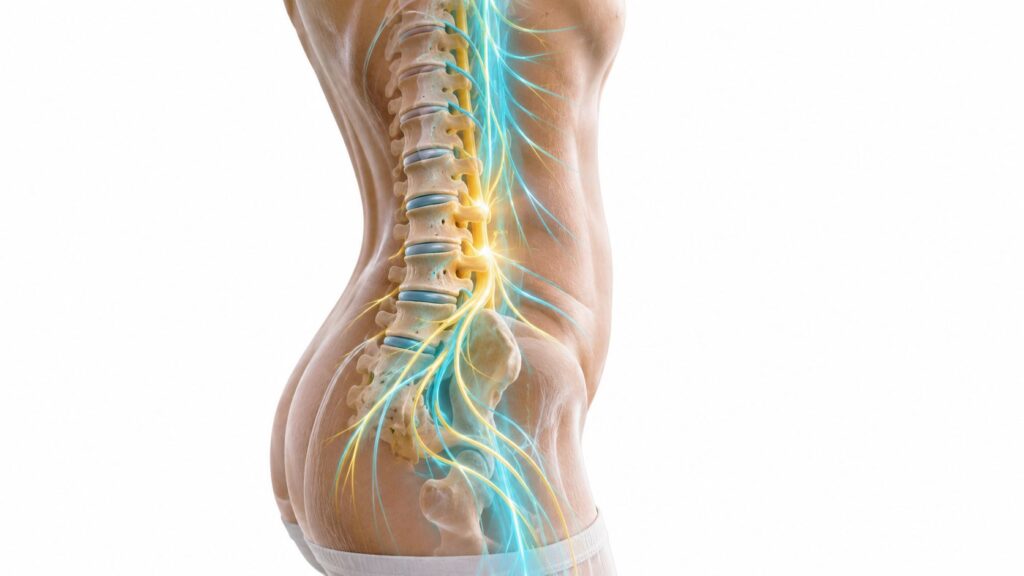
That pattern points toward spinal stenosis. The term means there is less room for the nerves, usually in the spinal canal or the openings where nerves exit. In the lower back, that narrowing often causes back pain plus leg symptoms that build with standing and walking, then ease with sitting or forward bending. The symptom pattern matters because it tells us more than the pain location alone.
The next decision is rarely about picking a treatment off a menu. The question is what is limiting function, what structure is causing it, and whether the current level of care still matches the problem. That is how good stenosis care works. It follows a sequence based on symptoms, walking tolerance, neurologic findings, imaging, and response to earlier treatment.
What spinal stenosis actually means
Spinal stenosis is not one single problem. Some patients have narrowing from disc bulging and arthritic change. Some have thickened ligamentum flavum crowding the canal. Some have facet joint arthritis, spondylolisthesis, or foraminal narrowing that irritates a specific nerve root more than the central canal itself.
That difference affects treatment choices.
A patient with mild positional symptoms and no progressive weakness may do well with conservative care. A patient who can no longer walk through a parking lot, has recurrent leg heaviness, and gets only temporary relief from flexing forward may need imaging and a more targeted plan sooner. I tell patients that stenosis treatment is less about chasing pain intensity and more about tracking loss of function over time.
A modern path is based on thresholds, not guesswork
The treatment sequence should reflect what the body is showing you. If symptoms are intermittent, tolerable, and improving with simple changes, there is room to stay conservative. If walking distance keeps shrinking, standing tolerance drops, sleep is affected, or leg weakness and numbness are becoming more consistent, the next step is not to wait indefinitely. It is to define the pain generator and decide whether a procedure could treat it more directly.
That is why image-guided injections help some patients and do very little for others. If inflammation around a compressed nerve is the main issue, an epidural injection may reduce pain enough to restore function. If the main problem is fixed mechanical crowding from thickened ligament and canal narrowing, temporary anti-inflammatory treatment may not last. In that setting, a minimally invasive decompression procedure may make more sense than repeating short-lived injections.
Patients searching for conditions treated at this clinic are often trying to answer one practical question. Is this something I should keep managing on my own, or is it time to escalate? For residents of Palos Hills, Oak Lawn, and nearby southwest suburbs, the answer usually comes from a clear review of symptom pattern, function, exam findings, and imaging, not from fear of surgery or pressure to rush into one procedure.
Foundational Steps Conservative Care and Self-Management
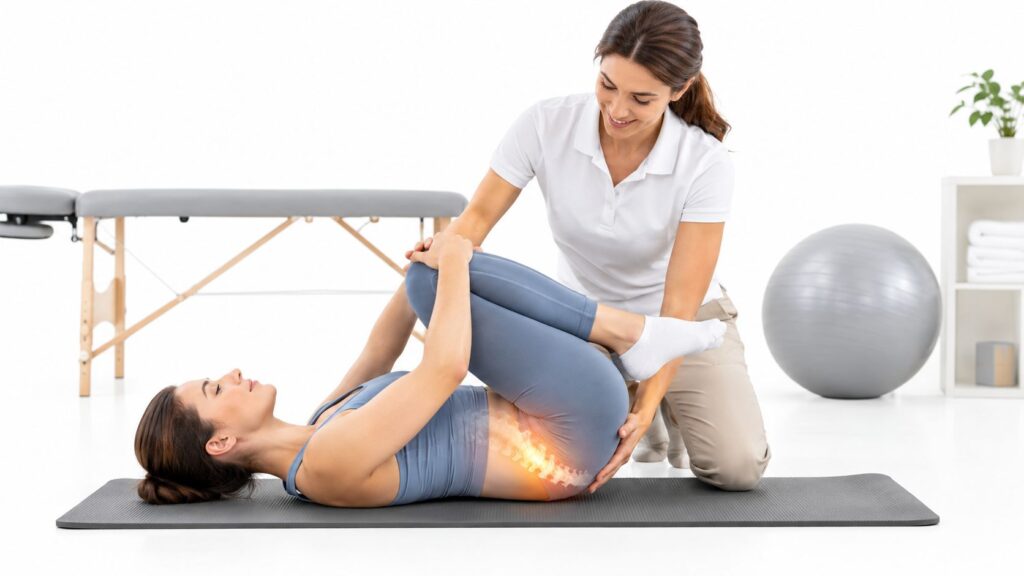
A common early pattern looks like this. You can still get through the day, but only by making quiet adjustments. You park closer, look for a cart to lean on, avoid standing in one place, and feel your legs fade before your back becomes the main issue. That is often the stage where conservative care is most useful. It can calm a flare, improve tolerance, and show whether symptoms respond to mechanical changes or keep progressing despite them.
Change the positions that trigger symptoms
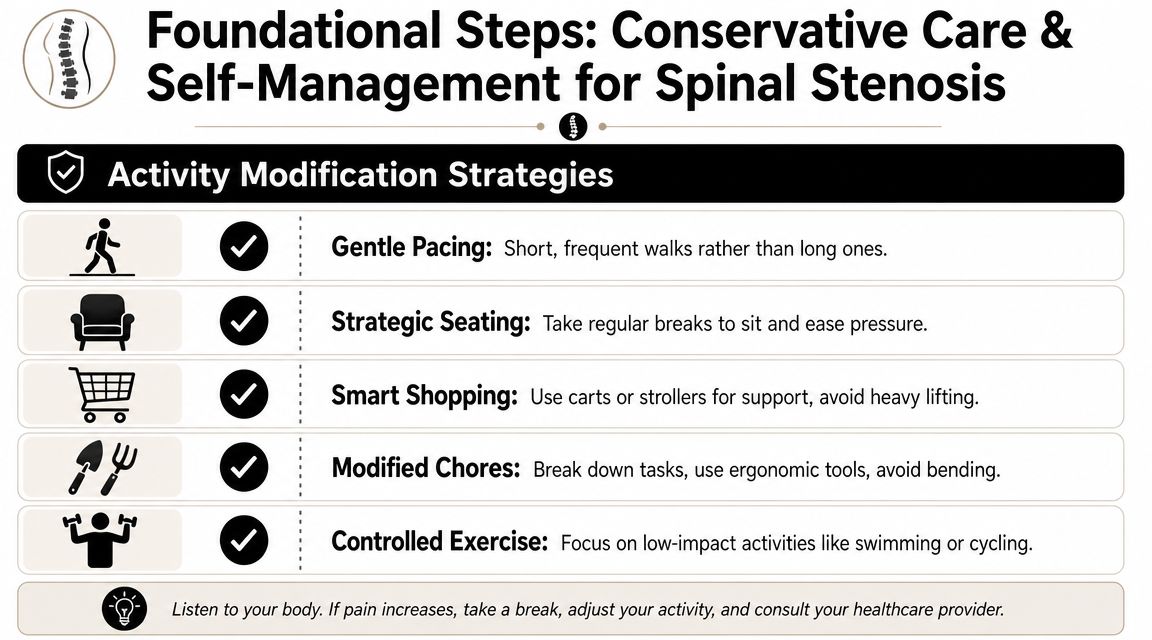
Lumbar stenosis is often position-dependent. Upright standing and walking can narrow the space available to the nerves. Sitting or bending slightly forward often relieves pressure. That pattern is useful. It helps guide day-to-day choices instead of relying on trial and error.
Use it deliberately:
- Walk with support when needed: A shopping cart, walker, countertop, or stroller can make walking more tolerable by putting the spine in slight flexion.
- Break up distance: Two short walks are often better than one long walk that ends in a flare.
- Schedule sitting breaks before symptoms spike: Waiting until numbness or heaviness is severe usually means recovery takes longer.
- Modify chores by time, not by task: Ten minutes of laundry, dishes, or yard work may be manageable where forty minutes is not.
- Limit repeated extension: Long periods of standing upright, reaching overhead, or walking downhill often aggravate symptoms.
These are not minor tricks. They are ways to reduce repeated nerve irritation and preserve function during the part of treatment where we are trying to learn how reversible the symptoms are.
Exercise should build tolerance, not provoke a setback
Exercise helps, but the wrong program can make stenosis feel worse. Patients often do best with movements that improve trunk support, hip mobility, and aerobic capacity without forcing prolonged upright loading.
A practical home program often includes:
- Gentle core stabilization: Abdominal bracing, pelvic control, and supervised form matter more than intensity.
- Hip and hamstring mobility work: Stiff hips can push the low back into positions that are less comfortable.
- Low-impact conditioning: Stationary cycling and pool exercise are often better tolerated than treadmill walking early on.
- Pacing: Consistent, moderate activity usually works better than an aggressive session followed by several bad days.
One rule matters here. If exercise leaves you with more leg numbness, more heaviness, or less walking capacity later that day or the next morning, the program needs to be adjusted.
Medication can help symptoms, but it does not change the anatomy
Over-the-counter anti-inflammatory medication can reduce pain during a flare, especially if inflammation is contributing to nerve irritation. That said, NSAIDs are not appropriate for everyone. Kidney disease, stomach ulcer history, blood thinner use, and blood pressure issues can all change the risk-benefit discussion.
I tell patients to judge medication by function, not just pain relief. If a medication lowers pain a point or two but you still cannot stand long enough to cook, shop, or work comfortably, it has not solved the practical problem.
What conservative care does well, and where it reaches its limit
Conservative care is the right first tier for many patients because it can reduce symptom triggers and improve day-to-day control. It is less effective when the main issue is fixed mechanical crowding around the nerves. In that setting, good self-management may still help you function better, but it may not restore lost walking tolerance or stop neurologic symptoms from becoming more frequent.
That trade-off matters. The goal at this stage is not to prove how much discomfort you can tolerate. The goal is to see whether the basics give you stable, usable function.
| Conservative step | What it helps | Where it falls short |
|---|---|---|
| Activity modification | Reduces symptom provocation during daily tasks | Does not change canal narrowing |
| Targeted exercise | Improves support, flexibility, and endurance | May not overcome significant nerve compression |
| NSAIDs or similar medication | Can reduce inflammatory pain during flares | Often limited by side effects or incomplete relief |
| Rest breaks and pacing | Helps prevent symptom escalation | Does not address progressive numbness or weakness |
Signs that home management is no longer enough
The decision to escalate usually becomes clearer when the same careful routine stops holding the line. You are modifying activity, pacing yourself, using the right exercises, and still losing ground.
Watch for patterns like these:
- Walking distance keeps shrinking
- You need to sit more often to finish routine errands
- Leg numbness or heaviness lasts longer after activity
- Sleep is interrupted because symptoms do not settle easily
- You are avoiding work, family, or social activities because you cannot trust your standing or walking tolerance
For many people in Palos Hills, Evergreen Park, or Hickory Hills, that is the point where conservative care has done its job. It has shown what helps, what does not, and whether the problem is stable or progressing. That information makes the next decision much more precise.
When to Escalate Your Care Getting a Definitive Diagnosis
The hardest part for many patients isn't starting treatment. It's knowing when they've crossed the line from “manage it” to “get this evaluated properly.”
That line usually isn't based on pain alone. It's based on function.
Track function, not just pain
Pain scores can be helpful, but they don't tell the whole story. A patient may report moderate pain yet be unable to get through a grocery store, stand at work, or walk from the parking lot without stopping. That's clinically important.
Look for changes like these:
- Walking distance is shrinking: You used to make it through a store or around the block. Now you need multiple stops.
- You're leaning more to get relief: You're searching for carts, railings, or countertops because upright standing is harder.
- Balance is changing: You feel less steady, especially during longer walks.
- Numbness lingers: Symptoms that used to resolve after sitting now hang around.
- Daily planning revolves around symptoms: You're skipping errands, church, social events, or work tasks because you can't trust your legs.
A clinical review on an algorithmic approach to treating lumbar spinal stenosis points out an important gap in patient education. People often want a clear threshold for escalation, especially around walking tolerance and balance changes, but management is individualized and works best when it's tied to functional goals and symptom trajectory.
The consultation should answer specific questions
A useful evaluation doesn't stop at “you have back pain.” It needs to sort out what kind of pain you have and what structure is likely causing it.
That usually includes:
- a history of where the pain starts and where it travels
- whether symptoms are worse with standing, walking, extension, coughing, or position changes
- whether leg symptoms are dominant or back pain is dominant
- whether numbness, weakness, or instability is appearing
- whether prior therapy, medication, or injections changed anything
The physical exam matters too. Strength testing, reflexes, gait, posture, and symptom provocation can help determine whether the problem looks more like stenosis, nerve root irritation, facet-mediated pain, or a mixed picture.
Imaging is how treatment becomes precise
If the symptoms and exam suggest stenosis, imaging often becomes the turning point. MRI is commonly used to confirm where the narrowing is, how severe it is, and whether there's a pattern that could respond to a targeted intervention.
Treatment decisions should follow anatomy. A patient with central canal narrowing from thickened ligament isn't the same as a patient with mostly facet arthropathy. A person with neurogenic claudication and relief in flexion isn't the same as a person with isolated low back pain.
A procedure should answer a mechanical problem. If the anatomy and symptom pattern don't match, the procedure may be technically well done and still disappoint.
The most useful benchmark is whether life is narrowing too
A lot of patients wait too long because they think the only reason to seek specialty care is unbearable pain. That's not the standard. The better question is whether your life is getting smaller despite appropriate self-care.
If you live in Oak Lawn, Palos Hills, or Orland Park and you've noticed that your world is being organized around where you can sit, how far you can walk, or how quickly your legs tire, that's usually enough reason to get a definitive diagnosis. You don't need to wait for a crisis to justify an evaluation.
Advanced Opioid-Sparing Interventional Treatments
A common turning point looks like this. You can still get through the day, but walking the grocery store takes planning, standing in line brings on leg heaviness, and the relief you get from sitting is getting shorter. That is often the point where treatment should shift from general symptom control to a procedure chosen for a specific pain generator.
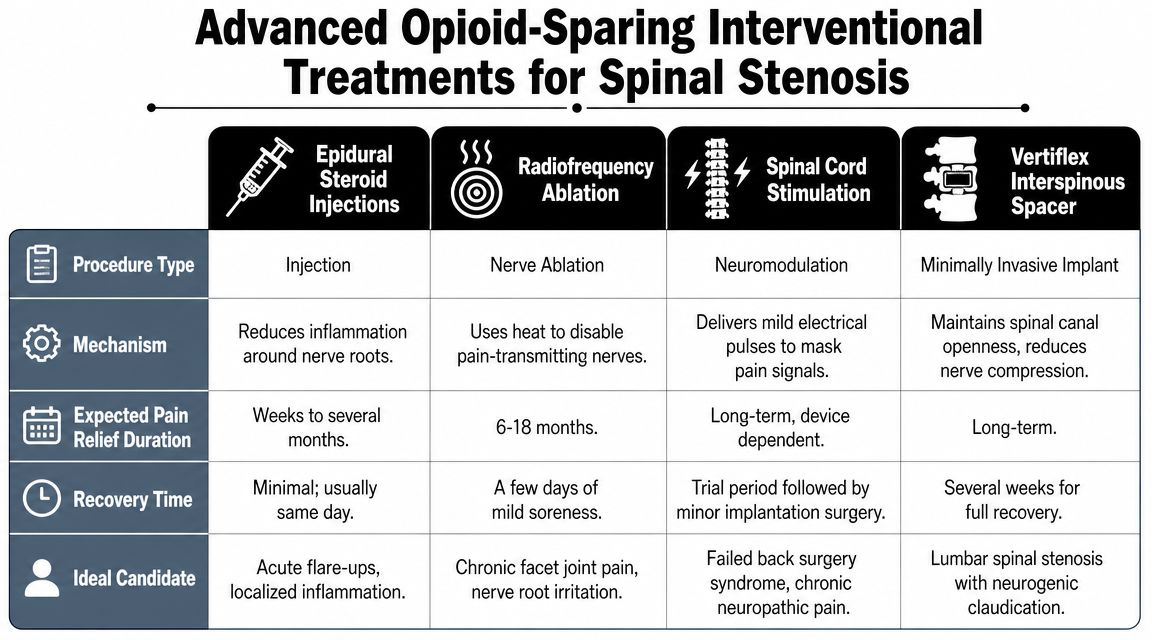
The goal here is not to do more. The goal is to do the right thing at the right time, and to know when a lower tier has stopped delivering enough function to justify repeating it.
Epidural steroid injections when inflammation is limiting progress
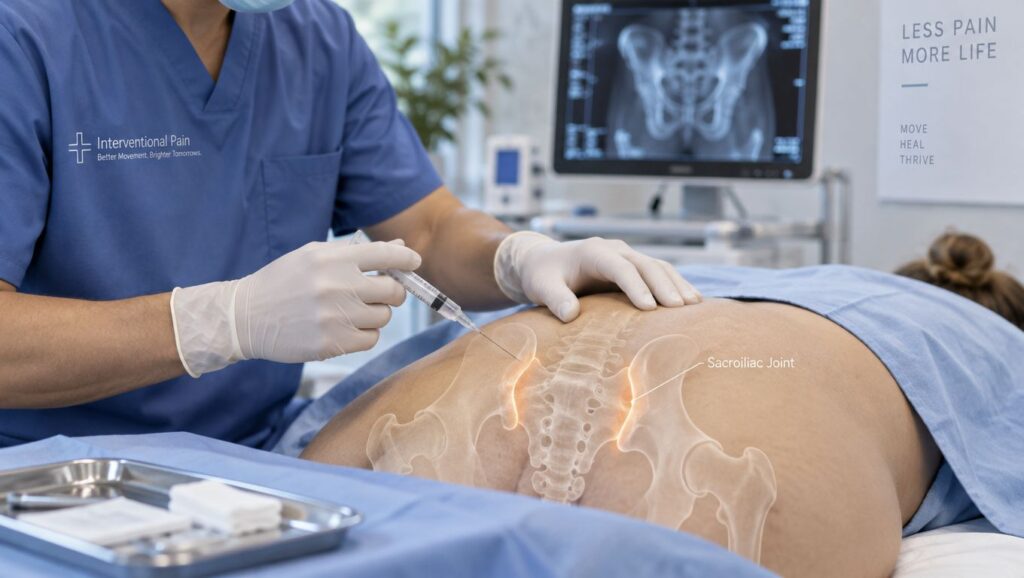
Epidural steroid injections can reduce inflammation around irritated nerves and create a window for movement, walking, sleep, and rehab. They are usually most useful when leg symptoms flare, the pain has a clear inflammatory component, or a patient needs enough relief to restart activity without relying on opioids.
The trade-off is durability. Relief can be meaningful, but it is often temporary, and a short response should trigger a reassessment rather than an automatic repeat.
Good candidates often include people with:
- radiating leg pain
- symptom flare-ups that fit nerve inflammation
- a need for short-term relief while building a broader plan
I generally advise patients to judge the injection by function, not by whether pain disappears for a few days. If walking tolerance improves, sleep improves, and activity expands, the injection did its job. If the response is minimal or brief, it may be time to move past anti-inflammatory care and consider an option that addresses structure or a different pain source.
Radiofrequency ablation when facet pain is part of the picture
Many patients with stenosis also have arthritic facet joints. That often shows up as low back pain that worsens with extension, standing upright, or rotation. In that setting, radiofrequency ablation can reduce pain from the small nerves serving those joints.
Mixed pain patterns are common. For example, a patient may have stenosis on MRI, but the symptom limiting daily life may be facet-mediated back pain rather than nerve crowding alone. Treating that component can improve standing tolerance and reduce the background pain that keeps activity restricted.
Radiofrequency ablation does not open the spinal canal. It is best used when the workup points to facet joints as a real contributor, not as a default response to any back pain in a patient who also has stenosis.
Minimally invasive lumbar decompression for ligament-related narrowing
Some patients have lumbar stenosis driven in part by thickened ligament, especially ligamentum flavum hypertrophy. For that anatomy, minimally invasive lumbar decompression, often called MILD, can make sense because it addresses a structural bottleneck rather than trying to quiet symptoms alone.
This is often the next conversation when conservative care has been appropriate, injections have not created enough durable walking or standing improvement, and imaging shows the right target. The decision is less about pain scores and more about function. If a patient still has to stop after short distances, still bends forward over a cart for relief, and still organizes the day around sitting breaks, it is reasonable to ask whether a more targeted decompressive procedure fits better than another injection.
Vertiflex for selected patients with neurogenic claudication
The Vertiflex Superion interspinous spacer is designed for carefully selected patients with lumbar spinal stenosis who have neurogenic claudication, especially those who feel better in flexion and worse with standing or walking upright. It helps maintain space in a way that can reduce symptom provocation during extension.
Selection determines whether this works well. The procedure can be a good opioid-sparing option for the right anatomy and symptom pattern, but it should not be used as a catch-all for every patient with lumbar stenosis.
A practical benchmark helps here. If you get reliable relief when leaning forward, sitting down, or walking slightly bent, and imaging supports a spacer-based approach, this becomes a reasonable escalation step. If the main problem is isolated back pain, instability, or anatomy that calls for a different solution, another treatment will make more sense.
The most advanced procedure in the room is still the wrong procedure if it does not match the anatomy.
Spinal cord stimulation for persistent nerve pain after simpler options fall short
Spinal cord stimulation works through neuromodulation. It does not decompress the spine. It changes how pain signals are processed and can help in chronic neuropathic pain, including more complex cases and some post-surgical pain patterns.
For straightforward stenosis, this is usually not the first procedural step. It enters the discussion later, when pain remains nerve-based and persistent despite more direct treatments, or when surgery has already occurred and symptoms continue. In other words, stimulation is usually a later-tier option for a different problem than early inflammatory flares or clearly compressive anatomy.
Other procedures that may enter the conversation
Some patients have overlapping diagnoses that change the plan. In practice, that is common.
- Medial branch blocks: Used to confirm suspected facet pain and help determine whether ablation is likely to help.
- Peripheral nerve stimulation: Considered in selected nerve pain patterns.
- Kyphoplasty: Relevant if vertebral compression fractures are contributing to pain and disability.
- PRP and cell-based options: Sometimes discussed in a broader regenerative context, depending on diagnosis and goals.
These are not interchangeable tools. They belong to different clinical situations, and using them well depends on matching the procedure to the driver of pain. Patients comparing procedures used for treatment should look less at the name of the procedure and more at the question it is meant to answer.
A side-by-side way to think about choices
| Treatment | Best fit | Main benefit | Main limitation |
|---|---|---|---|
| Epidural steroid injection | Inflammatory leg pain flare, nerve irritation | Can calm symptoms and create a rehab window | Often temporary |
| Radiofrequency ablation | Facet-mediated low back pain | Targets joint pain signals | Does not decompress stenosis |
| MILD | Selected patients with ligament-related narrowing | Addresses a structural contributor | Requires the right anatomy |
| Vertiflex | Selected lumbar stenosis with neurogenic claudication | Can improve standing and walking tolerance | Not for every stenosis pattern |
| Spinal cord stimulation | Chronic neuropathic pain, complex or post-surgical cases | Neuromodulation without open decompression | Not a first-line answer for typical stenosis |
What usually leads to disappointing results
Two patterns cause problems. One is repeating short-term treatments after the functional benefit has clearly plateaued. The other is choosing a less invasive procedure even when the anatomy suggests it is unlikely to help enough.
Good interventional care is image-guided, opioid-sparing, and tied to a clear goal such as walking farther, standing longer, or reducing the frequency of forced sitting breaks. For patients in Oak Lawn, Palos Hills, and nearby communities, the right time to escalate is usually when function keeps shrinking despite appropriate lower-tier care, not when pain finally becomes unbearable.
Navigating Surgical Referrals and Urgent Red Flags
A common turning point looks like this. You can still get through the grocery store if you lean on the cart, but without support your legs start burning, tingling, or weakening within minutes. You have tried the right lower-tier treatments. Relief either never came or never lasted long enough to give you your life back.
That is usually when a surgical conversation becomes appropriate.
Pain specialists and spine surgeons are addressing different parts of the same problem. My job is to help determine whether symptoms still fit a non-surgical plan, or whether the pattern has shifted to one where decompression is more likely to protect walking ability, leg strength, and nerve function.
When surgical referral makes sense
A referral makes sense when function keeps declining despite appropriate conservative care and well-chosen procedures. The key question is not whether pain exists. The key question is whether the current strategy is still buying meaningful function.
Several patterns push that decision:
- Walking or standing tolerance remains poor despite appropriate treatment: You are still forced to sit, bend forward, or stop frequently.
- Relief from injections or other procedures is brief and incomplete: A short window of improvement can be useful. Repeating the same step after the benefit plateaus usually is not.
- Weakness is new or worsening: Progressive motor loss changes the timeline.
- Imaging shows a compressive problem that matches the symptoms: When the anatomy clearly points to nerve crowding, surgery may fit better than continued symptom control alone.
- Daily life is shrinking in a measurable way: You are avoiding stairs, cutting back work duties, limiting errands, or giving up routine activities because your legs will not hold up.
That last point matters. I do not judge escalation by pain scores alone. I look at what your spine is stopping you from doing, how quickly that limit is worsening, and whether the next treatment tier has a realistic chance of changing it.
What surgery is trying to accomplish
The goal of decompressive surgery is straightforward. Create more space for the nerves.
That often helps patients whose main problem is leg-dominant stenosis symptoms, especially neurogenic claudication, numbness, or weakness that clearly tracks with nerve compression. It is less predictable for every form of low back pain, especially when the pain picture is mixed.
This is the trade-off patients need explained clearly. Surgery can address structural compression better than injections or medication, but it is still a targeted treatment, not a reset button for every pain generator in the spine. Good referrals happen when the symptom pattern, exam, and imaging line up.
For patients in Oak Lawn, Palos Hills, and nearby communities, that decision usually comes after a careful review of what has already been tried, what changed, and what is now at risk if treatment stays on the same path. If your symptoms are reaching that point, request a spine evaluation appointment with Midwest Pain & Wellness so the next step is based on function, neurologic findings, and imaging, not guesswork.
Red flags that need urgent care
Some symptoms need emergency evaluation because the issue is no longer pain control. The issue is possible nerve injury.
| Symptom | Why it matters | Action to take |
|---|---|---|
| Loss of bowel or bladder control | May signal severe nerve compression | Seek emergency medical care immediately |
| Rapidly worsening leg weakness | May reflect active neurologic decline | Seek urgent emergency evaluation |
| New inability to walk because of weakness | Suggests significant nerve compromise | Go to the emergency department |
| Numbness in the saddle area | Raises concern for a cauda equina pattern | Seek emergency medical care immediately |
| Sudden major balance decline with neurologic symptoms | Can indicate worsening cord or nerve compression | Get urgent medical evaluation |
Do not wait for a routine follow-up if these symptoms appear. Hours matter more than convenience.
A planned surgical referral is one situation. Sudden bowel or bladder changes, saddle numbness, or rapidly progressive weakness are a different category entirely. Those findings need immediate medical attention.
Your Personalized Spinal Stenosis Plan in the Chicago Area
A good spinal stenosis plan starts with a real-life question. What are you no longer able to do, and what change would tell you treatment is working?
For one person, that benchmark is walking through Mariano's without leaning on the cart. For another, it is getting through a work shift in Oak Lawn or standing long enough to cook dinner in Palos Hills. Those details shape the treatment sequence. They also tell us when it is time to stop repeating low-yield care and move to a better-matched option.
The plan should stay flexible. Conservative care still has a role, but it should earn its place by improving function. If home exercise, medication, and therapy are helping you walk farther, stand longer, or recover faster after activity, stay with that tier and keep building on it. If progress stalls, or your tolerance keeps narrowing despite good effort, the next step should be based on anatomy, neurologic findings, and the pattern of your symptoms.
I use a few practical benchmarks when deciding whether to escalate care:
- Walking or standing tolerance keeps dropping despite appropriate conservative treatment
- Leg symptoms drive the limitation more than isolated back soreness, especially heaviness, cramping, numbness, or pain with standing and walking
- Relief only comes with sitting or bending forward, which often points toward a stenosis pattern rather than a simple muscle flare
- An injection helped, but only briefly, which may support a more targeted procedure instead of repeating the same treatment
- The main goal is clear, such as delaying surgery, improving community walking, tolerating work, or sleeping with less positional pain
Personalization also means choosing the right target. A patient in Orland Park with neurogenic claudication and imaging-confirmed narrowing may be a candidate for a decompression-focused strategy. A patient in Evergreen Park whose pain is coming from arthritic posterior elements may need a different interventional plan. A patient in Alsip with mixed back and leg pain may need staged treatment rather than a single procedure.
That is the trade-off many patients want explained clearly. The least invasive option is not always the weakest option, and the most advanced procedure is not always the right first move. The right choice depends on what structure is causing the limitation, how quickly function is changing, and whether the goal is short-term symptom control or longer-lasting improvement in mobility.
If you live in Oak Lawn, Palos Hills, Chicago Ridge, Hickory Hills, Worth, Bridgeview, Burbank, Palos Heights, or nearby communities, local care should leave you with a decision framework, not a generic list of treatments. You should know what to keep doing at home, what result would justify the next step, and what sign would tell us to reconsider the plan.
If your walking, standing, balance, or daily routine keeps shrinking, schedule a spinal stenosis evaluation appointment so the next step matches your symptoms, exam, and imaging. Midwest Pain & Wellness provides interventional pain management options for Chicago-area patients who may need better conservative guidance, image-guided treatment, a minimally invasive procedure, or a surgical referral.
Spinal stenosis often changes life in small ways before it changes it in big ones. A personalized plan should catch that early and respond with the right level of care at the right time.