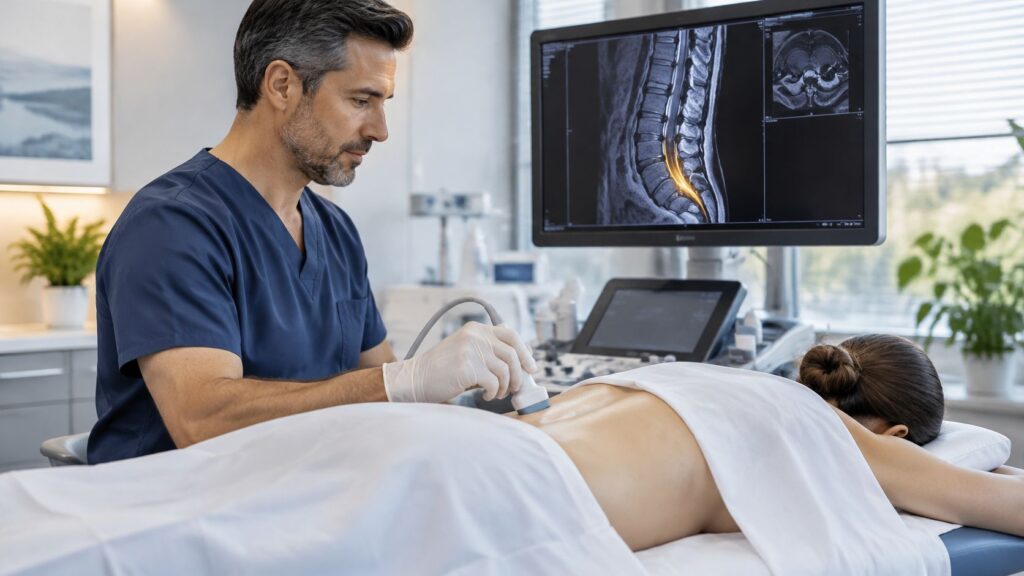
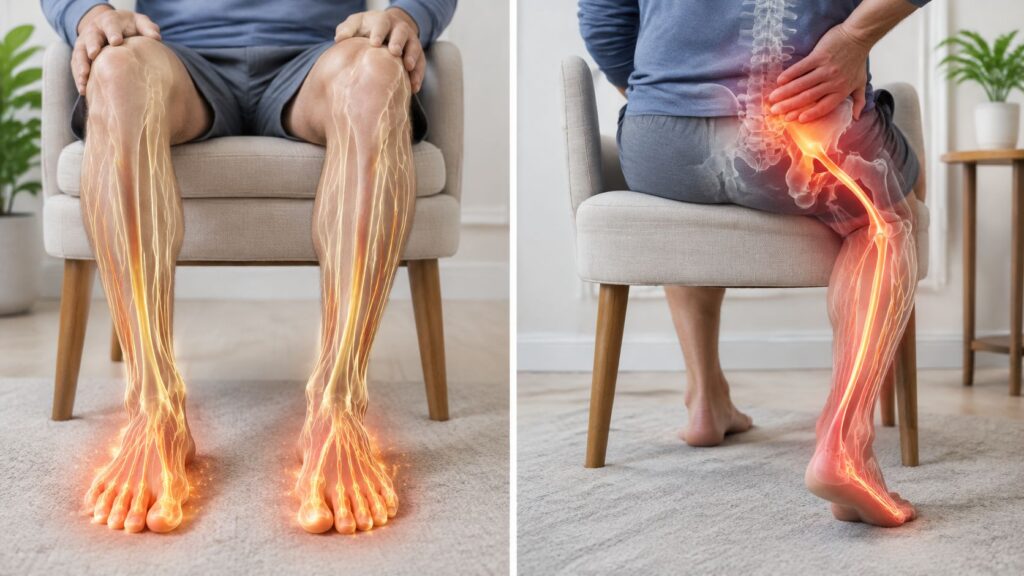
Pain changes ordinary decisions first. You stop taking the long way through the grocery store in Bridgeview because your back tightens halfway down the aisle. You think twice before sitting through your child's game in Orland Park because getting up from the bleachers has become its own event. The drive from Oak Lawn, Palos Hills, or Burbank starts to feel longer, not because of traffic, but because your neck, hip, or leg pain won't let you ignore it anymore.
Often, individuals don't come looking for a pain specialist on day one. They usually get here after trying the usual sequence. Rest. Heat. Ice. A short course of medication. A few visits somewhere that helped a little but didn't answer the bigger question of why the pain keeps coming back. That's often the turning point. You don't just want another temporary patch. You want a plan built around the actual pain generator.
That's where a specialized pain clinic becomes different from general medical care. The work isn't just to dull symptoms. It's to identify the structure, nerve, joint, or pattern driving the pain, then match treatment to that finding in a way that protects function and avoids unnecessary reliance on opioids whenever possible.
When Chronic Pain Disrupts Your Life in the Chicago Suburbs
You make it through the workday in Palos Hills. Then the drive home to Bridgeview feels longer than it should because your back starts tightening at every stoplight, or your leg starts burning halfway through the trip. By evening, even simple tasks like carrying groceries, standing at the stove, or getting comfortable in bed have turned into decisions you have to plan around.
That is often what chronic pain looks like in real life. It does not always stop you all at once. It narrows your day, one activity at a time.
You may sit off to one side because your sacroiliac joint flares if you put weight through the other hip. You may avoid stairs because your knee swells after too much load. You may pick parking spots based on walking distance, not convenience. Over time, pain starts setting the terms.
When usual care has not solved the problem
Many patients who come to a specialized clinic have already done the reasonable first steps. They have seen primary care. Some have tried orthopedic evaluation, chiropractic care, medication, or therapy. Those visits still matter. They help rule out urgent problems and often provide early treatment. But persistent pain usually needs a more targeted approach than general care can provide in a short office visit.
The key question is not whether you have tried hard enough. The better question is whether anyone has identified the structure or nerve most likely driving your symptoms and matched treatment to that finding.
That is the role of an interventional pain management clinic. The goal is to improve function with precise, opioid-sparing treatment options whenever possible. For patients in the southwest suburbs, that can mean a plan built around getting through a commute, returning to work duties, sleeping with fewer interruptions, or walking through your neighborhood without having to stop every few minutes.
Chronic pain is measured by what it takes from your daily function, not by how dramatic it looks from the outside.
Care built for people who need more than another refill
A specialized pain visit should give you more than a temporary patch. It should answer practical questions. Where is the pain likely coming from. What has already been tried. What is the next least invasive option with a reasonable chance of helping. What are the trade-offs.
That matters in communities like Palos Hills, Bridgeview, Oak Lawn, and nearby suburbs, where people are trying to stay active, keep working, and care for family while pain keeps interrupting ordinary routines. A focused clinic can offer image-guided procedures, targeted medication strategies, and coordinated rehabilitation plans that aim to reduce reliance on opioids rather than default to them.
Relief is important. Function is the standard we treat toward.
Understanding Your Interventional Pain Management Team
You may have already seen your primary doctor, tried medication, and done a course of therapy, yet you still do not have a clear answer to a simple question. What is causing the pain. That is usually the point where a specialized interventional team becomes useful.
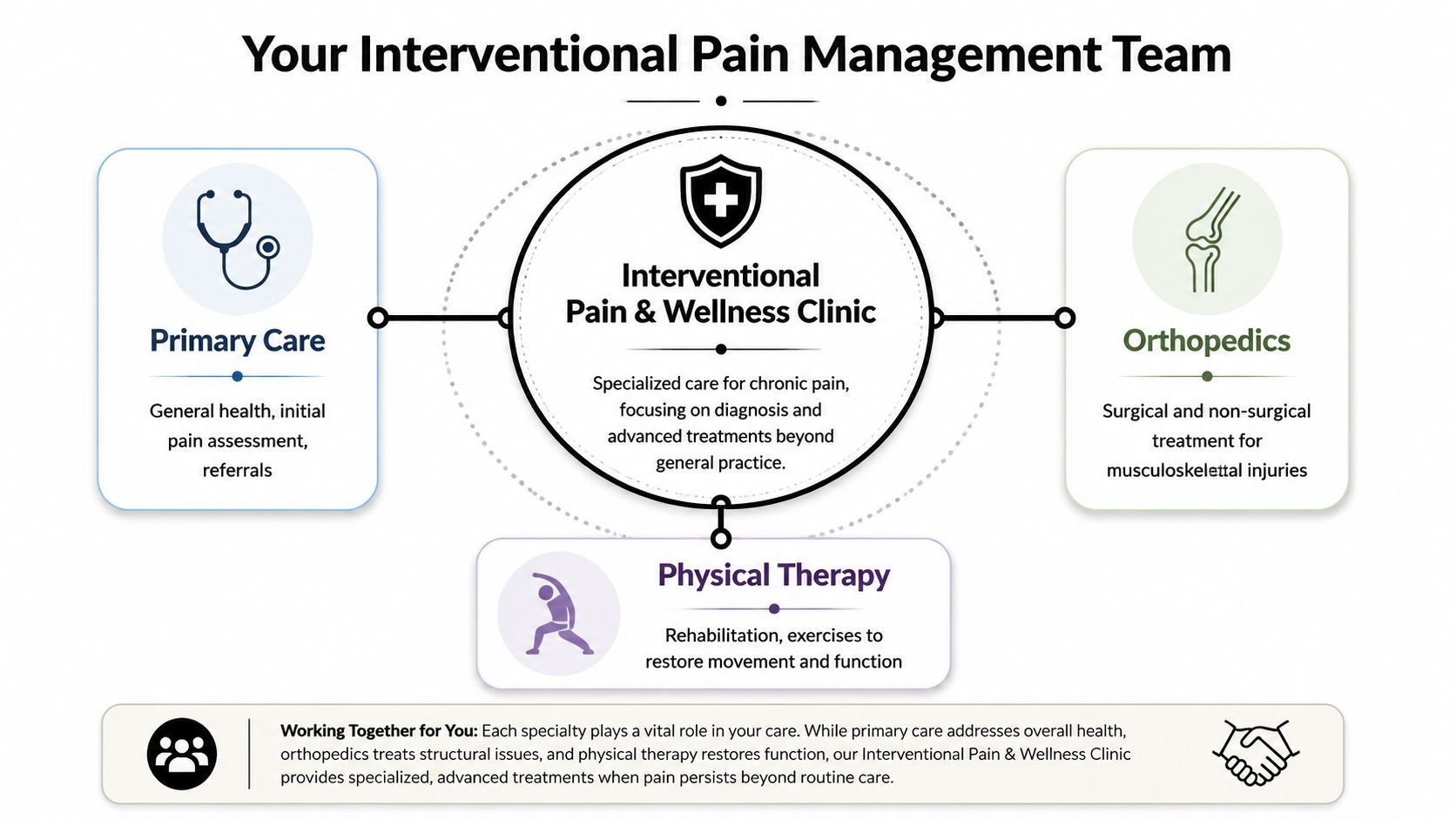
Interventional pain management focuses on diagnosis and targeted treatment for persistent pain that has not improved with basic care alone. In practice, that means we work to identify the structure or nerve pattern driving your symptoms, then match that finding to the least invasive option that can reasonably improve function. For patients in Palos Hills, Bridgeview, and nearby southwest suburbs, that often matters more than a broad label like back pain or neck pain.
How a specialized pain team evaluates the problem
Pain location is only part of the story. Low back pain can come from a disc, facet joints, the sacroiliac joint, a pinched nerve, or a problem outside the spine. Neck pain that feels muscular may still involve irritated joints or nerve roots. Leg pain may start in the spine even when the back barely hurts.
A strong pain evaluation sorts through those possibilities with a focused history, physical exam, imaging review when it adds value, and attention to what makes symptoms better or worse during ordinary activities. I look for patterns. Does walking bring on leg heaviness. Does sitting trigger burning pain down the leg. Does turning the neck reproduce arm symptoms. Those details often tell us more than the pain score alone.
Chronic pain is common, but the practical issue is not the number of people who have it. The practical issue is how often patients are left with partial treatment and no clear roadmap. A specialized clinic fills that gap by connecting diagnosis to image-guided procedures, rehabilitation planning, and medication decisions that support function rather than chasing short-term relief alone.
What each member of the care team does
Different clinicians solve different parts of the problem.
- Primary care handles first evaluation, screens for urgent causes, starts initial treatment, and helps coordinate referrals.
- Physical therapy improves strength, mobility, and movement tolerance. It is often part of a good plan, especially after pain is controlled enough for you to participate well.
- Orthopedic or spine surgery specialists step in when imaging, neurologic loss, instability, or structural damage raises the possibility of an operation.
- Interventional pain specialists connect the exam, imaging, and symptom pattern to targeted non-surgical treatment. That can include diagnostic injections, epidural procedures, radiofrequency ablation, peripheral nerve treatment, spinal cord stimulation evaluation, and other minimally invasive options.
The difference is not turf. It is task.
A clinic built around this model usually follows an opioid-sparing approach. That does not mean medication is ignored, and it does not mean every patient should avoid it in every situation. It means we use medication carefully, weigh side effects against real benefit, and keep asking whether a more targeted treatment could improve walking, sleep, work tolerance, or daily activity with less overall burden.
If you want a clearer picture of how a specialized interventional pain management clinic approaches diagnosis and treatment, that overview explains the model in more detail.
Practical rule: If your treatment plan does not identify the most likely pain generator, it is probably still incomplete.
Why coordinated care matters
The best results usually come from timing the right treatments together. A patient with spinal stenosis may need a procedure to calm nerve irritation, followed by a home program and closer surgical review if weakness progresses. A patient with pain after surgery may need medication adjustment, a focused nerve block, and a slower return-to-activity plan than expected.
That kind of coordination matters in real life. You may be trying to manage a commute from Bridgeview, stand through a work shift in Oak Lawn, or keep up with family responsibilities in Palos Hills while pain keeps cutting into the day. Your pain team should help you work through those limits with a plan that is specific, medically sound, and realistic about trade-offs.
Conditions We Help People Overcome Every Day
The names of pain conditions can sound abstract until you connect them to daily life. Spinal stenosis might be the leg heaviness that starts after walking through a store in Bridgeview. Neuropathic pain may be the burning, tingling foot that wakes you up in Alsip. Cervical radiculopathy can feel like pain leaving the neck and running down the arm when you turn your head backing out of the driveway in Oak Lawn.
The patterns that show up most often
Some conditions are especially common in a pain practice because they follow recognizable mechanical or nerve patterns.
| Pain Category | Examples of Conditions Treated |
|---|---|
| Spine and back pain | Lumbar radiculopathy, cervical radiculopathy, spinal stenosis, post-laminectomy pain, failed back syndrome, facet-related pain, sacroiliitis |
| Nerve disorders | Peripheral neuropathy, nerve irritation after injury or surgery, burning or shooting limb pain |
| Joint and structural pain | Arthritis pain, sacroiliac joint pain, degenerative spine-related pain |
| Headache and muscle pattern disorders | Chronic migraine, cervical dystonia, headache patterns linked to neck dysfunction |
| Injury and recovery pain | Persistent pain after surgery, pain after workplace injury, lingering pain after an accident |
A strong pain clinic doesn't stop at labels. It asks what the label means for your life. Can you stand long enough to cook? Does your pain ease when you lean forward? Does sitting trigger it more than walking? Did the problem begin after surgery, gradually over time, or after one specific injury?
Spine pain isn't all the same
Low back pain is one of the biggest categories, but it's also one of the easiest to oversimplify. Some people have inflammatory irritation around a nerve root. Others have pain driven by arthritic facet joints. Others have central canal narrowing that causes leg symptoms when standing or walking. The treatment shouldn't be identical for all three.
That's one reason broad advice often falls short. “Strengthen your core” isn't wrong, but it isn't enough when the central issue is a compressed nerve or a pain pattern that only becomes clear under image-guided diagnostic evaluation.
Nerve pain has its own language
Neuropathic pain tends to speak differently than joint pain. Patients describe it as burning, buzzing, stinging, electrical, cold, numb, or hypersensitive. Socks hurt. Bed sheets bother the feet. The calf or hand feels wrong even when there's no visible swelling.
For a closer look at this category, this guide on how to manage neuropathic pain helps explain why nerve-related pain needs a different approach than ordinary soreness.
Pain that shoots, burns, tingles, or causes numbness often points us toward nerve involvement rather than a simple muscle strain.
Post-surgical and long-standing pain deserve fresh evaluation
People sometimes assume that if they've already had surgery, injections, or therapy in the past, there's nothing new to consider. That's not always true. Scar-related irritation, adjacent-level stress, residual nerve inflammation, and untreated secondary pain generators can all keep symptoms going after the original procedure or injury.
Detailed reassessment matters. A patient may have been told “your MRI doesn't look that bad,” yet still have disabling pain from a very specific source. Another patient may have clear imaging findings that aren't the main pain generator. Matching symptoms to anatomy is the core work.
Advanced Opioid-Sparing Treatment Options
If pain has pushed you to cut back on work, sleep poorly, or avoid simple errands around Palos Hills or Bridgeview, it makes sense to want relief now. It also makes sense to be cautious about a plan built only around stronger medication. In a specialty pain clinic, the goal is to improve function by identifying the pain generator and choosing treatments that fit it.
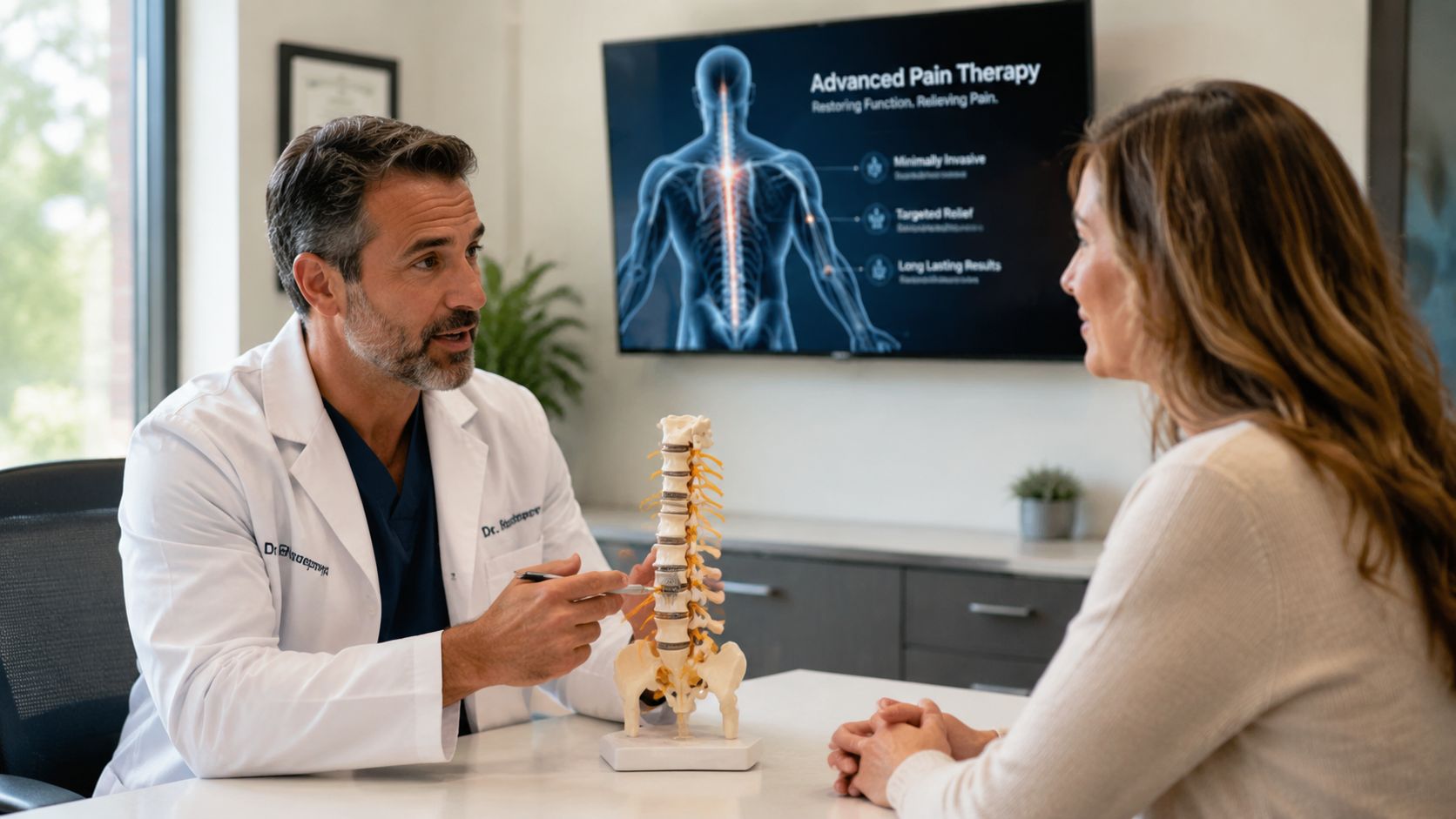
General primary care often has to manage many problems at once. An interventional pain team can spend more time matching symptoms, examination findings, imaging, and prior treatment response to a targeted procedure. That difference matters when the aim is to reduce pain enough for you to walk farther, return to work tasks, tolerate therapy, or get through the day with less medication.
Image-guided injections
Image guidance improves accuracy. It also helps us test whether a specific structure is driving your pain.
Common examples include:
- Epidural steroid injections: Often used when inflammation around a spinal nerve is sending pain into an arm or leg.
- Facet or medial branch blocks: Used when the small joints in the neck or back appear to be the source of pain, especially with extension or twisting.
- Sacroiliac joint injections: Considered when pain centers low in the back or buttock and fits an SI joint pattern.
These procedures have limits. Relief may be short-lived if the diagnosis is incomplete, if several pain generators are involved, or if severe structural compression is the main issue. Used well, though, injections can give both diagnostic clarity and a meaningful window for movement, therapy, and recovery.
Radiofrequency ablation
When diagnostic blocks point to the right target, radiofrequency ablation can offer longer relief than repeating temporary injections. It uses controlled heat to interrupt pain signals from small sensory nerves, most often around painful facet joints.
This treatment does not reverse arthritis. It can, however, reduce the pain that arthritis produces, which may make standing, walking, getting out of a chair, and sleeping more manageable. The trade-off is that careful testing comes first, and not every patient with back or neck pain is a candidate.
Neuromodulation and stimulation
Some pain persists even after therapy, medications, injections, or surgery. In selected cases, spinal cord stimulation or peripheral nerve stimulation may help by changing how pain signals are processed.
This option is usually reserved for persistent nerve-related pain, certain post-surgical pain patterns, and other cases where simpler anti-inflammatory treatments are unlikely to do enough. Screening matters. So does expectation setting. A successful trial should improve daily function and reduce pain burden, not promise a perfect zero-pain outcome.
Minimally invasive lumbar procedures
Lumbar spinal stenosis often shows up as leg pain, heaviness, or limited walking tolerance that improves when leaning forward. For the right anatomy, minimally invasive options such as MILD or Vertiflex Superion may reduce symptoms without committing every patient to open surgery.
Patient selection is the hard part. These procedures are not interchangeable, and they are not appropriate for every pattern of narrowing or instability. In practice, they can fill an important middle ground for suburban patients who want to stay active but need more than medication and repeat temporary injections.
Regenerative and specialized therapies
Other tools may fit specific diagnoses:
- PRP and cell-based approaches: Sometimes considered for carefully selected musculoskeletal problems where tissue healing and function are part of the treatment goal.
- Botox for chronic migraine or cervical dystonia: Useful when headache frequency or abnormal muscle contraction is a major driver of disability.
- Kyphoplasty: Used in appropriate vertebral compression fractures to stabilize the bone and reduce fracture-related pain.
The strongest opioid-sparing model uses these options selectively, not automatically. A specialized clinic should be able to tell you when a procedure is likely to help, when it is unlikely to help, and when the better choice is medication adjustment, physical rehabilitation, behavioral support, or surgical referral. Midwest Pain & Wellness follows this diagnosis-driven approach, with treatment plans that may include image-guided procedures, ablation, neuromodulation, minimally invasive lumbar care, headache treatment, and other targeted options based on your goals and daily limitations.
Your First Visit What to Expect on Your Path to Relief
The first visit shouldn't feel rushed, vague, or transactional. If you've been in pain for a long time, you need more than a quick scan of your chart and a generic next step. You need someone to listen for patterns that matter.
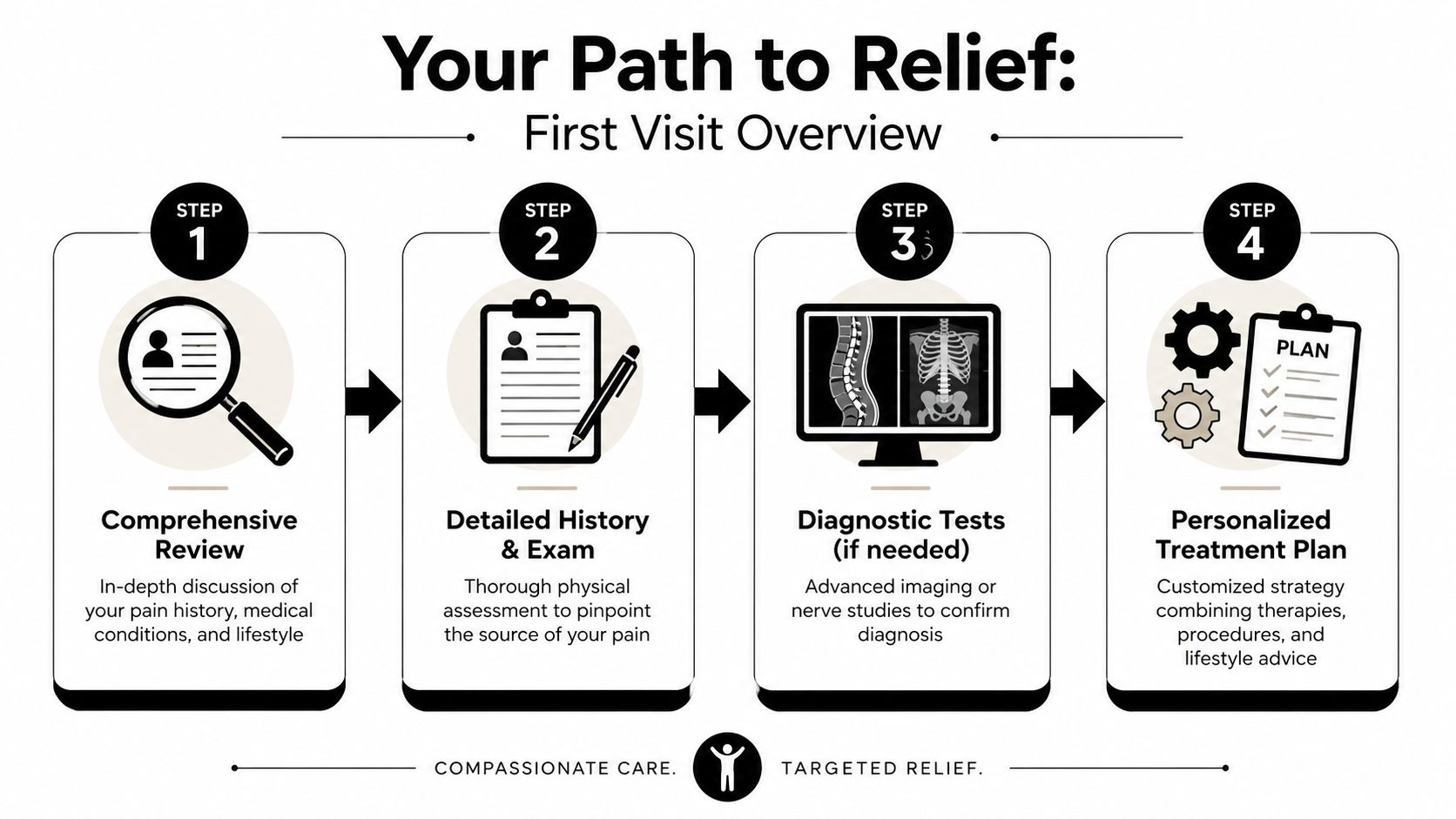
Step one starts before anyone touches an exam table
A strong evaluation begins with your story. Where the pain started. What it feels like. What makes it worse. What briefly helped. Whether the pain stays local or travels. Whether you've had surgery, injections, injuries, numbness, weakness, headaches, sleep disruption, or work limitations.
This history matters because pain patterns often point us toward the diagnosis before any procedure is discussed. A person from Burbank with pain that worsens when bending backward may be describing a very different problem than someone from Evergreen Park whose pain shoots below the knee with coughing or prolonged sitting.
The exam should narrow the problem
A focused physical examination helps separate muscle guarding from nerve irritation, joint pain from referred pain, and structural limitation from fear-based movement avoidance. Sometimes the exam confirms what imaging already suggested. Sometimes it reveals that the MRI finding everyone focused on isn't the main issue.
If more testing is needed, that decision should make sense. Imaging and diagnostic procedures are useful when they answer a clinical question. They're less useful when they're ordered without a clear purpose.
The plan should be collaborative
By the end of the visit, you should understand the likely pain source, the reasonable treatment options, and the trade-offs attached to each one. Some patients need a stepwise plan beginning with the least invasive option. Others need a diagnostic block because the pain generator is still uncertain. Some need to be referred back for surgical input because warning signs or instability change the equation.
A thoughtful first visit usually includes:
- Review of prior records and treatments
- Detailed pain history and physical exam
- Discussion of likely diagnosis
- Shared treatment planning with clear next steps
Ask these questions at your first visit
- What structure do you think is causing my pain most likely
- What findings support that conclusion
- Is this treatment diagnostic, therapeutic, or both
- What would make you change course
- How will we measure whether treatment is actually helping my function
Those questions matter because relief is only part of the goal. We also want movement, stamina, sleep, and daily capacity to improve in ways you can feel outside the exam room.
Navigating Insurance Referrals and Workers Compensation
Pain care gets delayed for practical reasons all the time. People aren't only asking, “Can this help me?” They're also asking, “Do I need a referral?” “Will my insurance allow this?” “What if this started at work?” Those questions are legitimate, and they shouldn't be treated like an afterthought.
Referrals are useful, but not always complicated
Some insurance plans require a referral from a primary care physician. Others allow direct scheduling with a specialist. The cleanest move is to verify this before the visit so you don't lose time or end up rescheduling over paperwork.
If you already have a primary doctor, surgeon, chiropractor, or other treating provider, coordination helps. A pain clinic should be able to work with outside records, imaging, operative history, and prior treatment notes so the process doesn't restart from zero each time you enter a new office.
Workers compensation and injury-related pain need organized documentation
Workplace injuries and personal injury cases often involve a second layer of complexity. The treatment plan still needs to be medically sound, but it also needs to be documented clearly enough for claims review, employer communication, and legal timelines when those apply.
That means details matter. Date of injury. Body regions involved. Prior function. Current limitations. What treatment has already been tried. What objective findings support the diagnosis. A clinic that handles these cases should understand both the medical and administrative side.
For patients dealing with that process, this article on workers comp and personal injury claims gives a practical overview of what to expect.
Administrative friction shouldn't stop medical care, but it often slows it down unless someone is managing the details carefully.
Insurance acceptance is only part of access
Patients often focus on whether a clinic “takes” their insurance, which is important, but not the whole picture. Real access also means timely scheduling, communication with referring offices, clear instructions before procedures, and follow-up that doesn't leave you guessing.
A clinic that works well with referrals and claims tends to reduce stress for everyone involved. That includes the patient, the employer when a workplace injury is involved, and the outside clinician trying to help but needing a specialty partner for the next step.
Take the First Step Toward Living Actively Again
You wake up in Palos Hills or Bridgeview already calculating the day around pain. How long you can sit in the car. Whether work will flare your back or neck. Whether you will have enough left for groceries, exercise, or time with family by evening. At that point, generic advice usually falls short.
A specialty pain clinic should offer more than another refill or another round of vague reassurance. The goal is to identify the pain generator as accurately as possible, then match treatment to that source with options that can reduce reliance on opioids and improve daily function. For many patients in the southwest suburbs of Chicago, that means a more focused interventional plan than a general primary care setting can reasonably provide.
We measure progress in real life terms. Better tolerance for walking. Less pain with sitting and driving. More reliable sleep. A safer return to work, household tasks, and activity. Some people improve with one targeted treatment. Others need a staged plan with procedures, physical rehabilitation, medication adjustments, and follow-up over time. Honest care means saying both are possible.
What matters is a clear plan, careful diagnosis, and treatment that is built around function instead of temporary coping alone.
If you are ready to work toward more movement, better function, and a treatment strategy aimed at the source of your pain, schedule a consultation with Midwest Pain & Wellness.