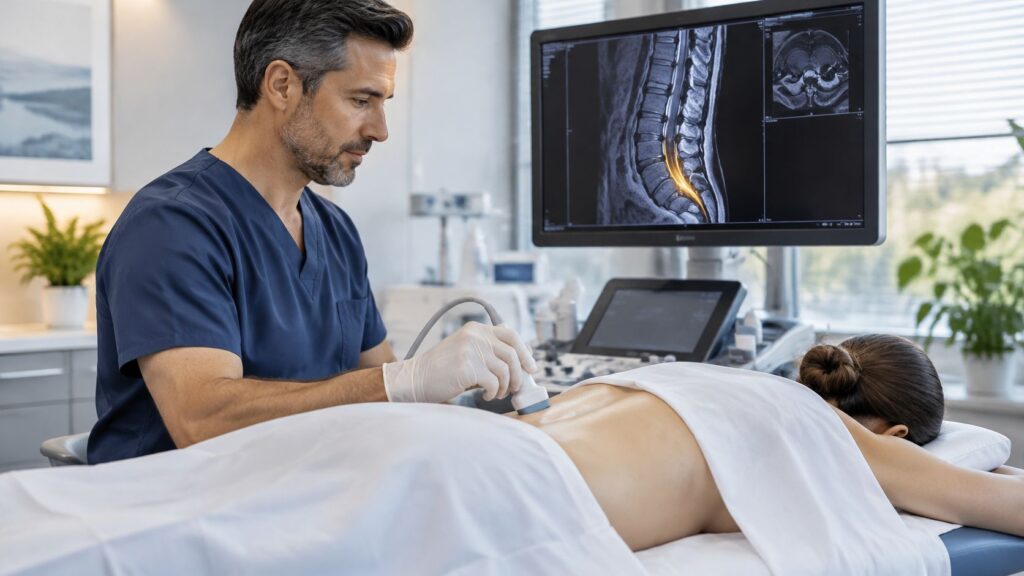
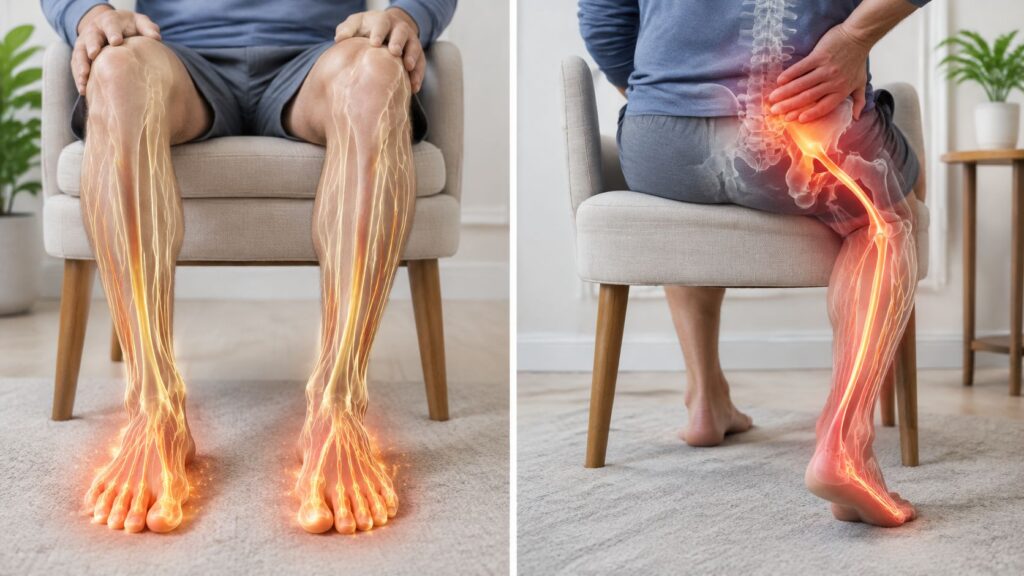
Pain changes ordinary routines first. The drive to work gets harder because sitting triggers leg pain. Grocery bags feel heavier because your shoulder catches every time you reach. Sleep becomes shallow, then your energy, mood, and patience start to go with it.
If you're searching for pain management Wilkes-Barre PA, but you live in Chicago Ridge or nearby suburbs like Oak Lawn, Orland Park, Palos Hills, Alsip, Burbank, Bridgeview, Hickory Hills, Worth, Palos Heights, or Evergreen Park, what you likely want is simple. You want to know what's causing the pain, what can realistically help, and what to do next without getting pushed straight toward long-term opioid use.
Finding Lasting Pain Relief in the Chicago Suburbs
A common story sounds like this. Someone in Orland Park strains their back years ago, gets through it, then notices the pain never fully leaves. At first it shows up after yard work or a long commute. Later it starts radiating into the hip or leg, and now even a short car ride or a night in bed can leave them stiff and guarded the next morning.
Another patient in Palos Hills may deal with neck pain and headaches that started after an accident or years of desk work. They've tried rest, stretching, maybe medication from urgent care, maybe chiropractic care, maybe a round of therapy. Some things help briefly. Nothing seems to hold.
That's where a pain and wellness clinic serves a different role. The goal isn't just to label the problem as “back pain” or “arthritis” and send you home with a refill. The goal is to identify the pain generator, then match treatment to that source and to your daily function.
Why the diagnosis matters
Herniated discs, facet arthritis, sacroiliac joint irritation, nerve compression, post-surgical scar-related pain, and peripheral nerve problems can all feel similar to a patient. They don't behave the same way, and they shouldn't be treated the same way.
A careful pain evaluation usually looks at:
- Where the pain starts: low back, neck, shoulder, knee, hip, or along a nerve path
- How it travels: local ache, burning, numbness, tingling, or radiating pain
- What makes it worse: standing, walking, bending, twisting, sitting, reaching, or lying flat
- What the pain is taking away: sleep, work, exercise, parenting, driving, and independence
The right treatment often becomes clearer only after the pain pattern, exam findings, and imaging are considered together.
For people across the southwest suburbs, the most useful pain care is usually opioid-sparing, functional, and stepwise. That means treatment should help you move better, tolerate daily activity better, and rely less on short-lived fixes that only mask symptoms.
What Is Interventional Pain Management
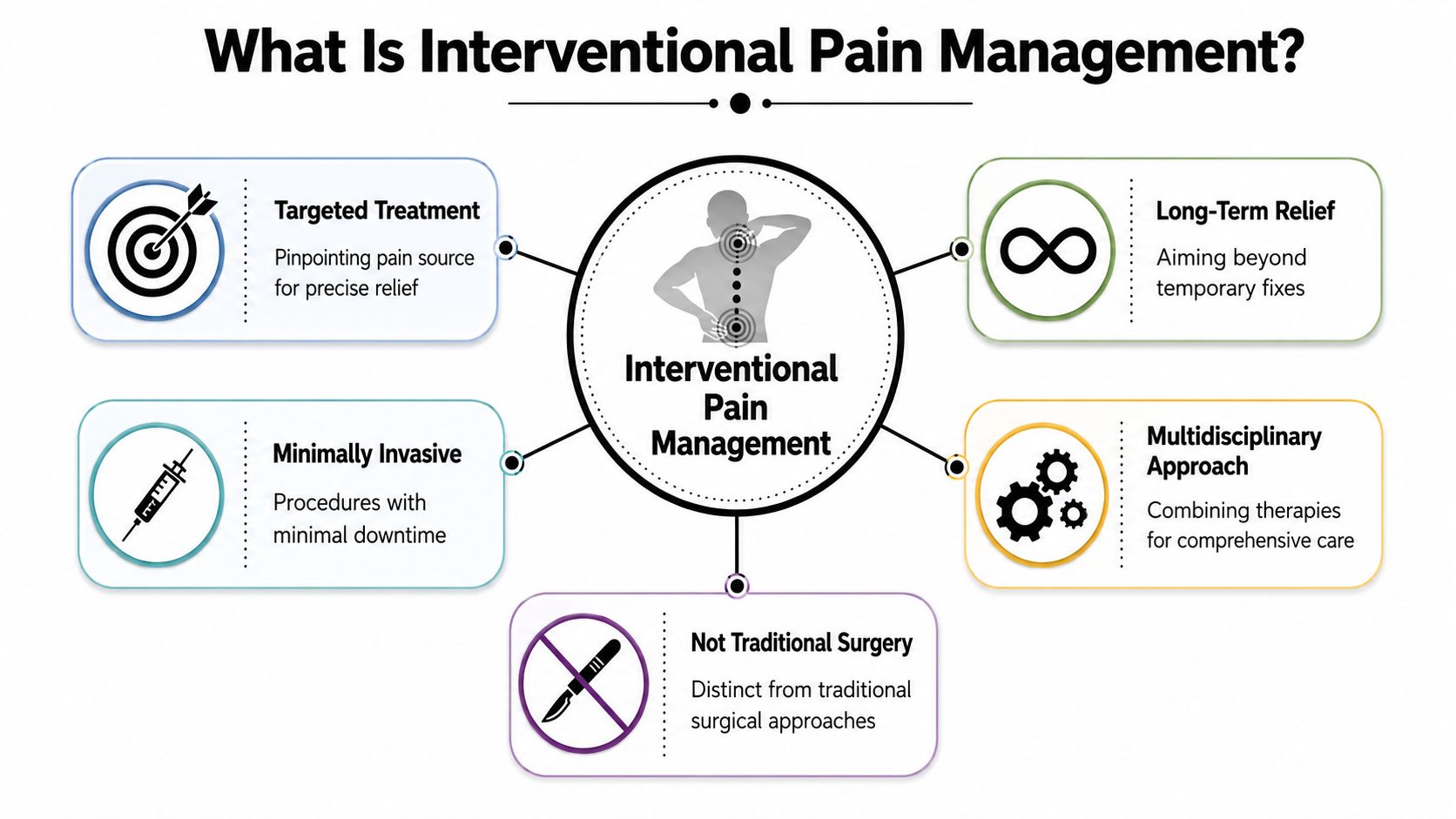
Interventional pain management is targeted pain care. Instead of treating the whole body as if everything hurts equally, it looks for the specific structure or nerve sending the pain signal.
Consider electrical troubleshooting. If a breaker keeps tripping, a good electrician doesn't just keep flipping the main switch and hoping the problem disappears. They trace the faulty circuit. Pain medicine works the same way. A broad medication may dull symptoms for a while, but a targeted approach tries to confirm where the signal is coming from.
The diagnostic side
One of the biggest misunderstandings is that injections are only for temporary relief. In many cases, they're also diagnostic.
A targeted block can help answer questions such as:
- Is the pain facet-mediated: coming from the small joints in the spine?
- Is it radicular: coming from a pinched or inflamed spinal nerve?
- Is it mixed: involving more than one source?
That distinction matters. Geisinger's overview of interventional pain management describes a stepwise pathway that begins with diagnostic injections and nerve blocks, then may progress to radiofrequency neurotomy, spinal cord stimulation, or dorsal root ganglion stimulation when conservative care hasn't been enough.
The therapeutic side
Once the likely pain generator is confirmed, treatment can become much more precise. That may include image-guided injections, nerve-focused procedures, or neuromodulation for selected patients.
This is different from traditional surgery, and it's also different from taking stronger medication. Many procedures are minimally invasive, done with imaging guidance, and intended to improve function while reducing dependence on opioids.
For patients comparing options, interventional pain management clinic care usually fits best when pain has become persistent, limits activity, and hasn't responded well enough to basic measures alone.
Practical rule: If a treatment plan can't explain what structure is likely causing the pain, it's usually not specific enough yet.
A broader healthcare trend also shows how much delivery changed during recent years. A 2024 Medicare trend study found an 18.7% drop in interventional pain procedures from 2019 to 2020, reflecting a major disruption in care access, not a disappearance of pain itself, as reported in this 2024 Medicare analysis on interventional pain procedures.
Common Conditions We Treat Near Orland Park and Palos Hills
A patient from Orland Park may tell me the pain started as a sore back after yard work, then changed. A few weeks later, sitting through a commute is difficult, sleep is broken, and the pain has started tracking into the leg. That story matters because the name of the condition matters less than identifying the structure that is generating the pain.
Patients near Palos Hills, Oak Lawn, Worth, and Bridgeview usually come in describing lost function first. They cannot turn their head comfortably in traffic. They avoid stairs. They stop walking the dog. Our job is to sort those symptoms into patterns, then test which pattern fits. That is how an interventional, opioid-sparing plan becomes specific instead of generic.
Spine and nerve pain
Low back pain is common, but it is not all the same problem. Pain centered in the lower back can come from the discs, facet joints, sacroiliac joints, muscles, or supporting ligaments. Pain that travels into the buttock, groin, or leg raises different questions, especially when numbness, tingling, or weakness are part of the picture.
Neck pain also has several common pain generators. Some patients feel aching at the base of the neck and across the shoulders. Others have pain that radiates into the arm, hand numbness, or headaches that begin in the neck. Those details help separate joint-related pain from nerve irritation or muscular strain.
Sciatica often feels sharp, burning, electric, or heavy down one leg rather than limited to the low back. If that pattern sounds familiar, our guide on how to manage sciatica explains the causes and treatment options in more detail.
Joint pain and pain that lingers after an injury
Shoulder, hip, and knee pain can interfere with work, exercise, and sleep, but the activity pattern often gives useful clues. A shoulder that hurts with overhead reaching suggests a different problem than one that aches at rest. A knee that flares with stairs points us in a different direction than one that catches, locks, or feels unstable. Hip pain can come from the joint itself, the low back, or the surrounding tendons, so location alone does not settle the diagnosis.
Pain after surgery or injury is another reason patients seek care in our Chicago Ridge clinic. A procedure may correct one structural issue and still leave behind nerve sensitivity, scar-related pain, joint irritation, or abnormal movement patterns. Old sports injuries and motor vehicle accidents can do the same thing. The tissue may have healed, but the pain generator may still be active.
Headaches, neuropathy, and mixed pain patterns
Some patients are surprised to learn that chronic headaches and migraines can overlap with interventional pain care, especially when the pain is tied to cervical joints, irritated peripheral nerves, or persistent muscle tension around the head and neck.
We also evaluate symptoms such as:
- Burning, tingling, or numbness in the feet
- Leg pain that worsens with standing or walking
- Pain after a healed fracture
- Ongoing pain after a prior procedure
- Symptoms that do not fit neatly into one diagnosis
Common conditions behind those symptoms include herniated discs, spinal stenosis, diabetic neuropathy, fibromyalgia, sports injuries, and chronic migraine. The diagnosis matters because treatment choices involve trade-offs. A patient with nerve root irritation may benefit from a very different plan than someone whose pain is coming from arthritic joints or peripheral nerve damage.
Two patients can describe the same pain in nearly identical words. The exam, imaging review, and response to targeted diagnostic work are what separate one pain source from another.
What tends to delay recovery
Pain becomes harder to treat when care stays nonspecific. Repeated rest, medication changes without reassessment, or procedures performed without a clear diagnostic purpose often lead to frustration rather than progress.
A better path is more focused. Identify the likely pain generator. Match the treatment to that structure. Then measure success by improved walking, better sleep, safer movement, and less reliance on opioid medication.
A Guide to Modern Minimally Invasive Pain Treatments
A patient from Chicago Ridge may come in saying, “I just want the pain to stop.” The better starting question is which structure is causing the pain, and which treatment gives the best chance of better walking, better sleep, and steadier day-to-day function without drifting toward long-term opioid use.
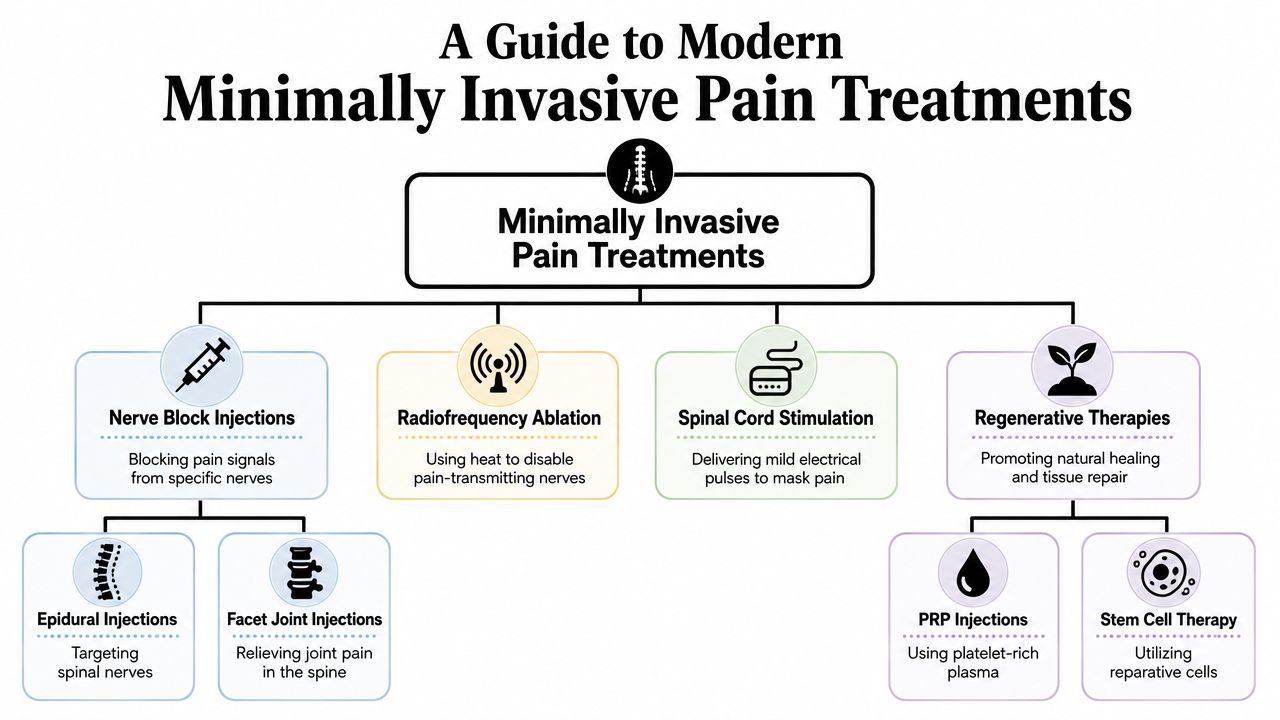
Minimally invasive pain care works best when it is tied to a diagnosis. In our Chicago Ridge clinic, that means matching the procedure to the suspected pain generator, not offering the same treatment to every patient with back, neck, or nerve pain. Residents of Chicago's southwest suburbs often arrive after trying medication changes, rest, therapy, or prior injections with mixed results. The next step should be more precise, not merely more of the same.
Image-guided injections
Image guidance improves accuracy and safety. It also makes injections more useful diagnostically.
If leg pain could be coming from a pinched lumbar nerve, spinal stenosis, sacroiliac irritation, or a peripheral nerve problem, the location of the injection matters. A well-targeted procedure can reduce inflammation, but it can also tell us whether we are treating the right structure.
Common examples include:
- Epidural injections for nerve root irritation from a disc problem or spinal narrowing
- Facet or medial branch blocks when the small joints of the spine are the likely source of neck or back pain
- Sacroiliac joint injections for pain centered low in the back or buttock
- Joint or bursa injections in areas such as the shoulder, hip, or knee when local inflammation is part of the problem
The trade-off is straightforward. These procedures can be very helpful, but they are not meant to be repeated indefinitely without a clear response. If an injection does not improve pain in a meaningful way, the plan should be reconsidered.
Radiofrequency ablation
Radiofrequency ablation, or RFA, is often used for facet-related neck or back pain after diagnostic blocks suggest the correct nerve pathway has been identified. The treatment applies controlled heat to reduce pain signaling from those small sensory nerves.
For the right patient, RFA can last longer than a temporary numbing injection. It does not fix arthritis, and it does not help every kind of spine pain. It is most useful when the pain pattern, exam, imaging, and block response all point in the same direction.
| Situation | Why RFA may be considered |
|---|---|
| Recurrent neck or back pain from facet joints | The pain source is often mechanical and may respond better to nerve-targeted treatment than repeat short-term injections |
| Pain returns after successful diagnostic blocks | A good block response supports the diagnosis before a longer-acting procedure is chosen |
| A patient wants non-surgical treatment with longer relief | RFA is minimally invasive and may reduce the need for frequent procedures or escalating medication use |
Neuromodulation
Neuromodulation includes spinal cord stimulation and, in selected cases, peripheral nerve stimulation. These treatments change how pain signals are processed. The goal is not to erase every symptom. The goal is to make pain less dominant so activity becomes possible again.
I usually discuss neuromodulation after more conservative and targeted interventional options have been tried, especially for persistent nerve pain, post-surgical spine pain, or chronic limb pain. Careful selection matters. The best candidates have a defined pain pattern, realistic expectations, and functional goals that can be measured.
Patients who want a plain-language overview can read more about how spinal cord stimulation works.
Minimally invasive lumbar procedures
Some patients with lumbar spinal stenosis describe a familiar pattern. Walking and standing become progressively harder, while leaning forward or sitting brings relief. When symptoms and imaging fit, minimally invasive options such as MILD or Vertiflex may be appropriate.
These procedures are designed for selected forms of stenosis. They are less invasive than open surgery, but they are still procedure-based treatments with specific indications. Good candidates are chosen by matching symptoms, imaging, prior treatment history, and overall health.
Kyphoplasty, regenerative care, and headache-focused treatment
Other procedures fill narrower but important roles in a personalized plan:
- Kyphoplasty may help selected patients with painful vertebral compression fractures
- PRP and other regenerative treatments may be discussed for certain musculoskeletal conditions, depending on the diagnosis and goals
- Botox for chronic migraine or cervical dystonia can be useful when headache frequency or neck muscle overactivity is driving disability
Midwest Pain & Wellness is one clinic in Chicago Ridge that offers image-guided injections, ablation, neuromodulation, minimally invasive lumbar procedures, and migraine-focused treatment within an opioid-sparing care model. The point is not to offer a long menu. It is to choose the smallest effective intervention that matches the pain source and helps patients in the southwest suburbs return to daily life with more confidence and less medication.
Your First Appointment What to Expect at Our Clinic
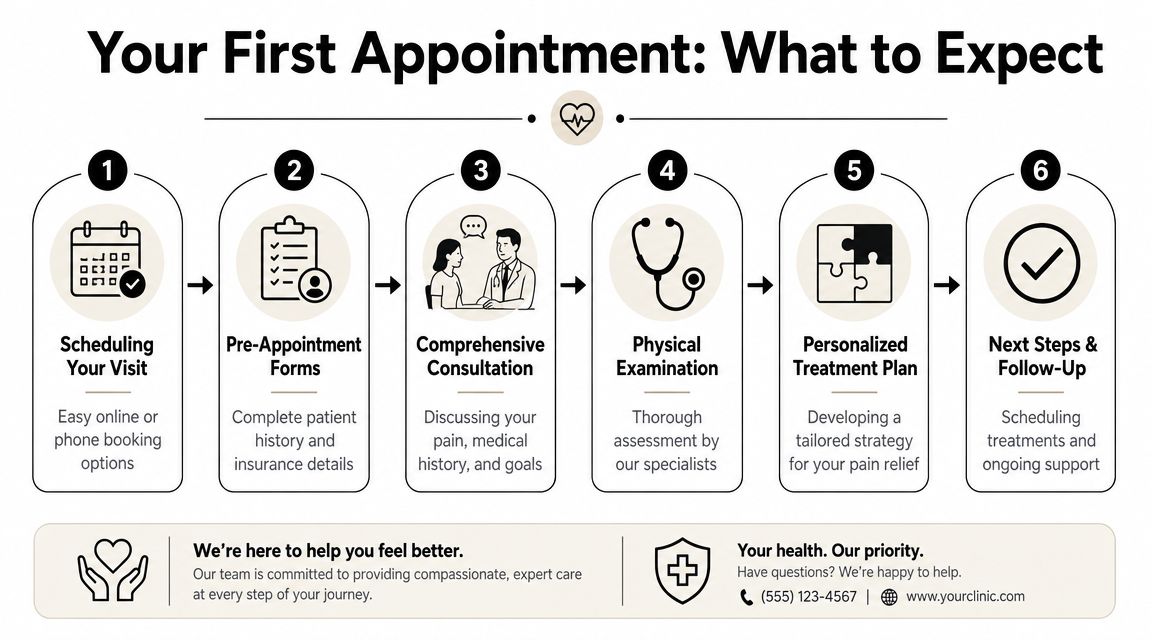
Most patients feel better once they know the process. The first visit usually isn't rushed into a procedure. It starts with listening, sorting through the story, and deciding what needs to happen first.
Before you come in
Bring the basics that help make the visit useful:
- Photo ID and insurance information
- A medication list
- Prior imaging reports if you have them
- Any procedure records or surgery history related to the pain
- A brief timeline of when the pain started and how it changed
If you've had MRIs, injections, surgery, therapy, or specialist visits before, that history helps avoid repeating steps that already failed.
During the consultation
The first discussion usually focuses on a few practical questions. Where is the pain? What does it feel like? What makes it worse? What activities are being limited? What has helped, even briefly?
Then comes the physical exam. That may include spine motion, strength, reflexes, sensation, gait, joint provocation, or nerve tension testing depending on the body area involved.
A good first visit often ends with one of several paths:
- Review and clarify the diagnosis if the likely pain generator is already fairly clear.
- Order or review testing if the symptoms and available records don't line up well enough yet.
- Plan a diagnostic procedure when targeted confirmation is needed before deciding on a longer-lasting intervention.
- Build a combined treatment plan that may include medication adjustment, procedure planning, home strategies, or referrals that support the bigger plan.
You shouldn't leave wondering, “Why am I getting this treatment?” You should understand what question it's meant to answer or what problem it's meant to treat.
After the first visit
Some patients are scheduled for a procedure. Others start with medication review, additional imaging, or coordination with a surgeon, primary care clinician, or rehab provider. Follow-up is where the plan gets refined based on what happened, not what anyone hoped would happen.
That matters because response to treatment is information. If a targeted block works exactly as expected, it strengthens the diagnosis. If it doesn't, the next step may need to change.
Navigating Insurance Referrals and Clinic Logistics
Administrative details matter because delayed care often starts with simple confusion. Many patients aren't sure whether they need a referral, whether prior records are required, or whether their case belongs in a pain clinic if there's a workers' compensation or personal injury component.
Referrals and authorizations
Whether you need a referral depends on your insurance plan. Some plans allow direct specialist scheduling. Others require authorization or a referring clinician's order before the visit or before a procedure.
If you're unsure, the safest move is to ask two questions when scheduling:
- Does my plan require a referral for the consultation?
- Will prior authorization be needed for imaging or procedures?
For workers' compensation and personal injury cases, documentation tends to matter even more. Bring claim information, adjuster or attorney contact details if applicable, and any existing records tied to the injury.
Practical preparation
This website screenshot may help if you're looking for the main clinic hub online.
A few simple steps can prevent the most common delays:
- Confirm coverage early: Make sure the consultation and any planned procedure are handled under your current plan.
- Gather records ahead of time: Imaging reports, operative notes, and prior procedure history can change the quality of the first visit.
- List current medications clearly: Include blood thinners, pain medication, and any allergy history.
- Ask about procedure-day instructions: Some injections or interventions have medication, transportation, or fasting instructions.
If you searched for pain management Wilkes-Barre PA but you're really looking for care in the Chicago Ridge area, it helps to verify that the clinic location, insurance participation, and referral process match your needs before booking.
Frequently Asked Questions About Pain Management
Are pain procedures painful
Most minimally invasive procedures are tolerable, and many are much easier than patients expect. You may feel pressure, soreness, or a brief reproduction of familiar pain during parts of the procedure, especially when the physician is confirming the correct target.
Afterward, some people feel temporary soreness at the injection site. The goal isn't to create a pain-free procedure minute by minute. The goal is to perform it safely, accurately, and in a way that gives useful therapeutic or diagnostic information.
How long does relief from an injection last
There isn't one universal timeline. Relief depends on what structure was treated, whether the injection was mainly diagnostic or therapeutic, the degree of underlying inflammation, and whether the diagnosis was correct.
An injection that briefly confirms the pain source can still be very valuable, even if it doesn't provide long-lasting benefit by itself. That result may point toward a more appropriate next step, such as ablation, neuromodulation, a different procedure, or surgical evaluation.
Will I have to stop my current pain medications
Not always. Many patients continue some of their current medications while the treatment plan is being clarified. Medication changes should be individualized and coordinated carefully, especially if you're taking long-term pain medication, nerve medication, muscle relaxants, or blood thinners.
The broader aim in an opioid-sparing clinic is usually to reduce reliance on medications when better-targeted treatments improve function. That process should be thoughtful, not abrupt.
Relief isn't the only outcome that matters. Better walking, better sleep, better tolerance for work, and better daily function count too.
What are the risks of procedures like RFA or spinal cord stimulation
Every procedure has potential risks, and those risks vary by procedure type, anatomy, and your medical history. In general, physicians discuss issues such as temporary soreness, incomplete relief, symptom flare, infection, bleeding, nerve irritation, or device-related concerns when applicable.
The right way to think about risk is not “Is this risk-free?” Nothing is. The right question is whether the expected benefit makes sense for your diagnosis, your pain pattern, and your alternatives.
When should I seek rehabilitation first instead of a procedure
That depends on the condition and how clearly the pain generator is identified. Some patients do best starting with a rehabilitation-focused plan, especially when deconditioning, movement avoidance, and muscular support problems are major drivers. Others need a targeted procedure first because pain is blocking any meaningful progress in exercise or rehab.
The key is sequence. Patients usually do better when the treatment order makes sense for the diagnosis rather than when every option is tried randomly.
If pain is limiting how you work, sleep, walk, or care for your family, Midwest Pain & Wellness offers evaluation and interventional pain care in Chicago Ridge with an opioid-sparing, function-focused approach. The next step is a careful assessment to identify the likely pain generator and build a treatment plan that fits your condition, goals, and daily life.