You finally get into bed, shift into a comfortable position, and hope your body will let you sleep. Then the feeling starts. It may be hard to describe. Creeping. Pulling. Buzzing. An internal restlessness that makes it almost impossible to keep your legs still. You move them and feel better for a moment, but once you settle again, the urge comes right back.
That pattern is familiar to many people living with Restless Legs Syndrome, also called RLS or Willis-Ekbom disease. It's real, it can be exhausting, and it often affects more than sleep. Over time, it can wear down mood, concentration, pain tolerance, and daytime function.
Good restless leg syndrome management starts with the right framework. RLS is not just a matter of “tight muscles” or “needing to stretch more.” It's a neurological condition with recognizable features, common triggers, and several treatment paths that work far better than older advice many patients still hear. In Illinois communities around Chicago Ridge, including Oak Lawn, Palos Hills, Palos Heights, Worth, Bridgeview, Hickory Hills, Alsip, Burbank, Evergreen Park, and Orland Park, patients deserve current, evidence-based care that looks beyond temporary fixes.
Understanding That Uncontrollable Urge to Move
RLS usually shows up when the body gets quiet. People often notice it while watching television, sitting through a long car ride, or trying to fall asleep. The legs feel uncomfortable in a way that doesn't fit ordinary soreness. Many patients describe a deep internal sensation rather than pain on the skin or in the joints.
What RLS feels like
The hallmark problem is an urge to move the legs. Movement often helps, at least briefly. That's why pacing the room at night, rubbing the legs, or repeatedly changing position becomes such a common routine.
RLS can look different from person to person, but a few descriptions come up often:
- Crawling or creeping sensations that are hard to localize
- Restlessness during rest such as sitting in a chair or lying in bed
- Evening worsening with symptoms becoming more noticeable later in the day
- Temporary relief with movement such as walking, stretching, or shaking out the legs
Why reassurance matters
Patients sometimes worry they're overreacting because they can't point to swelling, injury, or a clear visible problem. That uncertainty can be frustrating. RLS is still a real medical condition even when the exam looks normal and routine labs don't immediately reveal the answer.
Many people with RLS spend months trying to explain a sensation that doesn't sound like typical pain. The difficulty describing it doesn't make it less real.
In practice, the most effective management plan is usually layered. It starts by confirming the pattern fits RLS, then looking for triggers and secondary causes, especially iron problems and medication effects. After that, treatment can include home measures, targeted iron replacement, and when needed, modern non-opioid medications that align with current standards rather than outdated habits.
For many patients, relief begins once the diagnosis is named clearly and the plan becomes specific.
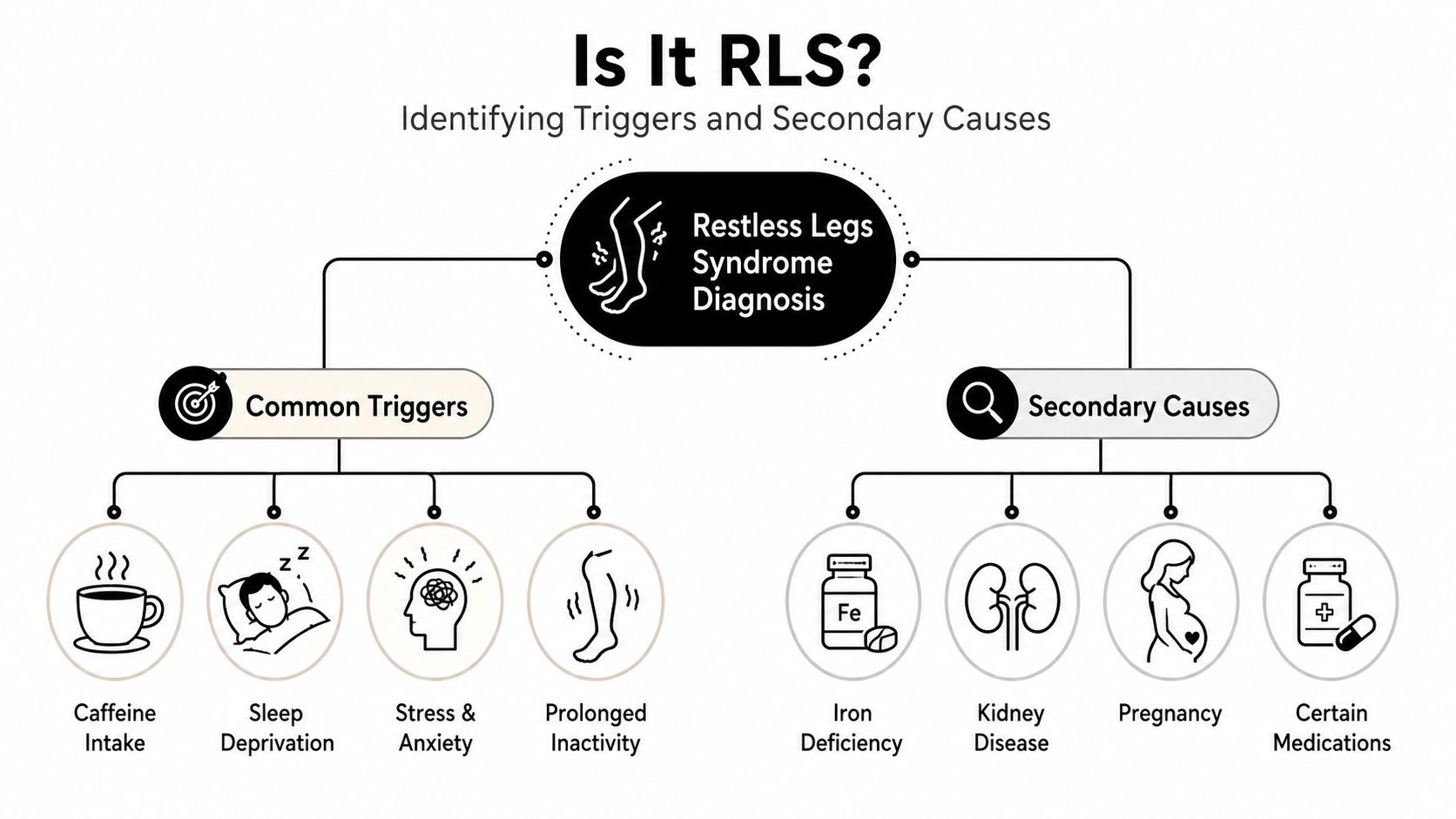
Is It RLS Identifying Triggers and Secondary Causes
Before treatment, the first job is making sure the symptoms really fit RLS and not another problem. Nighttime leg cramps, neuropathy, arthritis pain, vein disease, and medication side effects can all muddy the picture. A careful history usually tells you a lot.
The core pattern doctors look for
RLS is typically identified by four clinical features:
- An urge to move the legs
- Symptoms that begin or worsen during rest
- At least partial relief with movement
- A stronger pattern in the evening or at night
If one of those pieces is missing, it's worth slowing down and reconsidering the diagnosis. True RLS has a rhythm to it. It tends to flare during inactivity and calm down when the legs move.
Here is a simple visual summary of what to look for:
What to check before starting medication
The American Academy of Sleep Medicine says the first step in RLS management is addressing aggravating factors such as alcohol, caffeine, certain antidepressants and antihistamines, and untreated obstructive sleep apnea before moving on to other therapies, as outlined in its treatment recommendations for restless legs syndrome.
That matters because a patient can take the right medicine and still feel miserable if the main trigger hasn't been identified.
A practical checklist includes:
- Caffeine use. Coffee, tea, energy drinks, and even late-day chocolate can keep symptoms active into the evening.
- Alcohol intake. Some patients notice their legs are much worse after drinking, especially close to bedtime.
- Medication review. Antihistamines and some antidepressants can aggravate symptoms. This doesn't mean you should stop them on your own, but they should be reviewed thoughtfully.
- Sleep apnea. Poor sleep quality and untreated obstructive sleep apnea can make nighttime symptoms more disruptive.
- Iron status. A normal hemoglobin doesn't rule out iron-related RLS.
- Medical context. Kidney disease, pregnancy, and other underlying conditions can contribute.
Why secondary causes deserve attention
RLS doesn't always exist in isolation. Hormonal shifts, changes in sleep, and metabolic issues can overlap with it, especially in midlife. For women sorting through fatigue, sleep disruption, and body changes that don't fit neatly into one diagnosis, Lila's insights on thyroid and menopausal health can be a useful companion resource because thyroid and menopausal symptoms can complicate the picture around nighttime discomfort and sleep quality.
Practical rule: If your symptoms suddenly changed, became more intense, or started after a medication change or new health problem, look for a trigger before assuming you only need a stronger prescription.
The best restless leg syndrome management plans begin with that detective work.
Starting With Lifestyle and Home-Based Strategies
Mild or intermittent RLS often improves when patients make a few targeted changes at home. These steps won't solve every case, but they give many people meaningful relief and help medications work better when medication is needed.
Build a calmer evening routine
A predictable pre-sleep routine matters. RLS tends to worsen when the body is overtired, overstimulated, or both. Going to bed at inconsistent times, scrolling late into the night, or pushing through exhaustion often makes symptoms feel louder.
Start with a few basics:
- Keep a steady sleep schedule so your body isn't fighting irregular timing
- Reduce evening caffeine if you suspect even small amounts keep symptoms active
- Limit alcohol near bedtime when it clearly worsens nighttime restlessness
- Create a wind-down period with lower light and less screen stimulation
Some patients also benefit from stress-reduction techniques because tension can amplify symptom awareness. If caffeine reduction is part of your plan, this guide to calm focus for professionals offers practical ideas for maintaining mental clarity without leaning on stimulants that may aggravate RLS.
This kind of movement can help many patients before bed:

Use movement strategically
Movement helps RLS, but timing matters. Moderate activity during the day is often beneficial. Overdoing intense exercise late at night can backfire in some people.
What usually works best:
- Short walks in the evening when symptoms are beginning to build
- Gentle stretching of calves, hamstrings, and hips
- Massage or leg rubbing for temporary symptom interruption
- Heat such as warm baths or heating pads, which can be soothing
- Regular exercise instead of long stretches of inactivity
The practical overlap between nerve irritation and restless sensations is one reason some patients also explore broader symptom-management habits such as this resource on relieving nerve pain, especially when they're trying to distinguish RLS from other causes of leg discomfort.
Know what home care can and can't do
Home strategies work best when symptoms are mild, occasional, or clearly trigger-driven. They're less likely to be enough if the problem is happening most nights, disrupting sleep repeatedly, or tied to iron deficiency or refractory disease.
If walking the hallway at night has become part of your regular routine, that's a sign to move beyond self-management alone.
Conservative care still matters. It lays the foundation for every other step.
The Critical Role of Iron in RLS Management
Iron isn't a side issue in RLS. In many patients, it's central. Even when a standard blood count looks acceptable, iron stores may still be too low for the brain's needs. That distinction is one reason RLS care often improves when someone finally gets the right labs instead of relying on guesswork.
Why iron matters so much
Low iron in the brain can interfere with pathways involved in dopamine function, and that disruption can worsen the urge to move. This is why iron testing belongs near the top of the evaluation, not as an afterthought.
Current medical consensus recommends iron replacement when serum ferritin is below 75 µg/L and/or transferrin saturation is less than 20 to 25%, according to the NCBI review on restless legs syndrome.
That threshold matters because many patients have been told their iron is “fine” based on general lab interpretation, while their RLS symptoms tell a different story.
Oral iron and IV iron are not the same conversation
When iron deficiency is documented, oral iron is often a reasonable starting point. A standard regimen includes ferrous sulfate 325 mg with vitamin C 250 mg, and vitamin C is used to help absorption, as described in the same NCBI clinical review. In other cases, especially when symptoms are more severe or oral iron isn't enough, intravenous iron may be the better path.
A few practical points:
- Oral iron takes time and can be limited by stomach side effects or poor absorption
- IV iron works faster for selected patients
- Follow-up testing matters because treatment should be guided by documented response, not assumptions
- Normal hemoglobin doesn't rule this out because RLS care focuses on iron stores, not just anemia
People who exercise heavily or have repeated low iron issues sometimes need a broader conversation about iron depletion patterns. For that reason, this guide to low iron for runners can be helpful background reading for active adults who may be missing the connection between exertion, iron loss, and restless symptoms.
A simple way to think about it
| Iron question | Why it matters in RLS |
|---|---|
| Is ferritin low? | Low ferritin can support iron replacement as part of treatment |
| Is transferrin saturation reduced? | It may point to inadequate available iron even if anemia isn't obvious |
| Did symptoms improve after correction? | Response helps confirm iron was clinically relevant |
Iron correction is one of the most important parts of modern restless leg syndrome management because it addresses a driver of symptoms rather than only trying to suppress them.
Modern Medication Options Beyond Old Approaches
Medication treatment for RLS has changed. That change is important because many patients still receive advice based on an older model that placed dopamine agonists first. Current care looks different, and for good reason.
Why older first-line habits fell out of favor
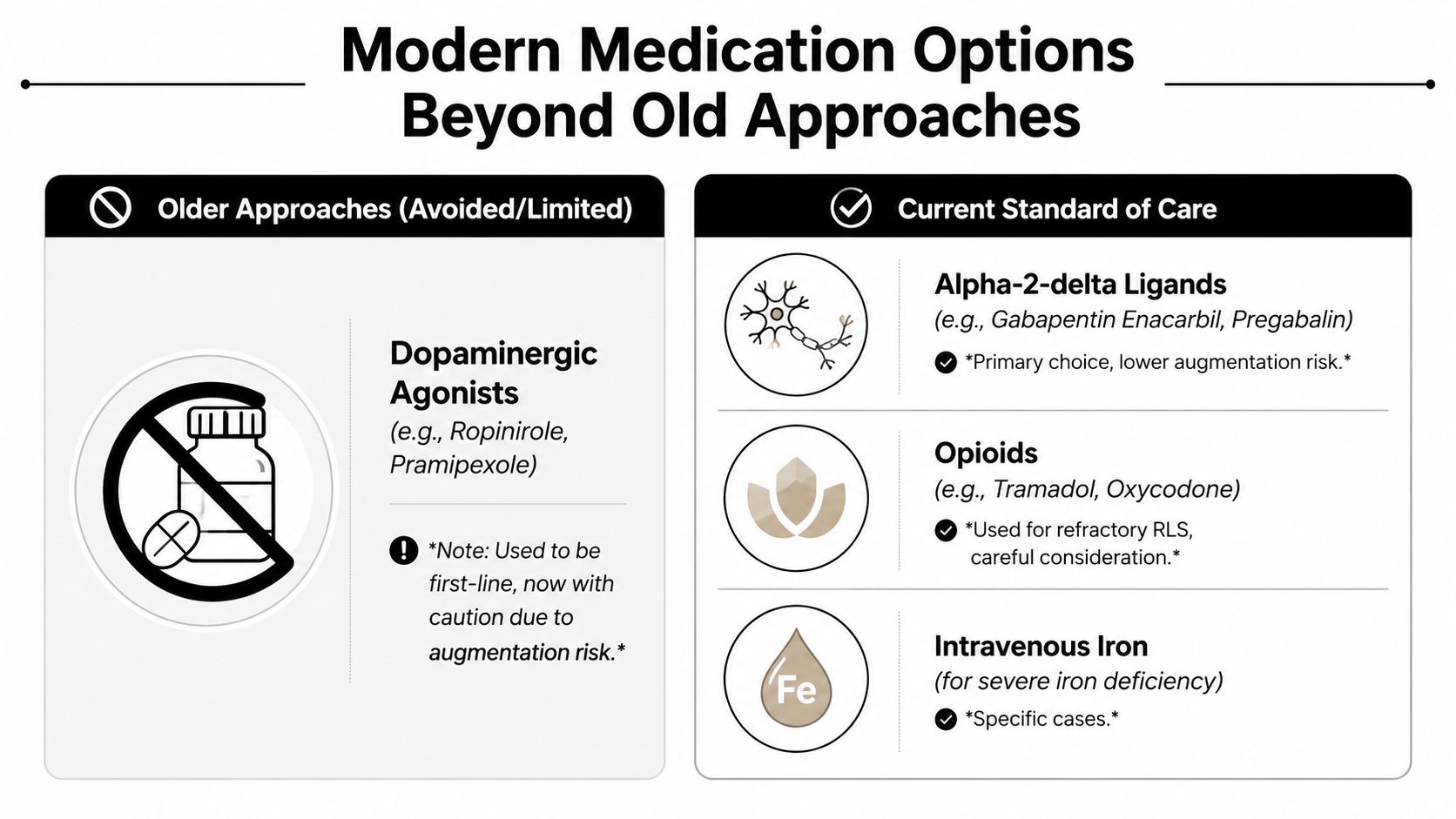
First-line management has shifted away from dopamine agonists and toward alpha-2-delta ligands, also called gabapentinoids, because of the risk of augmentation, a medication-induced worsening of symptoms over time. Recent guidelines now conditionally recommend against using dopamine agonists as initial treatment, as summarized by Yale Medicine's review of the change in RLS treatment advice.
Augmentation is not a subtle problem. It can mean symptoms start earlier in the day, become more intense, and spread beyond the original pattern. The same Yale Medicine summary notes that augmentation affects approximately 80% of patients within eight years of continuous dopamine agonist use and explains why the field has moved away from those drugs as the default first choice.
Here's a visual comparison of that shift:
What now counts as first-line treatment
For chronic persistent RLS, the preferred first-line medications are gabapentin, pregabalin, and gabapentin enacarbil. They are especially useful when RLS is paired with poor sleep, insomnia, anxiety, or pain. The Cleveland Clinic overview of RLS treatment notes that these medications are typically taken 1 to 2 hours before symptom onset, and some patients need split dosing if daytime symptoms also occur.
This medication class often fits well within an opioid-sparing pain practice because it can address overlapping sensory discomfort without carrying the same long-term augmentation concerns associated with dopamine agonists.
A few practical medication truths:
- Gabapentinoids match the newer standard of care for many chronic cases
- Dose timing matters because the medicine should cover the window when symptoms usually begin
- Side effects still matter and should be reviewed honestly, especially sedation, dizziness, and balance concerns
- One medication doesn't fit every patient because age, kidney function, sleep issues, and coexisting pain all influence the best choice
Patients dealing with nerve-related symptoms elsewhere in the body sometimes recognize overlap in how these medications are used. This guide on managing neuropathic pain helps explain why careful medication selection matters when symptoms involve the nervous system.
A medication that helps tonight but worsens the condition over time is not a strong long-term strategy.
Where dopamine agonists and opioids fit now
Dopamine agonists haven't disappeared completely, but they're no longer the automatic opening move. When they are used, they require caution, lower dosing, and close follow-up. Yale Medicine notes maximum doses of traditional dopamine agonists such as ropinirole at 4 mg and pramipexole at 1 mg when used adjunctively in this context, in its clinical summary of updated RLS management.
Opioids are generally reserved for severe, refractory cases after more appropriate options have been considered. In a modern pain clinic, that's a last-resort conversation, not the first solution.
When to Seek Specialist Care in the Chicago Suburbs
Some people have occasional symptoms that improve with better sleep habits, trigger reduction, or iron replacement. Others have a more stubborn pattern. If your evenings are repeatedly disrupted, your sleep is unraveling, or treatment hasn't helped, it's time for a more advanced evaluation.
Signs your RLS needs a specialist
A specialist becomes useful when the diagnosis is unclear, symptoms are severe, or standard treatment hasn't worked. Red flags include symptoms that start earlier in the day, involve the arms, break through medication, or continue despite a reasonable home program and iron assessment.
You should seek specialist input if:
- Your sleep is regularly disrupted and daytime function is declining
- You've already tried home measures with little or no benefit
- Medication side effects are limiting treatment
- You may have refractory RLS with persistent symptoms despite appropriate first-line care
- Another diagnosis may be mixed in such as neuropathy, spine-related symptoms, vascular issues, or medication-induced restlessness
For patients in Oak Lawn, Palos Hills, Palos Heights, Worth, Bridgeview, Hickory Hills, Alsip, Burbank, Evergreen Park, and Orland Park, access to coordinated specialty evaluation in Illinois can make the process far less confusing.
This kind of specialty care is especially helpful when symptoms overlap with other pain or nerve disorders:

What advanced care adds
A pain specialist is not acting as a physical therapist here. The role is broader and more medical. It can include reviewing medication history, confirming whether symptoms fit RLS, checking for overlapping nerve or spine conditions, coordinating with primary care, and deciding when more advanced treatment is appropriate.
For severe, refractory RLS, intravenous iron therapy is clinically indicated when serum ferritin is below 100 μg/L, according to the Mayo Clinic Proceedings algorithm for RLS management31489-0/fulltext). That's a meaningful threshold in difficult cases because brain iron deficiency can persist even when the story seems more complicated than “just low iron.”
If you're unsure whether your situation has reached that point, this resource on finding a specialist doctor can help you think through when a higher level of evaluation makes sense.
When symptoms become nightly, treatment becomes more than symptom control. It becomes a sleep, function, and quality-of-life issue.
Your Restless Leg Syndrome Management FAQs
Is RLS the same as nighttime leg cramps
No. RLS usually causes an urge to move with uncomfortable sensations that improve when you get up or shift your legs. Cramps are more often sudden, painful muscle tightening, often in the calf, and they don't have the same rest-related pattern.
Will I need medication forever
Not always. Some patients improve when triggers are corrected, sleep stabilizes, or iron deficiency is treated. Others need longer-term treatment, especially when symptoms are frequent or chronic. The right answer depends on the cause, severity, and how your body responds over time.
How is RLS handled during pregnancy
Pregnancy can complicate the picture, so treatment should be individualized and handled carefully with the appropriate clinician. In many cases, the emphasis is on confirming iron status, reducing triggers, and choosing conservative options whenever possible.
What if my symptoms feel like both RLS and nerve pain
That happens. Burning, tingling, numbness, and restlessness can overlap. The key distinction is the timing pattern and the relief with movement. If the diagnosis is murky, a more detailed evaluation is worth it rather than guessing.
Can a specialty clinic work with my primary doctor
Yes. That's often the best model. Primary care can handle initial evaluation, labs, and many first steps. A specialist can help when symptoms are persistent, treatment choices are complicated, or there may be overlapping pain, sleep, or neurologic issues.
What's the biggest mistake people make with RLS
Waiting too long to get the right workup. Many people spend months assuming it's stress, aging, dehydration, or “just bad sleep,” when the problem may be highly treatable with a more precise plan.
If restless evenings are affecting your sleep, comfort, or daily life, Midwest Pain & Wellness provides evidence-based, opioid-sparing care in Illinois for patients who need a careful medical evaluation of leg discomfort, nerve-related symptoms, and complex pain conditions. For people in and around Chicago Ridge, including Oak Lawn, Palos Hills, Palos Heights, Worth, Bridgeview, Hickory Hills, Alsip, Burbank, Evergreen Park, and Orland Park, the next step may be a focused review of triggers, iron status, medication options, and overlapping pain issues so treatment is built around what's driving the problem.