Understanding Spinal Cord Stimulators: A Modern Solution for Chronic Pain
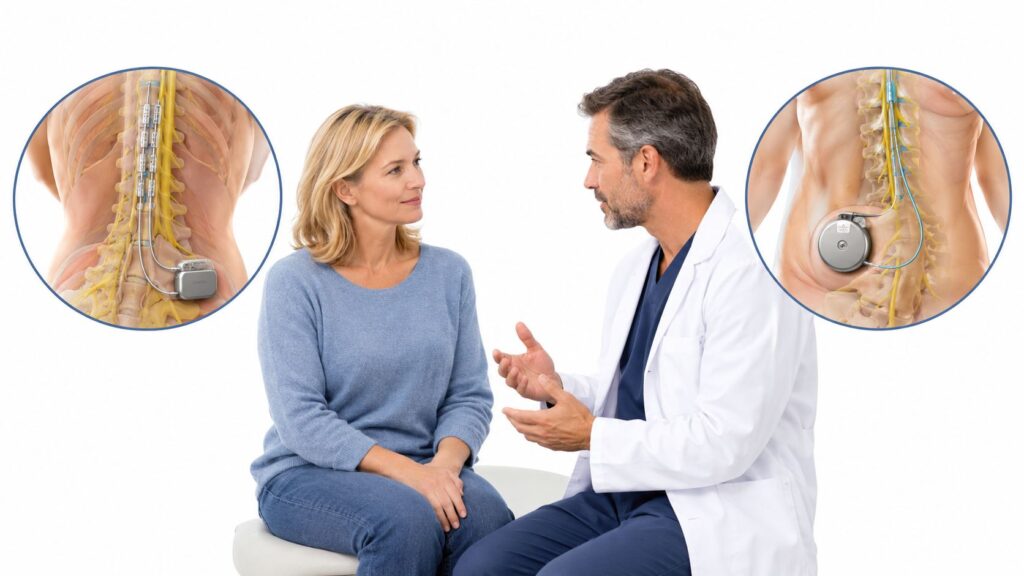
A spinal cord stimulator is an implanted medical device that sends mild electrical signals to the spinal cord, interrupting pain signals before they reach the brain. It offers relief for chronic pain that hasn’t responded to other treatments.
Quick Facts About Spinal Cord Stimulators:
- What it is: A small, pacemaker-like device with thin wires (leads) placed near the spinal cord.
- How it works: Delivers electrical pulses that mask or interrupt pain signals.
- Who it helps: People with chronic back pain, nerve pain, or failed back surgery syndrome.
- Success rate: 50-70% of patients experience a significant (≥50%) reduction in pain.
- Trial period: A temporary version is tested for 3-10 days before permanent implantation.
- Benefits: Reduces pain, decreases the need for opioids, and improves quality of life.
- Reversible: The device can be removed if it’s not effective.
If you’ve lived with chronic pain for months or years, you know how it affects everything from sleep to simple daily activities. Pain medications, especially opioids, offer temporary relief but come with significant risks of addiction and side effects. Spinal cord stimulation offers an alternative, acting as a “pacemaker for pain” that changes how your body perceives pain signals rather than masking them with drugs.
Modern SCS technology has evolved to include various stimulation types, from a traditional tingling sensation (paresthesia) to newer, unfelt “sub-perception” stimulation. Before committing to a permanent implant, you’ll undergo a trial period with a temporary device to ensure it’s the right choice for you. Studies show high effectiveness, especially when placed within two years of pain onset, but even those with longer pain histories can find relief.
Understanding the Spinal Cord Stimulator: How It Works and What It Treats
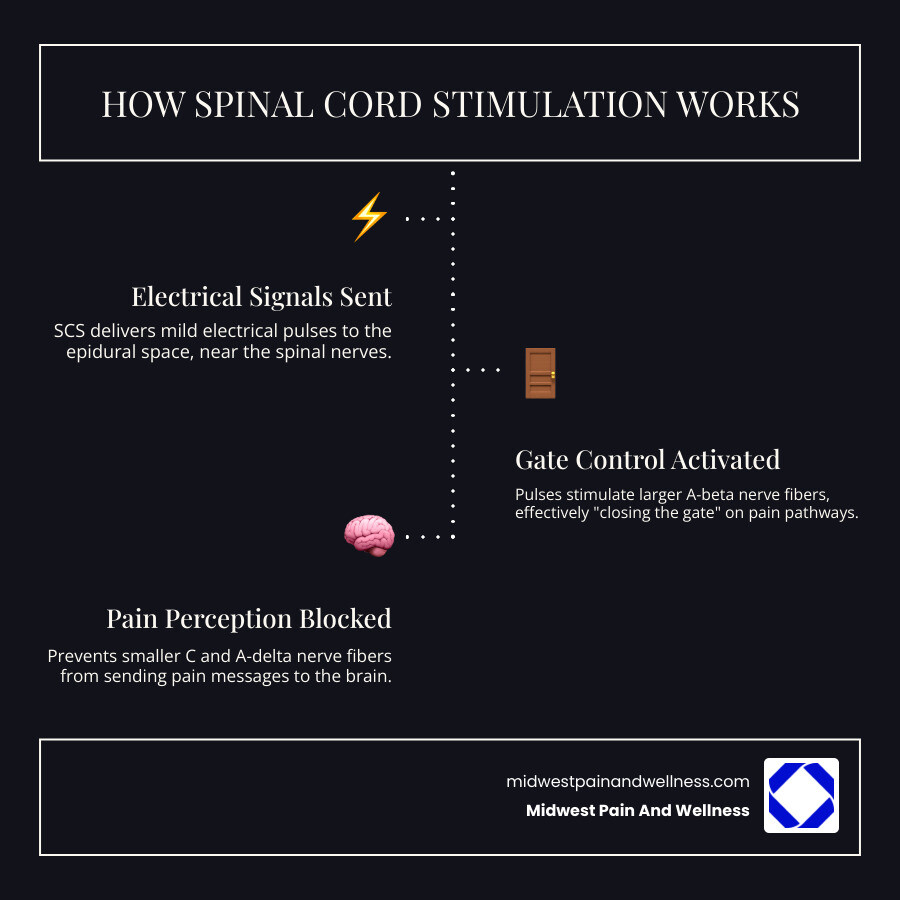
At Midwest Pain and Wellness, we’re dedicated to helping you find lasting relief from chronic pain. For many, a spinal cord stimulator is a game-changer. This treatment, known as neuromodulation, sends mild electrical pulses to your spinal cord, confusing pain signals before they reach your brain.
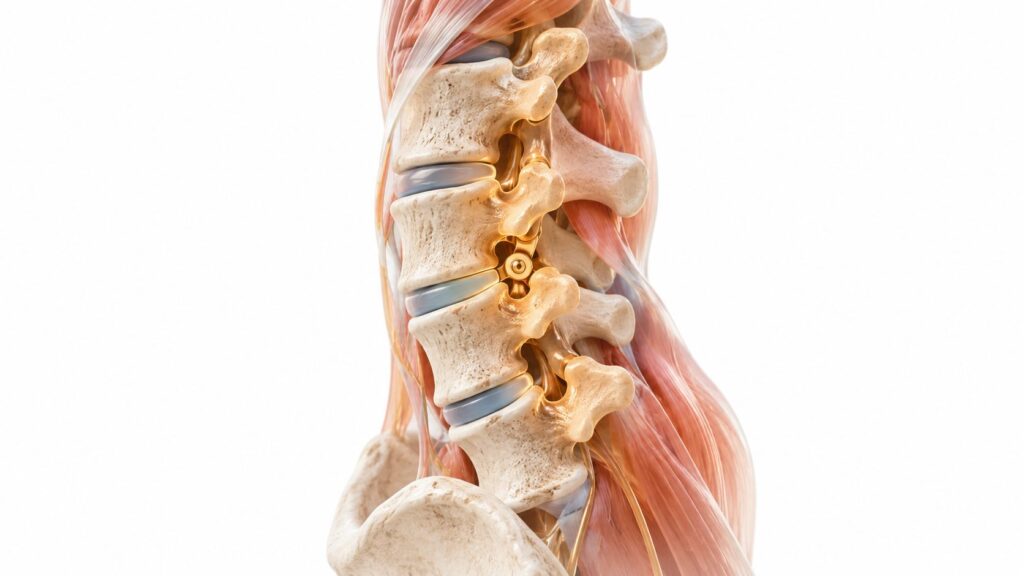
The science behind it is rooted in the “Gate Control Theory” of pain. This theory suggests the spinal cord has a “gate” that can block pain signals. A spinal cord stimulator delivers impulses to the epidural space, stimulating large nerve fibers that “close the gate” on smaller pain fibers, preventing their messages from reaching the brain.
Traditionally, this created a mild tingling sensation (paresthesia) that replaced the pain. Modern devices now offer “sub-perception” stimulation, providing pain relief you don’t feel at all. A spinal cord stimulator system has three main parts:
- Leads (Electrodes): Thin wires placed in the epidural space to deliver electrical pulses.
- Implantable Pulse Generator (IPG): A small, battery-powered device (generator) implanted under the skin that creates the pulses.
- Remote Control: An external device you use to turn the stimulator on/off and adjust settings.
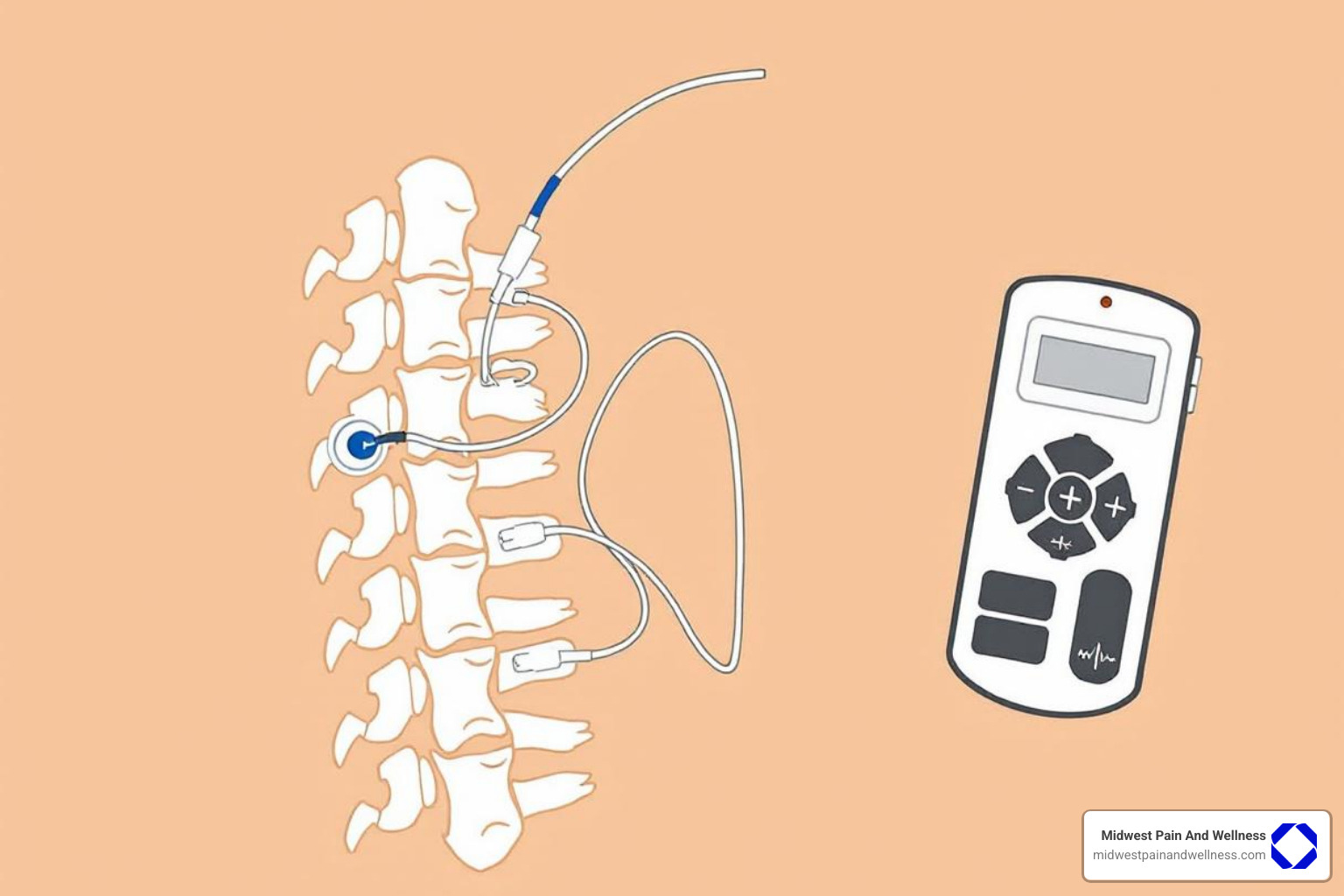
This treatment is for individuals who haven’t found relief from other methods like medications or physical therapy. You can find More info about the conditions we treat on our website.
Conditions Treated by Spinal Cord Stimulation
SCS is a powerful tool for severe, chronic neuropathic pain that hasn’t responded to conservative therapies. Key conditions include:
- Failed Back Surgery Syndrome (FBSS) / Post-Laminectomy Syndrome: Persistent back and/or leg pain after one or more spinal surgeries. SCS is often more effective than repeat surgery for these patients.
- Complex Regional Pain Syndrome (CRPS): A chronic condition causing severe pain, swelling, and skin changes, usually in an arm or leg. SCS can provide significant pain relief.
- Chronic Neuropathic Pain: This includes nerve pain from various causes, such as:
- Diabetic Neuropathy: Nerve damage from diabetes, often causing pain in the feet and legs.
- Peripheral Vascular Disease (PVD): Pain from poor blood circulation in the legs. SCS can improve blood flow and reduce amputation risk in non-surgical candidates.
- Postherpetic Neuralgia: Lasting nerve pain after a shingles outbreak.
- Spinal Cord Injuries: Pain resulting from damage to the spinal cord.
- Refractory Angina Pectoris: Severe chest pain from heart disease that doesn’t respond to conventional treatments.
Types of Spinal Cord Stimulators
The technology offers various types based on the battery and stimulation waveform:
- Conventional vs. Rechargeable IPG: Conventional (non-rechargeable) IPGs last 3-5 years and are suited for localized pain. Rechargeable IPGs can last 10+ years, reducing replacement surgeries, and are better for widespread pain requiring higher power.
Modern stimulators also offer different electrical “waveforms”:
- Traditional Paresthesia-Based Stimulation: Creates a mild tingling sensation that masks the pain.
- High-Frequency Stimulation (HF10 Therapy): Delivers pulses at 10 kHz, providing pain relief without any tingling sensation (paresthesia-free). It is highly effective for chronic back pain.
- Burst Stimulation: Delivers pulses in “bursts” and is also typically paresthesia-free, proving effective for neuropathic pain.
At Midwest Pain and Wellness, our doctors use these advanced technologies to provide personalized pain relief.
The Two-Stage Journey to Pain Relief: Trial and Implantation
Deciding on a spinal cord stimulator is a significant, collaborative journey at Midwest Pain and Wellness. The process involves two stages: a trial period and, if successful, permanent implantation. Before this, we explore all conservative options. You can find More info about non-surgical pain relief options on our website. A multidisciplinary team helps evaluate your suitability to ensure a comprehensive approach.
Who is a Good Candidate for a Spinal Cord Stimulator?
Not everyone with chronic pain is a candidate. You might be a good fit if you meet these criteria:
- Failed Conservative Therapies: Other treatments (physical therapy, injections, etc.) haven’t provided adequate relief after at least six months.
- Chronic Pain Duration: Your pain has persisted for more than six months.
- Specific Pain Conditions: Your pain is neuropathic, such as Failed Back Surgery Syndrome or CRPS.
- Psychological Screening: A psychological evaluation is often required to ensure conditions like severe depression won’t negatively impact success. Patients with realistic expectations have better outcomes.
- No Contraindications: You have no active infections or other medical conditions that would make the procedure unsafe.
- Trial Success: You must experience significant pain relief (at least 50%) during the temporary trial.
Step 1: The SCS Trial Period
The trial is a crucial “test drive” of the spinal cord stimulator before committing to a permanent implant.
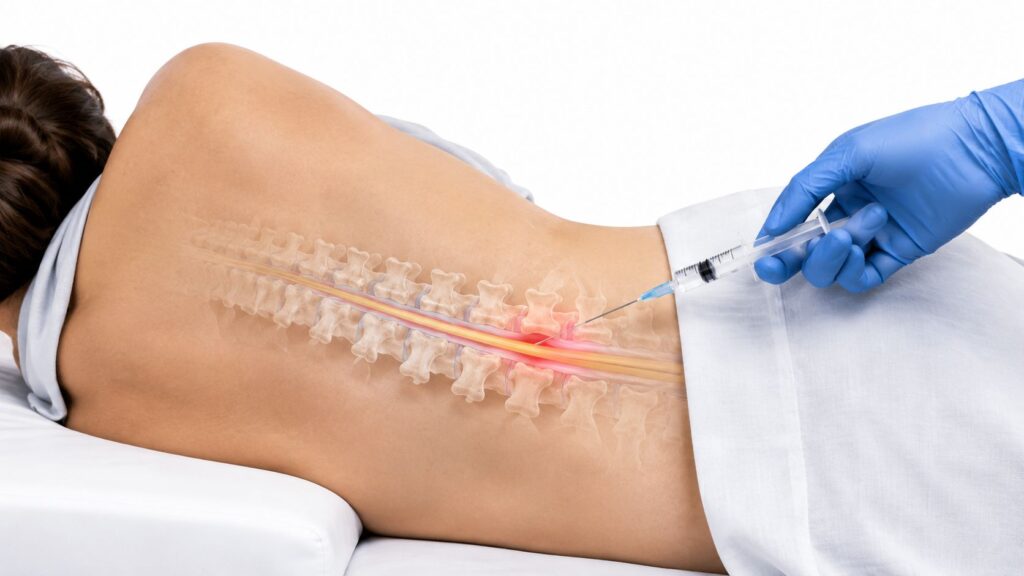
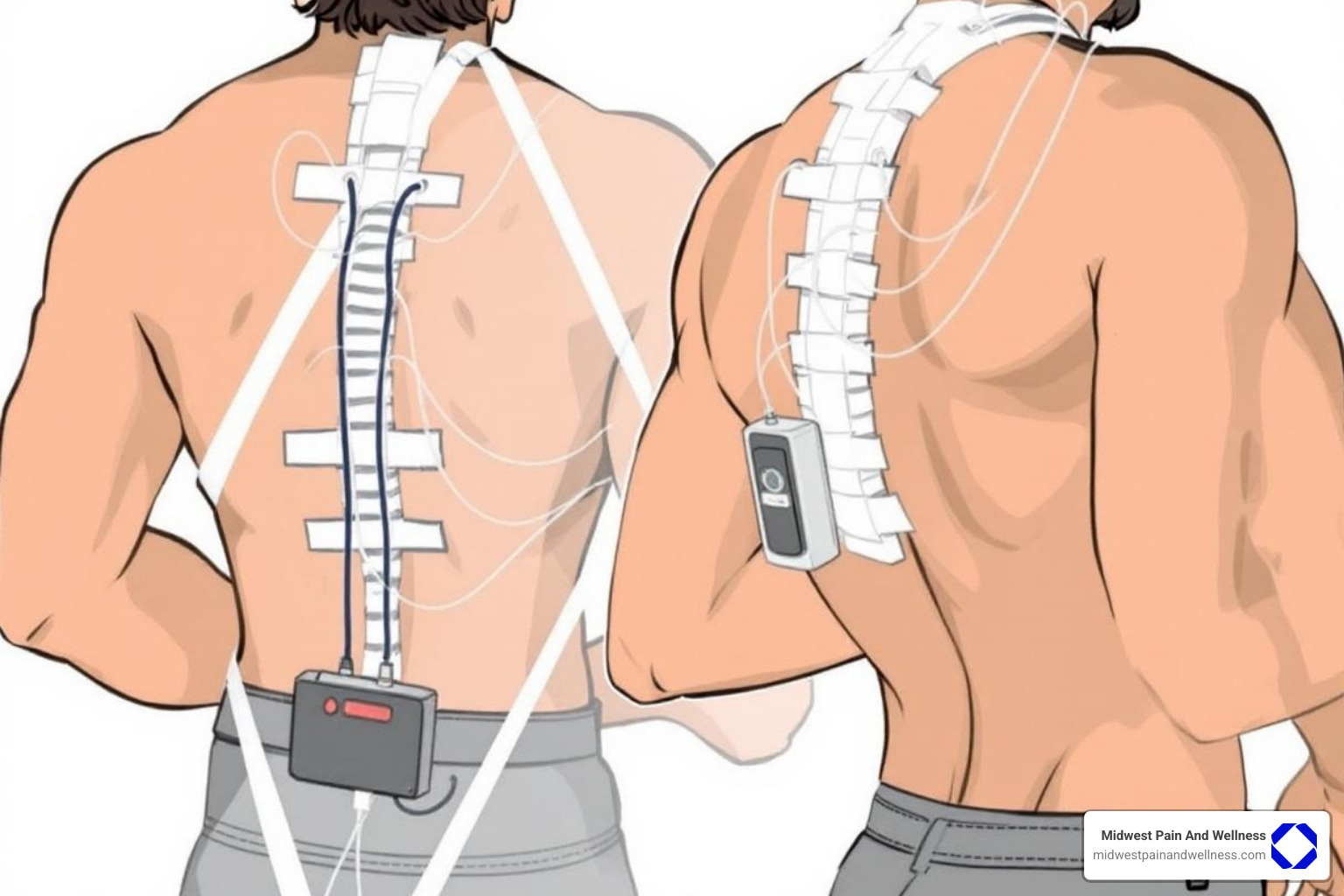
- Procedure: Thin, temporary leads are inserted into the epidural space near your spinal cord using a needle under local anesthesia. This is a minimally invasive outpatient procedure.
- External Device: The leads connect to a small, external generator you wear on a belt.
- Evaluation: The trial lasts 3 to 10 days. You’ll go about your daily activities and keep a pain diary to track your pain reduction and functional improvements (better sleep, more activity).
- Care: During the trial, you must keep the area dry (no showering or bathing) and limit bending, lifting, and twisting to prevent the leads from moving.
If the trial is successful (≥50% pain reduction), we can proceed with permanent implantation. The SCS trial outcomes study highlights this phase’s importance.
Step 2: The Permanent Spinal Cord Stimulator Implant
If your trial is a success, the next step is the permanent implant, also a minimally invasive outpatient procedure.
- Procedure: The procedure takes 1-2 hours under sedation or anesthesia. Permanent leads are placed in the epidural space using X-ray guidance.
- Generator Implantation: A small incision is made in your lower back, buttocks, or abdomen, and a “pocket” is created under the skin for the IPG (battery). The leads are then connected to it.
- Programming: After implantation, the device is programmed to your specific pain needs. This can be adjusted during follow-up visits to optimize relief.
Weighing the Pros and Cons: Benefits, Risks, and Success Rates
Deciding on a spinal cord stimulator involves weighing its benefits against the risks. For many, SCS offers a path to a better quality of life, especially as an alternative to long-term opioid use. It provides improved function, reduced reliance on opioids, and is reversible.
Here’s a comparison of SCS to other pain management approaches:
| Feature | Spinal Cord Stimulation (SCS) | Oral Medications (e.g., Opioids) | Physical Therapy (PT) | Surgery (e.g., Laminectomy) |
|---|---|---|---|---|
| Mechanism | Blocks pain signals with electrical pulses (neuromodulation) | Systemic relief, masks symptoms | Strengthens muscles, improves function | Corrects anatomical problems |
| Invasiveness | Minimally invasive implant | Non-invasive | Non-invasive | Highly invasive |
| Reversibility | Yes, device is removable | Yes, can be stopped | Yes | No, changes are permanent |
| Opioid Use | Can significantly reduce or eliminate | High risk of dependence | May reduce need | May reduce need, but not always long-term |
| Side Effects | Surgical risks, lead migration | Nausea, constipation, addiction, sedation | Soreness | Infection, nerve damage, long recovery |
| Trial Period | Yes, temporary trial first | No | No | No |
Key Benefits of SCS Therapy
A spinal cord stimulator can offer life-changing benefits:
- Significant Pain Relief: Many patients see a 50% or greater reduction in pain.
- Increased Activity Levels: Reduced pain allows for more movement, physical therapy, and hobbies.
- Improved Sleep Quality: Managing pain leads to more restful sleep and better overall well-being.
- Decreased Need for Pain Medication: SCS can significantly reduce or eliminate the need for opioids, avoiding their side effects and risks.
- Targeted Pain Control: Stimulation is delivered directly to the pain source, and you have control over the settings.
- Reversibility: The device can be surgically removed if you are unsatisfied with the results.
Potential Risks and Complications
While SCS is safe, it’s important to be aware of potential risks:
- Surgical Risks: Includes bleeding, infection (3-5% of cases), and fluid buildup.
- Lead Migration or Breakage: The leads can move, causing a loss of pain relief and requiring revision surgery.
- Hardware Failure: The device can malfunction, requiring repair or replacement.
- Dural Puncture: A rare risk of puncturing the membrane around the spinal cord, which can cause a severe headache.
- Discomfort from Stimulation: Some patients find the tingling sensation uncomfortable.
- Nerve Injury: A very rare risk of nerve or spinal cord damage during lead placement.
- Tolerance: Over time, some patients may find the stimulation less effective, though reprogramming often helps.
What is the Success Rate of Spinal Cord Stimulation?
The success of spinal cord stimulator therapy is encouraging. On average, about 50-70% of patients achieve at least a 50% reduction in pain.
- Long-Term Efficacy: Many individuals experience substantial pain relief for years, though effectiveness can decrease over time for some.
- Factors Influencing Success:
- Patient Selection: Proper screening and realistic expectations are crucial for good outcomes.
- Pain Duration: SCS is most effective if placed within two years of pain onset, but can still help those with a longer history of pain.
- Type of Pain: Neuropathic pain conditions like FBSS and CRPS respond very well.
- Technology: Newer technologies like high-frequency stimulation have shown improved outcomes, with success rates over 70% for back pain.
At Midwest Pain and Wellness, we evaluate these factors to assess your potential for success. You can review Evidence on SCS outcomes for chronic pain for more information.
Life After Implantation: Recovery and Long-Term Adjustments
Getting a spinal cord stimulator is the start of a new chapter with less pain. Your active participation in recovery and long-term management is key to maximizing its benefits. At Midwest Pain and Wellness, we partner with you through the entire process, including More info about rehabilitation pain management to ensure your best outcome.
The Recovery Process
A smooth recovery is crucial after your permanent spinal cord stimulator implant.
- Incision Care: Keep the incision sites clean and dry. Watch for signs of infection like redness, swelling, or discharge.
- Activity Restrictions: For the first 4-6 weeks, avoid bending, lifting more than 5-10 pounds, stretching, or twisting to allow the leads to secure in place.
- Healing Timeline: Incisions heal in 2-4 weeks, but deeper healing takes longer. Some soreness is normal.
- Gradual Return to Activity: After the initial recovery, we will guide you in slowly returning to normal activities and light exercise.
- Follow-up Appointments: Regular follow-ups are essential to monitor healing and adjust your stimulator’s programming for optimal pain relief.
Living with Your SCS Device
A spinal cord stimulator improves your life but requires some adjustments:
- MRI Compatibility: This is critical. Many newer devices are “MRI conditional,” but not all are. Always inform all medical staff you have an SCS device before any MRI scan. You will receive an ID card with your device’s specific information.
- Airport Security: Your device will likely trigger metal detectors. Carry your manufacturer ID card and inform security. It’s best to turn your stimulator off before passing through security gates.
- Driving Restrictions: For safety, power off your stimulator when driving or operating heavy machinery, as stimulation changes could be distracting.
- Recharging the Battery: If you have a rechargeable device, you’ll need to charge it regularly at home.
- Device Programming: Your programs can be adjusted during follow-up visits as your pain patterns change.
- Other Medical Procedures: Always inform any healthcare provider about your device before other procedures.
Frequently Asked Questions about Spinal Cord Stimulators
Here are answers to some common questions we hear at Midwest Pain and Wellness:
Will I feel the device in my body?
You might feel the generator as a small bump under your skin, but most people get used to it. As for the stimulation, traditional devices create a tingling sensation (paresthesia). Newer technologies like high-frequency or burst stimulation are often “sub-perception,” meaning you get pain relief without feeling any sensation.
Can a spinal cord stimulator be removed?
Yes. A key advantage of a spinal cord stimulator is that it is fully reversible. The device can be surgically removed if you are unsatisfied, have complications, or if your pain condition changes.
Can I swim or bathe with a spinal cord stimulator?
- During the Trial Period: No. You must keep the temporary external device and incision sites dry to prevent infection. Sponge bathing is required.
- With a Permanent Implant: Yes. Once your incisions have fully healed (usually 4-6 weeks post-op), you can swim and bathe normally, as the entire system is internal and waterproof.
Take Control of Your Chronic Pain
Chronic pain can steal your joy, limit your activities, and diminish your quality of life. At Midwest Pain and Wellness, we believe you deserve to live a life free from its constant burden. A spinal cord stimulator represents a significant advancement in pain management, offering a safe, effective, and often opioid-free solution for many who have found little relief elsewhere.
Our double board-certified doctors, located right here in Chicago Ridge, Illinois, specialize in comprehensive, advanced pain management. We use a multi-modal, interventional approach, collaborating with you to create a custom care plan custom to your unique needs. We understand the complexities of chronic pain and are committed to helping you find long-term relief and regain control of your life.
If you’re living with persistent pain, especially after spinal surgery, it’s time to explore all your options. Learn more about post laminectomy pain treatment in Chicago Ridge and how a spinal cord stimulator could be the solution you’ve been searching for. Don’t let chronic pain define you any longer. Contact us today to schedule a consultation and take the first step towards a more comfortable future.