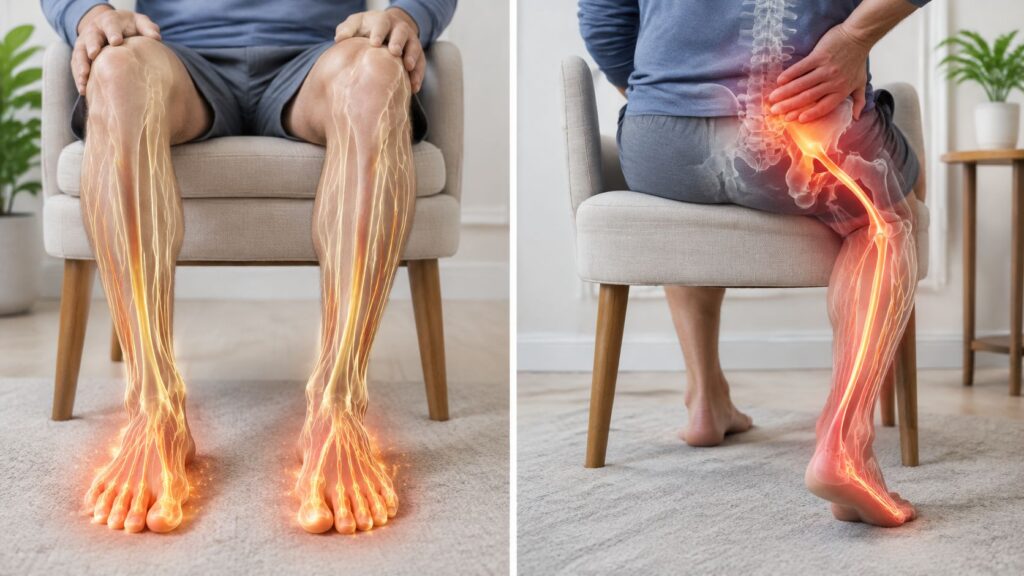
Virtual reality pain relief is no longer a fringe idea. A major 2023 umbrella review found 21 systematic reviews and meta-analyses, covering 274 studies and 17,680 patients, and it concluded that VR consistently reduced pain across acute, procedural, and chronic settings PMC umbrella review. That scale matters because pain care usually changes slowly, and this body of evidence is now large enough to deserve serious clinical attention.
For patients, that doesn't mean VR replaces every other option. It means the conversation has moved past novelty and into practical decision-making. The right question is no longer whether VR can reduce pain in principle, but where it helps most, where it falls short, and how it fits into a broader plan.
Table of Contents
- The Growing Evidence Behind Virtual Reality Pain Relief
- How VR Changes the Way Your Brain Processes Pain
- Where VR Works Best and Where Results Are Mixed
- Clinical Scenarios Where VR Adds Real Value
- Who Benefits Most and What Barriers Still Exist
- How Midwest Pain & Wellness Integrates VR Into Your Treatment Plan
The Growing Evidence Behind Virtual Reality Pain Relief
The strongest sign that virtual reality pain relief has matured is the size of the research base. A 2023 umbrella review synthesized 21 systematic reviews and meta-analyses spanning 274 studies and 17,680 patients, and every review it included reported positive results for VR in pain control Frontiers umbrella review. That is a far cry from the small pilot studies that often define emerging therapies. It tells clinicians and patients that VR is being tested, re-tested, and summarized across very different pain contexts.
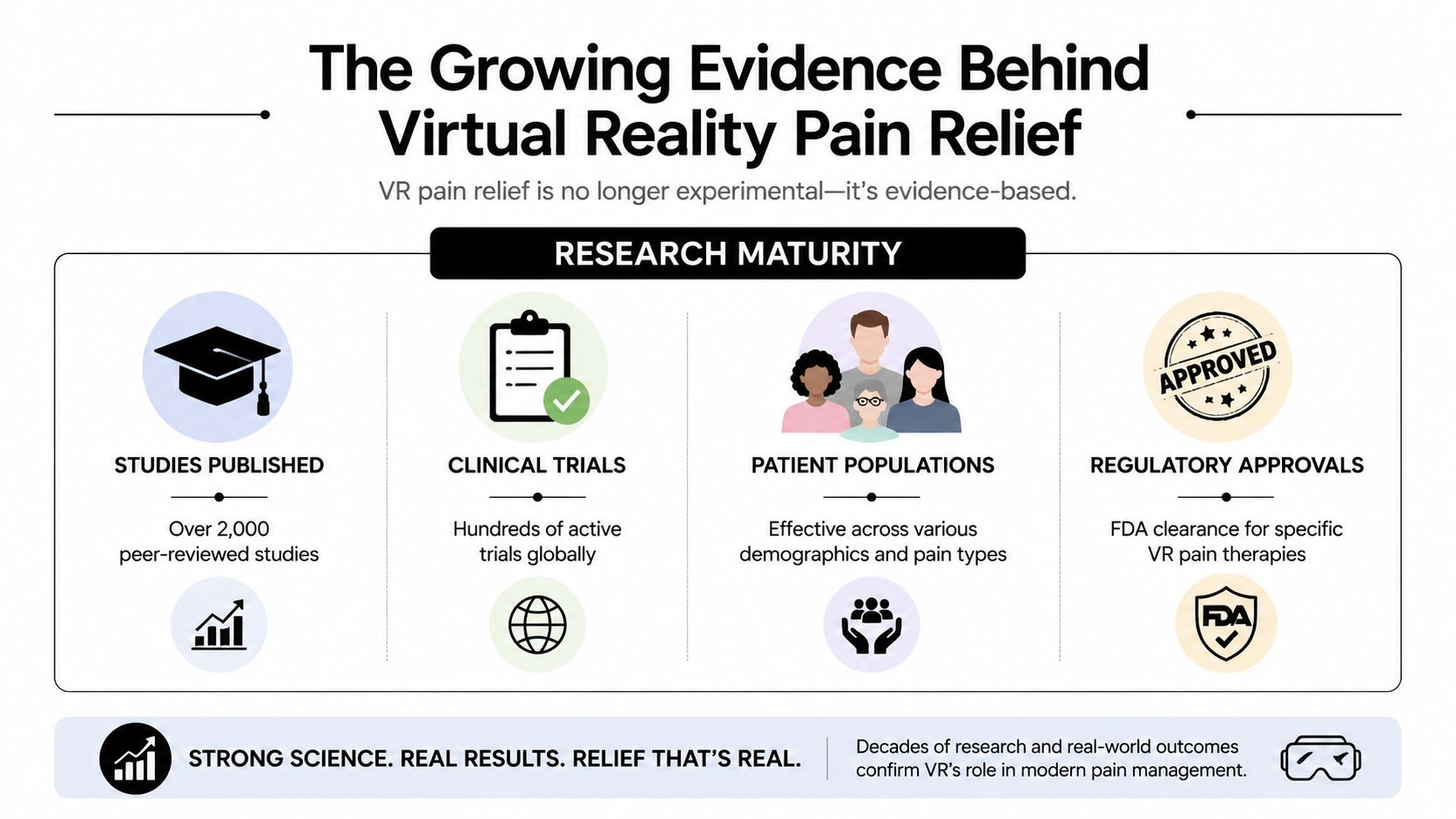
A separate 2023 meta-analysis of 92 randomized controlled trials with 7,133 participants found VR was associated with a statistically significant drop in procedural pain, with a pooled standardized mean difference of −0.78 PMC meta-analysis. The same year, another analysis across 137 study cohorts found pain reductions of 25.3% when baseline or control pain was below 4, and 30.5% when it was 4 or higher PAIN analysis. Those numbers don't prove VR works the same way for every patient, but they do show a consistent direction of benefit.
What that means in real practice
The evidence base now supports a more careful conclusion than “VR is a distraction.” It's a credible nonpharmacological adjunct, especially when the goal is to make a painful event more tolerable, reduce distress, or help a patient stay engaged with care. That said, the literature also shows heterogeneity, so the headset itself is not the whole story. The content, the timing, and the kind of pain being treated all matter.
Practical rule: if a therapy's benefits keep appearing across review after review, the burden shifts to the clinician to decide where it belongs in the plan, not whether it deserves a place at all.
For people comparing options, that maturity is important. It means VR is no longer just a curiosity. It's a tool with enough evidence to justify thoughtful use alongside other treatments, including the kinds of care discussed in mental health and chronic pain treatment.
How VR Changes the Way Your Brain Processes Pain
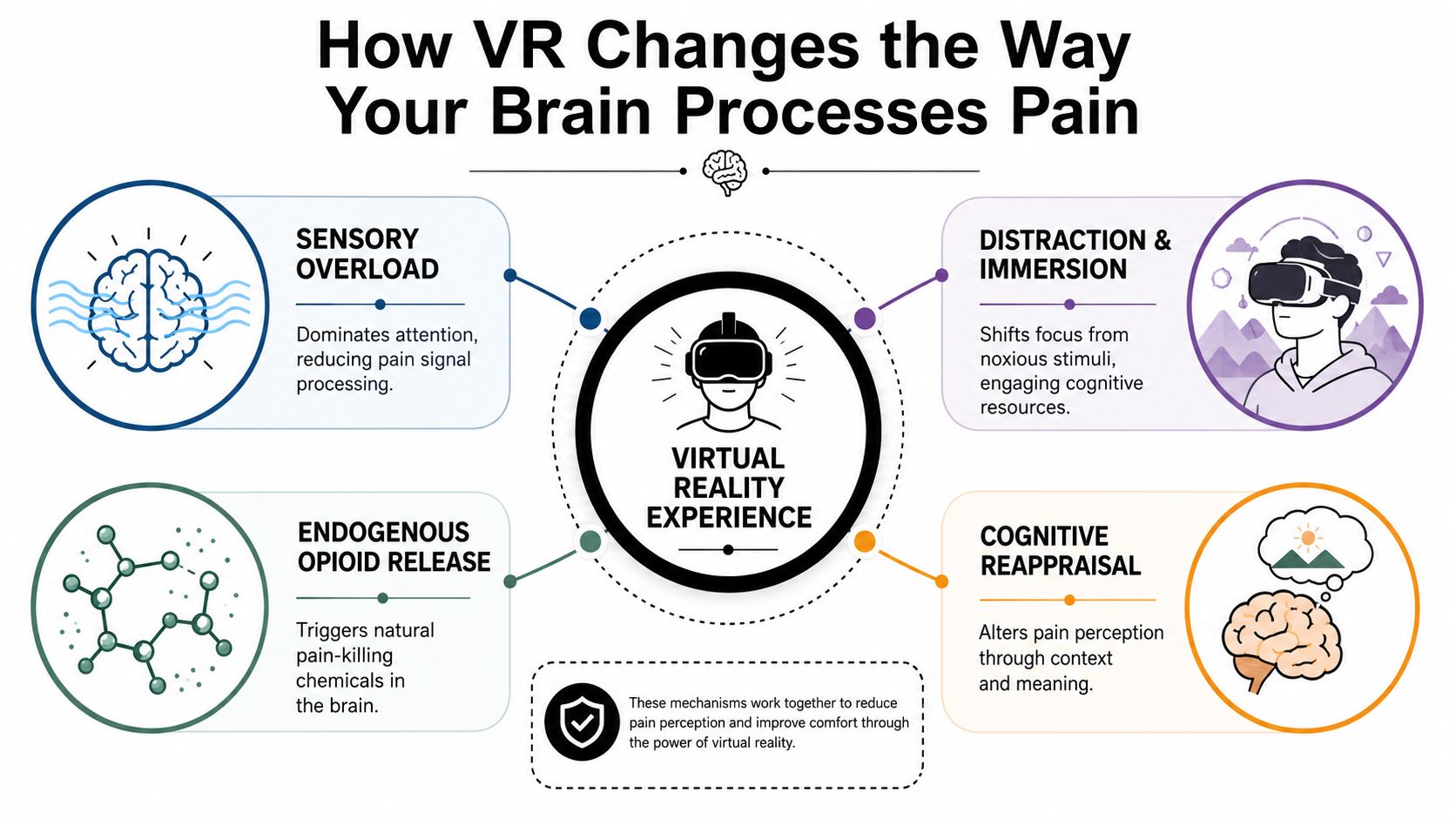
VR does more than occupy your attention. The better mechanistic studies suggest it changes how the brain organizes pain signals in the first place. Reviews of fMRI work describe VR as able to inhibit pain signaling in key pain-matrix regions, while other summaries point to modulation across attention, emotion, memory, and sensory pathways pain-matrix review. In plain language, the brain is not just “looking away” from pain. It's processing the whole experience differently.
Why immersion matters more than passive entertainment
A patient watching a screen can be entertained, but that isn't the same as being immersed. The analgesic effect seems strongest when the experience creates presence, meaning the brain accepts the virtual environment as the main reality for that moment. That kind of engagement can shift activity away from the salience network, which flags what feels urgent, and toward the default mode network, which appears to support descending inhibitory pathways that can dampen pain signaling pain network review.
A crowded control room. Pain is one alarm. VR doesn't remove the alarm system, but it can lower the volume of competing signals and reroute attention before pain becomes the only thing the nervous system can hear.
The ASRA update on VR analgesia also describes involvement of the anterior cingulate cortex, orbitofrontal regions, and descending inhibitory circuits ASRA update. That matters clinically because it helps explain why the best sessions are the ones that feel active, not passive. If the patient is wearing a headset without meaningful engagement, the effect is usually weaker.
Clinical takeaway: VR works best when it creates enough presence and embodiment to change how the brain weighs pain, not just when it offers a pleasant visual distraction.
That's also why VR can be attractive in pain medicine. It fits the basic principle that pain is both sensory and emotional. A treatment that can influence both layers at once is worth considering, especially when standard care has left the patient with only partial relief.
Where VR Works Best and Where Results Are Mixed
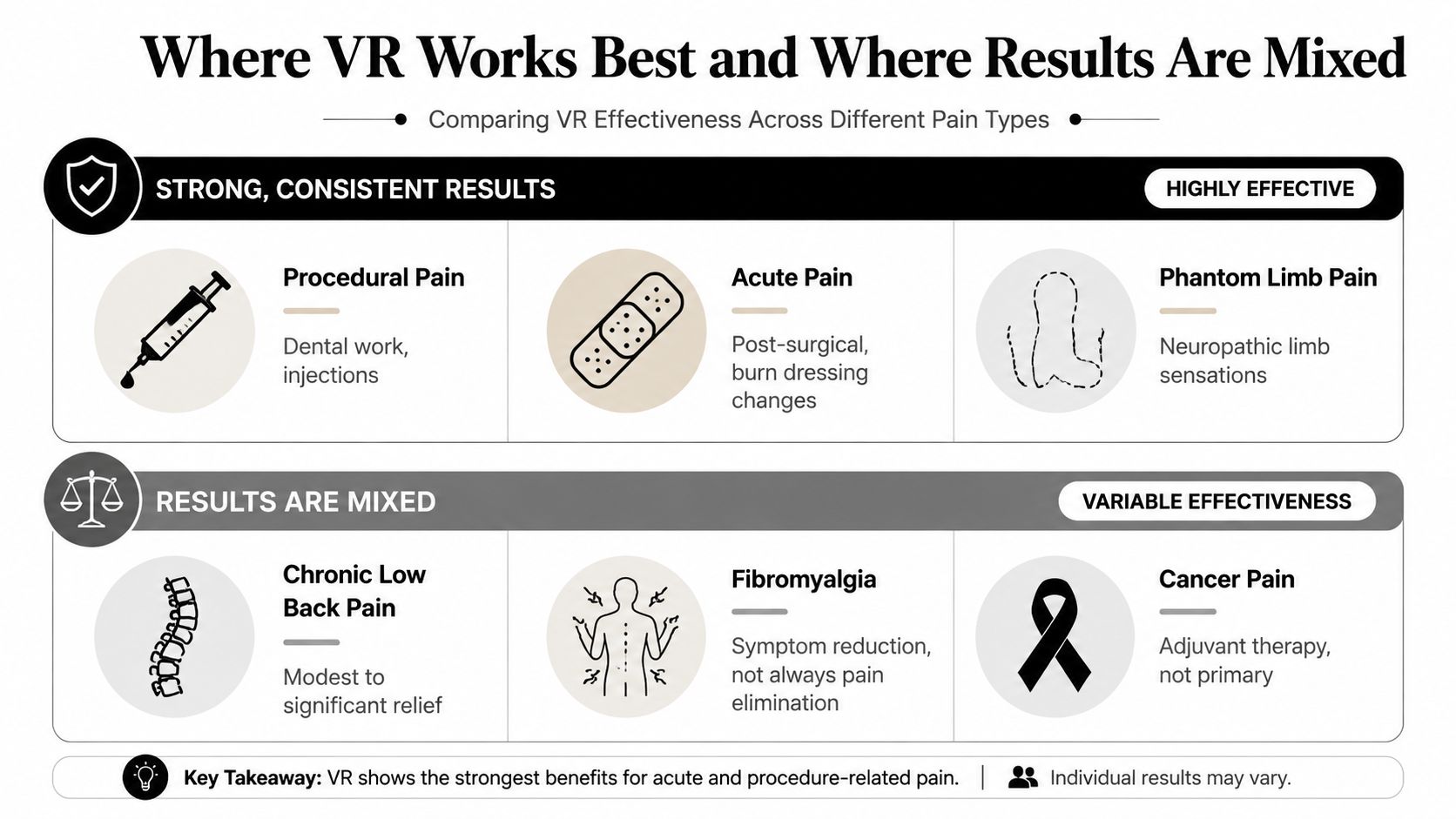
VR has its clearest role in acute and procedural pain. A rapid evidence assessment found strong overall evidence for immediate and short-term pain reduction, moderate evidence for short-term physical function, and little evidence for longer-term benefit, with no serious adverse events reported in the reviewed studies rapid evidence assessment. A 2020 systematic review also found that 67% (12/18) of acute-pain studies showed significant pain reduction, and among the studies that measured procedural anxiety, 50% (4/8) showed significant anxiety reduction acute pain review. That's why VR fits so naturally during injections, wound care, dressing changes, and other time-limited procedures.
Chronic pain is a different test
The picture gets less uniform in chronic pain. A systematic review on VR as an analgesic found that most studies supported VR for acute pain during procedures and immediately afterward, but evidence for lasting chronic relief was insufficient because the benefit often faded after the session ended systematic review. A 2024 scoping review reached a similar practical conclusion, noting that immersive VR often reduced pain only during or immediately after use, with limited long-lasting analgesia scoping review. For chronic low back pain and chronic neck pain, the evidence is more mixed, and in some analyses the results are inconclusive or not significant.
That's the central trade-off patients should understand. VR can be powerful when the pain episode is bounded, such as a procedure or a postoperative moment. It becomes less reliable when the condition is persistent, multifactorial, and tied to movement fear, sleep disruption, and central sensitization.
Short version: VR is often strongest as a session-based analgesic, not as a standalone cure for long-term pain.
Cancer-related pain, fibromyalgia, phantom limb pain, and chronic spine pain may still benefit, but usually as part of a broader plan rather than as the only treatment. In those settings, clinicians have to be honest. If someone is asking whether a headset will erase months or years of pain on its own, the evidence doesn't support that promise.
Clinical Scenarios Where VR Adds Real Value
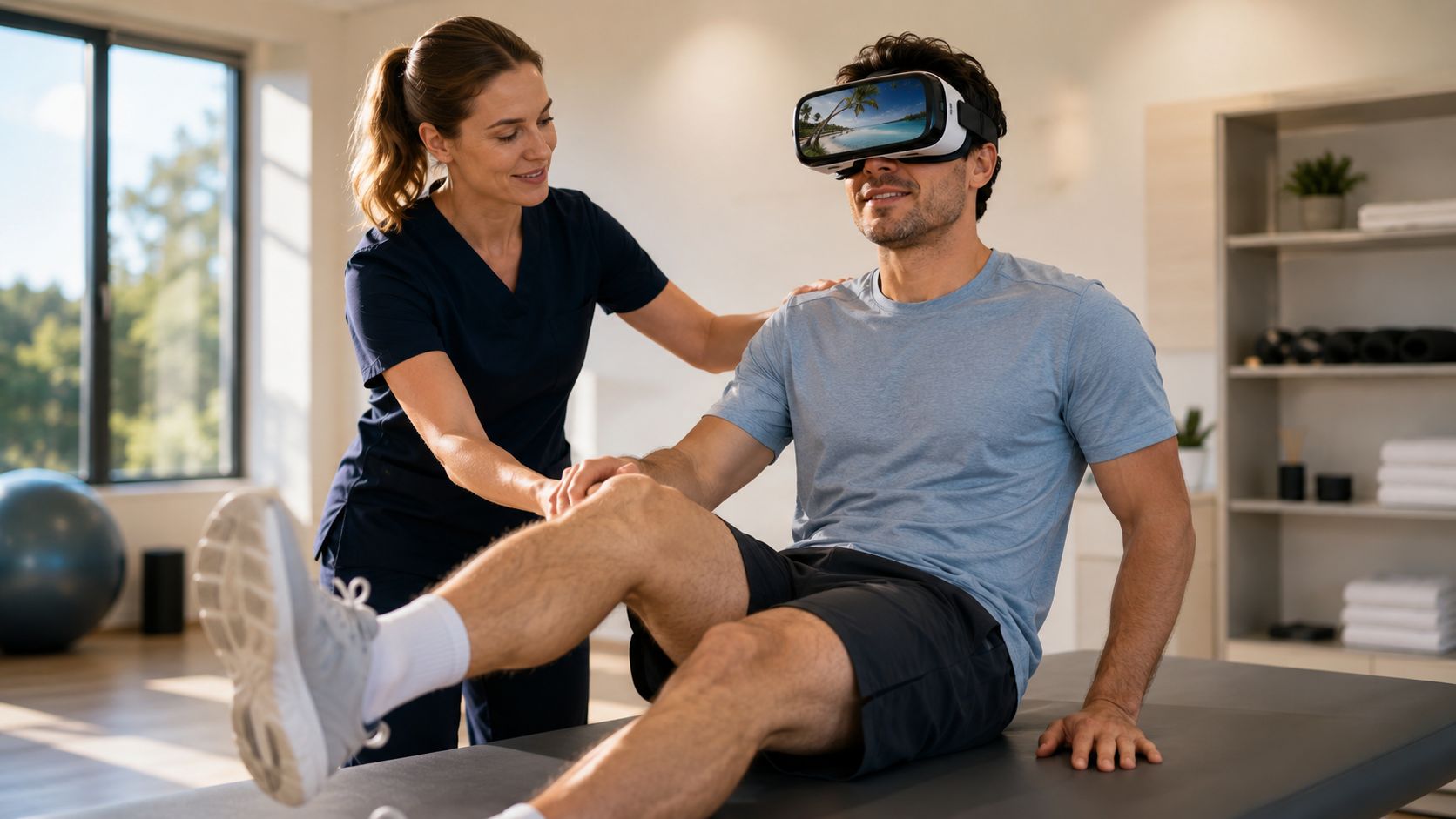
A useful way to think about VR is to ask where it changes what the patient can tolerate today. During a painful procedure, the goal is often to lower distress enough that the visit goes more smoothly. In the recovery period after surgery, the goal may be to make movement less intimidating so the patient can participate in care more consistently. In both settings, VR can serve as a focused, time-limited adjunct.
What patients usually feel during a session
Most patients describe the experience as being pulled into a task or environment strongly enough that the pain feels farther away. That doesn't mean the underlying problem disappears. It means the nervous system has less space to amplify the signal for a while. For some people, that window is enough to complete a wound dressing change, a joint injection, or a rehab exercise they'd otherwise resist.
The session itself should be brief, structured, and tied to the clinical goal. If it's used around movement, the patient may use VR while practicing a tolerated exercise or guided breathing. If it's used for a procedure, the priority is to keep the experience immersive and predictable so anxiety doesn't spike before the painful stimulus starts.
Where it fits best in a care pathway
- During procedures, VR can reduce pain perception and lower anticipatory anxiety, which often makes the encounter easier for both patient and clinician.
- After surgery, it can help some patients focus less on pain while they re-engage with movement and routine tasks.
- In exercise-based rehabilitation, it may improve tolerance by making the activity feel less threatening, especially when fear of pain is a barrier.
A broader digital-health perspective is helpful here. A well-written overview of immersive technologies in healthcare from augmented reality transforming healthcare article shows how these tools are increasingly being used to support, not replace, clinical care. That's the right lens for VR in pain medicine too. It's an aid to engagement, not a magic reset button.
The most realistic wins happen when the headset helps a patient get through a task that matters. That might mean completing a dressing change without aborting halfway through. It might mean finishing an exercise set that was previously too uncomfortable. Small gains like that can shift the whole trajectory of care.
Who Benefits Most and What Barriers Still Exist
The evidence base for VR pain relief still has a representation problem. Most studies have involved predominantly White, well-resourced cohorts, while older adults, people with limited educational attainment, and racially or ethnically diverse populations remain underrepresented. One 2023 review found only 5 usability studies in historically marginalized groups underserved populations review. That matters because a therapy can look promising in a controlled sample and still feel very different in a real clinic serving a broader population.
The practical barriers are not abstract
Cost is one barrier, but it isn't the only one. Some patients need time to learn the device. Others struggle with discomfort, dizziness, or frustration when the interface feels unfamiliar. Content also matters. If the environment or the coaching doesn't feel culturally relevant, patients may disengage before the therapy has a fair chance to work.
For a pain and wellness clinic in Illinois, honest triage matters. A patient in Chicago Ridge, Palos Heights, Palos Hills, Evergreen Park, or Hickory Hills may ask a very practical question, Will this work for me? The answer depends less on the city and more on the pain pattern, the patient's comfort with technology, and whether the treatment is being used for a problem where VR's strengths match the goal.
Important distinction: VR is easier to justify when the target is a procedure, a painful rehab session, or a short recovery window. It's harder to recommend as a lone strategy for complex chronic pain without a broader plan.
That's also why current VR protocols can feel uneven in everyday care. The best outcomes require the right patient, the right setup, and the right expectation. If a clinic oversells it as a universal fix, the therapy will disappoint. If the clinic uses it selectively, it can be a meaningful part of care for patients who want non-drug options that make difficult moments more manageable.
How Midwest Pain & Wellness Integrates VR Into Your Treatment Plan
At Midwest Pain & Wellness, VR belongs inside a multimodal, opioid-sparing pain plan, not outside it. That means the starting point is a careful assessment of the pain generator, the triggers, and the patient's day-to-day function. For some patients, the right next step is image-guided injection therapy, a nerve block, or another interventional option. For others, VR may be a useful add-on when the main challenge is procedural pain, movement fear, or the stress that amplifies symptoms.
The primary value of VR is that it can complement the rest of the plan without pretending to replace it. A patient with spine pain, post-surgical pain, headache symptoms, or nerve-related pain may benefit from a combination approach that includes targeted interventions, rehabilitation support, and symptom management strategies. VR can help with the “how do I get through this visit or exercise today” problem, while other treatments address the underlying source of pain.
What a careful clinic recommendation looks like
The decision usually comes down to three questions. First, is the pain pattern one where VR has a reasonable chance of helping? Second, does the patient need help with tolerance, anxiety, or engagement during a discrete moment of care? Third, is VR being used as an adjunct, not a substitute for needed medical treatment?
That's the kind of thinking patients should expect from a pain specialist. A headset may be appropriate for one part of the treatment plan and irrelevant for another. The goal is not to make every therapy fit every patient. The goal is to match the right tool to the right pain problem.
If you live in Chicago Ridge, Palos Heights, Palos Hills, Evergreen Park, or Hickory Hills, and you want an evidence-based conversation about whether VR belongs in your pain plan, Midwest Pain & Wellness can help you sort through the options and build a practical next step.
If you're ready to explore whether virtual reality pain relief fits your situation, schedule a visit with Midwest Pain & Wellness. The clinic offers evidence-based, opioid-sparing pain care for patients who need practical solutions, not guesses, and a consultation can help you decide whether VR, an intervention, or another treatment path makes the most sense for your pain.