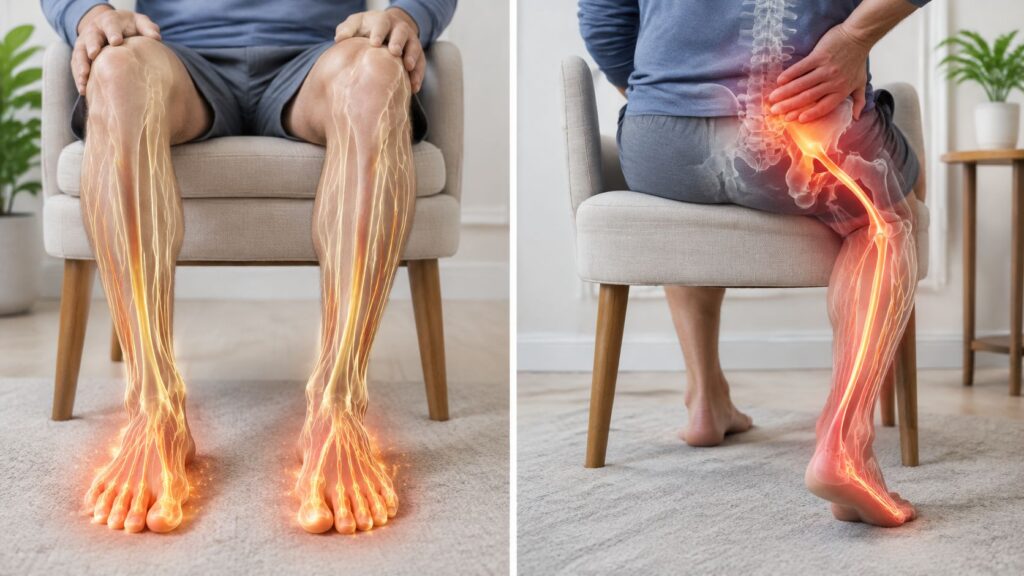
Why Knee Pain Demands Your Attention
How to reduce knee pain starts with understanding that you’re not alone—knee pain is one of the most common complaints across all ages. Whether it’s a dull ache after sitting too long or sharp discomfort when climbing stairs, sore knees can quickly interfere with daily life.
Quick Answer: How to Reduce Knee Pain
- Rest and protect your knee from further strain
- Apply ice for 15-20 minutes every 2-3 hours (wrap in a towel)
- Use compression with an elastic bandage or knee brace
- Elevate your leg above heart level to reduce swelling
- Take over-the-counter pain relievers like ibuprofen or topical diclofenac gel
- Switch to low-impact activities such as swimming, cycling, or elliptical training
- Lose weight if needed—every pound lost removes 2-4 pounds of pressure from your knees
- Strengthen surrounding muscles through gentle exercises and stretching
The good news? Most knee pain responds well to conservative treatment at home. You should start to feel better within a few days to weeks with consistent care.
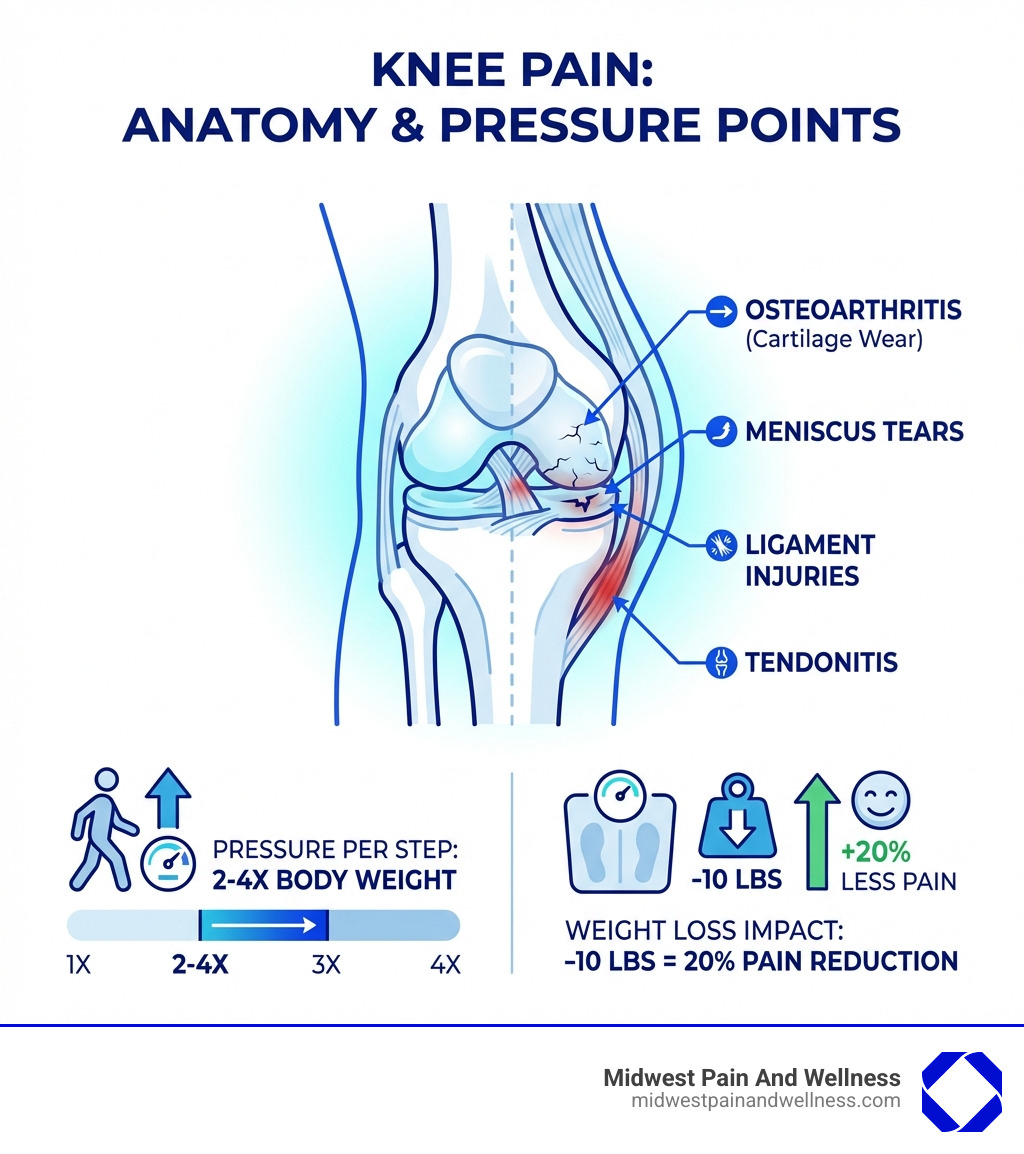
With each step you take, two to four times your body weight transmits through your knee joint. That’s enormous pressure on a single joint, day after day. Over time, this stress—combined with factors like inflammation, muscle weakness, poor footwear, or structural damage—leads to the pain you’re experiencing now.
The key is addressing knee pain early with a comprehensive approach. Some cases stem from temporary inflammation that responds beautifully to rest, ice, and anti-inflammatory measures. Others involve structural issues like torn cartilage or arthritis that may need more advanced care. Either way, understanding how to reduce knee pain through evidence-based strategies gives you control over your comfort and mobility.
As Dr. Yaw Donkoh, a double board-certified physician in anesthesiology and interventional pain management, I’ve helped countless patients find relief through minimally invasive, outcomes-focused treatments. My approach to how to reduce knee pain combines proven home remedies, lifestyle adjustments, and—when needed—advanced non-surgical interventions that target the root cause without relying on opioids or rushing to surgery.
Understanding the Root Causes of Knee Discomfort
To figure out how to reduce knee pain?, we first have to identify what is actually hurting. The knee is the largest joint in your body, and because it’s a complex hinge of bone, cartilage, ligaments, and fluid, there are several “usual suspects” when things go wrong.
- Osteoarthritis: This is the most common form of arthritis, often described as “wear and tear.” It occurs when the protective cartilage that cushions the ends of your bones wears down over time. It typically causes stiffness, especially in the morning or after being inactive.
- Rheumatoid Arthritis: An autoimmune condition where the body’s immune system attacks the joint lining, leading to painful swelling and eventual bone erosion.
- ACL Injuries: A tear of the anterior cruciate ligament (ACL)—one of four ligaments that connect your shinbone to your thighbone. This is common in athletes who play sports involving sudden changes in direction.
- Meniscus Tears: The meniscus is the tough, rubbery cartilage that acts as a shock absorber between your shinbone and thighbone. It can be torn if you suddenly twist your knee while bearing weight on it.
- Tendonitis: Inflammation of one or more tendons—the thick fibrous tissues that attach muscles to bones. “Jumper’s knee” is a common type that affects the patellar tendon.
Inflammation vs. Structural Damage
One of the most important steps in our Conditions We Treat protocol is differentiating between simple inflammation and structural damage. Why? Because inflammation usually responds to physical therapy and medication, while structural issues might eventually require more intensive intervention.
| Feature | Inflammation-Related Pain | Structural Damage |
|---|---|---|
| Mobility | You can usually straighten the knee fully. | Knee may “lock” or you cannot squat to 90 degrees. |
| Swelling | Minimal or localized. | Significant swelling (“water on the knee”). |
| Stability | The joint feels stable. | The knee feels like it might “give way.” |
| Response | Improves quickly with ice and rest. | Persistent pain despite home care. |
Expert insights suggest that if you can extend your knee straight without sharp pain, you are likely dealing with inflammation. However, if your knee is visibly swollen or you feel a “catch” when moving, structural damage to the cartilage or ligaments is more likely.
Effective Home Strategies: How to Reduce Knee Pain?
If you’re wondering how to reduce knee pain? right this second, the answer usually starts in your own living room. Most minor injuries and flare-ups of chronic conditions can be managed with the RICE method.
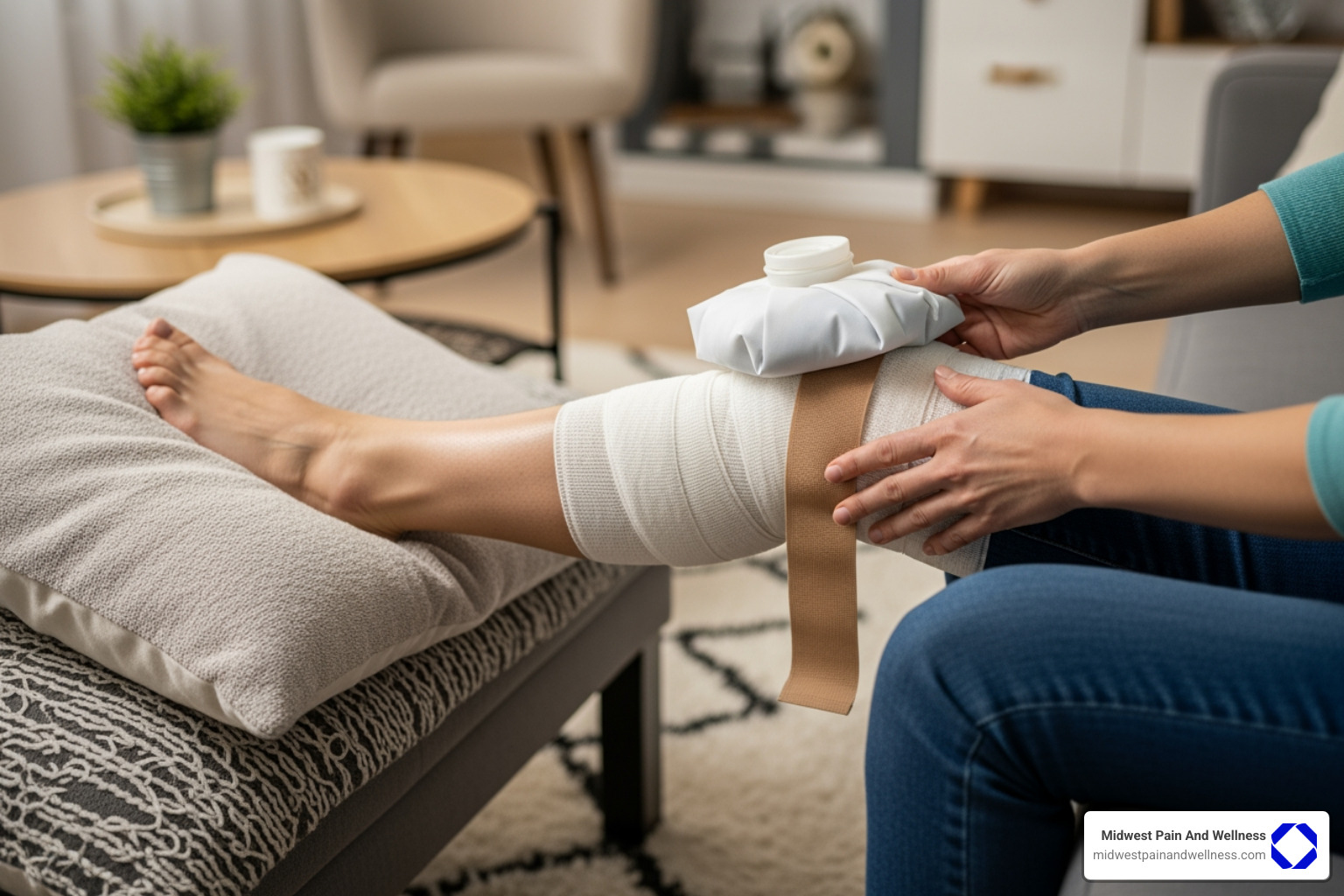
The RICE Protocol
- Rest: Give your joint a break. Avoid activities that aggravate the pain. You might even use a cane or crutch for a few days to offload the pressure.
- Ice: Apply a cold pack or frozen peas (wrapped in a thin towel) to the area for 15 to 20 minutes several times a day. Be careful not to exceed 20 minutes, as you want to avoid skin or nerve damage.
- Compression: Use an elastic ACE wrap or a compression sleeve to prevent fluid buildup and provide support. Ensure it’s snug but not so tight that it cuts off circulation.
- Elevation: Prop your leg up on pillows so that your knee is higher than your heart. This uses gravity to help drain excess fluid away from the joint.
For many, these Non-Surgical Pain Relief steps are enough to calm a flare-up within 7 to 10 days.
Over-the-Counter Medications and Topicals
When RICE isn’t quite enough, medication can help bridge the gap.
- NSAIDs: Drugs like ibuprofen (Advil, Motrin) or naproxen (Aleve) reduce both pain and inflammation. However, they should be used cautiously as they can irritate the stomach or affect kidney function if taken long-term.
- Acetaminophen: Tylenol is great for pain but doesn’t reduce inflammation. It’s a safer alternative for those who can’t take NSAIDs.
- Topicals: Diclofenac gel (Voltaren) is a topical NSAID that provides relief directly to the joint with fewer systemic side effects. Menthol-based creams can also provide a cooling, distracting sensation.
- Supplements: While evidence is mixed, some patients find relief with glucosamine and chondroitin or turmeric. Turmeric has natural anti-inflammatory properties, but check with us first if you are on blood thinners, as it can increase bleeding risk.
Low-Impact Exercises: How to Reduce Knee Pain Through Movement
It sounds counterintuitive, but movement is medicine. Inactivity actually weakens the muscles that support your knee, making the pain worse. The goal is to strengthen the “scaffolding” around the joint—your quadriceps, hamstrings, and hips.
- Swimming and Water Aerobics: The buoyancy of water supports your weight, allowing you to move the joint without impact.
- Cycling: Using a stationary bike or a regular bicycle builds leg strength with minimal jarring.
- Straight-Leg Lifts: Lie on your back, keep one leg bent and the other straight. Lift the straight leg to the height of the opposite knee. This strengthens the quads without bending the knee joint.
- Hamstring Curls: Hold onto a chair and lift your heel toward your glutes. Strong hamstrings help balance the pull on the kneecap.
- Step-ups: Use a small platform or the bottom step of a staircase. Step up, then back down, focusing on controlled movement.
Lifestyle Adjustments to Protect Your Joints
Sometimes, how to reduce knee pain? is less about what you do in the gym and more about what you wear on your feet.
- Proper Footwear: High heels shift your weight forward, overworking the quadriceps and putting immense pressure on the kneecap. Opt for supportive sneakers with good arch support.
- Posture Alignment: Stand up straight! Keeping your head, shoulders, and hips aligned prevents your body from compensating in ways that stress the knees.
- Knee Braces and Sleeves: An unloader brace can shift pressure away from the “bone-on-bone” side of an arthritic knee, while a simple compression sleeve provides warmth and a sense of stability.
Weight Management: How to Reduce Knee Pain by Offloading Pressure
This is perhaps the most powerful tool in your arsenal, though often the hardest to implement. Remember the “4-pound rule”: Every extra pound of body weight adds two to four pounds of excess pressure on your knees.
If you are 20 pounds overweight, your knees are essentially carrying an extra 40 to 80 pounds of force with every single step. Research shows that people with arthritic knees lose about 20 percent of their pain with every 10 pounds of weight loss. If you’re looking for a Hip Pain Management Guide, you’ll find that weight loss is equally critical for the entire lower kinetic chain.
Advanced Non-Surgical and Interventional Treatments
When home remedies and lifestyle changes aren’t enough, we move to a multi-modal, interventional approach. At Midwest Pain And Wellness, we focus on custom care plans that avoid the risks of long-term opioid use.
- Physical Therapy: A therapist can identify if your knee pain is actually “referred pain” from your hips or feet. Strengthening the hips is often the secret to offloading knee stress.
- Hyaluronic Acid Injection for Knee Pain: Also known as viscosupplementation, this involves injecting a gel-like substance into the joint. Hyaluronic acid is something healthy joints have in abundance; arthritic knees don’t. These Hyaluronic Acid Injection for Knee Pain Chicago treatments can provide relief for 6 to 12 months.
- Corticosteroid Shots: These are powerful anti-inflammatories injected directly into the joint for rapid relief during a flare-up.
- Regenerative Therapy (PRP): Regenerative Therapy PRP Cell-Based Options in Chicago Ridge involve using your own blood’s platelets to promote healing and reduce inflammation. Other options include Amniotic Fluid Injections Pain Chicago.
- Genicular Nerve Blocks: If you have chronic pain that hasn’t responded to other treatments, we can perform Pain Injections Chicago to block the specific nerves that transmit pain signals from the knee to the brain.
Knowing When to Seek Professional Medical Attention
While we’ve discussed many ways to manage pain at home, some situations require an expert eye immediately.
Seek urgent medical attention if:
- Your knee is visibly deformed or “out of place.”
- You heard a loud “pop” at the time of injury.
- You cannot bear any weight on the leg.
- The pain is intense even when you aren’t moving.
- You have sudden, severe swelling.
- You have a fever along with knee redness and warmth (this could indicate an infection).
If your pain is not an emergency but hasn’t improved after two weeks of home care, it’s time to schedule an evaluation. We can use imaging like X-rays or MRIs to see exactly what’s happening inside the joint.
Frequently Asked Questions about Knee Pain
How long does it take for the RICE method to work?
For acute injuries like a minor sprain, you should see a reduction in swelling and pain within 48 to 72 hours. However, you should continue modified activity and gentle care for 7 to 10 days to ensure the inflammation has fully subsided.
Can certain shoes actually cause knee pain?
Absolutely. High heels, worn-out flats, and flip-flops offer little to no shock absorption or arch support. This forces your knees to absorb the impact of every step, which can lead to tendonitis and exacerbate arthritis.
Is walking good for arthritic knees?
Yes! Walking is a low-impact exercise that keeps the joint lubricated and the surrounding muscles strong. The key is to wear supportive shoes and walk on level surfaces. If walking is too painful, try “unloading” the joint by walking in a pool.
Conclusion
Learning how to reduce knee pain? is a journey that starts with small, consistent steps. Whether it’s applying the RICE method, committing to a 10-pound weight loss goal, or switching to more supportive footwear, you have the power to change how your joints feel.
At Midwest Pain And Wellness, we believe that no one should have to live with chronic discomfort. Our double board-certified doctors in Chicago Ridge are dedicated to providing a multi-modal approach that combines the best of modern medicine with personalized, compassionate care. From Treatment Procedures like regenerative therapy to advanced nerve blocks, we are here to help you achieve long-term relief.
If your knees are holding you back from the life you want to lead, don’t wait for the pain to become unbearable. Explore our advanced treatment procedures and let us help you get back on your feet.