Understanding the Discomfort in Your Wrist and Hand
Carpal tunnel pain is a common condition causing numbness, tingling, and weakness in the hand and fingers. Affecting about 3 in 1,000 people in the U.S. annually, its hallmark signs include waking at night to shake your hands or struggling to hold objects.
What you need to know about carpal tunnel pain:
- What it is: Pressure on the median nerve as it passes through the carpal tunnel in your wrist
- Common symptoms: Numbness, tingling, and pain in the thumb, index, middle, and ring fingers (especially at night)
- Who’s affected: Women are 3 times more likely than men to develop it; most common in adults aged 40-70
- Main causes: Repetitive hand motions, wrist injuries, pregnancy, medical conditions like diabetes or rheumatoid arthritis
- Good news: 70-90% of mild to moderate cases respond well to conservative treatment
The condition occurs when swelling in a narrow wrist passageway, the carpal tunnel, compresses the median nerve. This nerve controls sensation in most fingers and powers thumb muscles.
Symptoms often start gradually, with fingers “falling asleep” at night. If untreated, it can progress to hand weakness, making simple tasks like gripping a cup difficult.
Early diagnosis is crucial. Without treatment, permanent nerve damage, muscle wasting at the base of the thumb, and lasting numbness can occur.
This guide covers carpal tunnel pain from symptoms and diagnosis to effective, non-surgical treatments that can restore your quality of life.
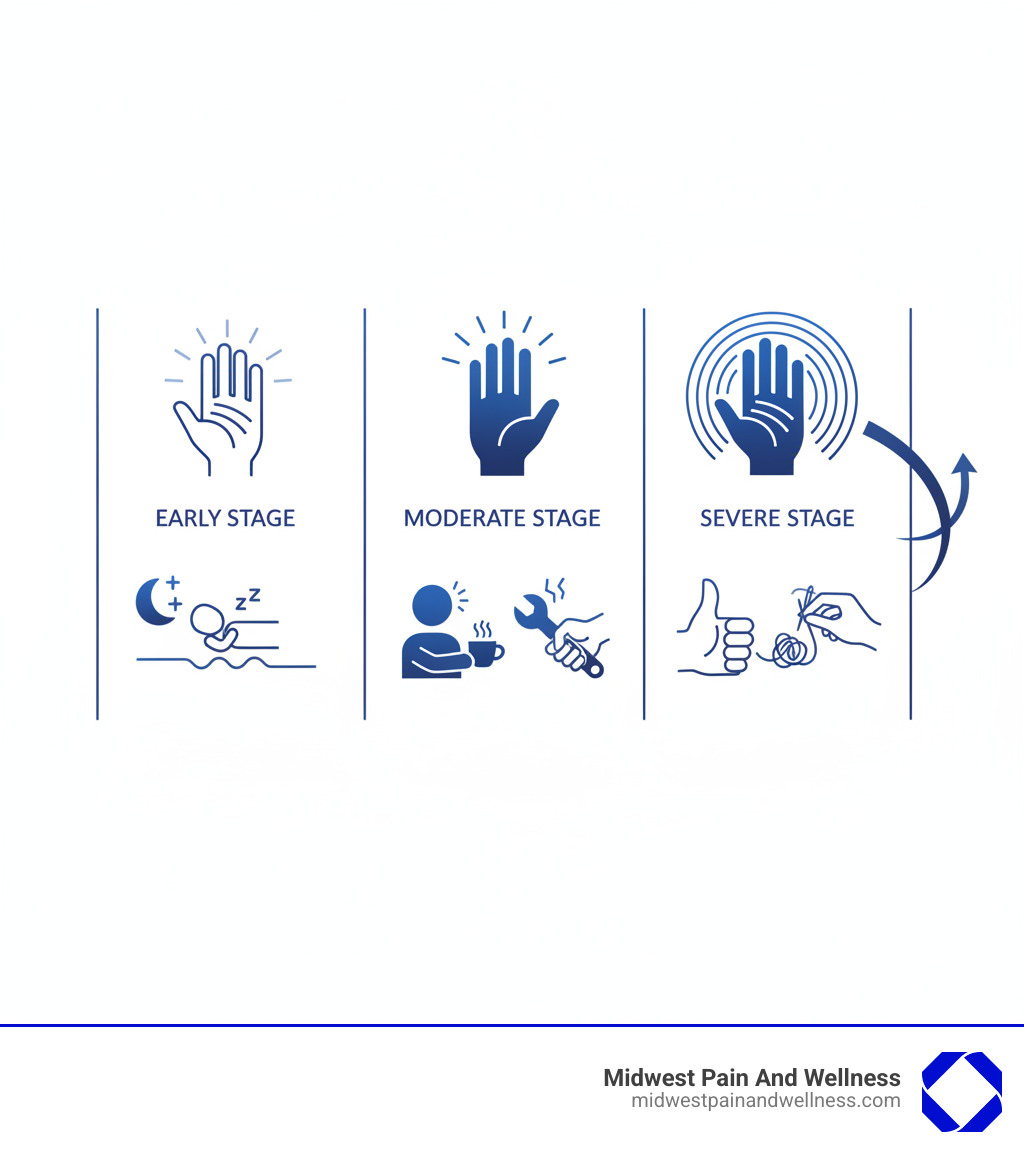
Understanding Carpal Tunnel Syndrome: Symptoms, Causes, and Risks
To understand carpal tunnel pain, it helps to know the anatomy. The carpal tunnel is a narrow passageway at the base of your hand, formed by wrist bones and a ligament. Through this tight space run nine tendons and the median nerve.
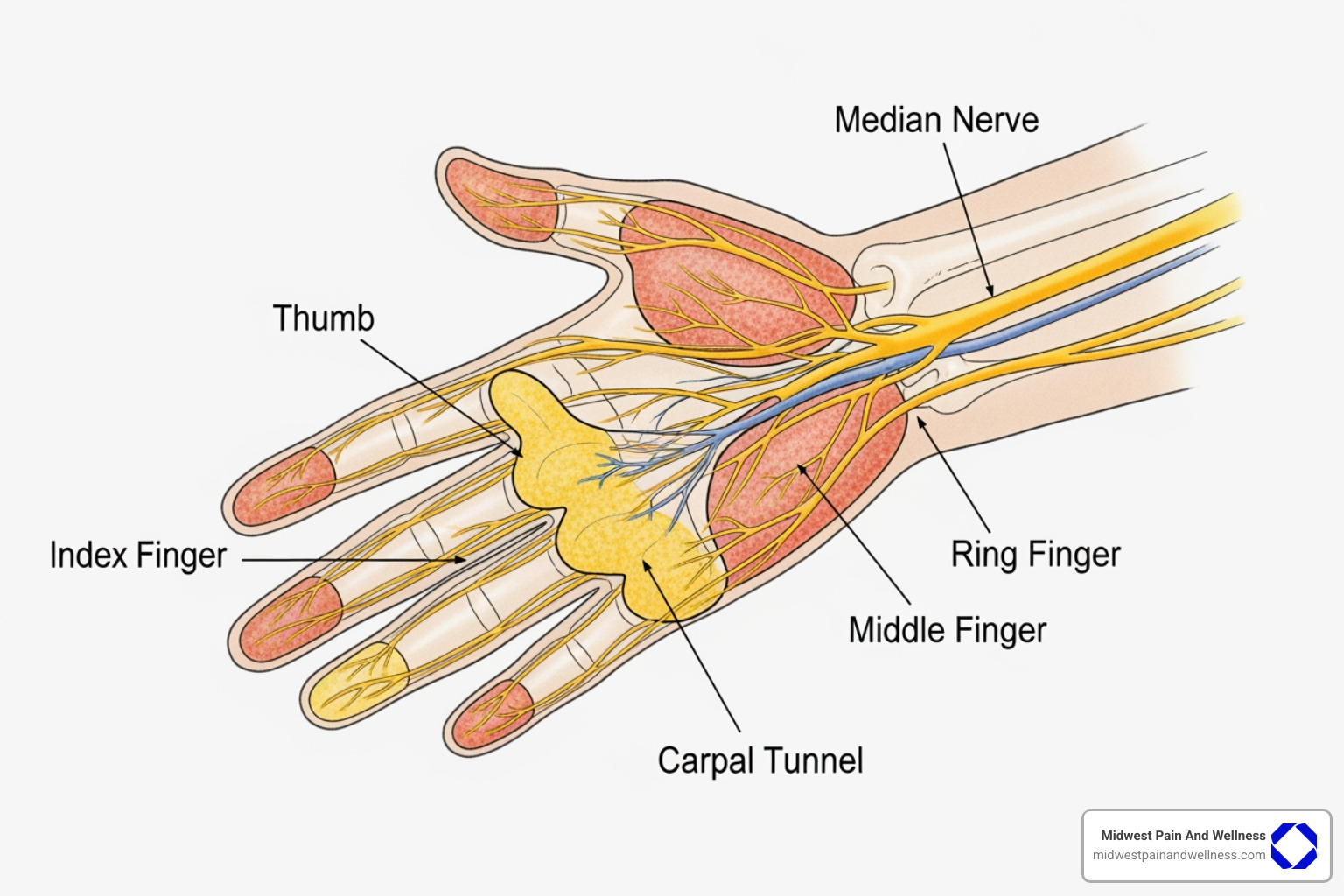
The median nerve provides sensation to your thumb, index, middle, and half of your ring finger. It also controls the thumb muscles used for gripping and pinching.
Carpal tunnel syndrome occurs when swelling or other factors shrink this space, compressing the median nerve. Irritated tendons can swell, pinching the nerve and disrupting its signals, which causes the characteristic numbness, tingling, and pain.
Recognizing the Symptoms of Carpal Tunnel Pain
Symptoms of carpal tunnel syndrome usually start mild and gradually worsen.
Numbness and tingling are often the first signs, typically in the thumb, index, middle, and part of the ring finger. The little finger is unaffected, a key clue. The sensation can feel like pins-and-needles or small electric shocks.
Burning pain, ranging from a dull ache to a sharp sensation, may radiate from the wrist up the arm or into the fingertips.
Hand weakness can develop as the condition progresses, leading to a less reliable grip. You might find yourself dropping objects or feeling clumsy.
Nighttime symptoms are a classic sign. Many people wake with numb or tingling hands because sleeping with bent wrists increases pressure in the tunnel. You may find yourself shaking your hands to restore sensation.
In severe, untreated cases, the muscles at the base of your thumb may visibly shrink (thenar atrophy), a sign of serious, potentially permanent nerve damage.
Symptoms can eventually intrude on your day, especially during activities that keep your wrist bent, like driving, reading, or holding a phone.
Common Causes and Who Is Most at Risk
Carpal tunnel syndrome rarely has a single cause; it’s often a combination of factors.
- Repetitive hand use: Activities involving forceful gripping, extreme wrist bending, or prolonged use of vibrating tools are strongly linked to CTS.
- Wrist injuries: Sprains, fractures, or dislocations can cause swelling and alter wrist anatomy, increasing pressure.
- Heredity: Some people are born with smaller carpal tunnels, making them more susceptible.
- Gender: Women are three times more likely than men to develop CTS, partly due to hormonal factors related to pregnancy and menopause.
- Obesity: Excess weight doubles the risk of developing carpal tunnel syndrome.
- Pregnancy: Fluid retention during pregnancy commonly causes temporary CTS symptoms.
- Medical conditions: Several conditions increase your risk, including:
- Diabetes
- Rheumatoid arthritis and other inflammatory conditions
- Thyroid disorders
- Kidney failure
- Workplace factors: Jobs requiring sustained awkward wrist positions, repetitive motions, or exposure to vibration put you at higher risk. This includes assembly line workers, manufacturing workers, and office workers with poor ergonomics.
Understanding your personal risk factors is the first step toward prevention and early treatment, which we’ll explore at Midwest Pain and Wellness’s conditions we treat.
How Carpal Tunnel Pain is Diagnosed
Getting a correct diagnosis for carpal tunnel pain is the first step to relief. The longer the median nerve is compressed, the higher the risk of permanent damage, like lasting numbness and muscle wasting. If symptoms interfere with your daily life or sleep, it’s time to see a doctor.
At Midwest Pain and Wellness, we specialize in comprehensive, opioid-free approaches to conditions like carpal tunnel syndrome. You can learn more about the conditions we treat on our website.
Physical Examination and In-Office Tests
Diagnosis begins with a discussion of your symptoms, medical history, and daily activities. A physical exam of your hands, arms, shoulders, and neck helps rule out other causes. We’ll check sensation, grip strength, and look for swelling. Several in-office tests help confirm the diagnosis:
- Tinel’s sign: Gently tapping over the median nerve at your wrist. A tingling or shock-like sensation suggests nerve irritation.
- Phalen’s test: Holding your wrists in a fully flexed position for a minute. If this triggers your symptoms, it points toward carpal tunnel syndrome.
- Carpal compression test: Applying direct pressure over the carpal tunnel for 30 seconds. Recreating symptoms is a strong indicator.
These tests, combined with your history, often provide a clear picture, but sometimes more information is needed.
Advanced Diagnostic Testing
When we need to confirm the diagnosis or measure the severity of nerve damage, we turn to advanced testing.
- Nerve conduction studies (NCS) are the gold standard. They measure the speed of electrical signals through your median nerve. Slowed signals indicate compression.
- Electromyography (EMG) is often done with NCS. It evaluates the electrical activity in your muscles to see if nerve damage has affected their function.
- Ultrasound imaging provides a real-time view of the median nerve, showing swelling or tunnel narrowing to help guide treatment.
- X-rays can’t diagnose CTS but can rule out other issues like fractures or arthritis.
- MRI scans offer detailed images of soft tissues and can identify nerve swelling or other issues like cysts or tumors.
For a helpful visual explanation, you can watch a doctor explain the diagnostic process for Carpal Tunnel Syndrome.
The combination of your history, physical exam, and appropriate testing gives us a complete picture of your condition, allowing us to determine the best treatment approach.
Managing Carpal Tunnel Pain with Non-Surgical Solutions
The good news is that you don’t necessarily need surgery for carpal tunnel pain. Conservative treatment is effective for 70-90% of mild to moderate cases. At Midwest Pain and Wellness, our opioid-free approach aims to reduce nerve pressure and help you heal. You can explore our full range of treatment procedures to see how we customize care.
At-Home Care and Lifestyle Adjustments
Simple changes in your daily routine can make a big difference in managing carpal tunnel pain.
- Wrist splinting at night: A neutral wrist splint keeps your wrist straight while you sleep, preventing the bent positions that squeeze your median nerve. Many people notice significant improvement in nighttime symptoms after a few weeks.
- Modifying your activities: Identify and adjust tasks that trigger your symptoms, such as tight gripping or repetitive wrist bending.
- Taking frequent breaks: If your work involves repetitive hand motions, take hourly breaks to stretch your hands and wrists.
- Icing your wrist: Ice your wrist for 10-15 minutes at a time to reduce inflammation, especially after aggravating activities.
- Over-the-counter NSAIDs: Medications like ibuprofen can offer short-term pain relief, but check with your doctor before regular use.
Ergonomics and Prevention Strategies
Making your environment work with your body can be as important as any treatment.

- Maintain good posture: Poor posture can contribute to nerve compression in your arm or neck, worsening hand symptoms.
- Keep your wrist in a neutral position: Your wrist shouldn’t be bent up, down, or sideways when typing or performing other hand tasks.
- Adjust your keyboard and mouse: Position your keyboard at or slightly below elbow height. Use a comfortable mouse and ensure wrist rests support the heel of your hand, not the wrist itself.
- Stretching and nerve gliding exercises: Gentle exercises help keep the median nerve mobile. The Chartered Society of Physiotherapy has instructions for simple hand exercises you can try.
Interventional Pain Management
When at-home strategies aren’t enough, we can take a more targeted approach.
Corticosteroid injections deliver powerful anti-inflammatory medication directly into your carpal tunnel, reducing swelling around the nerve. Relief typically lasts for several months. We use ultrasound guidance for these injections to ensure precise, safe delivery of medication, avoiding injury to the nerve or tendons.
The goal is to calm the swelling that’s squeezing the nerve. While effective, injections treat symptoms, so they are part of a larger care plan that includes lifestyle adjustments and exercises for long-term management.
When to Consider Advanced Treatment Options
For some people with carpal tunnel pain, conservative treatments don’t provide enough relief. This isn’t a failure, but a sign that a different approach is needed. Waiting too long when advanced treatment is necessary can lead to permanent nerve damage, so we are proactive in protecting your nerve function.

You might be ready for advanced treatment if you’re experiencing:
- Persistent symptoms after months of conservative care
- Severe pain or constant numbness that disrupts your daily life
- Progressive weakness making basic tasks difficult
- Visible muscle wasting at the base of your thumb
- Test results showing moderate to severe nerve compression
At Midwest Pain and Wellness, our double board-certified doctors specialize in minimally invasive, opioid-free solutions to provide lasting relief.
Advanced Interventional Procedures Offered by Midwest Pain and Wellness
The gold standard for persistent carpal tunnel syndrome is carpal tunnel release surgery. This procedure cuts the transverse carpal ligament to create more space for the median nerve. We offer two outpatient approaches:
- Open carpal tunnel release: Uses a small incision in the palm for direct visualization of the ligament.
- Endoscopic carpal tunnel release: A minimally invasive option using one or two tiny incisions and a camera, often leading to faster recovery.
Both are performed with local or regional anesthesia and light sedation for your comfort.
Recovery and The Long-Term Outlook for Carpal Tunnel Pain
Recovery is a gradual process that depends on your condition’s severity and the surgical method. You’ll wear a splint for one to two weeks but will be encouraged to move your fingers early to prevent stiffness. We manage any post-procedure pain responsibly and without opioids.
Hand therapy is a key part of recovery. A therapist will guide you through exercises to restore strength, flexibility, and nerve mobility.
Most people return to light activities in a few weeks. Grip strength improves over two to three months, but full recovery can take up to a year, especially in severe cases.
Initial success rates for surgery exceed 90%. While some residual numbness can occur in severe cases, most people find their quality of life dramatically improved. Long-term, recurrence is possible, but most patients experience lasting relief.
Untreated carpal tunnel pain can have serious consequences, including permanent nerve damage, irreversible numbness, chronic pain, and severe muscle atrophy. This can make simple daily tasks difficult, which is why early intervention is so important.
Frequently Asked Questions about Carpal Tunnel Discomfort
Here are answers to some of the most common questions we hear about carpal tunnel pain.
Can carpal tunnel syndrome heal on its own?
In rare, mild cases, such as those related to pregnancy, symptoms may resolve on their own. However, for most people, carpal tunnel pain is a progressive condition that worsens without treatment. Waiting can lead to permanent nerve damage, including lasting numbness and muscle wasting. Professional evaluation is crucial if your symptoms persist or interfere with your daily life.
What is the best way to sleep with carpal tunnel pain?
The most effective strategy is wearing a neutral wrist splint to bed. This keeps your wrist straight, preventing the bending that increases pressure on the median nerve. Also, try elevating your hand on a pillow to reduce swelling. Avoid sleeping on your hands or tucking them under your pillow, as this can worsen symptoms.
How do I know if my hand pain is definitely carpal tunnel?
Classic signs of carpal tunnel pain include numbness and tingling in the thumb, index, middle, and half of the ring finger, but not the little finger. Symptoms are often worse at night. However, other conditions like neck problems or arthritis can mimic these symptoms. A definitive diagnosis requires a medical evaluation, which may include physical tests and nerve conduction studies. Getting the right diagnosis ensures you get the right treatment, which is why our double board-certified doctors at Midwest Pain and Wellness use a comprehensive diagnostic approach.
Take Control of Your Carpal Tunnel Pain
You now understand what carpal tunnel pain is and, more importantly, that you don’t have to live with it. The tingling, numbness, and weakness affecting your daily life can be addressed with the right approach.
The key takeaway is that early action matters. Seeking help sooner improves your chances of avoiding permanent nerve damage and returning to the activities you love, from holding a coffee cup to sleeping through the night.
At Midwest Pain and Wellness, we create personalized, opioid-free treatment plans. Our double board-certified doctors use a comprehensive, multi-modal approach focused on long-term relief, not just temporary fixes. We collaborate with other practitioners to address the root cause of your pain.
You deserve to live without the frustration of hand pain and numbness. The path to relief starts with seeking professional guidance and exploring the treatment options that are right for you.
Don’t wait for your symptoms to worsen. Take control of your carpal tunnel pain today. Explore our comprehensive treatment procedures to find lasting relief and see how we can help you reclaim your quality of life.