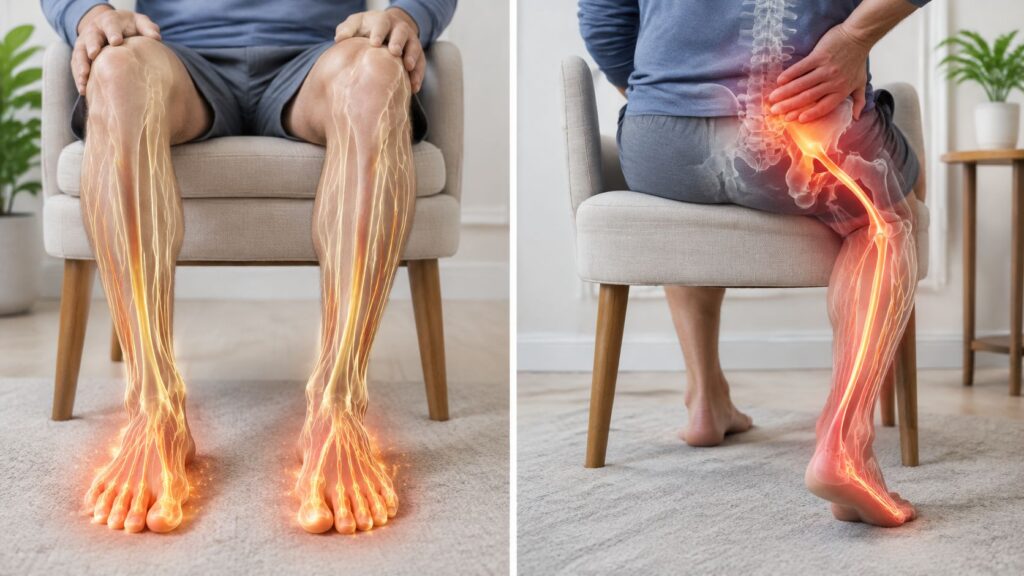
If your feet feel hottest when the house is finally quiet, you're not imagining it. Many people describe the sensation as burning, stinging, tingling, or feeling like they're standing on a surface that never cools down. Sleep gets interrupted. Walking becomes irritating. Even a light bedsheet can feel like too much.
That pattern often points to a nerve-related problem, not just tired feet. Good burning feet syndrome treatment starts by figuring out why the nerves are misfiring, then matching the treatment to the cause. For patients in the Illinois communities around Chicago Ridge, including Oak Lawn, Palos Hills, Palos Heights, Worth, Bridgeview, Hickory Hills, Alsip, Burbank, Evergreen Park, and Orland Park, the most useful approach is one that moves step by step from symptom control to precise diagnosis and, if needed, advanced pain management.
Understanding Your Burning Feet Symptoms
Burning feet syndrome, also called Grierson-Gopalan syndrome, is a symptom pattern rather than a single disease. In plain language, the nerves in your feet start sending pain or heat signals that don't match what is occurring in the tissue. Your skin may look normal, yet your feet feel intensely hot.
For some people, symptoms come and go. For others, the discomfort builds in the evening and becomes most noticeable at night. Along with burning, people often notice tingling, prickling, numbness, oversensitivity, or a deep aching that's hard to describe.
What the sensation usually means
The most important thing to understand is this. Burning doesn't automatically mean injury on the surface of the foot. It often means the nervous system is involved.
That matters because skin creams, changing socks, or soaking your feet over and over may give short relief without fixing the actual problem. When nerve irritation is driving the symptoms, treatment needs to calm the nerve itself, address any underlying condition, and protect function before sleep, walking, and balance start to suffer.
Practical rule: If burning feet keep returning, wake you up, or come with numbness, don't treat it like a minor annoyance.
When to take it seriously
A specialist looks at the whole pattern, including:
- Timing of symptoms such as worsening at night or after activity
- Associated nerve signs like tingling, electric pain, or reduced sensation
- Distribution including whether symptoms stay in the soles or spread upward
- Medical context such as diabetes, thyroid issues, prior chemotherapy, kidney disease, alcohol use, or a history of nerve compression
The right care plan doesn't begin with guessing. It begins with identifying whether this is neuropathy, nerve entrapment, a metabolic issue, a nutritional problem, or another cause that needs targeted treatment.
What Causes Burning Feet Syndrome
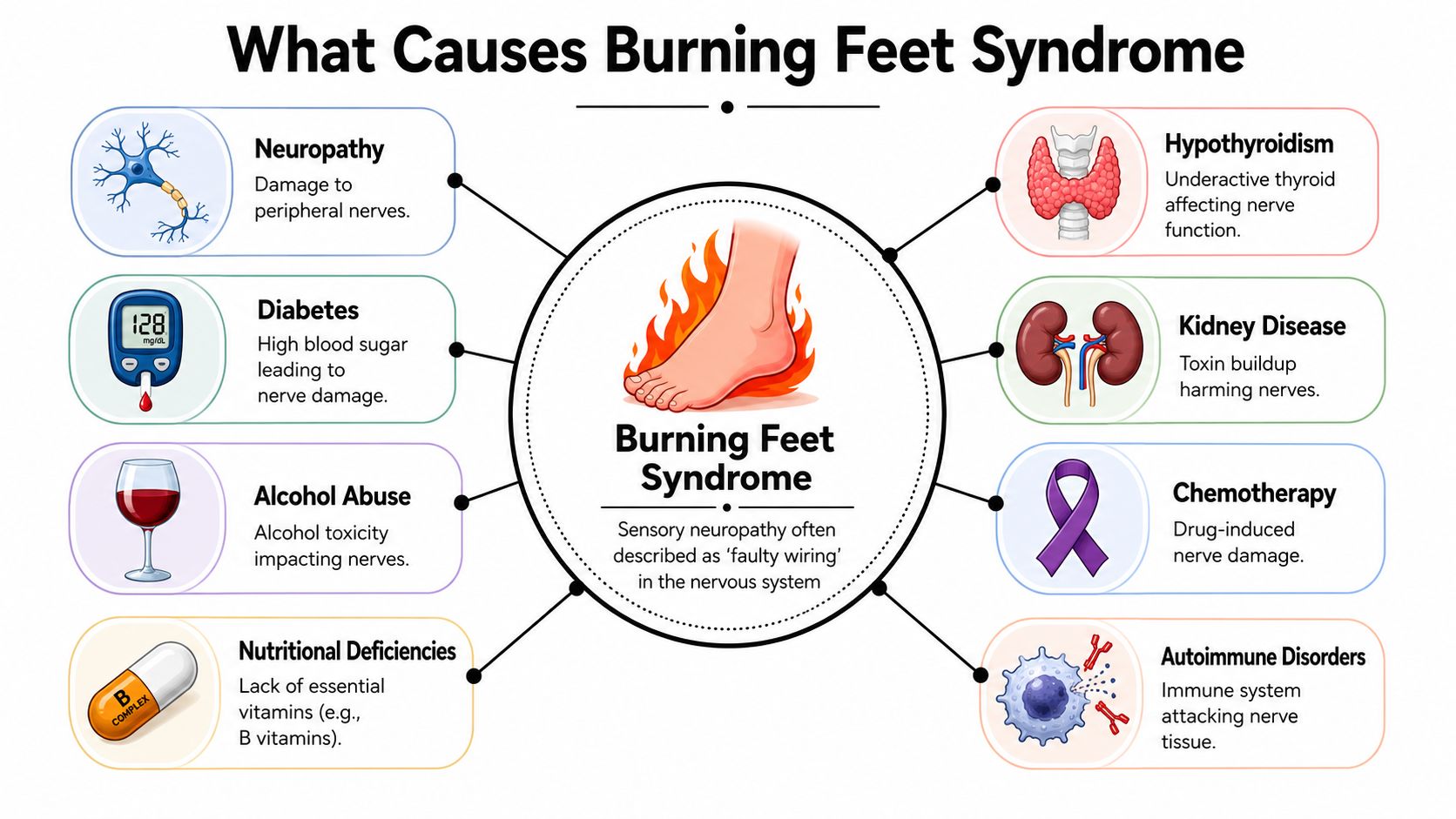
The cleanest way to think about burning feet is faulty wiring. Healthy peripheral nerves carry accurate signals about pressure, temperature, and touch. Irritated or damaged nerves can send distorted signals instead. Your brain receives “heat” or “pain” even when there's no burn on the skin.
That faulty wiring can happen for several reasons. Sometimes the cause is widespread nerve irritation. Sometimes it's a local entrapment around the ankle or foot. Sometimes the trigger is systemic, meaning it comes from a medical condition affecting the whole body.
Common medical causes
A few patterns show up often in practice:
- Diabetic neuropathy can injure nerves over time, which is why blood sugar control matters so much when burning feet are part of diabetes-related nerve pain.
- Small-fiber neuropathy tends to affect the tiny nerve fibers that carry pain and temperature signals. Patients often describe burning, hypersensitivity, or painful feet despite a fairly normal-looking exam.
- Tarsal tunnel syndrome is a local compression problem. A nerve gets crowded or irritated near the ankle, and the pain can feel hot, sharp, or electrical.
- Other medical conditions such as hypothyroidism, kidney disease, autoimmune disorders, and chemotherapy-related nerve injury can also produce this symptom pattern.
Less obvious but important contributors
Not every cause is chronic or irreversible. Some cases improve substantially when the underlying problem is identified early.
One of the clearest historical examples comes from nutritional medicine. Historical therapeutic trials demonstrated that administering mung beans, rich in vitamins B1 and B2, improved burning feet symptoms within a 4-to-6-week timeframe. That finding matters because it established a lasting link between certain nutritional deficiencies and burning feet syndrome.
In current care, that doesn't mean everyone should self-prescribe supplements and hope for the best. It means a workup should consider reversible causes, including vitamin-related issues. If you're trying to understand whether a deficiency could be part of your symptoms, reviewing blood panel results for nutrients can help you know what questions to ask during a medical evaluation.
Burning feet can come from a correctable problem, a chronic nerve disorder, or a combination of both. The treatment works better when the cause is named clearly.
Why self-diagnosis often misses the mark
Patients often assume one of two things. Either “it's just circulation,” or “it must be neuropathy.” Both shortcuts can mislead you.
A person with diabetes might also have a trapped nerve. Someone with normal routine labs might still have a small-fiber pain problem. Another patient may blame shoes when the underlying cause is a systemic condition affecting nerves. That's why the same symptom can require very different care plans.
How a Specialist Diagnoses the Problem
A proper evaluation does more than label the pain. It sorts out whether the burning is coming from metabolic nerve damage, localized nerve compression, medication effects, nutritional issues, or another process entirely. That distinction shapes treatment.
A pain and wellness clinic approaches this differently than casual symptom management at home. The goal isn't only to reduce discomfort today. It's to identify what needs treatment now, what needs monitoring, and what shouldn't be missed.
What a diagnostic visit usually includes
The first part is a detailed history. A specialist wants to know when the symptoms started, whether they're constant or intermittent, what makes them worse, and whether you also have numbness, weakness, balance changes, swelling, or back pain.
The physical exam often focuses on:
- Sensation testing to see whether light touch or temperature feels abnormal
- Strength and reflexes to look for broader nerve involvement
- Foot and ankle mechanics to detect entrapment patterns or pressure-related aggravation
- Skin changes and circulation clues that may point away from a purely nerve-based issue
Some patients also need blood work, imaging, or nerve studies based on the pattern. The testing isn't one-size-fits-all. It should answer a practical question, not just generate more paperwork.
Red flags that shouldn't wait
Get evaluated sooner if burning feet are accompanied by:
- Rapid worsening
- New weakness
- Falls or balance trouble
- Foot wounds or skin breakdown
- Pain severe enough to disrupt sleep repeatedly
- Significant numbness that makes it hard to tell where your feet are
These signs can change the urgency of treatment and the kind of specialist involvement you need.
Chronic nerve pain affects more than nerves. It can narrow sleep, mood, focus, and daily confidence.
That's why the emotional side of care can't be treated as optional. Expert analysis has found that patients with burning foot syndrome face a suicide risk 2 to 3 times higher than the general public, which is why psychotherapy support deserves a place in treatment planning. If pain has become isolating, discouraging, or mentally exhausting, bring that up directly. It is medically relevant.
Initial Treatment Conservative and Pharmacologic Options
Early burning feet syndrome treatment usually combines simple mechanical relief with medications that calm overactive nerves. The trade-off is straightforward. Conservative care is easy to start and low risk, but it may not be enough by itself. Medications can reduce nerve-driven pain more directly, but they need proper selection, dose adjustment, and monitoring.
What patients can try first
Conservative care doesn't “cure” neuropathic pain, but it often reduces friction on irritated tissue and makes daily life more tolerable.
- Cooling measures can help settle symptom spikes. Short water-based cooling is often better than aggressive icing.
- Supportive footwear reduces pressure and mechanical irritation, especially when symptoms worsen with standing or walking.
- Rest and pacing matter when overuse is amplifying an already irritated nerve.
- Skin and foot protection become more important if numbness is part of the problem.
Where medication fits
Nerve pain medications don't work like standard painkillers. They aim to reduce abnormal nerve signaling.
Gabapentin and pregabalin are commonly used when the pattern looks neuropathic. Carbamazepine may also be considered in selected cases. Topical lidocaine or capsaicin can be useful when the pain is more focal and the patient wants to avoid adding another systemic medication.
Here's a simple comparison of the first-line options:
| Treatment Type | Examples | Primary Goal |
|---|---|---|
| Conservative self-care | Supportive footwear, rest, cooling soaks, activity pacing | Reduce aggravation and improve comfort |
| Oral neuropathic medication | Gabapentin, pregabalin, carbamazepine | Calm abnormal nerve firing |
| Topical medication | Lidocaine, capsaicin | Provide localized symptom relief |
What works and what doesn't
Patients often do best when they set realistic expectations early.
- What usually helps is consistency. A medication taken long enough at an appropriate dose, along with mechanical support and treatment of the root cause, has a better chance than random short-term fixes.
- What often disappoints is bouncing between home remedies without a diagnosis.
- What needs caution is assuming lack of instant relief means the plan failed. Neuropathic pain treatment often requires adjustment.
For a broader look at how clinicians approach this category of pain, this guide on how to manage neuropathic pain is a useful next read.
Short-term comfort matters, but the bigger goal is reducing the nerve's tendency to fire pain signals over and over.
Advanced Interventional Pain Management
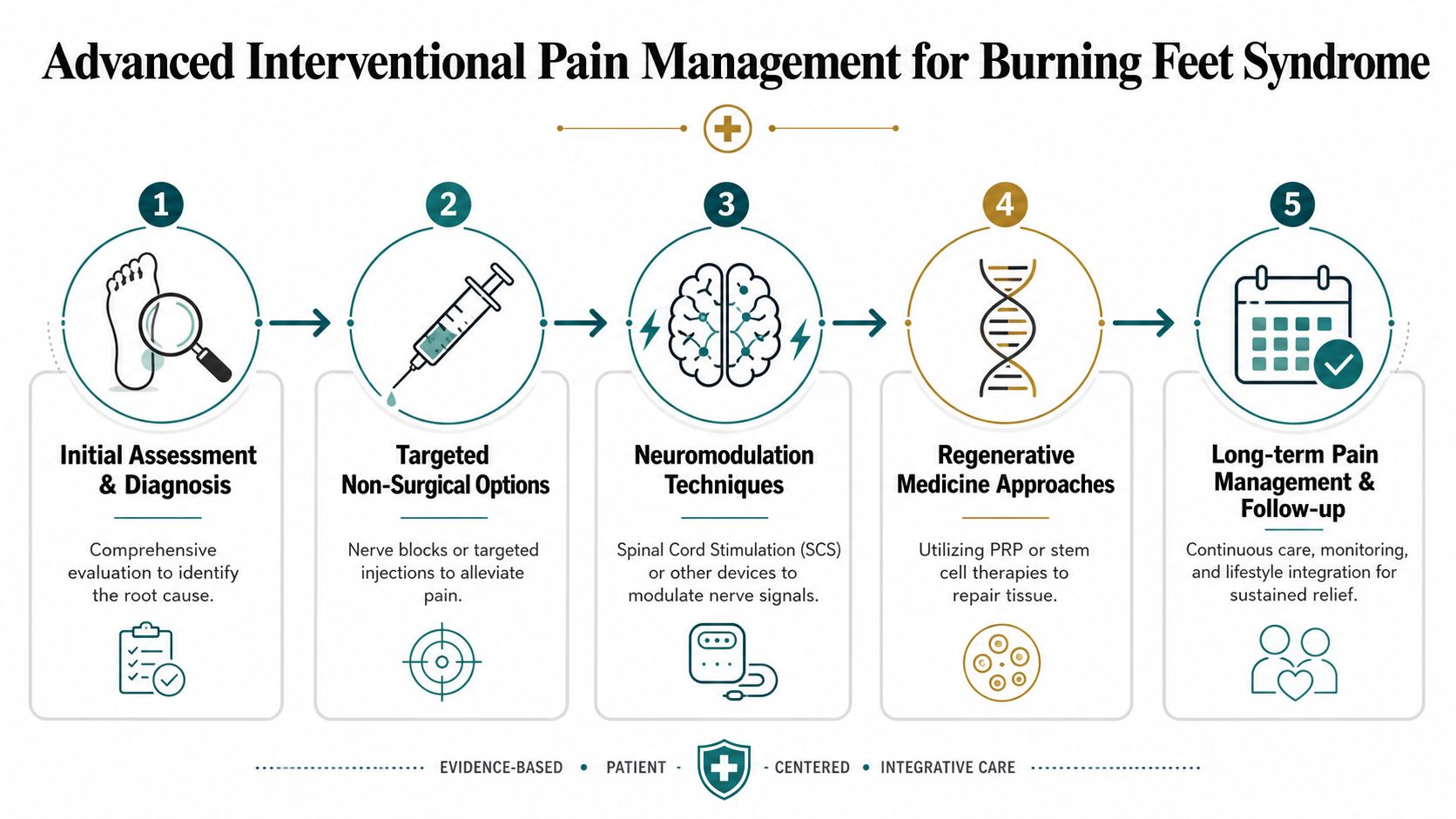
Some patients improve with footwear changes, topical agents, and oral medication. Others don't. When burning feet remain disruptive despite appropriate first-line care, interventional pain management becomes the next logical step.
Opioid-sparing treatment becomes particularly crucial. The objective isn't to merely add stronger medication. It's to identify whether a targeted procedure or neuromodulation strategy can interrupt the pain pathway more precisely.
When escalation makes sense
Interventional care is worth discussing when:
- The diagnosis is reasonably clear, but symptoms remain limiting
- Medication side effects become a barrier
- Pain stays localized enough that a targeted approach may help
- Function keeps declining, even if pain levels fluctuate
In these situations, targeted injections or nerve-focused procedures can help confirm the pain generator and reduce inflammation around irritated structures.
Neuromodulation and targeted procedures
One underused option is neuromodulation. Recent reviews describe TENS as a “well-tolerated and inexpensive” strategy with modest benefits, especially for patients who haven't done well with first-line drugs. It won't solve every case, but it belongs in the conversation earlier than many patients realize.
Other escalation pathways may include targeted injections around entrapped or irritated nerves. In carefully selected cases, clinicians also consider more advanced neuromodulation approaches such as peripheral nerve stimulation or spinal cord stimulation to alter the way pain signals are processed.
For patients trying to understand when an injection-based strategy fits, this overview of the best injection for nerve pain explains the decision process clearly.
The trade-offs patients should know
Advanced treatment isn't about chasing procedures for their own sake. It's about choosing the least invasive option likely to move function forward.
A few practical trade-offs matter:
- Injections can be more precise than medication, but they only help when the pain source is correctly identified.
- Neuromodulation can reduce medication dependence, but it requires thoughtful patient selection and follow-up.
- Interventional care can be proactive, not just a last resort, especially when ongoing pain is disrupting sleep, mobility, and mood.
The strongest plans stay multimodal. Even when a procedure works well, long-term outcomes are better when the underlying cause, daily habits, and emotional burden of chronic pain are all addressed.
Your Patient Pathway at Midwest Pain & Wellness
For many patients, the hardest part is knowing what to do first. Not every burning sensation needs the same doctor, test, or treatment. A structured pathway makes the process less overwhelming.
At a pain and wellness clinic, the sequence should feel deliberate. You begin with symptom mapping and medical review. Then the team determines whether the presentation fits neuropathy, nerve entrapment, referred pain, or a more complex mixed pattern. From there, treatment is built in layers rather than by trial and error.

What that process can look like
Patients from Oak Lawn, Palos Hills, Palos Heights, Worth, Bridgeview, Hickory Hills, Alsip, Burbank, Evergreen Park, and Orland Park often need care that connects diagnosis, medication management, and procedure-based options without defaulting to long-term opioids.
That pathway commonly includes:
- Detailed evaluation of symptoms, medical history, and likely pain generators
- Focused testing or coordination with other treating physicians when needed
- Conservative and medication planning if the pattern supports first-line care
- Interventional discussion if symptoms remain refractory or function keeps slipping
- Follow-up and reassessment so treatment changes are based on response, not guesswork
Why opioid-sparing care matters
For peripheral neuropathy, evidence supports gabapentin at 900-3,600 mg/day with symptom reduction in 40-60% of patients, while refractory cases may move to options such as injectable corticosteroids or percutaneous nitroglycerine before long-term opioids are considered. That sequence reflects a sensible priority. Use effective medication when it helps. Escalate thoughtfully when it doesn't. Keep opioids as a last resort.
Image guidance also matters when procedures are part of the plan. This overview of ultrasound guidance for nerve blocks shows why precision can improve both safety and targeting.
Good pain care doesn't force a choice between “just live with it” and “take stronger medication.” There's a middle path, and many patients do better there.
A strong clinic experience should leave you with a diagnosis that makes sense, a treatment plan that matches your life, and a clear next step if the first approach doesn't give enough relief.
Frequently Asked Questions About Burning Feet Treatment
Can burning feet syndrome be cured
Sometimes, yes. If the cause is reversible, such as a nutritional problem or a treatable compression issue, symptoms may improve significantly when that cause is addressed. In other cases, the goal is long-term control rather than cure.
How long does treatment take to work
That depends on the cause and the type of treatment. Some supportive measures help quickly. Neuropathic medications usually need time and dose adjustment. Nutritional correction in historical trials improved symptoms within 4 to 6 weeks, as noted earlier.
Are interventional procedures painful
Most patients tolerate them well. The experience depends on the specific procedure, the area being treated, and how sensitive the nerve already is. The purpose is to reduce pain, not add more of it, so careful technique and planning matter.
Should I worry if burning feet affect my sleep or mood
Yes. Sleep disruption and emotional strain are common with chronic nerve pain, and they deserve direct treatment. If you're feeling overwhelmed, hopeless, or mentally exhausted, say so clearly during your visit.
If burning feet are limiting your sleep, walking, or quality of life, Midwest Pain & Wellness offers compassionate, opioid-sparing care for nerve-related pain in the Chicago Ridge area. Patients from Oak Lawn, Palos Hills, Palos Heights, Worth, Bridgeview, Hickory Hills, Alsip, Burbank, Evergreen Park, and Orland Park can seek a personalized evaluation with Dr. Yaw Donkoh to identify the source of symptoms and build a treatment plan that may include medication management, image-guided interventions, and advanced neuromodulation when appropriate.