Finding Relief from Sciatica Pain Without Surgery in Chicago
Non-surgical treatment for sciatica chicago offers hope for thousands of people experiencing radiating leg pain, numbness, and tingling. If you’re dealing with sciatica, you’re not alone—nearly 40% of people in the United States will experience this condition at some point in their lives.
Here are your main non-surgical options available in Chicago:
- Physical Therapy – Core strengthening, posture correction, and targeted stretching exercises
- Interventional Pain Management – Epidural steroid injections and nerve blocks to reduce inflammation
- Regenerative Medicine – Platelet-Rich Plasma (PRP) and platelet lysate therapies
- Spinal Decompression Therapy – Gentle, non-invasive treatment to relieve nerve pressure
- Lifestyle Modifications – Weight management, ergonomic adjustments, and heat/cold therapy
The good news? Up to 90% of people who experience sciatica find relief without surgical options. Most cases resolve successfully with time and conservative, non-surgical treatments.
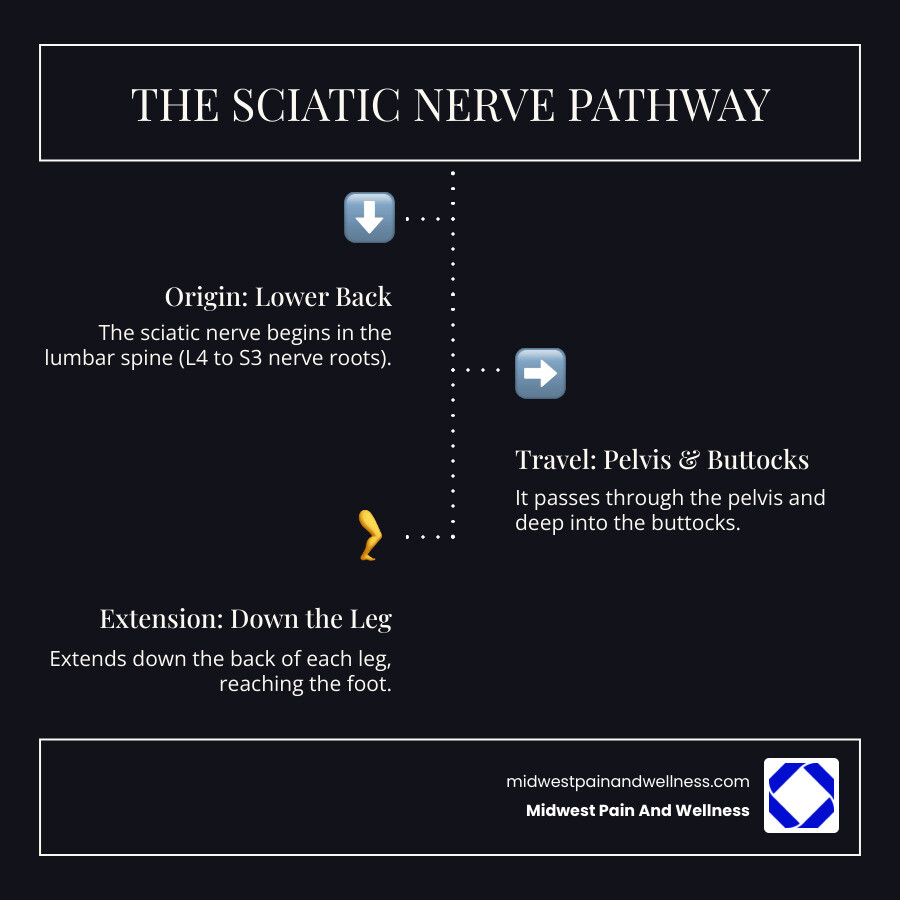
Sciatica—also called lumbar radiculopathy—occurs when the sciatic nerve becomes irritated or compressed. This nerve is the longest in your body, running from your lower back through your hips and buttocks, then down each leg. When it’s compressed, you feel pain along this path, usually on just one side of your body.
The pain can range from a dull ache to sharp, shooting sensations. Many people notice their symptoms worsen when sitting or standing for long periods. You might also experience numbness, tingling, or weakness in your leg or foot.
This guide will walk you through the comprehensive non-surgical treatment options available in Chicago, helping you understand what works, what to expect, and how to choose the right care for your situation.
Understanding Sciatica: Causes and Symptoms in the Windy City
Sciatica is more than just a backache; it’s a symptom that tells us something is irritating or compressing your sciatic nerve. This nerve, as we mentioned, is the largest and longest in your body, originating in your lower back and extending all the way down to your feet. When this vital nerve is affected, the pain can be quite literally a pain in the leg, often feeling like it’s radiating or shooting down one side of your body. This condition is also known as lumbar radiculopathy.
Common symptoms of sciatica include pain that travels from your lower back into your buttock and down the back of your leg. You might also experience burning, tingling, numbness, or weakness along this nerve pathway. For many, the pain intensifies when sitting, coughing, or sneezing. While the symptoms can be debilitating, for most people in Chicago and beyond, effective non-surgical treatment for sciatica chicago is well within reach. To better understand this crucial nerve, you can learn more about The sciatic nerve.
Common Causes of Sciatic Nerve Pain
So, what causes this irritation or compression of the sciatic nerve? Often, sciatica develops slowly due to wear and tear on the discs of the lower spine. Here are some of the most common culprits we see in our Chicago Ridge clinic:
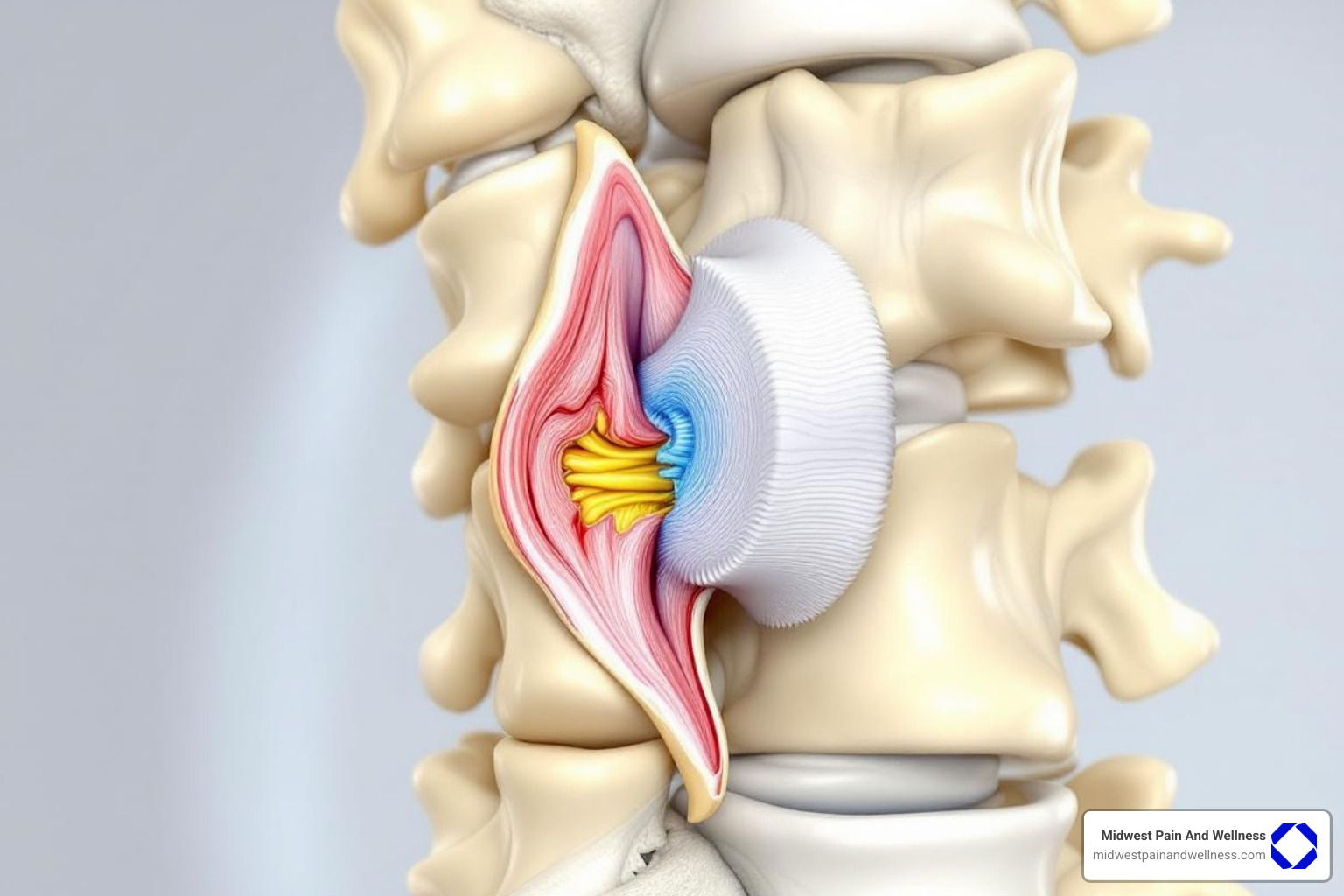
- Herniated or Bulging Discs: This is by far the most frequent cause. When one of the soft, gel-like discs between your vertebrae protrudes or ruptures, it can press directly on a sciatic nerve root, causing inflammation and pain. Think of it like a jelly donut with the jelly squeezing out and hitting a nearby nerve.
- Spinal Stenosis: This condition involves the narrowing of the spinal canal, which can put pressure on the spinal cord and nerve roots, including those that form the sciatic nerve. You can explore more about Spinal Stenosis on our website.
- Degenerative Disc Disease: As we age, our spinal discs naturally lose water content and become less flexible. This degeneration can lead to disc height loss, bone spurs, or disc herniation, all of which can irritate the sciatic nerve. Learn more about Degenerative Disc Disease here.
- Bone Spurs: These bony growths can develop along the edges of the vertebrae, often in response to arthritis or disc degeneration. If a bone spur presses on a nerve root, it can trigger sciatica. The Mayo Clinic has a good overview of bone spurs.
- Piriformis Syndrome: The piriformis muscle is a small muscle located deep in the buttock, near the sciatic nerve. If this muscle tightens or spasms, it can compress the sciatic nerve, leading to sciatica-like pain. We address this condition specifically; you can read More on Piriformis Syndrome for more details.
Less common causes can include spinal tumors, spondylolisthesis (where one vertebra slips over another), trauma, cysts, or even certain health conditions like diabetes. Understanding the precise cause is the first step toward effective non-surgical treatment for sciatica chicago.
Comprehensive Non-Surgical Treatment for Sciatica Chicago
At Midwest Pain And Wellness, we believe in a holistic, multi-modal, and interventional approach to pain management. Our goal is to provide comprehensive, opioid-free solutions for long-term relief, especially when it comes to a challenging condition like sciatica. For us, non-surgical treatment for sciatica chicago isn’t just a phrase; it’s our mission.
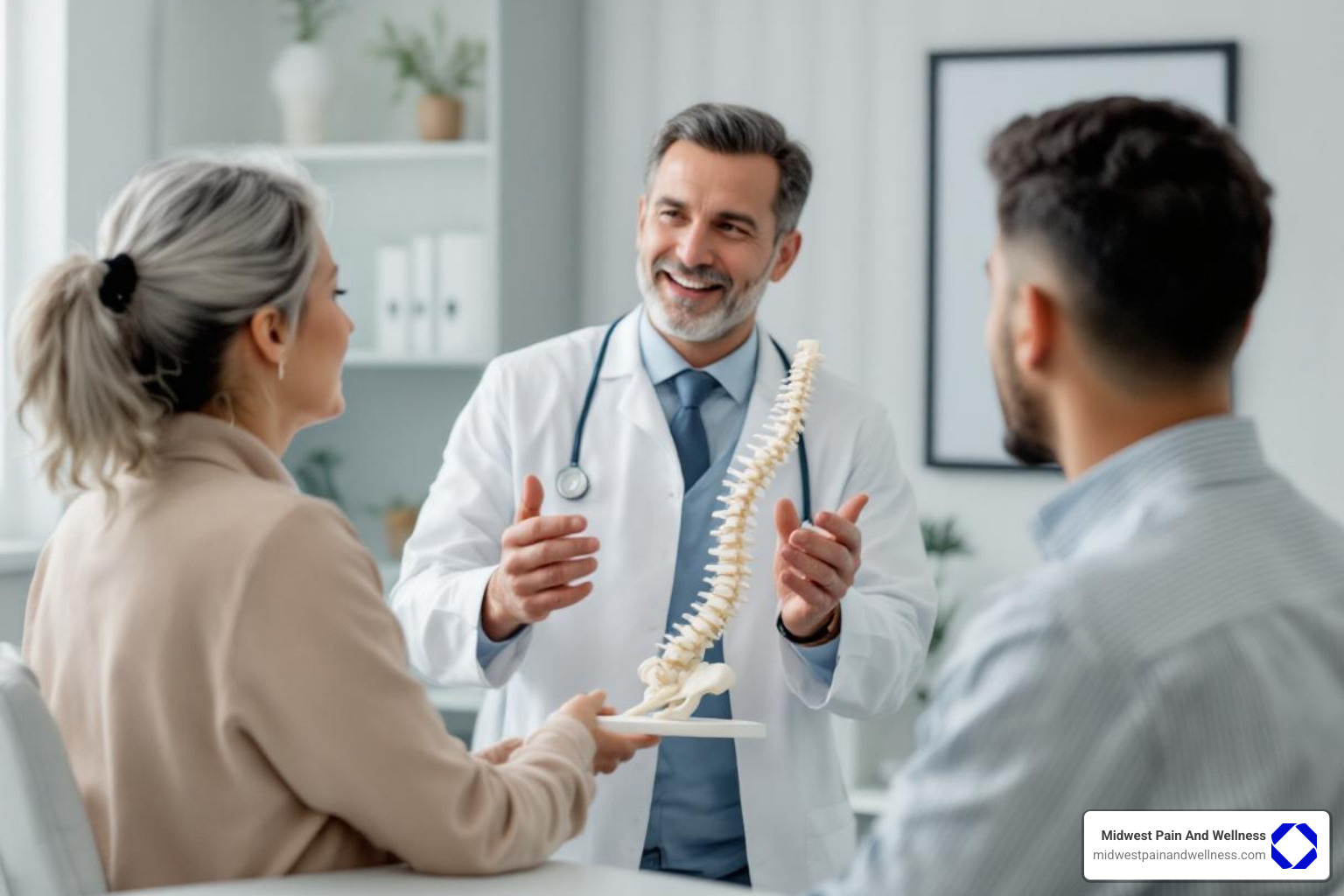
We know that every patient is unique, which is why our double board-certified doctors collaborate with other practitioners to create custom care plans. The good news, as statistics confirm, is that about 90 to 95 percent of sciatica cases are successfully resolved with time and conservative, non-surgical treatments. We leverage current therapies to achieve the best possible outcomes, focusing on truly resolving the problem rather than just masking symptoms. Explore our general Non-Surgical Pain Relief options.
Foundational Care: Physical Therapy and Lifestyle Changes
Often, the journey to relief begins with foundational care. Physical therapy is a cornerstone of non-surgical treatment for sciatica chicago, focusing on improving your body’s mechanics and strength. A custom physical therapy program will typically include:
- Core Strengthening Exercises: A strong core supports your spine, reducing stress on the sciatic nerve.
- Posture Correction: Learning and maintaining proper posture, especially when sitting or lifting, can significantly alleviate nerve pressure.
- Stretching: Specific stretches can improve flexibility in your lower back, hamstrings, and glutes, which can reduce tension on the sciatic nerve.
- Heat and Cold Therapy: Applying cold packs initially can help reduce inflammation, while heat can relax tight muscles. We often recommend alternating between the two for continuing pain.
- Ergonomic Adjustments: Modifying your workspace or daily activities to better support your spine can make a big difference.
- Weight Management: Carrying excess weight can put additional strain on your spine, exacerbating sciatica symptoms. Maintaining a healthy weight is a crucial lifestyle modification.
These foundational elements are not just about temporary relief; they are about empowering you with tools to manage your condition long-term and complement other advanced non-surgical treatments.
Advanced Interventional Pain Management
When foundational care needs a boost, advanced interventional pain management techniques offer targeted relief. Our Chicago Ridge clinic specializes in these precise treatments to reduce inflammation and pain directly at the source:
- Epidural Injections Chicago: These injections deliver powerful anti-inflammatory medication, typically corticosteroids, directly into the epidural space around the irritated sciatic nerve roots. This helps reduce swelling and alleviate pain. We use imaging guidance, such as a CT scan or an MRI, to ensure precise placement of the medication. You can learn more about Epidural Injections Chicago on our site.
- Nerve Blocks for Pain: A nerve block involves injecting an anesthetic and sometimes a steroid near a specific nerve or group of nerves to block pain signals. This can provide significant pain relief and help identify the exact source of your pain. Learn more about Nerve Block for Pain here.
These procedures are part of our comprehensive Pain Injections Chicago offerings, designed to provide effective, targeted relief without the need for surgery. While generally low risk, potential side effects can include temporary soreness at the injection site or a slight increase in pain before relief sets in. Serious complications are rare, especially with our experienced, board-certified physicians.
Innovative Therapies for Lasting Relief
Beyond traditional injections, we offer cutting-edge innovative therapies that focus on healing and restoring function, providing a more permanent solution for non-surgical treatment for sciatica chicago.
- Regenerative Medicine: This exciting field uses your body’s natural healing capabilities to repair damaged tissues and reduce inflammation.
- Platelet-Rich Plasma (PRP): PRP involves drawing a small amount of your blood, processing it to concentrate the platelets (which contain growth factors), and then injecting this concentrated plasma into the affected area. For sciatica, PRP can be injected into ligaments, muscles, or even around the sacroiliac (SI) joint to strengthen tissues, reduce inflammation, and promote nerve healing. This multi-targeted approach helps address the root cause of pain. PRP treatments are known for their lower risks compared to surgery or steroid injections, as they use your body’s own healing elements and don’t damage tissue.
- Platelet Lysate: Similar to PRP, platelet lysate is derived from your own blood platelets but involves a process that releases growth factors from the platelets before injection. It can be particularly effective for treating pinched nerves when used as an epidural injection, as the concentrated growth factors can reduce inflammation and support nerve health.
We believe early treatment with regenerative medicine can prevent the need for surgery and offer healing from within.
- Spinal Decompression Therapy: This gentle, non-invasive treatment uses a specialized table to create negative pressure within the spinal discs. By gently stretching the spine, it can relieve pressure on the sciatic nerve, allowing herniated or bulging discs to retract, promoting nutrient flow, and encouraging healing. It’s an excellent option for those looking for a natural approach to non-surgical treatment for sciatica chicago. Many patients experience significant improvement within a few sessions. This FDA-approved technology has been a significant advancement in non-surgical back pain treatment.
These innovative therapies are often combined with physical therapy and lifestyle changes to achieve the best and most lasting results.
When is Surgery Considered? Understanding the Role of Non-Surgical Care
It’s a common concern: “Will I need surgery for my sciatica?” The overwhelming answer for most people is no! As we’ve emphasized, up to 90% of people who experience sciatica find relief without surgical options. In fact, about 90 to 95 percent of sciatica cases are successfully resolved with time and conservative, non-surgical treatments. Our philosophy at Midwest Pain And Wellness aligns with this: surgery is typically a last resort.
The benefits of pursuing non-surgical treatment for sciatica chicago first are significant:
- Faster Recovery: Non-surgical treatments generally involve minimal to no downtime, allowing you to return to your daily activities much sooner than after surgery.
- Lower Risk: Surgical procedures inherently carry greater risks, including infection, bleeding, and complications from anesthesia. Non-surgical options, while not entirely risk-free, have a much lower profile of potential adverse events.
- Cost-Effectiveness: The cost of non-surgical treatments is often significantly less than surgery, making it a more accessible and financially prudent option for many.
- Avoiding Surgery: For many, the idea of surgery is daunting. Non-surgical approaches offer a way to alleviate pain and restore function without invasive procedures.
We always prioritize helping you explore and exhaust all appropriate non-surgical avenues before considering surgery. Our commitment is to find the least invasive yet most effective path to your long-term relief.
Red Flags: When to Seek Further Medical Evaluation
While most sciatica cases improve with conservative care, there are specific “red flag” symptoms that warrant immediate medical attention. Knowing these can be crucial for your health. You should seek further medical evaluation if:
- Conservative Care Fails: If you’ve undergone several weeks of conservative, non-surgical care and your pain persists or worsens, it may be time to speak with a specialist. As Hopkins Medicine advises, after a few weeks of conservative care, further evaluation might be needed.
- Cauda Equina Syndrome Symptoms: This is a rare but serious condition. If you experience worsening leg weakness, new or increasing numbness in your inner thighs, groin, or around your rectum (saddle anesthesia), or loss of bladder or bowel control, contact a doctor immediately. This requires prompt medical intervention.
- Progressive Muscle Weakness: If you notice that the weakness in your leg or foot is getting progressively worse.
- Severe, Unmanageable Pain: Pain that is so intense it’s debilitating and not responding to any pain management strategies.
- Other Complicating Health Factors: If your sciatica occurs in conjunction with a history of cancer, high fever, unexplained weight loss, drug abuse, or HIV/AIDS, you should contact your doctor immediately.
These situations are exceptions, not the rule, but be aware of them.
Next Steps if Non-Surgical Care Is Not Enough
If, after a thorough course of non-surgical treatment for sciatica chicago, your symptoms persist or worsen, our team will guide you through the next steps. This might involve:
- Referral to a Specialist: We have a network of trusted surgical specialists in Chicago we can refer you to, ensuring you receive expert care if surgery becomes necessary.
- Further Diagnostic Evaluation: Sometimes, additional imaging or specialized tests are needed to pinpoint the exact cause of persistent pain.
- Discussion of All Available Options: We will sit down with you to discuss all potential avenues, including surgical interventions like microdiscectomy, laminectomy, or, in very rare and severe cases, spinal fusion. We ensure you understand the risks, benefits, and recovery associated with each.
Our commitment at Midwest Pain And Wellness is to explore every possible non-surgical route first. However, if surgery is deemed the most appropriate course of action, we ensure you are fully informed and connected with the best specialists in the Chicago area.
Choosing Your Path to Relief: What to Look for in a Chicago Sciatica Clinic
When seeking non-surgical treatment for sciatica chicago, selecting the right clinic and care team is paramount. You want a partner in your pain management journey who is knowledgeable, compassionate, and dedicated to your long-term well-being.
Here’s what we believe you should look for, and what we proudly offer at Midwest Pain And Wellness:
- Board-Certified Doctors: Our physicians are double board-certified, meaning they have undergone rigorous training and demonstrated expertise in multiple specialties related to pain management. This ensures you receive the highest standard of care.
- Comprehensive Evaluation and Accurate Diagnosis: Effective treatment begins with understanding the precise cause of your sciatica. We conduct thorough evaluations, which may include physical exams, medical history review, and advanced imaging, to arrive at an accurate diagnosis. The Mayo Clinic provides excellent insights into diagnosis and treatment options, emphasizing the importance of this step.
- Custom Treatment Plans: There’s no one-size-fits-all solution for sciatica. We develop personalized care plans custom to your specific condition, lifestyle, and goals, ensuring the most effective path to relief.
- Collaborative Care: Our multi-modal, interventional approach means we don’t just focus on one type of treatment. We collaborate with other practitioners, such as physical therapists and chiropractors, to ensure a well-rounded and integrated care strategy.
- Local Expertise: Choosing a clinic in the Chicago area means you have convenient access to follow-up appointments and ongoing care. If you’re looking for a specialist near you, consider our services when searching for a Back Pain Specialist Near Me.
Key Questions for Your Sciatica Consultation
To make the most of your consultation, we encourage you to come prepared. Here are some key questions you might want to ask your doctor or our team:
- What diagnostic tests are needed to pinpoint the cause of my sciatica? This helps you understand the diagnostic process and why certain tests are recommended.
- What are my specific non-surgical treatment options, and how do they work? Ask for details on physical therapy, injections, regenerative medicine, and lifestyle modifications.
- What is the expected timeline for relief, and how will we measure progress? Understanding the typical duration of treatment and how improvement is tracked can set realistic expectations.
- How can I prevent recurrence of sciatica, and what long-term strategies do you recommend? This focuses on sustained wellness beyond immediate pain relief.
- What are the potential risks and side effects of the recommended non-surgical treatments? Ensure you understand what to expect and any precautions to take.
- When would surgery be considered, and what are the criteria for that decision? Even if you prefer non-surgical options, it’s good to know the thresholds for surgical consideration.
We believe an informed patient is an empowered patient. We’re here to answer all your questions and guide you every step of the way.
Frequently Asked Questions About Non-Surgical Sciatica Treatments
We understand you likely have many questions about non-surgical treatment for sciatica chicago. Here are some of the most common ones we hear:
How long does it take to see results from non-surgical treatment for sciatica chicago?
The timeline for seeing results from non-surgical sciatica treatments can vary significantly depending on the individual, the underlying cause of their sciatica, and the specific treatments being used.
- Injections: For interventional treatments like epidural steroid injections or nerve blocks, some patients may experience relief within a few days to a week. The full effect might take a bit longer to manifest.
- Physical Therapy and Lifestyle Changes: Consistent engagement in physical therapy and lifestyle modifications typically shows gradual improvement over several weeks to a few months. Core strengthening and posture correction are long-term strategies.
- Regenerative Medicine: With therapies like PRP or platelet lysate, improvements can often be noticed within a few weeks, with optimal results appearing over 2-4 months as the body’s natural healing processes take effect and nerve tissue regenerates.
- Spinal Decompression: Many patients report a reduction in pain after the first few sessions of spinal decompression, with significant improvement often seen by the second week of treatment.
Relief is often a gradual process. Our team will work with you to set realistic expectations and monitor your progress closely.
What are the potential risks and side effects of non-surgical sciatica treatments?
One of the major benefits of non-surgical treatments compared to surgery is their generally lower risk profile. While no medical procedure is entirely without risk, side effects from non-surgical treatment for sciatica chicago are typically mild and temporary.
- Injections (Epidural, Nerve Blocks): Potential side effects can include temporary soreness or bruising at the injection site, a temporary increase in pain, headache, or a feeling of numbness or weakness that resolves quickly. Serious complications like infection or nerve damage are extremely rare, especially when procedures are performed by board-certified specialists using image guidance. Allergic reactions are also possible but uncommon.
- Regenerative Medicine (PRP, Platelet Lysate): Since these treatments use your body’s own blood products, the risk of allergic reaction or rejection is minimal. The most common side effects are mild pain, swelling, or bruising at the injection site, which usually subsides within a few days.
- Spinal Decompression: This gentle therapy is largely non-invasive. Some patients might experience mild muscle spasms or temporary soreness in the treated area.
- Physical Therapy & Lifestyle Changes: These generally carry minimal risks, primarily related to overexertion or improper technique, which is why guided professional instruction is crucial.
Overall, the potential risks and side effects of non-surgical sciatica treatments are significantly lower and less severe than those associated with surgical interventions.
Can I fix sciatica myself at home?
While self-care measures can certainly play a supportive role in managing sciatica symptoms, relying solely on them to “fix” sciatica might not address the underlying cause.
- Self-Care Helps: At-home strategies like applying heat or cold packs, performing gentle stretches (as advised by a professional), and ensuring good posture can provide temporary relief and comfort. Many sciatica sufferers find that rest, combined with gentle movement, helps alleviate symptoms.
- Professional Diagnosis is Crucial: The problem with self-diagnosing and self-treating is that sciatica is a symptom, not a diagnosis. The underlying cause (e.g., herniated disc, spinal stenosis, piriformis syndrome) needs to be accurately identified for effective, long-term relief. Without a professional diagnosis, you might be treating the wrong issue or inadvertently making it worse.
- Home Care Complements Medical Treatment: We view self-care as an important complement to professional medical treatment. Once a proper diagnosis is made and a treatment plan is established by our team, we’ll guide you on specific stretches, exercises, and lifestyle modifications you can do at home to support your recovery.
For a comprehensive approach to your pain, we encourage you to explore our available Treatment Procedures and consult with our experts.
Your Next Step Towards a Pain-Free Life in Chicago
Living with sciatica pain can be incredibly challenging, impacting your work, hobbies, and overall quality of life. But as we’ve seen, there is immense hope for relief through non-surgical treatment for sciatica chicago. With the vast majority of cases resolving without surgery, a personalized, multi-modal approach can make all the difference.
At Midwest Pain And Wellness, located conveniently in Chicago Ridge, we are dedicated to providing comprehensive, opioid-free pain management using the most current and effective therapies. Our double board-certified doctors use a multi-modal, interventional approach, collaborating with you and other practitioners to create custom care plans designed for long-term pain relief.
You don’t have to let sciatica rule your life. We are here to help you understand your condition, explore all your non-surgical options, and guide you towards a pain-free future. Take control of your pain and find the relief you deserve.
Learn more about our approach to treating spinal conditions and how we can help you say goodbye to sciatica.