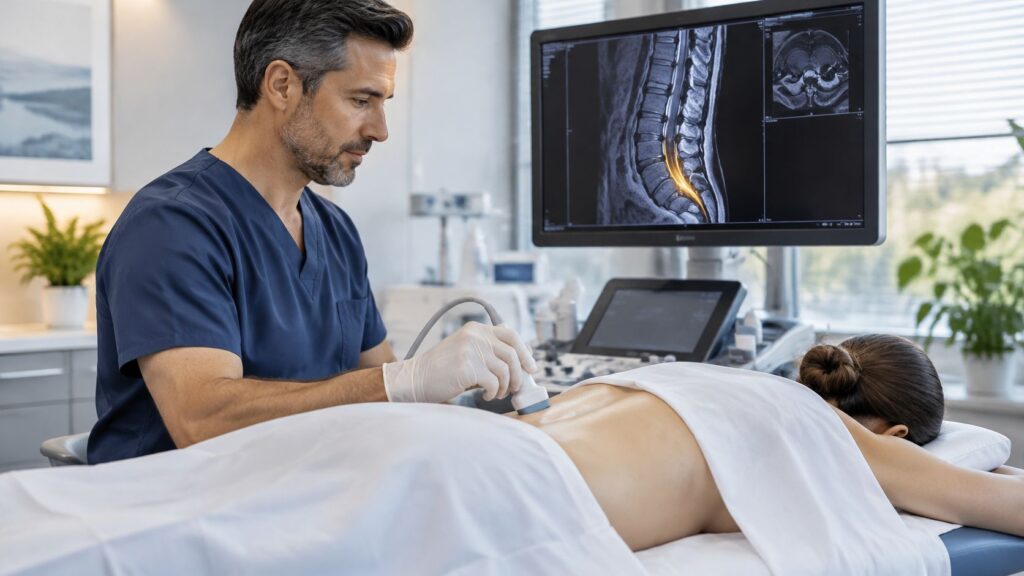
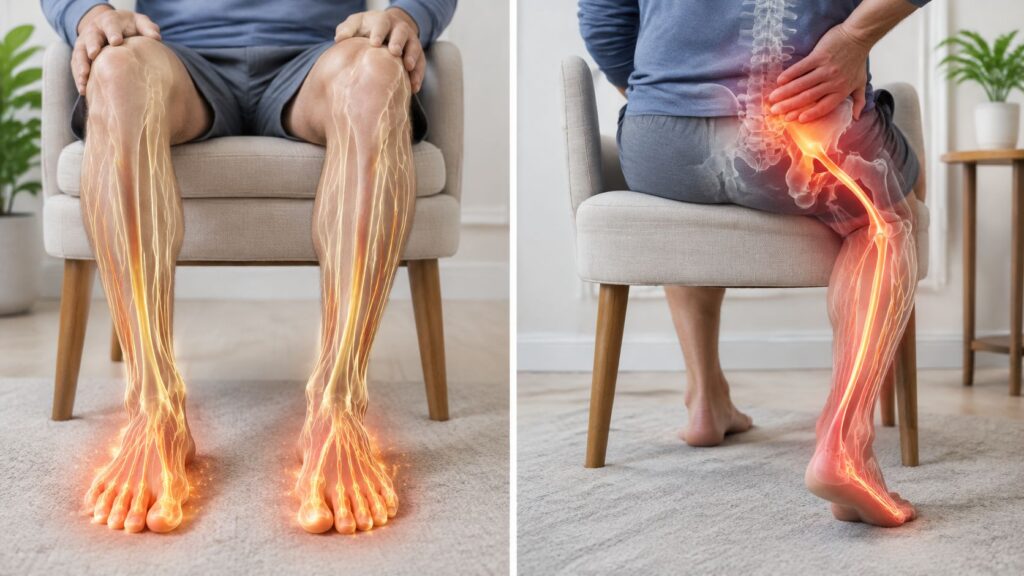
Back pain rarely stays in one part of your life. It follows you into the car ride to work, the grocery run, the walk from the parking lot, and the quiet hour when you finally sit down and realize your leg is still burning, tingling, or aching. Many people across Chicago Ridge and nearby suburbs put off getting help because they assume the next step must be a big surgery with a long recovery.
That fear is understandable. Traditional open spine surgery sounds overwhelming if you're already struggling to sleep, sit, or stand comfortably. The good news is that for the right diagnosis, there are less disruptive options that aim to treat the source of nerve or spinal pain while preserving more of the surrounding tissue.
Is Chronic Back Pain Limiting Your Life in Illinois
If you live in Oak Lawn, Orland Park, Palos Hills, Worth, or Bridgeview, the pattern is often the same. Pain starts as an occasional annoyance, then becomes the thing you plan around. You lean on the shopping cart for support. You avoid long drives. You stop going out because walking from one end of a parking lot to the other feels like too much.
For some people, the pain stays in the low back. For others, it shoots into the buttock or down the leg, which often suggests nerve irritation. Some notice heaviness in the legs when standing upright, then feel better when bending forward or sitting. Those symptom patterns matter because they can point to different spine problems, and different procedures.
A lot of patients first want to know whether surgery can be avoided. That's the right place to start. Many people should first consider medication adjustments, image-guided injections, activity modification, and a structured plan such as these chronic back pain treatment options. But when those steps stop helping, the conversation often shifts from “Can anything be done?” to “Is there a less invasive way to do it?”
Why people ask about smaller procedures
Minimally invasive spine surgery isn't just about having a smaller incision. For patients, it represents a different philosophy of care. The aim is to reach the painful area through a smaller corridor, disturb less healthy tissue, and support a quicker return to normal movement.
That matters in daily life. If you're in Evergreen Park, Palos Heights, or Burbank and trying to keep up with work, family, and basic errands, recovery time isn't a side issue. It's often the deciding factor.
Many patients aren't asking for the newest procedure. They're asking for the least disruptive option that still makes sense for their diagnosis.
When the conversation becomes serious
It's time for a more focused spine evaluation when pain has become persistent, function keeps dropping, or symptoms such as leg pain, numbness, or walking intolerance are starting to shape your choices every day. That doesn't automatically mean surgery. It means the diagnosis has to be clear before the treatment can be.
Understanding Minimally Invasive Spine Surgery
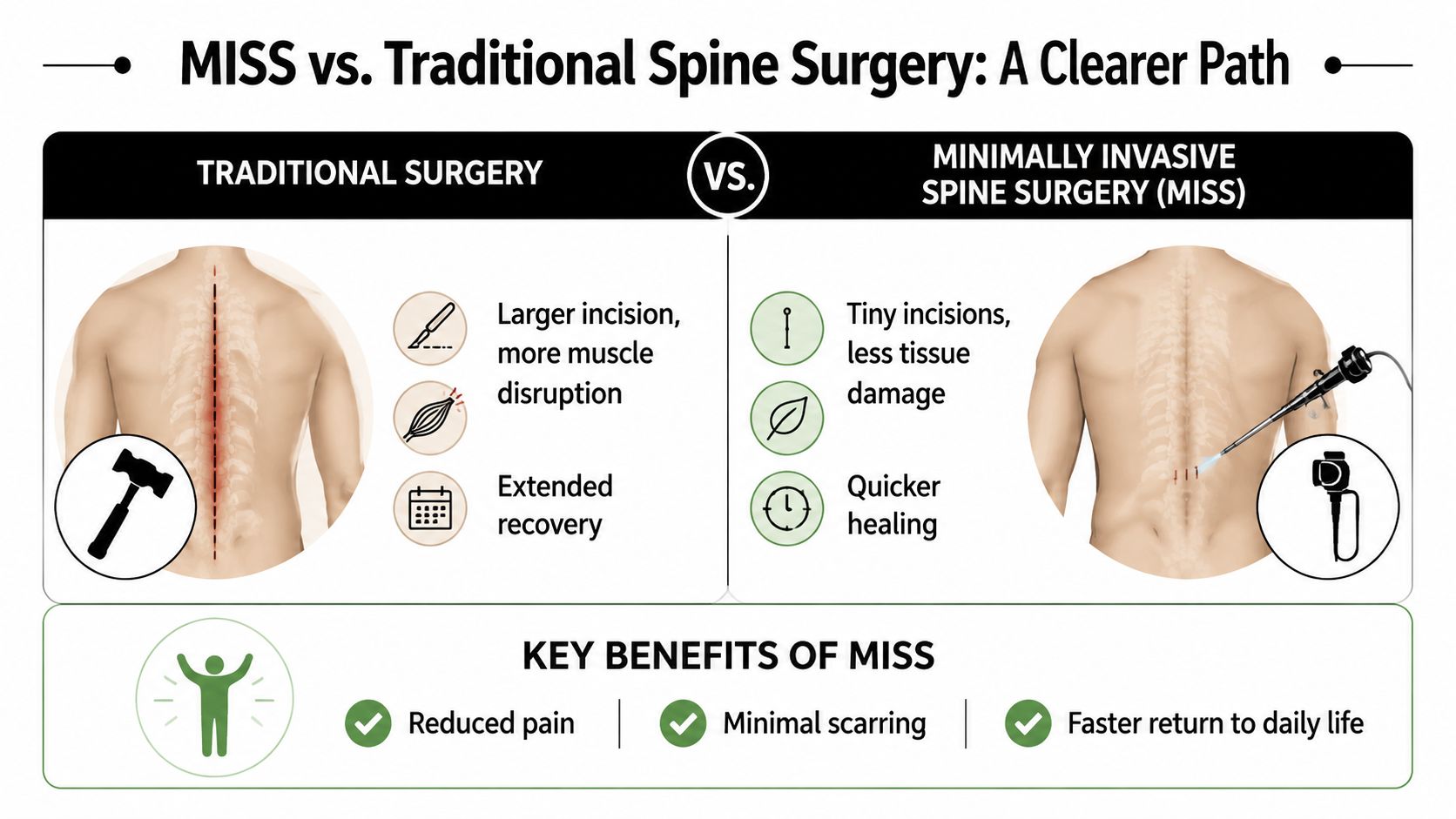
Traditional open surgery and minimally invasive spine surgery are trying to solve the same problem. The difference is how the surgeon gets there.
A simple way to think about it is home repair. If a plumber can fix a pipe through a small access panel, there's no reason to tear down the whole wall. In spine care, the “wall” is healthy muscle and soft tissue. The smaller the disruption, the less the body has to recover from afterward.
How the approach works
The core technical idea is straightforward. Minimally invasive spine surgery uses small incisions plus tubular retractors or endoscopes to create a narrow working corridor, which limits disruption of paraspinal muscle and soft tissue, according to Cleveland Clinic's overview of minimally invasive spine surgery. That tissue-sparing approach is the reason patients often experience less postoperative pain and a faster recovery than with open surgery.
Instead of stripping muscle away from the spine, the surgeon works through a focused channel. That can be especially useful in procedures aimed at decompression or stabilization, including discectomy, laminectomy or foraminotomy, and certain fusion approaches.
Why smaller access can matter so much
When less muscle and soft tissue are disrupted, several downstream benefits can follow:
- Less tissue trauma: The body has fewer structures to heal after the operation.
- Less postoperative soreness: Pain after surgery doesn't come only from the spinal problem itself. It also comes from the exposure needed to reach it.
- Faster mobilization: People can often start moving sooner because the access route is less disruptive.
- More normal anatomy preserved: That can make recovery feel less like rebuilding from scratch.
What minimally invasive does not mean
It doesn't mean “minor.” It doesn't mean risk-free. It doesn't mean every spine condition should be treated this way.
Practical rule: A smaller incision is only better if it still lets the surgeon treat the real pain generator safely and completely.
That's why procedure selection matters. The best approach is the one that fits the anatomy, the diagnosis, and the patient's goals. Sometimes that's an endoscopic approach. Sometimes it's a tubular decompression. Sometimes it isn't a surgical problem at all.
Could MISS Be the Answer for Your Condition
The right question isn't whether minimally invasive spine surgery sounds appealing. It usually does. The better question is whether your symptoms and imaging point to a condition that can reasonably be treated through a less disruptive approach.
Demand for these procedures has grown well beyond a niche trend. A market analysis projected the global minimally invasive spine surgery devices market to reach USD 2.22 billion by 2034, with North America accounting for over 35% of the market in 2024, as noted in this industry report on minimally invasive spine surgery market growth. That matters because it reflects how often patients and clinicians now view these techniques as part of mainstream spine care.
Conditions commonly evaluated for minimally invasive treatment
Some diagnoses come up again and again in patients from Palos Hills, Worth, Bridgeview, and nearby Illinois communities.
Herniated disc
A disc can bulge or rupture and irritate a nearby nerve root. Patients often describe sharp leg pain, sciatica, numbness, or weakness that follows a clear path down one side. If symptoms match the imaging, targeted decompression may help.
Lumbar spinal stenosis
This means there's narrowing around the nerves in the lower back. Many people don't describe it as back pain first. They say their legs feel heavy, weak, cramped, or unreliable when standing or walking. Relief with sitting or leaning forward is a classic clue.
Degenerative disc disease
This is a broad term, and not every painful disc needs surgery. Some people improve with a nonoperative plan. Others have structural changes that contribute to nerve compression, instability, or ongoing pain that doesn't settle down. If this sounds familiar, it helps to review a broader discussion of the best treatment for degenerative disc disease.
Symptoms that deserve a deeper workup
Patients in Oak Lawn, Hickory Hills, Alsip, and Orland Park often seek a spine consultation when they have:
- Radiating leg pain: Burning, shooting, or electric pain below the knee
- Walking intolerance: Needing to stop frequently because the legs tighten or weaken
- Numbness or tingling: Especially when it follows a clear nerve pattern
- Pain with standing but relief with flexion: A common stenosis story
- Symptoms that persist despite conservative care: When rest, medication, or injections no longer move things forward
Not every back pain diagnosis fits minimally invasive spine surgery. Muscle strain won't. Diffuse pain without a clear structural cause usually won't either. The treatment only works when the diagnosis is specific enough to target.
Advanced MISS Procedures at Midwest Pain and Wellness
A patient from Oak Lawn or Orland Park may come in saying, “I can make it through the grocery store if I lean on the cart, but standing in line is miserable.” That detail matters. It often points to a specific pain pattern, and the right minimally invasive procedure depends on that pattern, the exam, and the imaging lining up.
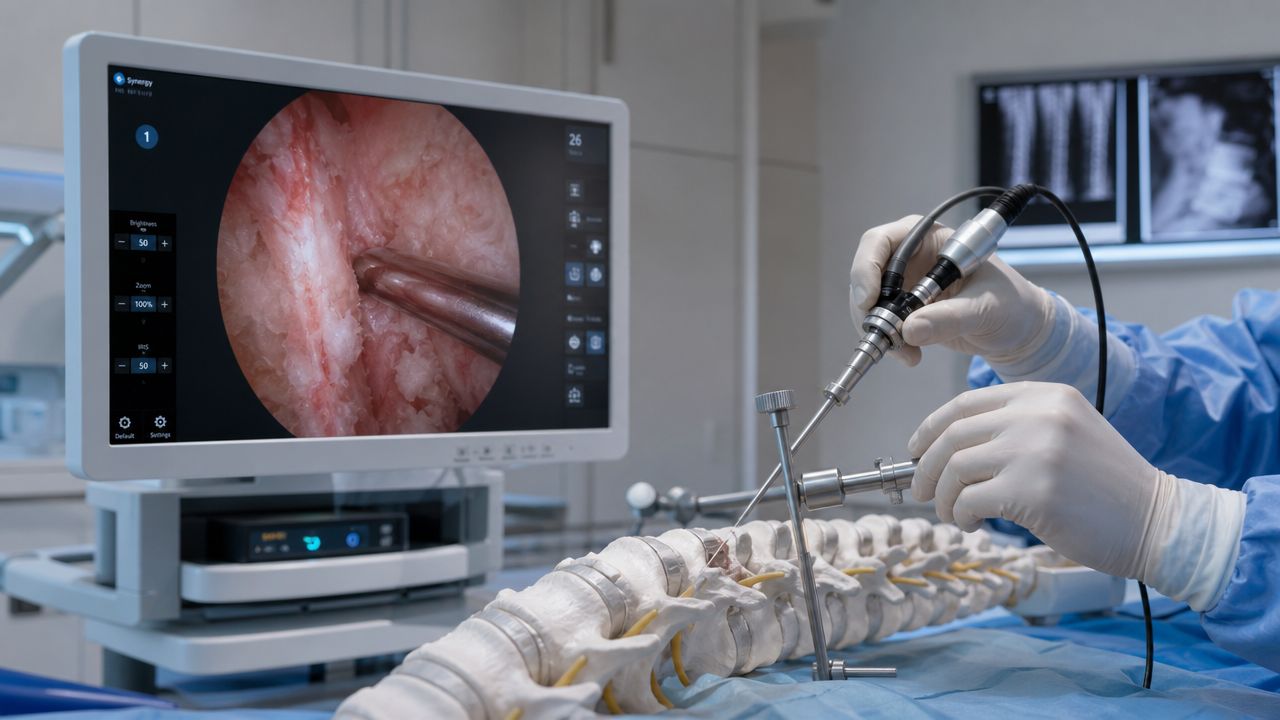
At Midwest Pain and Wellness, minimally invasive spine care is not treated as one generic category. We match the procedure to the structure causing symptoms. That may mean relieving pressure on nerves, creating more room in the spinal canal, or deciding that a surgical procedure is not the best next step at all.
MILD for lumbar spinal stenosis
The MILD procedure is designed for a specific form of lumbar spinal stenosis. In some patients, a thickened ligament contributes to narrowing around the nerves and leads to leg heaviness, cramping, or pain that gets worse with walking and standing.
MILD creates more space through a small access point. For the right patient, that can reduce the burden of a larger open operation while still addressing the structure causing the problem.
Vertiflex for selected stenosis patients
The Vertiflex Superion procedure can help selected patients with stenosis, especially those who feel better when they bend forward or sit down. The goal is to maintain space in a way that reduces nerve irritation during standing and walking.
Patient selection matters here. Spine stability, imaging findings, and symptom pattern all have to fit. A small implant is still a procedure, and it only makes sense when the anatomy supports it.
Microdiscectomy and focused nerve decompression
When a disc herniation is compressing a nerve root, a microdiscectomy or another focused decompression procedure may be the better match. The aim is straightforward. Remove the portion causing nerve pressure while preserving as much healthy tissue as possible.
Patients with classic sciatica often feel this pain most in the leg, not the back. The key step is confirming that the MRI finding matches the pain pattern and physical exam.
If the imaging does not match the symptoms, even a technically perfect procedure can miss the actual problem.
Procedure matching matters more than the label
Patients often ask whether a newer technique is automatically better. Usually, the better question is whether the procedure fits the diagnosis. An expert review on evolving minimally invasive spine surgery technologies noted that newer tools have not shown a clear overall outcome advantage for every condition.
That is why coordinated evaluation matters, especially for patients near Chicago Ridge who want clear next steps without bouncing between disconnected opinions. At Midwest Pain and Wellness, the discussion may include MILD, Vertiflex, focused decompression, injections, rehabilitation, or neuromodulation such as spinal cord stimulation for chronic nerve pain, depending on what is driving symptoms.
What patients should take from this
Small incisions do not make a procedure correct. A modern device does not make it appropriate. Good minimally invasive spine care starts with a specific diagnosis, an honest discussion of trade-offs, and a treatment plan that fits the person sitting in front of you.
Benefits Risks and Finding Your Candidacy
Patients deserve a balanced answer here. Minimally invasive spine surgery can be very helpful, but it still has to clear the same test as any procedure. Will it treat the right problem with an acceptable level of risk?
One of the strongest historical reasons these procedures gained credibility is that the conversation moved beyond cosmetics. A review summarized in the NIH's PMC archive reported that endoscopic microdiscectomy outcomes were equivalent to open microdiscectomy in a study of 10,228 patients. The same review also described a multi-institutional study of 533 endoscopic spine surgery patients, with 0.54% durotomy and 0.36% epidural hematoma, plus 4 recurrent herniations within 3 months, in this review of the evidence base for minimally invasive spine surgery. Those figures matter because they show that large patient groups have been studied, not just small early series.
Where the benefits usually show up
For the right diagnosis, patients often value minimally invasive procedures because they may offer:
- Less postoperative pain: Less tissue disruption usually means less pain from the surgical exposure itself
- Lower blood loss: Smaller working corridors are designed to minimize unnecessary disruption
- Lower infection risk: Less exposed tissue can reduce one source of surgical burden
- Faster return to routine movement: Earlier walking and function are common goals
- Smaller scars: Helpful, but usually not the main reason to choose the approach
Risks still need a direct discussion
Every spine procedure still carries real risks. Depending on the operation, these can include nerve injury, bleeding, infection, durotomy, hematoma, persistent symptoms, or recurrent symptoms later.
That doesn't mean patients should be alarmed. It means they should be informed.
Good consent doesn't promise perfection. It explains what the procedure can reasonably improve, what it might not fix, and what complications remain possible.
Minimally invasive vs traditional open spine surgery
| Factor | Minimally Invasive Surgery (MISS) | Traditional Open Surgery |
|---|---|---|
| Tissue access | Smaller corridor through less tissue disruption | Wider exposure with more soft tissue disruption |
| Muscle handling | Often separates or dilates tissue to preserve more anatomy | Often requires broader dissection to reach the spine |
| Recovery experience | Often supports earlier mobility and less postoperative soreness | Recovery may feel more demanding because exposure is larger |
| Visual working field | Focused, technology-assisted corridor | Broader direct exposure |
| Best use | Selected conditions with anatomy suited to a targeted approach | Cases that need wider access or more complex reconstruction |
Who may be a candidate
Candidacy usually depends on a few basics:
- A clear diagnosis: Symptoms and imaging should point to the same pain generator
- Failed conservative care: Many patients have already tried medications, therapy, or injections
- Functional limitation: Pain is affecting walking, sleep, work, or daily life
- A procedure that matches the anatomy: Not every narrowing or disc problem is suited to a minimally invasive approach
Some patients who are not ideal candidates for decompression may still benefit from other interventional options, including neuromodulation. For example, patients with chronic neuropathic pain sometimes ask how spinal cord stimulation fits into the larger picture, and this overview of how spinal cord stimulation works can help frame that conversation.
Your Recovery Journey with Our Coordinated Care
Recovery doesn't start when you get home. It starts before the procedure, with a plan that matches the operation, your baseline function, and the support you'll need during the first days afterward.
Many modern minimally invasive procedures can be done with a short stay. In selected lumbar decompression cases, endoscope-assisted surgery may be performed under monitored anesthesia care in an outpatient setting, and some modern MISS procedures have hospital stays of less than 24 hours, as described in this PMC review of endoscope-assisted spine surgery and recovery features. That shorter timeline is possible because these techniques aim to preserve blood supply, reduce internal scarring, and support faster mobilization.
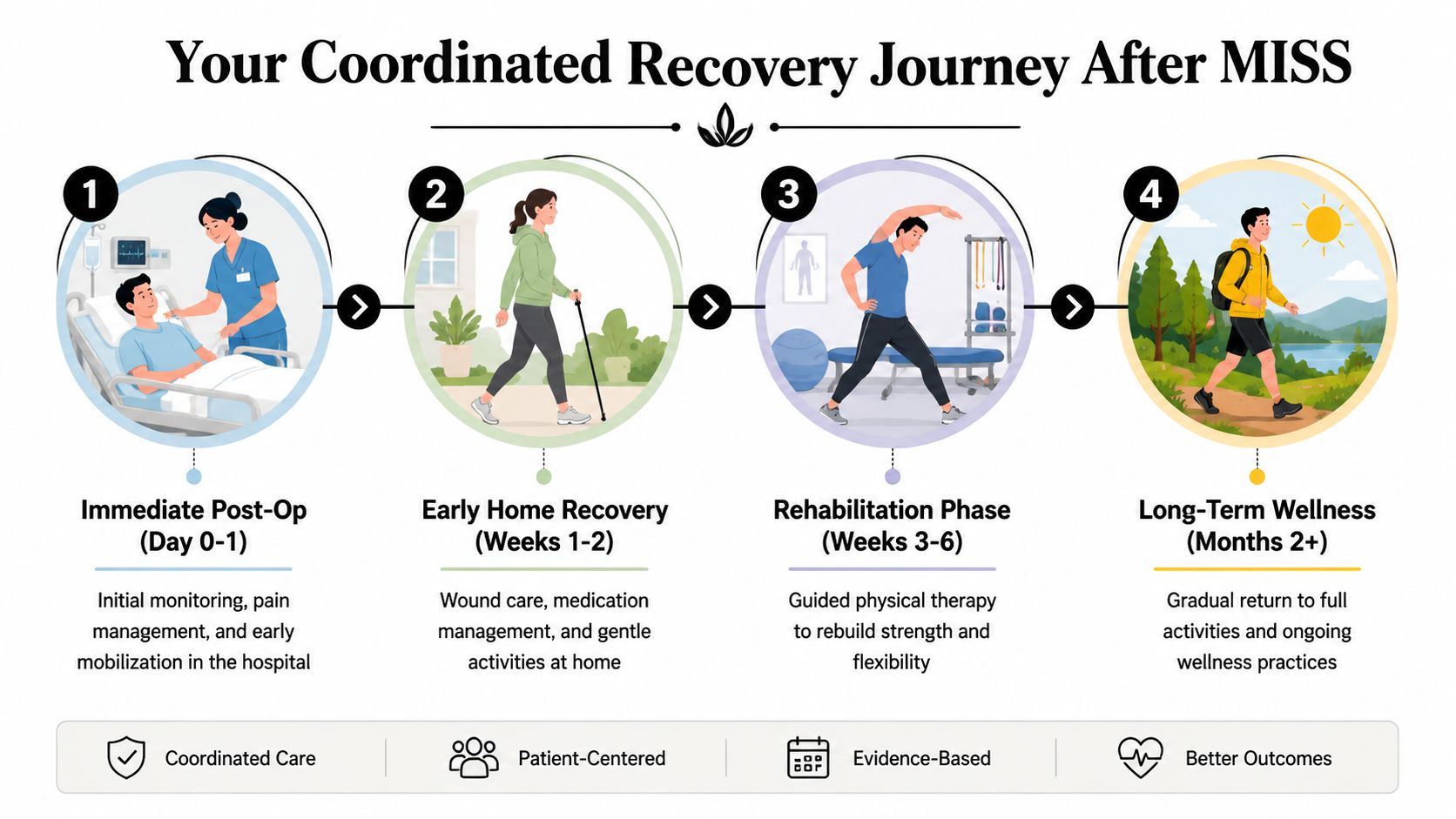
What the first phase usually looks like
Right after the procedure, most patients want to know two things. Is this amount of soreness normal, and when can I move? The answer depends on the procedure, but early movement is usually part of the plan.
The first phase often focuses on:
- Pain control: Using the smallest effective medication plan
- Safe movement: Getting up, walking, and changing positions correctly
- Incision care: Keeping the wound clean and watching for warning signs
- Clear restrictions: Avoiding movements that could stress the healing area
The middle of recovery is where habits matter
The next stage is less dramatic but just as important. Patients often feel better quickly, then try to do too much. That's one of the easiest ways to create a setback.
Early improvement is encouraging, but it isn't the same as full healing.
For patients in Hickory Hills, Alsip, Burbank, and nearby Illinois communities, good follow-up care means the procedural team doesn't work in isolation. Recovery often goes better when pain management, primary care, surgical input when needed, and rehabilitation are aligned around the same diagnosis and goals.
Coordinated care changes the experience
A coordinated model helps answer practical questions that come up after minimally invasive spine surgery:
- Who adjusts medications if pain changes
- Who reviews activity restrictions
- Who decides when rehab should begin or progress
- Who reassesses the diagnosis if recovery stalls
That kind of coordination matters because not every post-procedure symptom means something has gone wrong. Sometimes tissue is healing normally. Sometimes a nerve is calming down slowly. Sometimes the original diagnosis needs to be revisited. Patients do better when those decisions are connected, not fragmented.
Key Questions to Ask Your Spine Specialist
A good consultation should leave you with more clarity, not more confusion. If you're considering minimally invasive spine surgery, ask direct questions and expect direct answers.
Questions worth bringing to the visit
- Why am I a candidate for this specific procedure? Ask your specialist to connect your symptoms, exam, and imaging in plain language.
- What problem is the procedure trying to fix? You should know whether the goal is decompression, stabilization, or something else.
- What are the alternatives if I don't do this now? Sometimes continued conservative care is reasonable. Sometimes it isn't.
- What symptoms should improve first, and what symptoms may take longer? Leg pain, numbness, weakness, and back pain don't always improve on the same timeline.
- What risks apply to my case? The answer should reflect your anatomy and health, not a generic script.
- What will recovery require from me at home? Restrictions, walking, follow-up visits, and rehab should be clear.
- How do you coordinate care for patients from Evergreen Park, Palos Heights, or Orland Park? Logistics matter when follow-up and recovery planning are part of the outcome.
The answer you want to hear
You want a specialist who can explain why one approach fits and another doesn't. You also want someone willing to say when a patient isn't a good candidate for a procedure. That kind of restraint usually signals good judgment.
If your pain has reached the point where walking, sleeping, driving, or working is getting harder, it's reasonable to ask whether a less invasive option could help. The key is making the decision from a clear diagnosis, not from fear of surgery or hope alone.
If you're ready for a personalized evaluation, Midwest Pain & Wellness in Chicago Ridge offers consultation with Dr. Donkoh to review your symptoms, imaging, prior treatments, and whether a minimally invasive option fits your diagnosis and recovery goals.