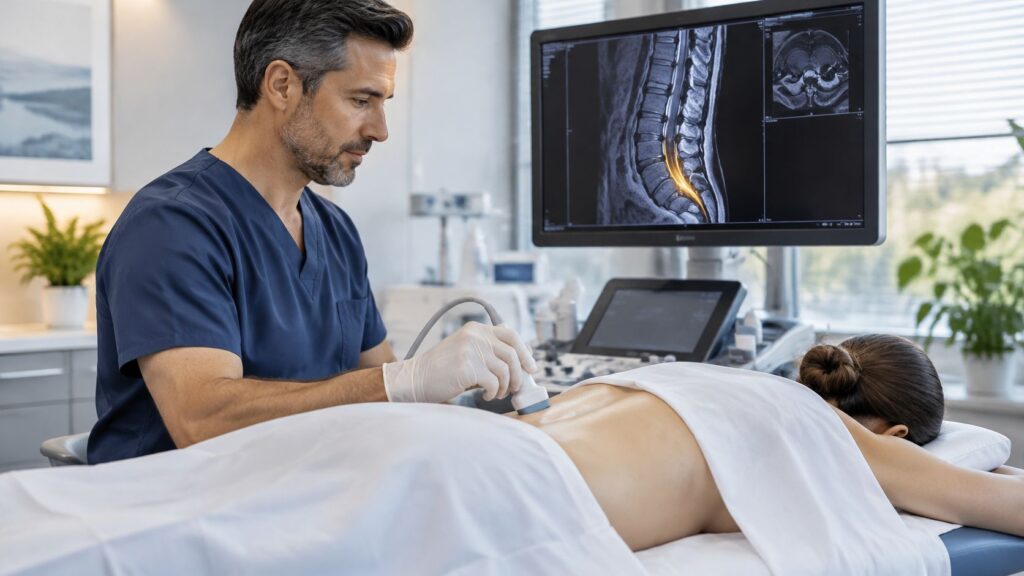
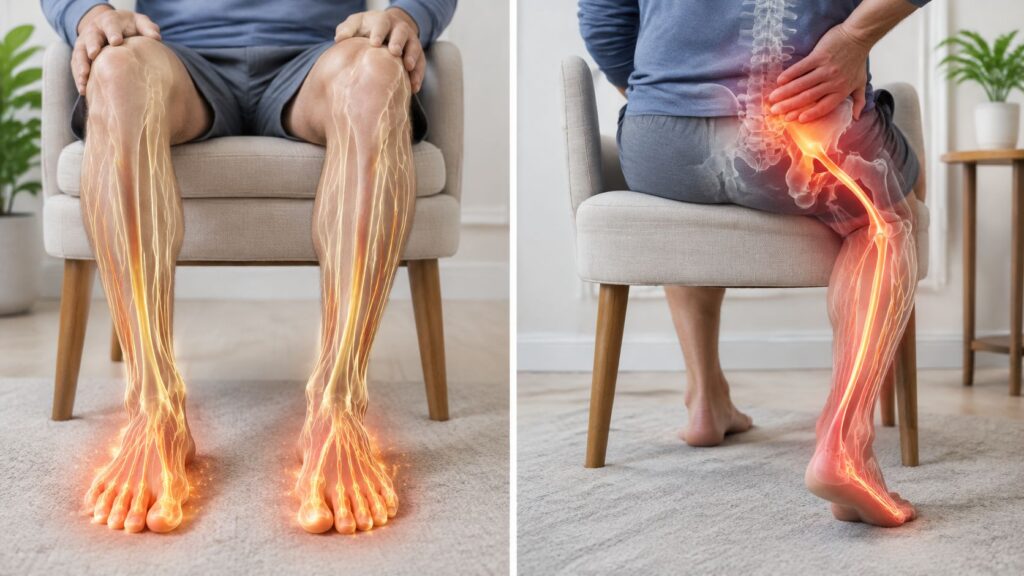
Back pain often starts as an annoyance and slowly becomes the thing that organizes your day. You think about how long you can stand at the counter, whether the drive will flare your symptoms, and how badly you'll pay for a simple errand later. By the time many people start looking into a PRP injection for back pain, they've already tried rest, medications, therapy, activity changes, or standard injections that helped for a while but didn't hold.
In the southwest suburbs of Chicago, that story is common. People in Oak Lawn, Palos Hills, Palos Heights, Worth, Bridgeview, Hickory Hills, Alsip, Burbank, Evergreen Park, Orland Park, and nearby communities around Chicago Ridge often aren't looking for hype. They want a straight answer about what might help, what won't, and what trade-offs come with each option.
Is Chronic Back Pain Limiting Your Life in Illinois
A lot of patients reach this point after months of adapting. They stop bending a certain way. They avoid longer walks. They turn down family plans because sitting, standing, and driving all hurt in different ways. In Illinois suburbs like Orland Park, Alsip, and Palos Hills, that can mean back pain interferes with everything from work commutes to weekend routines.
The frustrating part is that chronic back pain isn't just one problem. One person has pain coming from a sacroiliac joint. Another has facet joint arthritis. Someone else has disc-related pain or a combination of issues. That's why a treatment that helped a friend may do very little for you.
When standard care helps, but not enough
Many patients have already done the reasonable first steps. They've tried medication, modified activity, and worked through conservative care. Sometimes they got partial relief. Sometimes the pain returned as soon as the first treatment wore off.
If that sounds familiar, it helps to know there are still options beyond repeating the same short-term cycle. A more complete look at chronic back pain treatment options often includes treatments aimed at the actual pain generator, not just temporary symptom suppression.
Chronic pain changes how people move, sleep, work, and think. A useful treatment plan has to improve function, not just reduce pain on a chart.
Where PRP fits
Platelet-rich plasma, or PRP, is one of the regenerative treatments used in pain medicine for carefully selected patients. It's an opioid-sparing option that uses a concentrated portion of your own blood and places it into a targeted structure with the goal of supporting healing and calming persistent irritation.
That doesn't make PRP a miracle cure. It also doesn't make it the right answer for every back problem. But for the right diagnosis, and when the injection is placed precisely, it can be a meaningful part of a broader pain and wellness plan in Illinois.
Understanding Platelet-Rich Plasma Therapy
PRP makes more sense when you think of it as your body's own repair crew, concentrated and redirected. Your blood already contains platelets and signaling proteins involved in healing. PRP takes that natural system and increases the concentration of the components clinicians want at the treatment site.
Here's the basic process patients go through during treatment.
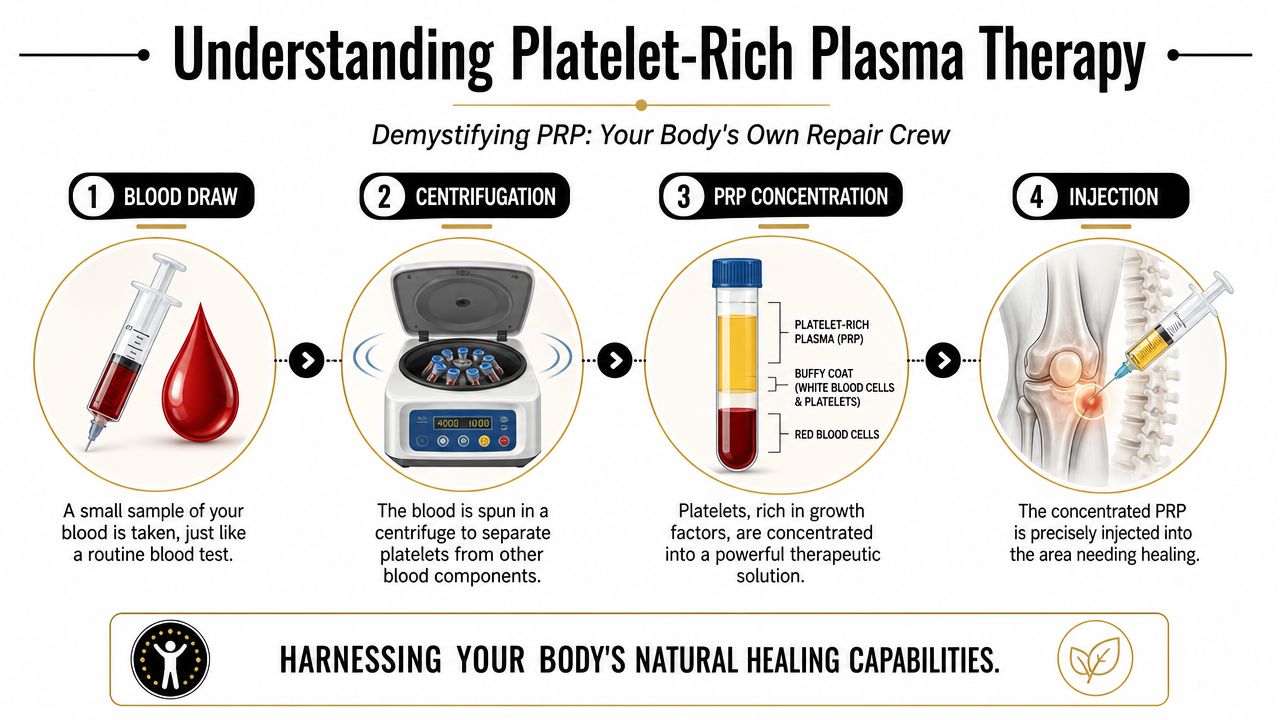
The four steps
Blood draw
A small sample of your blood is taken, similar to a routine lab draw.Centrifugation
That blood is spun in a centrifuge to separate its components.PRP concentration
The platelet-rich portion is isolated. This is the part used for treatment.Targeted injection
The PRP is injected into the painful structure with image guidance so the treatment reaches the intended area.
Why platelets matter
Platelets do more than help with clotting. They also release growth factors and signaling proteins involved in tissue repair. In a regenerative medicine setting, the goal isn't to numb the area. The goal is to deliver a concentrated biologic signal where damaged or chronically irritated tissue may benefit from help organizing a better healing response.
That's why PRP is different from a medication that blocks inflammation for a short window. It's trying to support a local repair process.
Practical rule: PRP works best when the diagnosis is clear, the target is specific, and the patient understands that improvement is often gradual rather than immediate.
What PRP is not
PRP isn't stem cell treatment. It isn't surgery. It also isn't a one-size-fits-all answer for every kind of low back pain. If pain comes from severe instability, advanced nerve compression, fracture, infection, or another condition that requires a different intervention, PRP may not be appropriate.
A good consultation should sort that out before anyone talks about injections. The right question isn't “Does PRP work?” The better question is “Does PRP make sense for this exact pain source in this specific patient?”
How PRP Injections Can Relieve Spinal Pain
Back pain is a broad label. A PRP injection for back pain only has a real chance to help if the painful structure is identified correctly and treated accurately. In spine care, that usually means distinguishing whether symptoms are coming from a sacroiliac joint, facet joints, discs, supporting ligaments, or nearby soft tissues.
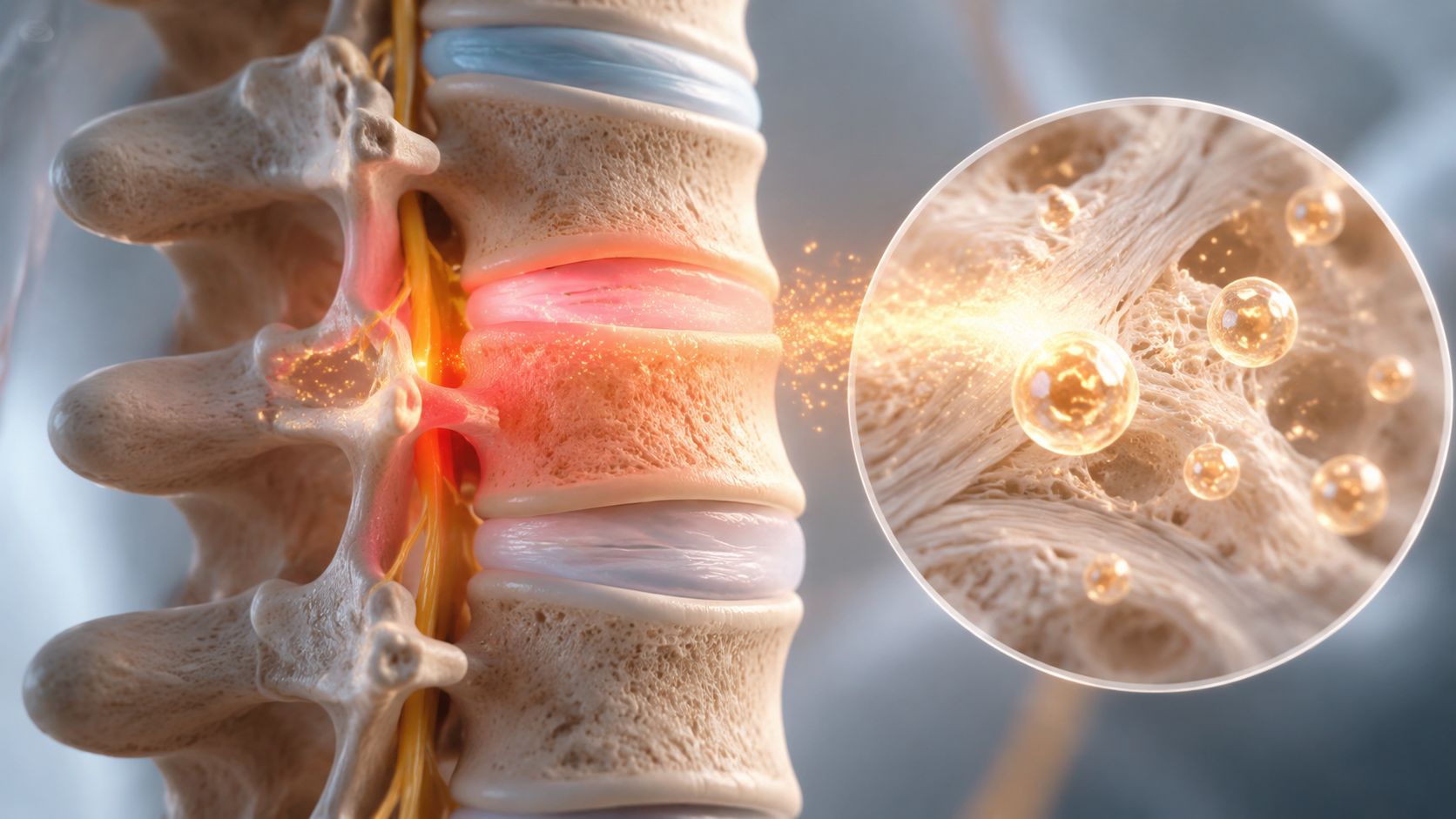
The structures that may respond
Some spine-related pain patterns are more suitable for PRP than others. Common targets in interventional pain practice include:
Sacroiliac joint pain
This often causes pain low in the back or buttock and may worsen with standing, walking, or transitions.Facet-mediated pain
Arthritic or inflamed facet joints can create localized low back pain, especially with extension or twisting.Disc-related pain
In selected cases, degenerative disc pain may be part of the discussion, though candidacy has to be assessed carefully.Supporting ligaments and stabilizing tissues
Some patients have pain driven in part by chronic strain or poor support around the spine and pelvis.
How the biology helps
Once injected into the right location, PRP is thought to help by changing the local environment. The platelet concentration brings growth factors and signaling molecules that can reduce the activity of inflammatory cells, support tissue repair, and encourage healthier matrix formation in damaged tissue.
In practical terms, that can mean less irritation with movement and better day-to-day function over time. Patients don't usually feel that as an immediate numbing effect. They feel it as a slow shift toward more tolerance for walking, sitting, bending, or getting through the workday.
Why precision matters
A spine injection should never be treated like a blind shot into a general area. In pain medicine, fluoroscopy or ultrasound guidance matters because different pain generators sit close together, and missing the target can lead to disappointing results even when the underlying treatment is reasonable.
That's one reason online conversations about PRP can be confusing. People say it worked or didn't work, but often leave out the most important issue. Was the diagnosis right, and was the injection placed in the right structure?
A clinical study found that a single PRP injection led to a 36.33% overall improvement in pain for patients with unresolved lower back pain, and the same study reported significant reductions in pain with better functionality scores that helped patients return to everyday activities more quickly, according to this clinical study on PRP for unresolved lower back pain.
The best PRP candidate isn't simply someone with severe pain. It's someone whose pain source can be identified and reached accurately.
The Clinical Evidence for PRP in Back Pain Management
Patients deserve honesty about the evidence. PRP for spinal pain has promising data, but the strength of that data depends on the diagnosis being treated and the comparison being made. The most useful way to read the research is to ask whether it improves pain, whether it improves function, and how long those changes appear to last.
What the stronger data shows
A helpful summary comes from a meta-analysis rather than a single small study. In plain language, that matters because it pools information from more than one trial and gives a broader look at outcomes.
A meta-analysis of 138 patients with chronic low back pain found that PRP injections provided significantly more pain relief at one, three, and six months compared to control groups. For sacroiliac joint pain specifically, PRP offered a 90% pain-free status at three months, compared with 25% in the lidocaine group.
How to interpret that as a patient
Those findings are encouraging, especially for patients whose pain is traced to the sacroiliac joint. They suggest PRP can outperform simpler anesthetic-based injections over time in selected situations.
But a responsible interpretation is narrower than many advertisements make it sound. The data doesn't mean every kind of low back pain responds equally well. It means that in studied patients, and especially in some targeted diagnoses, PRP showed meaningful benefit.
A practical way to track whether treatment is helping is to measure changes in pain, function, walking tolerance, and daily activity in a structured way. That's the same logic behind Meloq's guide for objective assessment, which explains why objective outcome measurement matters when judging progress rather than relying only on memory.
Better decisions come from matching symptoms, exam findings, imaging, and response to treatment. One data point alone usually isn't enough.
What the evidence does not prove
The current evidence supports PRP as a reasonable conservative option for selected chronic back pain patients. It does not prove that PRP is universally superior to every established intervention. It also doesn't remove the need for diagnosis, rehabilitation, or other spine procedures when those are more appropriate.
That distinction matters. Evidence-based care means using PRP where it fits, not trying to force it into every back pain story.
Your PRP Procedure at Our Chicago Ridge Clinic
A lot of anxiety about PRP comes from not knowing what the day entails. The procedure is usually straightforward, but the planning before the injection matters as much as the injection itself.
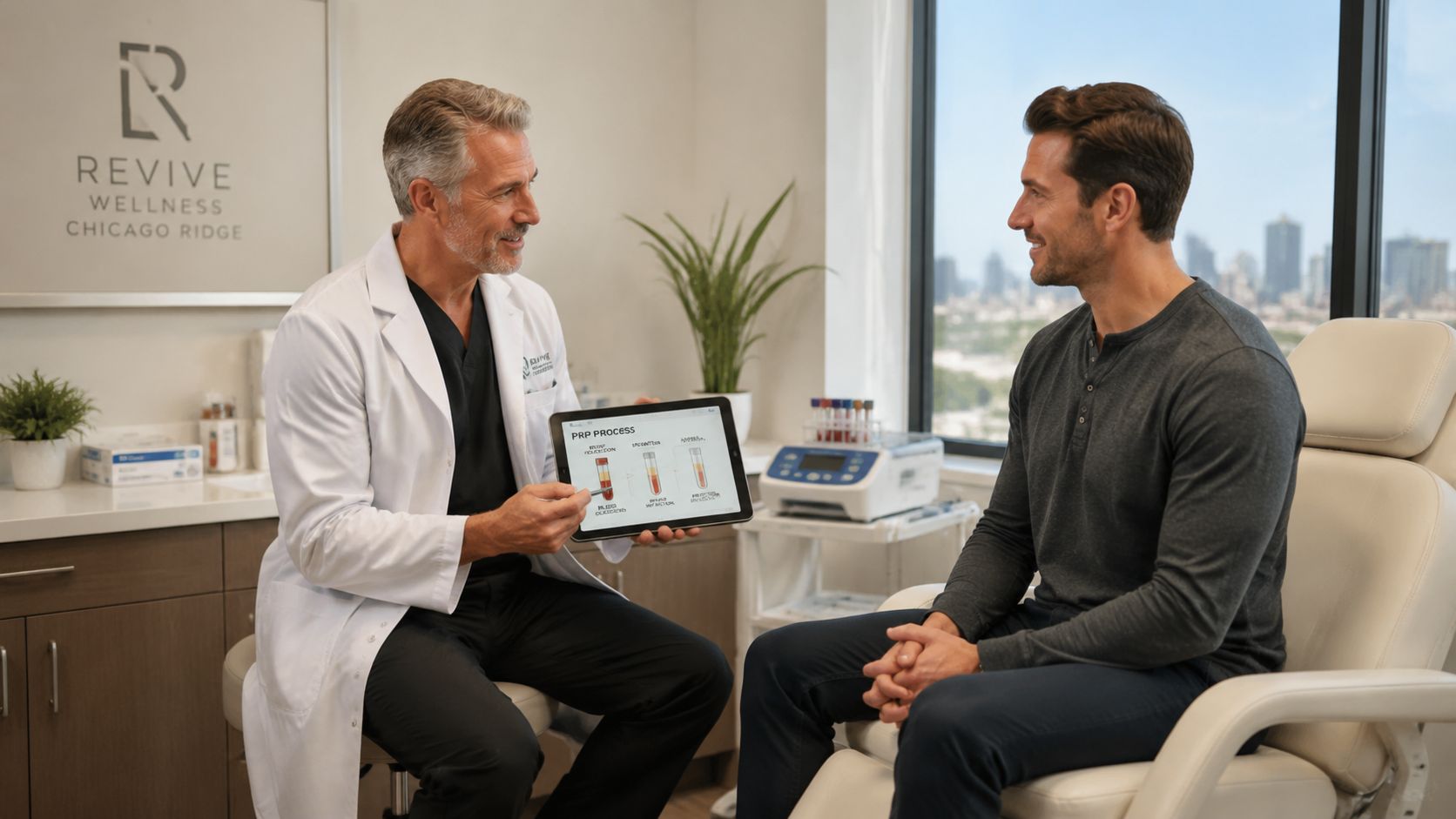
Step one is deciding if you're a good candidate
The first visit should focus on diagnosis. That includes your pain pattern, what makes it worse, what you've already tried, imaging when needed, and whether the suspected pain generator is something PRP can reasonably address.
This is also the time to talk openly about goals. Some patients want to sit through work without flaring up. Others want to get back to golf, gardening, or longer walks in communities like Bridgeview or Evergreen Park. The treatment plan should reflect that.
What happens on procedure day
The actual treatment commonly includes a few clear steps:
Blood collection
A small sample of your blood is drawn.Processing the sample
The sample is prepared on site to isolate the platelet-rich portion.Image-guided injection
The PRP is placed into the identified structure using fluoroscopy or ultrasound. Precision is a key part of the procedure.Post-procedure instructions
You'll receive guidance on activity modification, soreness expectations, and when to resume elements of your normal routine.
Some patients exploring spinal PRP also want to understand how regenerative treatment is used in nearby areas of the spine. A related page on PRP for neck pain can help frame how target selection and image guidance affect outcomes in cervical conditions as well.
Recovery and repeat treatment expectations
Most patients should expect a gradual recovery curve rather than a dramatic overnight change. It's common to have short-term soreness after the injection, followed by a period where the area settles before improvement becomes more noticeable.
Research for orthopedic conditions indicates that a minimum of two PRP injections is often more successful than a single shot, and the average duration of symptom relief after a successful treatment course is approximately nine months, based on this overview of PRP treatment patterns in orthopedic care.
That doesn't mean every back pain patient automatically needs the same number of injections. It means repeat treatment is sometimes part of the plan, and patients should know that before starting.
A PRP procedure is rarely the whole treatment plan. The injection is one part of a larger strategy that may also include movement modification, strengthening, and follow-up reassessment.
PRP Compared to Other Back Pain Interventions
The most useful question isn't whether PRP is “better” in the abstract. It's whether it matches your priorities. Some patients want the fastest short-term mobility improvement possible. Others care more about avoiding repeated steroid exposure or delaying more invasive treatment.
This comparison helps place PRP in context.
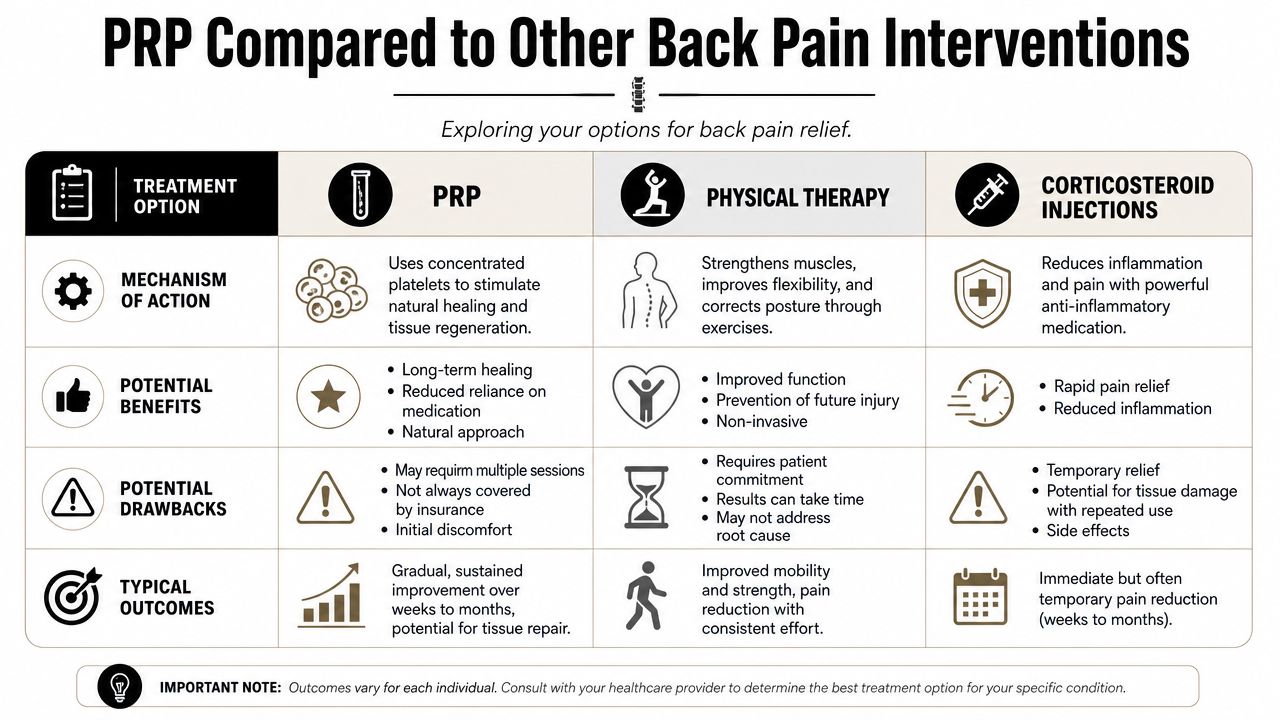
Side by side trade-offs
| Treatment | Main goal | Best feature | Main limitation |
|---|---|---|---|
| PRP | Support healing in a targeted painful structure | Potential for longer-lasting improvement in selected patients | Relief is usually gradual, not immediate |
| Corticosteroid injection | Reduce inflammation and calm pain quickly | Faster short-term mobility improvement | Often temporary and not designed as regenerative treatment |
| Surgery | Correct structural problems when conservative care isn't enough | Can be necessary for the right diagnosis | More invasive, with higher recovery demands |
PRP versus steroid injections
Patients require the most honest counseling. Steroid injections and PRP are not trying to do the exact same thing in the same timeframe.
Data shows that corticosteroid injections significantly outperform PRP at the 4-week mark for improving mobility, while PRP shows a trend toward better function at 6 months, according to this discussion of comparative PRP and steroid outcomes. If you need quick short-term functional improvement, that matters.
On the other hand, if your goal is a regenerative approach with a longer view, PRP may fit better in selected cases. It's a different treatment philosophy.
PRP versus surgery
PRP is not a substitute for surgery when surgery is clearly indicated. Severe neurologic compromise, marked instability, or other structural issues may require a surgeon's evaluation. But many patients aren't at that point. They're somewhere in the large middle group that wants to pursue less invasive care first.
That's where a pain specialist helps sort out what's reasonable now and what should stay on the table later.
Where exercise and rehab fit
Even if an injection is part of your plan, movement still matters. Good mechanics, progressive strengthening, and a return to activity strategy often determine whether relief translates into better function. For patients who want a starting point, these top exercises for back pain can help frame the kinds of movements often discussed during conservative care.
If rapid pain suppression is the immediate need, some patients also compare regenerative treatment with epidural steroid injection for back pain, which is a different tool used for different pain patterns, especially when nerve irritation is involved.
Your Questions Answered About PRP for Back Pain
Who's usually a good candidate
The best candidates usually have chronic back pain with a reasonably clear pain source, have not gotten enough relief from simpler care, and want an opioid-sparing option short of surgery. PRP is typically a discussion for selected sacroiliac, facet, disc-related, or supportive soft tissue pain patterns, not every cause of low back pain.
Is the procedure painful
Most patients tolerate it well, but it's fair to expect some discomfort. There's the injection itself, and then there may be a period of post-procedure soreness because the treatment is meant to stimulate a biologic response rather than only numbing the area.
Is PRP covered by insurance
Coverage varies, and spinal PRP is often an out-of-pocket treatment. The exact cost depends on the area treated, whether imaging guidance is used, and whether more than one treatment is recommended. A consultation is the right place to get exact pricing and discuss whether the expected benefit matches the investment.
Can PRP keep me from needing surgery
Sometimes it may help delay that step, but expectations have to stay realistic. A review noted that up to 50% of well-selected patients deferred surgery for at least one year after PRP, while also making clear that long-term follow-up beyond two years is limited, as summarized in this review discussing PRP and surgical delay.
That's an important point. PRP may help some patients postpone surgery, and in the right case that can be valuable. But it shouldn't be sold as guaranteed permanent structural repair.
How long until I know if it worked
PRP usually requires patience. Some people notice progress gradually as pain with daily movement eases and function improves over time. The right follow-up question isn't just “Do I hurt less?” It's also “Can I do more?”
If you live in Oak Lawn, Burbank, Evergreen Park, Chicago Ridge, Palos Heights, or nearby Illinois communities and want a candid opinion about whether PRP makes sense for your back pain, a consultation with Dr. Donkoh can help clarify the diagnosis, the likely benefit, and the alternatives.
If you're looking for an evidence-based plan for chronic back pain in Illinois, Midwest Pain & Wellness offers thorough evaluation and interventional care led by double board-certified pain specialist Dr. Yaw Donkoh. Patients from Chicago Ridge, Oak Lawn, Palos Hills, Palos Heights, Worth, Bridgeview, Hickory Hills, Alsip, Burbank, Evergreen Park, and Orland Park can schedule a consultation to discuss whether PRP, targeted injections, or another treatment path is the right fit.