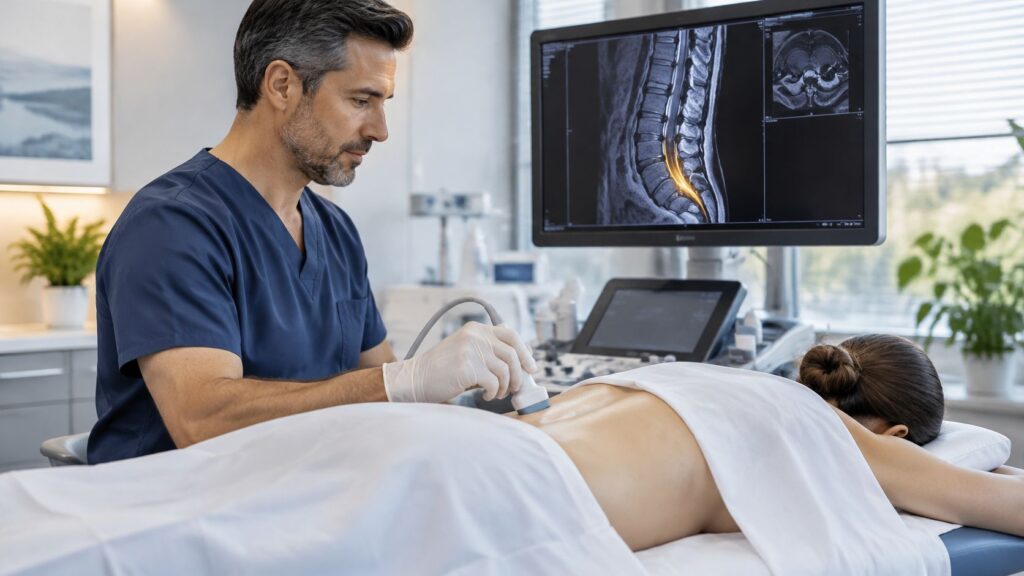
You had back surgery because you wanted your life back. You expected the leg pain to calm down, the back pain to ease, and daily life to get simpler. Instead, you're still hurting, or the pain has changed into something harder to explain.
That experience is more common than most patients realize, and it doesn't mean you're imagining it, exaggerating it, or stuck forever. It means the next step has to be more precise than “give it more time” or “just live with it.”
The Frustration of Pain After Back Surgery
A patient often comes in after a lumbar surgery and says some version of the same thing: “I did the operation because I was told this was the fix. Why am I still in pain?” That question carries anger, fear, and exhaustion. It also usually carries confusion, because family members may assume the surgery should have solved everything.
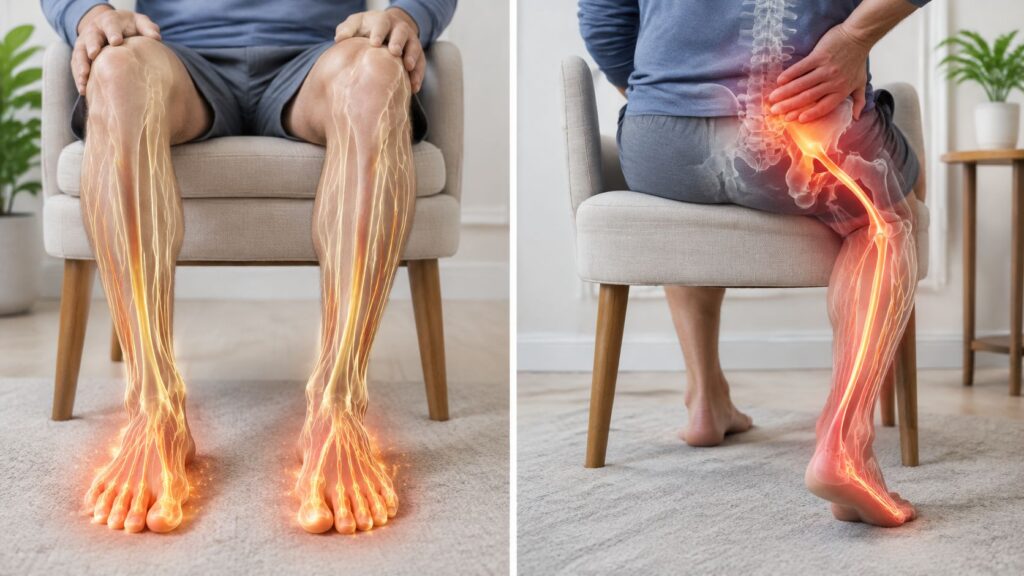
The first thing I tell patients is simple. Persistent pain after spine surgery is a real medical problem, and it has a name. When pain continues after a laminectomy or related lumbar procedure, we consider Post-Laminectomy Syndrome, often shortened to PLS. Some people have back pain that never fully settled. Others have new leg pain, burning, numbness, or tightness that appeared after surgery. Both patterns matter.
Why this feels so discouraging
Surgery is often treated as the final step. By the time someone agrees to it, they've usually already dealt with scans, medications, lost sleep, missed work, and months of limitations. When symptoms remain, patients don't just feel pain. They feel betrayed by the whole process.
That emotional reaction is understandable. It also affects treatment. A frustrated patient may stop moving, avoid follow-up care, or get pushed toward repeated opioid use without anyone clearly identifying the pain source.
Persistent pain after surgery doesn't automatically mean the operation was a mistake. It means the pain problem needs a new diagnosis.
What a better path looks like
Post laminectomy syndrome treatment works best when it follows a sequence. First, identify the current pain generator. Second, match the treatment to that generator. Third, escalate only when simpler measures haven't done enough.
That matters because the right treatment for scar-related nerve irritation isn't the same as the right treatment for facet-mediated pain, spinal instability, or persistent radicular symptoms. If everything gets lumped together as “failed surgery pain,” care becomes guesswork.
In practice, the goal is to restore function while limiting opioid dependence. That often means combining targeted medications, image-guided procedures, and, when needed, advanced interventions such as radiofrequency ablation or spinal cord stimulation. Patients across the Chicago Ridge area, including Oak Lawn, Palos Hills, Palos Heights, Worth, Bridgeview, Hickory Hills, Alsip, Burbank, Evergreen Park, and Orland Park, usually need that kind of structured plan more than they need another generic recommendation to stretch and wait.
What Exactly Is Post Laminectomy Syndrome
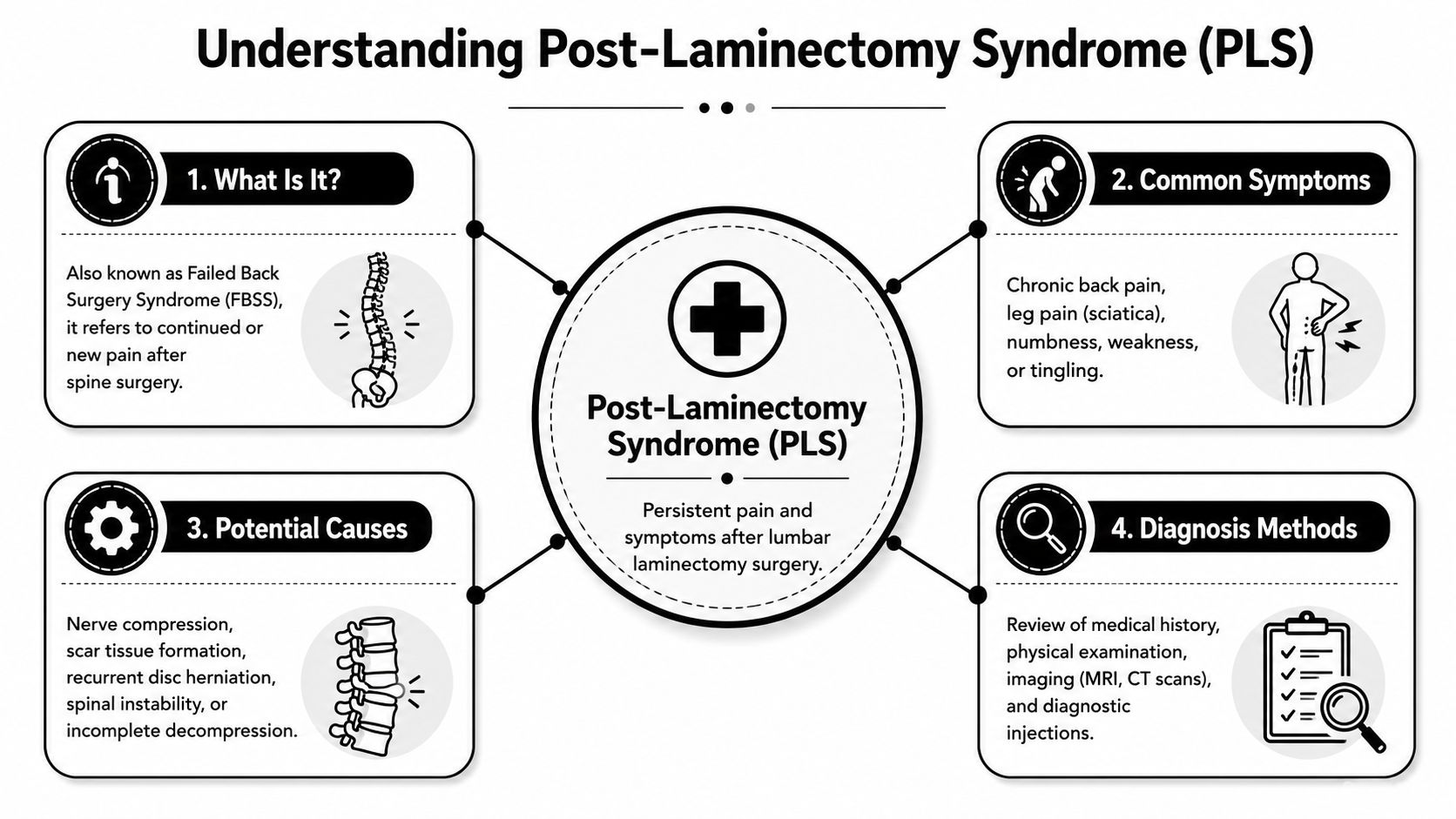
Post-Laminectomy Syndrome is ongoing or recurrent pain after lumbar spine surgery. You may also hear it called failed back surgery syndrome. I don't love that older label because it suggests blame. In many cases, the surgery may have addressed one problem correctly, but another pain generator remained, developed later, or became more obvious during recovery.
A useful way to think about it is this: the spine can heal from surgery, yet the nervous system can still keep producing pain because something is still irritating, compressing, or destabilizing the area.
What causes pain to continue
Several mechanisms can drive symptoms after surgery:
- Scar tissue around a nerve can form as part of normal healing, then become a problem if it binds or compresses the nerve.
- Recurrent disc problems can bring back leg pain that feels familiar.
- Nerve injury or ongoing inflammation may leave burning, shooting, or electric symptoms.
- Spinal instability can create mechanical pain with standing, walking, or position changes.
- Incomplete decompression or new compression can leave a patient with persistent nerve symptoms.
One of the most common explanations patients hear is “it's just scar tissue.” Sometimes that's true. But scar tissue isn't a throwaway answer. Epidural fibrosis can act like unwanted scaffolding around a healing site, limiting normal nerve movement and keeping the nerve irritated.
You're not alone in this diagnosis
PLS is not rare. Post-laminectomy syndrome affects approximately 20% of patients who undergo lumbar spinal surgery, and with roughly 500,000 spinal surgeries performed annually in the United States, about 100,000 individuals may develop PLS according to this overview of post-laminectomy syndrome prevalence and treatment.
Those numbers matter because many patients think they're the exception. They aren't. Persistent post-surgical pain is recognized, studied, and treatable.
Risk factors that start before surgery
Not every case begins with a technical surgical issue. Recent guidance has pushed the field to pay more attention to the patient's baseline health before the procedure. Smoking, poor nutrition, untreated depression or anxiety, and weak bone health can all affect recovery and long-term pain.
That doesn't mean pain is “all in your head.” It means spine pain behaves like a biopsychosocial condition. Tissue healing, nerve sensitivity, stress, sleep, mood, and conditioning all interact. If one piece gets ignored, recovery can stall.
Clinical reality: The label matters less than the mechanism. If we identify what is still generating pain, we can build a treatment plan around that finding.
The Diagnostic Workup A Precise Diagnosis for Targeted Treatment
A careful workup is what separates a targeted plan from trial-and-error care. Post laminectomy syndrome treatment shouldn't start with a random injection or a refill. It should start with a map.
What I need to know before recommending treatment
The history matters more than patients often expect. I want to know what the pain felt like before surgery, what changed afterward, and whether the current pain is mainly in the back, down the leg, or both. Timing helps. So do aggravating positions, walking tolerance, numbness, weakness, sleep disruption, and prior response to procedures.
Then comes the physical exam. I'm looking for patterns, not just tenderness. A nerve root pattern feels different from facet-mediated pain. Sacroiliac pain behaves differently from epidural scarring. Mechanical pain and neuropathic pain often leave different clues.
The tools that sharpen the diagnosis
A diagnostic workup may include:
- MRI or CT imaging to look for recurrent compression, post-surgical changes, scar formation, and structural issues.
- EMG and nerve conduction testing when symptoms suggest ongoing nerve injury or when the exam and imaging don't fully match.
- Diagnostic injections to test a suspected pain generator by temporarily numbing a specific structure.
- Review of surgical records because the exact procedure and level treated can change the differential diagnosis.
If you'd like a clearer overview of how specialists sort out overlapping pain patterns, this guide on how back pain is diagnosed is a useful starting point.
Why whole-patient factors still matter
Recent guidance from 2023 to 2024 emphasizes that improving overall health before surgery, including smoking cessation, diet, treatment of depression or anxiety, and bone health, is critical because 20% to 30% of patients develop chronic pain due to modifiable pre-surgical risk factors rather than surgical error, as described in this discussion of prevention and pre-surgical optimization.
That point changes how I interpret the workup. If the scan shows post-surgical changes but the patient also has severe deconditioning, poor sleep, catastrophizing, depression, nicotine use, and fear of movement, treatment has to address those variables too.
A clean scan doesn't mean the pain isn't real. It means we need to look harder at nerve sensitivity, mechanics, and functional limitations.
For some patients, documenting functional capacity also becomes important outside the clinic, especially if pain affects work status or disability review. In that setting, a practical explanation of the FCE disability claim process can help patients understand how functional limitations are evaluated.
A Stepwise Approach to PLS Treatment
Most patients don't need everything at once. Good post laminectomy syndrome treatment follows an escalating ladder. Start with the least invasive option that matches the diagnosis. If that helps enough, don't escalate. If it doesn't, move to a more targeted intervention.
The early treatment layer
The first layer often includes medication adjustment, activity modification, and prescribed rehabilitation. This is a pain and wellness clinic, not a physical therapy office, but targeted rehab still matters when it's coordinated correctly. The goal isn't generic exercise. It's restoring movement without repeatedly provoking the same pain cycle.
Non-opioid medications can be useful when symptoms have a strong nerve component. Some calm irritated nerves. Others improve sleep or reduce central pain amplification. None of these are magical. They work best when chosen based on symptom pattern rather than handed out broadly.
When injections make sense
Image-guided procedures become more valuable when the diagnosis is specific.
- Epidural steroid injections are often used when inflammation around a nerve root appears to be maintaining pain.
- Selective nerve blocks can clarify whether a given nerve is the source.
- Facet or medial branch blocks help when post-surgical pain is more mechanical and joint-driven.
Many patients get frustrated, because they may have already “tried injections.” The key question is whether the right injection was done for the right reason. A poorly targeted procedure can fail even when an accurately targeted one would have helped.
Where adhesiolysis fits
When scar tissue is the likely driver, adhesiolysis becomes an important option. Adhesiolysis, also known as the Racz technique, targets epidural fibrosis by using injections to mechanically or chemically tear up fibrotic scar tissue that compresses spinal nerves after laminectomy, offering a non-surgical solution for nerve compression, as explained in this description of adhesiolysis for post-laminectomy syndrome.
That makes adhesiolysis different from general rehab or a standard epidural. It is specifically aimed at scar-related entrapment.
For a broader review of options used for chronic spinal pain, see these chronic back pain treatment options.
Post-Laminectomy Syndrome Treatment Options at a Glance
| Treatment | Invasiveness | Goal |
|---|---|---|
| Non-opioid medication management | Low | Reduce nerve pain, improve sleep, support activity |
| Prescribed targeted rehabilitation | Low | Restore movement, strength, and confidence with motion |
| Epidural steroid injection | Low to moderate | Reduce inflammation around irritated nerves |
| Diagnostic nerve or joint blocks | Low to moderate | Confirm the pain generator before longer-acting treatment |
| Adhesiolysis | Moderate | Break up scar-related epidural fibrosis compressing nerves |
| Radiofrequency ablation | Moderate | Quiet pain-signaling nerves for longer relief |
| Spinal cord stimulation | Advanced | Modulate pain signaling when other measures haven't been enough |
Practical rule: If a treatment doesn't match the pain generator, it isn't a failed patient. It's a mismatched plan.
Advanced Interventional Therapies for Durable Relief
When basic measures and standard injections don't provide enough relief, advanced interventional care becomes the next step. These treatments are still designed to avoid unnecessary repeat surgery and reduce long-term reliance on opioids.
Radiofrequency ablation for mechanical pain
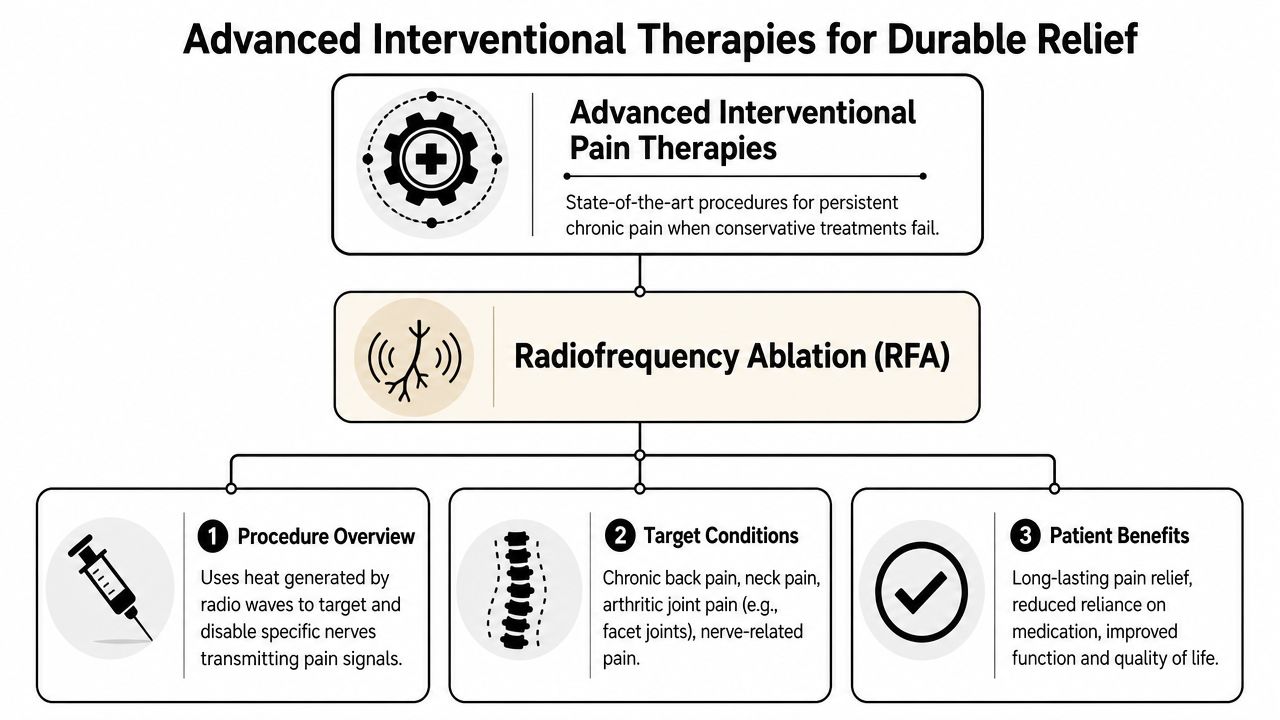
Radiofrequency ablation, or RFA, works by heating a small targeted nerve that is carrying pain signals from a joint. I often describe it as turning down a noisy wire. The structure is still there, but the signal becomes quieter for a period of time.
That matters most in patients whose pain comes from the facet joints or similar pain generators rather than direct nerve root compression. Radiofrequency ablation can provide up to six months of pain relief by targeting nerves that transmit pain signals, based on this summary of post-laminectomy treatment options including RFA.
Spinal cord stimulation and peripheral nerve stimulation
Spinal cord stimulation, or SCS, is often described as a pacemaker for pain. The idea is not to fix every structural problem. The goal is to change how pain signals are processed before they become overwhelming. This can be especially helpful in persistent neuropathic pain after surgery.
SCS also matters in opioid-sparing care. The same source notes that patients with a spinal cord stimulation device were less likely to use opioids after implantation. That doesn't mean the device is right for everyone. It means it's a legitimate option when medications and procedures haven't created enough functional relief.
If you're curious about the mechanics, this overview of how spinal cord stimulation works explains the process in plain language.
Other tools when the pain pattern fits
Not every advanced case goes straight to neuromodulation. A few other options can enter the discussion:
- Peripheral nerve stimulation when pain is localized to a specific nerve distribution.
- Regenerative therapies such as PRP or cell-based approaches in carefully selected patients where ligament or tendon instability may be contributing to spinal instability.
- Minimally invasive lumbar decompression or interspinous spacer options when anatomy and symptom pattern support them.
One option available in the Chicago Ridge area is Midwest Pain & Wellness, where Dr. Yaw Donkoh and the team offer image-guided injections, radiofrequency ablation, spinal cord stimulation, peripheral nerve stimulation, and minimally invasive lumbar procedures as part of a coordinated pain management pathway.
The trade-off with advanced therapy is straightforward. These options require more careful selection and planning, but they can offer longer relief and better function when simpler steps have already been exhausted.
Your Care Pathway at Midwest Pain & Wellness
A good care pathway should feel organized from the first visit. Patients with post-surgical pain usually don't need more vague reassurance. They need a sequence: assess, recommend, treat.
Assess
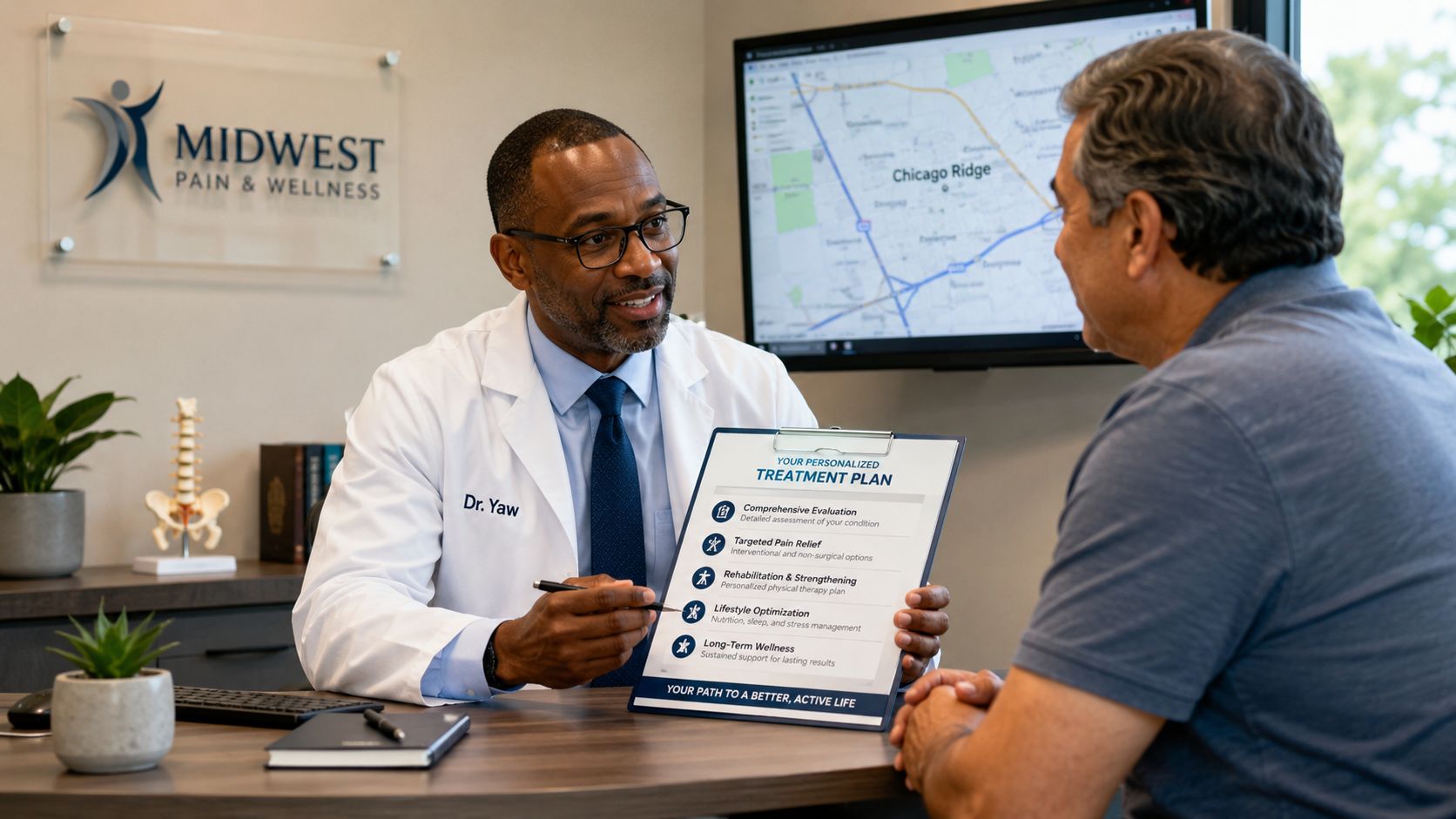
At the initial consultation, Dr. Yaw Donkoh reviews the surgical history, current symptoms, prior imaging, medication use, and what has or hasn't helped. That part matters because “back pain after surgery” is not a single diagnosis. Some patients need a clearer nerve evaluation. Others need diagnostic blocks. Others need the plan stripped down because they've accumulated treatments without a unifying diagnosis.
The first visit should also clarify function. Can you stand long enough to cook? Walk through a grocery store? Drive? Sleep? Return to work? Functional limits often tell me more than pain scores alone.
Recommend
Once the likely pain generators are narrowed down, the plan becomes more concrete. One patient may need medication refinement and a diagnostic injection. Another may need adhesiolysis because symptoms and imaging suggest epidural fibrosis. Another may be a better candidate for radiofrequency ablation or a spinal cord stimulation trial.
The recommendation phase should also include coordination with surgeons, primary care, chiropractors, and rehab providers when needed. Post-surgical pain rarely improves through isolated treatment decisions.
The most useful treatment plan is the one that tells you not only what comes next, but what comes after that if step one isn't enough.
Treat
Treatment then moves in stages. Procedures are image-guided. Follow-up is used to judge response, not just schedule the next intervention automatically. If the first move helps but doesn't go far enough, the next step is chosen based on that response.
For patients in Oak Lawn, Palos Hills, Palos Heights, Worth, Bridgeview, Hickory Hills, Alsip, Burbank, Evergreen Park, and Orland Park, that kind of local pathway matters. You shouldn't have to piece together post laminectomy syndrome treatment across multiple disconnected offices if your pain is already draining your energy.
Finding Your Path Forward From Chronic Pain
Persistent pain after lumbar surgery can make you feel cornered. It can also make you suspicious of every new recommendation. That's reasonable. What matters now is not chasing every option. It's choosing a specialist who can sort the pain into a clear diagnosis and a rational sequence of care.
Relief doesn't always mean a cure. Often it means better function, fewer flare-ups, less medication reliance, and the ability to get back to ordinary life. That's meaningful progress, and for many patients it's absolutely achievable.
A biopsychosocial approach is part of that progress because chronic post-surgical pain isn't purely structural. If you'd like a simple nontechnical explanation, you can explore biopsychosocial health examples to better understand how sleep, stress, mood, movement, and tissue injury interact.
The important point is this. You are not out of options, and you do not have to accept persistent post-surgical pain as your final outcome.
If you're dealing with ongoing pain after back surgery, schedule a consultation with Midwest Pain & Wellness to get a precise evaluation and a personalized, opioid-sparing treatment plan built around your actual pain generator.