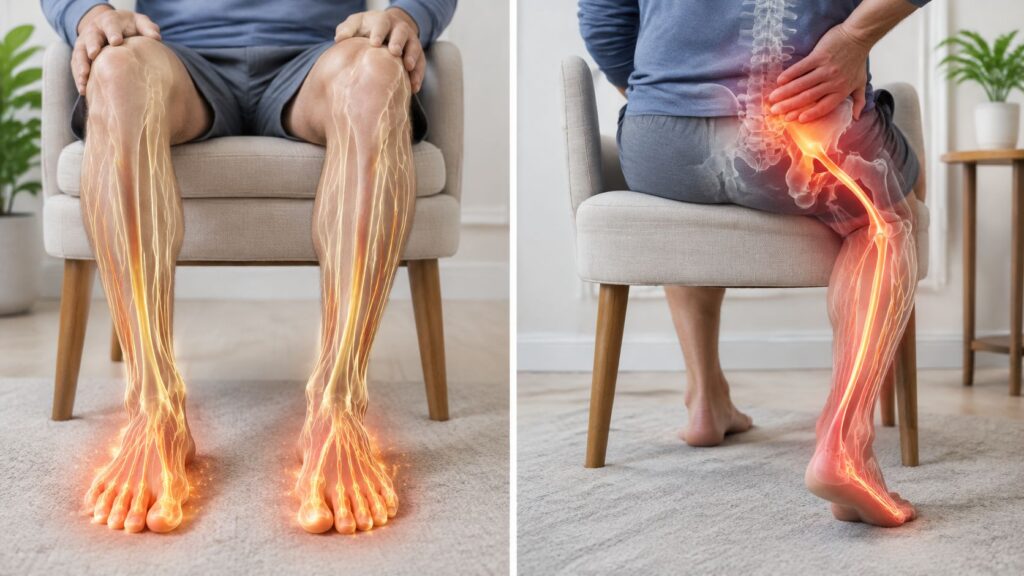
Some people in Chicago Ridge put off care for months because they hope the pain will settle down on its own. Then one day the knee that only hurt on stairs starts aching in the grocery store. The shoulder that felt stiff in the morning starts catching when they reach into a cabinet. The hip that was “annoying but manageable” begins changing how they walk.
That pattern is common in Oak Lawn, Palos Hills, Palos Heights, Worth, Bridgeview, Hickory Hills, Alsip, Burbank, Evergreen Park, and Orland Park. Joint pain rarely affects just one body part. It affects errands, sleep, exercise, work, and confidence. Many people assume the only next step is stronger medication or surgery. In many cases, that isn't true.
Living with Joint Pain in Illinois Is Not Your Only Option
A patient might start by avoiding the long walk at a local park in Oak Lawn because the knee feels unreliable. Then the same person begins using the railing on stairs at home in Palos Hills. Soon, even simple housework feels like a negotiation with pain.
That's often when people start asking about shots for joint pain. They want relief, but they also want to know what they're getting. That's the right question. Not every injection works the same way, and not every painful joint should be treated with the same plan.

What patients usually want to know first
People generally don't ask for a technical lecture. They ask practical questions.
- Will this help quickly: They want to know how soon they might walk, sleep, or move with less pain.
- How long will relief last: A shot that helps for a brief flare is different from a shot chosen for longer-term planning.
- What are the risks: Patients deserve clear answers about trade-offs, not vague reassurance.
- Does this fit my diagnosis: Arthritis, tendon problems, inflamed bursae, nerve pain, and spine-related pain don't respond the same way.
Joint injections can be useful, but they work best when the diagnosis is right and the goal is specific.
Some patients also want to support joint health outside the procedure room. For general education on nutrition-based support, VitzAi's guide on joint supplements is a reasonable companion resource. It doesn't replace diagnosis or treatment, but it can help patients think more broadly about how they manage symptoms.
Why this decision matters
An injection shouldn't be treated like a shortcut with no consequences. The best use of a joint injection depends on the timeline you need, the tissue involved, your imaging, your medical history, and what you're trying to get back to doing in daily life.
For someone in Illinois living with knee, shoulder, or hip pain, there is a middle ground between “just live with it” and “go straight to surgery.” That middle ground is careful, targeted pain management.
Understanding Corticosteroid Injections
A patient comes in with a knee that suddenly swelled after a busy weekend, or a shoulder that started throbbing badly enough to interrupt sleep. In that situation, the first question is usually simple. How fast can this calm down?
Corticosteroid injections, often called cortisone shots, are often the fastest injection option for an inflamed joint. They reduce inflammation inside or around the joint, which can ease pain and improve movement more quickly than treatments aimed at longer-term joint support. For patients in Chicago Ridge who need relief for a flare, that timeline matters.
The main strength of cortisone is speed. A review in PubMed found that many patients improve within days to weeks, but the benefit often fades within about 4 to 8 weeks. That makes cortisone a reasonable short-term tool when the joint is swollen, irritated, and limiting daily function.
When cortisone makes sense
I consider a steroid injection when the goal is quick control of inflammation, not lasting joint repair. Common examples include an arthritic knee with a sudden flare, a shoulder with significant bursitis, or a painful joint that is making it hard to walk, dress, or sleep.
Used carefully, cortisone can help in a few practical ways:
- Quick relief for a flare: This is the main advantage.
- Precise treatment: The medication is placed at the site of pain rather than relying only on pills.
- A short window to function better: That can help someone tolerate physical therapy, return to routine activity, or get through an important event with less pain.
Some patients also use home measures between visits. For people interested in non-drug comfort options, support for active recovery can be part of a broader symptom-management routine.
The trade-off patients need to hear clearly
Cortisone does not rebuild cartilage or reverse arthritis. It treats inflammation. That distinction is important because a shot that helps quickly is not always the right choice for repeated long-term use in the same joint.
A randomized clinical trial published in JAMA found that repeated knee corticosteroid injections over two years led to greater cartilage volume loss than saline, without better pain relief at that time point. That does not mean a single injection is unsafe or inappropriate. It means repeated use needs a reason, a plan, and a discussion about what problem the injection is trying to solve.
Practical rule: Cortisone is usually best used as short-term flare treatment or as a bridge, not as routine maintenance for the same arthritic joint.
There are other trade-offs to consider. Steroid injections can temporarily raise blood sugar, which matters for patients with diabetes. They can also lose usefulness if they are repeated too often. There is no single annual number that fits every joint and every patient, so the schedule should be individualized.
What this means in real care
If someone in Bridgeview or Evergreen Park needs rapid relief before travel, a family event, or a temporary setback in mobility, cortisone may be a reasonable choice. If the same joint keeps needing the same injection every couple of months, I usually reconsider the diagnosis, review imaging if needed, and talk through options that fit a longer timeline.
That is where good decision-making matters most. Choose cortisone for speed. Be cautious with repetition. Match the shot to the diagnosis, the joint, and the relief timeline you need.
Patients who want a clearer overview of the procedure itself can review how a steroid injection works.
Exploring Hyaluronic Acid or Gel Shots
Hyaluronic acid injections, often called gel shots, are used most often for knee osteoarthritis. If cortisone is about calming an inflamed joint quickly, hyaluronic acid is more about improving the joint environment. It acts more like a lubricant and shock absorber inside the knee.
In osteoarthritis, the joint fluid doesn't function as well as it should. The theory behind gel shots is straightforward. If the knee has lost some of its normal cushioning and lubrication, adding hyaluronic acid may help movement feel smoother and less painful.
What the timeline looks like
Gel shots don't usually win on speed. They're not the choice when someone needs immediate quieting of a major flare. Their value is durability.
A 2024 meta-analysis described at this source found that hyaluronic acid injections had an 83.3% response rate for at least 20% pain improvement, with an average pain reduction of 51.3% and relief lasting 6 to 12 months.
That profile is why many patients prefer them for knee arthritis management rather than short rescue care.
What treatment usually involves
Clinical guidance described in the same source notes that doctors often give one to five injections, usually spaced about a week apart, and the series can be repeated every six months. The exact schedule depends on the product selected and the patient's diagnosis.
A simple way to think about gel shots:
- Slower start: Relief may take a few weeks to build.
- Longer runway: The benefit often lasts much longer than a steroid shot.
- Best fit: Knee osteoarthritis is the classic use case.
If your main question is “What will last longer,” gel shots often enter the conversation before repeat steroid injections do.
Who tends to ask about this option
Patients in Palos Heights, Worth, and Orland Park often ask about gel shots when they're trying to stay active without relying on repeated anti-inflammatory injections. They may still be walking regularly, working, or trying to delay more invasive treatment.
For many of them, the question isn't whether the pain can be reduced for a weekend. It's whether a treatment can support steadier function through the coming months. That's where hyaluronic acid often fits.
Patients interested in knee-specific information can review hyaluronic acid injection for knee pain in Chicago.
The Rise of Regenerative Medicine PRP and Cell-Based Therapy
Regenerative medicine has changed how many patients think about injections. Instead of only asking, “Can you numb this down or calm this down,” they ask whether the joint environment can be improved in a more durable way.
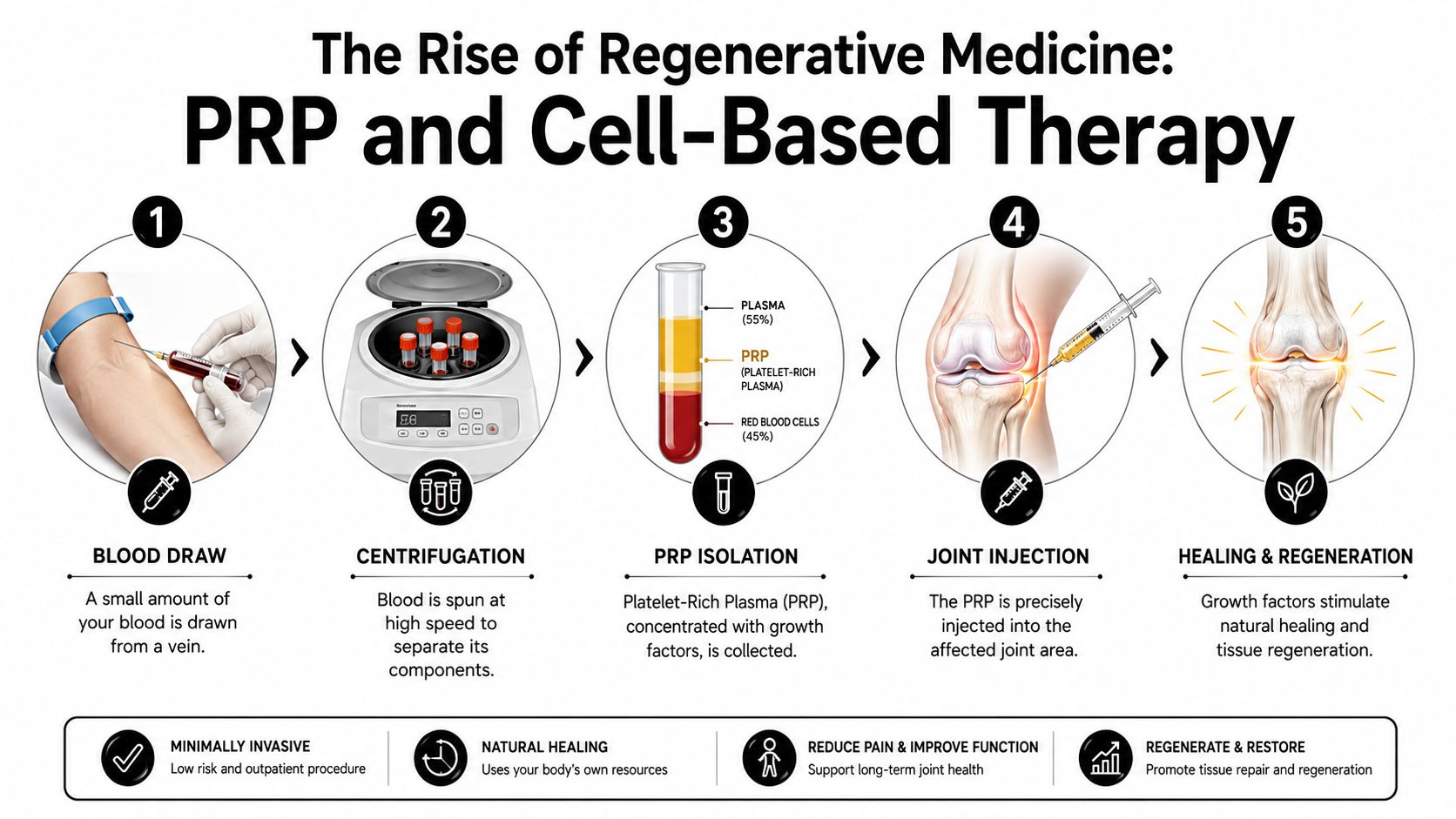
Platelet-Rich Plasma, or PRP, is the best-known example. A small amount of the patient's blood is drawn, processed to concentrate platelets, and then injected into the painful area. Platelets contain growth factors, and the goal is to support a healing response rather than suppress inflammation.
What PRP seems to do best
PRP usually isn't the fastest option. Patients need to know that upfront. It's chosen more often for longer-horizon relief.
A meta-analysis described at this research summary found that PRP was the most successful treatment for improving function and reducing pain at 3, 6, and 12 months of follow-up, with no significant difference in adverse events compared to placebo.
That finding matters because it shifts the conversation from immediate relief to sustained improvement. For a patient in Alsip or Burbank who is planning around months rather than days, that difference can shape the whole treatment plan.
What PRP is not
PRP should not be oversold. The available information supports symptom and function improvement over time, but that does not mean it reliably regrows cartilage or cures arthritis.
That's an important distinction. Patients deserve honest language. The goal is better pain control, better function, and possibly a healthier joint environment. It is not a promise of reversal.
PRP is often most useful for patients who can wait longer for benefit in exchange for the possibility of longer-lasting relief.
A careful word on cell-based therapy
Patients also ask about amniotic products, stem cell treatments, and other cell-based therapies. These are complex areas and deserve a careful, individualized discussion. Some options remain investigational, and the regulatory environment matters.
That's why these treatments shouldn't be chosen based on advertising language alone. Diagnosis, candidacy, expectations, and safety all matter. Patients who want to understand the broader category can read about regenerative medicine and tissue engineering.
Specialized Injections for Targeted Pain Conditions
Not every painful area needs an injection inside a joint. Some pain comes from irritated nerves. Some comes from muscle overactivity. Some pain patterns are so specific that using a standard arthritis shot would miss the actual source.
Nerve blocks for diagnosis and relief
A nerve block can help in two ways. First, it can help identify whether a specific nerve is driving the pain. Second, it can provide relief by interrupting pain signaling from that area.
That makes nerve blocks useful in more complex cases, especially when symptoms spread, burn, radiate, or don't behave like straightforward arthritis. For patients with neck, back, or regional limb pain, this type of targeted procedure can clarify what's going on instead of guessing.
Botox for muscle-driven pain conditions
Botox isn't just cosmetic medicine. In pain practice, it has an established role in conditions where muscle overactivity creates significant disability. Two common examples are chronic migraine prevention and cervical dystonia, where involuntary neck muscle contractions can be painful and functionally limiting.
This is a different category from joint injections. The target isn't worn cartilage or inflamed synovial tissue. The target is abnormal muscle activity that keeps producing pain.
Why precision matters
A patient in Bridgeview with shoulder-region pain may have a cervical or nerve-related driver. A patient in Burbank with head and neck pain may not need a joint injection at all. That's why matching the procedure to the pain generator is one of the most important parts of pain medicine.
For readers who want a patient-facing overview of muscle-focused injection care, this page can help them explore trigger point relief. It's separate from joint care, but it highlights how targeted injections can serve very different purposes.
Comparing Your Injection Options Side by Side
You wake up in Chicago Ridge with a swollen knee three days before a family event, or with shoulder pain that has been wearing you down for months. Those are different problems, and the right injection choice often comes down to one practical question: do you need faster relief now, or are you trying to build a longer plan with fewer repeats?
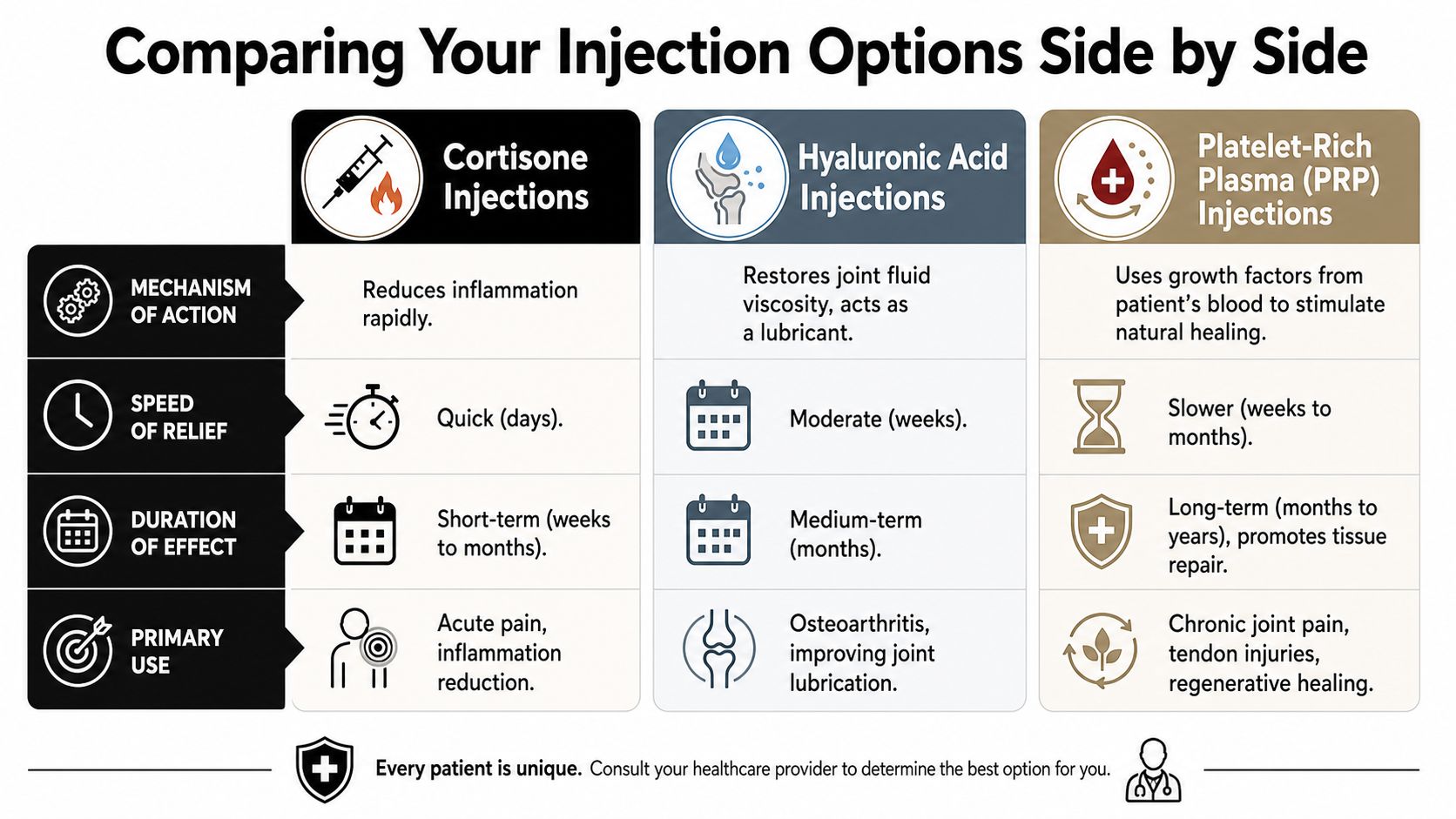
That timeline matters as much as the name of the shot. Corticosteroid injections usually offer the fastest path to relief, but the benefit is often temporary. Hyaluronic acid tends to take longer to help, yet some patients with knee arthritis get a longer stretch of improvement. PRP usually asks for the most patience at the start and the most discussion about cost, but it may fit patients who are thinking beyond the next few weeks.
Joint Injection Comparison at a Glance
| Injection Type | Onset of Relief | Duration of Relief | Best For | Key Consideration |
|---|---|---|---|---|
| Cortisone | Fast, often within days to weeks | Short-term | Acute inflammatory flare, rapid symptom control | Relief can come quickly, but repeat use raises concern about cartilage and other tissue effects over time |
| Hyaluronic Acid | Slower, often over weeks | Months | Knee osteoarthritis, patients seeking longer symptom control | Usually considered for knee OA, and coverage can vary by plan |
| PRP | Slower than cortisone | Longer-term | Chronic joint pain and function-focused planning | Often involves out-of-pocket cost and delayed payoff |
The real trade-off with repeat steroid shots
Patients ask a fair question in clinic: how many cortisone shots are too many? The honest answer is that there is no single number that applies safely to every joint, every diagnosis, and every patient. The American Academy of Orthopaedic Surgeons explains that while there is no formal absolute limit, clinicians often set a practical limit on repeated cortisone injections and make that decision based on the joint involved, the reason for treatment, and the risks of repeated exposure.
That uncertainty is exactly why I do not view steroid injections as an autopilot treatment. A knee that needs quick relief before travel is different from a joint that has already had several injections and keeps flaring every few months. Short-term benefit can be worthwhile. Repeated temporary fixes without a broader plan usually are not.
Cost and coverage often shape the decision
Insurance also changes the conversation. According to Arthritis Foundation information on joint injections, PRP is rarely covered by insurance, while hyaluronic acid is more often covered for appropriate knee osteoarthritis cases. The same source points out that clear head-to-head cost-effectiveness data remain limited, especially over longer follow-up.
So the practical choices often look like this:
- If you need relief soon for an inflamed flare: Cortisone is often the first option discussed.
- If you have knee osteoarthritis and want a slower but potentially longer benefit: Hyaluronic acid may be a reasonable next step.
- If you are planning for longer-term function and out-of-pocket cost is acceptable, PRP may be worth considering.
The best injection is the one that matches the pain source, the expected timeline of relief, and the level of risk that makes sense for your situation.
For some patients near Chicago Ridge, a clinic such as Midwest Pain & Wellness may discuss these options within a broader pain management plan that includes image-guided procedures and opioid-sparing care.
Begin Your Pain Relief Journey at Midwest Pain & Wellness
You may be at the point where getting out of the car, climbing the stairs, or standing through a work shift has become a daily calculation. By the time patients come in for an evaluation, many have already changed how they move, cut back on exercise, or relied on over-the-counter medication longer than they hoped. What helps at that stage is a clear diagnosis and a treatment plan that matches both the pain source and the timeline you need.
In Chicago Ridge and nearby communities such as Worth, Hickory Hills, Evergreen Park, and Oak Lawn, that first visit often changes the whole discussion. Pain that feels like it is coming from a knee or shoulder can come from a tendon, bursa, irritated nerve, or even the spine. If the diagnosis is off, the injection choice is off too.
What a good consultation should answer
A useful pain visit should answer a few practical questions before anyone schedules a procedure.
- What structure is causing the pain: Arthritis inside a joint can feel very different from referred pain, but patients are often told both are described as “joint pain.”
- How fast do you need relief, and how long do you want it to last: A steroid injection may fit a short-term flare. A slower option may make more sense if the goal is steadier function over the next several months.
- What are the trade-offs with repeat treatment: This matters most with corticosteroid injections, where short-term relief can be reasonable but repeated use deserves a careful discussion about tissue effects and diminishing value.
- What is the backup plan if an injection is not the right move: Good care includes saying no to a shot that is unlikely to help.
One issue I see often is that patients are given an injection recommendation without a clear discussion of timing. They may hear that a shot can help, but not how quickly it should work, how long the benefit usually lasts, or when repeated injections start to deserve more caution. Guidance from the American Academy of Orthopaedic Surgeons on cortisone shots reflects that this decision is not one-size-fits-all and should take into account the joint, the diagnosis, and prior injection history.
Why local, personalized care matters
A patient in Palos Heights who needs to get through an upcoming trip may choose differently from a patient in Bridgeview whose goal is to stay active through the next year with fewer flare-ups. Both goals are reasonable. They just call for different timelines and different levels of risk tolerance.
That is why the right plan is not “get a shot.” The right plan is to identify the pain generator, match the injection to the expected window of relief, and decide whether the short-term benefit supports your longer-term joint health and function.
If joint pain is limiting your day in Chicago Ridge or nearby Illinois communities, schedule a consultation with Midwest Pain & Wellness. A precise diagnosis can clarify whether you need a short-term anti-inflammatory shot, a longer-lasting knee injection, a regenerative option, or a different pain procedure altogether.