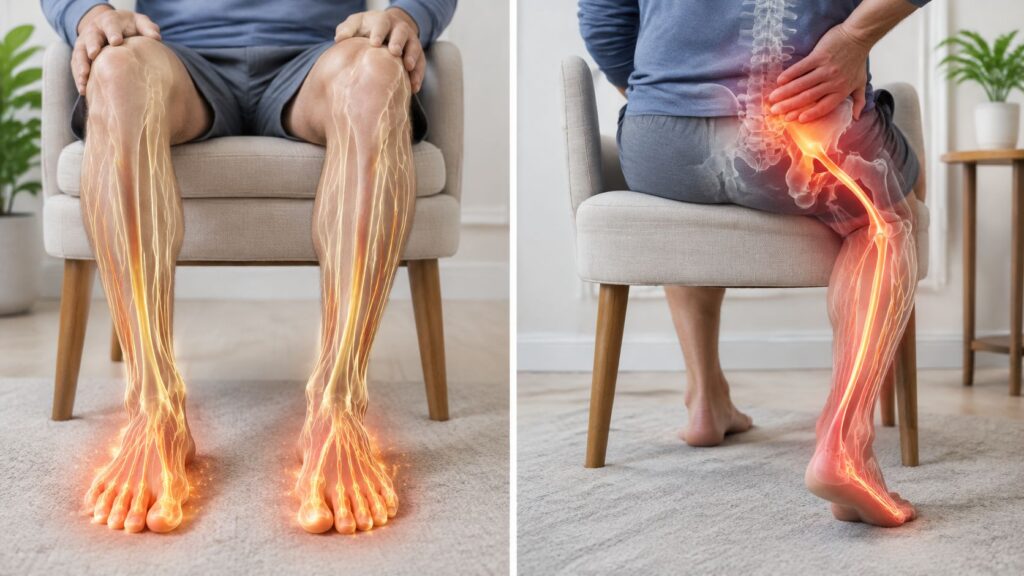
You're home from surgery, the incision looks fine, and everyone keeps saying, “Start moving.” But nobody has really told you what that means, how much is too much, or what to do when pain makes every step feel like a negotiation. That gap, between discharge instructions and real recovery, is where post-surgical rehabilitation either helps you rebuild function or leaves you guessing.
The best recovery plans are not just about exercise sheets. They combine early mobilization, pain control, safe progression, nutrition, and follow-up that matches the pace of healing. In practice, that means learning when to walk, when to rest, when to push, and when to call for a change in the plan.
Defining Post-Surgical Rehabilitation
A lot of patients hear “rehab” and picture a few leg lifts or a stack of home exercises. That is only one part of the job. Post-surgical rehabilitation is the full recovery process that begins in the hospital, continues after discharge, and usually needs coordinated follow-up so function can return without triggering pain, swelling, or avoidable complications.
The gap shows up fast once patients get home. The incision may look fine, but the body still has to relearn safe movement, rebuild strength, and tolerate daily activity again. In elective spinal surgery patients, inpatient physical therapy was associated with a 2-fold increase in ambulation distance during the hospital stay compared with nurse-assisted ambulation alone, although it did not reduce complications or 30-day readmissions (PMC study on postoperative spinal rehabilitation). Movement matters, and movement by itself is not enough.
Rehab is bigger than exercise
A recovery plan usually includes pain control, mobility work, protection of the surgical site, and a gradual return to daily tasks. In some procedures, the main progress comes from getting the body moving safely again instead of waiting for pain to settle first. A postoperative guideline recommends a multidisciplinary approach, progressive resistance exercise, balance training, early ambulation, weight-bearing exercise, activities-of-daily-living training, and nutritional support as part of recovery care (postoperative rehabilitation guideline).
Practical rule: If a plan only talks about exercises and never mentions pain control, walking tolerance, or what to do when symptoms flare, it is too narrow.
That broader view matters because pain can block participation, fear can limit movement, and poor nutrition can slow the pace of recovery. In a pain and wellness clinic, the goal is not to hand out generic activity advice. It is to help patients recover function with the least medication burden possible while still staying active enough to heal.
The Four Phases of Post-Surgical Recovery
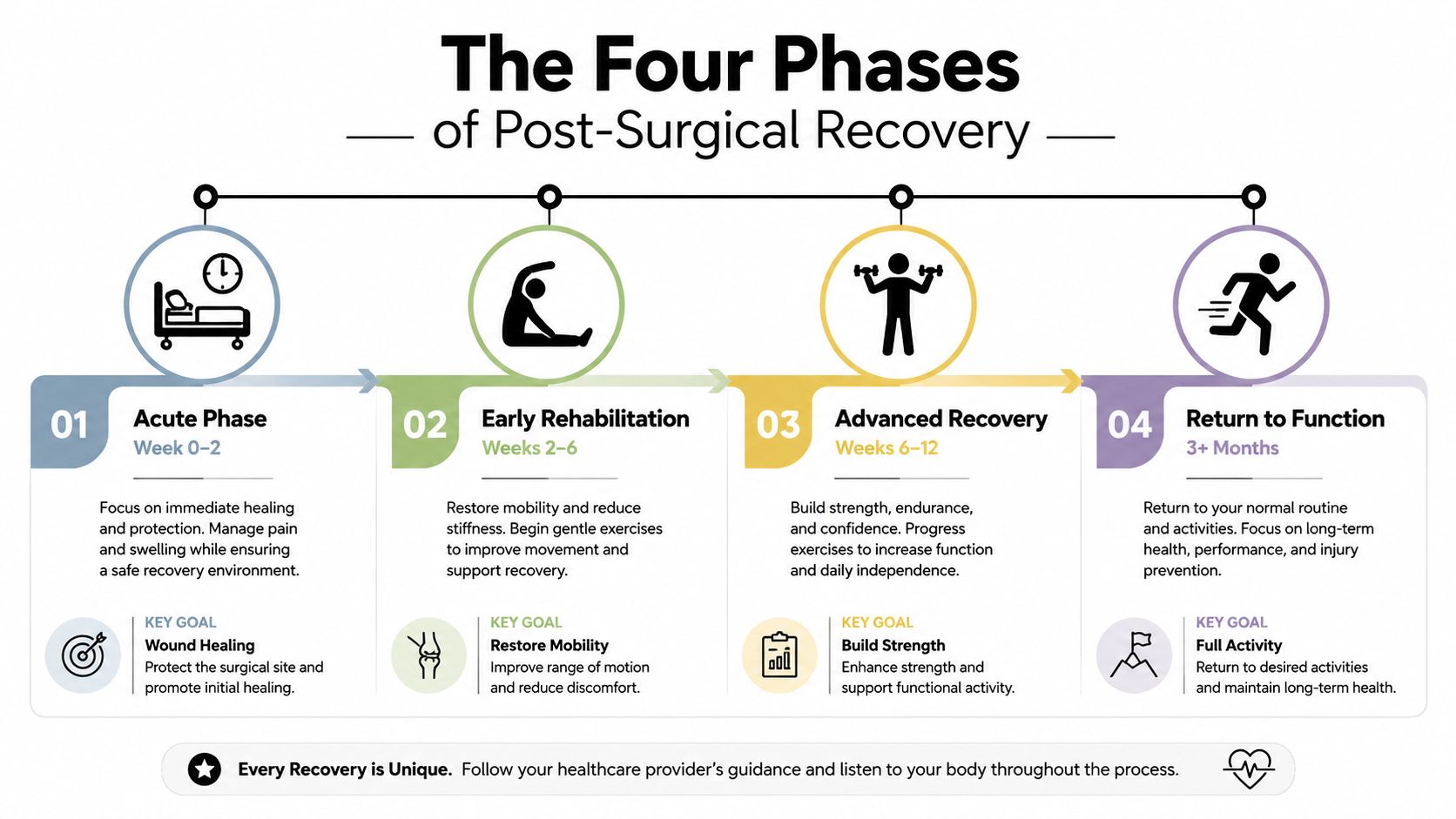
Recovery after surgery usually unfolds in phases, even though the pace depends on the procedure, the surgical approach, and the patient's overall health. The early acute phase begins right away and is usually the period when pain, swelling, and complication prevention take center stage (postsurgical rehabilitation overview). After that, the focus shifts toward mobility, then strength, then a fuller return to daily function. For a patient having a smaller procedure, that progression may move quickly. For someone recovering from a larger operation, it can take much longer and may need closer coordination between surgery, pain control, and rehabilitation.
Acute phase
This is the period when people are most likely to either push too hard or avoid movement entirely. The right target is safe movement, protection of the surgical site, and preventing the body from stiffening or falling into deconditioning. Early movement also helps reduce the harms of prolonged immobilization, including muscle atrophy, metabolic dysregulation, and a higher risk of venous thromboembolism and pulmonary morbidity (review on early postoperative mobilization).
Pain control matters here because uncontrolled pain shuts down participation. If walking, breathing exercises, or basic transfers are too painful, the rehab plan needs adjustment, not just more willpower. In practice, this is often the phase where a pain specialist, surgeon, and therapy team have to keep the plan realistic.
Early rehabilitation
Once the immediate post-op period settles, the goal becomes restoring basic mobility. That includes getting in and out of bed, walking with more confidence, and handling routine tasks without triggering a pain flare. If you want an example of how that is built into a surgical plan, a review of minimally invasive spine surgery recovery shows why the discharge plan has to match the actual demands of the procedure, not just the hospital stay.
For hip fracture surgery, a multidisciplinary program with progressive resistance exercise and balance training is strongly recommended, and early mobilization ideally starts within 24 hours if medical status allows (hip fracture rehabilitation guideline). That timing is not about being aggressive. It is about preventing the spiral of weakness, stiffness, and fear that can set recovery back.
Advanced recovery and return to function
Later phases build endurance and task-specific function. Stairs, longer walks, lifting, and resistance training usually belong here, not in the first few days after surgery. By this stage, the rehab plan should be tied to what the patient needs to do at home and at work, because function is the point of recovery, not just completing a list of exercises.
In one guideline summary, mobilization within 48 hours improved transfer independence, walking distance, and reduced assistance needed for walking by day 7 after surgery (hip fracture rehabilitation guideline). That is the pattern to remember. Earlier, when safe, tends to work better than waiting, and delays often mean more pain, more guarding, and a slower return to normal activity.
| Surgery Type | Early Mobilization Window | Key Rehabilitation Focus | Typical Full Recovery Timeline |
|---|---|---|---|
| Spine surgery | As soon as medically safe, often during the hospital course | Walking tolerance, posture, core protection | Varies by procedure and baseline health |
| Hip fracture repair | Ideally within 24 hours if allowed | Transfers, balance, gait, supervised loading | Varies, often extended |
| Cardiac surgery | Early inpatient activity plus structured rehab | Functional status, endurance, safety | Ongoing follow-up may continue |
| Joint replacement | Early discharge mobility and guided home activity | Walking, strength, daily tasks | Varies by joint and complexity |
Evidence-Based Protocols by Surgery Type
A patient can do everything “right” after surgery and still have the wrong rehab plan. A spine case, a cardiac case, and a fracture repair do not ask the body to recover in the same way, so the pacing, loading, and pain strategy need to match the procedure. That is why I am cautious when families ask for a standard plan that fits every operation.
What the evidence shows
For lumbar decompression, routine supervised physiotherapy after surgery has not consistently changed the long-term course of pain or disability in the way many people expect, which points to a simpler conclusion. Staying active with the right movements and progressing in a way that matches the operation can matter more than automatic, repetitive therapy after every case (PMC study on postoperative spinal rehabilitation). The lesson is straightforward, rehab has to fit the surgery and the person, not just fill time.
Cardiac recovery follows a different pattern. In a follow-up study of patients admitted to inpatient cardiac rehabilitation, functional improvement was common among people with severe disability, and that improvement tracked with better long-term survival (cardiac rehabilitation outcomes). For families, that is a clear reminder that after major surgery, getting function back is not only about comfort, it can change the overall recovery course.
Enhanced Recovery After Surgery, or ERAS, organizes care before, during, and after the operation so the patient is not left to recover with only a discharge sheet and a few generic exercises. An orthopaedic review found better length of stay, fewer postoperative complications, lower pain scores, and better functional recovery compared with conventional rehab (ERAS orthopaedic review). Recovery goes better when the surgeon, anesthesia team, and rehab plan are working from the same playbook.
Practical rule: If surgery changes how you load, lift, bend, or walk, the rehab plan should be procedure-specific.
This gap after discharge is where many patients struggle. A scoping review found that after total hip arthroplasty, many patients receive only short home-based physical therapy and then no continued formal rehab, even though recovery often takes longer than that early window (scoping review on arthroplasty rehabilitation). Pain, stiffness, and fear of movement often build in that gap, especially when no one is adjusting the plan as function returns.
| Rehab Element | Why It Matters | Where It Fits |
|---|---|---|
| Early walking | Restores mobility and lowers risks from staying still too long | Hospital and first recovery phase |
| Resistance exercise | Rebuilds strength and endurance | Later recovery |
| Balance training | Supports safety and steadier gait | Fracture and joint recovery |
| Multidisciplinary follow-up | Keeps surgery, rehab, and pain control aligned | Throughout recovery |
If you are recovering after spine surgery, this resource on minimally invasive spine surgery can help you discuss how the procedure may shape the rehab plan with your surgeon or pain specialist.
Pain Management and Interventional Options
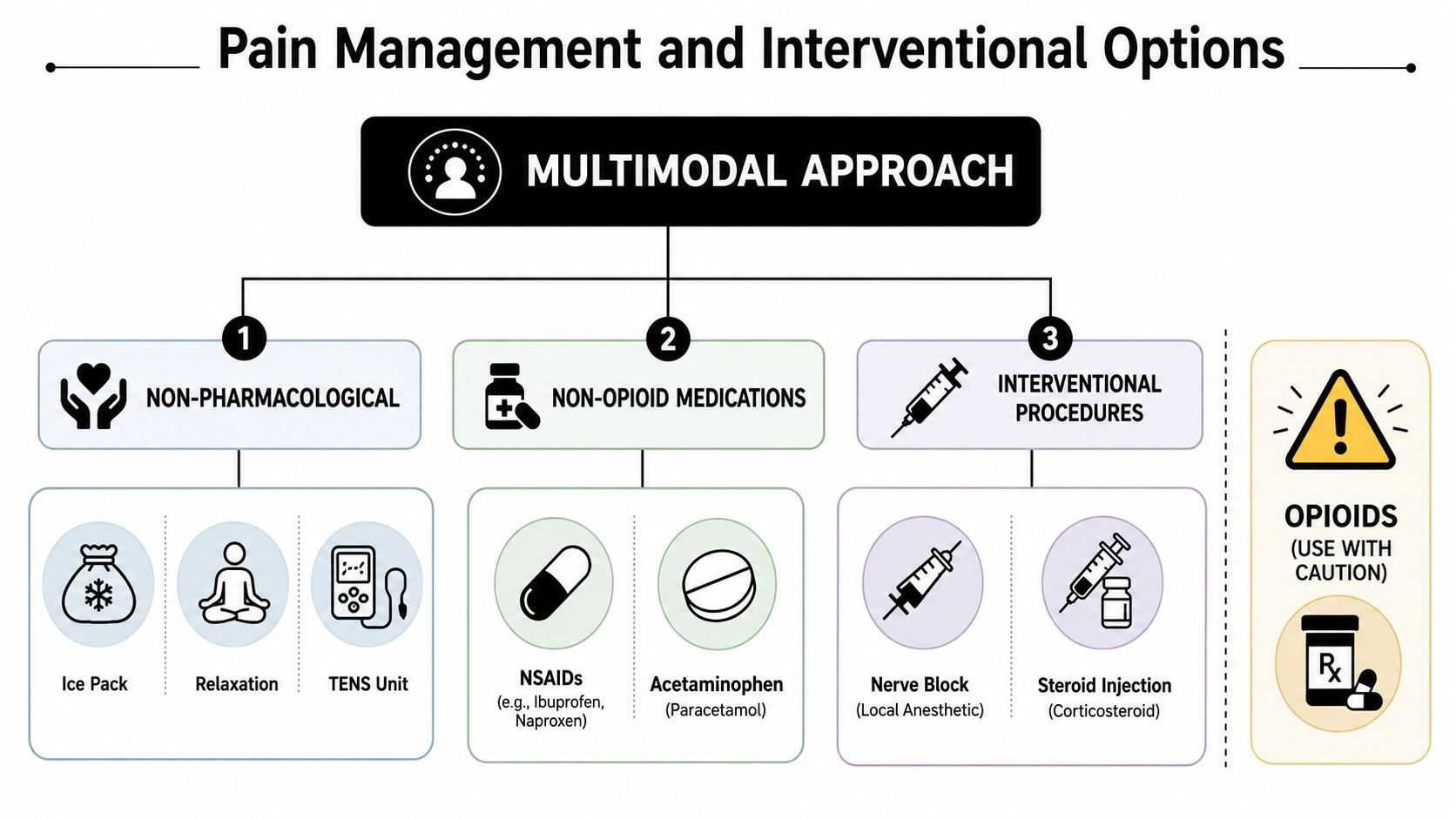
Pain control is not separate from rehabilitation. If pain is uncontrolled, people stop walking, stop sleeping well, and stop trusting the recovering body. If pain is overtreated with sedating medication, progress can stall for a different reason. The balance matters.
Matching the treatment to the problem
A multimodal plan usually starts with non-opioid medication and non-pharmacological measures, then adds targeted procedures when pain is blocking function. Ice, positioning, guided breathing, and gentle activity can help some people participate in recovery without escalating medication. Others need more specific tools, such as image-guided injections, nerve blocks, epidural steroid procedures, or longer-term interventions when pain persists and remains clearly mechanical or inflammatory in pattern.
The point is not to eliminate every sensation. The point is to get the pain low enough that you can walk, sleep, breathe normally, and complete the rehab work that restores function. That's where an interventional pain specialist can be useful, especially when pain is out of proportion, blocks therapy, or doesn't match the expected recovery curve.
Practical rule: If pain is the reason rehab keeps stopping, the pain plan needs to be reviewed before the rehab plan is abandoned.
This is also where opioid-sparing care earns its place. Opioids may have a short role in selected cases, but they're not a long-term recovery strategy. For many patients, especially those with spine or joint pain after surgery, a coordinated plan that includes targeted procedures and guided activity keeps the focus on function rather than medication dependence. If you're sorting out whether pain is normal recovery or a separate problem, this overview of postoperative pain is a useful place to start.
Interventional pain care can also fit alongside rehab in a structured clinic setting. Midwest Pain & Wellness in Illinois provides opioid-sparing, multimodal care for pain, injury, and post-surgical recovery, including image-guided injections, nerve procedures, and coordination with rehab and surgical teams. For a patient whose pain is preventing progress, that kind of coordination can matter more than a generic exercise handout.
Coordinating Care Across Your Recovery Team
Recovery often goes off track between appointments. The surgeon is watching tissue healing, the rehab clinician is watching movement, and the pain specialist is trying to keep symptoms low enough that therapy can happen. If those clinicians are not working from the same plan, the patient and family end up trying to connect the pieces on their own.
Why handoffs matter
After surgery, many patients are discharged with a short stretch of home therapy and little else, even when their recovery needs continue well beyond that early period. That gap leaves families asking the same practical questions over and over. Is this level of pain expected. Is the stiffness part of healing. Who is supposed to change the plan when progress stalls.
The answer should be clear from the start. The surgeon sets the healing restrictions and the checkpoints for tissue recovery. The pain specialist keeps discomfort from blocking participation in rehab. The rehab team directs mobility, strength, and function. The primary care clinician helps track the broader medical issues, medication interactions, and health risks that can slow recovery.
What coordinated care should look like
- Clear restrictions: Everyone involved should know which movements are limited and for how long.
- Shared pain plan: Medication choices, injections, or nerve procedures should support rehab, not interfere with it.
- Functional targets: Walking, stairs, transfers, and daily tasks should be followed closely, not just symptom scores.
- Health support: Nutrition, sleep, and other medical conditions should stay part of the plan.
A pain clinic can help close that gap when rehab is stalling because no one is addressing the pain source directly. If you want a clearer view of how that specialty role fits into recovery, this page on anesthesiologist-led pain care explains how that kind of treatment can support a recovery-focused plan.
Good recovery plans do not make the patient guess which office should answer next. They make the handoff obvious.
Red Flags and When to Modify Your Rehab Plan
Not every painful day means something is wrong. Some soreness, stiffness, and slower mornings are part of healing. What matters is whether the pattern is moving forward, or whether pain, fear, and restriction are steadily narrowing what you can do.
Signs the plan may need adjustment
When recovery feels stuck, the issue is not always weakness. It may be fear of movement, pain sensitization, or a procedure-specific restriction that needs a better explanation. Recent postoperative rehabilitation literature emphasizes that recovery is supported by both physical and psychological rehabilitation, and it highlights individualized care, early mobilization, wearable devices, and VR as helpful tools (review of postoperative recovery support). That matters because the mind and body recover together, not separately.
A patient who stops walking because each step feels threatening may need graded exposure and reassurance, not a harder workout. Someone with persistent sharp pain, worsening swelling, or motion that stops improving may need a new evaluation of the surgical site or a different pain strategy. And if the rehab plan assumes every procedure follows the same timeline, the plan itself may be the problem.
When to contact whom
- Contact the surgeon for wound concerns, sudden change in function, or questions about surgical restrictions.
- Contact the pain specialist when pain is keeping you from walking, sleeping, or doing therapy.
- Contact the rehab team when exercises feel too easy, too hard, or no longer match your stage of recovery.
The most common mistake is waiting too long because the discomfort seems “probably normal.” Some discomfort is normal. A stalled plan is not. Postoperative recovery improves when the treatment stays individualized and the pace matches the body's actual response, not a generic calendar.
Is Your Rehabilitation Plan Sufficient
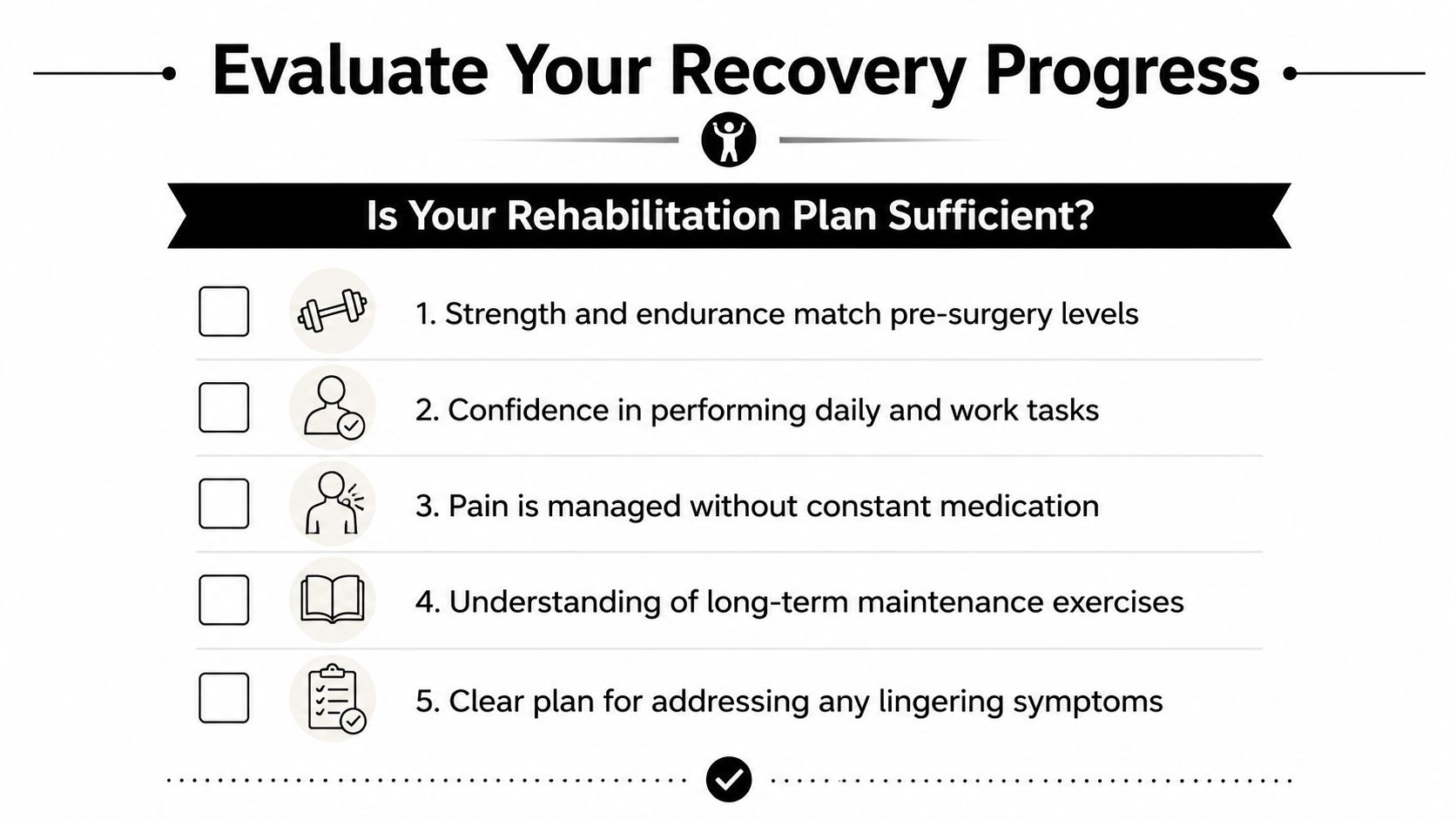
The easiest time to miss an underpowered plan is right after discharge, when you've technically “started rehab” but still don't feel like yourself. A plan is probably too thin if you're getting a short burst of care and then no clear direction for what comes next, especially after a larger joint or spine procedure.
A simple way to judge the plan
Check whether you can answer these questions without guessing:
- Can you walk, transfer, or climb stairs better than you could last week?
- Do you know what to do when pain spikes instead of shutting down activity?
- Is there a follow-up path if you're still limited after the first phase ends?
- Has someone addressed nutrition, sleep, and other health factors that affect recovery?
- Do your symptoms fit the expected timeline for your procedure?
If the answer to most of those is no, the plan probably needs more structure. If your discharge instructions ended but your function hasn't returned, ask for a reassessment rather than assuming time alone will fix it. That's especially important for patients who leave formal rehab too early or never get enough coordinated follow-up in the first place.
For patients in Illinois, a pain and wellness clinic can help bridge that gap when pain is blocking progress and the rehab plan needs to be adjusted around function. The right next step is the one that gets you moving safely again, not the one that only checks the box of “completed therapy.”
If you're recovering after surgery and still don't feel like the plan matches your pain, mobility, or timeline, Midwest Pain & Wellness can help coordinate a function-first recovery strategy in Illinois. Visit Midwest Pain & Wellness to discuss pain control, mobility barriers, and the next steps that fit your surgical recovery.