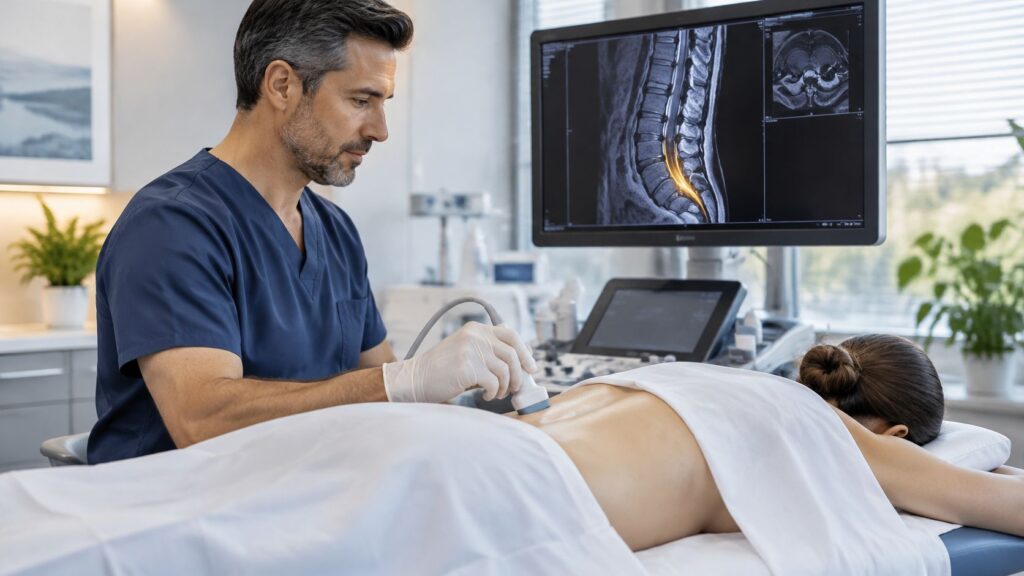
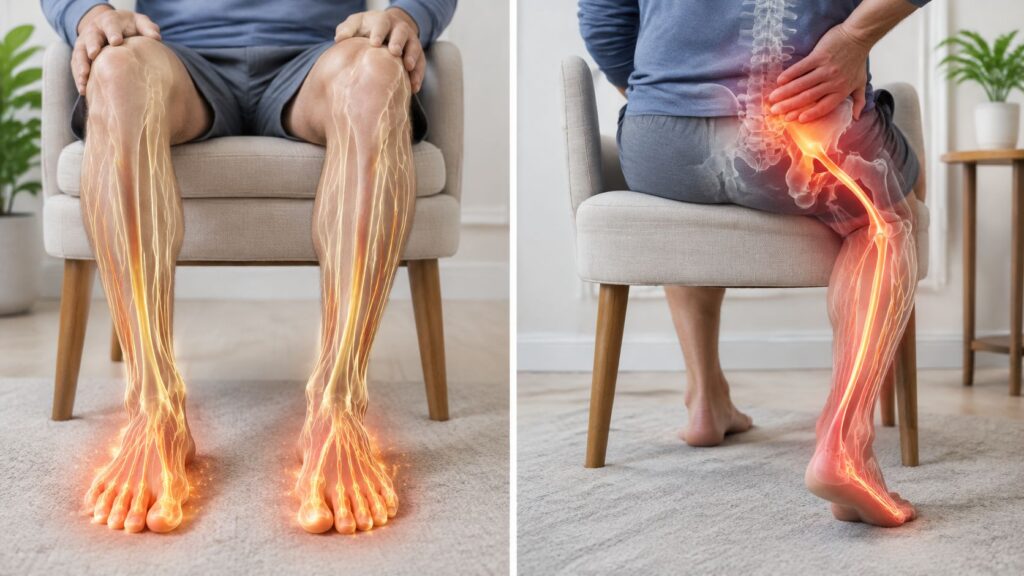
You're in the exam room because the pain hasn't behaved the way you hoped. Maybe it's a knee that still aches after walking, a tendon that flares every time you get active again, or a spine problem that keeps returning even after injections, therapy, or rest. In that situation, PRP therapy often comes up because it doesn't try to cover pain up. It tries to tell the body to repair better.
Platelet-rich plasma, or PRP, starts with your own blood. Clinicians draw a small sample, concentrate the platelets, and place that concentrate back into the problem area so the platelets can release growth factors that support healing. That simple idea leads to a lot of questions, though, especially around how does prp therapy work, which conditions it helps most, and why some people feel better faster than others.
Table of Contents
- Why Patients Are Turning to PRP for Chronic Pain
- The Biology Behind Platelet-Rich Plasma
- What Happens During a PRP Procedure
- Which Conditions Respond Best to PRP Therapy
- The Healing Timeline and What to Expect
- Comparing PRP to Other Pain Treatment Options
- How Midwest Pain and Wellness Approaches PRP Therapy
Why Patients Are Turning to PRP for Chronic Pain
A common story starts the same way in Chicago Ridge, IL and nearby places like Palos Heights, IL or Evergreen Park, IL. Someone has tried rest, medication, therapy, maybe a steroid shot, and the pain still shows up when they climb stairs, lift groceries, or sleep on one side. They're not looking for a miracle. They want a treatment that fits the body's own repair process instead of just muting symptoms for a while.
That's where PRP gets attention. It uses the patient's own blood, concentrates the platelets, and puts that concentrate where the tissue needs help. The idea is biological, not mystical, and the practical appeal is obvious. If the tissue can still respond to repair signals, PRP may help amplify that response.
Practical rule: PRP makes the most sense when the problem is still capable of healing, but the body needs a stronger signal than it's giving on its own.
The phrase how does prp therapy work usually gets answered too broadly. People hear “regenerative” and assume it means PRP rebuilds everything from scratch. It doesn't. It works by creating a local environment rich in repair signals, which can matter a lot in tendons, joints, ligaments, and some selected spine-related structures. In clinic conversations, I usually tell patients to think of PRP as a biologic nudge, not a magic reset button.
That distinction matters because it helps set expectations. PRP may fit some pain patterns better than others, and the timeline is slower than people expect. The rest of this article walks through the science, the procedure, the conditions that tend to respond best, and the timeline patients should anticipate. If you live in Palos Hills, IL or Hickory Hills, IL, the key question isn't whether PRP sounds advanced. It's whether your specific tissue problem is the kind that can benefit from that repair signal.
The Biology Behind Platelet-Rich Plasma
Platelets are best known for clotting, but they also act like the body's first-responder repair crew. When tissue is injured, activated platelets release growth factors from alpha-granules, and those signals help start the healing cascade. PRP concentrates those platelets so the signal is stronger right where the injury is. The result is not a synthetic drug effect, it's a concentrated version of a natural repair message. Mechanistic review on PRP signaling and repair
What the growth factors actually do
The major molecules discussed in PRP research include PDGF, TGF-β, VEGF, and IGF-1. Each one plays a different role. PDGF helps recruit repair cells and supports cell growth. TGF-β contributes to matrix formation and inflammation control. VEGF supports new blood vessel formation. IGF-1 helps with cell proliferation and tissue rebuilding. Review of PRP growth factors and their roles
That mix of signals matters because tissue repair is not one event. Cells need instructions to move in, multiply, lay down matrix, build blood supply, and then remodel the area over time. PRP is designed to enrich that local environment rather than replace the tissue with something artificial. For readers in Illinois who are trying to understand why one injection might help a tendon but do little for something else, this is the main concept to hold onto.
Clinical takeaway: PRP works best when the tissue still has a repair response to amplify. It's less useful when the tissue can't realistically respond to those signals.
Another reason PRP gets studied so widely is that it may influence inflammation as well as repair. Reviews describe a shift toward an M2, pro-repair macrophage pattern and a reduction in pro-inflammatory cytokine signaling, which helps explain why some patients notice changes in pain even before the tissue is fully remodeled. That doesn't mean the pain disappears overnight. It means the biologic environment is changing before the patient feels the full effect.
To connect this back to the title question, how does prp therapy work? It works by delivering a concentrated set of the body's own growth factors directly to the injured site, where they can recruit cells, encourage new vessel growth, support collagen and matrix production, and help steer inflammation toward repair. For a closer look at regenerative concepts in pain care, this overview of regenerative medicine and tissue engineering fits well with the same biologic logic.
What Happens During a PRP Procedure
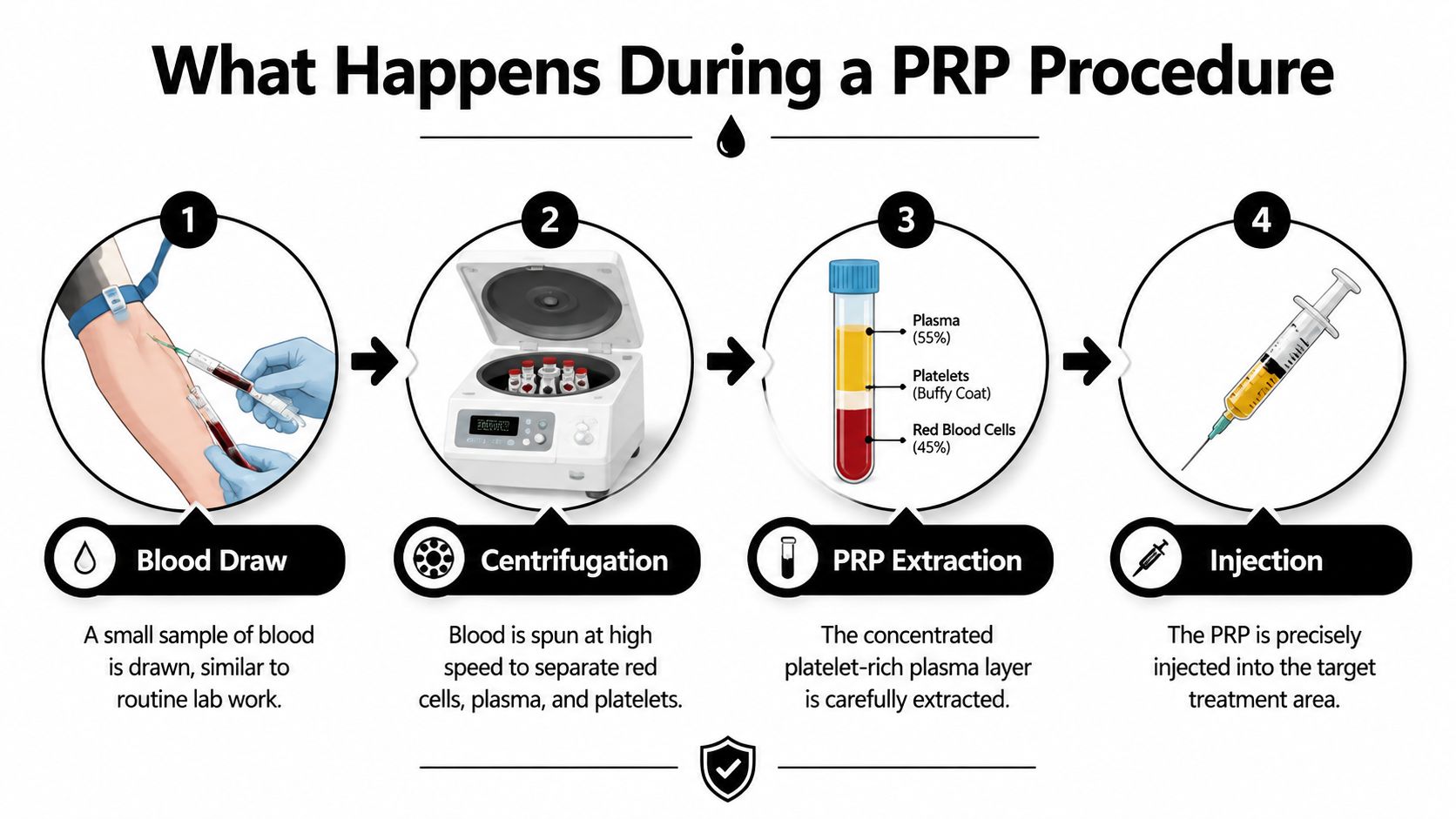
The process is simple enough that many patients are surprised by it. You arrive, get checked in, have blood drawn, and then the blood is processed to separate the platelet-rich portion from the rest. After that, the clinician injects the PRP into the target tissue, often with imaging guidance when precision matters. The whole visit typically takes about an hour according to UCLA Health, which is useful to know if you're planning around work or family obligations. UCLA Health overview of PRP procedure timing
From blood draw to injection
The first step is a standard blood draw. That part feels similar to routine lab work, because it is routine lab work in a different setting. The sample then goes into a centrifuge, which spins the blood so the red cells separate from the platelet-rich plasma. Cleveland Clinic describes PRP as a five- to ten-fold platelet concentration compared with normal blood, which is the practical reason the sample has to be processed before it's injected. Cleveland Clinic PRP overview
Once the PRP is prepared, the injection itself usually takes only a few minutes. Local anesthetic is commonly used, so patients often feel pressure more than sharp pain. If the target area is deep, narrow, or close to important structures, ultrasound guidance can help place the injectate more accurately. That matters because PRP only works where it's delivered.
The visit usually ends the same day. Most patients can drive themselves home, though the treated area may feel sore or full for a short time. That feeling isn't the treatment failing. It's often the early inflammatory response starting, which is part of the healing process PRP is trying to trigger.
What patients usually notice first: the appointment is often shorter and less dramatic than they expected, but the biologic work starts after they leave the office.
For patients in Palos Heights, IL, Evergreen Park, IL, or nearby communities, this is often the part that eases anxiety the most. The procedure is not surgery. There's no implant, no incision line, and no long recovery room stay. The key question becomes whether the target tissue is a good biological match for the treatment, which leads directly to candidacy.
Which Conditions Respond Best to PRP Therapy
PRP is not a universal fix. It tends to perform better in tissues that still have a repair pathway to stimulate, especially joints, tendons, muscles, and some dermatologic indications, while results remain uneven across conditions. Cedars-Sinai notes that PRP modifies the healing environment rather than directly rebuilding tissue, and that honest framing matters because patients often expect a broader regenerative effect than the evidence supports. Cedars-Sinai PRP discussion
Where PRP is used most often
The most common pain-related uses are in knee osteoarthritis, tennis elbow, rotator cuff tendinopathy, and Achilles tendinopathy. These problems share a theme. They often involve irritated or degenerative soft tissue that still has some capacity to respond when the local healing environment improves. In those cases, PRP can make more biological sense than a treatment that only numbs the area.
Spine-related uses are more cautious. PRP is being explored for structures such as facet joints and sacroiliac joints, but that area of care is still developing. That's why a careful consultation matters. A patient with a chronic tendon problem may be a better candidate than someone whose pain comes from a structural issue that PRP can't realistically change.
| Condition | Evidence Level | Typical Timeline | Best Candidates |
|---|---|---|---|
| Knee osteoarthritis | More supportive than many other pain uses | Improvement usually emerges gradually | Patients with persistent symptoms who still have joint function worth preserving |
| Tennis elbow | Supportive but variable | Weeks to months | Patients with tendon pain that hasn't settled with basic care |
| Rotator cuff tendinopathy | Promising in selected cases | Weeks to months | Patients with tendon irritation rather than full structural failure |
| Achilles tendinopathy | Promising but not universal | Weeks to months | Active patients with chronic tendon pain and intact healing potential |
| Facet or sacroiliac pain | Developing evidence | Variable | Carefully selected spine patients after full evaluation |
| Severe structural damage | Limited usefulness | Unpredictable | Usually not the best fit for PRP |
The conditions that respond poorly are often the ones where the tissue can't answer the repair signal well enough. Advanced degeneration, major tears, or pain driven by a mechanical problem that keeps repeating may need a different strategy. PRP is not meant to force healing where the biology is too far gone.
That's why candidacy matters more than enthusiasm. A patient in Chicago Ridge, IL might hear PRP described as regenerative and assume it's appropriate for every ache and tear. It isn't. The treatment has the best chance when there's enough living tissue and repair capacity left for the platelet signals to amplify.
The Healing Timeline and What to Expect
PRP doesn't act like a pain blocker. It acts like a healing trigger, and the timeline reflects that difference. One review reports that growth factor secretion can begin about 10 minutes after injection, with at least 95% released within 1 hour, while platelets can continue releasing growth factors for up to 7 days. That early burst is why PRP can start a repair cascade rather than numbing pain. Review of PRP growth factor release timing
The body's response unfolds in phases
The first phase is the inflammatory phase, which can last up to one week in published clinical overviews. That sounds counterintuitive because inflammation is uncomfortable, but it's part of the repair sequence. Pain can temporarily increase during this stage, especially if the target tissue is already irritated. A later proliferation phase follows around day 5 to 20, when cells start laying down new material. The remodeling phase can last 3 to 6 months, as the tissue matures and gains strength. Clinical overview of PRP healing stages
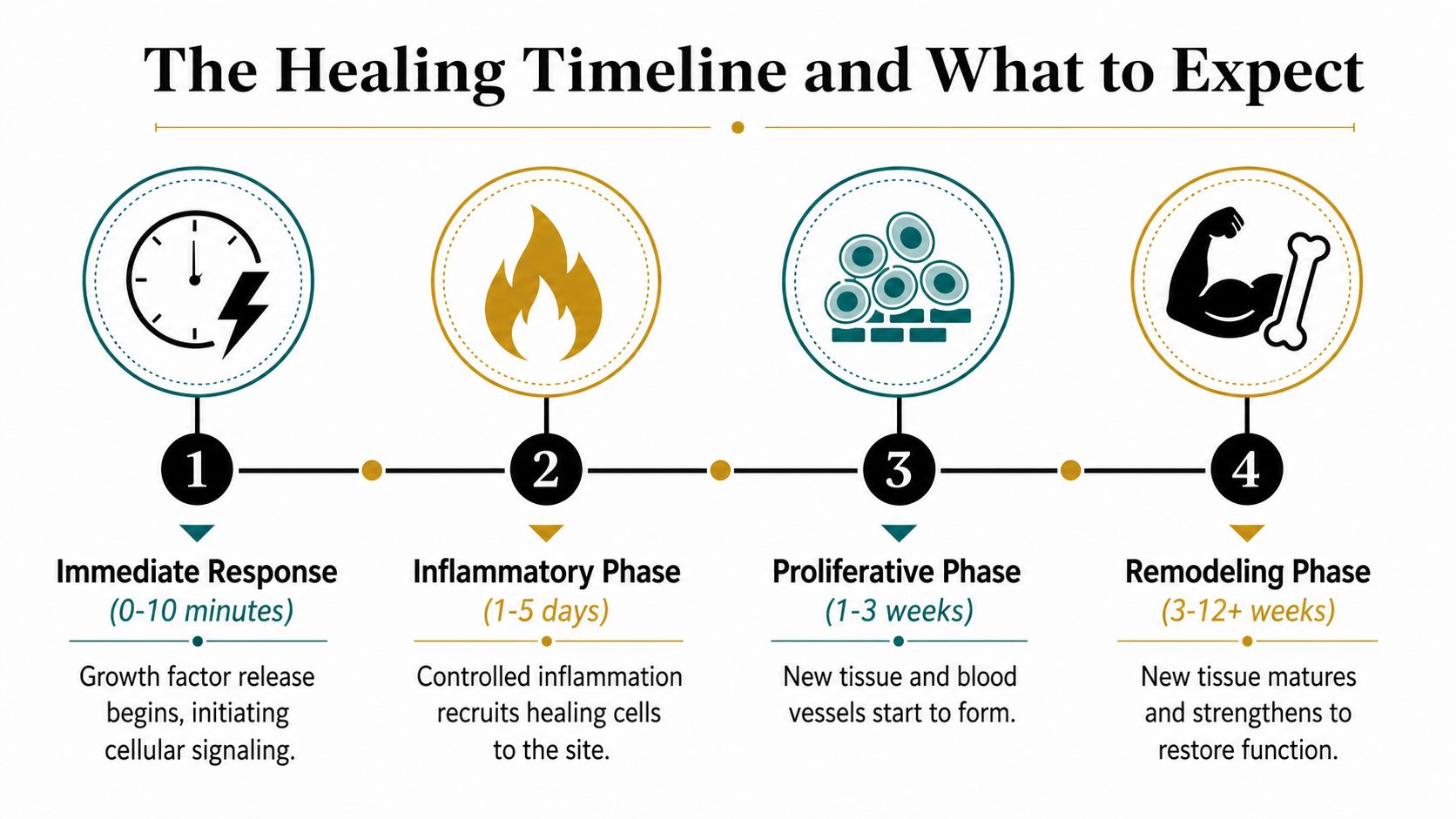
That's why a patient may not feel dramatic change right away. Some people notice improvement around 4 to 6 weeks, then continue improving for months, while others need more time or additional treatment sessions. The point is not instant relief. The point is a better healing environment that unfolds over time.
Practical expectation: if a patient expects PRP to feel like a steroid shot, they're setting themselves up for disappointment. PRP is slower, but the intent is different.
This timeline also explains why aftercare and activity modification matter. If the area is overloaded too early, the tissue can get irritated before the repair process settles in. If the tissue is protected appropriately, the body has a better chance to use the platelet signals effectively. That's the part many patients miss when they ask how does prp therapy work. It works in phases, not all at once.
Comparing PRP to Other Pain Treatment Options
Patients usually compare PRP with the treatments they already know. Corticosteroid injections can reduce pain quickly, but they don't support tissue repair in the same way. Hyaluronic acid can help with lubrication in some joints, but it doesn't rebuild tissue. Physical therapy alone can improve mechanics and strength, but it doesn't add concentrated growth factors. Surgery may be necessary when the structure is too damaged to save, yet it carries a bigger recovery and greater risk burden.
How the tradeoffs usually look
PRP sits in the middle of that spectrum. It's more biologically active than a lubricant injection and less invasive than surgery. It also asks for more patience than a steroid injection. For many patients, that tradeoff is the main decision point.
| Option | Mechanism | Relief Pattern | Tissue Effect | Typical Use |
|---|---|---|---|---|
| PRP therapy | Uses the body's own platelets and growth factors | Slower, then gradual | Supports repair signaling | Chronic tendon, joint, and selected spine pain |
| Corticosteroid injection | Suppresses inflammation | Faster onset | May not support long-term tissue health | Flares and short-term symptom control |
| Hyaluronic acid | Adds joint lubrication | Variable | Does not rebuild tissue | Selected joint problems |
| Physical therapy alone | Improves movement and strength | Gradual | No injected biologic effect | Mechanical and functional rehabilitation |
| Surgery | Repairs or removes damaged structure | Longer recovery | Direct structural intervention | Severe or persistent structural problems |
If you're weighing options in Palos Hills, IL or Hickory Hills, IL, the right question is usually not which treatment sounds strongest. It's which one matches the biology of the problem. A severely torn structure may need a different answer than an overworked tendon or a painful but still viable joint. That's also why many patients ask whether they should try PRP before surgery. In the right case, it can be a reasonable step to consider before escalating.
For a broader look at injection-based pain care, this overview of shots for joint pain fits well with the same decision-making framework.
How Midwest Pain and Wellness Approaches PRP Therapy
At Midwest Pain & Wellness, PRP is evaluated as part of a broader pain plan, not as a stand-alone promise. Dr. Yaw Donkoh reviews the pain source, the tissue involved, and the patient's goals before recommending whether PRP makes sense. That matters because the best candidate is not the person looking for the most aggressive-sounding procedure, it's the person whose condition fits the biology of PRP.
The clinic also uses image guidance when precision is important, which helps place the injection into the intended target. PRP can be combined with other care, including medications, physical therapy, or other interventional treatments, so the plan is customized rather than one-size-fits-all. The goal is opioid-sparing care and durable function, not just a temporary change in symptoms.
If you're coming from Chicago Ridge, IL, Palos Heights, IL, Palos Hills, IL, Evergreen Park, IL, or Hickory Hills, IL, bring your prior imaging, a medication list, and a short summary of what's already been tried. That makes the first visit more useful and helps the clinician decide whether PRP belongs in the plan. For patients who want a regenerative option explained clearly, the clinic's PRP and cell-based therapy page is a good place to start before scheduling.
If chronic pain is still limiting your day, Midwest Pain & Wellness can help you sort out whether PRP fits your condition and goals. The team offers image-guided, individualized pain care for patients who want a biologic approach explained in plain language. Visit Midwest Pain & Wellness to schedule a consultation and see whether PRP belongs in your treatment plan.