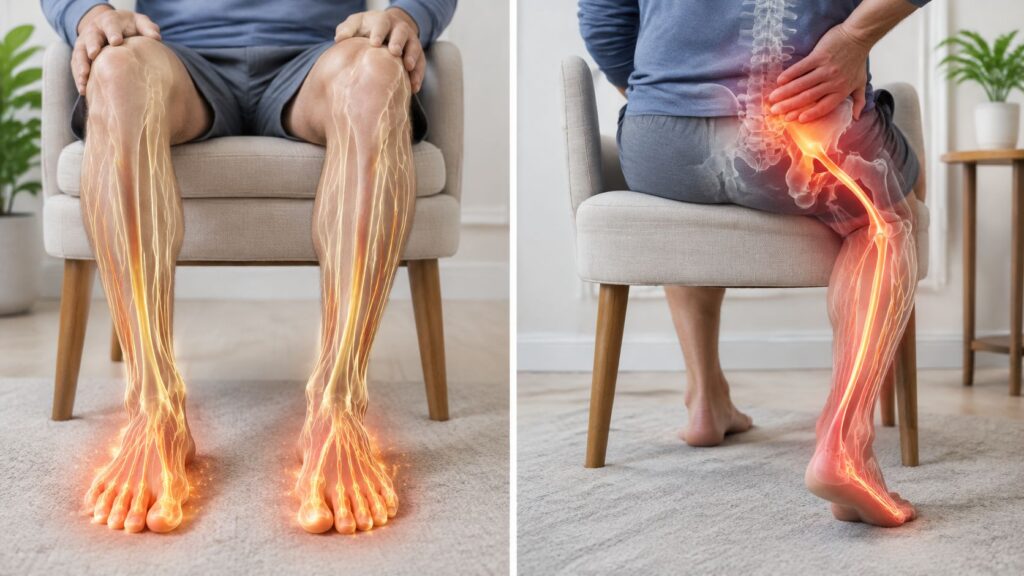
Meditation is often sold as if it should erase chronic pain. That promise is too clean, and it sets people up for disappointment. In real pain care, meditation for chronic pain is usually about changing how pain lands in the nervous system and how much it dominates a day, not about pretending the pain never happened.
For many patients, that difference is the whole point. If pain is still present but feels less threatening, sleep can settle a bit, movement can feel less loaded, and flare-ups may be easier to ride out. A patient in Chicago Ridge, IL, or a nearby community like Palos Heights, IL, Palos Hills, IL, Evergreen Park, IL, or Hickory Hills, IL often doesn't need another vague wellness slogan, they need a realistic tool that fits alongside medical care.
Table of Contents
- What Meditation Does for Chronic Pain
- The Evidence Behind Meditation for Pain Management
- Meditation Techniques Adapted for Chronic Pain
- Building a Sustainable Meditation Practice
- Integrating Meditation with Comprehensive Pain Care
- When Meditation Isn't Enough and Other Common Questions
What Meditation Does for Chronic Pain
The biggest myth is that meditation “cures” pain by making the sensation disappear. That is not how it usually works. In practice, it more often lowers the emotional burden of pain, which can matter just as much in daily life as the intensity score itself.
Pain intensity is not the whole story
When people meditate regularly, many still notice the painful area, but the experience feels less sharp, less alarming, or less consuming. That distinction matters because chronic pain is shaped by attention, fear, stress, and expectations, along with the body's sensory input. A person with neck pain may still feel stiffness, yet stop spiraling into panic every time it flares.
A short practice can still help when pain remains. If the sense of threat drops, you may sit through a meeting, get through a commute, or fall asleep without the pain taking over every thought. For patients who want a broader mind-body framework, the discussion on mental health and chronic pain fits naturally with this approach.
Practical rule: If meditation makes you feel calmer but not pain-free, that still counts as a meaningful response.
Meditation tends to change your relationship to pain more reliably than it changes the raw signal. That is not a weakness. It is often the reason it helps, especially when pain is persistent and already being treated with medications, physical therapy, or procedures.
What patients usually notice first
The first wins are often subtle. People describe less catastrophic thinking, fewer panic spikes during flares, and a little more ability to tolerate discomfort without clenching against it. Those changes may sound small, but in chronic pain, small shifts can accumulate into better function.
It also helps to be honest about who benefits least. Patients who are in severe, uncontrolled pain, who are in the middle of an acute flare, or who have trouble staying still and focused may find meditation frustrating at first. In those cases, I usually treat it as one part of a pain plan, not the whole plan, and I may pair it with injections, medication review, sleep work, or rehabilitation strategies so the patient is not trying to meditate through untreated pain.
For a broader view of how mind-body care gets discussed in clinical settings, holistic telepsychiatry Pennsylvania is a useful example. The point is straightforward, pain has a mental and physical side, and treatment should reflect both without pretending meditation can do the entire job.
The Evidence Behind Meditation for Pain Management
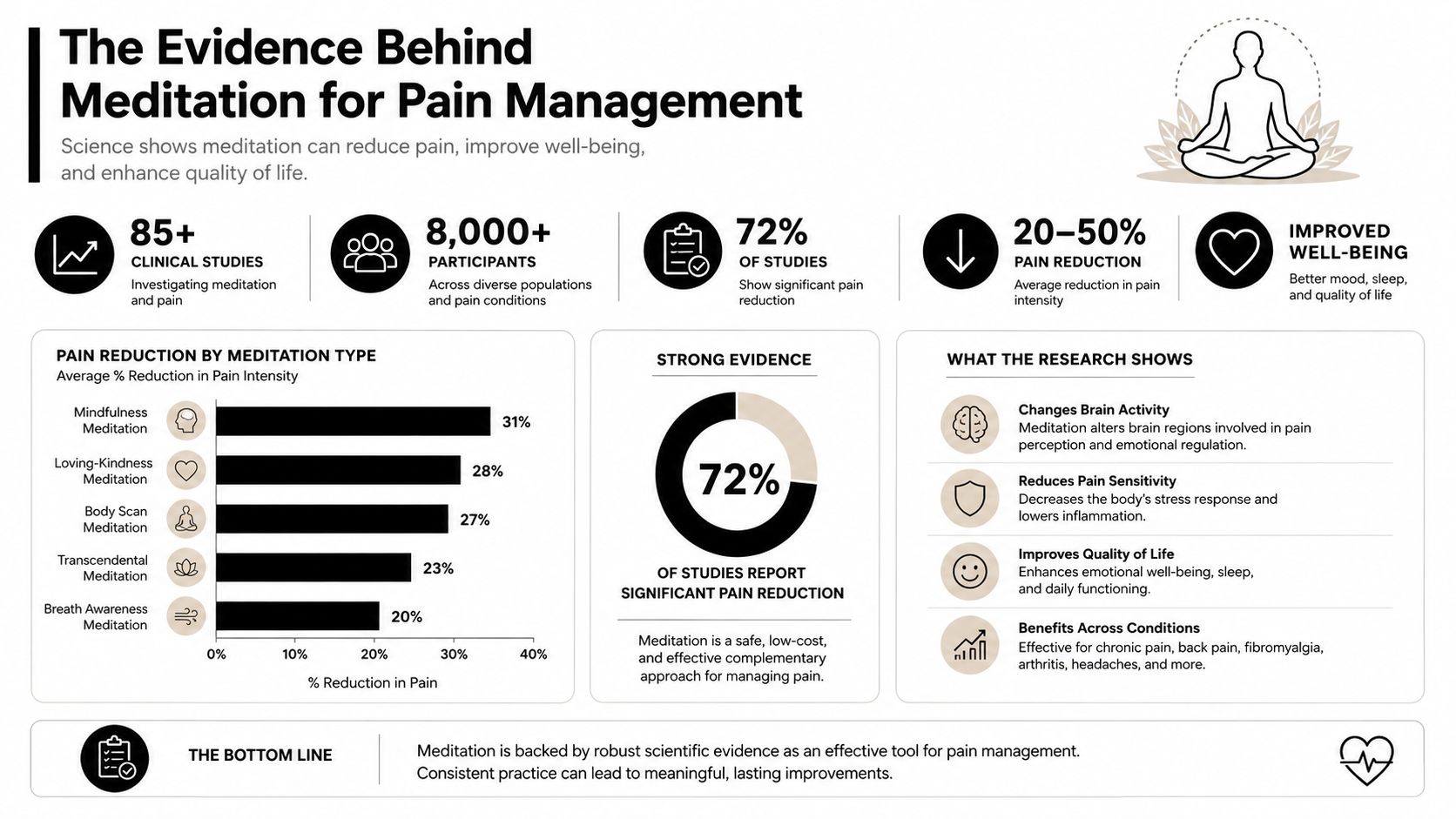
The research is more encouraging than the hype, but less dramatic than the marketing. A major 2017 systematic review from RAND examined 24 randomized controlled trials and found a small but statistically significant improvement in pain symptoms, with a pooled standardized mean difference of 0.26 and 95% CI 0.06 to 0.46, while also noting substantial heterogeneity, I² = 62.1%. In plain language, that means benefit was real but inconsistent across studies, which is exactly why this is not a miracle treatment. You can read the full RAND report in the 2017 chronic pain review.
A separate 2017 review in JAMA Internal Medicine included 30 RCTs and found a similar small effect, with an SMD of 0.32 and 95% CI 0.09 to 0.54. That review also reported a mean percent change in pain of -0.19% in meditation groups versus -0.08% in control groups. Those numbers support a cautious conclusion, meditation can help, but the average effect is modest.
Why the evidence is still called low quality
The historical takeaway from those reviews is important. By the mid-2010s, meditation had moved from a niche self-management practice into a research-backed adjunct for chronic pain, but the evidence was still classified as low quality because study methods weren't consistent and publication bias was a concern. That doesn't mean meditation doesn't work. It means we should be careful about overstating certainty.
The same caution shows up in broader public-health data. The U.S. National Center for Complementary and Integrative Health reported that meditation use among U.S. adults more than doubled from 7.5% in 2002 to 17.3% in 2022, and it also summarized a 2020 analysis of five studies involving 514 participants using opioids for acute or chronic pain, where meditation practices were strongly associated with pain reduction. In the same NCCIH summary, mindfulness-based stress reduction improved low-back pain in the short term but not fibromyalgia pain.
The pattern is clear. Meditation is not equally strong for every condition, and the best results tend to come when the practice matches the patient's pain type, daily routine, and ability to stick with it. In chronic pain medicine, that's the core question, not whether meditation is fashionable.
Meditation Techniques Adapted for Chronic Pain
The safest way to start is with techniques that don't fight your body. If you're in pain, the goal isn't perfect stillness. The goal is to lower tension, keep attention steady, and avoid turning every sensation into a threat.
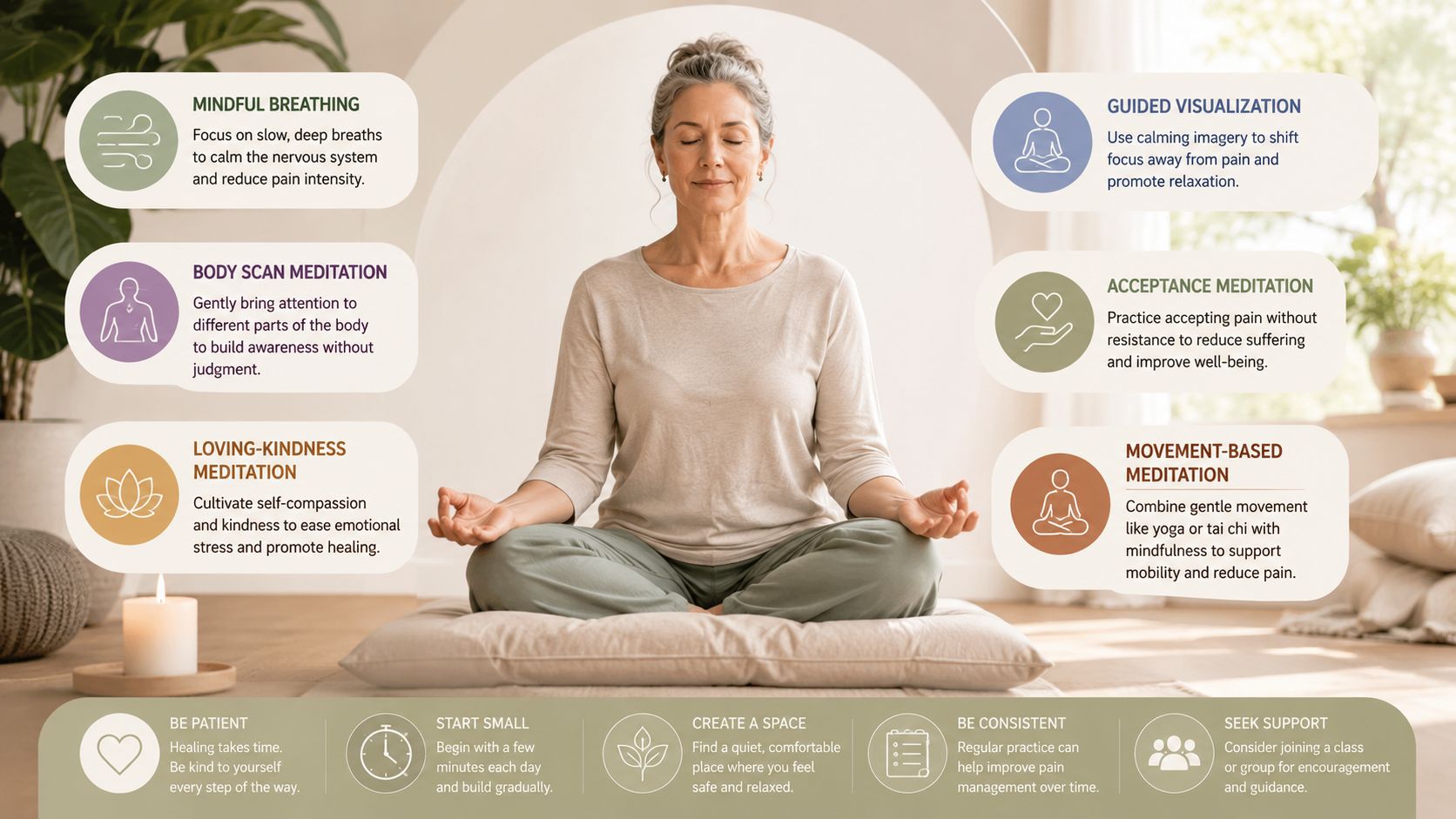
Start with body scan and breath awareness
A body scan works well for people who tend to hold tension in the back, shoulders, hips, or jaw. Lie down if you can tolerate it, or sit in a supported chair. Move attention slowly from the feet upward, noticing sensation without trying to force release. If a painful spot is too sharp, skip over it and return later.
For breath awareness, keep it simple. Count breaths from one to ten, then start over. If the breath feels tight because of neck pain or rib discomfort, don't force deep inhaling. Let the exhale be a little longer than the inhale, and keep your jaw relaxed. The value here is not spiritual performance, it's nervous system steadiness.
Try this phrase during a flare, “I'm noticing discomfort, and I don't need to fight it for the next three minutes.”
Use loving-kindness and gentle movement when pain is stubborn
Loving-kindness practice helps when pain brings irritability, grief, or self-criticism. You repeat short phrases such as, “May I be steady. May I be patient. May I be kind to my body.” That can sound abstract, but patients who feel angry at their body often need exactly that shift.
Movement-based meditation can be a good fit for joint pain or stiffness, as long as the motion is easy and deliberate. Slow seated shoulder rolls, gentle neck turns within comfort, or mindful walking across a room can keep attention anchored to movement instead of fear. If you're looking for a comfortable setup for seated practice, the complete meditation cushion guide can help you think about support, posture, and pressure relief.
A common mistake is trying to meditate through severe pain with no adjustment. That usually just turns the practice into another test you can fail. Support your body first, then work on attention.
Building a Sustainable Meditation Practice
The biggest challenge isn't technique, it's adherence. A systematic review of home practice in chronic pain found that people practiced at about four days per week, but the dose varied a lot, and studies often reported better outcomes with more practice. That's the clinical issue, meditation can look ineffective when the home routine falls apart.
Make the habit small enough to survive pain flares
Start with a short, repeatable session instead of an ambitious one. A quiet 5 to 10 minutes is easier to protect than a 30-minute promise that collapses after a bad night. If mornings are unreliable, attach the practice to something you already do, such as sitting with coffee, after brushing your teeth, or before bed.
A support strategy also matters. Use the same chair, cushion, or corner of the room so your body recognizes the routine quickly. If you need to shift positions because of back or hip pain, that's fine. Consistency beats aesthetics every time.
Track more than pain scores
Pain intensity is only one measure. Watch for changes in sleep continuity, mood reactivity, physical guarding, and whether flares recover faster. If you find yourself doing daily tasks with less dread, that matters even if the pain scale hasn't dropped much.
One useful pattern is to keep the same practice during flares, but shorten it. That keeps the habit alive without asking your body for more than it can give. If sitting is miserable, switch to lying down. If silence feels overwhelming, use a simple count with the breath.
Practical rule: The practice should fit the worst day you expect, not just the best day you hope for.
The evidence on home practice suggests another reality, people who stay with it tend to do better than people who treat it like an occasional rescue tool. That's why the best plan is boring on purpose. Same time, same cue, same modest length.
Integrating Meditation with Comprehensive Pain Care
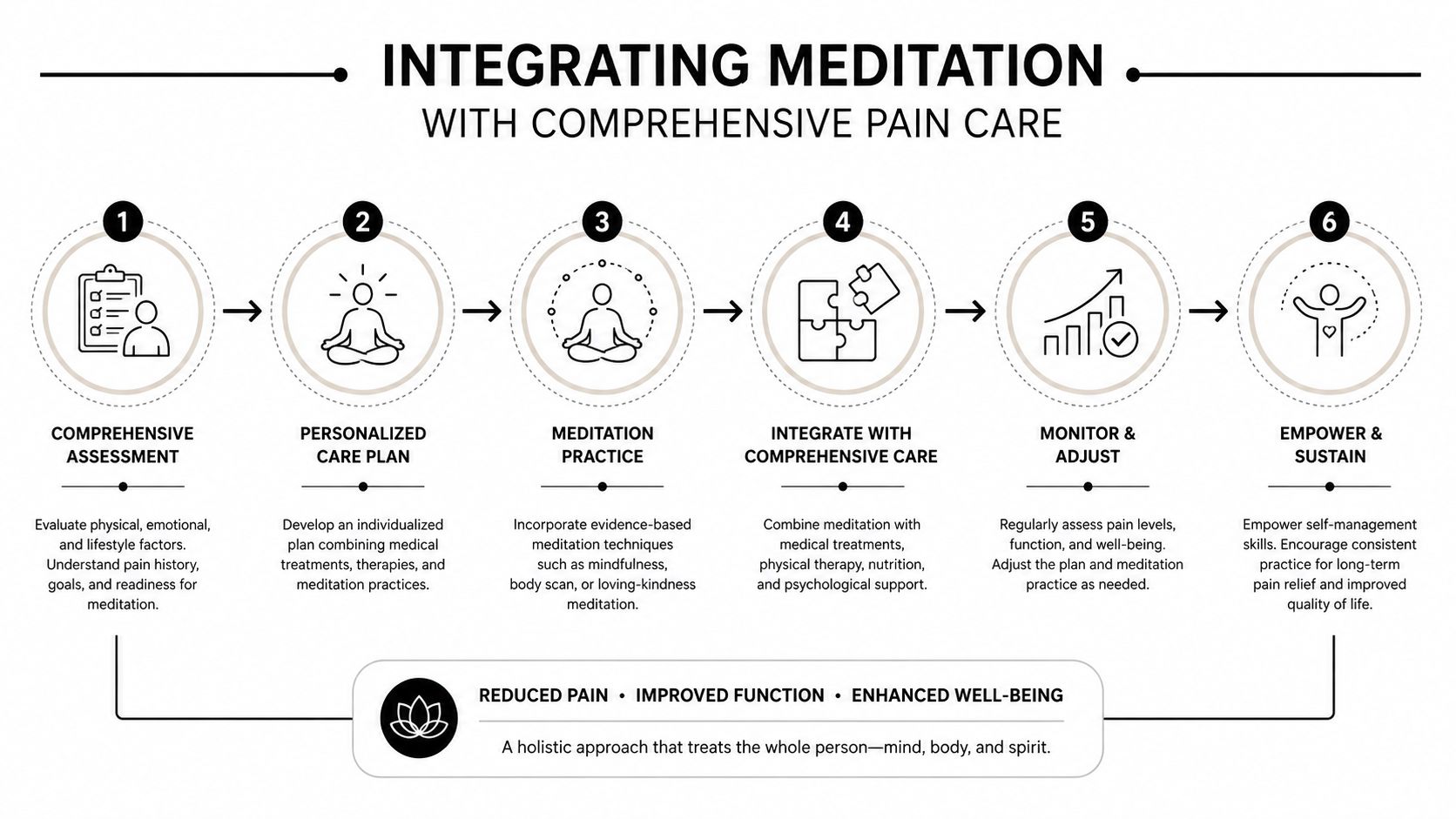
Meditation works best as part of a plan, not as a replacement for treatment. In patients with chronic pain, especially those dealing with spine disease, post-surgical pain, or recurrent flares, the best results usually come from combining mind-body work with medical management. That might include procedures, exercise, sleep work, or psychological support, depending on the pain generator.
How meditation fits with interventional care
If a patient is preparing for a nerve block, spinal cord stimulation workup, or a regenerative procedure, meditation can help with anticipatory stress and symptom tracking. It doesn't change anatomy, but it can make the period before and after treatment easier to manage. That's especially useful when pain is aggravated by worry, muscle guarding, or poor sleep.
For patients comparing options within a broader pain plan, the CBT for pain guide is a practical companion because cognitive-behavioral skills and meditation often solve different parts of the same problem. CBT helps with thought patterns and coping behaviors, while meditation trains attention and body awareness. In real clinics, those tools can reinforce each other.
If you're being treated in a pain clinic, tell the clinician exactly what you're doing. Mention the type of meditation, how often you practice, and whether it changes sleep, anxiety, or flare recovery. That information helps the plan become more precise.
What a multimodal approach looks like in practice
A good pain plan doesn't force meditation to do everything. It uses meditation to reduce distress, procedures to target the pain generator when appropriate, and movement or rehab to keep function moving in the right direction. That's the difference between a coping tool and a full treatment strategy.
For patients in the Chicago Ridge area, that kind of coordination matters because persistent pain rarely has one cause and rarely responds to one fix. If you're trying to make sense of how procedures and self-management fit together, the interventional pain management clinic resource aligns with the way multimodal care is usually built in real practice.
When Meditation Isn't Enough and Other Common Questions
I think of meditation as useful for the patient who says, “My pain is still here, but I need to stop it from running my whole life.” It's much less reliable when the pain is severe, structurally driven, or tied to nerve damage that needs medical evaluation. A patient with worsening numbness, major weakness, or pain that keeps escalating despite self-care shouldn't keep waiting on meditation to solve it.
One common example is post-surgical pain that never settles the way it should. Another is neuropathic pain, where burning, shooting, or electric sensations dominate the picture. Meditation may help someone cope with those sensations, but it doesn't replace the need to review the diagnosis and the treatment plan.
What to do if you're unsure
If your pain keeps interfering with walking, sleep, work, or basic daily tasks, bring that into the exam room directly. The easiest patients to help are often the ones who can describe where it hurts, what it feels like, what makes it worse, and what changes after rest, heat, medication, or meditation. If that description is hard to organize, the guide on how to describe pain to doctor can help you prepare.
A few situations should push you toward more than meditation alone:
- Progressive function loss: If you're doing less each week because pain is getting in the way, the plan needs reassessment.
- Neurologic symptoms: New numbness, weakness, or balance problems deserve prompt medical attention.
- After failed self-management: If meditation, rest, and routine care aren't changing the pattern, you may need a different treatment layer.
Meditation can still stay in the plan, just not as the only plan. That's the honest answer most patients need.
If you're looking for a pain clinic that treats meditation as one part of a real chronic pain strategy, Midwest Pain & Wellness can help you build a plan that fits your diagnosis, your function, and your daily life. The clinic works with patients who need thoughtful interventional care, practical coping tools, and a clear path forward, not empty promises.