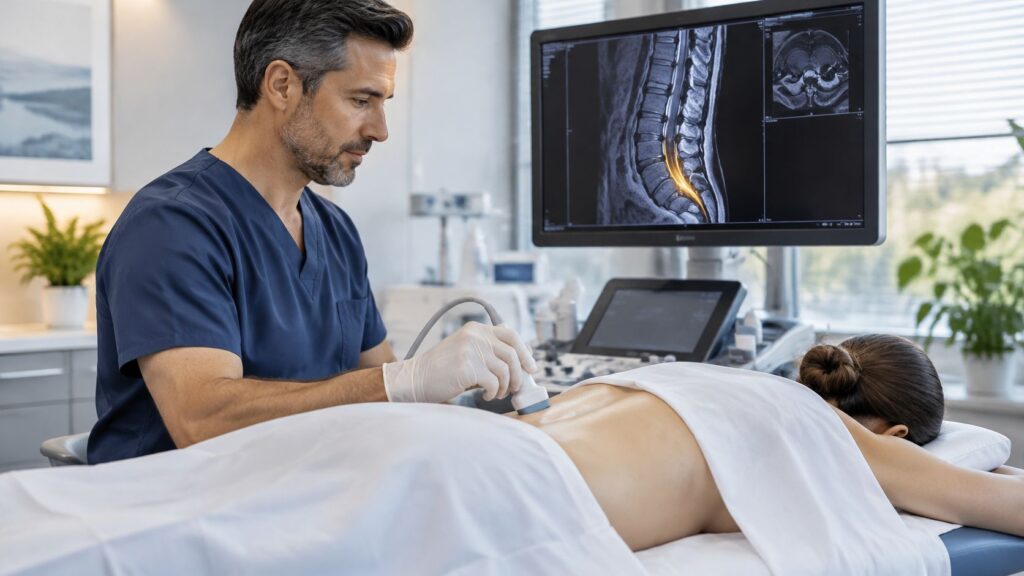
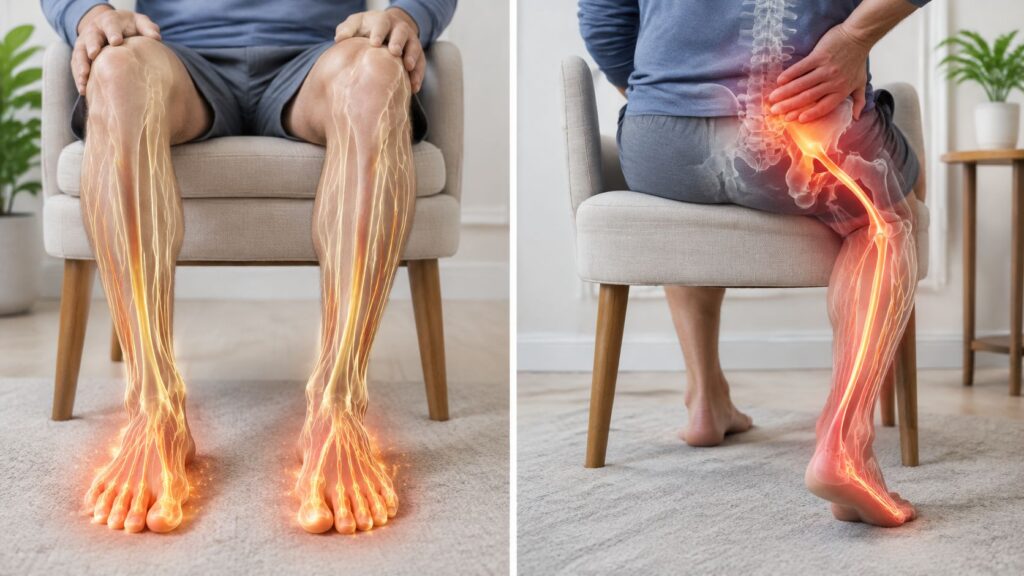
You're halfway through a grocery trip when an electric pain runs from your lower back into your buttock and down your leg. Sitting in the car makes it worse, standing feels uncertain, and you're wondering whether to stretch, lie down, take medication, or just wait. That confusion is common, but how to help sciatica becomes much clearer when you follow a decision timeline rather than chase one “magic” exercise.
Sciatica usually responds to a measured combination of symptom control, tolerable movement, rehabilitation, and monitoring. It also has limits. Certain neurologic symptoms require urgent evaluation, and persistent or disabling leg pain may justify a pain-clinic assessment rather than more weeks of guessing.
Table of Contents
- What Sciatica Actually Is and Why Early Recognition Matters
- Daily Stretches and Strengthening Exercises That Actually Help
- Activity Modifications and Ergonomic Adjustments
- Pain Relief Options From the Pharmacy and Beyond
- Red Flags and the Right Time to Escalate to a Specialist
- What Interventional Pain Care Looks Like Step by Step
- Putting It Together and Your Next Step
What Sciatica Actually Is and Why Early Recognition Matters
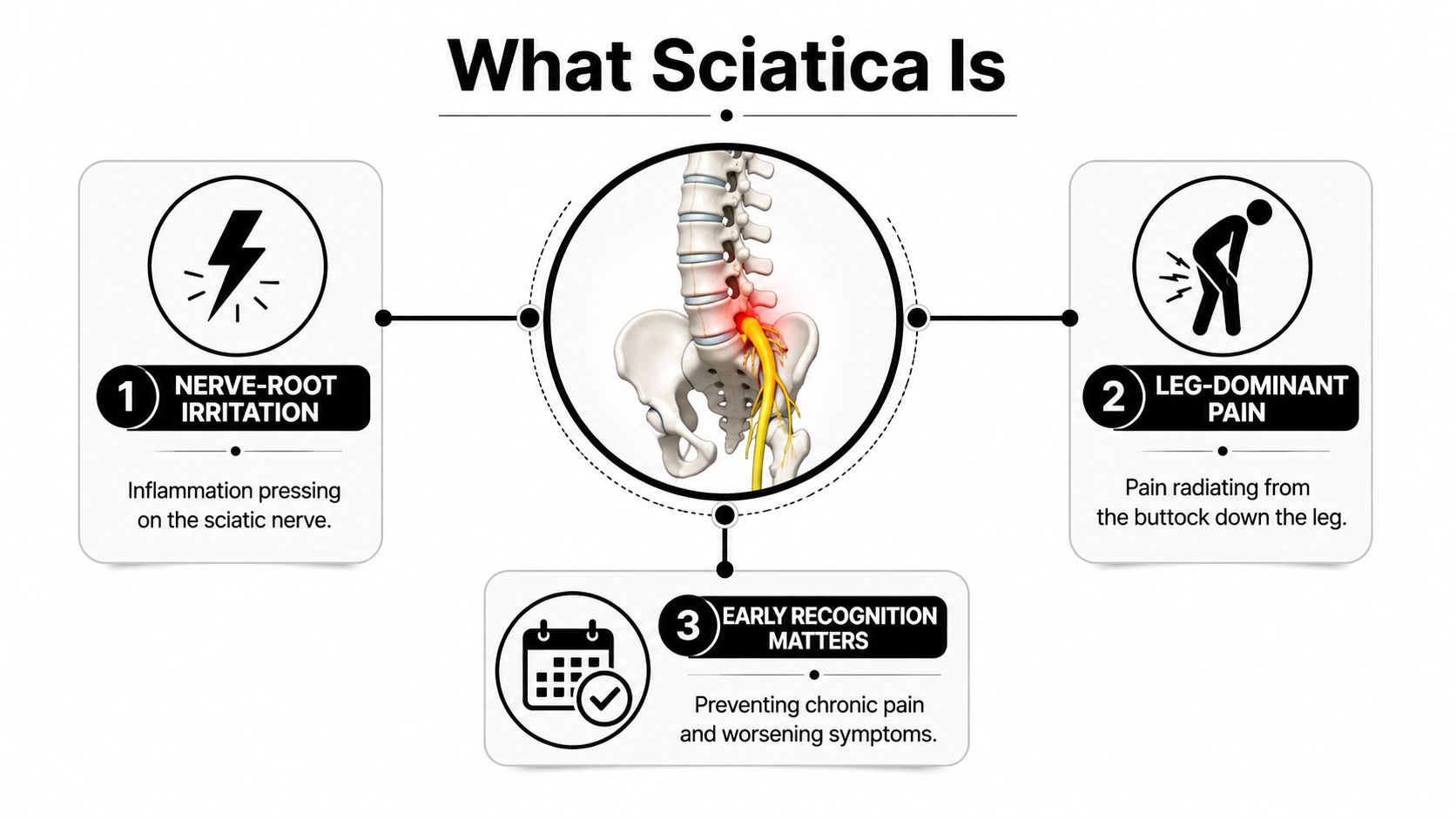
Sciatica isn't just low back pain. It describes nerve-root irritation that produces pain, tingling, numbness, or weakness into the leg, usually below the knee. The irritation can affect the path of the sciatic nerve, which travels from the lower spine through the buttock and down the leg.
A mechanical back strain often stays centered in the lower back and may improve as the muscles settle. Sciatica is more likely when the leg becomes the dominant problem. Patients may describe burning, electrical, shooting, or deep radiating pain, sometimes accompanied by altered sensation or difficulty lifting the foot.
Population estimates show why recognizing this pattern matters. Major medical references estimate lifetime sciatica incidence at 10% to 40%, with annual incidence estimated at 1% to 5% and peak occurrence in the fourth decade of life (NCBI Bookshelf overview of sciatica). Clinically significant sciatica affects about 4% to 6% of the population, although as many as 40% may experience sciatica-like symptoms at some point, according to the same reference. Sciatica accounts for roughly 5% to 10% of low back pain cases, while disc-related sciatica occurs in about 2.2% of the general population each year (NCBI Bookshelf overview of sciatica).
First, identify the nerve pattern
A desk worker who ignores radiating leg pain for three weeks may eventually find that sitting, driving, and sleeping all become difficult. Earlier recognition wouldn't necessarily have guaranteed a faster recovery, but it could have prompted a neurologic screen, activity modifications, and a clearer plan before the symptoms began controlling the person's day.
Use this quick distinction:
- Back-dominant discomfort often behaves like mechanical low back pain.
- Leg-dominant pain below the knee raises concern for sciatica.
- Numbness or tingling suggests sensory nerve involvement.
- Weakness, such as trouble lifting the foot or pushing off with the toes, deserves clinical attention.
- Pain that travels farther down the leg with coughing, sneezing, or certain positions can fit a nerve-root pattern, but it still needs to be interpreted alongside an examination.
For a more detailed explanation of the diagnostic process, see this guide to how sciatica is diagnosed. A symptom pattern alone can't identify the exact spinal level or prove that a disc is responsible.
Your first 72 hours
The first three days are when people commonly make one of two mistakes. They either stay in bed and become stiffer, or they push through repeated movements that clearly intensify the leg pain. A better approach is sequential.
-
Screen for urgent symptoms. New urinary retention or incontinence, saddle numbness, fecal incontinence, severe bilateral sciatica, or rapidly progressive motor weakness requires urgent evaluation, not a home exercise experiment. These symptoms can indicate cauda equina syndrome or another serious spinal problem (low back pain and sciatica red-flag guidance).
-
Reduce aggravating positions briefly. You may need to shorten a car ride, avoid repeated bending, or change how you get out of bed. These are temporary adjustments, not a command to stop moving. If an over-the-counter anti-inflammatory medication is medically appropriate for you, follow the label and ask a clinician or pharmacist about kidney disease, ulcers, blood thinners, pregnancy, and other contraindications.
-
Keep tolerable activity. A 20-minute grocery trip may be manageable if you use a cart, change position, and leave when the leg symptoms increase. A two-hour shopping outing may turn the same flare into a prolonged setback. Break necessary tasks into smaller exposures and judge success by whether symptoms settle afterward.
-
Record the pattern. Write down where the pain travels, whether numbness is changing, what position worsens it, how far you can walk, and whether strength feels different. A simple log gives a pain clinician useful information that a single pain score often misses.
Practical rule: A movement that causes mild, temporary discomfort may be acceptable. A movement that steadily pushes pain farther down the leg, increases numbness, or produces new weakness is a reason to stop and seek guidance.
Evidence has moved away from routine bed rest. A classic evidence review found little difference between bed rest and advice to stay active for pain or function, and current guideline-based management emphasizes continuing normal activities as tolerated rather than remaining in bed (evidence review of bed rest and activity; NICE guideline NG59). The first goal isn't to prove that you can tolerate everything. It's to calm the flare without allowing fear or overprotection to take away ordinary movement.
Daily Stretches and Strengthening Exercises That Actually Help
No single stretch wins for every patient. A synthesis of 50 randomized trials published in 2026 found very low confidence in comparisons among nonsurgical treatments for chronic sciatica, with no clearly superior nonsurgical intervention (2026 synthesis of nonsurgical sciatica interventions). That doesn't make exercise pointless. It means the routine should be selected by symptom response, function, and stage of recovery.
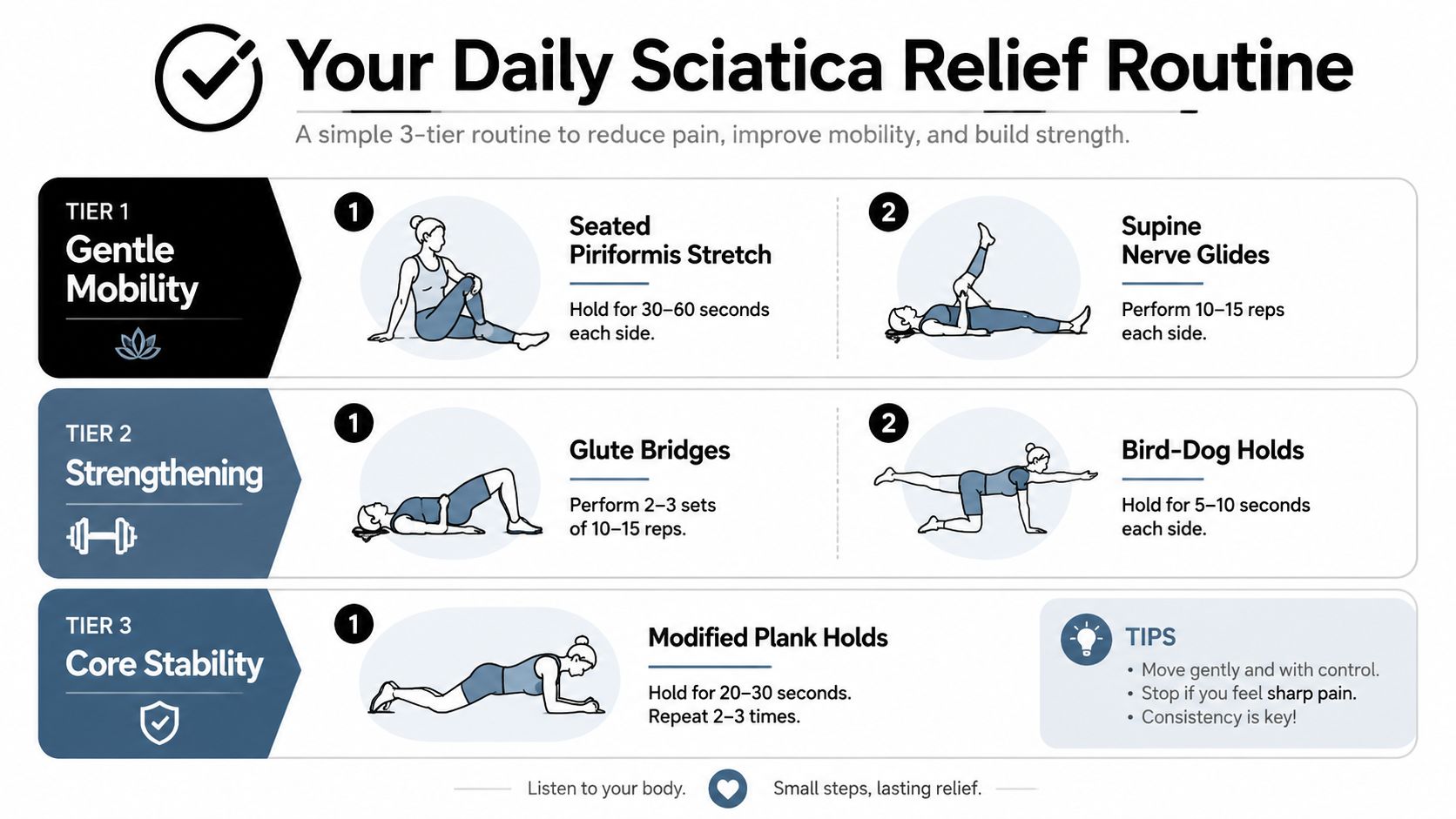
Tier one, mobility without provoking the nerve
Start with gentle movement rather than an aggressive hamstring stretch. For a supine nerve glide, lie on your back with one hip and knee comfortably bent. Slowly straighten the knee while pointing the toes away, then bend the knee while bringing the toes gently toward you. Perform five to ten smooth repetitions, once or twice daily, without holding the nerve at its most uncomfortable position.
A seated version uses the same principle. Sit upright, slowly straighten the symptomatic leg only as far as comfortable, then return it while relaxing the ankle. The purpose is to move the nerve through its pathway, not to force length into it.
Stop if symptoms intensify down the leg and remain worse after the exercise. A mild stretch near the back of the thigh is different from increasing electrical pain or numbness.
Tier two, restore hip and trunk support
When walking and basic mobility are easier, add low-load strength work:
- Glute bridges: Lie on your back with knees bent, tighten the buttocks, and lift the hips only as high as you can without increasing leg symptoms. Begin with five to ten repetitions. Avoid arching the lower back.
- Bird-dog holds: From hands and knees, brace gently and extend one arm or one leg before progressing to the opposite arm and leg. Hold briefly, repeat on the other side, and keep the pelvis level.
- Modified curl-up alternatives: Keep one knee bent and support the natural curve of the lower back while lifting the head and shoulders slightly. Don't pull the neck forward or repeatedly flex through pain.
Advance when the current movement no longer causes a meaningful symptom increase later that day or the next morning. Progress one variable at a time, such as repetitions, hold time, or walking duration.
Tier three, walking and conditioning
Walking is often the most practical conditioning tool because it rehearses normal function without requiring complicated equipment. Begin with a distance you can complete while keeping symptoms stable, then add time gradually. Low-impact options can also help once the acute irritability has settled.
Use this screenshot checklist:
- Mobility: Nerve glides remain smooth and non-provocative.
- Strength: Bridges and bird-dog work stay controlled.
- Conditioning: Walking increases without a lasting leg-symptom flare.
- Progression: Change one exercise variable at a time.
- Stop signs: New weakness, spreading numbness, or worsening radiating pain prompts reassessment.
For additional movement ideas, review this practical guide on how to exercise with sciatica. Exercise should serve your recovery, not become another test you feel compelled to pass.
Activity Modifications and Ergonomic Adjustments
Sciatica often becomes harder to manage when ordinary tasks repeatedly load the same irritated position. The answer isn't perfect posture all day. It's reducing long, uninterrupted exposure and changing positions before symptoms build.
At a desk, keep the screen near eye level, support the lower back with a small cushion if it helps, and place both feet on the floor or a footrest. Avoid sinking into a soft chair that keeps the lumbar spine rounded. Stand, walk briefly, or perform a comfortable position change every 30 to 45 minutes, adjusting sooner if your leg symptoms start to spread.
Car entry is another frequent trigger. Sit down first with your feet outside the vehicle, then turn your whole body together as you bring your legs in. Reverse the sequence when exiting. This avoids the combined bending and twisting that often provokes a sensitive back.
Sleep and lifting
For sleep, try the position that reduces leg symptoms rather than the position that looks most “correct.” On your back, a pillow under the knees may reduce strain. On your side, a pillow between the knees can prevent the upper leg from rotating forward. If a position increases numbness or sends pain farther down the leg, change it.
Lifting requires a hip hinge. Keep the object close, bend at the hips and knees, brace gently, and rise by driving through the legs. With a laundry basket, grocery bag, or toddler, turn your feet instead of twisting your trunk while carrying the load.
The two common mistakes are rounding while reaching and combining a bent spine with rotation. A brace may offer temporary confidence during a specific task, but it shouldn't replace movement retraining or become something you wear continuously without clinical guidance. Heat can relax protective muscle guarding, while cold may soothe a fresh flare. Use whichever gives you useful short-term relief, protect your skin, and don't mistake temporary comfort for treatment of the nerve source.
Runners rebuilding activity should also consider the entire kinetic chain. This resource on rehab exercises for runners with back issues can provide general context, but radiating pain, numbness, or weakness still calls for individualized assessment rather than a generic running program.
Pain Relief Options From the Pharmacy and Beyond
Medication can make movement possible during a flare, but it rarely corrects the mechanical or inflammatory cause. The safest choice depends on your medical history, other medicines, kidney and stomach health, pregnancy status, and symptom pattern.
NSAIDs such as ibuprofen or naproxen may help inflammatory pain around a nerve root. For adults who can take ibuprofen safely, a typical over-the-counter range is 200–400 mg every 4–6 hours, while staying within the package's maximum daily amount. Use the lowest effective dose for the shortest practical period. Do not combine NSAIDs unless a clinician specifically instructs you to. Check with a clinician first if you have ulcer disease, kidney problems, cardiovascular risk, take anticoagulants, or are pregnant.
Acetaminophen may reduce general pain for some people, but it does not provide the same anti-inflammatory action and is not a dependable treatment for nerve pain. Follow the labeled daily limit and check combination products so you do not take acetaminophen from multiple sources.
Muscle relaxants sometimes reduce spasm-related discomfort. Their benefit varies, and sedation can interfere with driving, work, and rehabilitation. They do not remove pressure from a nerve root.
Options that deserve skepticism
The NICE guideline NG59 advises against gabapentinoids, other antiepileptic medicines, oral corticosteroids, and benzodiazepines for sciatica because overall benefit is lacking and harm has been documented. A medication can sound logical yet produce little improvement in walking, sleep, or function.
Topical menthol or capsaicin may provide surface-level sensory relief when muscle soreness surrounds the main problem. These products do not decompress a nerve root, and irritated skin can increase discomfort. This guide to topical pain relief covers general topical-product use and precautions.
Cold packs may soothe an acute flare when used briefly with a cloth barrier and regular breaks. Heat can feel better when muscle guarding dominates. TENS helps some people modulate pain enough to move, but the response varies. It should not delay assessment if neurologic symptoms are worsening.
Tell your primary care clinician where the pain travels, whether numbness is present, whether strength has changed, what activities you can no longer perform, and which medicines you have tried. Those details guide the next decision more effectively than saying only that your back hurts.
Red Flags and the Right Time to Escalate to a Specialist
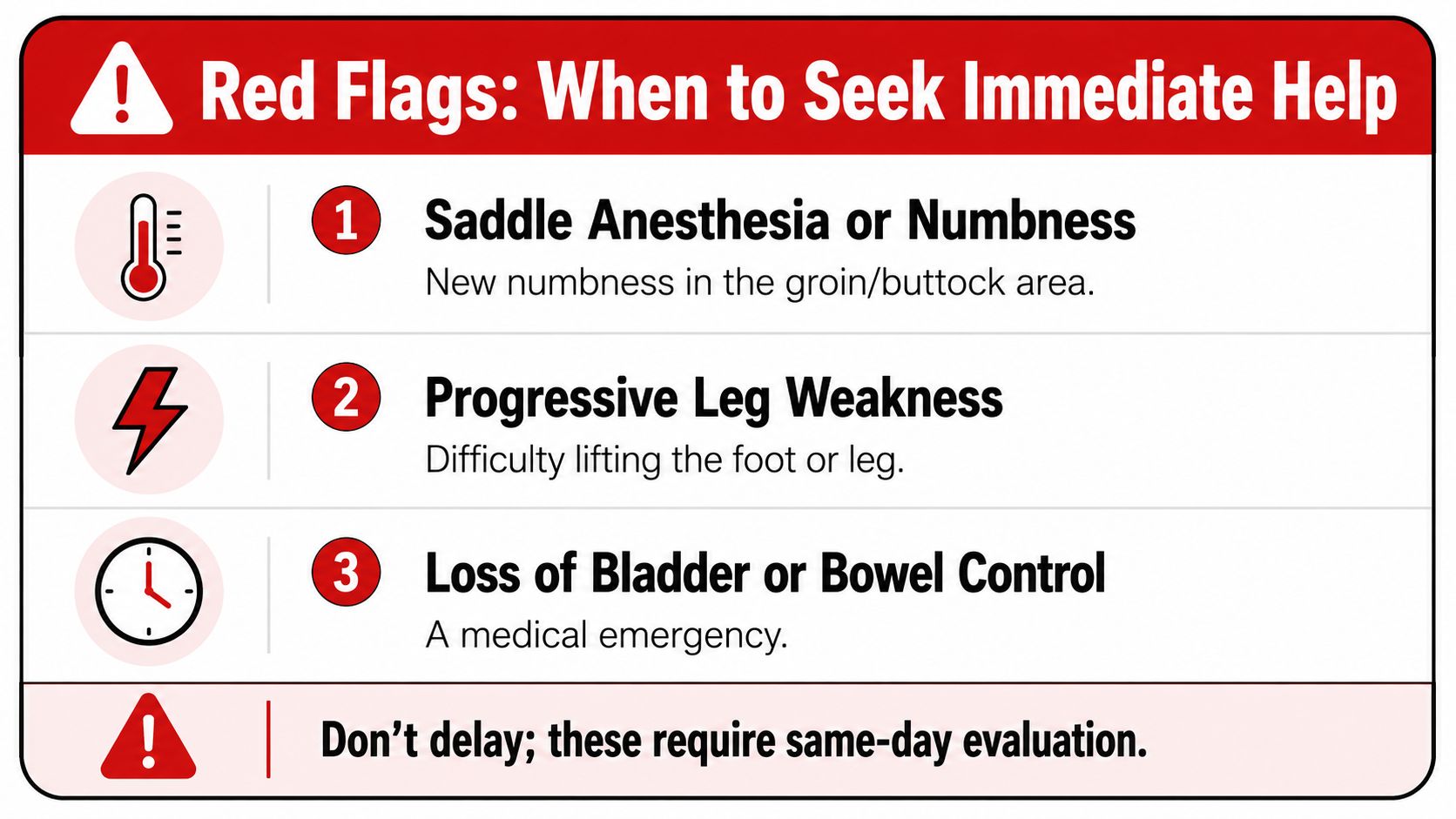
Self-care is appropriate only while symptoms remain stable and neurologic function is intact. Seek same-day medical evaluation if any of these warning signs develop:
- Urinary retention or incontinence, especially alongside worsening leg symptoms.
- Saddle anesthesia, new numbness around the groin, buttocks, or inner thighs.
- Fecal incontinence, which may indicate serious nerve compromise.
- Severe bilateral sciatica, particularly when both legs are substantially affected.
- Progressive motor weakness, such as increasing difficulty lifting the foot or controlling the leg.
These symptoms can signal cauda equina syndrome or another serious spinal condition. Follow this low back pain and sciatica red-flag guidance and do not wait for routine outpatient review.
When persistence changes the plan
For uncomplicated sciatica, begin with conservative care and avoid reflexive imaging. If symptoms are not improving after about 6 to 8 weeks, advanced imaging or surgical assessment commonly becomes reasonable, unless red flags or substantial neurologic deficits appear sooner (management approach for uncomplicated sciatica).
An MRI in the second week may feel proactive, but it does not automatically change treatment. Disc abnormalities can exist without causing the current symptoms. Imaging becomes more useful when the pain distribution, examination findings, symptom duration, and a possible treatment decision all point in the same direction.
Arrange a specialist assessment sooner if pain is disrupting sleep, work, walking, or rehabilitation, even before the usual conservative-care window ends. An interventional pain specialist can assess neurologic function, decide whether imaging is warranted, and clarify whether the next step is continued rehabilitation, further evaluation, or an image-guided intervention. The goal is to preserve function while avoiding unnecessary procedures, rather than bypassing self-managed recovery.
What Interventional Pain Care Looks Like Step by Step
Interventional care should follow a diagnosis and a functional problem, not a menu of procedures. The first question is whether the symptoms and examination support a specific pain generator that an intervention can reasonably target.
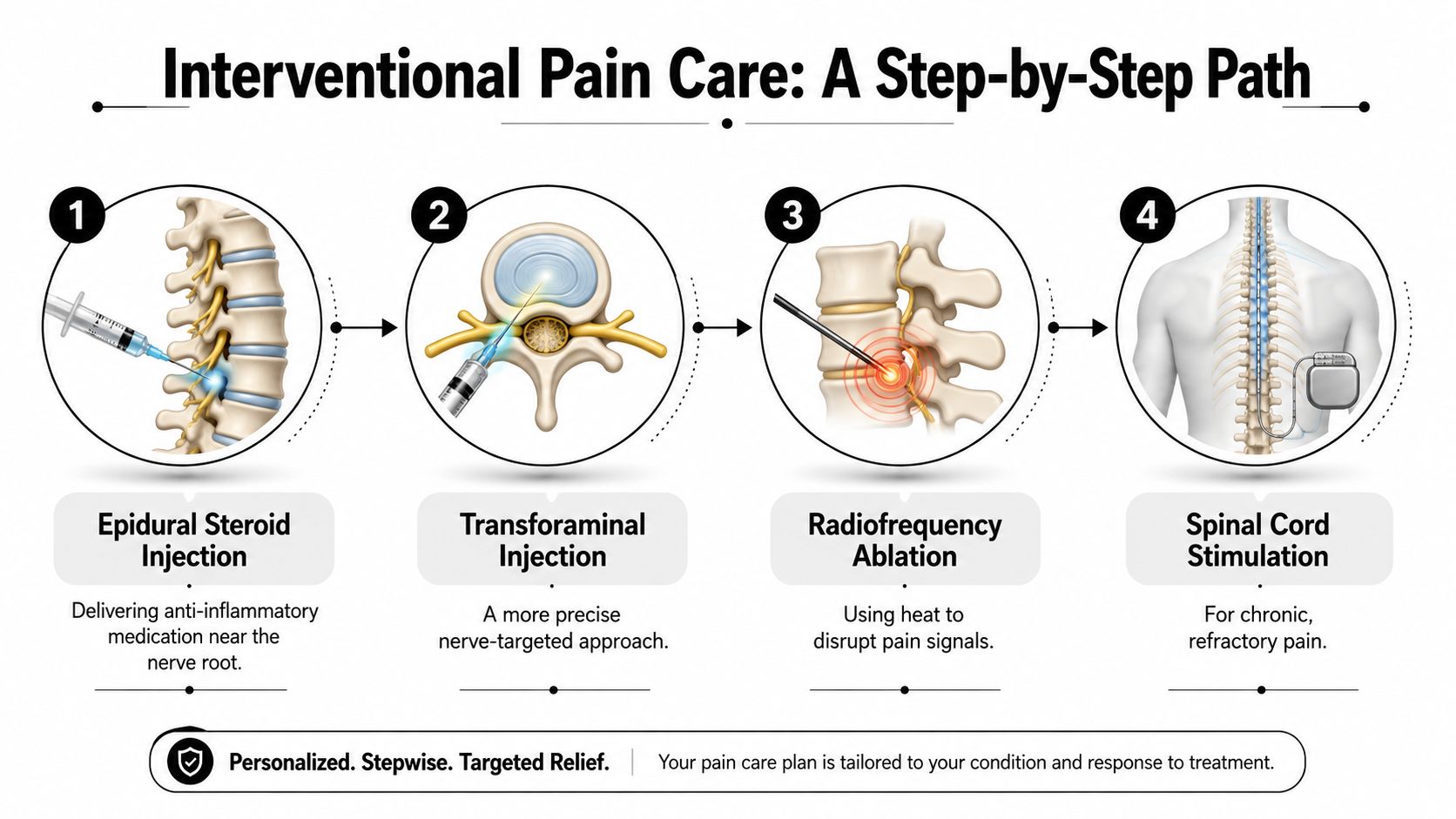
Epidural treatment for selected nerve-root pain
An image-guided epidural steroid injection may provide short-term relief for selected patients with nerve-root compression. A systematic review described benefit mainly for subgroups with nerve-root compression, while also noting that other conservative treatments were not unequivocally effective (systematic review of epidural steroid injections).
The workflow is deliberate:
- Confirm that the symptoms are radicular and clinically meaningful.
- Review imaging only when it matches the examination and pain distribution.
- Select the level and approach based on anatomy and the suspected nerve root.
- Use fluoroscopic or other image guidance for accurate placement.
- Continue rehabilitation while the temporary anti-inflammatory effect creates a window for movement.
- Reassess function and symptom durability rather than repeating injections automatically.
A transforaminal approach can target medication more selectively near a suspected nerve root. Patients can learn more about the role of fluoroscopy-guided injections before discussing whether the technique fits their presentation.
Matching procedures to other pain generators
Not every leg or buttock symptom comes from the same structure. If examination points toward facet-mediated back pain rather than nerve-root irritation, diagnostic medial branch blocks may help determine whether radiofrequency ablation is appropriate. If the sacroiliac joint appears to be the pain generator, a targeted sacroiliac intervention may be considered after the clinical assessment.
For persistent radicular pain that hasn't improved with conservative care and injections, neuromodulation options such as peripheral nerve stimulation or spinal cord stimulation may enter the discussion. These treatments are reserved for selected patients and require careful counseling about goals, risks, trialing, and long-term management.
When spinal stenosis contributes to symptoms, minimally invasive lumbar decompression or a Vertiflex Superion procedure may be considered for appropriate candidates. These aren't generic fixes for every case of sciatica. Anatomy, walking tolerance, neurologic findings, prior treatment, and surgical alternatives all matter.
The durable objective is restored function with an opioid-sparing, multimodal plan. Procedures may create a rehabilitation window, clarify the pain source, or reduce symptoms when conservative care alone has stalled. They shouldn't replace movement, monitoring, or collaboration with the clinicians already involved in your care.
Putting It Together and Your Next Step
A practical timeline looks like this:
- First 72 hours: Check for red flags, reduce the positions that clearly aggravate the leg, use appropriate short-term symptom relief, and keep tolerable walking and daily activity.
- Week one: Avoid prolonged bed rest. Track pain distribution, numbness, strength, walking tolerance, sleep, and work limitations.
- Weeks two through six: Build a graded routine using comfortable mobility, trunk and hip strengthening, and low-impact conditioning. Modify the routine if symptoms spread farther down the leg.
- If symptoms persist or worsen: Arrange a clinical assessment, especially if weakness develops or daily function deteriorates.
- After structured conservative care: Discuss imaging, diagnostic clarification, injection, or other interventional options when the findings and functional limitations support them.
The target isn't a quieter MRI. It's better sleep, safer walking, improved work tolerance, and the ability to resume meaningful activities. Evidence supports active, individualized care, but it doesn't support promising one universal exercise or procedure for every chronic case.
Midwest Pain & Wellness serves patients in Chicago Ridge, Palos Heights, Palos Hills, Evergreen Park, and Hickory Hills, Illinois. The practice is led by double board-certified interventional pain specialist Dr. Yaw Donkoh and uses multimodal, opioid-sparing care that may include targeted rehabilitation, image-guided injections, diagnostic blocks, radiofrequency ablation, neuromodulation, and minimally invasive spine procedures when clinically appropriate.
Frequently asked questions
Can recurring sciatica be prevented?
You can reduce avoidable triggers by rebuilding strength gradually, varying sitting and lifting positions, maintaining tolerable activity, and responding early when familiar leg symptoms return. Prevention doesn't guarantee that another episode won't occur, so use the first-72-hour plan rather than waiting until function collapses.
Can I keep working at a desk with sciatica?
Often, yes, but uninterrupted sitting may need to change. Use a supportive setup, vary positions, stand or walk regularly, and divide long tasks into shorter blocks. If work remains impossible despite these changes, that functional loss is a reason to seek clinical guidance.
What happens at an interventional pain clinic visit?
The clinician reviews the history, maps the pain and sensory changes, checks strength and reflex-related findings, and considers whether imaging is needed. If a procedure is appropriate, the discussion should cover the target, expected duration of benefit, risks, rehabilitation plan, and alternatives before treatment is scheduled.
Midwest Pain & Wellness provides individualized evaluation and opioid-sparing treatment for sciatica and other spine-related nerve pain, including rehabilitation coordination and image-guided interventions when appropriate. If you're in Chicago Ridge, Palos Heights, Palos Hills, Evergreen Park, or Hickory Hills, Illinois, visit Midwest Pain & Wellness to request an assessment and discuss the next practical step for returning to daily activity.