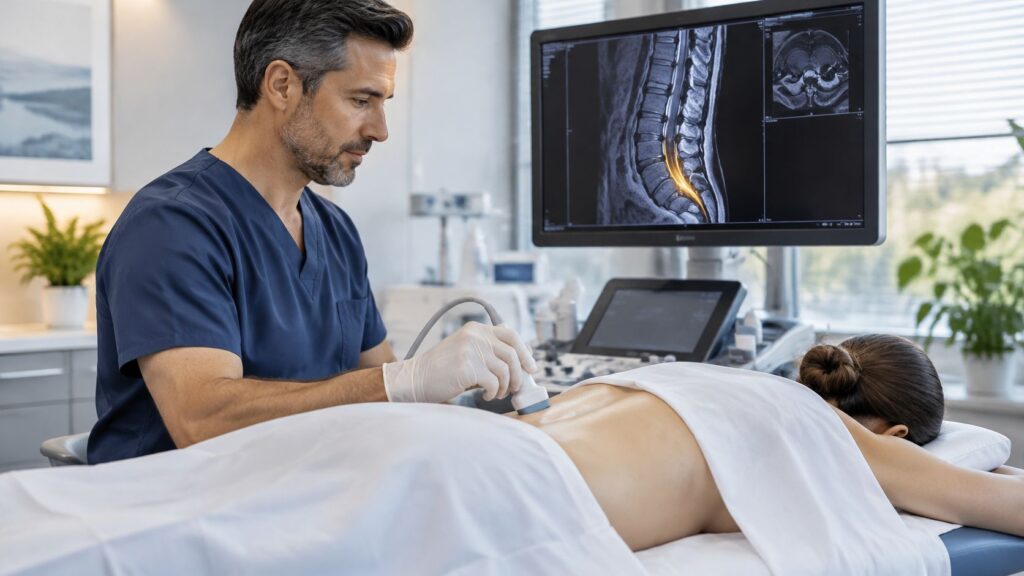
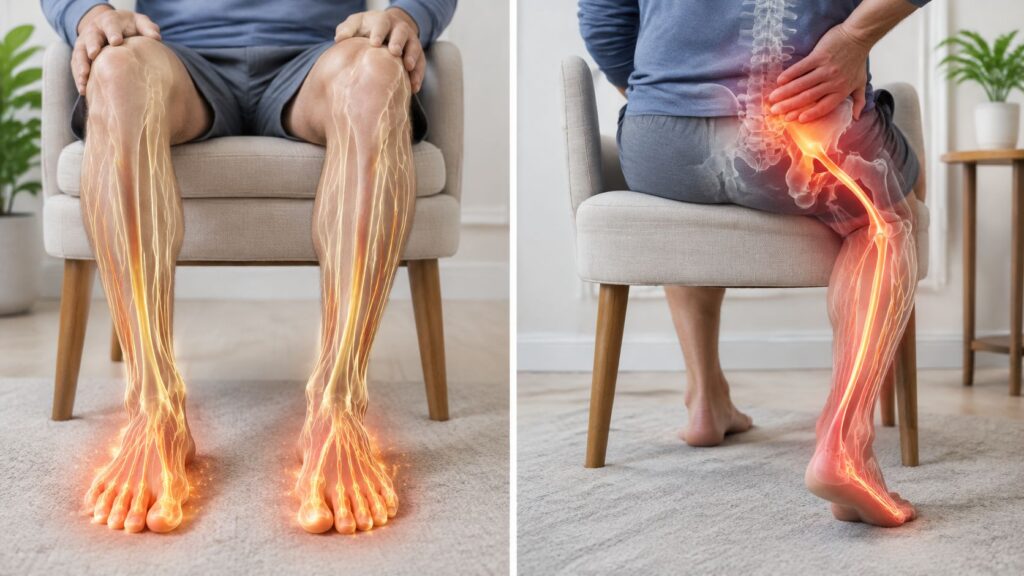
A transforaminal epidural steroid injection, or TFESI, is an image-guided injection that places corticosteroid near an irritated spinal nerve root through the neural foramen. Published reviews report pain reduction of 64% to 81% and disability reduction of 60% to 63% when therapeutic lumbar TFESI is appropriately performed. Systematic review evidence
You may be dealing with this problem if lower back pain shoots through your buttock and down one leg when you walk, sit at a desk, or roll over in bed. Neck-related nerve irritation can create a similar pattern into the arm. The pain often feels different from a sore muscle because it may burn, tingle, numb, or weaken the limb along a recognizable path.
TFESI is designed to calm inflammation around the affected nerve. It doesn't repair a herniated disc, remove a bone spur, or permanently widen a narrowed opening. Instead, it may create a useful period of relief that lets you move more comfortably, participate in rehabilitation, and work toward better function as part of an individualized pain and wellness plan.
Table of Contents
- Understanding Transforaminal Epidural Steroid Injection
- How TFESI Targets an Irritated Nerve Root
- When an Interventional Pain Specialist May Recommend TFESI
- What Happens During the TFESI Procedure
- Comparing TFESI With Other Pain Treatment Options
- Benefits, Evidence, and Safety Considerations
- Aftercare and Monitoring Your Response
- Key Takeaways for Illinois Patients
Understanding Transforaminal Epidural Steroid Injection
A targeted treatment, not a structural cure
During TFESI, a clinician guides a needle through the neural foramen, the small opening where a spinal nerve root exits the spine. Imaging helps place medication near that irritated root, much like delivering treatment to a specific address rather than spreading it throughout the surrounding area. This focused route can make sense when pain follows a nerve into an arm or leg.
The injection usually contains corticosteroid, an anti-inflammatory medicine. A local anesthetic may also be included. It can briefly numb the area and help the clinician assess whether the targeted nerve is contributing to your symptoms. TFESI is aimed at radicular pain, which results from spinal nerve-root irritation and travels along the nerve's path.
The technique developed from earlier epidural treatments. Epidural steroid injections have been used for lumbar disc-related pain since the 1950s, and transforaminal epidural injections have been used since the late 1990s for lumbar radicular pain. The selective route was developed to place medication nearer the suspected nerve root instead of distributing it mainly through a central epidural approach. Historical review of epidural techniques
What a patient might reasonably expect
Suppose an MRI shows a disc bulge near a lower lumbar nerve, while your symptoms travel down the same side of your leg. If your examination and history support that connection, an interventional pain specialist may consider TFESI as one part of your treatment plan. Relief may make walking, sleeping, or beginning carefully selected exercises easier.
Results vary. Improvement may be partial or temporary, and some patients need another approach when mechanical compression, joint pain, severe narrowing, or a different condition is driving the symptoms. Corticosteroid cannot correct those structural problems.
Practical rule: TFESI creates a better environment for recovery. It does not show that the underlying spine condition has disappeared.
Midwest Pain & Wellness treats injections as one component of individualized, multimodal care for patients in Chicago Ridge and nearby Illinois communities. Depending on the diagnosis, care may also include medication management, activity changes, rehabilitation, lifestyle support, or referral for a surgical opinion. The right plan combines the procedure with ongoing assessment of pain, movement, function, and wellness goals.
How TFESI Targets an Irritated Nerve Root
A nerve root exits the spinal canal through a narrow bony passage called the neural foramen. If a disc herniation, arthritic bone spur, or swelling reduces space in that passage, the nerve may become irritated. Symptoms can then follow its route into the arm, chest, abdomen, buttock, or leg, causing radicular pain, tingling, numbness, or weakness.
The anatomy resembles a main road with a series of side exits. Each nerve root uses one of those exits to reach the body. TFESI directs medication toward the affected exit rather than distributing it mainly through a central or lower epidural route. The clinician identifies the suspected spinal level and guides a needle toward the foramen, placing medication near the nerve-root sleeve. This selective path distinguishes TFESI from interlaminar and caudal epidural injections.
Why imaging and contrast matter
The foramen is a compact space containing nerves and blood vessels. Surface landmarks alone cannot reliably show the needle's relationship to these structures, so the clinician uses fluoroscopy or another appropriate imaging method to guide placement. An anatomic and technical review of transforaminal injections explains the reasoning behind this image-guided approach.
Before injecting the therapeutic medication, the clinician administers contrast dye. The dye outlines the needle tip and shows how fluid spreads. It can confirm an appropriate position and reveal an unsafe vascular pattern before corticosteroid is delivered.
Practice guidance recommends real-time fluoroscopy or digital subtraction imaging with contrast for cervical and lumbar TFESIs before any therapeutic substance is administered. Epidural steroid injection practice guidance
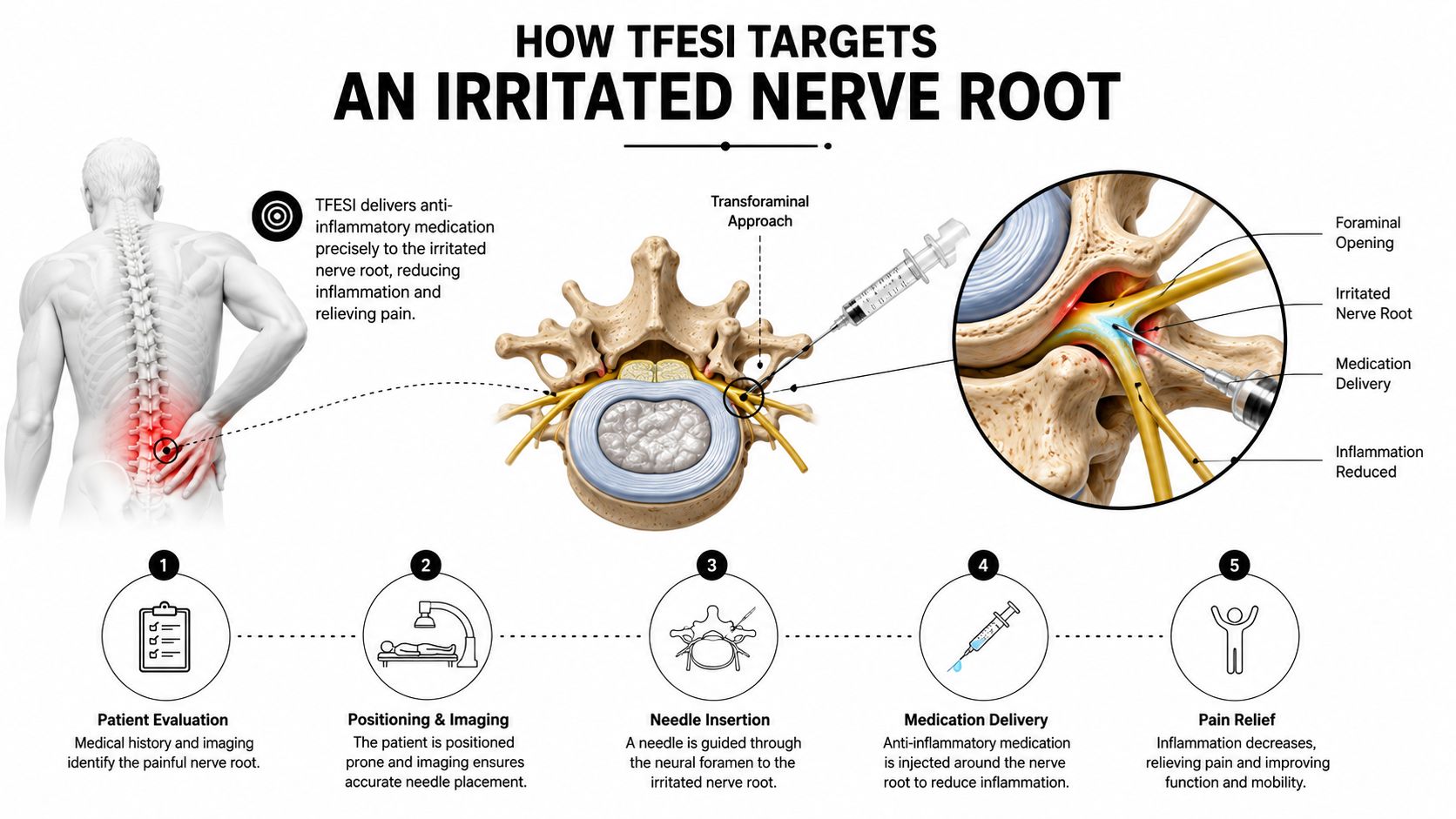
The goal is focused anti-inflammatory treatment near the location most likely contributing to radiating pain. A temporary anesthetic response may also provide diagnostic information when it matches the patient's familiar symptoms. Even so, TFESI is one part of an individualized, multimodal plan. For patients in Chicago Ridge and nearby Illinois communities, pain care may combine injections with rehabilitation, activity changes, medication management, lifestyle support, or other appropriate treatment options.
When an Interventional Pain Specialist May Recommend TFESI
A scan can look dramatic while symptoms remain mild, or show only modest narrowing despite disabling leg or arm pain. An interventional pain specialist weighs both situations carefully. MRI or CT findings are one road sign, not the entire route. The decision depends on whether the examination, symptom pattern, imaging, and response to earlier treatment point toward the same spinal level.
The clinical review usually considers:
- Symptom distribution: Does the pain, tingling, or numbness travel in a pattern associated with one nerve root?
- Neurologic examination: Does dermatomal sensory loss or a depressed reflex localize the irritation to a single level? Are strength and movement stable?
- Imaging correlation: Does MRI or CT show foraminal narrowing, disc herniation, or another finding that matches the suspected nerve root?
- Response to prior care: Have rest, activity changes, oral medication, or physical therapy failed to provide enough improvement?
- Patient goals: Is the aim to walk farther, sleep better, tolerate work, return to exercise, or avoid or postpone surgery?
A decision table for the clinical picture
| Clinical Finding | May Support TFESI | Requires Different Pathway |
|---|---|---|
| Pain traveling into an arm or leg | A consistent nerve-root pattern may support a selective injection | Diffuse pain without a nerve pattern may need broader assessment |
| Numbness or tingling | Symptoms that match a specific level may strengthen the case | Widespread or unexplained sensory changes require further evaluation |
| Foraminal narrowing on MRI or CT | Matching imaging and symptoms may support treatment | An incidental imaging finding should not determine treatment alone |
| Persistent symptoms after conservative care | TFESI may provide a rehabilitation window | Symptoms improving steadily may not need an injection |
| Progressive weakness | Requires careful neurologic assessment and possible urgent referral | Do not delay surgical evaluation when weakness is worsening |
| Bowel or bladder changes | Not a routine injection indication | Seek urgent medical evaluation |
| Suspected infection | Requires medical investigation and treatment | Injection should not replace evaluation for infection |
The clinical picture may support TFESI when a particular nerve root appears to be the main contributor and symptoms continue despite reasonable conservative care. A selective injection can then serve two purposes: corticosteroid may reduce inflammation, while the temporary anesthetic response may help test whether the targeted root contributes to the patient's familiar pain.
The plan still needs to fit the person, not only the scan. Progressive weakness, bowel or bladder changes, or suspected infection can redirect care toward urgent evaluation rather than an elective injection. For patients in Chicago Ridge and nearby Illinois communities, TFESI may be one part of a multimodal plan that includes rehabilitation, activity changes, medication management, lifestyle support, or other appropriate options.
What Happens During the TFESI Procedure
From consent to needle placement
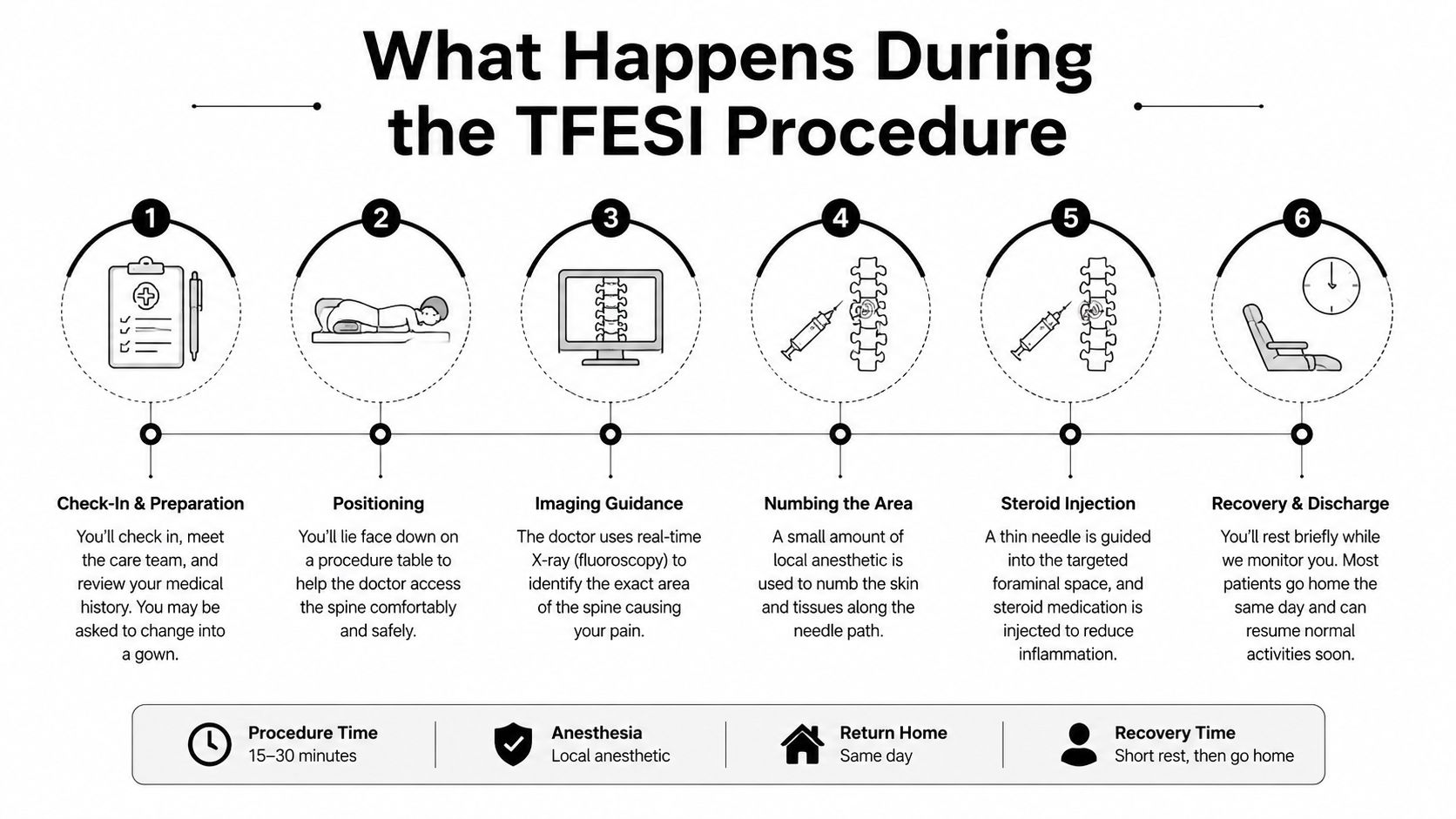
The appointment begins with informed consent and a review of your symptoms, allergies, medications, and relevant medical history. Tell the clinician about blood-thinning medicines, infection symptoms, diabetes, prior reactions, and any concern that could affect the procedure. Instructions vary according to the setting, medications, anatomy, and diagnosis, so follow the directions given by your care team.
You generally lie face down on an imaging table. A cushion under the abdomen can make the lumbar spine more comfortable and help position the treatment area. The skin is cleaned using sterile technique, and local anesthetic numbs the entry point.
The clinician then uses fluoroscopy, and in selected situations another suitable imaging method, to identify the target foramen. A thin needle is advanced carefully toward the intended safe region of the foramen. The exact trajectory depends on the level, anatomy, and reason for treatment.
Contrast first, medication second
Contrast dye is injected before the therapeutic substance. The clinician watches its spread in real time to confirm the needle position and check for an unsafe vascular pattern. Only after this assessment does the clinician slowly deliver the corticosteroid, often with local anesthetic.
You may feel pressure, brief discomfort, or a temporary reproduction of your familiar pain as the medication reaches the area. Tell the clinician immediately if you experience unusual or severe symptoms. To learn more about the role of live imaging in injection care, review fluoroscopy-guided injections.
After the needle is removed, the site is covered and you spend a brief period in recovery while the team observes your response. You'll receive individualized discharge information about activity, medication, driving, and follow-up. Technique choices aren't identical for every patient, because spinal anatomy and the suspected diagnosis differ.
Comparing TFESI With Other Pain Treatment Options
If pain travels from the back or neck into an arm or leg, an irritated nerve root may be the main pain generator. TFESI can place medication beside that selected root, but it is not the right injection for every type of spinal pain.
A useful road analogy is route selection. Oral anti-inflammatory or nerve-pain medicines travel through the entire body, like sending treatment along every road. TFESI uses a narrower entrance toward the suspected nerve, while image guidance helps the clinician confirm the route. Physical therapy works on the road system itself, improving strength, movement, posture, and tolerance for loading. When radiating pain limits participation, temporary relief from TFESI may make that rehabilitation more achievable.
Interlaminar and caudal epidural injections also reach the epidural space, but their entry routes can distribute medication more broadly. Medial branch blocks and facet injections address pain from facet joints rather than primarily from a nerve root. Surgery, including decompression or fusion, addresses structural compression or instability directly and may enter the discussion when neurological deficits, severe compression, or continuing functional limits require a surgical opinion.
| Treatment | Primary Target | Invasiveness | Typical Role in Care Plan |
|---|---|---|---|
| TFESI | A selected irritated nerve root | Image-guided injection | Targeted relief and diagnostic information |
| Oral medication | Systemic inflammation or nerve sensitivity | Noninvasive | Symptom control and support for activity |
| Structured physical therapy | Movement, strength, and mechanics | Noninvasive | Functional restoration and prevention of deconditioning |
| Interlaminar or caudal epidural injection | Broader epidural space | Image-guided injection | Alternative epidural route based on diagnosis |
| Facet injection or medial branch block | Facet-joint pain | Image-guided injection | Evaluation and treatment of joint-mediated pain |
| Surgery | Structural compression or instability | Operative | Considered when anatomy and clinical findings require it |
The choice should reflect your history, symptom duration, examination, imaging, previous treatment response, and functional goals. In Chicago Ridge and nearby Illinois communities, a pain and wellness plan may involve coordination among medical, rehabilitation, and chiropractic teams. Clear education and referral processes, including chiropractic patient acquisition strategies, can support that coordination.
TFESI is one component of an individualized, multimodal plan, not a guarantee or a substitute for rehabilitation. For a related explanation of a comparison of injection options for nerve pain, remember that the appropriate injection depends on the structure producing the symptoms, the examination, and the imaging.
Benefits, Evidence, and Safety Considerations
A patient in Chicago Ridge may notice that leg pain follows a narrow path, worsens with standing, and limits walking even after other treatments. When the examination and imaging point to the same irritated nerve root, TFESI may provide temporary relief that makes movement and rehabilitation more manageable. It remains one part of an individualized, multimodal plan.
Evidence supports TFESI for selected patients with radicular pain, although improvement is not guaranteed. A systematic review of therapeutic lumbar TFESI reported 64% to 81% pain reduction and 60% to 63% disability reduction when the procedure was appropriately performed. It graded the evidence as Level II-1 for short-term relief and Level II-2 for long-term relief under USPSTF criteria. Review of therapeutic lumbar TFESI
Another evidence review described positive findings across randomized and prospective research involving lumbosacral radicular pain. Overall, the evidence supports a possible role for TFESI in symptom relief and, for some patients, delaying surgery. Results still depend on the diagnosis, nerve involvement, symptom duration, and treatment plan.
The injection treats inflammation around a nerve root. It does not remove a large disc herniation or reverse severe stenosis. For a plain-language explanation, see how a steroid injection reduces nerve inflammation. Relief may reduce reliance on oral medication and make physical rehabilitation easier to begin or continue.
Safety depends on more than placing the needle accurately. The clinician reviews sterile technique, contrast confirmation, steroid formulation, medications, bleeding risk, infection risk, and individual anatomy. Non-particulate steroid choices may be considered when the clinician believes they provide a safer balance.
Serious complications are uncommon, but they can occur. The FDA has warned that epidural corticosteroid injections have been associated with serious neurologic events, including spinal cord infarction, paraplegia, quadriplegia, cortical blindness, stroke, and death. FDA safety communication
An anatomic review reported at least 18 paralysis cases after transforaminal injections across lumbar levels from T12 to S1. It also noted that directing the needle more medially in the neural foramen increases dural-puncture risk. Anatomic review of TFESI complications Image guidance, real-time contrast assessment, careful positioning, screening, and informed consent reduce avoidable risk, but cannot eliminate it.
Aftercare and Monitoring Your Response
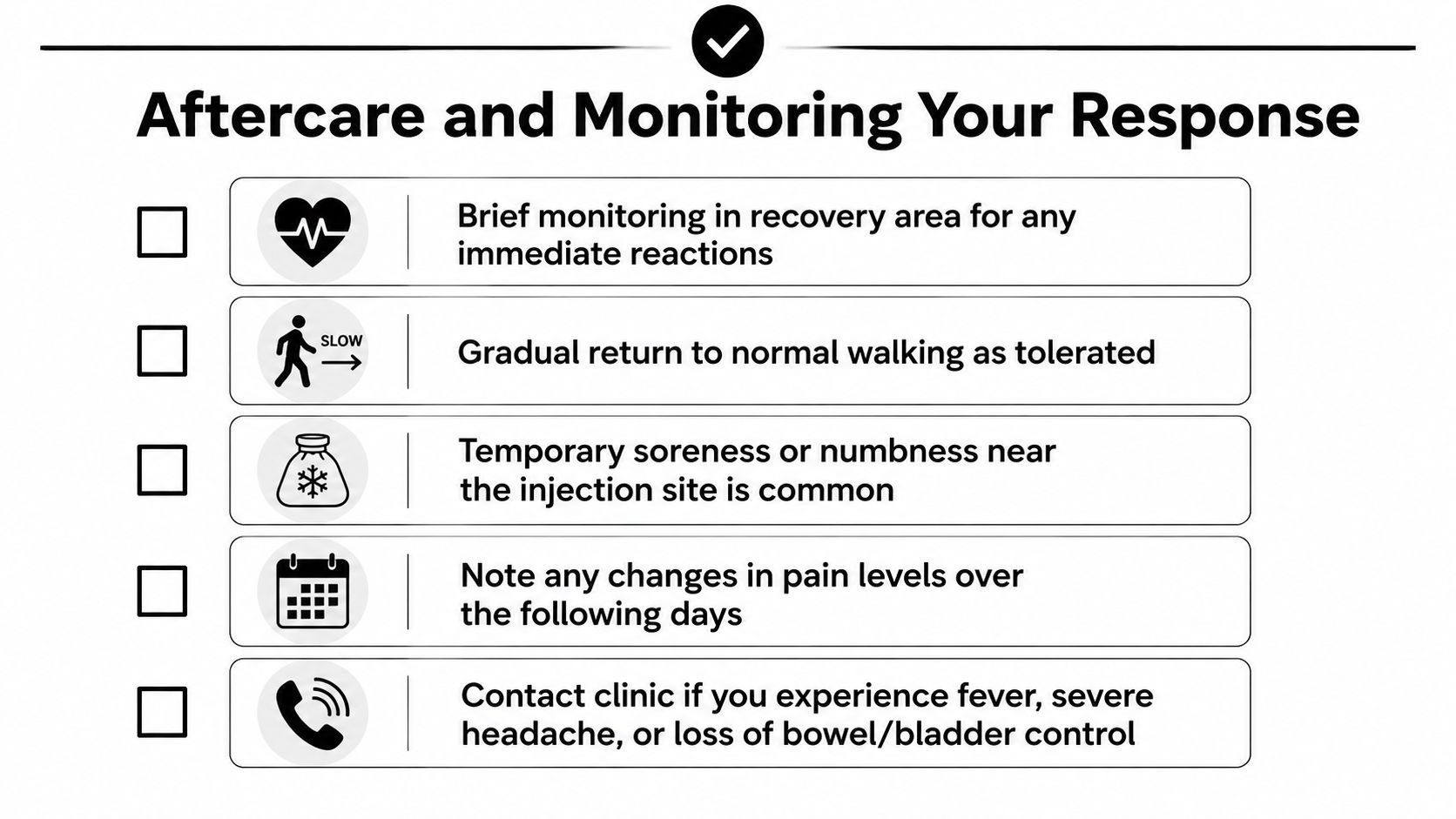
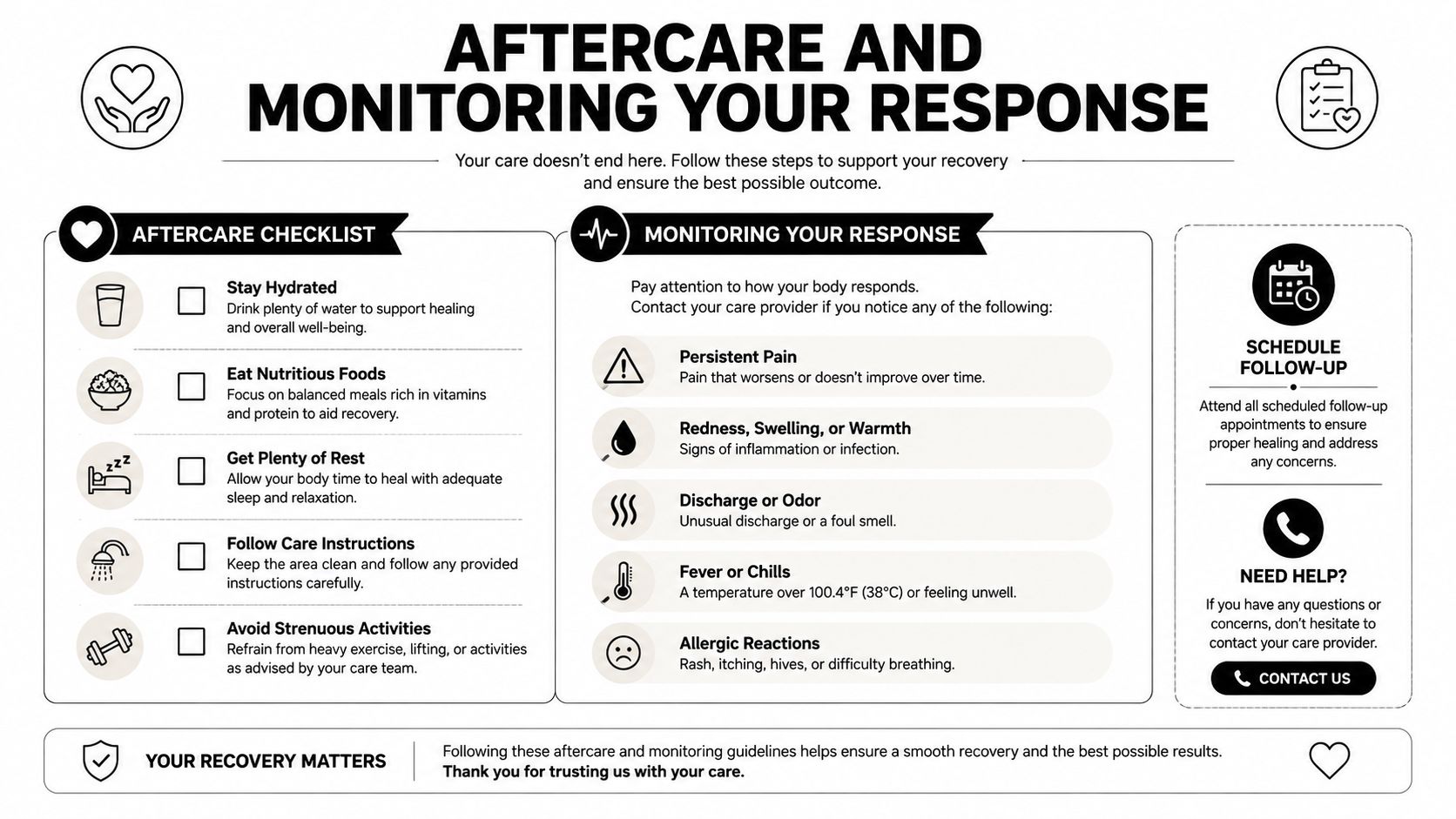
After the injection, you remain under observation while the care team checks for immediate reactions. You will receive individual instructions about walking and returning to ordinary activities. Temporary soreness, heaviness, or numbness near the injection site can occur, especially while the local anesthetic is active.
Early relief may come from the anesthetic rather than the steroid's full anti-inflammatory effect. Improvement can develop over several days and continue for up to two weeks, although timing differs among patients. A brief change immediately after leaving the clinic does not establish the long-term result.
Track function, not only pain
A simple daily record gives your specialist clearer information at follow-up. Include:
- Pain pattern: Note changes in leg or arm symptoms, along with back or neck discomfort.
- Function: Record walking tolerance, sitting, sleep, work tasks, and exercises you can complete.
- New symptoms: Write down weakness, numbness, fever, severe headache, or another unusual change.
- Medication needs: Note whether you need less rescue medication. Do not change prescriptions unless your clinician directs you.
Light activity is often reasonable as tolerated, while strenuous activity should wait for individualized guidance. Function can show meaningful progress more clearly than a single pain score. For example, walking more comfortably or completing rehabilitation exercises may indicate that the injection has created a useful window for recovery.
Know when to call
Contact your clinical team promptly if you develop fever, a severe headache, worsening weakness, or new bowel or bladder changes. These symptoms are not routine aftercare concerns and may require urgent assessment.
If symptoms remain stable, attend the follow-up appointment. Your specialist can review your response and decide whether to continue rehabilitation, adjust medication, pursue another diagnostic step, or choose a different treatment. TFESI is one part of an individualized plan, so the next step depends on your symptoms, function, examination, and goals.
Key Takeaways for Illinois Patients
TFESI is a targeted, image-guided treatment for radiating pain linked to an irritated spinal nerve root. It delivers corticosteroid beside the nerve through the neural foramen, which makes it different from broader epidural routes and from injections aimed at facet joints. The procedure may provide both therapeutic relief and diagnostic information, but it isn't a structural cure.
The most useful role for TFESI is often as a bridge. Relief may create a more comfortable window for physical therapy, medication adjustments, gradual activity, lifestyle changes, and functional retraining. If symptoms persist, worsen, or reflect significant structural compression, a surgical consultation or another treatment pathway may be appropriate.
Patients respond differently. Benefits can be temporary, incomplete, or absent, and the decision should reflect your diagnosis, examination, imaging, previous treatments, health history, and goals.
Residents of Chicago Ridge, Palos Heights, Palos Hills, Evergreen Park, Hickory Hills, and nearby Illinois communities can seek an interventional pain consultation close to home rather than traveling far during a painful episode. Midwest Pain & Wellness is a pain and wellness clinic, not a physical therapy practice, and its care planning may coordinate injections with rehabilitation and other services when appropriate.
Bring these questions to your consultation:
- Which nerve root appears to be causing my symptoms?
- Does my MRI or CT finding match my pain pattern?
- What benefit is realistic for my function?
- What alternatives should I consider first or next?
- What red-flag symptoms should prompt urgent care?
- How will we use any relief to support rehabilitation?
Midwest Pain & Wellness offers individualized interventional pain consultations and image-guided treatments for nerve-root conditions such as sciatica and radicular pain. If you're in Chicago Ridge or a nearby Illinois community, visit Midwest Pain & Wellness to discuss whether TFESI fits your broader, opioid-sparing care plan.