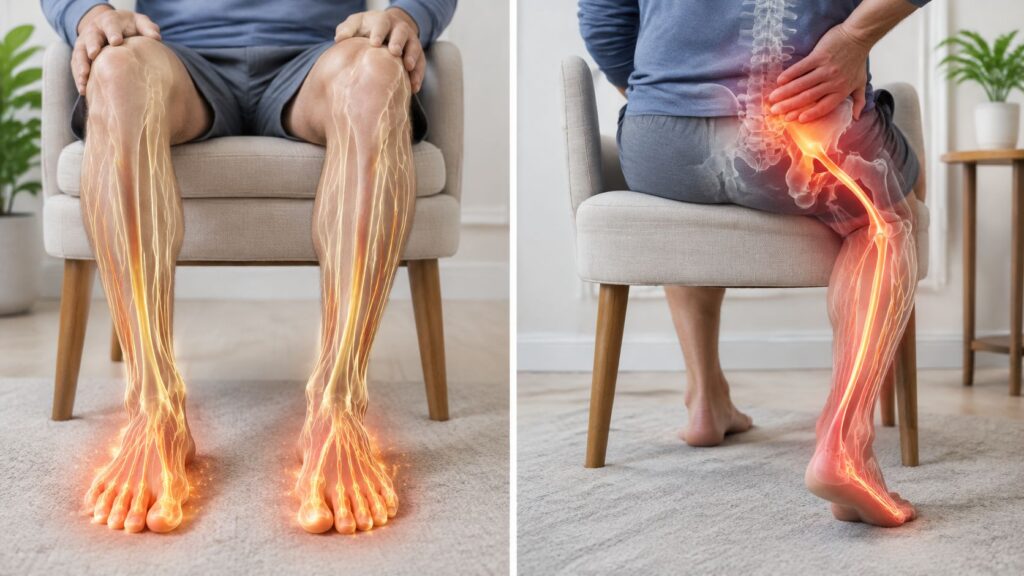
You've tried anti-inflammatory medication, adjusted your activity, and perhaps sat through one or more injection treatments, yet the joint still complains when you climb stairs, walk through a store, or stand after sitting. PRP injection for arthritis can sound like the next logical step, especially when you're hoping to stay active and delay joint replacement. The honest answer is more nuanced. PRP may improve pain and function for selected patients, but it doesn't rebuild a worn joint, and the duration of relief varies with arthritis severity, platelet concentration, injection protocol, and the comparator used in the research.
Table of Contents
- What a PRP Appointment Looks Like for an Arthritis Patient
- How Platelet-Rich Plasma Actually Works
- What the Evidence Shows About PRP and Arthritis
- Who Makes a Good Candidate for PRP Injection for Arthritis
- The Appointment, Recovery Timeline, and Risks
- Comparing PRP With Steroid Shots, Hyaluronic Acid, and Surgery
- Cost, Insurance, and How Midwest Pain & Wellness Delivers PRP
- Deciding Whether PRP Is Right for Your Arthritis
What a PRP Appointment Looks Like for an Arthritis Patient
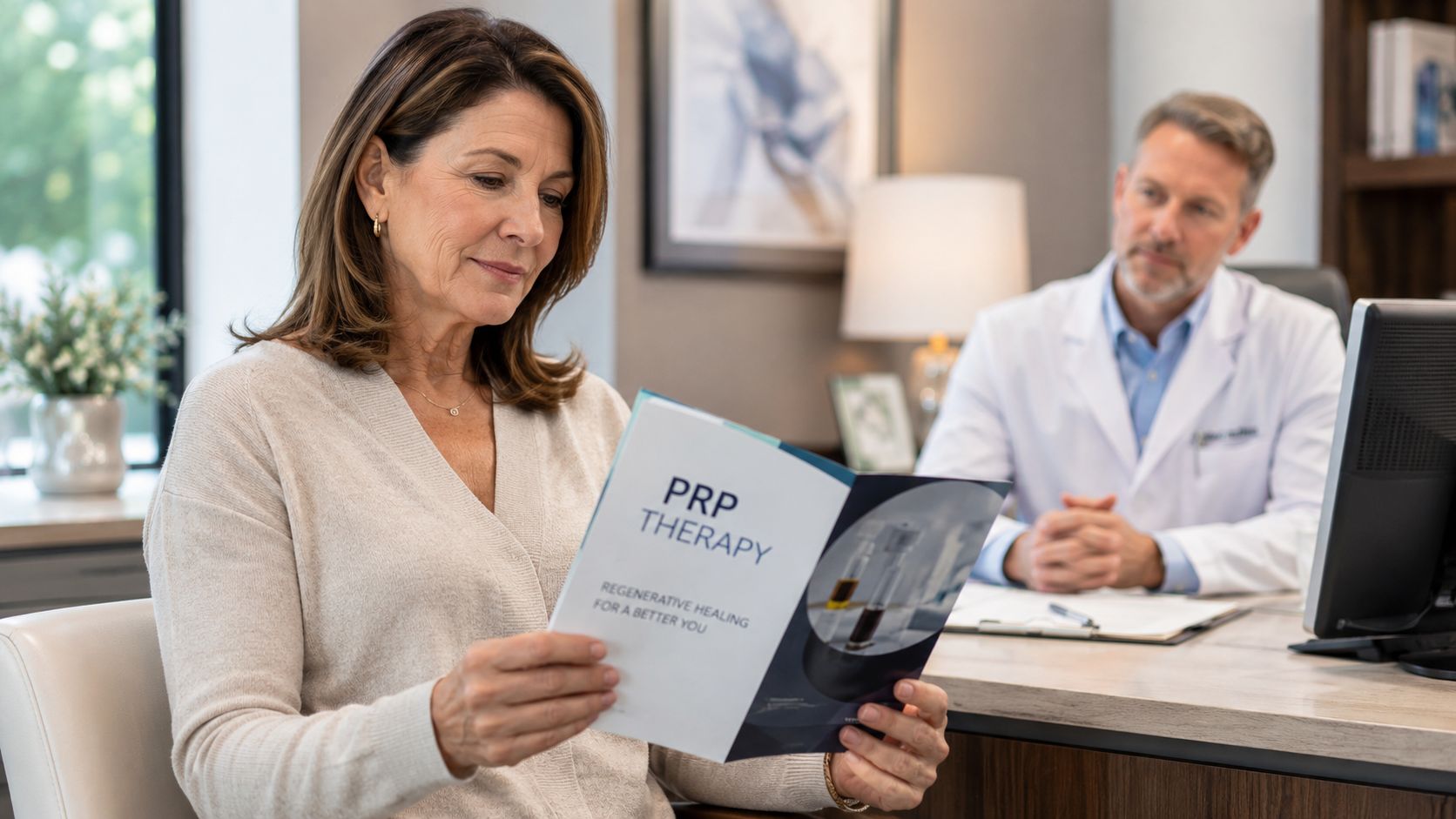
Maria is 58 and has reached the point many arthritis patients know well. Ibuprofen no longer gives dependable relief, two rounds of cortisone helped only temporarily, and a hyaluronic acid series didn't restore the walking tolerance she wanted. Her orthopedic clinician has mentioned a knee replacement consultation, but Maria would like to explore a non-surgical option first. She's considering PRP, while asking the questions I hear every week: Will it hurt? How long will it take? Is it worth paying for?
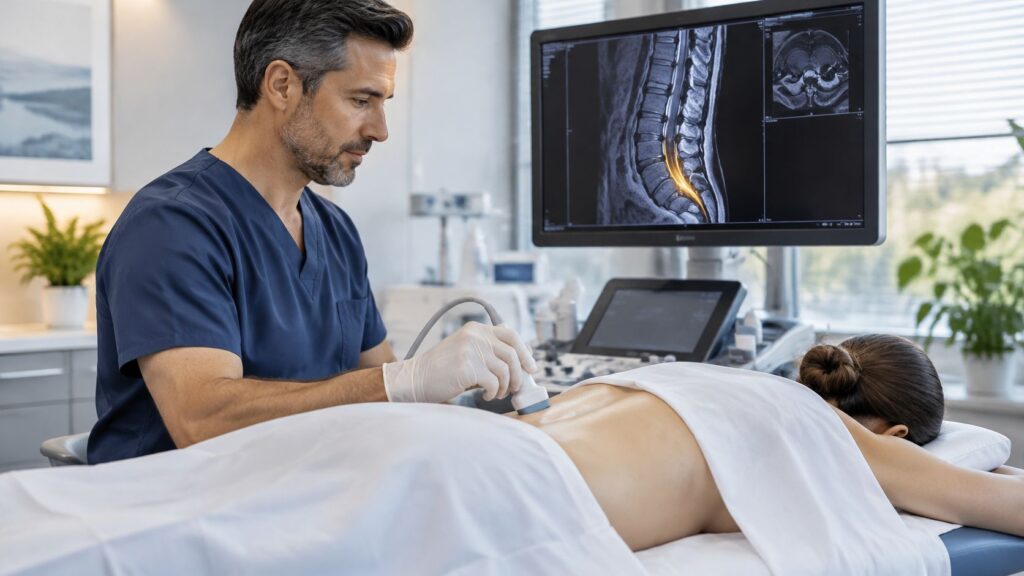
At a community pain and wellness clinic serving Chicago Ridge, Palos Heights, Palos Hills, Evergreen Park, Hickory Hills, and nearby Illinois communities, the visit typically begins with a medical history review, examination, imaging discussion, and informed consent. The clinician looks at more than the X-ray. Symptom pattern, activity goals, prior treatments, medications, blood health, and the severity of cartilage loss all influence whether PRP makes sense.
The procedure itself
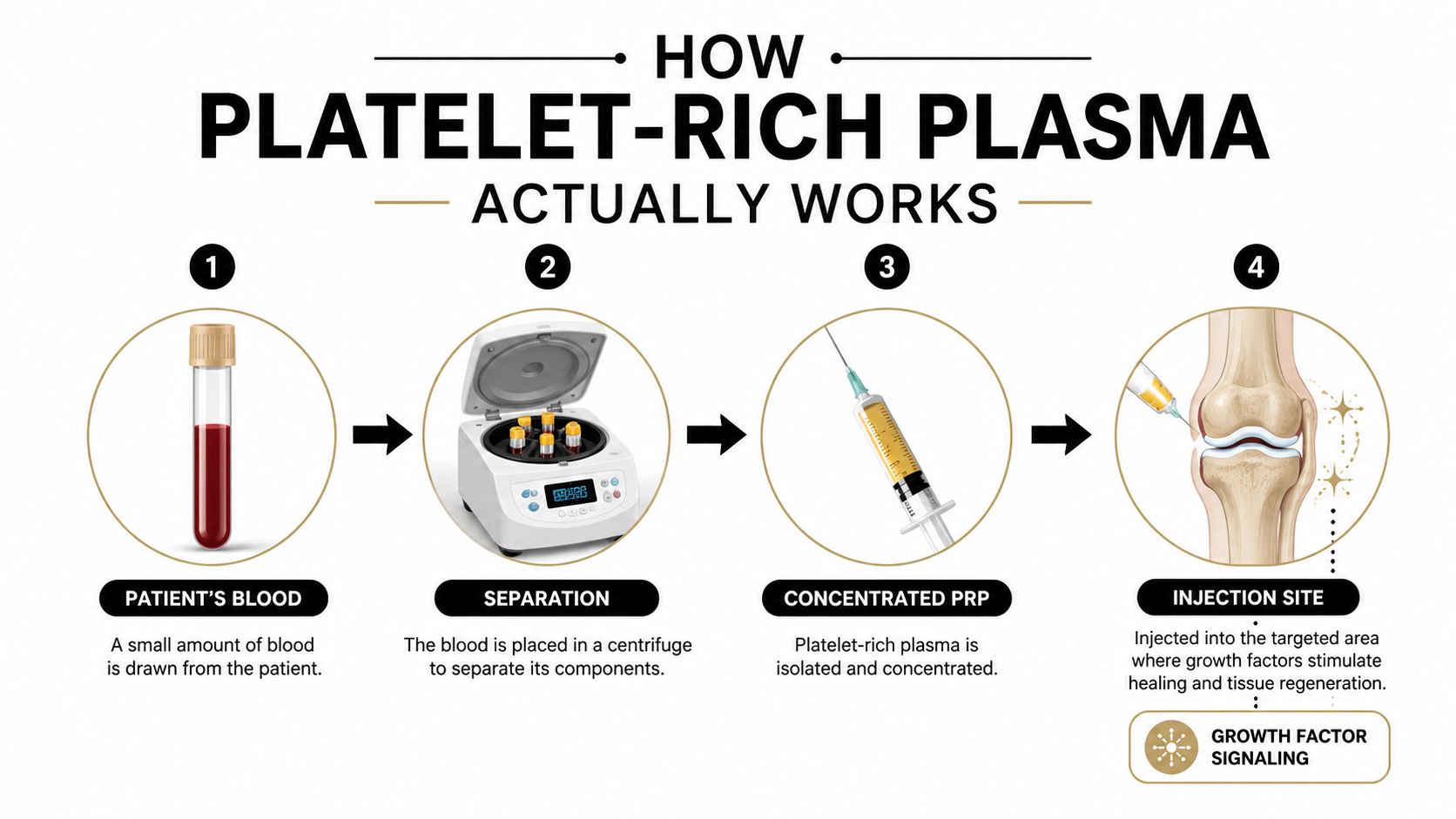
If Maria proceeds, a team member draws blood from her arm. The sample goes into a centrifuge, which separates its components and concentrates the platelet-containing fraction. The clinician then prepares the selected PRP formulation and places it into the painful joint with image guidance, commonly ultrasound or fluoroscopy, to confirm the target.
Afterward, Maria spends a short period in a recovery area while the team checks her symptoms, vital signs, and walking status. She leaves the same day. PRP is an outpatient procedure made from the patient's own blood. It isn't surgery, and it isn't a biologic harvested from a donor.
The practical questions come next: how PRP works, what the strongest evidence says, who tends to respond, what recovery involves, how risks are handled, and how out-of-pocket costs compare with other arthritis treatments.
How Platelet-Rich Plasma Actually Works
Platelet-rich plasma, or PRP, is a concentrated fraction of your own blood. A useful analogy is a healing soup. The liquid carries platelets, and platelets contain signaling proteins that participate in the body's response to injury. When clinicians inject the preparation into a painful joint, the aim isn't to replace cartilage. The aim is to influence the joint environment and reduce pain-related inflammation.
From blood draw to joint signaling
The process has several linked steps:
- Blood collection: A clinician draws blood from your arm and places it in a sterile processing system.
- Separation: Centrifugation separates red cells, plasma, platelets, and, depending on the system, white blood cells.
- Concentration: The team collects the desired platelet fraction and prepares it for injection.
- Targeted delivery: Image guidance helps place the product inside the joint rather than relying only on surface landmarks.
Platelets carry growth factors and signaling molecules, including platelet-derived growth factor, transforming growth factor beta, insulin-like growth factor, and vascular endothelial growth factor. These substances may influence synovial inflammation, cartilage-adjacent tissues, and surrounding soft tissue. The clinical objective is a shift away from a highly catabolic environment, where tissue breakdown signals dominate, toward a more anabolic environment that supports healing activity.
Why preparation matters
PRP isn't one standardized medication. Commercial kits and processing methods vary, and the final product can differ in platelet concentration, white blood cell content, volume, and activation method. That variability helps explain why two studies can evaluate “PRP” yet reach different conclusions.
Clinicians commonly discuss leukocyte-poor PRP, or LP-PRP, and leukocyte-rich PRP, or LR-PRP. LP-PRP contains fewer white blood cells and is generally favored for many intra-articular joint applications because it may limit an inflammatory flare. LR-PRP has a different cellular profile and may be selected for specific tissues or clinical circumstances, but it isn't automatically better for an arthritic joint.
Patients can review the clinic's platelet-rich plasma benefits information, but the most important conversation remains individualized. Ask which preparation will be used, how it's processed, whether the product is leukocyte-poor or leukocyte-rich, and why that protocol fits your joint.
What the Evidence Shows About PRP and Arthritis
The strongest modern evidence comes from randomized trials involving knee osteoarthritis, the arthritis indication studied most extensively. A 2025 meta-analysis pooled 18 randomized controlled trials involving 1,995 patients and found that PRP produced statistically superior pain and function improvements compared with placebo across follow-up points. The benefits met the minimum clinically important difference at 3 and 6 months for pain, while WOMAC function improvements met that threshold at all follow-up points reported in the review. The same analysis found that high-platelet PRP produced more durable pain relief and better functional improvement than low-platelet PRP. Read the pooled analysis of platelet concentration and clinical outcomes.
That's encouraging, but it doesn't mean every protocol works equally well or that every patient should pay for PRP. Another 2025 meta-analysis included 28 randomized controlled trials and 3,246 knee osteoarthritis patients. It found PRP offered pain relief comparable to hyaluronic acid, while functional improvement favored PRP, particularly when PRP was combined with hyaluronic acid. A separate review of 11 randomized trials involving 1,023 patients found that combined PRP and hyaluronic acid outperformed PRP alone on several arthritis measures, including WOMAC total score, VAS pain, the Lequesne index, and IKDC. That analysis also reported fewer adverse events with combination treatment, with a relative risk of 0.41. Review the evidence on PRP and hyaluronic acid combinations.
Where the evidence becomes less certain
The encouraging findings sit beside meaningful limitations. PRP studies differ in platelet concentration, leukocyte content, injection number, spacing, volume, activation, imaging guidance, and comparator. A placebo-controlled trial may answer a different question from a head-to-head trial against hyaluronic acid. Those differences make it difficult to promise a specific timeline or outcome.
Durability is the clearest example. One 2025 meta-analysis found pain improvement at 3 and 6 months but no efficacy at 12 months, and concluded that the clinical relevance remained debatable. Another 2026 meta-analysis found 12-month WOMAC and pain scores favored PRP over hyaluronic acid, showing why protocol, comparator, and study selection matter. A recent NIH and PMC review also reports inconsistent long-term benefit in high-quality placebo-controlled trials, with some studies failing to beat saline beyond 6 to 12 months, while rating the overall certainty of evidence as moderate and noting that several guidelines remain cautious about routine use. See the review of longer-term uncertainty.
| Comparison | Timeframe | Pain Outcome Trend | Durability Note |
|---|---|---|---|
| PRP versus placebo | Early to later follow-up | Pain and function favored PRP in the 2025 pooled analysis | Clinically meaningful pain benefit was shown at 3 and 6 months, while longer-term results vary |
| PRP versus hyaluronic acid | Intermediate and later follow-up | Pain relief may be comparable, with functional outcomes often favoring PRP | Combination protocols may improve several outcomes |
| High-platelet versus low-platelet PRP | Across follow-up points | Higher platelet concentration favored pain and function outcomes | Preparation quality may affect how long improvement lasts |
| Single versus repeat injection | Early response and later follow-up | A single dose can help, but benefit may decline | A trial found symptom effects deteriorated after 6 months after a single-dose approach |
The most practical interpretation is modest but useful. PRP can provide symptom relief and better function for selected knee arthritis patients, while combination therapy with hyaluronic acid and structured exercise remains an active area of investigation rather than a settled standard.
Who Makes a Good Candidate for PRP Injection for Arthritis
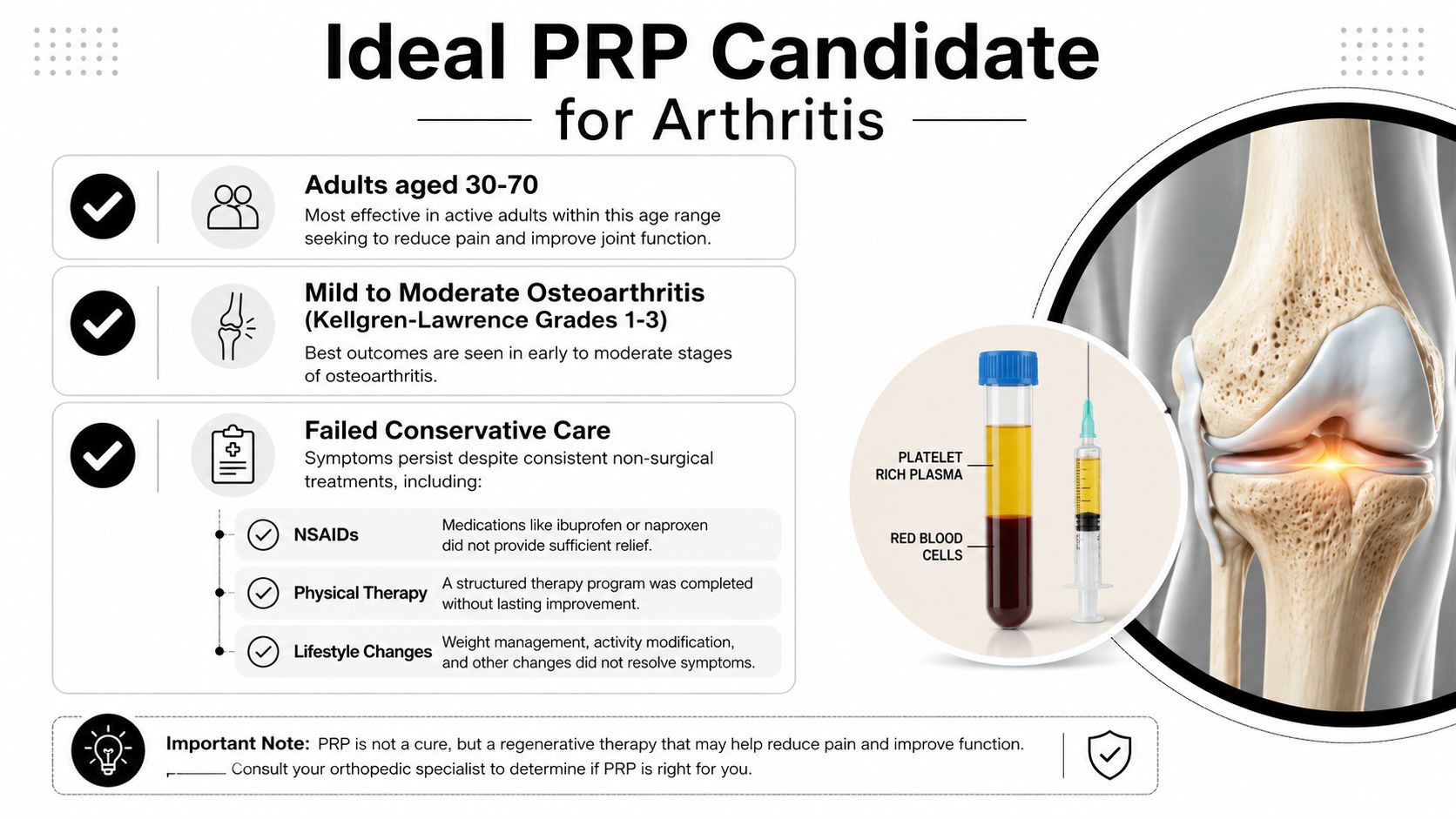
The typical candidate is an adult between 30 and 70 with mild to moderate osteoarthritis, commonly corresponding to Kellgren-Lawrence grades 1 through 3, who has tried reasonable conservative care and wants to remain active or postpone joint replacement. Conservative care may include medication when medically appropriate, physical therapy, weight-related lifestyle changes, activity modification, and other non-surgical strategies.
A good candidate also understands that PRP treats symptoms and joint function. It doesn't restore a normal joint surface. People with preserved joint space, an intact meniscus when relevant, and a willingness to participate in rehabilitation often have a more favorable starting point than patients with severe structural destruction.
Factors that shape the decision
Clinicians consider several practical details:
- Arthritis severity: Mild to moderate disease generally offers a more reasonable target than advanced bone-on-bone arthritis.
- Body composition: A body mass index under 35 is often viewed as a favorable selection factor, although it isn't an automatic guarantee of response.
- Rehabilitation commitment: PRP works best as part of a plan that restores strength, movement, and load tolerance.
- Treatment expectations: Patients willing to discuss a series rather than insisting on one injection may have more protocol options.
- Prior treatment response: Medication history and prior injection results help identify what has and hasn't worked.
When PRP may be unsafe or poorly matched
An active infection, significant blood disorder, severe anemia, active malignancy, pregnancy, or an uncontrolled autoimmune flare may rule out treatment or require additional medical review. Anticoagulant therapy needs individualized discussion rather than an automatic stop, because stopping it without proper supervision can create serious risk. A recent corticosteroid injection, commonly within the prior six weeks, may also affect scheduling.
Patients with grade 4, bone-on-bone disease and severe functional limitation often respond poorly and should at least discuss surgical consultation. A pain specialist reviews imaging alongside the symptom history, examination, activity goals, and prior care before recommending a protocol.
The Appointment, Recovery Timeline, and Risks
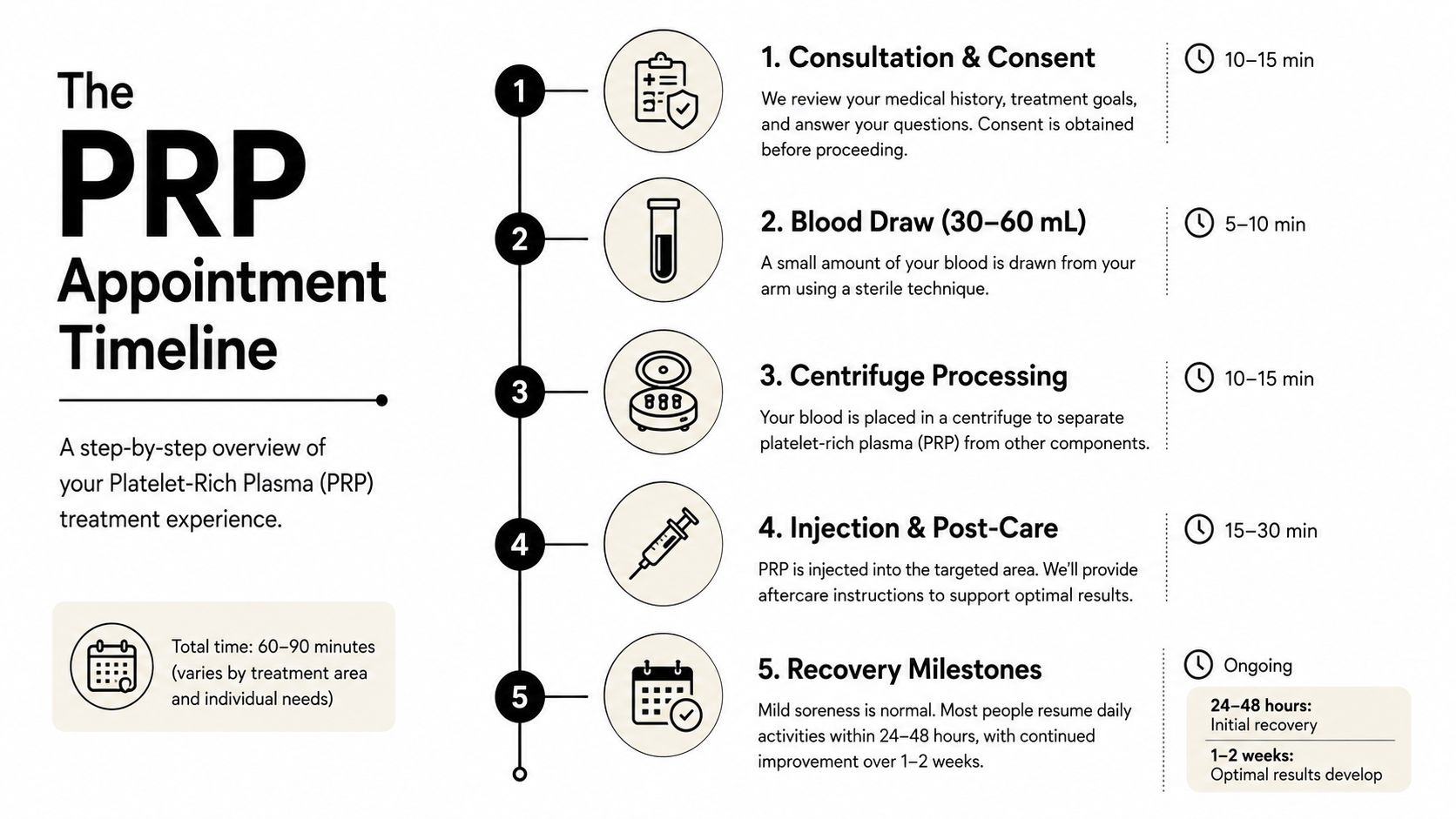
A PRP visit starts with a health review, medication reconciliation, vital signs, and informed consent. The clinician confirms the diagnosis and injection target, discusses alternatives, and explains what the preparation can and can't accomplish. If the plan is appropriate, the team draws approximately 30 to 60 milliliters of blood, then processes it using a single-spin or dual-spin method depending on the kit and protocol.
The resulting product may be leukocyte-poor or leukocyte-rich. Some systems use an activation step, while others inject the preparation without separate activation. The clinician then uses ultrasound or fluoroscopy to confirm intra-articular placement. Local anesthetic may be used around the skin or needle track, but the specific approach depends on the joint and the clinic's protocol.
A typical total visit takes approximately 60 to 90 minutes. These procedural details are part of the treatment, not administrative trivia. If a study uses a different platelet concentration, injection volume, or guidance method, its results may not translate directly to the protocol offered in your clinic.
A practical recovery plan
- Day one: Rest the treated joint, use ice if advised, and avoid strenuous loading.
- Days two and three: Gradually reintroduce light activity based on pain and swelling.
- Before treatment: Many protocols ask patients to avoid anti-inflammatory medications for approximately one week beforehand, but medication changes must be cleared with the treating clinician.
- Weeks one through four: Avoid NSAIDs unless the clinician specifically advises otherwise, and follow the prescribed activity plan.
- Weeks four through six: Begin or progress rehabilitation as directed, then assess the early response.
- Weeks four through twelve: Many patients report meaningful relief during this window, although response timing varies.
Expected effects include injection-site soreness, swelling, and a transient flare. Infection is uncommon and is reported as under 1% in the planned clinical framework, but any worsening redness, fever, drainage, or severe persistent pain requires prompt medical contact. A small group of patients receives no meaningful benefit, even when the procedure is performed correctly.
Comparing PRP With Steroid Shots, Hyaluronic Acid, and Surgery
The choice usually comes down to speed, expected duration, disease severity, and what you're trying to avoid. Corticosteroid injections often make sense when rapid anti-inflammatory relief matters, particularly during a flare. PRP generally has a slower onset, and its value lies in the possibility of longer symptom improvement rather than immediate relief.
Hyaluronic acid occupies a middle ground for some patients. It may provide a faster response than PRP, while pooled knee research has found PRP offers better functional outcomes in several comparisons. The 2025 evidence also supports discussing PRP plus hyaluronic acid, although combination treatment should be presented as an option with evolving evidence, not a guaranteed upgrade.
Joint replacement is different from both injections. It addresses advanced mechanical disease with a surgical reconstruction, but involves anesthesia, postoperative rehabilitation, surgical risks, and an implant that has a finite service life. Patients with severe pain, major functional loss, deformity, or bone-on-bone disease often need a surgical opinion rather than repeated attempts to extend injection-based care.
| Option | Onset | Typical Duration | Best Candidate | Trade-Offs |
|---|---|---|---|---|
| Corticosteroid injection | Usually faster | Often short term | Patient needing rapid flare control | Relief can fade, and repeated exposure may raise cartilage concerns |
| Hyaluronic acid | Often earlier than PRP | Variable and commonly shorter than favorable PRP comparisons | Selected patients seeking a non-steroid injection | Results differ, and coverage and out-of-pocket policies vary |
| PRP | Gradual | Commonly measured in months, with inconsistent longer-term durability | Mild to moderate arthritis and patients delaying surgery | Out-of-pocket expense, protocol variability, and no guarantee of benefit |
| Partial or total replacement | Recovery follows surgery | Intended as a durable structural solution | Severe functional limitation and advanced joint disease | Surgical recovery, anesthesia considerations, rehabilitation, and implant-related issues |
The joint pain injection options conversation should include age, activity goals, imaging, medical risk, budget, and willingness to undergo rehabilitation. No injection should be sold as a substitute for surgery when the joint has reached an advanced stage.
Cost, Insurance, and How Midwest Pain & Wellness Delivers PRP
PRP pricing in the Chicago Ridge and southwest-suburban Illinois market varies by joint, preparation, image guidance, clinician time, and whether the plan involves one injection or a series. A clinic should provide the actual fee before treatment. Because the verified evidence doesn't establish a universal local price, patients should treat any published range as a clinic-specific estimate rather than a standard Illinois rate.
| Protocol | Typical Range (USD) | Series Length |
|---|---|---|
| Single-joint PRP | Confirm with the clinic | One visit |
| Bilateral knee PRP | Confirm with the clinic | One visit or staged visits |
| Multi-injection protocol | Confirm with the clinic | A planned series determined during consultation |
Medicare and most commercial insurance carriers generally don't cover PRP for arthritis. One reason is that CPT 0232T is an unlisted code, while evidence-based coverage policies differ among payers and often classify PRP for arthritis as non-covered or investigational. Confirm benefits directly with the carrier, but ask the clinic to clarify whether the consultation, imaging, procedure, supplies, and follow-up are billed separately.
Questions to ask before scheduling
- Total price: Ask whether the quoted amount includes blood processing, image guidance, supplies, and follow-up.
- Series policy: Find out whether a multi-injection plan is recommended and how each visit is priced.
- Payment options: Ask whether the expense may qualify for HSA or FSA use and whether financing is available.
- Medication planning: Confirm which medications should continue and which require prescriber approval before adjustment.
- Rehabilitation: Clarify whether physical therapy is coordinated separately or included in the broader care plan.
Midwest Pain & Wellness, a pain and wellness clinic in Chicago Ridge, Illinois, frames PRP within opioid-sparing interventional care. Its process may include a consultation workup, ultrasound-guided delivery, rehabilitation coordination, and a clear front-desk discussion of costs. Patients can also review knee joint pain relief injections before discussing whether PRP fits their broader plan.
Deciding Whether PRP Is Right for Your Arthritis
Start with the treatment's evidence ceiling. For knee osteoarthritis, pooled research supports short- to mid-term improvements in pain and function for many selected patients, particularly when the preparation and comparator are clearly defined. The long-term picture is less dependable. One recent review found no efficacy at 12 months, while another favored PRP over hyaluronic acid at that point, so you shouldn't accept a guaranteed durability promise.
The evidence is also less settled outside the knee. A 2018 clinical recommendations review found level 1 evidence for leukocyte-poor PRP in knee osteoarthritis but reported insufficient evidence to routinely recommend PRP for hip osteoarthritis or high ankle sprains. A 2023 review described substantial evidence for knee and hip osteoarthritis while emphasizing that major guideline groups remain divided or cautious. Review the clinical recommendations for PRP use.
Use this decision filter
PRP may be reasonable if you have mild to moderate arthritis, remain active or want to regain activity, have tried conservative care, and want to delay replacement. You also need to accept an out-of-pocket expense, a potentially gradual response, and the possibility that a series rather than a single visit will be recommended.
PRP may be a poor fit if imaging shows end-stage joint destruction, your main problem is an uncontrolled inflammatory arthritis flare, or you expect the injection to regrow cartilage. It's also a poor fit if you can't commit to the recovery and rehabilitation plan or if the financial cost would create unacceptable pressure.
Before scheduling, gather your imaging, write down every medication and injection you've tried, note how long each helped, and list the activities you want to recover. Then schedule a regenerative-medicine consultation with the Midwest Pain & Wellness team to review candidacy, preparation choice, image-guided technique, alternatives, follow-up, and realistic goals for living with arthritis in Illinois.
Midwest Pain & Wellness evaluates selected arthritis patients for PRP and other opioid-sparing, image-guided pain treatments as part of an individualized plan. Visit Midwest Pain & Wellness to request a consultation and discuss whether PRP injection for arthritis fits your imaging, symptoms, treatment history, and activity goals.