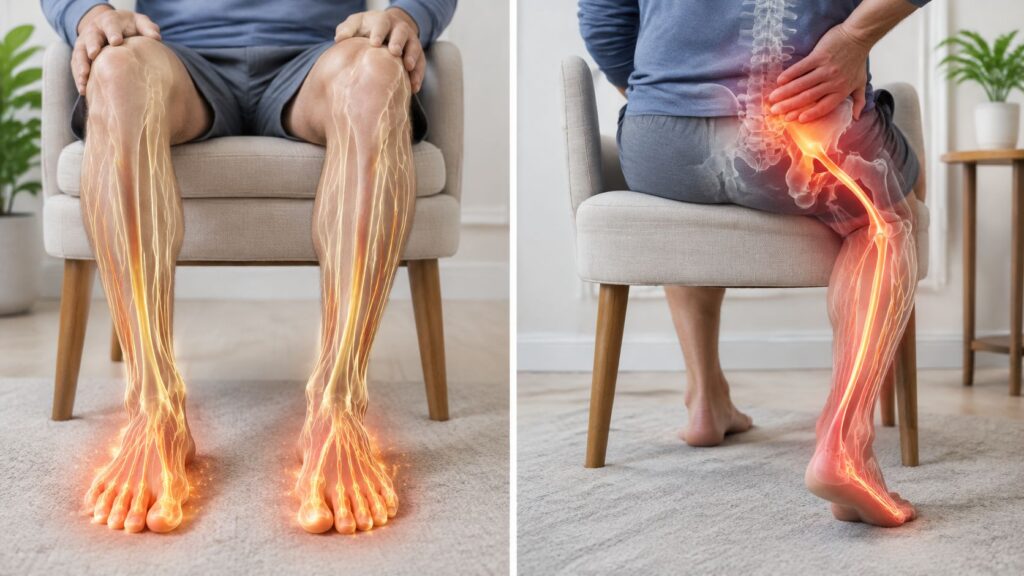
You wake up in Chicago Ridge with a familiar problem. Your lower back feels locked, turning in bed hurts, and a short drive through Evergreen Park becomes an exercise in bracing against the seat. Maybe the pain travels into your leg, or perhaps it stays across your waist and worsens when you stand, cook, or play with your grandchildren in Hickory Hills.
A nerve block may be part of the answer, but it isn't automatically the right answer for every type of back pain. The important questions are where the pain starts, whether a nerve is irritated, how long symptoms have lasted, and what treatments you've already tried. This guide explains back pain nerve block injections for patients in Chicago Ridge, Palos Heights, Palos Hills, Evergreen Park, and Hickory Hills. You'll learn how injections work, how specialists determine candidacy, what happens in the procedure room, and why a precise diagnosis matters more than the injection name.
Table of Contents
- Understanding How Nerve Blocks Work
- Key Types of Nerve Block Injections
- Determining Candidacy and Indications
- Procedure Overview for Back Pain Nerve Block Injections
- Benefits Risks and Expected Outcomes
- Alternatives to Nerve Block Injections
- Conclusion
Understanding How Nerve Blocks Work
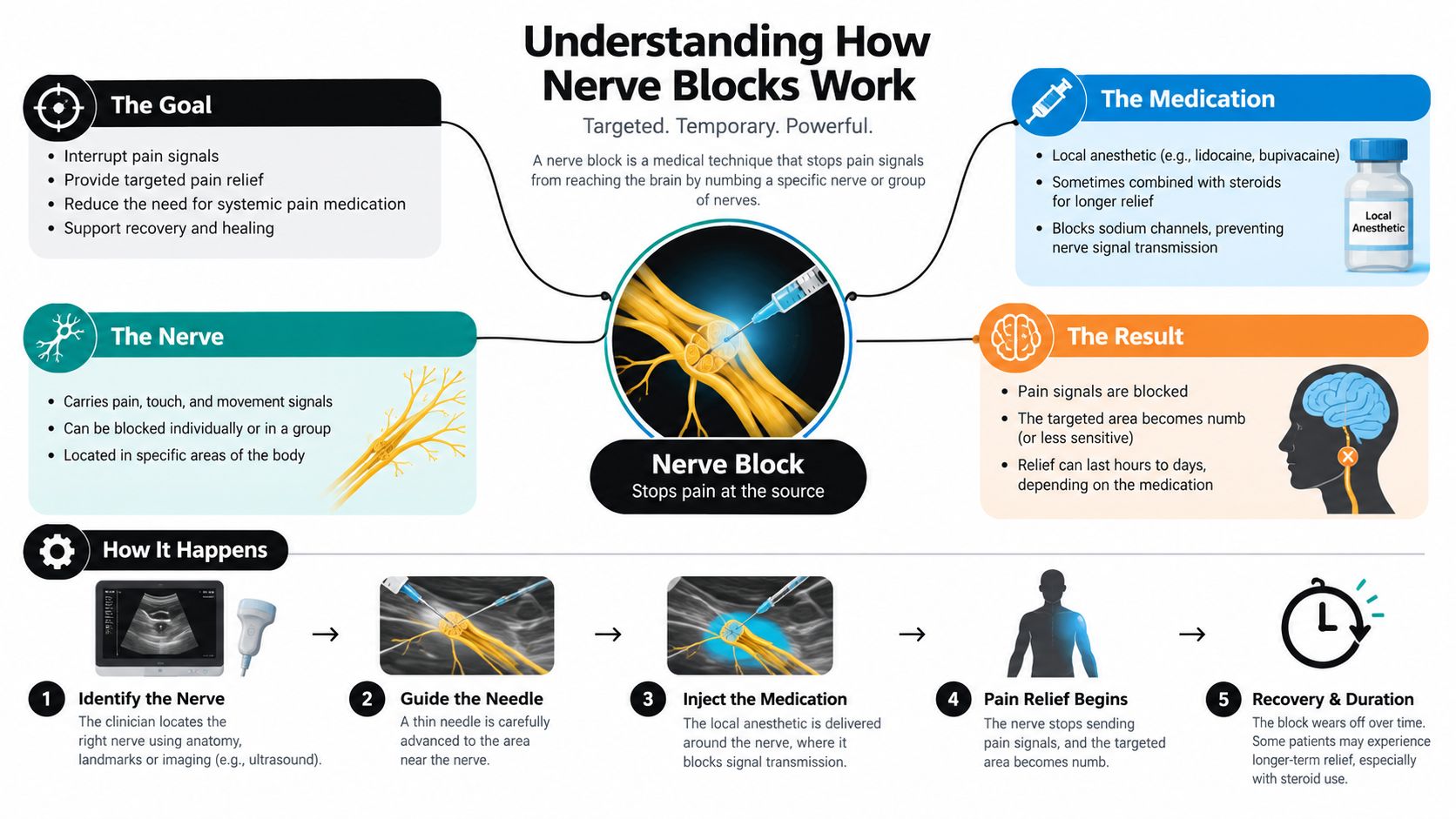
Think of your nervous system as a network of roads carrying information from your spine to your brain. When a nerve root, facet joint, or sacroiliac joint becomes irritated, pain signals can travel along that network. A nerve block places medication near the suspected source, creating a temporary roadblock or quieting inflammation around the structure.
The medication may include a local anesthetic, a corticosteroid, or both. The anesthetic can temporarily reduce nerve signaling, which helps the specialist learn whether the targeted structure is contributing to your pain. The corticosteroid is intended to calm inflammation, although its usefulness depends heavily on the diagnosis and the type of pain being treated.
Image guidance helps the clinician place the needle close to the intended structure rather than relying only on surface landmarks. A medial branch block targets small nerves carrying signals from facet joints. A selective nerve root block focuses on a particular spinal nerve root, often when pain travels from the back into the buttock or leg. An epidural injection places medication in the epidural space, while a sacroiliac injection addresses the joint linking the spine and pelvis.
These techniques have a long history. The first recorded epidural medication injection for lumbago and sciatica was performed in 1901 using cocaine, and corticosteroid use in the epidural space was documented in the early 1950s, reflecting more than a century of procedural refinement (historical overview of epidural injections). Modern procedures aren't experimental novelties, but their results still vary from patient to patient.
For a plain-language explanation of the treatment, see what a nerve block injection does. The most useful goal isn't just to "turn off" pain. It's to identify the pain generator, reduce symptoms when appropriate, and create an opportunity to move more comfortably during a broader recovery plan.
Key Types of Nerve Block Injections
The phrase nerve block covers several different procedures. Choosing among them depends on the suspected pain source, not just the location of your back pain.
| Injection Type | Target Structure | Primary Indication |
|---|---|---|
| Facet or medial branch block | Small nerves serving the facet joints | Axial back pain believed to come from facet joints |
| Selective nerve root block | A specific spinal nerve root | Radiating back or leg pain associated with an irritated nerve root |
| Lumbar epidural steroid injection | Epidural space around spinal nerves | Selected radicular symptoms and certain degenerative spinal conditions |
| Sacroiliac joint injection | Sacroiliac joint | Pain believed to originate in the joint between the spine and pelvis |
Facet and medial branch blocks
Facet joints sit at the back of the spine and help guide movement. When these joints are suspected of causing pain across the lower back, a medial branch block can serve as a diagnostic test. Evidence reviews report Level I diagnostic accuracy when the test uses a stringent threshold of at least 75% pain relief with restored movement (facet intervention evidence review).
A diagnostic injection asks, “Did numbing this pathway change the pain in a meaningful way?” A therapeutic injection focuses more on symptom relief. The distinction matters because a positive diagnostic response may help determine whether radiofrequency treatment is reasonable later. You can also review what a medial branch block involves.
Selective nerve root blocks
A selective nerve root block focuses on one nerve root. It may be considered when symptoms are sharp, burning, or electric and travel from the spine into the buttock or leg. The injection can help both with symptoms and with identifying whether a particular nerve root is involved.
Lumbar epidural steroid injections
An epidural injection delivers medication into the space around the spinal nerves. It may be considered for carefully selected radiating symptoms, but it shouldn't be presented as a universal cure for chronic low back pain.
Sacroiliac joint injections
The sacroiliac joint can produce pain near the belt line, buttock, or hip region. An image-guided injection can help test whether that joint is the source and may offer relief when the clinical findings fit.
Administrative details also matter. Clear documentation of the diagnosis, target, and medical necessity can reduce avoidable coverage problems. Practices that handle interventional care may find this resource on denial prevention for pain practices useful when reviewing documentation workflows.
Determining Candidacy and Indications
A person from Palos Hills may describe “back pain,” while a person from Palos Heights uses the same phrase for a completely different problem. One may have pain centered over the facet joints. Another may have a compressed or inflamed nerve root. A third may have pain near the sacroiliac joint. The injection choice changes because the suspected source changes.
What the evaluation looks for
A pain specialist usually combines your history, physical examination, prior treatment response, and imaging when available. The clinician will ask whether the pain stays in the back or travels into the leg, whether numbness or weakness is present, what movements reproduce symptoms, and whether conservative care has helped.
For a medial branch block, candidacy typically requires facet-mediated axial pain without untreated radiculopathy. One payer guideline specifically states that lumbar medial branch blocks should be used for facet-mediated axial pain and not for unrelated indications (facet joint and medial branch block guideline). That restriction protects patients from receiving a technically correct injection aimed at the wrong pain generator.
An epidural injection is considered differently. Medicare coverage language describes lumbar epidural steroid injections as an option for short-term relief in selected chronic low-back pain without radiculopathy related to degenerative lumbar disease, with evidence characterized as Grade C / Level III (Medicare coverage determination for lumbar epidural steroid injections). Coverage criteria aren't the same as a personal treatment recommendation, so your specialist still has to match the procedure to your symptoms.
When the sacroiliac joint is suspected
For sacroiliac joint pain, a multispecialty guideline recommends image-guided intra-articular corticosteroid injection when pain continues despite conservative care for at least four weeks, and it favors fluoroscopic or CT guidance (multispecialty sacroiliac joint guideline). Another consensus guideline recommends a maximum total injectate volume of 2.5 mL to reduce the chance of capsular rupture and spread to nearby structures, and it uses 50% pain relief as a diagnostic or prognostic cutoff when selecting patients for radiofrequency ablation (sacroiliac joint complex pain guideline).
Bring a list of medications, previous imaging, injection records, and information about physical therapy or home exercises to your visit. Those details help a specialist in Chicago Ridge decide whether an injection is appropriate, whether another treatment should come first, or whether additional evaluation is needed.
Procedure Overview for Back Pain Nerve Block Injections
Most patients feel more comfortable when they know the sequence before arriving. Your exact preparation can vary by procedure, medication, health history, and clinic policy, so follow the instructions provided by your care team.
Before the injection
At check-in, staff confirm your identity, procedure, medications, allergies, and relevant medical conditions. Tell the team about blood thinners, diabetes, infection symptoms, pregnancy, medication reactions, and any new weakness or loss of bladder or bowel control. These details can change whether the injection should proceed.
The specialist reviews the target and explains the expected benefit, limitations, and possible risks. You should understand whether the injection is primarily diagnostic, therapeutic, or both. Ask what improvement would count as a meaningful response and what the next step would be if the injection doesn't help.
During the procedure
You'll usually lie face down or in another position that allows access to the target. The skin is cleaned, a sterile field is prepared, and local anesthetic numbs the entry area. Fluoroscopy, or live X-ray guidance, may help the physician confirm the needle position and direct medication toward the intended structure. You can learn more about fluoroscopy-guided injections.
Patients often notice pressure, brief stinging, or a temporary increase in familiar symptoms as the needle approaches the target. Tell the specialist what you feel, especially if the sensation is unusually sharp or spreads in an unexpected pattern. Once the position is confirmed, medication is delivered and the needle is removed.
Afterward
You'll remain under observation briefly so the team can check your comfort, movement, and vital signs. Temporary numbness or weakness can occur, especially when medication reaches nearby nerves. Arrange a trusted driver from Evergreen Park, Palos Hills, or another nearby community if your clinic advises against driving after the procedure.
Drink fluids as directed, avoid strenuous activity immediately afterward, and follow the written instructions about returning to work, exercise, and medications. Keep a symptom diary. Record pain before the injection, changes during the first several hours, and how symptoms behave over the following days. For a diagnostic block, that record can be more useful than a general impression that you “felt better.”
Practical rule: Relief matters most when you can connect it to a specific activity, such as standing, walking, bending, or sleeping.
Benefits Risks and Expected Outcomes
The honest answer to “Will it work?” is, “It depends on the source of pain and the procedure.” A nerve block can provide a useful window of relief, but a short-term response doesn't prove that the underlying condition has been cured. Some patients need additional treatment, while others learn that the targeted structure wasn't responsible for most of their symptoms.
A study of 76 patients receiving selective nerve root blocks found that 90.7% improved immediately, 28.9% had long-term relief without recurrence over three months, and 61.8% experienced pain recurrence during follow-up (selective nerve root block outcomes). These findings show why immediate improvement and durable improvement should be discussed separately.
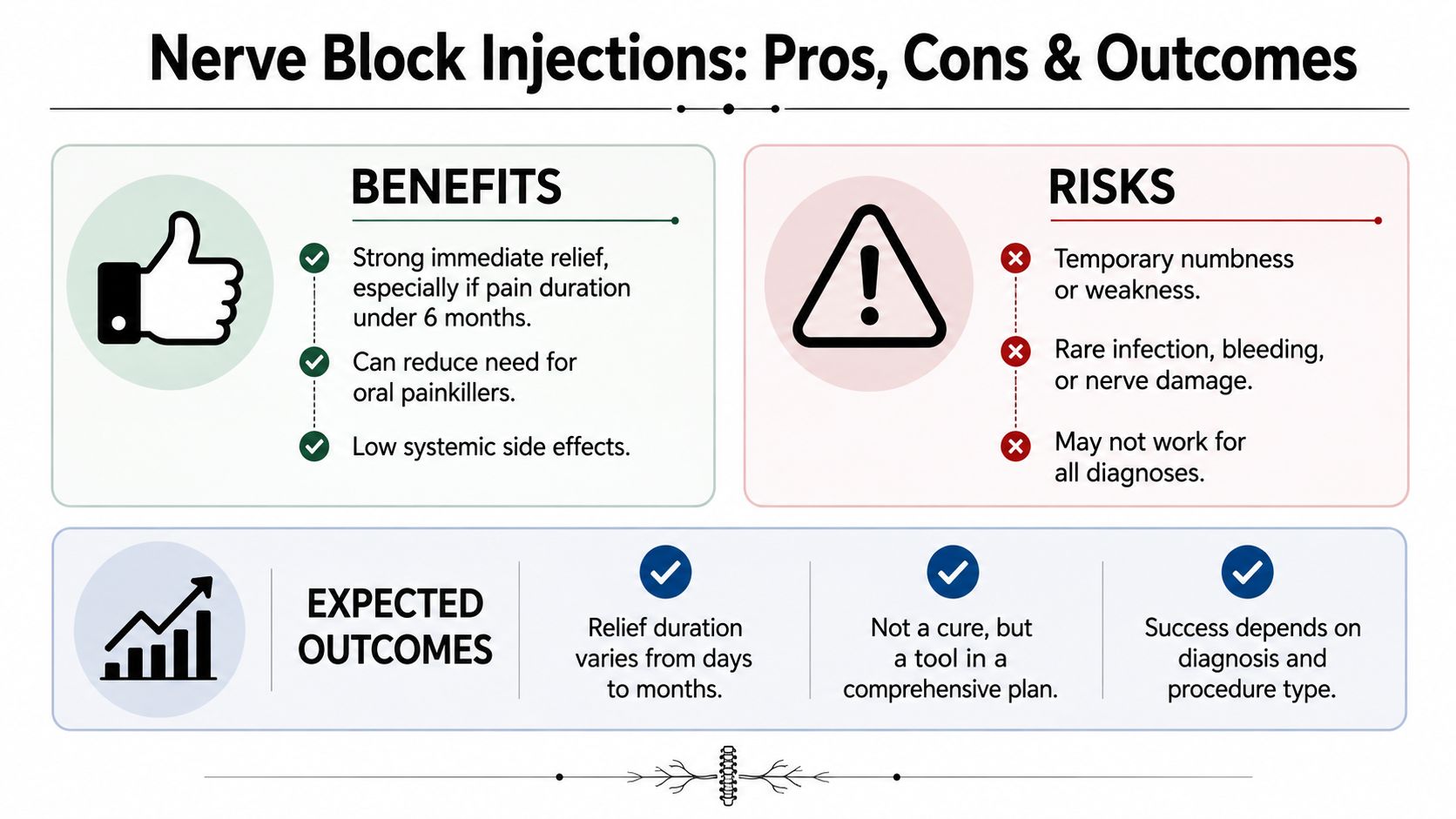
Potential benefits
The anesthetic may reduce pain quickly, which can help your physician assess the targeted pathway. If inflammation contributes to symptoms, the corticosteroid may provide additional relief after the anesthetic effect fades. Less pain may make it easier to participate in movement-based rehabilitation, improve sleep, or reduce reliance on oral pain medicine, although no injection guarantees those outcomes.
Response tends to be more favorable when the diagnosis is specific and symptoms haven't become longstanding. In the same body of evidence, response rates were described as about 90% when symptoms lasted under three months, around 70% when radiculopathy lasted under six months, and about 50% after more than one year (clinical outcome summary for interventional pain procedures).
Risks and limitations
Common short-term effects can include soreness at the injection site, temporary numbness, weakness, or headache. Less common but serious complications can include infection, bleeding, or nerve injury. Your clinician should review personal risk factors, including medication use and health conditions, before proceeding.
A broader concern involves chronic axial back pain. In February 2025, an international expert panel published strong recommendations against spine injections for adults with chronic back pain, stating that epidural steroid injections and nerve blocks provided little or no meaningful relief compared with sham procedures for chronic axial or radicular pain not caused by cancer, infection, or inflammatory arthritis (report on the 2025 expert recommendations). That recommendation doesn't mean every injection is inappropriate. It means diagnosis, patient selection, and realistic expectations matter.
Alternatives to Nerve Block Injections
An injection is one tool, not a complete treatment plan. The best alternative depends on whether your pain comes from a facet joint, nerve root, sacroiliac joint, spinal narrowing, muscle weakness, or another source.
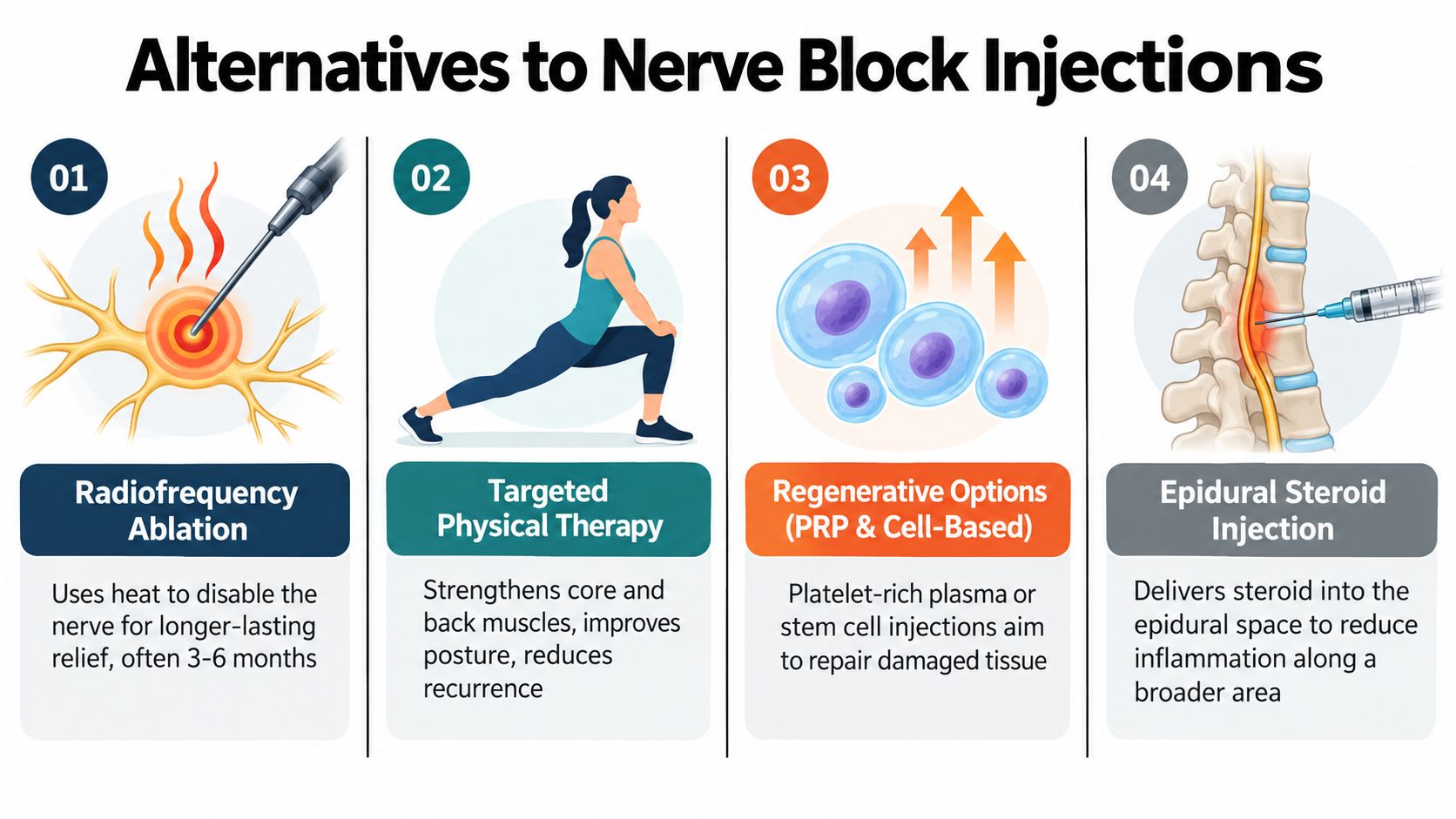
Targeted physical therapy emphasizes movement, strength, posture, and tolerance for daily activities. It may be a better starting point when weakness, reduced mobility, or poor movement patterns contribute to symptoms. A pain and wellness clinic can coordinate this approach with interventional care rather than treating injections as a substitute for rehabilitation.
Radiofrequency ablation uses heat to interrupt selected pain-carrying nerves. It may be considered when diagnostic medial branch blocks support facet-mediated pain. Unlike a diagnostic block, it isn't just a test, and it still requires careful patient selection.
Regenerative options, including PRP and cell-based therapies, are intended to address damaged or irritated tissue rather than temporarily interrupting a pain signal. Their suitability depends on the tissue involved, the diagnosis, and the evidence supporting that particular use.
Minimally invasive decompression may be discussed when spinal narrowing produces symptoms that don't respond to conservative care. Procedures such as MILD or an interspinous spacer are not interchangeable with an injection, because they address anatomy differently.

For chronic low back pain, the evidence for lumbar epidural steroid injections remains limited. A meta-analysis found only small, short-term benefits at six months, with no meaningful reduction in later surgery rates (review of epidural steroid injections for low back pain). That makes a shared decision important. Ask whether the proposed procedure has a clear target, what success would look like, and which next step follows if relief is brief.
Conclusion
Back pain nerve block injections can offer rapid relief for selected patients in Chicago Ridge, Palos Heights, Palos Hills, Evergreen Park, and Hickory Hills, particularly when the clinician identifies a specific pain source and uses appropriate image guidance. They can also provide diagnostic information, but they're not a universal cure for chronic back pain. A consultation with an interventional pain specialist can help you compare an injection with rehabilitation, radiofrequency treatment, regenerative care, or minimally invasive options and build a personalized, opioid-sparing plan.
Midwest Pain & Wellness evaluates spine, nerve, facet, and sacroiliac pain and offers personalized care that may include image-guided injections, medial branch blocks, epidural treatments, radiofrequency ablation, regenerative options, and minimally invasive procedures. Visit Midwest Pain & Wellness to request a consultation and discuss whether a nerve block fits your symptoms and recovery goals.