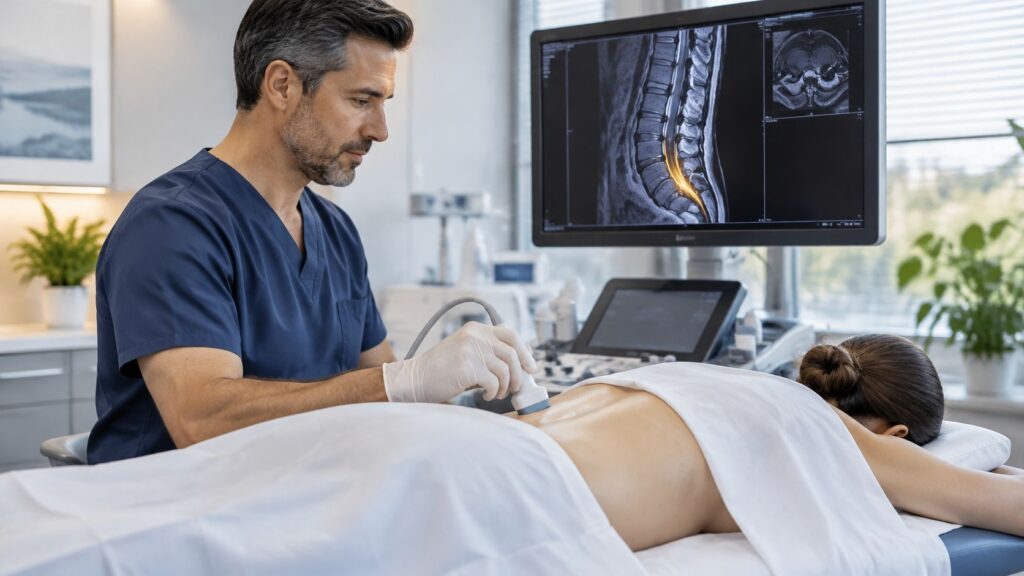
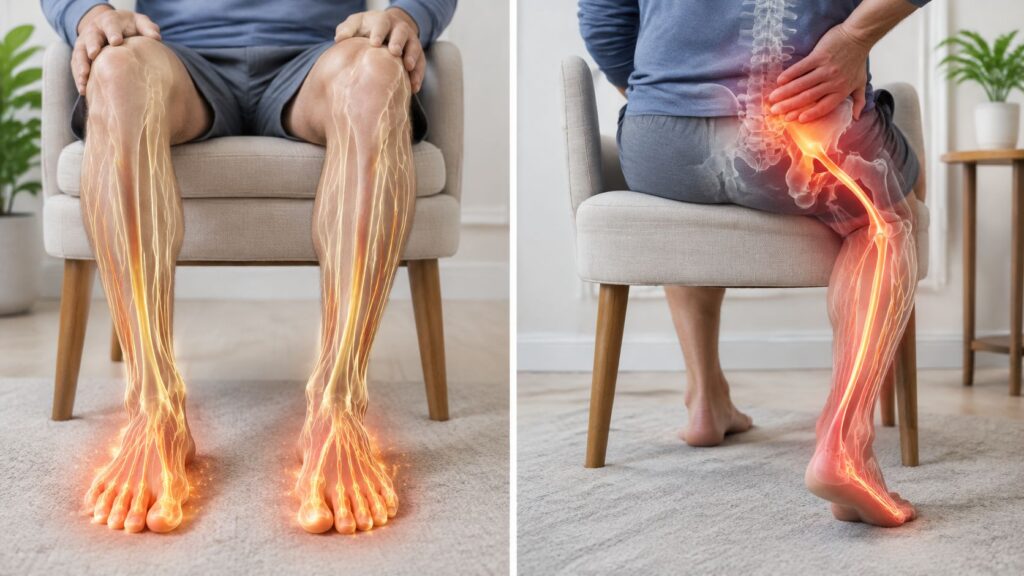
You had the surgery. The incision healed. People around you expected the hard part to be over. But you're still dealing with aching across the low back, pain into the buttock or leg, or a strange mix of stiffness, burning, and fatigue that doesn't fit the simple story of “the fusion fixed it.”
That experience is more common than many patients realize, and it doesn't automatically mean the operation failed.
As a pain specialist, I want patients to know something early. Pain after spinal fusion is usually a localization problem before it's a surgery problem. In other words, the key question is not “Was the fusion a failure?” The key question is “What structure is generating the pain now?” Sometimes it's the sacroiliac joint. Sometimes it's the level above the fusion. Sometimes it's a nerve that stayed irritated long after the mechanical pressure changed.
For patients in Chicago Ridge, Palos Heights, Palos Hills, Evergreen Park, and Hickory Hills, Illinois, a calm, step-by-step evaluation can prevent a lot of unnecessary fear and, in some cases, unnecessary repeat surgery.
Table of Contents
- Understanding Pain After Spinal Fusion and What Recovery Should Feel Like
- Why Pain Can Persist After a Technically Successful Fusion
- Common Causes Behind Ongoing or New Pain After Fusion
- How Specialists Diagnose the Source of Post Fusion Pain
- Relief Options From Rehab to Interventional Procedures
- What to Expect Long Term and How Coordinated Care Helps
- Taking the Next Step Toward Lasting Relief in Illinois
Understanding Pain After Spinal Fusion and What Recovery Should Feel Like
A typical recovery story sounds like this. The first few weeks are dominated by surgical soreness, muscle guarding, fatigue, and a back that feels tight and unreliable. Then things usually start to settle. Walking gets easier. Position changes become less dramatic. The sharp “post-op” pain fades, even if you still feel stiff or limited.
That's the normal healing side of the story.
The confusing part is that healing after fusion takes time, and not every ache during recovery is a warning sign. Fusion is designed to stop motion at a painful or unstable spinal level. That can help, but it also means the body has to heal bone, calm inflamed tissue, and retrain muscles that have been through a major procedure.
What's expected and what deserves another look
Some symptoms fit the usual recovery window:
- Incisional soreness that gradually improves
- Morning stiffness that eases once you start moving
- Muscle tightness around the low back or hips
- Activity-related pain that improves with pacing and rest
Other symptoms deserve a closer evaluation:
- Pain that returns after initial improvement
- New pain in a different location, especially below the belt line or into the buttock
- Burning, tingling, or electric pain that feels nerve-related
- Pain that stays stuck instead of trending in the right direction
A broader discussion of postoperative pain and what recovery can feel like can help you place your symptoms in context.
Persistent pain after fusion doesn't always mean something was done wrong. It often means the current pain generator hasn't been clearly identified yet.
A pain and wellness clinic looks at that question differently than a physical therapy practice alone. The job isn't just to strengthen around the problem. The job is to sort out whether the pain is coming from the fused area, the joints next to it, the sacroiliac joint, irritated nerves, scar-related changes, or a combination.
That's especially important for patients across this part of Illinois, where getting a local, coordinated evaluation can make the next step much clearer.
Why Pain Can Persist After a Technically Successful Fusion
A fusion can be technically solid and still leave someone with pain. That surprises people, but it makes sense once you look at how the spine behaves after one segment is made rigid.
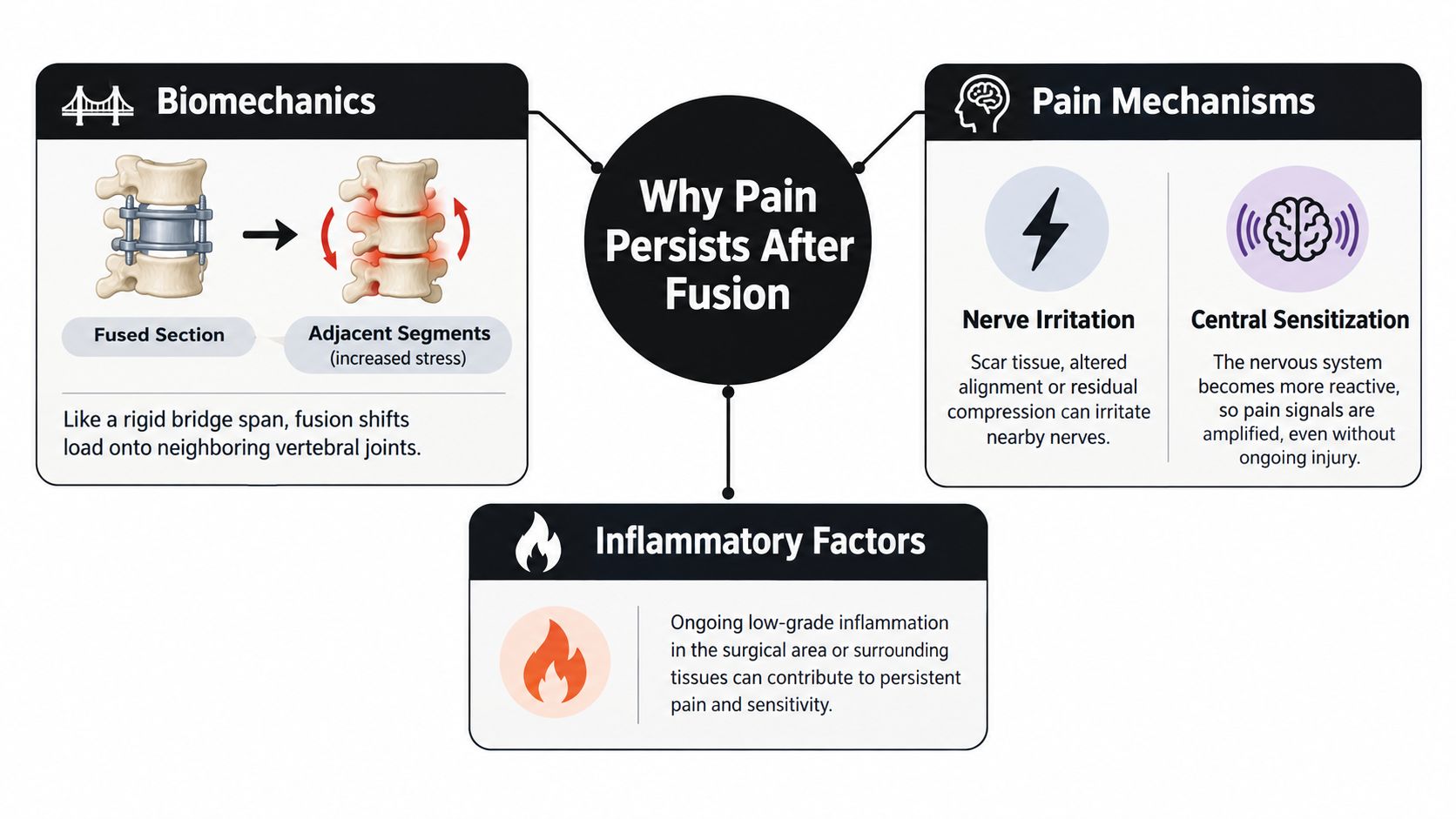
The bridge analogy helps
Think of the lower spine like a row of connected bridge spans. If one span is stiffened so it can't move, the spans beside it have to absorb more motion and force. That doesn't mean the repair was wrong. It means the surrounding structures now carry a different workload.
This is one reason some people develop pain above or below the fusion, or in the pelvis where the spine meets the sacrum. It's also why failed back surgery syndrome is often too simple a label for what's really going on.
Pain can remain even when imaging looks fixed
There are two broad buckets to understand.
First, there are structural causes. These include things like incomplete fusion, hardware irritation, recurrent narrowing around a nerve, scar-related nerve tethering, or stress transferred to nearby joints.
Second, there are non-structural pain syndromes. A recent review emphasized that persistent post-surgical pain isn't one single failed-fusion problem and may also involve central sensitization, nociplastic pain, or persistent nerve injury, even when imaging appears to show a corrected structure (review of persistent spinal pain syndrome concepts).
Here's the practical meaning of that. A scan can answer whether a screw is loose or whether bone healed across a fusion. It cannot fully answer how sensitized a nerve has become, or whether the nervous system is still amplifying pain after the original mechanical issue changed.
Why this matters to patients
If pain is assumed to come only from the fusion itself, people can get pushed toward the wrong next step. They may hear “everything looks fine” and feel dismissed. Or they may hear “maybe you need another surgery” before anyone has carefully tested other likely sources.
Clinical mindset: A technically successful fusion and ongoing pain can both be true at the same time.
That's why the right approach is systematic. You rule in or rule out the most likely pain generators one by one, rather than treating the entire situation as a single mystery.
Common Causes Behind Ongoing or New Pain After Fusion
When patients say, “My back still hurts after fusion,” they often mean several different sensations at once. Deep low back ache. Buttock pain. Pain with standing. Pain turning in bed. Burning into the leg. Each pattern points in a slightly different direction.
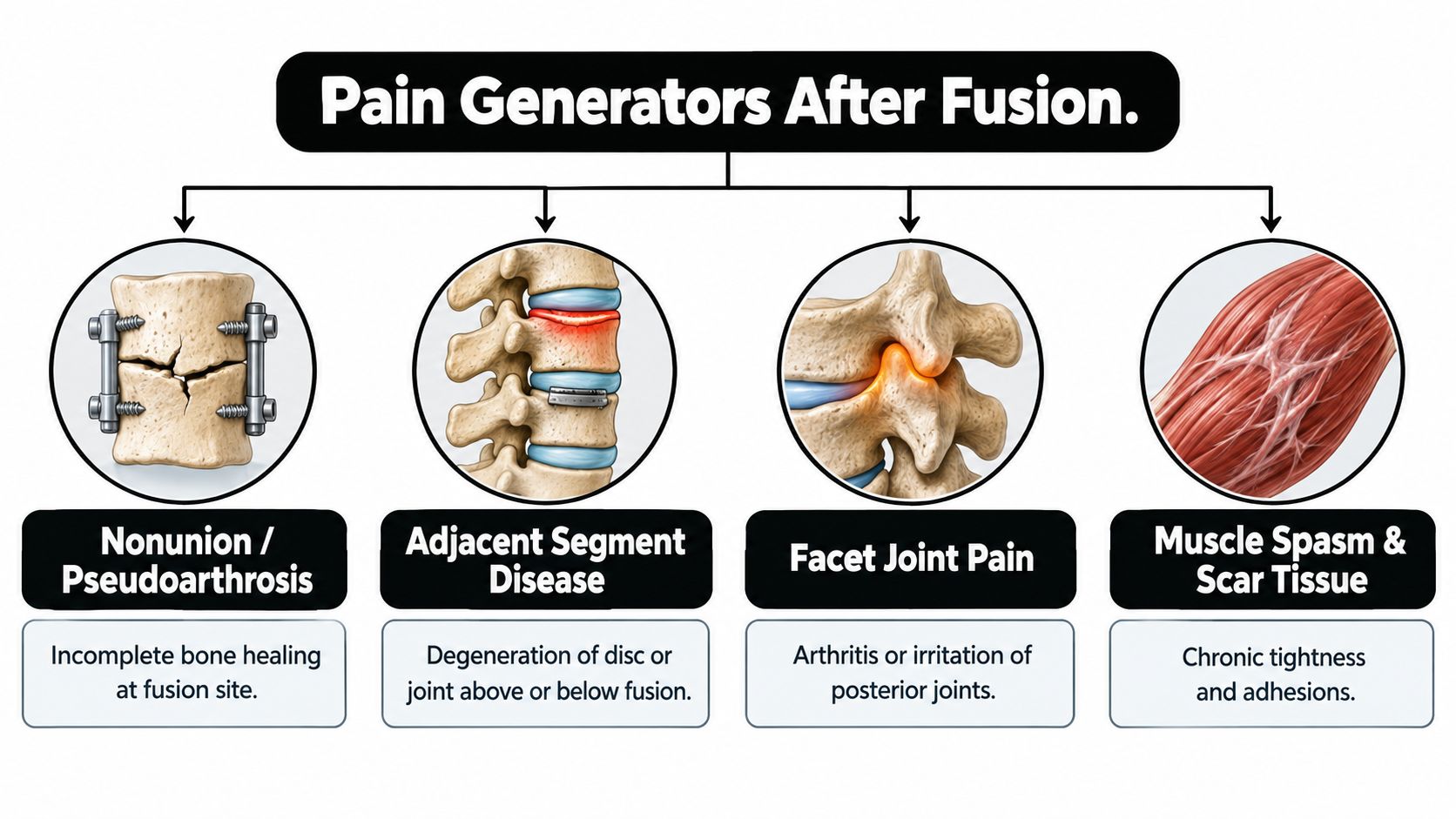
Nonunion and hardware-related pain
Sometimes the intended bone healing doesn't fully consolidate. This is often called pseudoarthrosis or nonunion. Patients may describe persistent mechanical pain, pain with transitions, or a sense that the back never became stable.
Hardware can also irritate nearby tissue or become a clue that the fusion isn't behaving as expected. The important point is that hardware pain and nonunion usually need confirmation with the right imaging, not guesswork.
A major review on persistent spinal pain after surgery notes that useful workup often correlates symptoms with CT for pseudoarthrosis or hardware failure and MRI for recurrent neural compression or fibrosis (review of causes and workup of persistent spinal pain syndrome).
Adjacent segment disease
The segment above or below a fusion may start doing extra work. Over time, that can irritate the disc, facet joints, or stabilizing structures nearby. Patients often feel this as pain in a slightly different zone than before surgery.
It may show up with extension, standing, or after activity rather than as classic surgical-site soreness. People sometimes say, “It's close to where I had surgery, but not the same.”
Recurrent narrowing, scar tissue, and nerve irritation
Some pain is less about motion and more about nerve behavior.
Common examples include:
- Residual or recurrent compression that continues to irritate a nerve root
- Epidural fibrosis, where post-surgical scar tissue contributes to ongoing nerve-related pain
- Persistent nerve injury, which can produce burning, numbness, hypersensitivity, or shooting pain even after decompression
A 2024 review estimated that 10% to 40% of patients may experience persistent or recurrent pain after spine surgery, with higher rates in larger surgeries and repeat operations (review on persistent or recurrent pain after spine surgery). That range is broad, but the message is simple. Ongoing pain after surgery is not rare, and it has more than one cause.
The often-missed sacroiliac joint
This is one of the biggest areas of confusion after lumbar fusion.
The sacroiliac joint, or SI joint, sits where the spine connects to the pelvis. After fusion, especially lower lumbar or lumbosacral fusion, that joint often absorbs more force. Pain there is usually felt below the belt line, over one buttock, sometimes into the groin or upper thigh, and often when standing from a chair, climbing stairs, or rolling in bed.
A systematic review found a pooled incidence of SI joint pain after lumbosacral fusion of 15.8% overall, rising to 32.9% when fusion extended to the sacrum, and a Mayo Clinic review noted the SI joint is the source of pain in nearly half of patients with new or continued low back pain after fusion surgery (discussion of SI joint and adjacent segment pain after fusion).
A separate study reported sacroiliac joint pain prevalence of 43% after lumbosacral fusion versus 13% in non-fused low-back-pain patients and concluded it was the most likely source of low back pain after lumbar fusion (study on SI joint pain after lumbar fusion).
If your pain sits low, off to one side, and feels worse with standing, walking, stairs, or getting out of a car, the SI joint deserves attention.
More than one pain generator can be active at the same time. That's common, not unusual.
How Specialists Diagnose the Source of Post Fusion Pain
The best evaluation starts with a map, not a scan.
A patient may point to the center of the low back, one buttock, the groin, the outer thigh, or a line traveling down the leg. That pain map matters because different structures refer pain in different patterns. The timeline matters too. Pain that never improved is different from pain that improved and then returned months later.
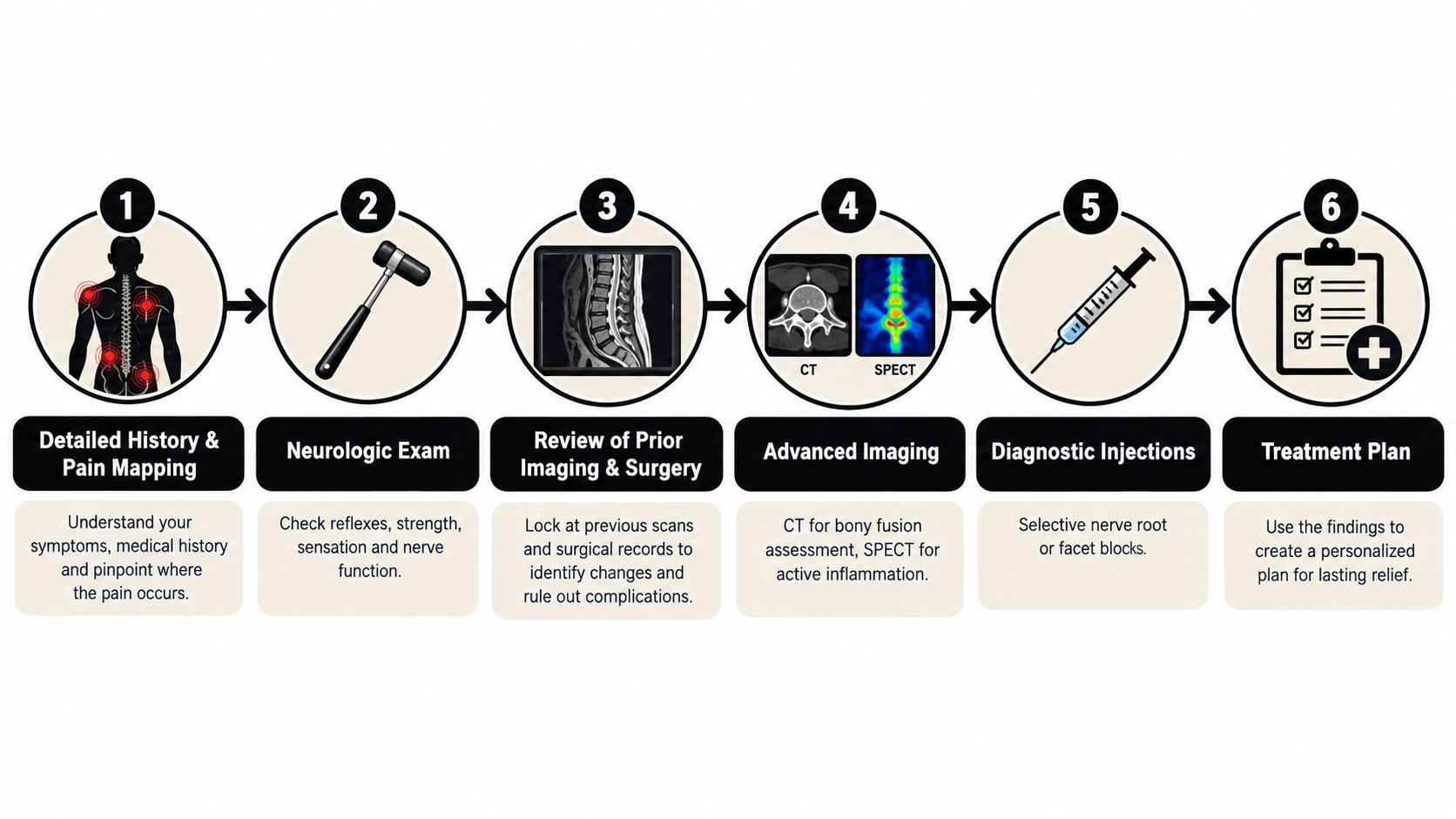
The first visit usually answers three questions
Where is the pain most likely coming from right now?
Not where the surgery happened. Where today's pain is most likely generated.Is there a structural issue that needs surgeon review?
Examples include nonunion, hardware problems, or significant recurrent compression.Is the pain mechanical, neuropathic, or mixed?
That distinction changes treatment.
What the workup typically includes
A focused post-fusion evaluation often includes:
- Detailed history with pain timing, triggers, posture sensitivity, and any neurologic change
- Review of operative records to confirm levels fused and the reason for surgery
- Neurologic exam to look for weakness, reflex change, sensory loss, or tension signs
- Provocative exam maneuvers to test SI joint, facet, hip, and nerve root patterns
After that, imaging is chosen to answer a specific question.
- CT is helpful when the question is whether the fusion healed or hardware remains stable.
- MRI is more useful when the concern is nerve compression, recurrent stenosis, or fibrosis.
- Plain X-rays or dynamic views may help in selected cases, depending on the surgeon's prior workup and the symptom pattern.
Why diagnostic injections matter
Many patients assume injections are only treatments. In post-fusion pain, they can also be tests.
If the exam strongly suggests SI joint pain, an image-guided SI joint block can help confirm whether that joint is the source. The same logic applies to facet-mediated pain and selected nerve root problems.
Imaging shows anatomy. Diagnostic blocks help connect anatomy to symptoms.
That connection prevents overcalling incidental findings. Lots of adults have abnormalities on scans. The goal is to find the abnormality that matches the pain pattern, exam findings, and response to targeted testing.
In Illinois, this process often works best when pain specialists coordinate with the surgeon, primary care clinician, and rehab therapists. That way, the patient doesn't bounce between offices hearing different theories without a clear sequence.
Relief Options From Rehab to Interventional Procedures
Treatment works best when it matches the actual pain generator. A person with SI joint overload needs a different plan than someone with neuropathic leg pain or someone whose main issue is deconditioning and fear of movement.
Start with function, not just pain scores
Most patients need some combination of movement retraining, activity pacing, and body mechanics work. A pain and wellness clinic can coordinate targeted physical therapy while also evaluating whether the therapy plan matches the pain source. If getting out of bed triggers low buttock pain from the SI joint, generic “core strengthening” alone may not get the job done.
For families supporting older adults after surgery, resources like at-home physiotherapy services Dubai show how home-based recovery support can be structured when mobility is limited. The setting is different, but the principle is useful. Rehab works better when it meets the patient where they are.
A broader overview of post-surgical rehabilitation options can also help patients understand how movement-based recovery fits alongside procedural pain care.
Non-opioid treatments and targeted procedures
Medication may help, especially when pain has an inflammatory or neuropathic component, but the long-term goal is usually not to keep increasing medication. Opioid-sparing care often combines medication with targeted procedures.
Common options include:
- Epidural steroid injections when nerve root inflammation is a major driver
- SI joint injections when exam and pain pattern suggest sacroiliac pain
- Facet or medial branch blocks when posterior element pain is suspected
- Radiofrequency ablation if medial branch blocks confirm facet-mediated pain and the pattern fits
- Neuromodulation, such as spinal cord stimulation or peripheral nerve stimulation, when neuropathic pain persists despite more conservative care
- Minimally invasive decompression-based procedures in selected cases when persistent stenotic symptoms fit the anatomy
- Revision surgery evaluation if the workup points to a structural problem that non-surgical treatment won't fix
Midwest Pain & Wellness evaluates post-laminectomy and fusion pain with this kind of cause-based approach, including diagnostic blocks, image-guided injections, radiofrequency ablation, neuromodulation, and coordinated rehab planning.
Matching Pain Generator to Opioid Sparing Option
| Pain Generator | Clues and Confirming Test | Best Fit Options |
|---|---|---|
| SI joint overload | Pain below the belt line, buttock pain, worse with stairs or rising, confirmed with image-guided SI block | SI joint injection, targeted rehab, radiofrequency procedures in selected cases |
| Recurrent nerve irritation | Burning, shooting, numbness, radiating leg pain, MRI correlation and exam findings | Epidural injection, neuropathic medication strategy, neuromodulation if persistent |
| Facet-mediated adjacent segment pain | Pain with extension or standing, localized paraspinal pain, confirmatory medial branch blocks | Medial branch blocks, radiofrequency ablation, mechanics-focused rehab |
| Deconditioning and movement fear | Pain tied to inactivity, stiffness, guarded movement, no dominant structural red flag | Structured rehab, pacing, sleep and activity coaching, non-opioid medication support |
| Pseudoarthrosis or hardware issue | Mechanical pain, instability feeling, CT correlation | Surgeon review, bracing in selected cases, revision discussion when indicated |
When regenerative and revision options fit
Regenerative treatments such as PRP may be considered selectively in some pain patterns, but they aren't a universal answer for post-fusion pain. The key is matching the treatment to the diagnosis.
Revision surgery should usually come after a careful localization process unless there's an urgent structural reason to act sooner. Many patients don't need more surgery. They need a more precise explanation.
What to Expect Long Term and How Coordinated Care Helps
Long-term recovery after fusion is often a mix of progress and recalibration. Many patients improve substantially, but they don't always become pain free.
In one large review of first-time lumbar spinal fusion for degenerative disorders, mean back-pain scores on a 100-point VAS improved from 64 before surgery to 20 at 24 months, leg-pain scores improved from 70 to 17, and disability scores improved from 44.8 to 17.3, showing major average improvement overall (long-term outcomes review of lumbar spinal fusion). That same body of literature also shows axial back pain can linger more than leg pain.

What realistic expectations look like
A large 2023 systematic review found the pooled prevalence of persistent pain after spinal surgery was 14.97%, and fusion-focused literature often reports residual postoperative symptoms in the 30% to 46% range, with one recent study reporting 28.4% residual postoperative pain after posterior fusion (systematic review of persistent pain after spinal surgery).
Another outcomes study found that 2 years after lumbar spine surgery, 11% reported no improvement in pain, 28% reported only a little to moderate improvement, 44% reported a lot of improvement, and 17% reported complete improvement (study of patient-reported outcomes after lumbar surgery).
Those numbers matter because they help patients avoid two unhelpful extremes. One is panic. The other is unrealistic expectation.
How coordinated care changes the experience
Doing best often requires someone who connects the dots across surgery, pain care, rehabilitation, and day-to-day function.
That may include:
- Flare planning so a bad week doesn't turn into months of fear and inactivity
- Functional milestones such as walking tolerance, sitting tolerance, sleep position tolerance, and return to work tasks
- Communication between clinicians so imaging findings, injection response, and therapy progress all inform the same plan
For patients in Chicago Ridge, Palos Heights, Palos Hills, Evergreen Park, and Hickory Hills, local coordinated care matters. It helps when the surgeon, primary care clinician, chiropractors when involved, and rehab therapists are all working from the same explanation of the pain pattern. That's also important in workers' compensation and personal injury cases, where clear documentation and cause-based treatment planning can affect the pace of recovery.
The long game is not just lower pain. It's better walking, better sleep, better confidence in movement, and less dependence on opioids.
Taking the Next Step Toward Lasting Relief in Illinois
If you're dealing with pain after spinal fusion, start by tracking the pattern. Write down where it hurts, whether it stays in the back or travels into the buttock or leg, what movements trigger it, and whether it's getting better, worse, or stuck. Bring prior operative notes, imaging reports, and any recent scans if you have them.
Seek prompt evaluation if you develop new weakness, major numbness, bowel or bladder changes, fever, or a rapidly escalating pain pattern. If the problem is a persistent ache, recurrent buttock pain, or nerve-type symptoms that never fully settled, a routine but focused specialist assessment is usually the right next move.
The main idea is simple. Don't assume persistent pain means failed fusion. Localize first. Rule in or rule out SI joint overload, adjacent segment problems, persistent nerve pain, and structural issues in an orderly way. That approach gives you a better chance of finding relief without defaulting to more opioids or rushing toward another operation.
Midwest Pain & Wellness provides evaluation and opioid-sparing treatment for post-fusion pain in Illinois, including diagnostic blocks, image-guided injections, radiofrequency procedures, neuromodulation, and coordinated rehab planning. If you're in Chicago Ridge or nearby communities and want a careful, cause-based assessment of ongoing pain after spine surgery, visit Midwest Pain & Wellness.