That lower back ache usually starts the same way. You bend to pick something up, twist getting out of the car, or stand after a long workday and feel a tight, nagging pull that makes every movement more noticeable. At that point, the need is for the same thing. Relief that's fast, local, and simple enough to try at home.
A pain cream is a reasonable first step for mild to moderate, localized back pain, especially when the problem feels more like a strain, sore muscles, or a focal ache than a deep, spreading, or shooting pain. The problem is that store shelves lump very different products together. Some mainly create a cooling or warming sensation. Some target inflammation more directly. Others are better suited to certain pain patterns than others.
That's why the best back pain relief cream isn't one universal product. It depends on what your pain feels like, where it sits, and how long it's been going on.
Finding Relief for Your Aching Back
If your back pain started after yard work, lifting, cleaning, or a long stretch at a desk, you're probably not looking for a lecture. You want to know what you can put on it tonight that has a real chance of helping.
For many people in Illinois, that first move is an over-the-counter cream, gel, or patch. That makes sense. Topicals are easy to try, they work right where you hurt, and they don't expose your whole body to the same level of medication as an oral pain reliever. If you want a broader at-home plan alongside topical relief, this guide on how to help back pain is a useful next step.
What matters most is matching the cream to the kind of pain you have.
A sore band of muscle across the low back after overuse is different from burning pain, different from stiffness tied to inflammation, and very different from pain that shoots into the buttock or leg. Patients often tell me they've tried “everything,” but when we go through the labels, they've really tried several versions of the same counterirritant with different branding.
The label matters more than the marketing. Start with the active ingredient, not the front of the box.
If your pain is localized and mechanical, a topical can be a practical self-care tool. If it's severe, radiating, or lingering despite good self-care, that's when a cream stops being the answer and starts being a delay.
How Topical Creams Work on Back Pain
A topical pain cream works in one of a few different ways. The easiest way to think about it is this. Some products distract pain signals, some reduce inflammation, and some dull sensation in the area.

Counterirritants change the signal
Ingredients such as menthol and camphor are grouped as counterirritants. They modulate pain signaling at the skin level, creating the familiar cooling or warming sensation many people associate with pain rubs. By contrast, topical NSAIDs like diclofenac inhibit cyclooxygenase (COX) and reduce prostaglandin production tied to inflammation and pain, as described in this overview of back pain cream ingredient categories and mechanisms.
These products can be helpful when your pain feels superficial, tight, sore, or achy. They don't repair tissue. They can, however, make movement more comfortable, and that alone can help you avoid guarding and stiffness.
Anti-inflammatory creams target a different problem
When the pain is driven more by irritated soft tissue and inflammation, a topical NSAID makes more sense. Diclofenac falls into this category. It isn't just creating a skin sensation. It works on an inflammatory pathway.
That distinction matters. A cooling cream may feel good even if it isn't addressing the driver of the pain. A topical anti-inflammatory is better aligned with a back strain or focal musculoskeletal irritation where inflammation is part of the story.
Practical rule: If your back pain feels like a strained area that's tender with certain movements, an anti-inflammatory topical is usually more logical than a purely cooling rub.
Local anesthetics have a narrower role
Some topical products include lidocaine. These aim to reduce sensation in the area. For certain surface pain patterns, they can be useful. For deep low back pain, results are often less impressive because the pain generator may sit deeper than the medicine can meaningfully affect.
Expectations are important. A cream can help you move, sleep, or tolerate the day better. It usually won't solve a deeper spine or nerve problem. That's especially true when pain is diffuse, radiating, or paired with numbness or weakness.
Decoding the Active Ingredients in Pain Creams
When patients ask for the best back pain relief cream, I steer the conversation away from brand names and toward active ingredients. That's where the useful differences are.
Diclofenac for localized inflammatory pain
Among evidence-backed topical options, diclofenac stands out. An NIH-reviewed article found that in acute musculoskeletal pain, topical diclofenac Emulgel had a number needed to treat of 1.8, while ketoprofen gel had an NNT of 2.5. For chronic musculoskeletal pain, topical diclofenac preparations had NNT values of 5.0 over less than 6 weeks and 9.8 over 6 to 12 weeks. The same review notes that capsaicin creams are typically sold at 0.025% or 0.075%, with 0.25% available in some countries, in this NIH review of topical analgesics for musculoskeletal pain.
What does that mean in plain English? Diclofenac has meaningful evidence for acute aches and strains. In chronic pain, it can still help, but the benefit is usually more modest.
This is often the best fit when your pain is:
- Localized
- Mechanical
- Tender with movement
- Likely inflammatory, such as a strain or overuse flare
Capsaicin for persistent localized pain
Capsaicin comes from chili peppers, but in pain creams it serves a medical purpose. It works by changing how pain fibers signal over time. Early on, many people notice a burning or hot sensation. That doesn't mean it's harming the tissue, but it does mean some patients stop too soon because they weren't expecting that feeling.
Capsaicin is commonly sold in 0.025% or 0.075% concentrations, so reading the label matters. It's not my first choice for every sudden back strain, but it can be a reasonable option when the pain is localized and you're willing to use it consistently.
One caution is practical, not theoretical. If you use capsaicin and then touch your eyes or other sensitive skin, you'll regret it quickly. Hand washing after application is mandatory.
Menthol, camphor, and methyl salicylate for fast symptom relief
These ingredients are common in classic pain rubs. Their appeal is immediate. Many people feel a sensation within minutes, and that sensory shift can make the area feel looser or less dominant.
They're often useful when:
- You want quick, temporary relief
- The pain is mild to moderate
- You're trying to stay comfortable enough to keep moving
- You prefer a non-prescription starting point
They're less impressive when the pain is deep, recurrent, or driven by a nerve root. In those cases, the surface effect may be pleasant without changing much underneath.
A cooling or warming effect can be helpful, but relief from sensation alone isn't the same as addressing inflammation.
Lidocaine for surface sensitivity
Lidocaine has a role, but it's often overestimated for low back pain. It can help numb a focal area. If the pain sits close to the surface, that may be enough to matter. If the pain comes from deeper spinal joints, discs, or an irritated nerve, it usually won't reach the actual source in a meaningful way.
That doesn't make it useless. It just means it's best chosen with realistic expectations.
Comparing common back pain cream ingredients
| Ingredient Type | How It Works | Best For… | Example Brands |
|---|---|---|---|
| Diclofenac | Reduces inflammation through COX inhibition | Localized strain, inflammatory soft-tissue pain | OTC topical NSAID gels |
| Capsaicin | Alters pain fiber signaling over repeated use | Persistent localized pain when consistent use is realistic | Capsaicin creams and patches |
| Menthol or camphor | Modulates pain signals at the skin level with cooling or warming sensation | Mild to moderate soreness, temporary comfort | Cooling and warming pain rubs |
| Methyl salicylate | Counterirritant effect with topical pain relief sensation | Achy muscles and focal mechanical discomfort | Multi-ingredient topical rubs |
| Lidocaine | Numbs sensation in the area applied | Surface tenderness or focal skin-level pain | Topical anesthetic creams and patches |
What usually works and what usually disappoints
The strongest predictor of success is a good match between the ingredient and the pain pattern.
Products tend to work better when the pain is focal, muscular, and mechanical. They tend to disappoint when the pain is deep, diffuse, radiating, or tied to significant nerve irritation.
If you want a short version, it's this:
- For strain-like pain, start by considering a topical NSAID.
- For temporary comfort, counterirritants are reasonable.
- For persistent localized discomfort, capsaicin is worth considering if you can tolerate the feel.
- For deeper or radiating pain, don't expect a cream to carry the whole load.
How to Apply Back Pain Cream Safely and Effectively
How you use a cream matters almost as much as which one you choose. A good product used carelessly can irritate your skin or underperform.
Start with the basics
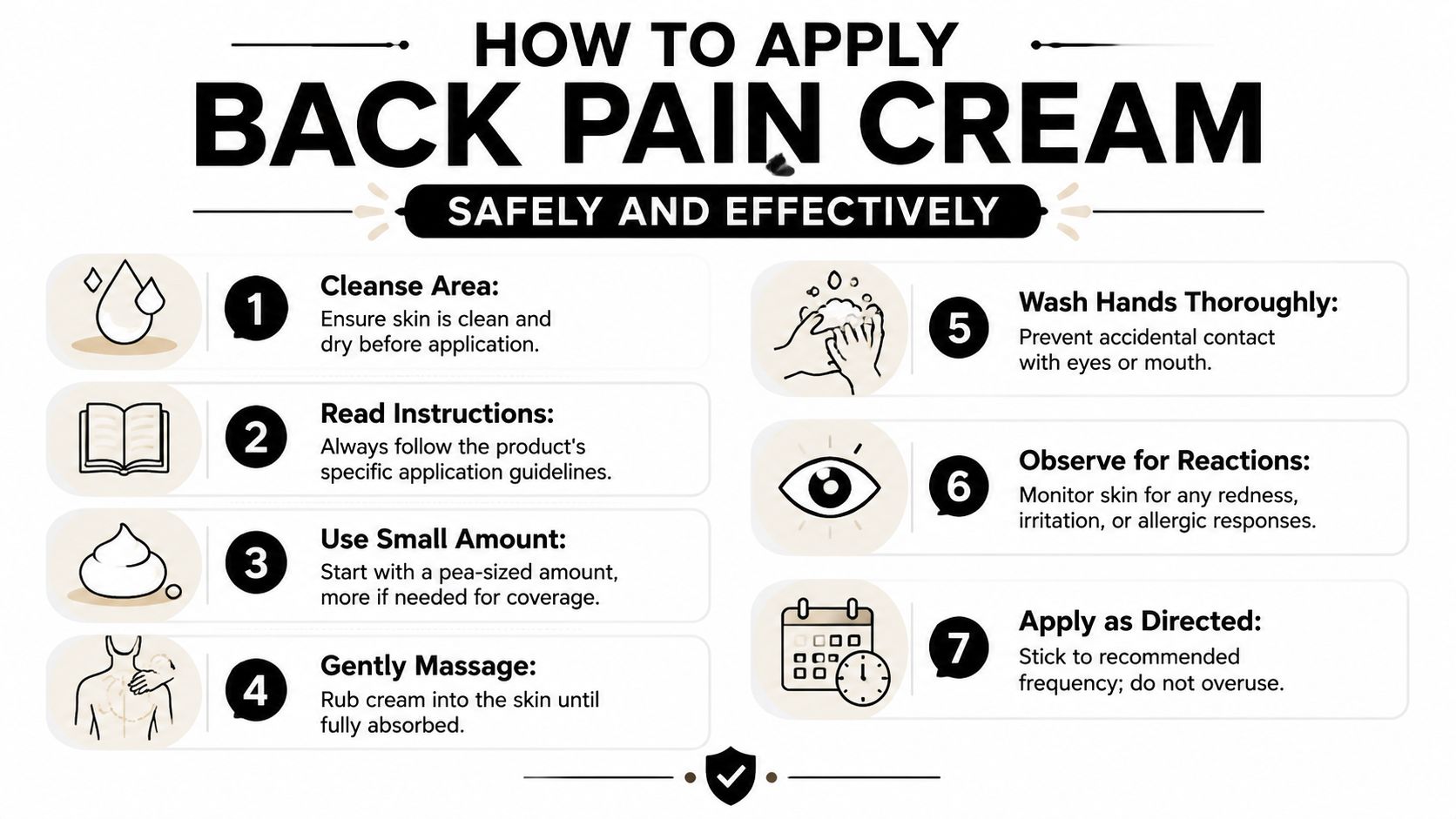
Apply topical pain products to clean, dry, intact skin. Don't apply them over cuts, scrapes, rashes, or irritated skin. If the area is sweaty or recently lotioned, absorption can be less predictable.
Mayo Clinic notes that adults can typically apply up to 4 grams of a 1% topical cream up to 4 times a day, and that common side effects are skin irritation, rash, or redness in this guidance on topical pain relievers and safe application.
A practical application checklist
- Read the label first: Different ingredients have different schedules and precautions.
- Use enough to cover the area lightly: You want even coverage, not a thick coating.
- Massage it in gently: Rubbing until it's absorbed helps spread it where you need it.
- Wash your hands thoroughly: This is especially important with capsaicin and menthol products.
- Watch your skin: Stop if you develop significant burning, rash, or persistent irritation.
What not to do
A lot of avoidable problems happen because people try to “boost” the cream.
Don't put it on broken skin. Don't wrap the area tightly unless the product specifically says that's acceptable. Don't add a heating pad on top because more heat feels like it should work better. It can increase irritation and, in some cases, increase burn risk.
If a cream helps a little, using more than directed or combining it with heat usually doesn't make it smarter. It just makes irritation more likely.
Some products are labeled for multiple daily uses. One widely used camphor and menthol product is labeled for 3 to 4 applications daily in adults and adolescents 12 and older, and the product guidance also reinforces the usual rules about using it on intact skin and avoiding heat in this application guidance for a camphor and menthol cream.
Set realistic expectations
Topicals are designed for temporary relief, not disease modification. If a cream reduces your pain enough to help you move more normally for part of the day, that's a success. If you're expecting it to resolve a chronic structural problem in the spine, you'll likely be disappointed.
When Creams Are Not Enough for Your Back Pain
A pain cream should be thought of as a trial, not an endless cycle. If you've used one appropriately and your pain isn't improving, continuing to rotate through similar products usually delays the next useful step.

Signs that self-care has reached its limit
Topicals are best for short-term symptom control. Consumer guidance for some products advises not using them for more than 7 days for an injury without a doctor's recommendation, and WebMD also warns against applying topicals to damaged skin or using them with heat sources in this overview of topical pain relievers and safety limits.
That fits what I see in practice. A cream is a sensible first move for a simple strain. It's not a smart long-term strategy for recurring or escalating pain.
Seek medical evaluation sooner if your back pain includes:
- Pain shooting down the leg
- Numbness or tingling
- Weakness
- Pain after a significant injury
- Pain that keeps returning
- Pain severe enough to limit walking, standing, or sleep
The pain pattern matters
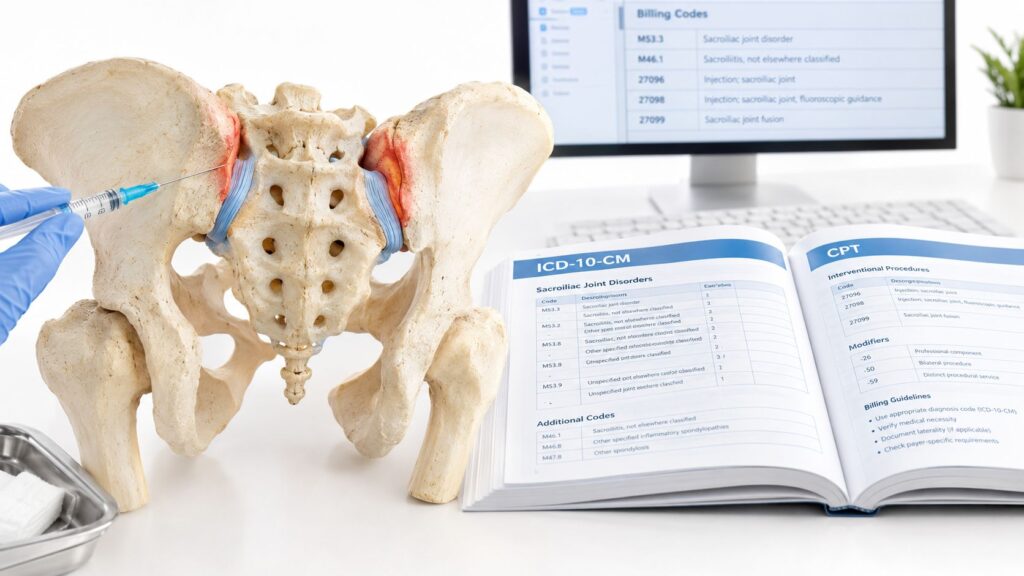
Localized soreness in one spot of the low back is one thing. Sharp pain that radiates, catches, or travels is another. Nerve-related pain, disc-related pain, sacroiliac pain, and facet joint pain can all be described as “back pain,” but they don't respond the same way to a cream.
That's why diagnosis matters.
If your pain has moved beyond a simple muscular flare, it may be time to learn about options such as epidural steroid injection for back pain, which is one approach used when inflammation around spinal nerves is part of the problem.
Persistent back pain isn't a sign that you picked the wrong cream. It may be a sign that the real pain generator needs a diagnosis.
Don't let temporary relief hide a bigger issue
One of the biggest traps with topicals is partial relief. If a cream takes the edge off, it's easy to keep using it while the underlying problem stays unchanged. For uncomplicated soreness, that's fine. For recurring pain, nerve symptoms, or function loss, it's not enough.
That's the point where good self-care becomes good judgment. Getting assessed early is often the faster path.
Lasting Back Pain Relief in the Chicago Area
For people dealing with persistent back pain in Illinois, the main question usually changes over time. At first it's, “What cream should I try?” Later it becomes, “Why does this keep happening?” That second question is the one that leads to better care.
A proper pain evaluation looks at the structure behind the symptom. The source may be a disc, facet joints, sacroiliac joint dysfunction, spinal stenosis, post-injury irritation, or a nerve problem. Once the source is clearer, treatment can move beyond repeated over-the-counter trials toward a more targeted plan.
For residents of Oak Lawn, Palos Hills, Palos Heights, Worth, Bridgeview, Hickory Hills, Alsip, Burbank, Evergreen Park, and Orland Park, local access matters. You shouldn't have to guess indefinitely when the pattern suggests something more than simple muscle soreness.
What a pain specialist adds
A board-certified pain specialist doesn't just offer stronger medication. The job is to define the pain pattern, examine function, review prior treatment response, and decide whether the next step is medication guidance, imaging, image-guided intervention, or a broader non-opioid treatment plan.
For some patients, that means a short, focused intervention. For others, it means a staged approach that addresses both pain control and function. If you're trying to decide when to move from self-treatment to specialty care, this guide on how to find a specialist doctor can help frame that decision.
Local care for people who have moved past trial and error
Midwest Pain & Wellness in Chicago Ridge provides pain management care for chronic spine, nerve, and musculoskeletal conditions using an opioid-sparing, interventional approach. That's relevant when creams help only briefly, not at all, or only enough to mask a recurring problem.
If you live near Chicago Ridge or in the surrounding Illinois communities listed above, the right next step may be an evaluation that identifies the cause instead of asking one more topical product to do a job it can't do.
If your back pain is lingering, recurring, or radiating, consider scheduling an evaluation with Midwest Pain & Wellness. A localized cream can be useful for short-term relief. Persistent pain often needs a diagnosis and a treatment plan built around the actual source.