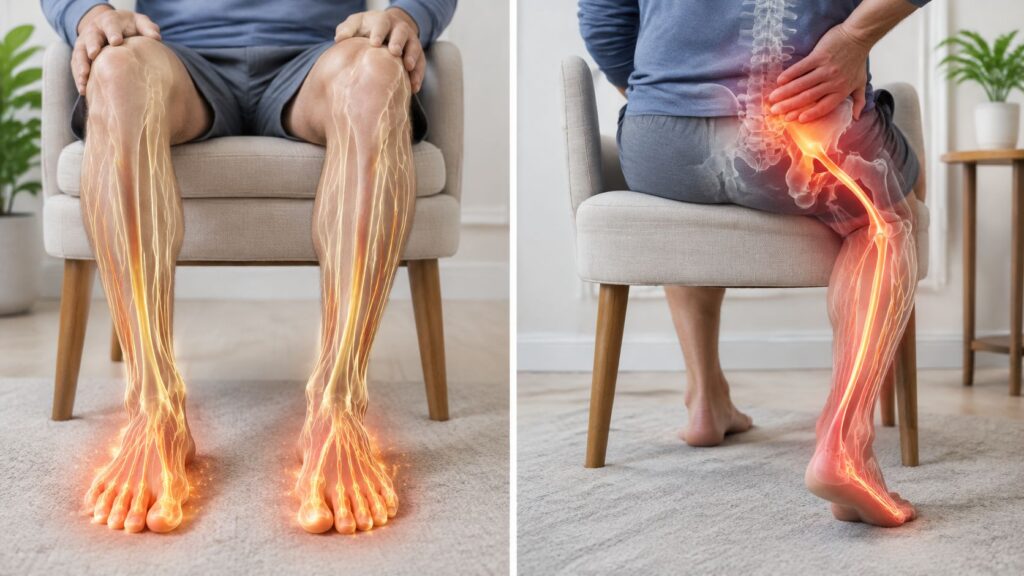
Back pain often starts in an ordinary moment. You lean into the trunk for groceries, stand up from your desk in Illinois after a long workday, or roll out of bed and feel a sharp pull that changes the rest of your day. Sometimes it fades quickly. Sometimes it lingers, spreads, stiffens, and starts to shape how you move, sleep, work, and think.
Those searching for how to help back pain don't need more generic advice. They need a clear plan that starts with sensible home care and also explains when that's no longer enough. That's especially true if you live near Chicago Ridge, Oak Lawn, Palos Hills, Palos Heights, Worth, Bridgeview, Hickory Hills, Alsip, Burbank, Evergreen Park, or Orland Park and want to know when to move from self-care to a proper pain evaluation.
Understanding Your Back Pain Journey
One person wakes with a sudden spasm after yard work. Another has a dull ache that has built slowly over months from long hours sitting, commuting, or bending at work. Both are dealing with the same question. What helps, and what just wastes time?

Back pain is common enough that many people assume they should wait it out. Sometimes that's reasonable. But “wait and see” can turn into weeks of guarding, poor sleep, less activity, and growing frustration. The World Health Organization reports that low back pain affected 619 million people globally in 2020 and projects that number will rise to 843 million by 2050, and WHO guidance emphasizes staying active and prioritizing non-pharmacologic care such as exercise and lifestyle changes over painkillers as first-line treatment, as summarized in this StatPearls review of low back pain guidance.
That matters because good care usually isn't about one magic fix. It's about matching the right response to the stage and type of pain.
Relief starts with the right frame
Acute pain needs calming strategies. Persistent pain needs a function-focused plan. Recurrent pain often needs a more precise diagnosis than “my back hurts.” If you skip that distinction, you can end up doing too much too soon, resting too long, or repeating treatments that were never a good fit.
Back pain is disruptive, but it isn't always random. The pattern of pain, what triggers it, and what makes it worse or better usually tell us something useful.
What people usually need most
For most adults, the path looks like this:
- Settle the flare-up: reduce irritation without shutting your body down
- Restore movement: bring back normal motion before stiffness takes over
- Rebuild support: improve core, hip, and trunk control
- Correct the setup: fix daily habits that keep re-triggering pain
- Escalate when needed: get evaluated when symptoms point to something more specific
If you want a broader overview of spine, joint, nerve, and pain conditions often seen in clinic, conditions we treat at Midwest Pain & Wellness gives a useful snapshot.
Immediate At-Home Back Pain Relief
When your back flares up, the first goal is simple. Calm the pain without feeding the cycle of stiffness and fear. People often swing to one extreme or the other. They either push through everything, or they stop moving almost completely. Neither tends to work well.
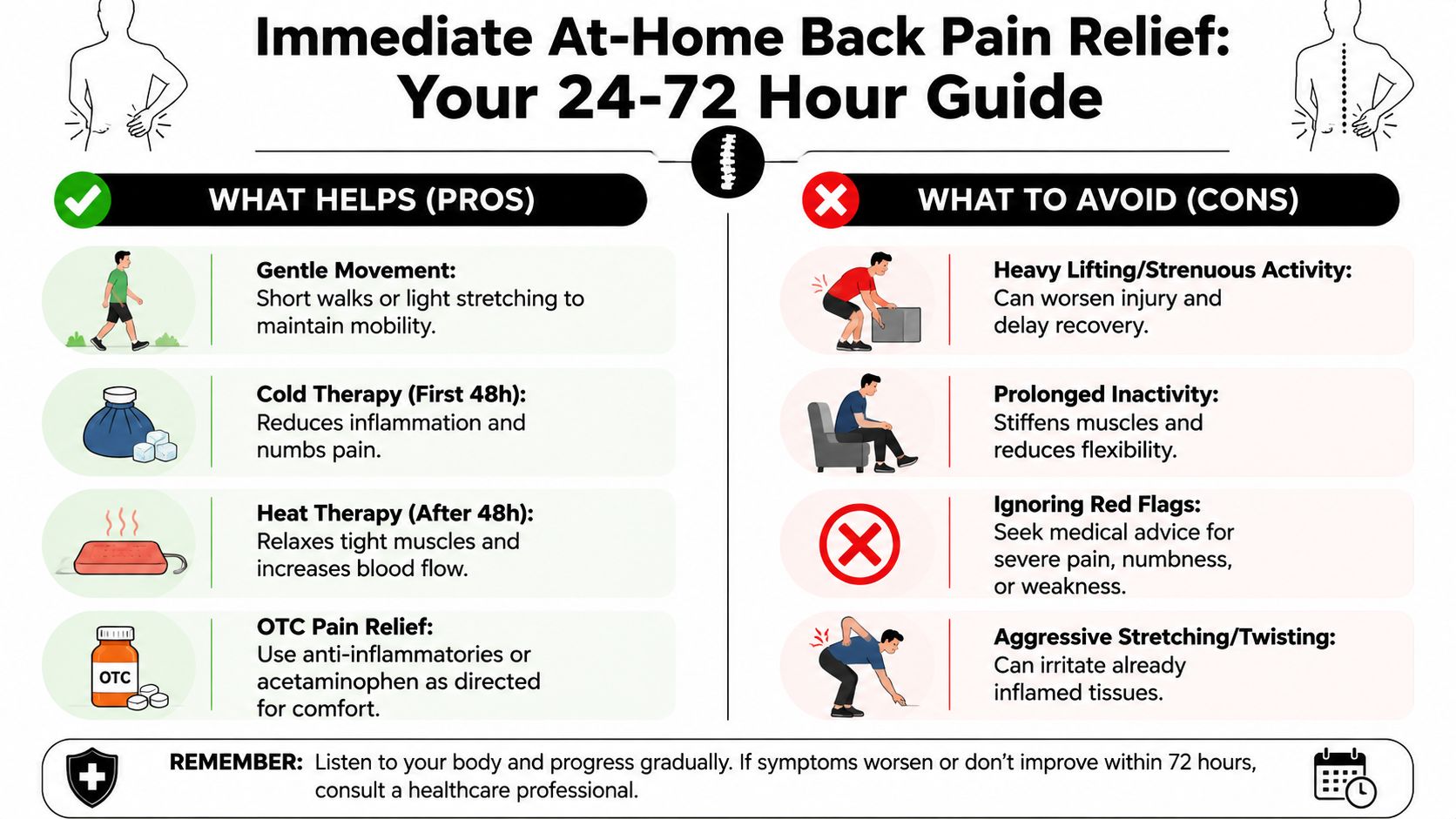
Harvard Health advises limiting bed rest to a few hours at a time and no more than one or two days because extended rest can be counterproductive. The same guidance notes that short rest may help severe flares, but prolonged inactivity is discouraged, and active, guided movement tends to work better for persistent pain, as described in Harvard Health's home remedies for low back pain.
What to do in the first days
Use the first day or two to reduce strain, not to disappear into bed.
- Change positions often: If sitting hurts, stand. If standing hurts, lie down briefly with support. Frequent position changes reduce sustained stress on irritated structures.
- Take short walks: Even a slow walk around the house or driveway can help prevent the back from tightening further.
- Use cold or heat strategically: Some people prefer cold early in a flare, especially if the area feels inflamed. Others feel better with warmth if muscle spasm is dominant. After the initial irritation settles, heat often feels better for stiffness.
- Try supported rest positions: Lying on your back with a pillow under your knees or on your side with a pillow between your knees can unload the lower back.
- Consider over-the-counter medication carefully: If your personal medical history allows it, some adults use nonprescription pain relievers for short-term comfort. Follow label directions and check with your physician or pharmacist if you have kidney disease, stomach ulcers, blood thinner use, high blood pressure concerns, or other medication conflicts.
Practical rule: Rest enough to take the edge off. Don't rest so much that your back gets stiffer than the original flare.
What to avoid
A painful back often makes people desperate to stretch hard, crack the spine repeatedly, or “test” whether they're better by lifting something heavy. That usually backfires.
- Avoid aggressive stretching: Forceful hamstring stretches, deep twists, or repeated toe-touching can irritate a fresh flare.
- Avoid heavy lifting: Bags of mulch, laundry baskets, and awkward boxes are common setbacks.
- Avoid marathon sitting: A sofa, car seat, or dining chair can all become pain amplifiers if you stay there too long.
- Avoid panic-based inactivity: Fear of movement often prolongs the problem more than careful movement does.
A simple 24 to 72 hour reset
If you want a practical script, use this:
- Protect, don't freeze. Ease off painful tasks, but keep basic walking and light movement going.
- Dose activity. Move in short intervals instead of trying one long session.
- Use comfort measures. Heat, ice, and supportive positions are tools, not cures.
- Watch the trend. Mild improvement over several days is reassuring. Escalating pain, weakness, numbness, or loss of control is not.
A lot of home care advice misses this point. The question isn't only “How do I make this hurt less today?” It's also “How do I avoid turning a short flare into a longer problem?”
Building a Stronger Back with Foundational Exercises
Once the sharpest phase settles, movement needs to become more intentional. Many people stumble here. They search for “best exercises for back pain,” do a random set from a video, and assume all back pain responds the same way. It doesn't.
An evidence synthesis found that evidence-based management of chronic low back pain works best with an active, function-focused program, and identified a classification-based exercise and manual therapy intervention as one of the leading treatments. It also noted that this approach works best when it is individually designed and paired with ongoing therapist guidance, as discussed in this review on evidence-based interventions for low back pain.
Start with motion before strength
If your back is stiff and guarded, start by restoring comfortable movement. These exercises should feel controlled, not punishing.
Pelvic tilts
Lie on your back with knees bent and feet flat. Gently rock your pelvis so your lower back flattens slightly toward the floor, then relax back to neutral.
Why it helps:
- Reduces guarding: Small movement reassures the body that the area can move safely
- Improves awareness: Many people with pain lose a sense of neutral spine position
- Builds tolerance: It's a low-threat way to reintroduce motion
Cat-cow
On hands and knees, slowly round your back up, then ease into a gentle arch. Keep the movement smooth and small at first.
This works well for people whose back feels stiff after sitting. It may not feel good in every pattern of pain, especially if extension or flexion clearly aggravates symptoms, so stop if it consistently sharpens pain.
Knee-to-chest, lightly
One knee at a time, bring the knee toward your chest until you feel a mild stretch. Don't yank. Don't bounce.
This is often more comfortable than stretching both knees at once and gives you a better sense of which side is tighter or more sensitive.
Motion should leave you looser, not flared up. If an exercise makes symptoms spread, sharpen, or linger afterward, it isn't the right one for that stage.
Build spinal support with low-load stability
Once basic movement is better tolerated, shift toward exercises that improve control in the trunk and hips. The goal isn't bodybuilder strength. The goal is support, coordination, and endurance.
Bird-dog
Start on hands and knees. Extend one leg behind you, then add the opposite arm if you can keep your trunk steady. Avoid twisting or lifting too high.
Why it matters:
- Challenges core control: The trunk has to resist rotation
- Trains balance and coordination: Useful for everyday bending and reaching
- Supports spine-friendly movement: Teaches stability without bracing too hard
Glute bridge
Lie on your back with knees bent. Tighten your hips and lift your pelvis until your body forms a gentle line from shoulders to knees.
This is a hip exercise as much as a back one. Weak or underused glutes often shift more demand into the low back during standing, walking, and lifting.
Dead bug variation
Lie on your back with knees bent and arms up. Brace gently, then lower one heel toward the floor while keeping your trunk steady. Advance to alternating arm and leg motions only if control stays solid.
This teaches your body to move the limbs while the trunk remains organized, which is exactly what daily life asks you to do.
How to progress without causing a setback
A stronger back comes from consistency, not from proving something in one workout.
Use these rules:
- Choose tolerable effort: Mild soreness in muscles can be acceptable. Sharp or spreading pain is not.
- Progress one variable at a time: Add repetitions, or time, or complexity. Don't increase all three at once.
- Favor quality over volume: A few controlled repetitions beat a long sloppy set.
- Watch the next day: Good exercise may make you feel worked. It shouldn't leave you significantly worse the following morning.
A useful self-check is whether the exercise improves daily function. Are you getting out of a chair more easily? Walking longer? Turning in bed with less hesitation? Those changes matter more than how hard the workout felt.
Not every back needs the same exercise menu
This is where classification matters. Someone with pain that worsens after prolonged sitting may need a different emphasis than someone whose pain ramps up with standing and walking. Someone with leg-dominant nerve pain may need a different progression than someone with mainly facet or sacroiliac discomfort.
That's why broad internet advice can be disappointing. It may not be wrong. It may just not be right for your pattern.
A simple weekly structure
For many adults easing back into activity, a reasonable foundation looks like this:
- Mobility days: gentle spinal and hip mobility
- Stability days: bird-dog, bridge, dead bug, and controlled trunk work
- Walking days: regular short walks with gradual progression
- Recovery emphasis: better sleep position, less prolonged sitting, and pacing of chores
If your symptoms keep recurring despite consistent work, it often means the problem needs better classification, not more random exercise.
Preventing Back Pain in Your Daily Life
Many flare-ups don't come from one dramatic injury. They come from repetition. The same chair. The same commute. The same laundry basket carried awkwardly. The same habit of staying in one position too long.
People often focus on treatment and ignore the setup that keeps provoking the pain.
The desk worker in Palos Heights
Someone working from home in Palos Heights may spend hours at a laptop on a kitchen table. The problem usually isn't one “bad posture” moment. It's being stuck in the same position long enough that the back, hips, and neck all stiffen.
The better setup is usually simple:
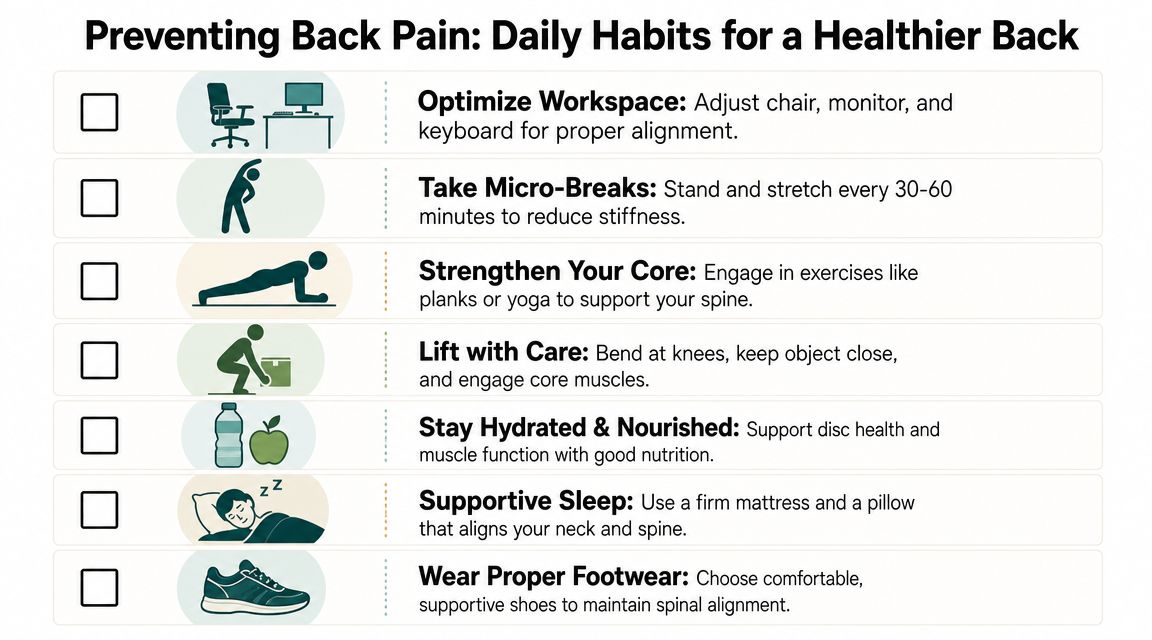
- Raise the screen: bring the monitor closer to eye level
- Support the forearms: keep shoulders from creeping upward
- Use the chair back: don't hover forward all day
- Stand up regularly: brief reset breaks matter more than sitting perfectly for hours
A perfect ergonomic setup still fails if you don't move.
The commuter from Orland Park
For people with long drives from Orland Park or nearby suburbs into busier parts of the Chicago area, the car can become the daily trigger. Hip flexors tighten, the lower back settles into one shape, and getting out of the seat becomes the painful part.
A better routine often looks like this:
- Set the seat closer than you think: reaching with the legs can flatten you into a strained position
- Use a small support if needed: a modest lumbar roll can help some drivers
- Pause after the drive: stand upright before immediately bending for bags or briefcases
- Walk for a few minutes after arrival: don't go straight from car seat to desk chair
The back often tolerates movement better than stillness. Prevention usually starts with interrupting long periods of holding one position.
The weekend chore cycle in Oak Lawn, Worth, and Bridgeview
A common pattern around Oak Lawn, Worth, and Bridgeview is feeling decent during the workweek, then overdoing housework or yard work on one day off. Vacuuming with repeated twisting, carrying heavy bins, prolonged weeding, and lifting from the floor are frequent culprits.
What works better is pacing:
- Break chores into rounds: one room, then a short walk or position change
- Hinge at the hips: let the hips and legs do more of the work
- Keep loads close: the farther an object gets from your body, the more the back has to manage
- Switch sides: if you always carry on one side, your back notices
Sleep, shoes, and small daily inputs
People underestimate bedtime positioning. If you're a side sleeper, a pillow between the knees can reduce twisting stress through the pelvis and low back. If you sleep on your back, a pillow under the knees may help unload the lumbar spine.
Supportive shoes matter more than people think, especially for adults who spend long hours on hard floors in Burbank, Alsip, Hickory Hills, or Evergreen Park. Footwear won't fix a structural spine problem, but unstable shoes can add strain to an already irritated kinetic chain.
A prevention checklist that actually helps
- Move before you're stiff
- Change positions before pain forces you to
- Lift smaller loads more often instead of one oversized load
- Use your hips during bending tasks
- Treat sleep position as part of treatment, not an afterthought
Prevention usually isn't dramatic. It's a series of ordinary corrections repeated often enough that your back stops getting ambushed by your routine.
When to See a Specialist for Your Back Pain
Some back pain improves with time, movement, and better habits. Some doesn't. The key is knowing when the pattern has changed from common mechanical strain to something that needs a more exact diagnosis.
Many consumer articles treat all back pain as one category. That's a problem. Mechanical pain, spinal stenosis, facet or sacroiliac pain, and nerve impingement can feel different, behave differently, and respond to different treatments. Johns Hopkins notes that chronic or recurrent pain often benefits from diagnosis-specific, opioid-sparing treatments such as injections, ablation, or nerve stimulators rather than generic self-care, as outlined in this Johns Hopkins guide to treating chronic back pain without surgery.
Red flags that need prompt medical attention
Seek urgent care right away if back pain comes with any of these:
- Loss of bladder or bowel control
- New or progressive leg weakness
- Fever with significant back pain
- Numbness in the saddle area
- Severe pain after trauma
- Rapidly worsening neurologic symptoms
These patterns can point to problems that should not be managed as routine strain.
Signs it's time for a pain specialist evaluation
A specialist visit makes sense when:
- Pain keeps returning: You improve briefly, then flare again with ordinary activity
- Pain radiates: Burning, shooting, or electric pain into the buttock or leg suggests nerve involvement
- Function is slipping: Sleep, work, walking, or household tasks are becoming harder
- Home care has stalled: You've tried reasonable self-care and still feel stuck
- The diagnosis isn't clear: The location and behavior of pain don't fit a simple muscle strain
Why the diagnosis changes the treatment
Facet pain often hurts with standing, twisting, and extension. Sacroiliac pain may center lower and off to one side. Nerve root irritation can bring numbness, tingling, or leg pain. Spinal stenosis often has its own pattern, especially in walking tolerance and posture-related symptoms.
Those distinctions matter because treatment should follow the source. Generic stretching, random chiropractic visits, or repeated medication refills can keep people circling the problem without naming it accurately.
If you're dealing with persistent or recurrent symptoms and want a formal evaluation, you can request an appointment with Midwest Pain & Wellness.
Advanced Opioid-Sparing Treatments for Lasting Relief
When back pain persists, the next step shouldn't be guesswork. It should be a structured, evidence-based escalation. That matters because a major 2024 evidence review found that only about 1 in 10 common nonsurgical and noninvasive low-back-pain treatments worked better than placebo, with benefits generally small rather than dramatic. The review also found NSAIDs were the only clearly effective option for acute low back pain, while exercise, spinal manipulation, taping, antidepressants, and TRPV1 agonists showed small benefits for chronic low back pain, as summarized in this report on the 2024 BMJ evidence review.
That finding doesn't mean treatment is hopeless. It means persistent back pain should be approached carefully, not casually.
Why a stepped plan works better
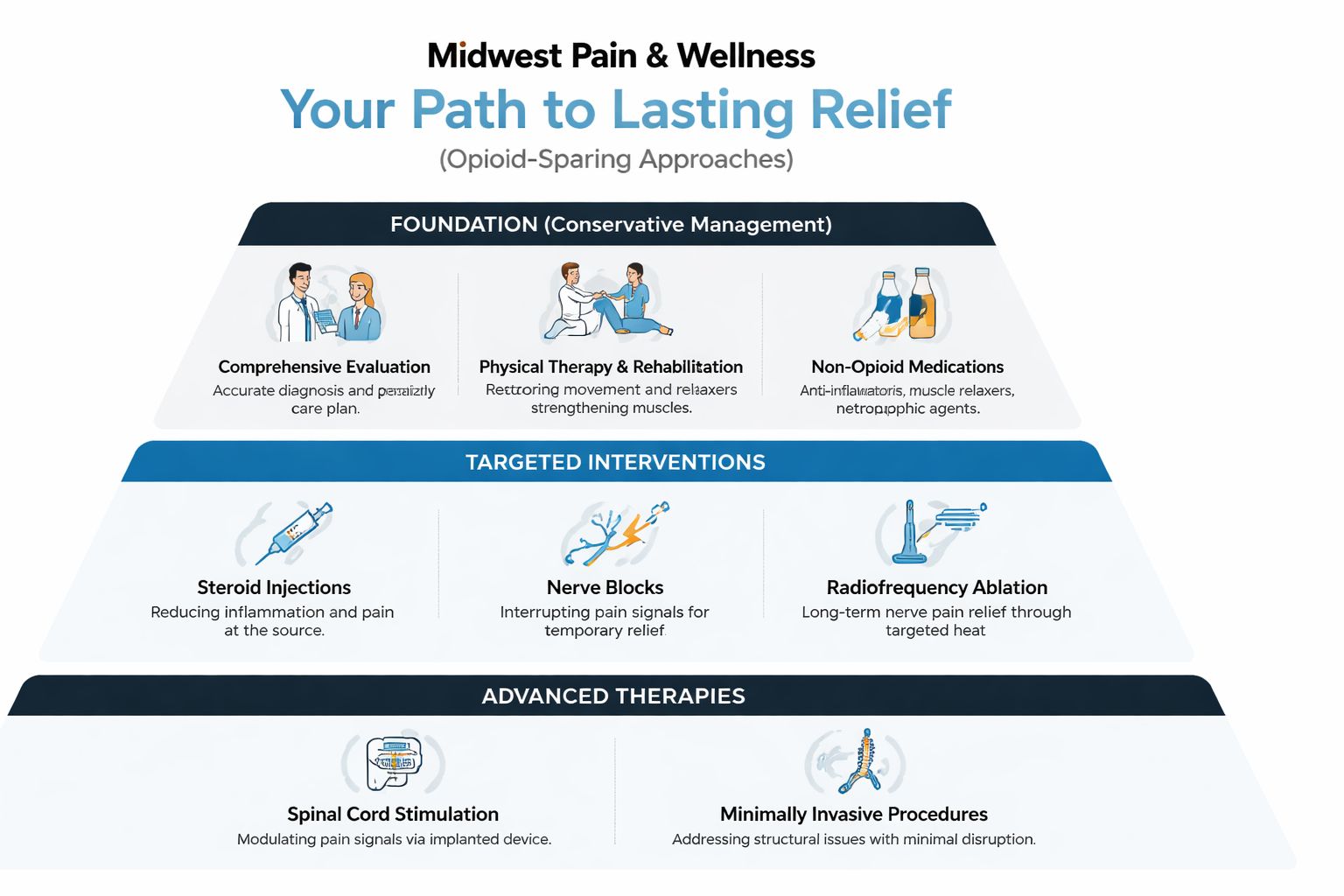
For chronic low back pain, major guidelines recommend beginning with nonpharmacologic care such as exercise, mindfulness-based stress reduction, yoga, motor-control exercise, cognitive behavioral therapy, multidisciplinary rehabilitation, or spinal manipulation. If response is inadequate, guidelines then consider NSAIDs first-line, duloxetine or tramadol second-line, and reserve opioids for situations where other options fail and benefits clearly outweigh risks, according to the American College of Physicians guideline.
That's the logic behind interventional pain care. You don't jump to procedures because they sound advanced. You use them when the diagnosis fits and conservative care hasn't been enough.
Good interventional care is targeted care. The procedure should answer a diagnostic or treatment question, not just fill time between office visits.
What interventional pain management actually does
Interventional pain management focuses on identifying the structure or pathway driving pain and then using image-guided procedures to reduce inflammation, block pain signaling, or improve function. It's not a replacement for movement, strength, and behavior change. It's often what makes those things possible again.
Here are some of the main options people may hear about.
Epidural steroid injections
These are commonly used when inflammation around a spinal nerve is contributing to radiating pain, tingling, or sciatica-like symptoms. The goal is to reduce irritation around that nerve root so the leg-dominant pain settles enough for the patient to move better and resume rehabilitation.
This isn't a “fix everything” shot. It's most useful when the symptom pattern matches nerve inflammation rather than ordinary muscle tightness.
Medial branch blocks
These are diagnostic and sometimes therapeutic injections used when the facet joints are suspected pain generators. The medial branch nerves carry pain signals from those joints. If blocking those nerves temporarily reduces pain in the expected pattern, that gives useful diagnostic information.
In plain language, a medial branch block helps answer whether facet pain is the problem.
Radiofrequency ablation
If medial branch blocks point to facet-mediated pain, radiofrequency ablation may be considered. This treatment uses targeted heat to disrupt the small nerves carrying facet joint pain signals.
The goal isn't to “burn the back.” The goal is to reduce a very specific pain pathway. For the right patient, that can be a meaningful option when extension-based, recurrent back pain has not improved enough with simpler measures.
Sacroiliac and related targeted injections
Pain lower in the back and upper buttock region can sometimes come from the sacroiliac joint rather than the lumbar discs or muscles. When the exam and history fit that pattern, targeted diagnostic or therapeutic injections may help clarify and treat the source.
Again, the point is precision. The same symptom label, “low back pain,” can hide very different pain generators.
Spinal cord stimulation
This is usually considered for more persistent, complex pain states, including some post-surgical spine pain or chronic nerve-related pain. A device modulates pain signaling so the brain receives a different signal pattern.
People often think of this only after years of suffering, but it belongs in the conversation whenever pain remains function-limiting and other appropriate treatments have not provided durable relief.
Minimally invasive lumbar procedures
Some patients with spinal stenosis or other structural issues may benefit from minimally invasive options such as MILD or Vertiflex Superion when the diagnosis and anatomy fit. These aren't general-purpose procedures. They are used for specific patterns of narrowing and posture-related symptoms.
That's why evaluation matters so much. Advanced care works best when the anatomy, symptom pattern, and procedure all line up.
Where this fits in real practice
For adults in Oak Lawn, Alsip, Burbank, Hickory Hills, Palos Hills, and nearby Illinois communities, the most useful specialist visit is usually the one that answers three questions clearly:
- What is the most likely pain generator?
- What has already been tried, and was it the right fit?
- What is the least invasive next step that matches the diagnosis?
At Midwest Pain & Wellness procedures for treatment, patients can review the range of image-guided and minimally invasive interventions commonly used in an opioid-sparing care model for spine and nerve pain.
A well-run pain clinic doesn't replace exercise and self-management. It helps patients who have plateaued, relapsed, or been treated too generically move into a more precise plan.
Your Path Forward to an Active Life
If you're trying to figure out how to help back pain, start with the basics that matter. Calm the flare without shutting down. Keep moving in a sensible way. Rebuild strength gradually. Change the daily habits that keep re-triggering the same pain.
Then be honest about the pattern. If your pain is persistent, recurrent, radiating, or limiting your life, it may not be a simple strain anymore. At that point, the right question isn't “What else can I try at home?” It's “What exactly is causing this, and what targeted treatment matches it?”
People across Worth, Bridgeview, Evergreen Park, Orland Park, and the greater Chicago Ridge area often wait too long because they assume specialist care means surgery or long-term medication. It often means something much more practical. A careful diagnosis. A stepwise plan. And, when appropriate, targeted opioid-sparing treatment that helps you move, sleep, work, and live with less pain.
Relief usually isn't one dramatic moment. It's the result of choosing the right next step instead of repeating the wrong one.
If back pain is interfering with your work, sleep, walking, or daily routine, Midwest Pain & Wellness offers evaluation and opioid-sparing treatment options for adults in Chicago Ridge and surrounding Illinois communities. A consultation can help clarify whether your pain is best managed with home strategies, rehabilitation, targeted injections, nerve-focused procedures, or another diagnosis-specific plan.