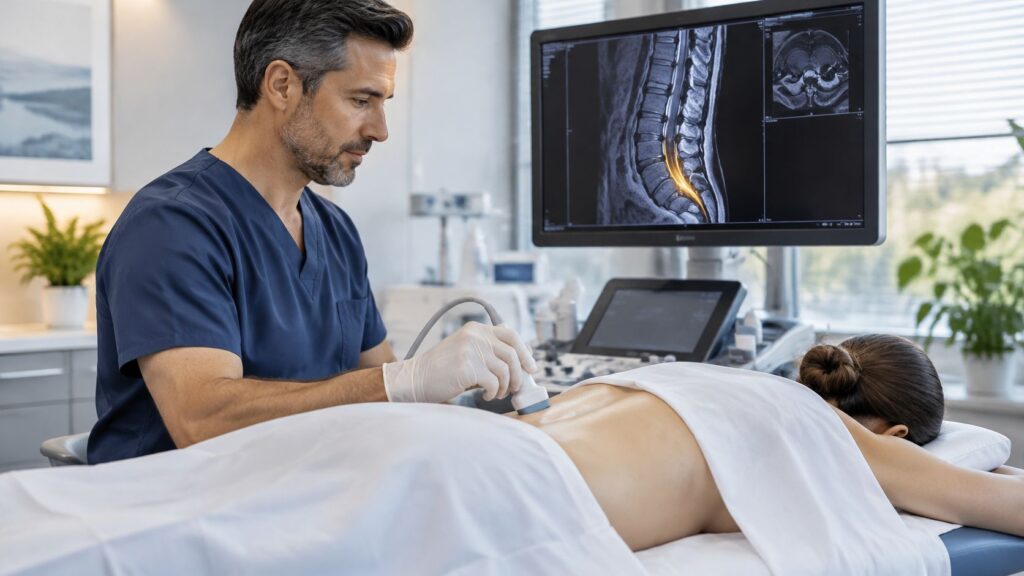
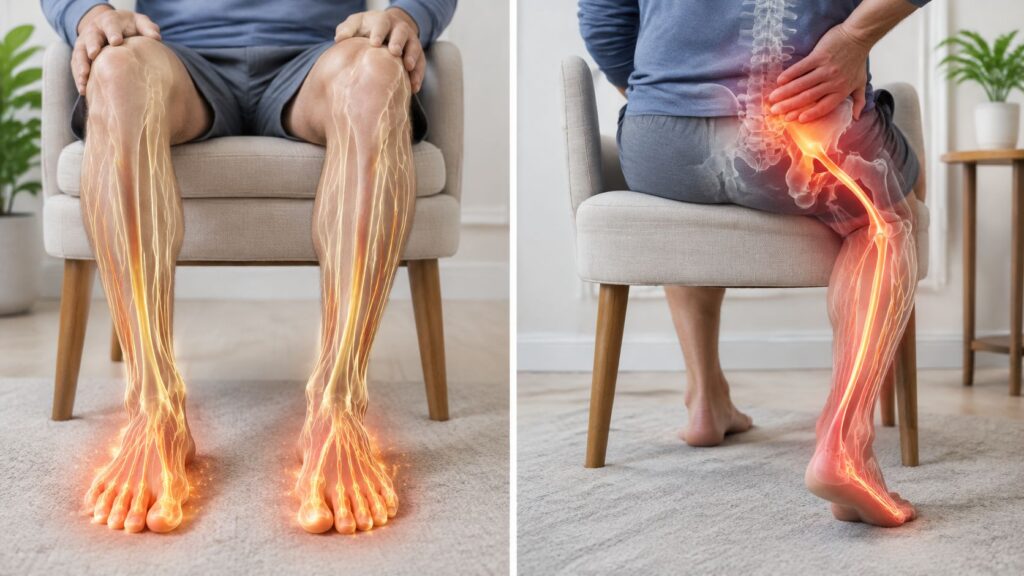
Searching for stem cell therapy Chicago is often about finding relief, but the hardest part is sorting real medicine from marketing. In pain care, the word “stem cell” gets used loosely, and that creates false expectations. A careful clinician starts with a different question, what problem are we treating, and what evidence supports the injection, if any?
For chronic pain, that distinction matters. Regenerative medicine can be useful in selected cases, but it is not a universal fix, and it is not a substitute for a sound diagnosis, image-guided technique, or a broader pain plan. If a clinic leads with promises instead of details, that's a warning sign, not a selling point. If you're researching options in Illinois, including Oak Lawn, Palos Hills, Palos Heights, Worth, Bridgeview, Hickory Hills, Alsip, Burbank, Evergreen Park, and Orland Park, start with the facts and work outward.
The Truth About Stem Cell Therapy for Pain
The phrase stem cell therapy sounds precise, but in pain medicine it often hides a broad mix of procedures with very different goals. Some injections are meant to calm irritated tissue, some aim to improve the local healing environment, and some are promoted far beyond what the evidence can support. In my view, the most important question isn't whether a treatment sounds advanced, it's whether it matches the diagnosis and can be delivered safely.
Chicago patients often run into two very different worlds. On one side are academic transplant programs, where the science is rigorous and the procedure is standardized. On the other are orthopedic or pain-clinic injections marketed under the same umbrella term, even though the biology, regulation, and outcome expectations are not the same. That is why the label alone tells you almost nothing.
Practical rule: if a clinic can't explain exactly what is being injected and why that tissue should respond, the conversation is too vague to trust.
A more honest frame is this, regenerative care can support healing in select musculoskeletal problems, but it does not erase structural damage, nerve compression, or long-standing degenerative disease. A patient with severe mechanical pain often needs a treatment sequence, not a single procedure. That sequence might include diagnosis, targeted injection therapy, rehab-based loading, and, when needed, other interventional options.
The best example of why patients should read carefully is a simple consumer choice outside medicine, such as deciding whether to book with Max's Luxury Rides. Even there, you'd want to know what's included, what the limits are, and what's being delivered. Medical care deserves at least that much clarity.
What I want patients to remember is straightforward. Stem cell therapy for pain is not magic, and good pain care doesn't pretend it is. The right question is whether a regenerative option fits your condition, your goals, and the standard of care in Illinois.
Understanding PRP and Cell-Based Therapies
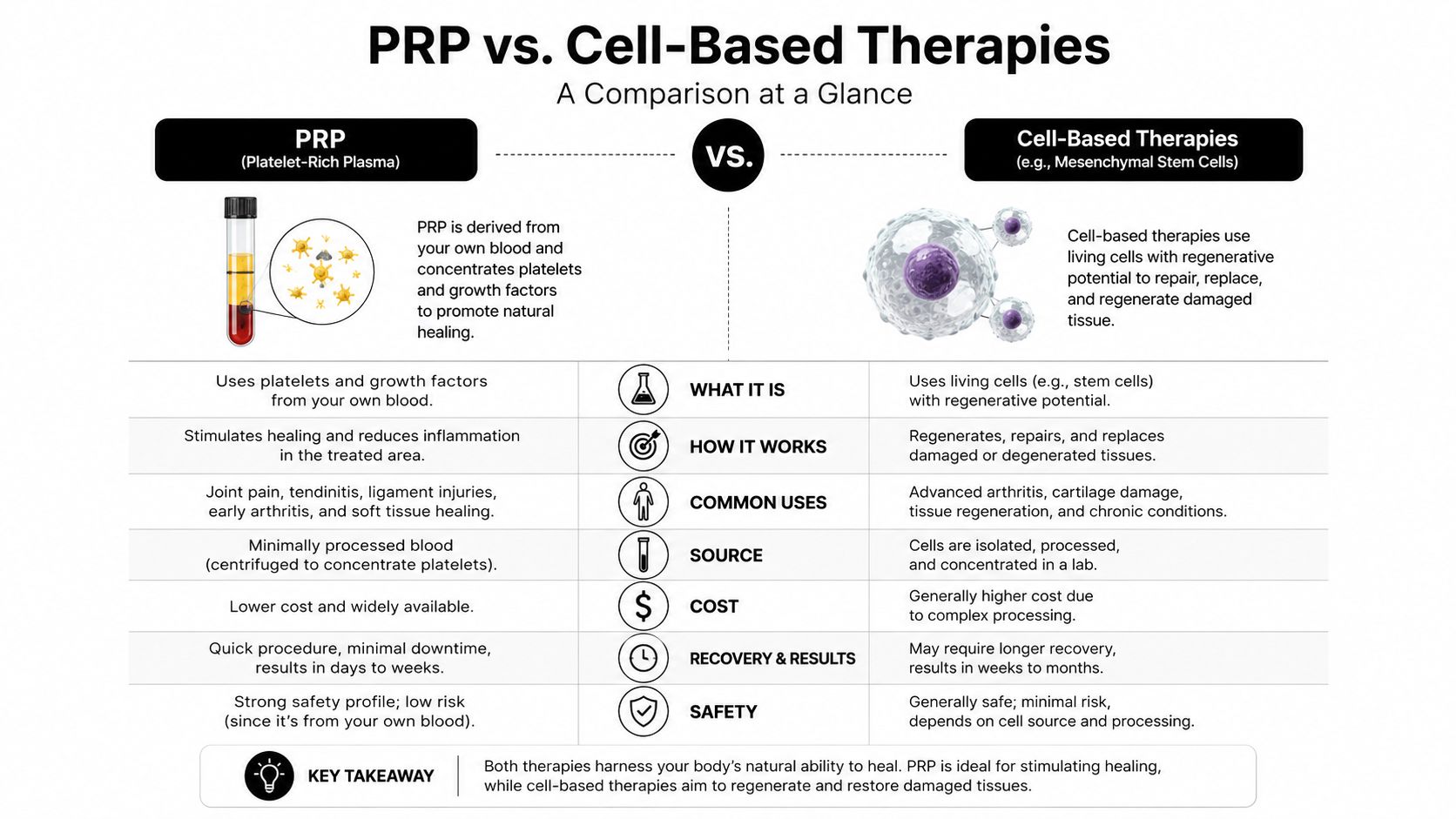
PRP and cell-based therapies are often grouped together, but they're not the same thing. Platelet-rich plasma, or PRP, starts with your blood. The blood is processed to concentrate platelets, which carry growth signals that can support tissue repair in the right setting. Think of PRP as fertilizer for a plant that still has roots and needs better conditions to recover.
Cell-based therapy is a different concept. Bone marrow aspirate can be concentrated into BMAC by centrifugation, while adipose-derived material comes from harvested fat that's processed before injection. The goal is to increase the local concentration of regenerative cells at the injured site, not to circulate them through the whole body. That's why the source material and processing method matter more than the marketing label.
A useful distinction is this, PRP mostly changes the environment, while cell-based therapies try to deliver more cellular building blocks. Both are site-specific treatments, and both depend on precise image-guided placement into the right joint, tendon, or spine-adjacent target. If the needle is off target, the biology doesn't matter nearly as much.
Patients sometimes ask whether one approach is always stronger than the other. It isn't that simple. The right choice depends on the tissue, the degree of damage, whether inflammation or degeneration is driving the pain, and whether the procedure is technically suitable for the target area.
For patients evaluating treatment pathways, the details matter enough that it's worth reviewing a clear clinical explanation of autologous cell therapy. That kind of plain-language breakdown is more useful than a headline claiming stem cells fix everything.
Bottom line: the biology is only part of the treatment. Patient selection, image guidance, and careful handling often determine whether a regenerative procedure has a realistic chance to help.
What the Evidence Shows for Common Pain Conditions
Evidence for regenerative pain care is uneven, and that's the honest answer. Some conditions have a more mature data set, while others still sit in the “promising but not settled” category. Patients do better when their expectations follow the diagnosis instead of the marketing brochure.
Joint and tendon problems
For knee osteoarthritis, regenerative injections are discussed most often because the knee is a common load-bearing joint and a frequent source of chronic pain. Tendinopathies, including issues around the elbow and shoulder, are another area where biologic injections are often considered. In these cases, the logic is fairly practical, the tissue is local, the target is identifiable, and image guidance can place treatment where it's needed.
That said, “can be considered” isn't the same as “should be expected to work for everyone.” Chronic degeneration, advanced cartilage loss, poor biomechanics, and uncontrolled overload can all limit response. A good plan pairs the injection with better movement mechanics, load management, and realistic timelines.
Spine-related pain
Spine applications are more selective. Some patients with carefully chosen disc, facet, or adjacent soft tissue pain patterns may be candidates for regenerative treatment, but the case selection needs to be tighter than it is for a simple overuse tendon problem. Spine pain often has multiple drivers at once, including joint irritation, nerve sensitivity, and deconditioning, so a single procedure rarely tells the whole story.
Clinical takeaway: the more complex the pain generator, the more important diagnosis becomes. The treatment should follow the pain source, not the other way around.
The strongest conversations I have are with patients who understand that regenerative care is protocol-dependent. Preparation, injection technique, tissue target, and patient selection can all change the outcome. A clinic that treats every pain complaint the same way is oversimplifying the problem.
If you're looking at stem cell therapy Chicago options in Illinois, the practical question is whether the clinic can name the diagnosis, explain the tissue target, and discuss what happens if the response is partial. That's the difference between an evidence-informed visit and a sales pitch.
Stem Cells vs PRP vs Traditional Pain Treatments
Choosing among regenerative care, standard injections, and surgery is really a question of trade-offs. You're balancing evidence, downtime, cost, and how much risk you're willing to accept for the chance of benefit. No single option wins across every category.
| Treatment Type | Evidence Strength | Typical Cost Range | Recovery Time | Best For |
|---|---|---|---|---|
| PRP | Moderate for selected musculoskeletal problems, still diagnosis-dependent | Varies by clinic | Usually short, with gradual improvement | Tendon pain, mild to moderate joint irritation, selected soft tissue cases |
| Cell-based injections | More limited and more variable | Often higher and less predictable | Usually short procedure recovery, but tissue response takes time | Selected orthopedic or spine cases when the target and rationale are clear |
| Corticosteroid injections | Established for short-term symptom relief | Generally lower and more standardized | Often quick symptom relief, with limited durability | Flare control, diagnostic clarity, short-term reduction in inflammation |
| Surgery | Strong when structural correction is needed | Highest overall burden | Longest recovery | Clear structural pathology, nerve compromise, or failed conservative care |
A 2025 PubMed market assessment found that orthobiologic knee injections are common in the Chicago metro area, and that alternative clinics were more likely than orthopedic sports medicine providers to offer stem-cell injections and to charge more, with greater price variability (PubMed market assessment). That matters because a higher price doesn't automatically mean a better biologic product or a better result.
PRP is often the more sensible first regenerative step when the diagnosis fits. It uses your own blood, the workflow is simpler, and the treatment goal is easier to explain. Cell-based therapy may have a role in more specific situations, but it shouldn't be treated as the default upgrade from PRP.
Surgery still belongs in the discussion when the pain source is structural and the mechanical problem needs correction. A biologic injection can't realign a joint, decompress a nerve, or reconstruct a failing tendon that has moved beyond conservative care. In the exam room, the question is never “Which treatment sounds most advanced?” It's “Which treatment matches the problem?”
Navigating Regulations and Avoiding Questionable Clinics
The regulatory picture matters because not every advertised regenerative treatment fits the same legal lane. The FDA uses a tiered framework for human cells, tissues, and cellular or tissue-based products, and only a narrow group qualifies for the lighter Section 361 pathway. A product has to be minimally manipulated, intended for homologous use, not combined with another article, and meet the other required criteria; otherwise it falls under full premarket review as a Section 351 product (FDA regulatory framework summary).
Illinois adds another layer. The state's Stem Cell Research and Human Cloning Prohibition Act is codified at 410 ILCS 110 (Illinois Compiled Statutes). For patients, the practical point is simple, regulated medicine has boundaries, and the clinic should be able to describe where its treatment sits inside those boundaries.
The Illinois Department of Financial and Professional Regulation warns patients that stem cell injections should be provided only by properly licensed physicians, and it urges consumers to ask what the cells are, where they came from, and what problem they're meant to treat (IDFPR guidance). The same guidance flags serious harms that have been reported after some stem-cell products, including bacterial infections, blindness, and tumors.
What to ask before you agree to anything
- What exactly is being injected? Ask whether it's PRP, BMAC, adipose-derived material, or something else.
- Where did the cells or material come from? Source matters as much as the label.
- What problem is this meant to treat? The answer should match your diagnosis, not a generic wellness pitch.
- Who is performing the procedure? Verify that the clinician is properly licensed in Illinois.
- What risks and alternatives were discussed? A legitimate clinic explains options, not just the treatment it wants to sell.
Red flag: guarantees, pressure to pay quickly, and broad claims for unapproved uses usually signal a clinic that's selling hope faster than it's offering medicine.
For patients comparing legitimate regenerative options, a clear clinical resource such as regenerative medicine and tissue engineering is more useful than a glossy landing page. You should leave the visit knowing exactly what was offered and why.
Your Treatment Journey from Consultation to Recovery
A typical regenerative visit starts long before any injection. The first step is an evaluation that includes your history, exam, and imaging review, because the treatment only makes sense if the pain generator is clear. If the story sounds like a vague “wear and tear” complaint with no specific target, I slow down and look harder.
At that point, the plan gets narrowed. Some patients are better candidates for PRP, some are better served by another injection strategy, and some need a different path entirely. The actual procedure can involve drawing blood for PRP or harvesting bone marrow for BMAC, then placing the product into the target under image guidance.
The procedure itself is usually the shortest part. Recovery is where expectations need discipline. Benefits don't show up instantly, and patients should expect the response to build gradually over time rather than in the first few days.
A patient education page about how much stem cell treatment may cost can help frame the logistics, but the more important conversation is what the payment is buying, namely a diagnosis-driven procedure with uncertain but potentially meaningful benefit in the right candidate.
Practical rule: if someone promises immediate transformation after a biologic injection, they're either overselling or skipping the biology.
Recovery also isn't just resting. Activity modification matters, and many patients do best when the injection is paired with a broader plan for movement, strengthening, and symptom control. If pain spikes, that doesn't automatically mean failure, but it does mean the aftercare plan needs review.
The best results come from patients who treat regenerative care like part of a process, not a one-time event. That means follow-up, reassessment, and a willingness to adjust the plan if the diagnosis points in a different direction.
Integrating Regenerative Care with Comprehensive Pain Management
Regenerative injections work best inside a multimodal pain plan. In real practice, that means PRP or cell-based care may sit alongside image-guided injections, radiofrequency ablation, nerve blocks, spinal cord stimulation, epidural steroid injections, or minimally invasive procedures when the diagnosis calls for them. The point isn't to collect treatments, it's to match the tool to the pain source.
A board-certified interventional pain specialist looks for the combination that reduces symptoms while preserving function and limiting medication burden. That's especially important for patients who want to avoid escalating opioid use, because durable pain care should focus on function, not just short-lived relief. If the plan ignores biomechanics, nerve pain, inflammation, and load tolerance, the patient usually ends up back in the same place.
Midwest Pain & Wellness is one Chicago Ridge pain management clinic that offers PRP and cell-based regenerative options as part of a broader interventional approach. That kind of structure matters more than the procedure label, because the same injection can mean very different things depending on who is evaluating the patient and how the rest of the plan is built.
Patient-centered care means this: the injection should support the rest of the treatment plan, not replace it.
In Illinois, that broader plan often involves coordination with surgeons, primary care physicians, chiropractors, and rehab therapists. A patient with joint pain may need a biologic injection, but also a movement plan, diagnostic clarification, and a contingency if symptoms don't settle. That's not a backup strategy, it's responsible medicine.
For patients in Oak Lawn, Palos Hills, Palos Heights, Worth, Bridgeview, Hickory Hills, Alsip, Burbank, Evergreen Park, and Orland Park, the best next step is a real consultation, not a sales call. Bring your imaging, ask what's being injected, ask why it's appropriate for your diagnosis, and ask what happens if the result is only partial. If you want a clinic that approaches regenerative care that way, visit Midwest Pain & Wellness and schedule a visit to review your options in a medically honest way.