What Regenerative Treatment Really Means for Your Health
What is regenerative treatment? is one of the most important questions in modern medicine — and the answer could change how you think about healing.
Here’s a quick answer:
Regenerative treatment is a medical approach that helps your body repair damaged tissues, cells, or organs — instead of just masking symptoms. It works by using your body’s own natural healing tools, like stem cells and growth factors, to restore function where injury or disease has caused harm.
At a glance:
- What it does: Repairs or replaces damaged tissue at the source
- How it works: Uses biological tools like stem cells, platelet-rich plasma (PRP), and tissue engineering
- Who it helps: People with chronic pain, joint damage, tendon injuries, and more
- Key difference from traditional care: Targets healing, not just symptom relief
- Who uses it: About 1 in 3 Americans could potentially benefit
This is not science fiction. Millions of patients have already been treated with some form of regenerative therapy. And for people living with chronic pain — especially those who want to avoid surgery or long-term medication — it represents a real, meaningful option.
I’m Dr. Yaw Donkoh, a double board-certified physician in anesthesiology and interventional pain management, with extensive training in minimally invasive procedures — including the regenerative therapies at the heart of what is regenerative treatment? At Midwest Pain and Wellness, I work with patients every day who are looking for safer, more natural paths to lasting relief.
What is Regenerative Treatment? A Modern Definition
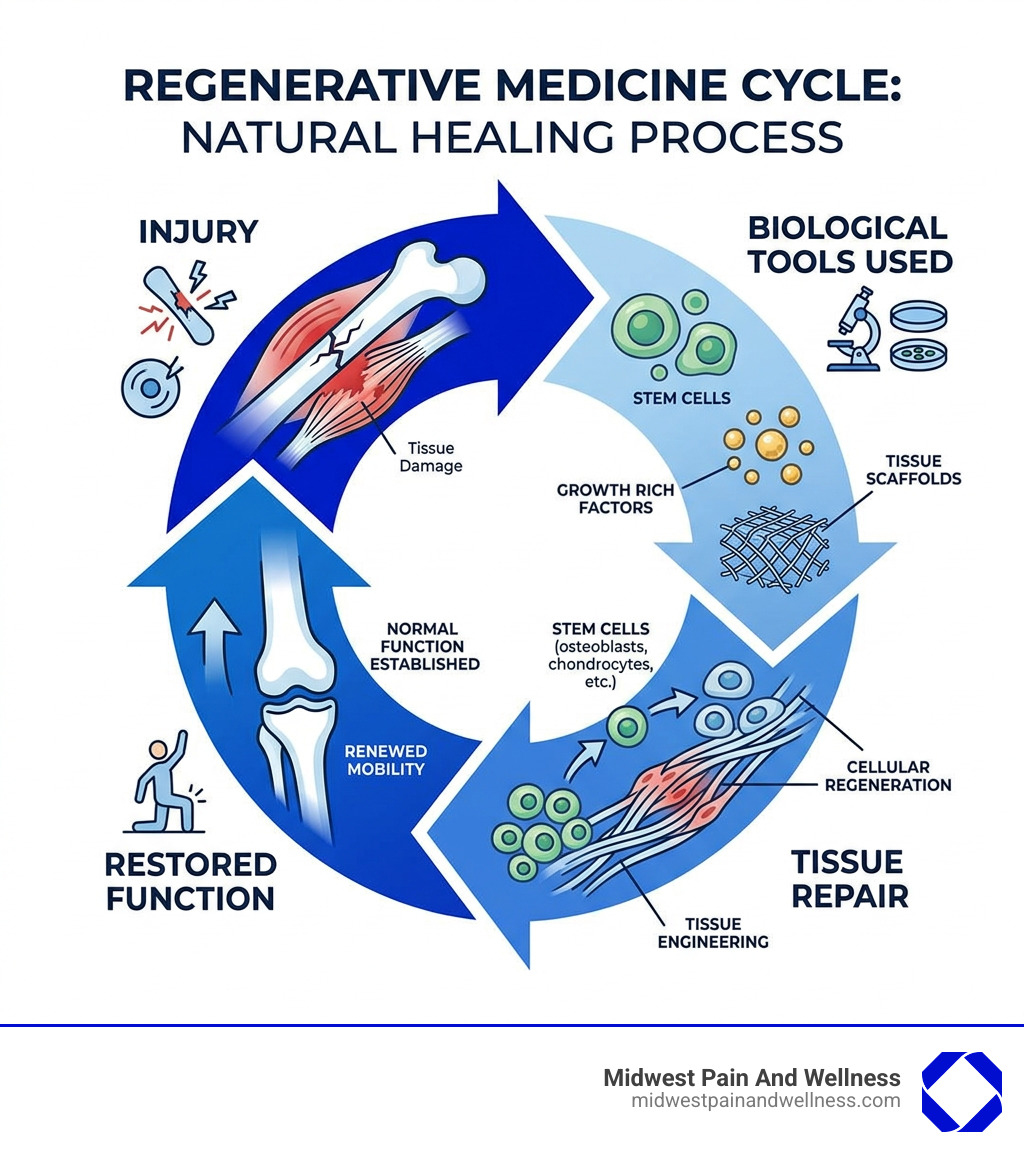
To truly understand the field, we look to researchers Chris Mason and Peter Dunnill, who provided a scientific definition of regenerative medicine that remains the gold standard today. They defined it as a process that replaces or “regenerates” human cells, tissues, or organs to restore or establish normal function.
In simpler terms, while traditional medicine often acts like a bandage — managing pain or suppressing symptoms — regenerative treatment acts like a construction crew. It provides the materials and the “blueprints” your body needs to fix what is broken.
Current estimates indicate that approximately one in three Americans could potentially benefit from these therapies. This isn’t just a niche area of medicine; it’s a transformative shift in how we approach human health. From using cellular therapy to support the body’s natural healing to engineering complex tissue structures in a lab, the goal is always the same: promoting tissue repair and enhancing function.
Millions of patients have already been treated with tissue-engineered devices, such as skin substitutes for chronic wounds or biological scaffolds for joint repair. Whether we are talking about a small injection for a torn tendon or complex organ engineering, the core philosophy is about moving from “treatments” to “cures.”
Core Mechanisms: How Regenerative Medicine Works
How does the body actually fix itself? It’s not magic; it’s a highly coordinated biological symphony involving cellular communication and signaling molecules.
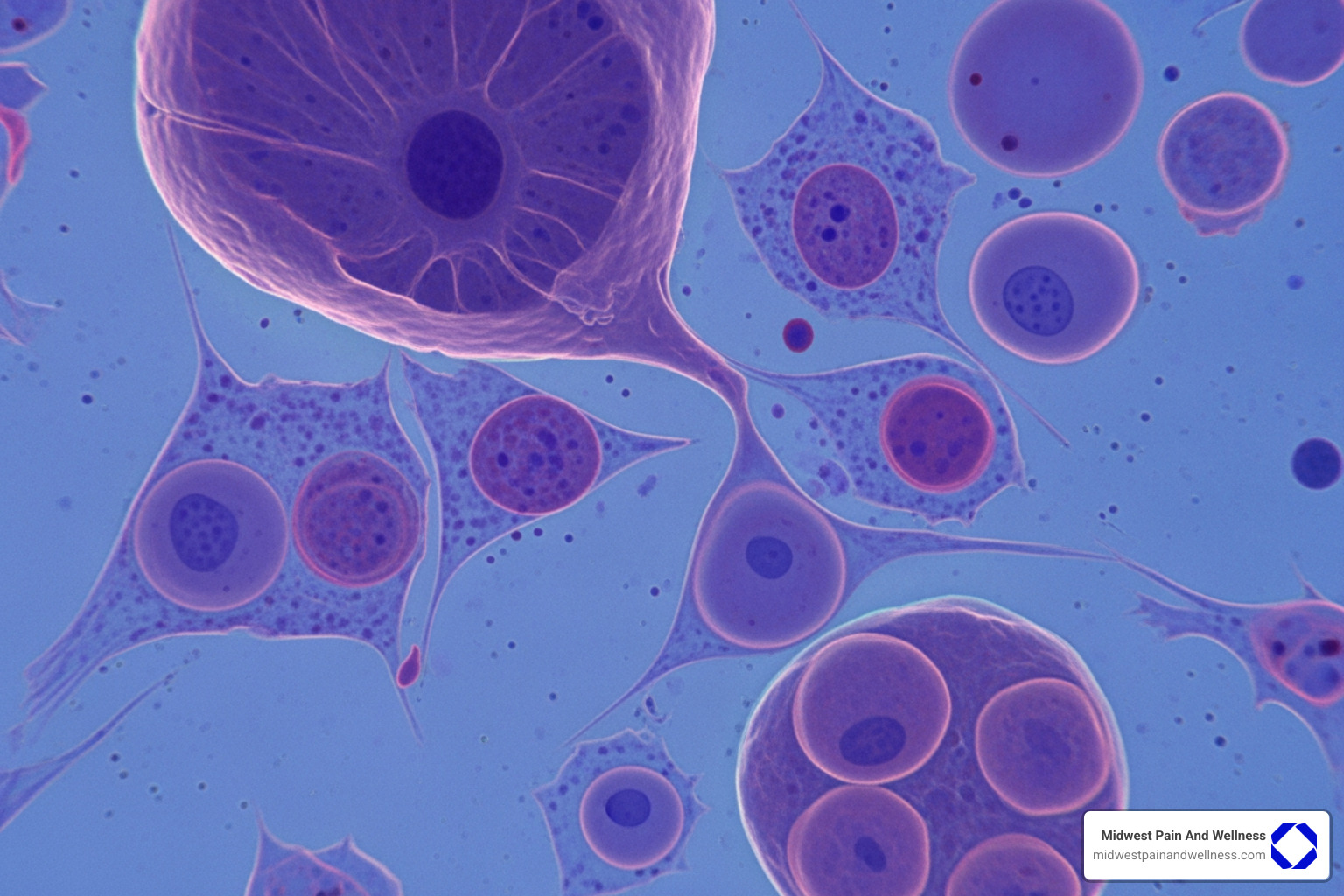
At the center of this process are three main pillars:
- Cells: The building blocks (like stem cells).
- Signals: The instructions (like growth factors).
- Scaffolds: The framework (like the extracellular matrix).
When we apply research on stem cell applications in a clinical setting, we are essentially amplifying the body’s innate ability to repair itself. Every human body contains many millions of adult stem cells that act as a built-in repair kit. However, as we age or suffer from chronic disease, these cells can become less effective or struggle to reach the site of the injury.
Regenerative treatments work by concentrating these biological tools and placing them exactly where they are needed. For example, in tissue engineering, we might use a scaffold — a biocompatible structure that mimics the natural tissue architecture — to guide cells as they grow and form new, functional tissue.
Another fascinating discovery in this field is the role of bioelectricity. Research has shown that endogenous voltage potentials control how cells behave and instruct pattern regulation. By understanding these bioelectric signals, scientists are learning how to better guide the regeneration of complex structures.
Understanding Stem Cells in What is Regenerative Treatment?
Stem cells are often called the “master cells” of the body because of two unique abilities: self-renewal (the ability to make more of themselves) and differentiation (the ability to turn into specialized cells like bone, muscle, or nerve cells).
In the context of what is regenerative treatment?, we primarily focus on:
- Adult Stem Cells: Found in bone marrow, fat (adipose tissue), and even dental pulp. These are “multipotent,” meaning they can become several different types of tissue.
- Umbilical Cord Cells: These are harvested from the cord blood after a healthy birth. They are highly potent and have the advantage of being “immunologically privileged,” meaning they are less likely to be rejected by the body.
The sheer volume of these cells is staggering. With millions of adult stem cells available in your own body, our job is to harness that specialized repair power to target chronic pain and degeneration.
The Role of PRP and Growth Factors in What is Regenerative Treatment?
Platelet-rich plasma (PRP) is perhaps the most famous example of an autologous regenerative treatment — meaning it comes from your own body.
The process is straightforward but powerful:
- We draw a small amount of your blood.
- We spin it in a centrifuge to concentrate the platelets.
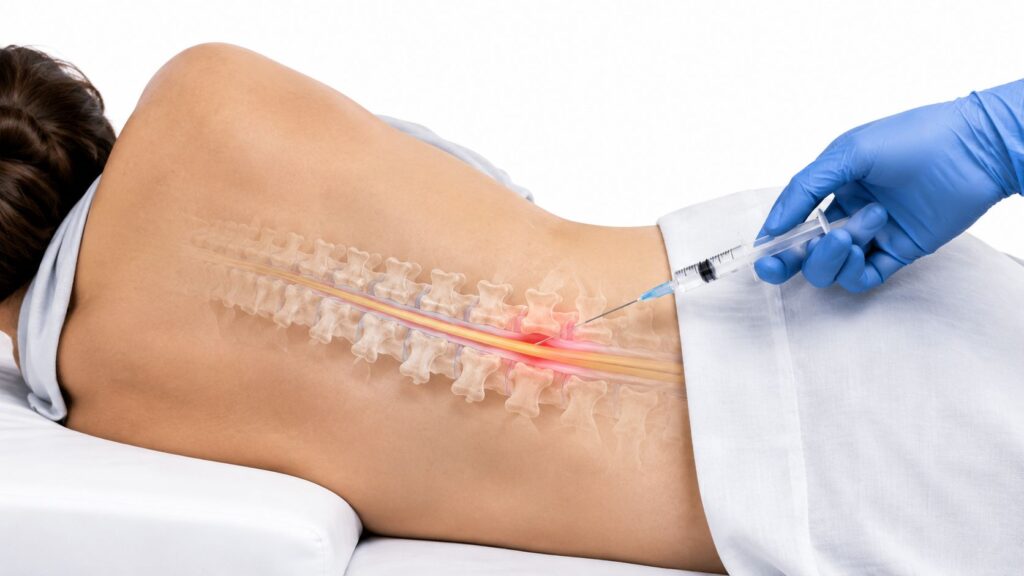
- We inject this “liquid gold” into the site of pain or injury.
Inside those platelets are alpha granules that release a massive “healing cascade” of growth factors, including PDGF, VEGF, and TGF-β. These signaling molecules act like a flare gun, calling your body’s repair cells to the site, promoting neo-angiogenesis (the growth of new blood vessels), and stimulating tissue repair. Because it is your own blood, the risk of an allergic reaction or rejection is virtually zero.
For more details on how we use these tools in our clinic, you can explore our Regenerative Therapy PRP & Cell-Based Options in Chicago Ridge.
Common Conditions Addressed by Regenerative Therapy
Regenerative medicine is proving to be a game-changer for conditions that were once thought to be “just part of getting older.”
Osteoarthritis and Joint Health
Osteoarthritis (OA) is characterized by the breakdown of cartilage. In the past, the only options were “living with it,” taking anti-inflammatories, or eventually getting a joint replacement. Today, we use regenerative injections to alter the joint environment, reducing inflammation and potentially slowing the progression of the disease.
Tendon and Ligament Injuries
Chronic tendon injuries like tennis elbow, Achilles tendonitis, or rotator cuff tears often have poor blood supply, which makes natural healing difficult. By injecting growth factors directly into the tissue, we can jumpstart the repair process that the body couldn’t finish on its own.
Cartilage Turnover
Interestingly, humans have a dynamic gradient of cartilage turnover in their limbs — a bit like the “salamander-like” ability to regrow parts of our joints. While we aren’t quite at the stage of regrowing an entire limb, we can certainly use these biological pathways to improve joint health.
Here is a quick look at how these therapies compare to traditional approaches:
| Feature | Traditional Surgery | Regenerative Therapy |
|---|---|---|
| Invasiveness | High (Incisions, anesthesia) | Low (Minimally invasive injections) |
| Recovery Time | Weeks to months | Days to weeks |
| Risk Profile | Infection, scarring, blood clots | Minimal (uses autologous cells) |
| Primary Goal | Structural repair/replacement | Biological healing/restoration |
| Opioid Use | Often required for recovery | Opioid-free approach |
For those specifically struggling with knee issues, we often look at Hyaluronic Acid Injection for Knee Pain Chicago or Amniotic Fluid Injections Pain Chicago as part of a comprehensive, multi-modal care plan.
The Evolution and Future of Healing Technologies
The history of regenerative medicine is longer than most people realize. While the term was officially coined in 1992 by Leland Kaiser and popularized in 1999 by William Haseltine, the roots go back to ancient Greek myths of regeneration and the 19th-century development of skin grafting.
Significant milestones include:
- 1956: The first successful bone marrow transplant between identical twins.
- 1997-1998: The birth of modern PRP applications and the first isolation of human embryonic stem cells.
- 2008: The first successful transplant of a tissue-engineered trachea using a patient’s own stem cells.
- 2014: The first transplant of a retinal sheet grown from induced pluripotent stem (iPS) cells.
The future of what is regenerative treatment? is even more exciting. We are moving toward “personalized medicine,” where we can identify the exact biological formula a specific patient needs for their unique joint or condition. Ongoing clinical trials are exploring everything from 3D-bioprinted organs to gene editing with CRISPR to “reboot” the immune system.
At Midwest Pain and Wellness, we stay at the forefront of these healing technologies, ensuring our patients in Chicago Ridge have access to the most current, science-backed therapies available.
Frequently Asked Questions about Regenerative Medicine
Who is a good candidate for these treatments?
The best candidates are often those with early-to-mid-stage degenerative conditions, chronic tendon issues, or joint pain that hasn’t responded well to physical therapy or medication. It’s also an excellent option for patients who want to avoid surgery or are not healthy enough for a major operation. During a consultation, we evaluate your specific imaging and medical history to see if your body has the “regenerative potential” to make the treatment successful.
Are there regulatory warnings for unproven treatments?
Yes, and this is very important. There are nearly 3,000 for-profit stem cell clinics in the U.S., many of which offer unproven treatments that are not backed by science. It is vital to work with double board-certified doctors who prioritize science over hype. We always follow ethical guidelines and use therapies that have a strong basis in clinical research.
How does this differ from traditional medication?
Traditional medications like NSAIDs or opioids are designed to block pain signals or reduce inflammation temporarily. They don’t fix the underlying problem. Regenerative treatments, on the other hand, aim to change the environment of the injured tissue. Instead of just turning off the “check engine” light, we are actually opening the hood and trying to fix the engine.
Conclusion
At Midwest Pain and Wellness, we believe that you shouldn’t have to choose between living in pain and undergoing invasive surgery. By answering the question “what is regenerative treatment?” with action and expertise, we provide our patients in Chicago Ridge, Illinois, with a path to long-term healing.
Our double board-certified doctors utilize a multi-modal, interventional approach to create custom care plans tailored to your specific needs. Whether it’s PRP, hyaluronic acid, or other cell-based options, our goal is to provide opioid-free relief and a custom recovery that gets you back to the life you love.
If you’re ready to explore how your body can heal itself, we are here to help. Let’s work together to find the custom relief you’ve been searching for.