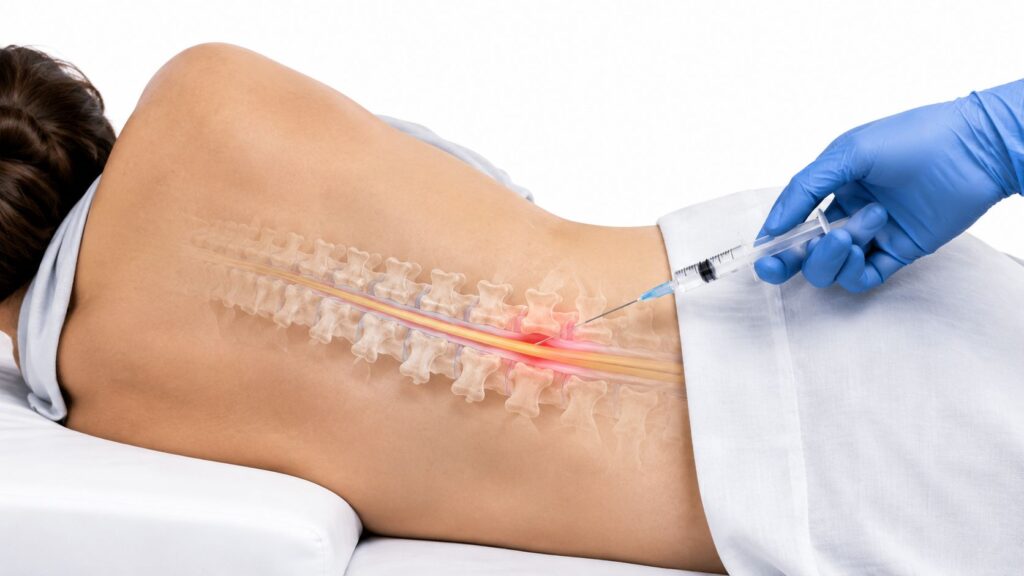
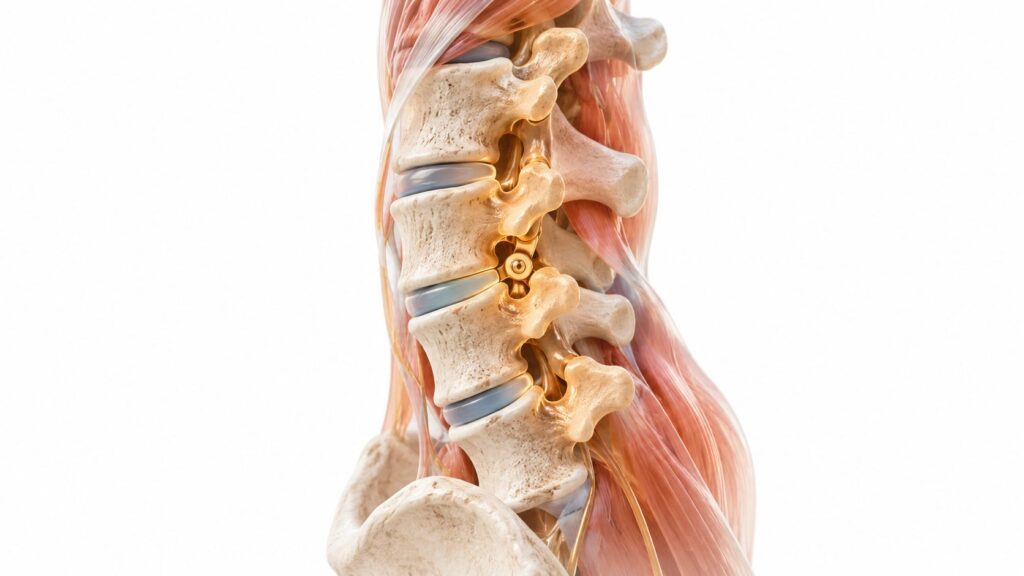
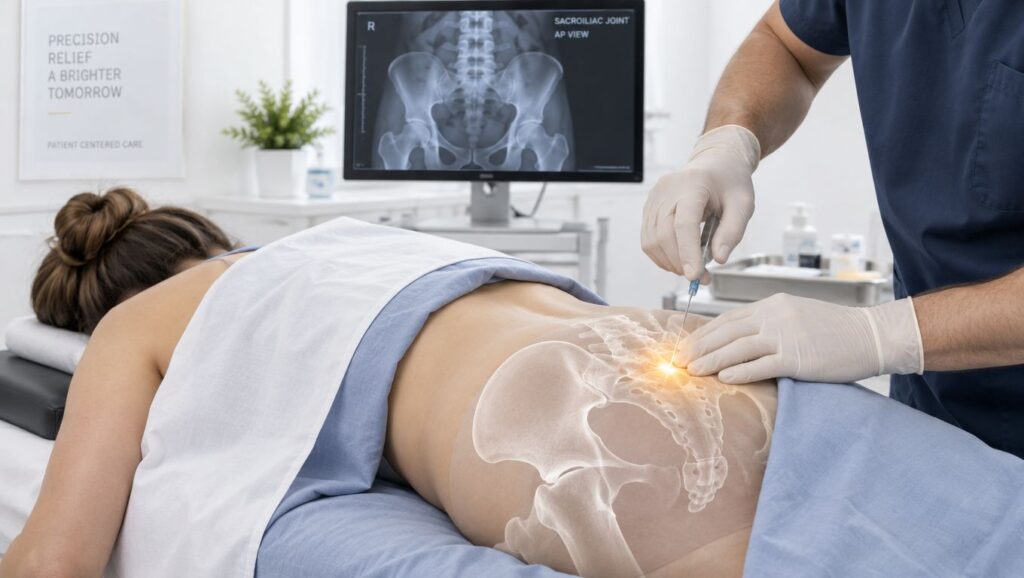
You've tried medication, rehabilitation, and injections, yet pain still decides how long you can stand, whether you sleep, and what you cancel. Now someone has mentioned an implant, and you're comparing a spinal cord stimulator vs pain pump without a clear explanation of which commitment fits your life.
The right question isn't which device is stronger. It's which treatment matches your pain diagnosis, which risks you can reasonably manage, and what happens if the treatment disappoints.
Table of Contents
- When Two Devices Are on the Table
- How Each Device Actually Works
- Side by Side on the Decisions That Matter
- Matching the Device to the Patient
- From Trial to Long-Term Follow-Up
- What Failure and Risk Actually Look Like
- Choosing Well and Starting the Workup
When Two Devices Are on the Table
Suppose you've had lumbar surgery, but burning pain still travels down your leg. Your medication list has grown, your walking hasn't improved, and you're reluctant to undergo another procedure without knowing exactly what it's supposed to accomplish. That's a reasonable place to start the conversation, not a reason to rush toward an implant.
Or perhaps medication helps, but the treatment itself has become difficult to tolerate. You want another option, yet you're worried that an implanted device will exchange one set of problems for another. That concern belongs in the decision, alongside the pain score.
Define success before choosing hardware
My recommendation is to establish what you're trying to regain before discussing a device model. Getting through a grocery trip, sleeping more comfortably, or returning to meaningful work gives the consultation a concrete purpose.
A treatment that lowers your reported pain but leaves you unable to do anything important hasn't met the goal you set. Likewise, a treatment that helps substantially but requires follow-up you can't reliably attend may be a poor practical fit.
Practical rule: Don't agree to an implant until you can explain what success would look like in your own daily life.
A systematic review comparing traditional stimulation with intrathecal drug delivery reported similar pain reduction, rather than a universally superior treatment. The same evidence base includes an SCS analysis in which 53% of patients achieved at least 50% pain relief at an average 24-month follow-up, with a 95% confidence interval of 47% to 60%.
Those findings support an honest discussion, not a promise. Some people obtain worthwhile, lasting relief; others don't obtain enough benefit to justify keeping the device.
The useful comparison is therefore personal. Which diagnosis are we treating? What has already failed, and why? Which burdens are acceptable to you? A recommendation should answer those questions before it asks you to sign consent.
How Each Device Actually Works
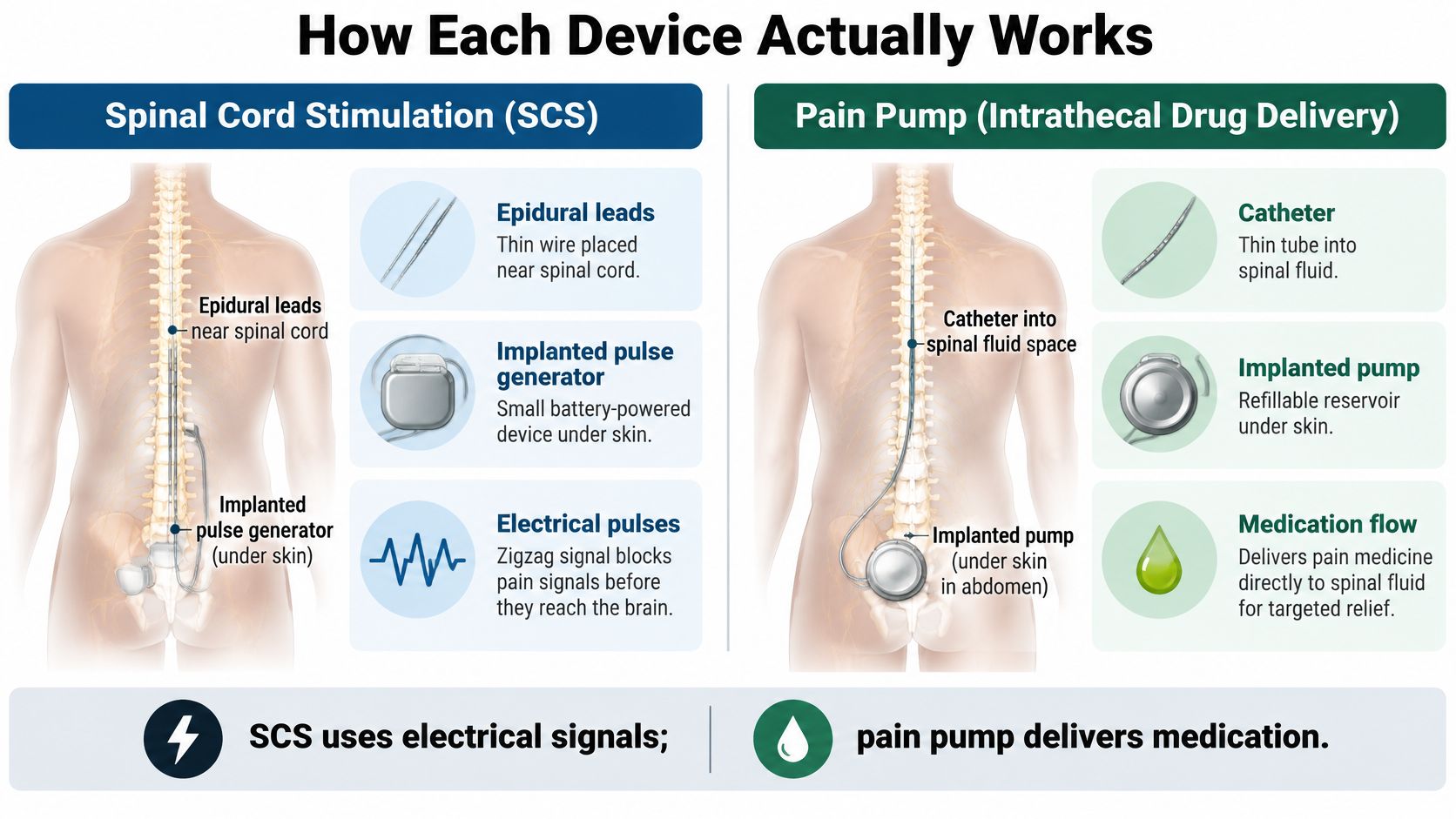
Spinal cord stimulation changes pain signaling electrically. Intrathecal drug delivery treats it pharmacologically. Both involve implanted equipment, but they don't perform the same job.
What a spinal cord stimulator delivers
An SCS system uses leads positioned in the epidural space, outside the fluid-filled compartment surrounding the spinal cord. An implanted pulse generator supplies the electrical current used to modulate pain signaling.
Think of it as an adjustable electrical treatment, not a medication reservoir. The clinician programs stimulation settings, and the ongoing treatment depends on the leads, generator, and battery functioning as intended. The clinic's explanation of how spinal cord stimulation works provides additional context for discussing the system at a consultation.
The important distinction is what SCS doesn't do: it doesn't continuously infuse a drug into spinal fluid. That makes it worth discussing when avoiding ongoing intrathecal medication exposure is an important treatment preference.
What an intrathecal pump delivers
A pain pump contains a medication reservoir connected to a catheter. Both components sit beneath the skin, with the pump typically positioned near waist level on one side of the abdomen, between the hip bone and ribs.
The catheter enters the intrathecal space, where cerebrospinal fluid surrounds the spinal cord. A clinician programs delivery remotely, using a constant rate, a variable rate, or scheduled doses, as described in the FDA's programmable infusion-pump system description.
Medication choice matters as much as the device itself. Intrathecal options include morphine, the non-opioid drug ziconotide, and medications used for particular clinical purposes, including baclofen for severe spasticity; the review of targeted intrathecal drug delivery explains these distinctions.
Don't accept the phrase “pain pump” as a complete treatment explanation. Ask which medication is proposed, what symptom it targets, and what adverse effects require action. A pump delivering an opioid and a pump used for spasticity aren't interchangeable treatment plans merely because the hardware looks similar.
Side by Side on the Decisions That Matter
Use this comparison to identify the questions that need a clear answer before implantation. It's a decision aid, not a ranking of devices.
Spinal Cord Stimulator vs Pain Pump at a Glance
| Decision Criteria | Spinal Cord Stimulator | Pain Pump (ITDD) |
|---|---|---|
| Best-suited diagnosis | Often considered for neuropathic or radicular pain, including persistent pain after back surgery and complex regional pain syndrome | Considered for selected severe, refractory pain when systemic medication is ineffective or intolerable, or for specific spasticity indications |
| Trial period | Temporary stimulation trial assessing pain relief and functional improvement | Medication trial assessing benefit and tolerability |
| Maintenance | Programming and assessment of leads, generator, and battery | Refills, dose programming, and pump and catheter surveillance |
| Monitoring burden | Primarily treatment response, infection, and hardware performance | Treatment response and hardware checks, plus medication-specific monitoring |
| Reversibility | Can be removed, but removal is another procedure | Stopping treatment requires a medication-management plan, not simply discontinuing delivery |
| Key risk | Hardware problems or inadequate sustained relief | Device problems combined with drug-related adverse effects and interruption risks |
The clinical guidance on neurostimulation and intrathecal treatment supports the central distinctions in diagnosis, trialing, and monitoring. The table's removal and interruption considerations are developed further in the risk discussion below.
Choose the burden you can actually manage
A patient who prefers an electrical approach may reasonably prioritize SCS. But that preference only helps if the pain pattern supports it and the trial demonstrates useful improvement.
A patient whose proposed medication provides meaningful benefit may reasonably consider a pump. That choice also requires a workable arrangement for appointments, medication management, and urgent assessment when something changes.
Neither treatment is maintenance-free. Ask who handles routine adjustments, who evaluates an unexpected loss of benefit, and how you contact the treating team outside ordinary appointments.
- For a busy household: Decide who can provide transportation or help if an unexpected visit becomes necessary.
- For someone living alone: Identify a dependable contact and make sure the treatment team understands the limits of your support.
- For a caregiver: Ask what responsibilities you're accepting before the procedure, not after discharge.
“Reversible” also deserves careful language. It should mean that there's a defined exit strategy, not that implantation has no consequences or that stopping therapy is effortless.
My advice is to compare the ordinary month and the difficult day. Can you manage routine care? And if the treatment stops helping unexpectedly, do you know exactly whom to call and what comes next? Those answers can matter as much as the initial response.
Matching the Device to the Patient
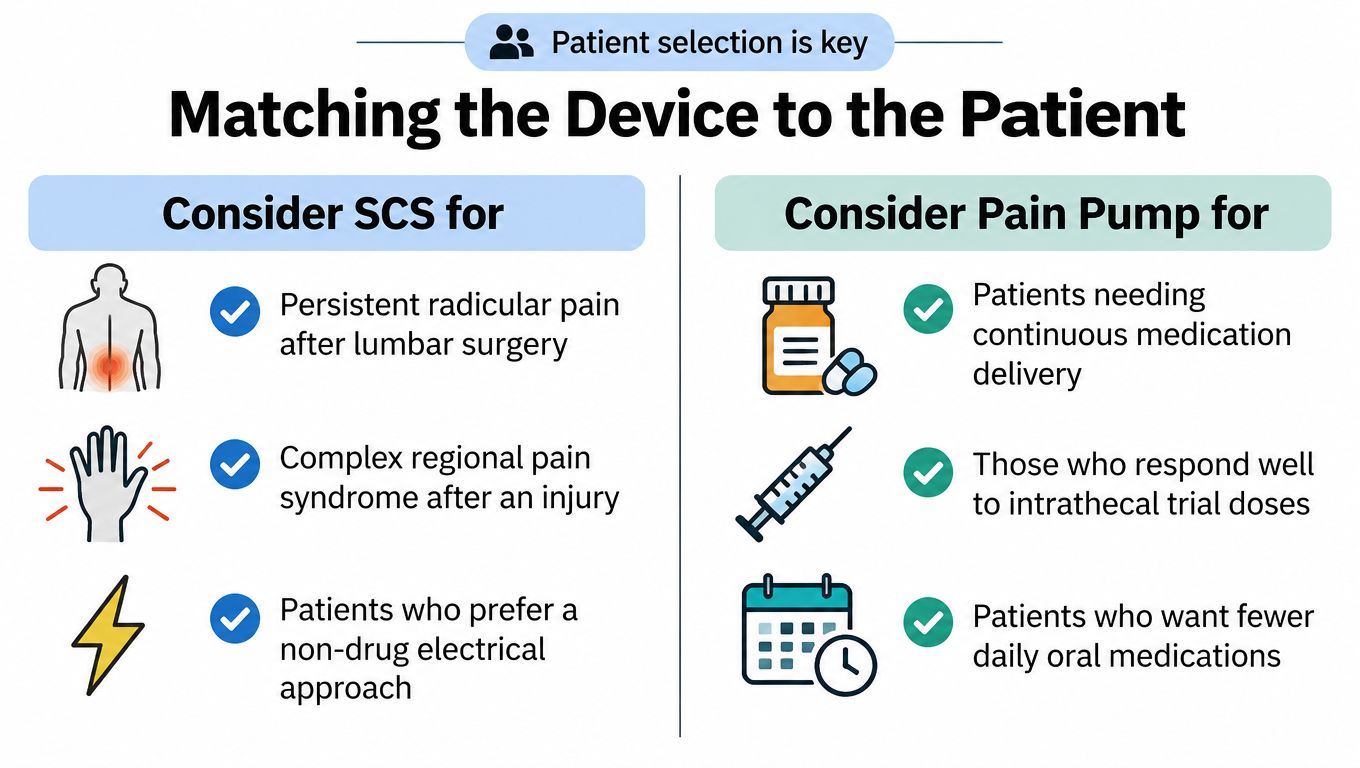
Your diagnosis should drive the recommendation. A preference for fewer pills or an advertisement for newer technology isn't enough.
When I'd prioritize an SCS discussion
For persistent radicular leg pain after lumbar surgery, I'd generally put an SCS evaluation ahead of a pump discussion, provided the workup hasn't identified a structural problem requiring different treatment. The same general direction applies to a patient with complex regional pain syndrome after a wrist injury whose symptoms remain disabling despite appropriate care.
That's a clinical recommendation based on the neuropathic indications described in the earlier guidance, not a guarantee of eligibility. Prior surgery alone doesn't establish that stimulation is appropriate, and a diagnostic label doesn't replace an examination.
The patient taking escalating opioids for mostly axial back pain needs a different conversation. I wouldn't promise that SCS will solve medication dependence, nor would I interpret a rising dose as proof that a pump is necessary.
A medication reduction goal is valuable. It isn't, by itself, a diagnosis or an indication for implantation.
When a pump deserves serious consideration
For severe spinal-origin spasticity accompanied by pain, a medication-specific pump evaluation may be more relevant than treating the situation as an electrical-stimulation problem. The therapeutic target must be clear: reducing spasticity and treating pain aren't automatically the same objective.
For severe refractory pain, a pump becomes a reasonable discussion when there's a credible medication strategy and the patient can manage the ongoing obligations. It shouldn't become the default merely because oral treatment has been frustrating.
An older patient with multiple medical conditions and unreliable access to refills should not be rushed toward a pump. Published patient-selection guidance for intrathecal drug delivery identifies concerns including infection, bleeding disorders, immunosuppression, poor glycemic control, anticoagulation, restrictive spinal anatomy, and inability to manage refills.
- If medication benefit is unclear: Review whether the problem is inadequate treatment, tolerance, or opioid-related harm.
- If follow-up is unreliable: Solve that access problem before implantation.
- If the diagnosis remains uncertain: Neither implant is the right next step yet.
Don't reduce this decision to “stimulator for nerve pain, pump for everything else.” Select the treatment only after identifying the target, testing the proposed approach, and confirming that its responsibilities are realistic.
From Trial to Long-Term Follow-Up
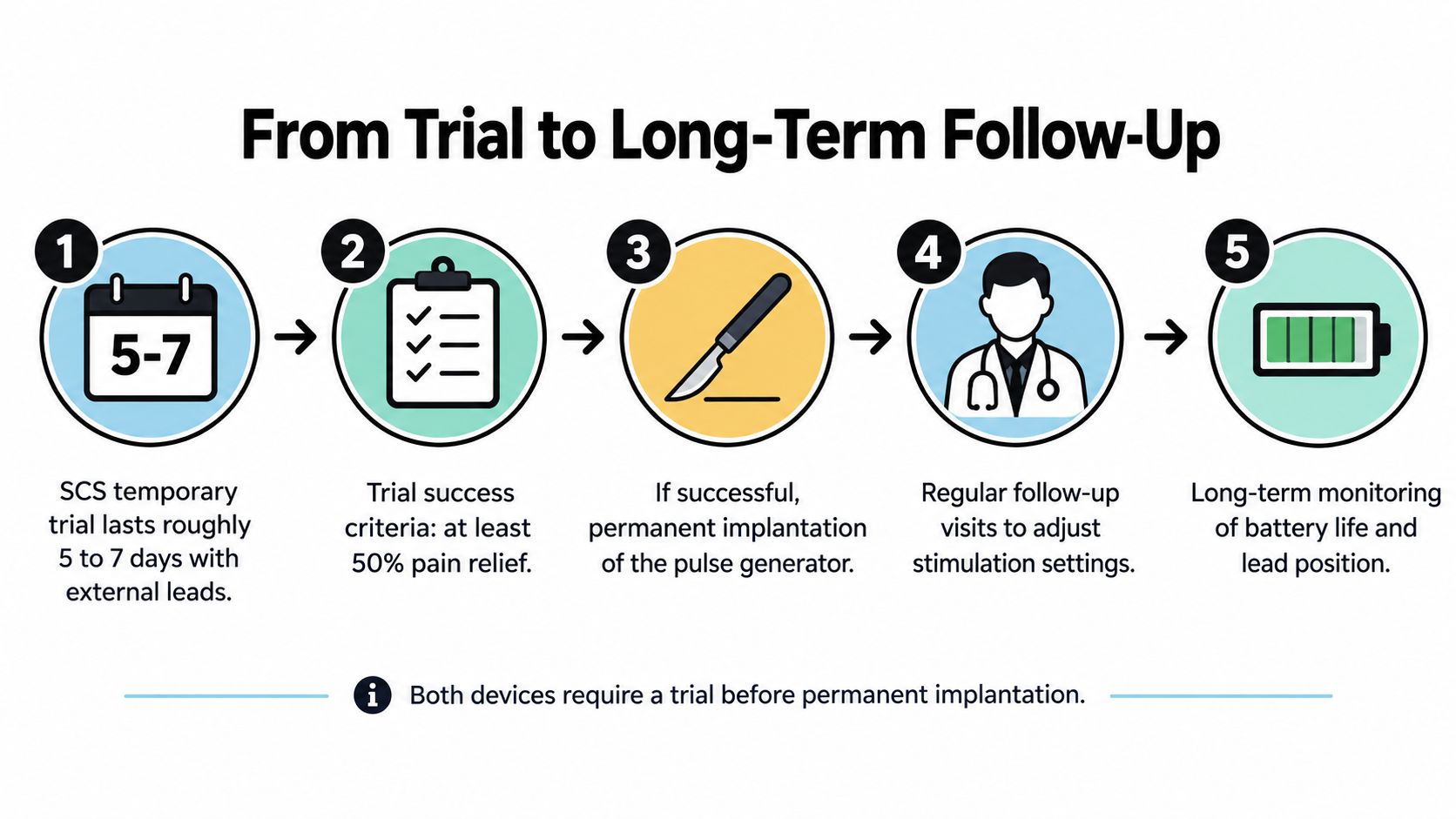
A successful trial is permission to consider implantation, not proof that the permanent device will work indefinitely. Treat it as a structured test with written goals and a record of what changed.
Test function alongside pain relief
During an SCS trial, record the activities that matter to you rather than relying on a general impression at the final appointment. Ask your clinician to specify the trial duration, activity restrictions, and criteria for proceeding.
In a real-world study of SCS trials, 435 of 505 patients achieved at least 50% pain relief, an 86.1% trial-success rate. Those results describe the temporary trial phase, not guaranteed long-term outcomes.
A favorable result should lead to another discussion, not an automatic booking. Review whether the improvement was meaningful, whether expectations remain realistic, and what recovery will require.
After permanent implantation, the plan includes recovery instructions, programming, and ongoing assessment of treatment performance. Review the clinic's spinal cord stimulator recovery guidance and ask which instructions apply to your particular procedure.
Make pump logistics concrete before surgery
The pump pathway starts with evaluation of the proposed medication and its response during trialing. Before implantation, obtain the expected refill arrangements and dose-management plan in writing; refill timing depends on the prescribed treatment rather than a universal calendar.
The practical preparation should include:
- Appointment ownership: Decide who books refills and who checks that transportation is available.
- Medication reconciliation: Keep the treating team's medication list current, including prescriptions from other clinicians.
- Emergency contacts: Know where to seek help if delivery is disrupted or concerning symptoms develop.
If managing several medicines already feels difficult, Stride's medication adherence app comparison can help you consider reminder tools. A reminder system supports organization; it doesn't replace a clinician-managed refill plan or assessment of a device problem.
Caregiver involvement should be agreed upon before implantation. Don't build a treatment plan around help that nobody has explicitly committed to providing.
What Failure and Risk Actually Look Like
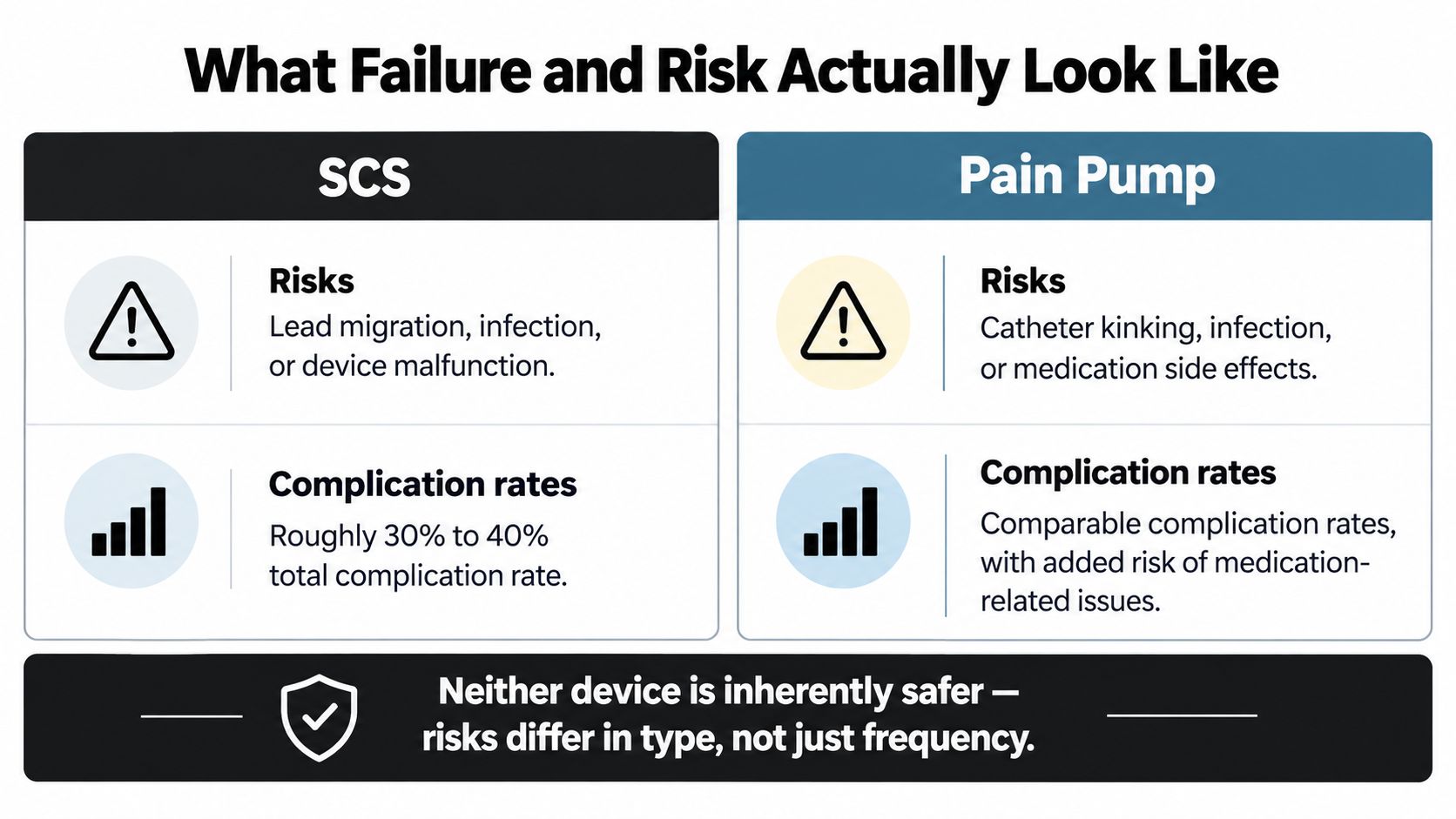
Neither device deserves a blanket “safer” label. You need to understand both the likelihood of a complication and what that complication could mean for you.
Put the figures in context
A review of implanted-device complications reports total SCS complication rates of approximately 30% to 40% across heterogeneous studies, ITDD implant-infection rates of approximately 0.9% to 6.3%, and catheter-tip granuloma in fewer than 3% of patients. These aren't equivalent measures: total complications for one treatment can't be directly compared with an individual complication for another.
The same [review findings] discussed here include infection, epidural bleeding, cerebrospinal-fluid leak, lead migration or malfunction, and generator-pocket problems for SCS. For pumps, medication-related concerns include respiratory depression, withdrawal, overdose, nausea, urinary retention, and catheter-tip granuloma, which can cause severe or permanent neurological injury if it isn't detected promptly.
Observational mortality figures also require direct disclosure: one-year mortality was 3.89% after ITDD implantation versus 1.36% after SCS implantation, with respiratory depression identified as the main contributor in the pump group, according to the review cited above. These populations differed in disease mix and severity, so the figures don't establish a randomized head-to-head comparison.
Failure isn't always a surgical complication
A device can remain physically intact and still fail to provide worthwhile relief. A systematic review of SCS explantation reported removal rates ranging from 1.8% to 38%, with inadequate pain relief the most consistent reason for removal.
That range shouldn't be presented as your personal probability. It does justify asking what the clinician will do if benefit fades and when revision or removal becomes reasonable.
Ask before consent: If this treatment stops helping, what will you check first, what can be adjusted, and when would you recommend stopping it?
For SCS, follow-up emphasizes hardware integrity, infection assessment, and whether programming still produces useful benefit. The clinic's discussion of spinal cord stimulation side effects can help you prepare questions about those concerns.
For a pump, an interruption in medication delivery can create withdrawal risk, while excessive delivery can create overdose risk. New neurological symptoms require prompt assessment rather than waiting for the next routine visit.
Seek emergency care for severe breathing difficulty or inability to awaken normally. Report new weakness or rapidly worsening neurological symptoms urgently, and make sure caregivers understand the emergency plan before treatment starts.
Choosing Well and Starting the Workup
The quality of the workup matters more than enthusiasm for either implant. If the pain generator hasn't been established, selecting hardware is premature.
Start with the examination, prior imaging, surgical history, and a careful account of what earlier treatments accomplished. A treatment shouldn't be labeled a failure without understanding whether it targeted the right problem and whether its benefits or adverse effects were documented.
What should be settled before implantation
I'd expect the pre-implant assessment to address the following:
- The treatment target: Confirm that the symptoms, examination, and imaging support the proposed diagnosis. Address structural compression when appropriate rather than assuming an implant is the next step.
- Medical readiness: Review infection concerns, bleeding risk, anticoagulants, and diabetes control. Never stop an anticoagulant without instructions from the responsible clinicians.
- Medication history: Document benefit, adverse effects, escalating doses, and whether apparent opioid resistance reflects tolerance or harm.
- Daily capacity: Assess sleep, rehabilitation needs, psychological and practical readiness, transportation, and caregiver availability.
- Measurable goals: Define walking tolerance, sleep improvement, work participation, or medication reduction in terms that can be reassessed.
These priorities follow the patient-selection considerations discussed earlier. They're not hurdles to get past quickly; they're opportunities to avoid committing to the wrong treatment.
Connect the recommendation to local care
For patients in Chicago Ridge, IL; Palos Heights, IL; Palos Hills, IL; Evergreen Park, IL; and Hickory Hills, IL, the local pathway should begin with a pain-management consultation, not an assumption that an implant is inevitable. Dr. Yaw Donkoh, a double board-certified interventional pain specialist, leads the Chicago Ridge pain and wellness clinic with an opioid-sparing, multimodal approach.
This is a pain and wellness clinic, not a physical therapy practice. Its treatment capabilities include spinal cord stimulation evaluation and trials, image-guided interventions, and coordination with rehabilitation professionals and other treating clinicians.
That breadth matters because the appropriate recommendation may be SCS, a medication-delivery evaluation, another intervention, or further diagnostic work. Don't assume that discussing pumps confirms candidacy or establishes where every stage of pump care will occur; ask who would perform trialing, implantation, refills, and emergency management.
Bring prior imaging, operative reports, treatment records, and a current medication list. Ask for explicit trial criteria, a realistic follow-up plan, and a fallback strategy if the chosen treatment underperforms. Leave with a reasoned recommendation, not merely the name of a device.
Midwest Pain & Wellness offers personalized, opioid-sparing pain care, including spinal cord stimulation evaluation and trials, to help patients assess options beyond escalating medication. Visit Midwest Pain & Wellness to request a consultation in Chicago Ridge, Illinois, and bring your records so you can discuss device suitability, follow-up responsibilities, and the next step that fits your goals.