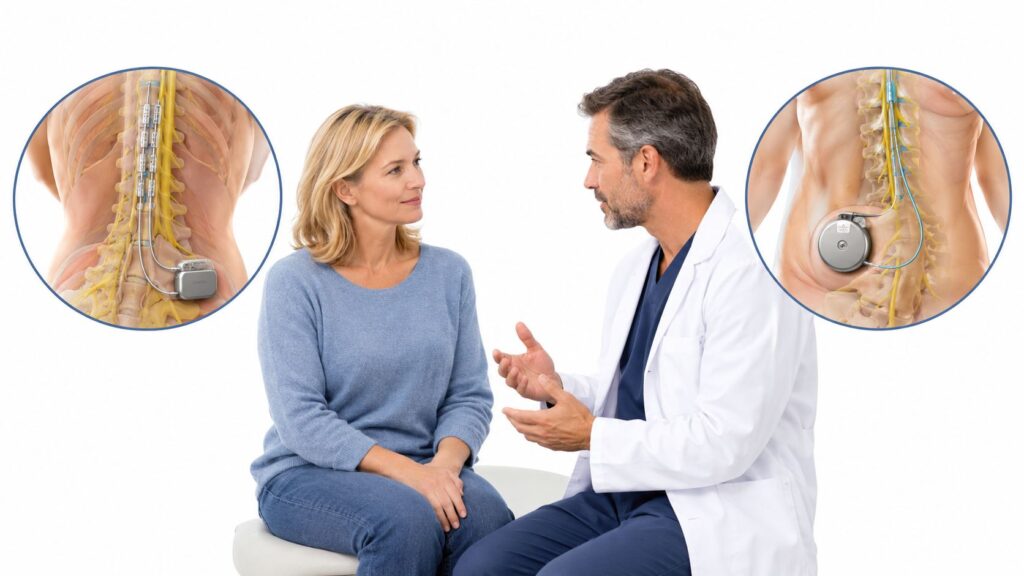
If you're reading this, you're probably at a hard point in the pain journey. You've tried medications, therapy, injections, maybe even surgery, and the relief either didn't last or never came the way you hoped. Now spinal cord stimulation is on the table, and you're weighing two very real feelings at the same time. Relief might finally be possible. Side effects might also be real.
That tension is normal. Patients from Oak Lawn, Palos Hills, Palos Heights, Worth, Bridgeview, Hickory Hills, Alsip, Burbank, Evergreen Park, Orland Park, and the communities around Chicago Ridge often arrive with the same question: "Is this worth it, and what could go wrong?"
The honest answer is that spinal cord stimulation can help the right patient, but it isn't a casual decision. The best outcomes usually come when patients understand the trade-offs before they start, know what the early recovery period feels like, and know exactly when to call for help.
Considering SCS for Your Chronic Pain
A common scenario looks like this. Someone in Orland Park has persistent leg and low back pain after spine surgery. Another patient in Alsip has burning nerve pain that still limits sleep, driving, and work despite trying several conservative options. By the time spinal cord stimulation enters the conversation, patients aren't looking for a miracle. They're looking for enough relief to function again.
That hope deserves a straight answer, not a sales pitch. Spinal cord stimulation side effects matter because the treatment involves implanted hardware, follow-up programming, and real recovery decisions in the first weeks after the procedure.
A broad review of the literature found that overall complication rates for SCS are estimated between 30% and 40%, and that most of these issues are device-related rather than catastrophic biologic events, as summarized in this 2022 narrative review on SCS complications. That number gets attention, and it should. It also needs context. Many complications are manageable, some are corrected through reprogramming or revision, and a smaller subset are the serious risks patients need to understand clearly before moving forward.
Why patients feel both hopeful and cautious
Most patients considering SCS aren't starting from zero. They've already lived through months or years of disrupted sleep, missed family time, reduced mobility, and the frustration of hearing "let's try one more thing."
That history changes how people hear risk.
- Hope matters: You may finally have an option aimed at reducing pain signals rather than just adding another pill.
- Fear matters too: You're being asked to consider an implant near the spine, and that should never feel routine.
- Clarity helps: Knowing which side effects are common, which are urgent, and which can often be fixed lowers anxiety and improves decision-making.
Practical rule: The right time to consider SCS isn't when you're desperate. It's when you've had a careful evaluation, understand what the device can and can't do, and you're ready to participate in follow-up care.
Some patients also benefit from broader spine education before deciding whether they need a pain specialist, a surgical opinion, or both. These Physical Therapy U back care insights give useful context on when persistent back pain deserves specialist evaluation.
If your pain started or continued after prior spine surgery, it's also worth reviewing neuromodulation options for failed back surgery syndrome so you can place SCS in the full treatment picture.
How Spinal Cord Stimulation Works
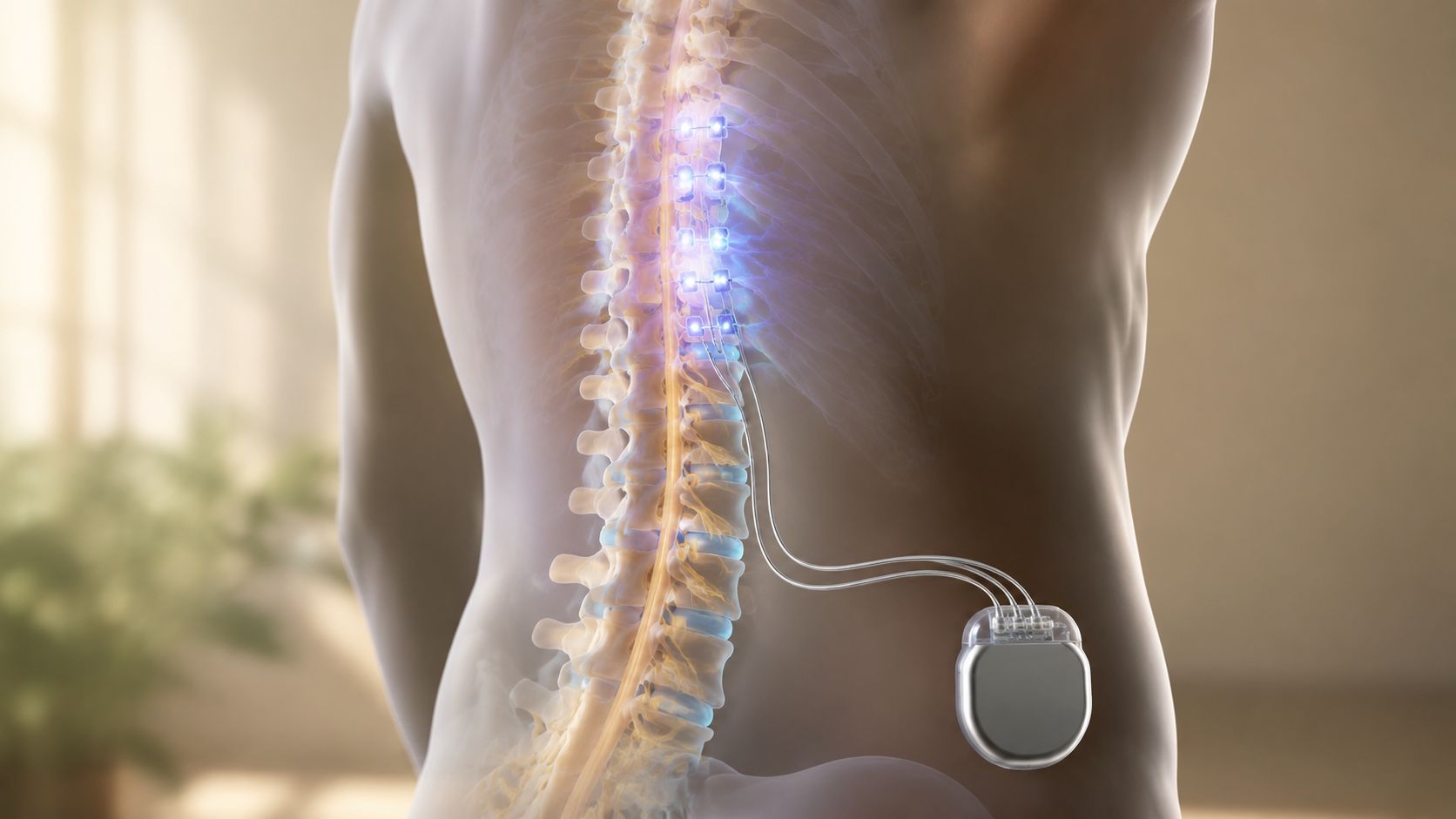
Spinal cord stimulation works a bit like a pacemaker for pain signals. It doesn't repair the underlying structure that's causing pain. Instead, it changes how pain signals are delivered and perceived, so the brain receives less of the signal that's been dominating daily life.
That basic idea explains both the potential benefits and many of the side effects. If the system depends on leads, battery power, programming, and signal delivery, then problems can happen at any of those points.
The three main parts
An SCS system has three practical components.
| Part | What it does | Why it matters |
|---|---|---|
| Leads | Thin wires placed near the spinal cord deliver electrical stimulation | If they shift, pain coverage can change |
| Implanted pulse generator | The battery and computer under the skin create the stimulation | Battery, charging, or hardware issues can affect therapy |
| Patient controller | Lets the patient adjust settings within prescribed limits | Helps tailor comfort and function during daily life |
Patients usually understand the treatment much better once they see it this way. This isn't a passive implant you forget about. It's a therapy you live with, adjust, and monitor.
Why the trial matters
The trial period is one of the most useful safeguards in pain management. Instead of committing immediately to a permanent implant, you first test whether stimulation improves pain and function in your real life.
That matters because meaningful success isn't only about pain scores. It's also about whether you can stand longer, sleep better, walk farther, or reduce the way pain controls your day.
A few practical points make the trial more valuable:
- Track function, not just pain: Note whether chores, walking, sitting, and sleep improve.
- Pay attention to comfort: Relief that comes with unpleasant stimulation may need adjustment.
- Be honest about daily use: A device only helps if it fits your routine and goals.
A fuller explanation of the treatment process is available in this guide to how SCS works.
The trial is not a formality. It's where many patients learn whether this therapy feels sustainable in actual life, not just in a procedure room.
Common Side Effects and Early Complications
A common moment in the first week after an SCS trial or implant goes like this: pain relief seemed promising at first, then the stimulation feels different, the incision gets sorer than expected, or a new headache starts when you stand up. That does not always mean something is seriously wrong. It does mean patients need a clear sense of what is expected, what can be adjusted, and what deserves a call to our clinic.
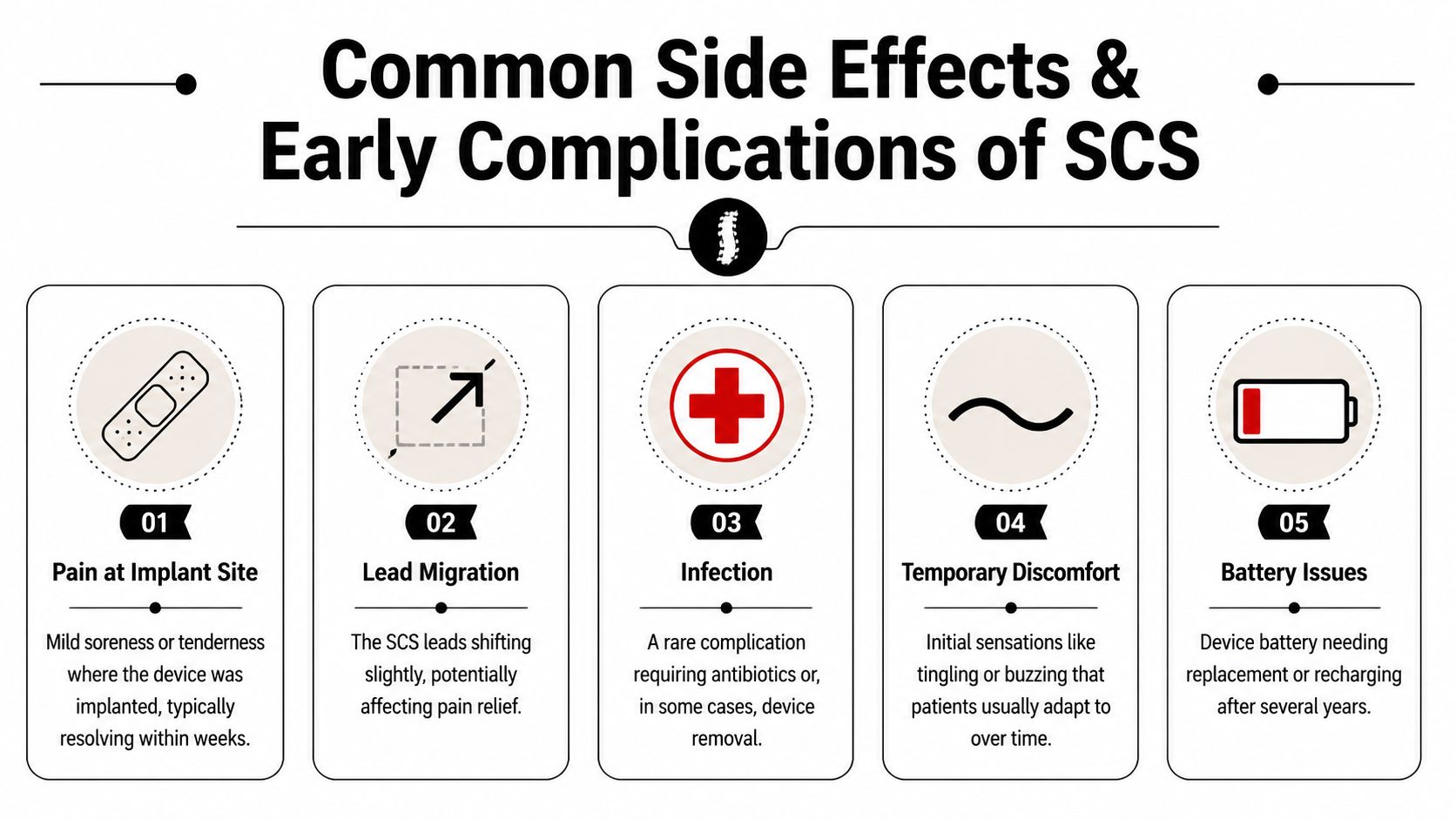
Early problems usually fall into three groups. Hardware issues, stimulation-related symptoms, and healing or procedure-related complications. That distinction helps because the first question is not only "Is this a side effect?" The better question is "What kind of side effect is this, and how quickly should we act?"
Complications after SCS are not rare. Across studies, overall complication rates are often reported in the 30% to 40% range, largely driven by lead movement, pocket pain, wound issues, and the need for reprogramming or revision rather than catastrophic injury. Patients deserve to hear that plainly. The point is not to alarm anyone. The point is to set realistic expectations and help patients respond early, before a fixable problem turns into a bigger one.
Hardware problems that affect pain coverage
Lead migration is the issue I warn patients about most often during early recovery because it is common and because the first sign is often a change in relief, not dramatic pain at the implant site. If the lead shifts, stimulation may no longer cover the painful area the way it did during the trial or right after implantation.
Patients usually notice one of a few patterns:
- Pain returns to an area that had been covered
- Stimulation shows up in a new or odd location
- Relief becomes inconsistent with sitting, standing, or turning
- The controller is working, but the therapy no longer feels targeted
This is one reason we place real restrictions on bending, twisting, lifting, and abrupt motion in the early healing period. Those instructions are not busywork. They are meant to protect lead position while tissue is still settling around the hardware.
A hardware problem is usually frustrating, but it is often manageable. Reprogramming may restore coverage. Sometimes imaging is needed. Some patients need a revision procedure. Patients dealing with severe spinal trauma often face very different medical and legal questions than those seen after routine SCS recovery, which is why topics such as spinal cord injury settlements in Pennsylvania belong in a separate conversation from standard device troubleshooting.
Stimulation symptoms that often improve with adjustment
Some side effects come from how the stimulation is being delivered rather than from a surgical complication. Tingling, buzzing, brief jolts, or stimulation that becomes uncomfortable in certain positions can happen, especially early while settings are being refined.
In practice, the pattern matters more than the label.
- Mild, positional changes often improve with reprogramming.
- New discomfort that persists through the day should be reported.
- Sharp shocking sensations, especially if repeated need prompt review.
- Symptoms paired with weakness, loss of coordination, or loss of function require urgent evaluation.
Many patients wait too long because they assume they should "get used to it." That approach often delays an easy fix. If the device starts feeling unpredictable, too intense, or poorly matched to the painful area, our team needs to know.
Implant site pain, swelling, and wound concerns
Some soreness is expected. The leads were placed through the skin, the battery pocket was created under the tissue, and both areas can stay tender for a while.
What should improve is the trend. Normal healing is uncomfortable, then gradually less uncomfortable. A concerning incision usually becomes more red, more swollen, more painful, or starts to drain.
Call us if you notice:
- Redness spreading beyond the incision
- Warmth, firmness, or increasing tenderness around the pocket
- Drainage, bleeding, or wound separation
- Fever or chills with increasing site pain
These calls are worth making early. A superficial skin issue and a deeper infection can look similar at first, and timing matters.
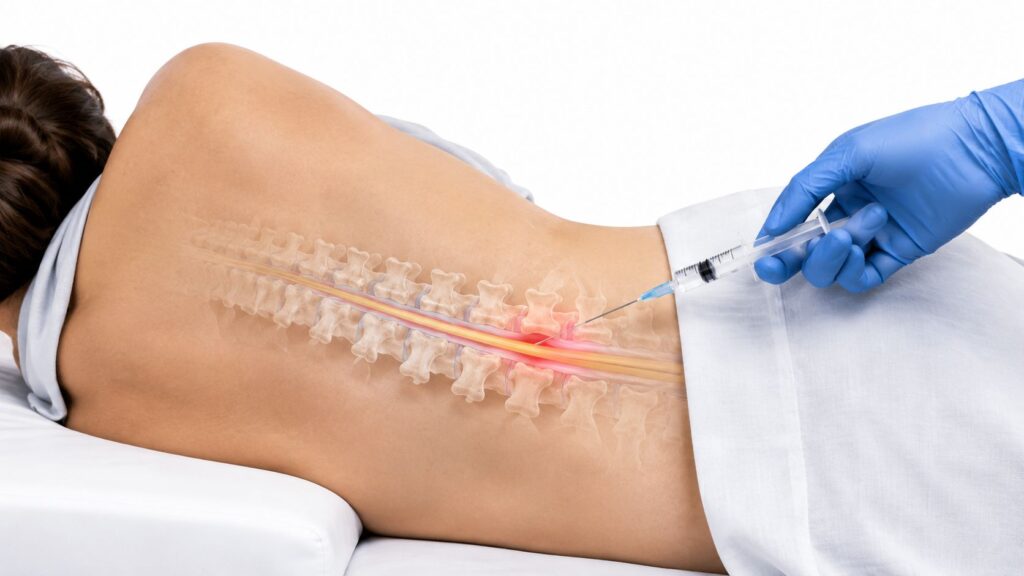
Post-procedure headache from a CSF leak
One problem patients are often not warned about clearly enough is a headache caused by leakage of cerebrospinal fluid after lead placement. The classic pattern is a headache that worsens when sitting or standing and improves when lying flat.
A patient education page from a major academic medical center notes that this type of headache can occur after neuraxial procedures used for spinal cord stimulator placement, and reported rates vary based on technique and equipment in this overview of spinal cord stimulation from the University of Maryland Medical Center.
The number matters less than the pattern. A severe upright headache after a trial or implant should not be brushed off as dehydration, tension, or lack of sleep. It may resolve with conservative treatment, but it needs assessment so we can decide whether rest, hydration, medication, or a procedural treatment is appropriate.
Understanding Rare But Serious Risks
A patient can feel well enough to go home after a trial or implant, then notice a sharp change later that day or the next morning. New leg weakness. Numbness that was not there before. Loss of bladder control. Severe back pain that feels different from expected post-procedure soreness. Those symptoms are uncommon, but they are the ones I want patients and families to recognize immediately.
The serious complications patients should know
The major risks in this category are bleeding around the spinal cord, deep infection, and neurologic injury. They are rare. They also require fast evaluation because the timeline matters. Hours can make a difference when there is pressure on the spinal cord or a spreading infection around implanted hardware.
Bleeding in the epidural space can compress the spinal cord or nearby nerves. Patients may describe rapidly increasing back pain, new numbness, heaviness in the legs, trouble walking, or bowel and bladder changes. Deep infection may show up as fever, shaking chills, severe site pain, confusion, or drainage that looks worse instead of better. A neurologic injury can present as new weakness, loss of coordination, or a sudden change in sensation below the level of the procedure.
These problems are not common after SCS, but they are part of the genuine risk discussion. Across the full patient journey, complication rates of roughly 30 to 40 percent are often quoted for SCS, and that number is driven largely by hardware issues, lead migration, wound concerns, and other non-catastrophic problems. Serious neurologic events make up a much smaller portion of that total. Patients deserve to understand both sides. The overall complication rate should prompt careful follow-up, not panic.
What we watch for in practice
In clinic, the question is rarely, "Could this ever happen?" The better question is, "What change should make me call right away?"
Call the same day, or seek urgent care if after an implant or trial you develop:
- New leg weakness or trouble standing
- Numbness that is spreading or feels distinctly different than your usual pain pattern
- Loss of bladder or bowel control
- Severe back pain with a sudden change in function
- Fever, confusion, or feeling acutely ill after the procedure
I tell patients this plainly because reassurance should be honest. SCS can be a very good treatment for the right person, but it is still a spine procedure with implanted hardware. Good outcomes depend on early recognition as much as technical skill.
Why risk reduction starts before the procedure
Serious complications are less likely when the case is planned carefully. Blood thinner use, bleeding history, diabetes control, skin condition, prior spine surgery, immune status, and the exact pain pattern all affect risk. That is one reason our Illinois clinic spends time on screening instead of rushing patients to an implant date.
Technique matters too. So does follow-up. Sterile handling, careful lead placement, clear discharge instructions, and a low threshold for evaluating new neurologic symptoms all lower the chance that a small problem becomes a larger one.
For patients trying to understand how severe spinal cord injuries can affect long-term life and legal recovery, this overview of spinal cord injury settlements in Pennsylvania shows how significant those injuries can become outside the procedure room as well. The point is perspective. Rare complications are still worth respecting, because prompt action protects function.
Preventing Complications and Long-Term Success
A common real-life pattern looks like this. The procedure goes well, pain relief starts to show up, and then a patient twists awkwardly, skips a check-in, or assumes a strange change in coverage can wait. That is how a manageable issue turns into a harder one.
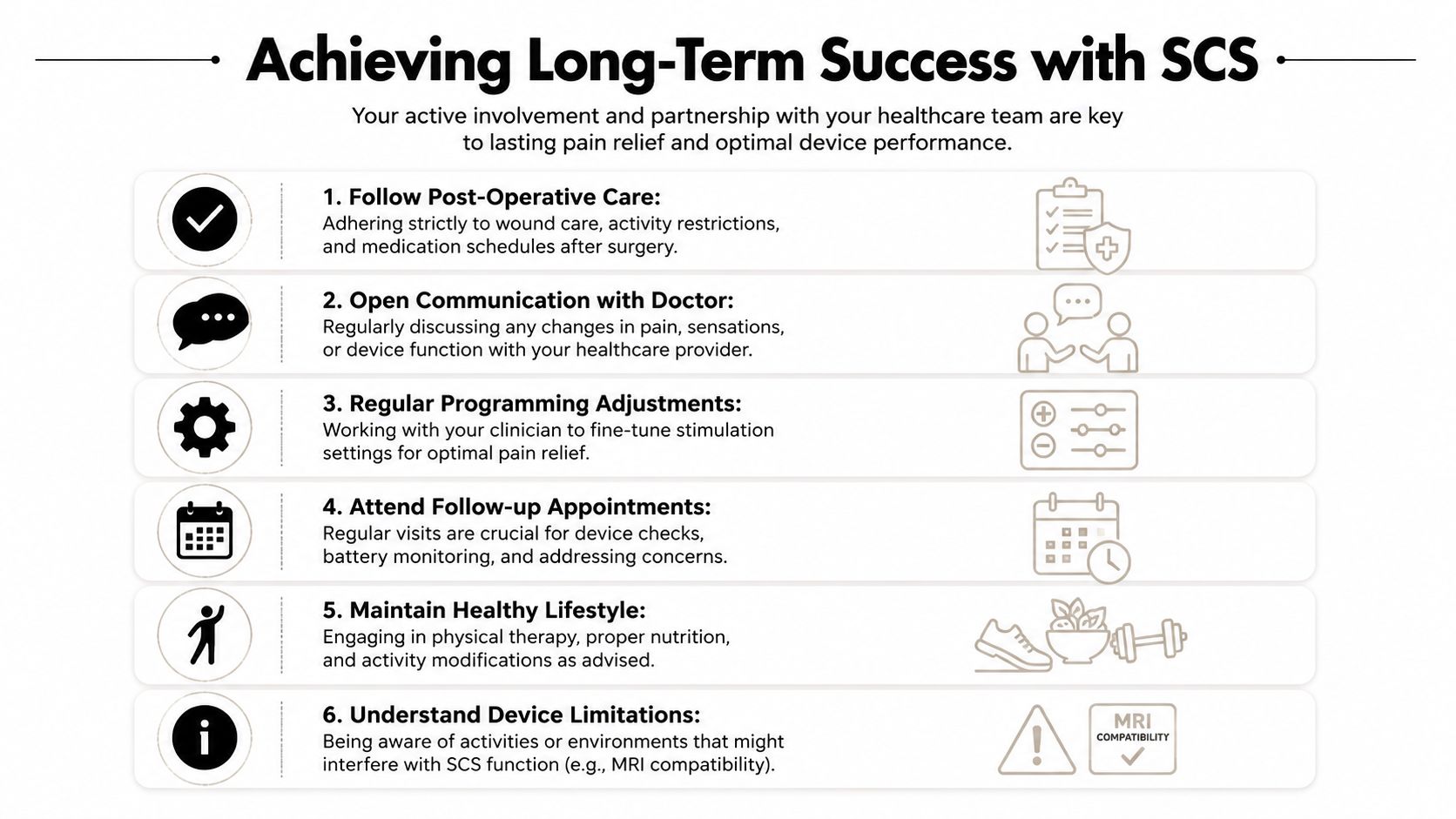
Long-term success with spinal cord stimulation depends on what happens after implantation as much as what happens in the procedure room. Good results usually come from careful healing, clear communication, and follow-up programming that matches how your pain changes over time. At our interventional pain management clinic, we treat SCS as an ongoing treatment plan, not a one-time device placement.
What helps in the early weeks
The first few weeks are mainly about healing around the leads and incision sites. Patients often feel encouraged by early relief, but that is also the period when lead movement and wound problems are more likely if activity increases too quickly.
Several habits improve the odds of a smoother recovery:
- Follow movement restrictions closely: Limit bending, twisting, stretching, and lifting for the time your pain specialist recommends.
- Keep incision care simple and exact: Clean and dry means exactly that. Do not improvise with creams, soaking, or bandages unless we told you to do it.
- Report changes while they are still small: A shift in stimulation coverage, new discomfort at the implant site, or loss of benefit is usually easier to assess early.
- Show up for programming visits: Fine-tuning is part of treatment. It often takes more than one adjustment to get reliable relief with tolerable stimulation.
I tell patients this often. Early success comes from protecting the system while your body heals around it.
Daily habits that affect long-term results
Patients who do well over time usually understand the trade-off. SCS can reduce pain and improve function, but the device needs attention. If pain returns, the answer may be reprogramming, a hardware check, a change in activity, or evaluation for a different pain generator. Waiting months to mention a problem makes each of those steps less straightforward.
Practical habits that help include keeping a simple record of pain relief, charging the device as instructed if your system requires it, and telling every outside medical team that you have an implanted stimulator. That last point matters more than patients expect.
Electromagnetic interference and medical procedures
Some medical equipment and high-energy electrical environments can interfere with an implanted stimulator. The risk is not part of day-to-day life for most patients, but it does matter before imaging, surgery, dental procedures that use electrical devices, or emergency treatment.
Use this rule. Tell the treating team about your stimulator before any procedure, scan, or operation. If the device card is available, bring it.
| Situation | Why it matters | What to do |
|---|---|---|
| MRI or surgery | Equipment or procedural devices may affect the stimulator | Tell the medical team about your implant before the appointment |
| Unexpected jolts or abrupt stimulation changes | Programming issues or outside interference may be involved | Stop what you are doing and contact your pain team |
| Loss of pain relief over time | Coverage can change because of healing, lead position, or programming needs | Schedule reassessment instead of trying to manage it indefinitely on your own |
The goal is not to make daily life feel restricted. The goal is to lower avoidable risk and catch correctable problems before they interrupt your pain control.
When to Call Our Clinic in Chicago Ridge
The most useful part of any discussion about spinal cord stimulation side effects is knowing what action to take. Patients in Bridgeview, Burbank, Evergreen Park, Oak Lawn, and nearby Illinois communities shouldn't have to guess whether a symptom is urgent.
The simplest rule is this. Sudden neurologic change, signs of infection, or a major shift in pain after a recent procedure deserve prompt contact. Less urgent programming issues can often wait for the next scheduled check, but they still shouldn't be ignored indefinitely.
Call immediately
Call the clinic right away if you notice any of the following:
- Fever with incision changes: Fever, spreading redness, warmth, or drainage from the incision can suggest infection.
- New weakness: Trouble lifting the foot, standing, walking, or moving the legs normally is urgent.
- New numbness in a concerning pattern: Especially if it appears suddenly or is getting worse.
- Severe new back pain after the procedure: Pain that is abrupt, intense, and clearly different from expected soreness needs assessment.
- Loss of bladder or bowel control: This is an emergency symptom.
- Severe upright headache after lead placement: A headache that worsens when sitting or standing and improves when lying down may reflect a CSF leak.
- Painful shocking or stimulation you can't control: Especially if the device feels erratic or the sensations are intense.
Discuss at your next visit
These issues still matter, but they can often be reviewed at a scheduled follow-up unless they worsen:
- Gradual decline in relief: The device still works, but not as well as it did before.
- Stimulation has shifted somewhat: Coverage feels off, but there are no neurologic red flags.
- Mild discomfort at the battery site: Tenderness without redness, drainage, or fever is often part of healing.
- Questions about activity, travel, or future imaging: These are best addressed before they become urgent.
Patients who want a broader view of available procedural care can review the clinic's interventional pain management services in Chicago Ridge.
The goal isn't to make you anxious about every sensation. It's to remove uncertainty. The right patient can do very well with SCS, but good outcomes depend on clear expectations, prompt communication, and steady follow-up.
If you're weighing whether spinal cord stimulation is the right next step, Midwest Pain & Wellness offers evidence-based pain management in Chicago Ridge, Illinois with a focus on careful patient selection, opioid-sparing treatment, and clear guidance before and after advanced procedures. If you live in Oak Lawn, Palos Hills, Palos Heights, Worth, Bridgeview, Hickory Hills, Alsip, Burbank, Evergreen Park, Orland Park, or nearby, the team can help you understand your options and decide whether SCS fits your goals, risks, and daily life.