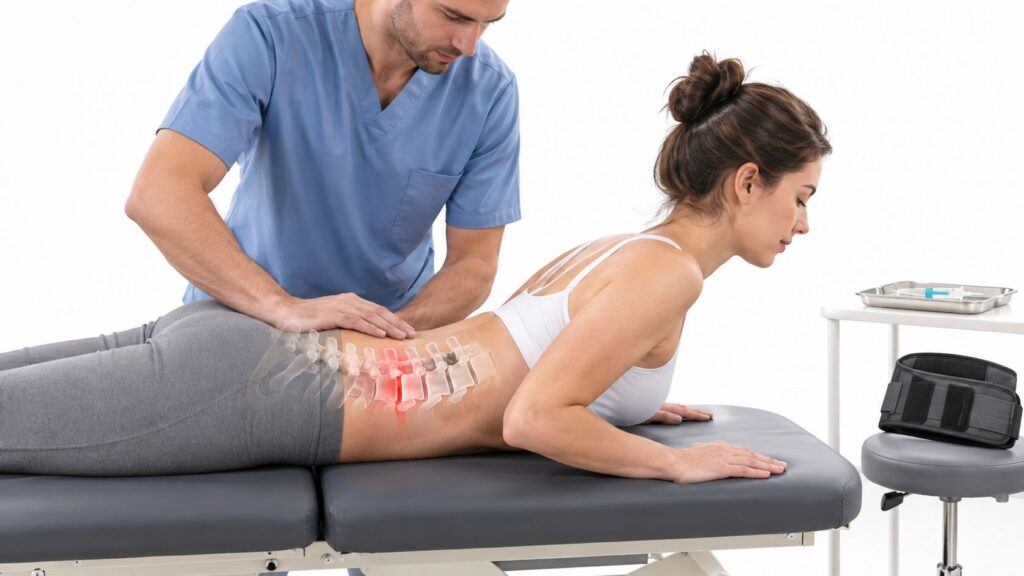
You've had low-back and buttock pain for months. Sitting through a drive, climbing stairs, or rolling over in bed can set it off, and rest, stretching, or over-the-counter medication hasn't made a lasting difference. If you live around Chicago Ridge, Illinois, you may be wondering whether an injection could help, or whether it would just mean another procedure without a clear answer.
That skepticism is reasonable. Pain in this area can come from the sacroiliac joint, but the lower spine, hip, and nearby muscles can produce similar symptoms. A careful plan uses an injection as one step: first to test whether the joint is involved, then, when appropriate, to treat it and guide decisions about what comes next.
Table of Contents
- Why SI Joint Pain Is Hard to Pin Down
- What the Sacroiliac Joint Does and Why It Hurts
- Why Diagnosis Comes Before Treatment
- What Happens During a Diagnostic Block and Steroid Injection
- Steroid, PRP, and Cell-Based Injections Compared
- When Injections Lead to Radiofrequency Ablation
- Risks, Safety Screening, and the Multimodal Plan
- What to Ask at Your Consultation
Why SI Joint Pain Is Hard to Pin Down
Consider a patient from the Chicago Ridge area who points to one side of the low back and buttock. Stairs hurt. Sitting too long brings on an ache, and turning in bed can wake them. They've tried resting, stretching, and nonprescription pain medicine, but the pain keeps returning.
That pattern may fit sacroiliac (SI) joint pain, but it doesn't prove it. A nerve irritated in the lower spine, a hip problem, or strained muscles can create pain in much the same neighborhood. Treating the wrong source with an injection can bring little benefit and delay a more useful plan.
The pattern matters, but it isn't proof
A pain specialist will ask where the pain starts, where it travels, and which movements bring it on. They'll also ask about prior injuries or surgery, what treatments you've tried, and whether symptoms such as numbness or weakness point toward another source. Your answers help narrow the possibilities, but no single symptom settles the diagnosis.
It can help to keep a brief record of what worsens your pain, including sitting, walking, climbing stairs, or rolling over. If you're looking for general, non-procedural ideas while preparing for an appointment, this overview offers information about approaches to lower back pain.
The key question isn't whether an SI injection is available. It's whether the evidence so far makes the joint a plausible pain source, and how the clinician will tell whether numbing it changes your familiar symptoms. A thoughtful pain specialist doesn't treat the injection as a last-ditch guess. They use it within a diagnostic-then-therapeutic pathway, with a clear plan for measuring the response.
What the Sacroiliac Joint Does and Why It Hurts
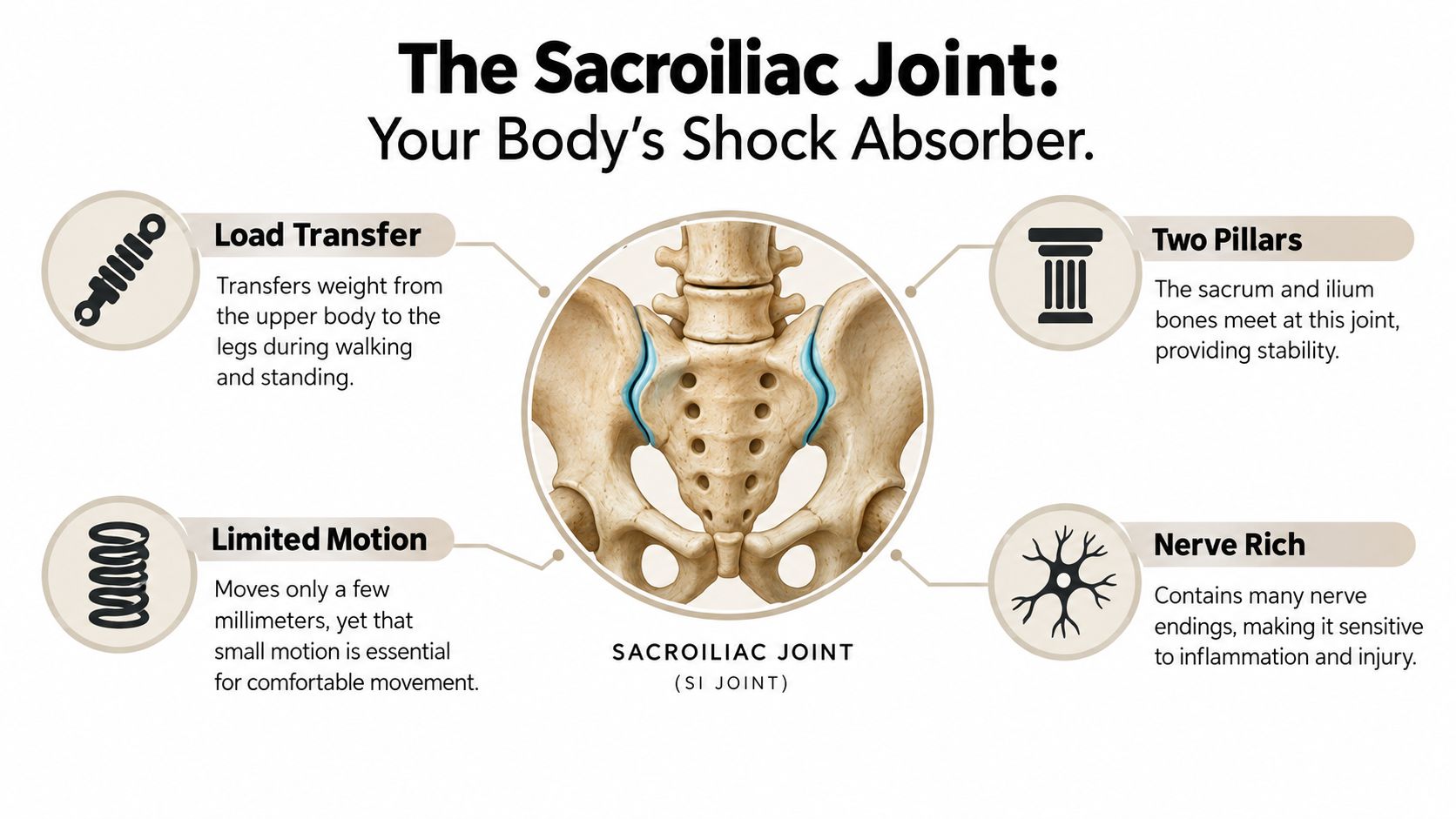
The sacroiliac joints connect the sacrum, the bone at the base of the spine, to the ilium, the broad bones of the pelvis. There's one on each side. Strong ligaments help hold the joints steady, and their movement is limited, but they still have an important job.
Think of each joint as a shock absorber in the route that transfers weight from your upper body to your legs. It also acts like a keystone between two pillars: the sacrum and the pelvis must work together as you stand, walk, and shift your weight. Even small changes in that connection can matter when it bears load throughout ordinary movement.
Two common routes to pain
The joint can become painful when inflammation affects it, including in inflammatory conditions such as spondyloarthropathy. It can also hurt because of mechanical strain or degenerative change, sometimes associated with pregnancy, injury, or long-standing wear. Those are different problems, so a treatment plan needs to account for the likely cause rather than treating all SI joint pain as one condition.
Pain from this area can be felt in the lower back or buttock and may refer toward the groin or back of the thigh. That spread can make the joint seem like the source of hip or lumbar pain, or vice versa. It's one reason the diagnosis depends on more than where you point when asked where it hurts.
Because nerves in and around the joint carry pain signals, irritation may produce symptoms even though the joint itself moves only a little. Understanding how everyday activities load the pelvis can also help you make sense of discomfort. For general context on lifestyle approaches that may support joint health, consider which changes are relevant to your own care plan with a clinician.
Why Diagnosis Comes Before Treatment
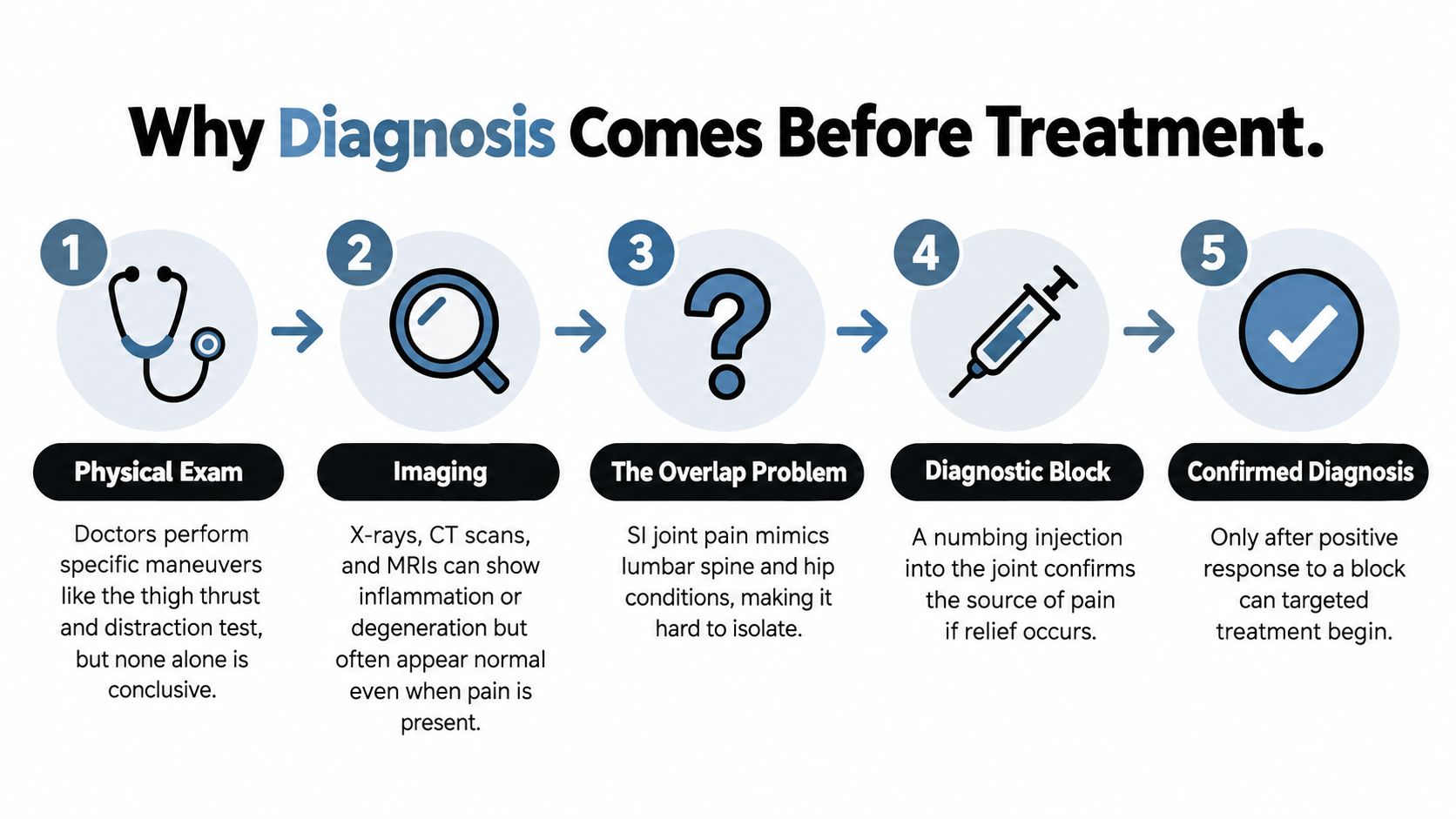
No single physical-examination maneuver or imaging test reliably confirms that the SI joint is causing pain. An exam can show what movements reproduce symptoms, and imaging can help identify relevant conditions, but neither necessarily distinguishes the joint from the lumbar spine, hip, or surrounding muscles. Medicare coverage guidance also recognizes that history, examination, and radiology alone may not definitively establish SI joint dysfunction.
A controlled local-anesthetic block offers a more direct test. A clinician places numbing medicine at the suspected pain source and asks whether your familiar pain improves during the period when that anesthetic should work. “Controlled” means the response is measured against a planned standard, including how much relief occurs and how long it lasts, rather than judged from a vague impression later.
Why the extra care matters: A single uncontrolled SI joint injection has an estimated false-positive rate of about 20%. The joint accounts for approximately 10% to 27% of suspected chronic low-back-pain cases when diagnosis is established with controlled comparative local-anesthetic blocks. Those estimates show why a structured diagnostic approach matters.
What counts as a meaningful response
Some clinical criteria use at least 75% pain relief for the expected duration of the anesthetic as a positive response before moving to therapeutic injection. The threshold helps avoid treating a joint as the main pain source when the improvement is small, inconsistent, or not timed to the anesthetic's effect. The clinician should also consider whether the movements that usually trigger your pain become easier.
This isn't a test you pass by reporting any improvement. If the familiar pain doesn't change, or if relief is hard to connect to the block, the result may lead the clinician to reconsider the target and evaluate other causes. The point is to avoid committing you to treatment for a problem you may not have.
What Happens During a Diagnostic Block and Steroid Injection
A diagnostic block and a therapeutic injection may use similar image-guided techniques, but they answer different questions. A diagnostic block uses local anesthetic to test whether numbing the joint reduces your familiar pain. A therapeutic injection may add corticosteroid to address inflammation, with the aim of improving symptoms as part of a broader care plan.
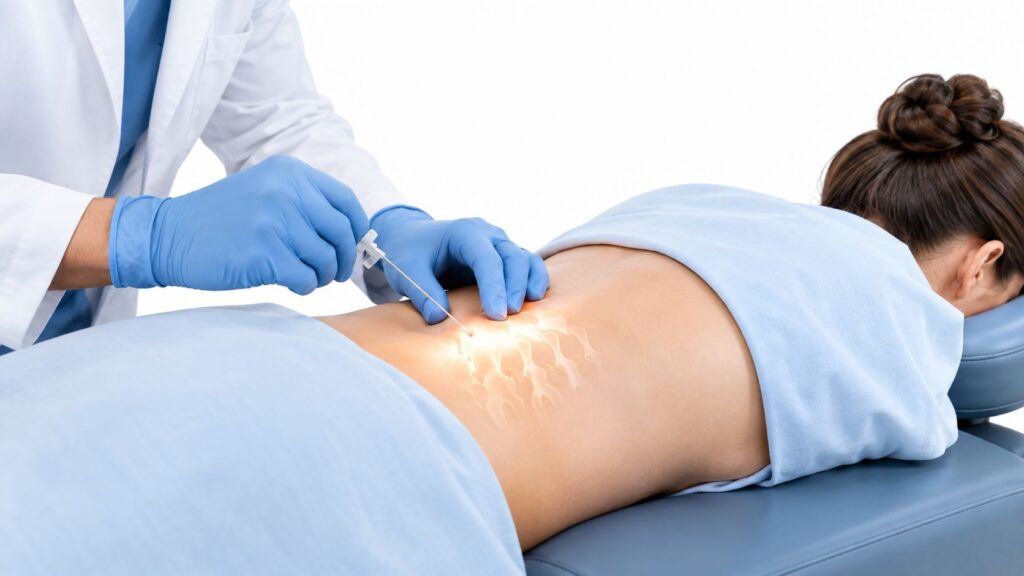
For the procedure, you'll be positioned on an imaging table, and the clinician will clean the skin and numb the area. Using fluoroscopy or another validated image-guidance method, the clinician guides the needle toward the joint and uses contrast to confirm the needle's placement and the medication's spread. Image guidance helps reduce the chance of treating nearby tissues instead of the intended joint.
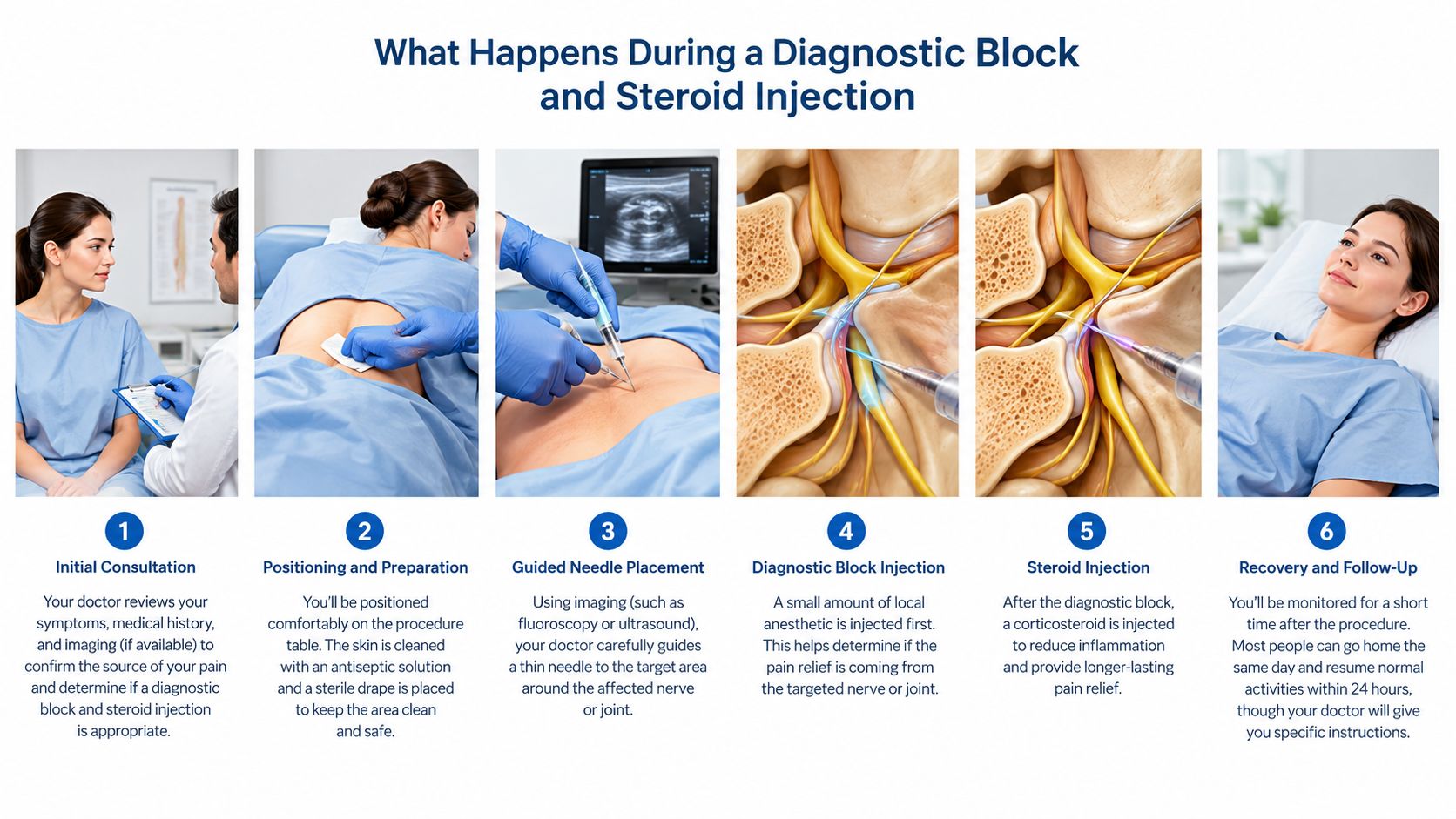
The clinician then injects anesthetic for a diagnostic block, or anesthetic and corticosteroid in a therapeutic session. Some clinical criteria define a positive diagnostic response as at least 75% pain relief lasting for the expected duration of the local anesthetic before therapeutic injection is authorized. Guidance on diagnostic response and image-guided placement underscores why your observations after the procedure matter.
Track what changes afterward
Before the block, note your baseline pain and which activities reliably bring it on. Afterward, repeat those activities as advised by your care team, then record the location and intensity of pain, the percentage of relief, how long the anesthetic benefit lasts, and any change in function.
Useful activities might include walking, sitting, climbing stairs, or rolling over in bed. A numerical pain score can help, but it can't tell the whole story on its own. Write down whether a specific movement that normally hurts has become easier, and share the record with your clinician when you review the result. Learn more about fluoroscopy-guided injection procedures.
Steroid, PRP, and Cell-Based Injections Compared
A corticosteroid injection is generally considered for short-term therapeutic benefit, not as a permanent fix. A systematic review covering 43 studies and 2,431 patients found that steroids were the most extensively studied approach, with 1,425 treated patients. In its pooled analysis, steroid injections improved visual analog scale (VAS) pain scores by 3.4 points at mid-term follow-up and 3.0 points at long-term follow-up. The review reported a 26% failure rate, and differences in study design and patient selection mean that average results can't predict one person's outcome. The review also compared steroid injections with PRP.
Platelet-rich plasma (PRP) is prepared from a patient's blood. In the same review, PRP improved VAS scores by 2.2 points at mid-term and 2.3 points at long-term follow-up, with a reported 14% failure rate. Those figures don't establish that PRP is superior: the studies differed in their methods and patients, and the review described the PRP evidence as uncertain. Learn more about what PRP treatment involves.
| Option | Evidence Strength | Typical VAS Change | Durability | Failure Rate | Regulatory Note |
|---|---|---|---|---|---|
| Corticosteroid | Most extensively studied of these options, though the broader evidence base includes many observational studies | 3.4 points mid-term; 3.0 points long-term | Benefit may fade; it isn't a permanent solution | 26% in the review | Discuss whether it fits the diagnosis and treatment goal |
| PRP | Less certain and less standardized; evidence is limited by inconsistent studies | 2.2 points mid-term; 2.3 points long-term | Long-term superiority hasn't been established | 14% in the review | Preparation and protocols vary |
| Cell-based injections | Evidence for SI joint pain remains uncertain | No pooled VAS change stated in the reviewed data | Long-term benefit hasn't been established | No comparable failure rate established | Don't assume a product is approved for an unproven use; ask about its regulatory status |
Match the option to the goal
Cell-based injections are not interchangeable with steroid or PRP, and available evidence doesn't establish a durable advantage for them in SI joint pain. Ask what a proposed treatment is intended to accomplish, what evidence supports that use, and what uncertainties remain about preparation and long-term outcomes.
The choice should reflect the suspected cause of pain and the outcome you value. For one person, reducing inflammation enough to take part in rehabilitation may be the immediate goal. For another, the priority may be to confirm the pain source before considering a different intervention.
When Injections Lead to Radiofrequency Ablation
A diagnostic block can inform a decision about radiofrequency ablation (RFA), a procedure that targets small nerves carrying pain signals from the SI joint. RFA doesn't repair the joint or remove its underlying inflammation or degeneration. It aims to reduce the transmission of pain from the area, so it may provide a longer window for activity and rehabilitation when the diagnostic evidence supports that target.
A positive block is important because it offers evidence that numbing the joint changes the familiar pain. Contemporary guidance commonly uses at least 75% pain reduction, sometimes demonstrated with two separate diagnostic blocks, before proceeding to longer-term procedures such as SI joint RFA. Diagnostic criteria for longer-lasting interventions help clinicians decide whether treating the nerves is a reasonable next step.
A block is a decision tool, not a promise. It can strengthen the case for targeting the SI joint, but it can't guarantee that RFA will work or make the underlying joint condition disappear.
The important distinction is between temporarily numbing a suspected source and deciding whether a nerve-targeted procedure makes sense. If the block doesn't produce a clear, appropriately timed response, the clinician may revisit the diagnosis rather than advance to RFA. If it does, the next conversation can cover expected benefits, limitations, and other treatment options. Learn about radiofrequency ablation and how it's used.
Risks, Safety Screening, and the Multimodal Plan
Before any injection, your clinician should review your health history and medicines. Tell them if you have an active infection, a malignancy near the treatment area, a bleeding condition, or take anticoagulants. Also mention pregnancy or poorly controlled diabetes. These issues can affect whether a procedure is appropriate, how it should be planned, or what precautions are needed.
An injection is only one part of care. When pain eases, that improvement may create an opportunity to work on pelvic stability and how your body transfers load between the spine and legs. A pain and wellness clinic can coordinate treatment with rehabilitation professionals while also considering activity modification and appropriate non-opioid medication.
A practical plan might connect the injection to a specific functional target, such as tolerating a walk, sleeping more comfortably, or participating in a rehabilitation program. The clinician and patient can then review whether both pain and function changed, rather than repeating a procedure because it was tried before.
Reassess instead of repeating by default
Relief varies, and fading benefit doesn't necessarily mean the injection was performed incorrectly. In a 2025 meta-analysis of 375 patients with spondyloarthropathy, average VAS pain decreased from 8.2 before injection to 3.2 at short-term follow-up and 3.3 at mid-term follow-up, then rose to 5.1 at final follow-up, indicating that benefit waned over time. The findings describe a group, not a guarantee for an individual patient.
That's why reassessment matters. If relief is partial or short-lived, the next step may be to review the diagnosis, adjust rehabilitation or medication, or consider another intervention. Repeated injections shouldn't replace diagnostic clarity, progressive rehabilitation, or an evaluation of other possible pain sources.
What to Ask at Your Consultation
Bring prior imaging, a list of treatments you've tried, and a short log of where and when pain flares. Ask whether the plan includes a controlled diagnostic block, what image guidance the clinician will use, and what functional goal the injection is intended to support. Clarify what duration of relief is realistic and what happens if improvement is partial or short-lived.
During the anesthetic window, record pain during activities that normally trigger it, such as walking, sitting, stairs, or rolling in bed. Patients in Chicago Ridge, Palos Heights, Palos Hills, Evergreen Park, and Hickory Hills can use those notes to have a more focused conversation with an interventional pain specialist in Illinois.
Midwest Pain & Wellness offers image-guided diagnostic and therapeutic sacroiliac joint injections as part of personalized, multimodal pain care. If you're weighing an injection or want to discuss what a diagnostic response could mean for your next step, contact Midwest Pain & Wellness to arrange a consultation.