You wake up with a sharp ache in your lower back, but the problem is the burning line traveling through your buttock and down your leg. Sitting at work, climbing stairs, or standing at the kitchen counter suddenly feels difficult. You may hear the word “sciatica” and wonder whether you need an injection, physical therapy, medication, or surgery.
The right choice depends on which nerve is involved, what your examination shows, how long symptoms have lasted, and whether your function is improving. Lumbar radiculopathy treatment options work best when they're matched to a clear decision point, not selected from a list without context. At a pain and wellness clinic serving Chicago Ridge, Palos Heights, Palos Hills, Evergreen Park, and Hickory Hills, Illinois, the practical goal is to reduce pain without relying unnecessarily on opioids, restore movement, and escalate care only when the expected benefit justifies the added risk.
Table of Contents
- Understanding Lumbar Radiculopathy and Why Leg Pain Happens
- How Treatment Decisions Are Made and What to Expect
- Conservative Care That Builds Recovery First
- Medications for Nerve Related Leg Pain and Opioid Sparing Choices
- Image Guided Injections and Interventional Procedures That Target the Nerve
- When Surgery and Neuromodulation Are Considered
- Choosing Your Next Step and Getting Care Near Chicago Ridge
Understanding Lumbar Radiculopathy and Why Leg Pain Happens
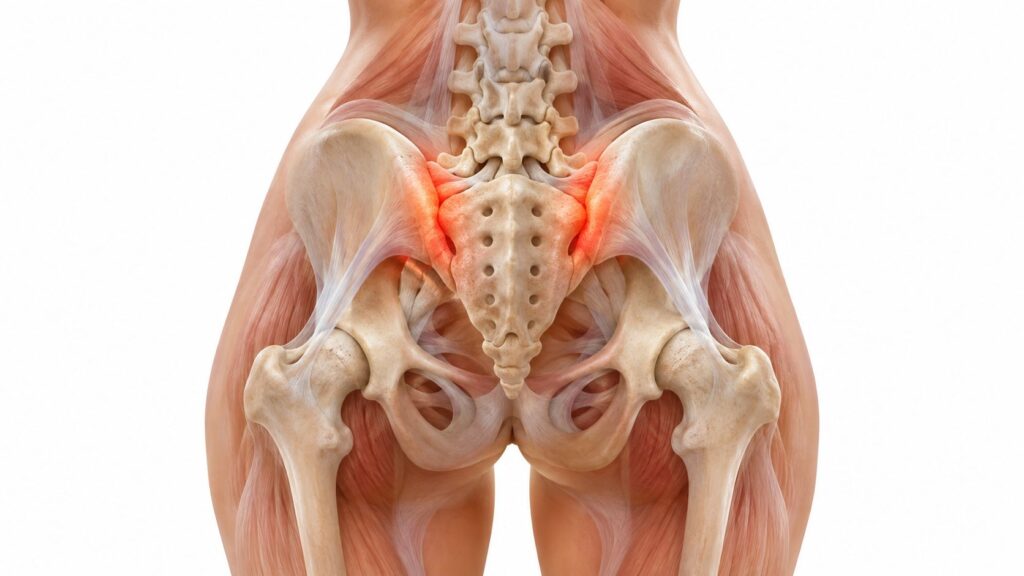
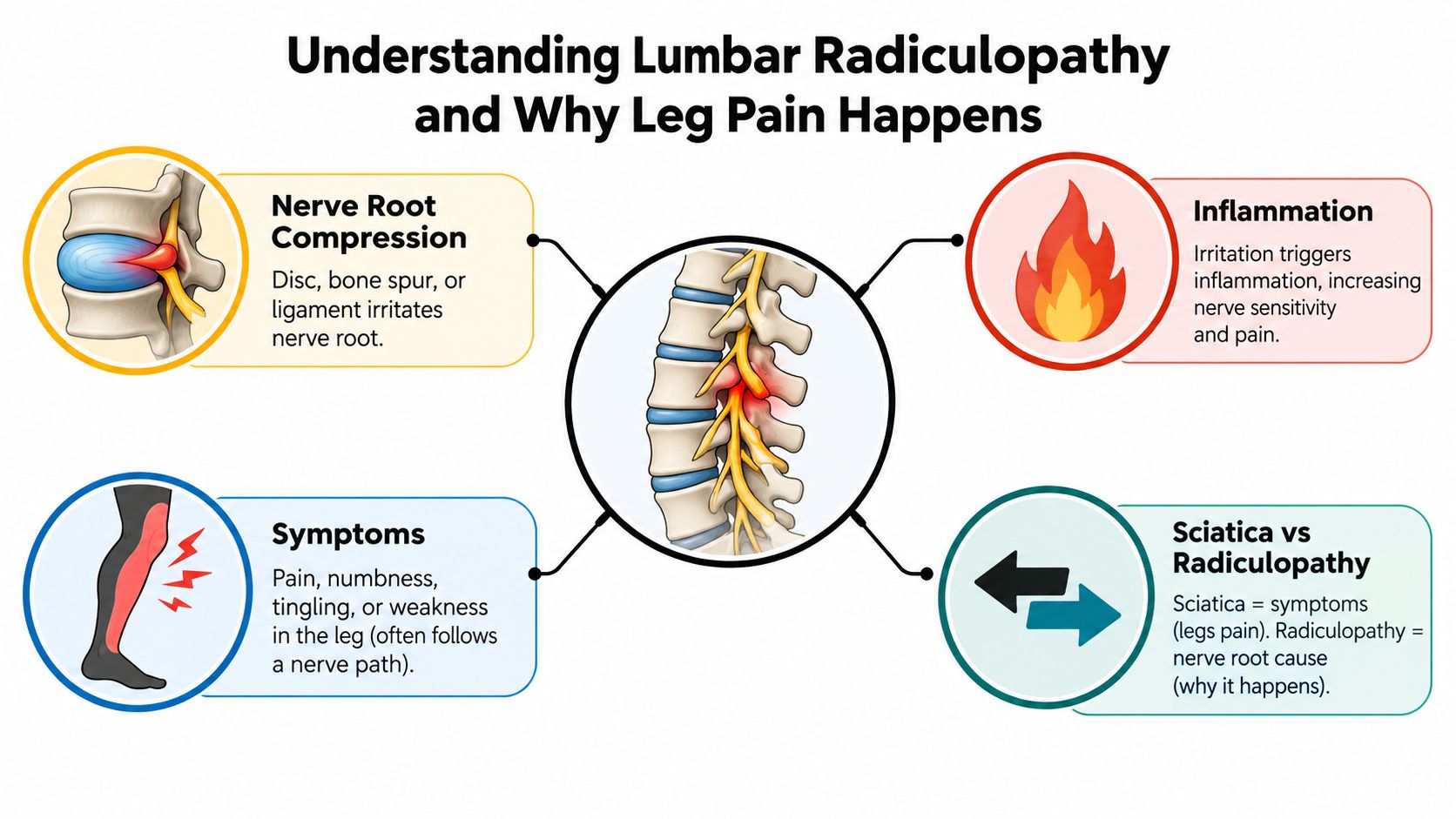
A patient may describe the pain as starting in the low back and “shooting” behind the thigh, into the calf, or toward the foot. Others notice tingling, numbness, or weakness instead of severe back pain. These symptoms often occur when a lumbar nerve root becomes irritated or compressed by a disc herniation, bone spur, spinal narrowing, or inflammation.
Think of a nerve as an electrical cable leaving the spine. If a nearby disc or other structure presses against the cable, the resulting signal can travel along the entire downstream pathway. That's why a problem in the lower back can cause pain in the leg. The symptoms don't mean the leg itself is necessarily injured.
Sciatica and radiculopathy aren't identical
People often use “sciatica” to describe any leg pain from the lower back. Lumbar radiculopathy is the more specific clinical term for nerve-root irritation or compression, particularly when symptoms include sensory changes, weakness, or altered reflexes. Sciatica is a common symptom pattern, while radiculopathy describes the underlying nerve problem.
Most cases can improve with time and structured non-surgical care, especially when there's no progressive neurologic loss. That doesn't mean you should ignore worsening symptoms. New or progressive leg weakness, difficulty walking, loss of bowel or bladder control, or numbness in the saddle area requires urgent medical evaluation.
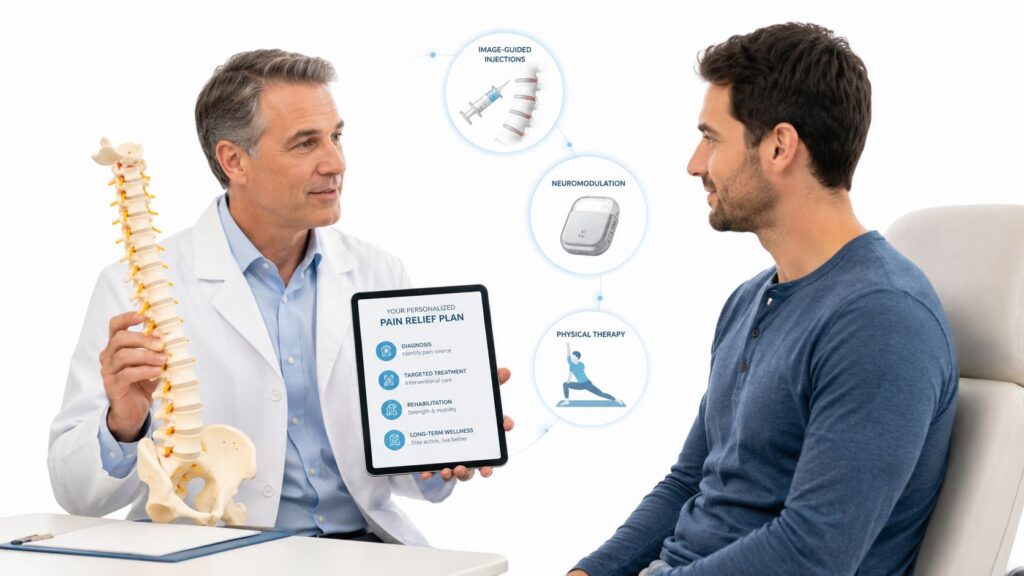
A careful evaluation usually combines your history, strength and sensation testing, reflexes, movement assessment, and imaging when it's clinically appropriate. You can learn more about the evaluation process in this guide to how nerve pain is diagnosed. The treatment ladder generally begins with activity and rehabilitation, adds medication when useful, considers a targeted injection for selected patients, and refers for surgery when persistent structural compression or neurologic decline changes the balance.
How Treatment Decisions Are Made and What to Expect
When leg pain keeps you from walking or sleeping, the first decision is not which treatment to try. It is what is preventing recovery right now. If pain and inflammation limit movement while strength remains stable, a time-limited non-surgical plan may be reasonable. If weakness is progressing, or imaging shows major compression that matches the examination, evaluation and treatment may need to move faster.
The spine resembles a crowded passageway carrying electrical cables to the leg. A scan can show several age-related changes, but only one may affect the nerve that matches your symptoms. MRI findings therefore guide a decision rather than make it alone.
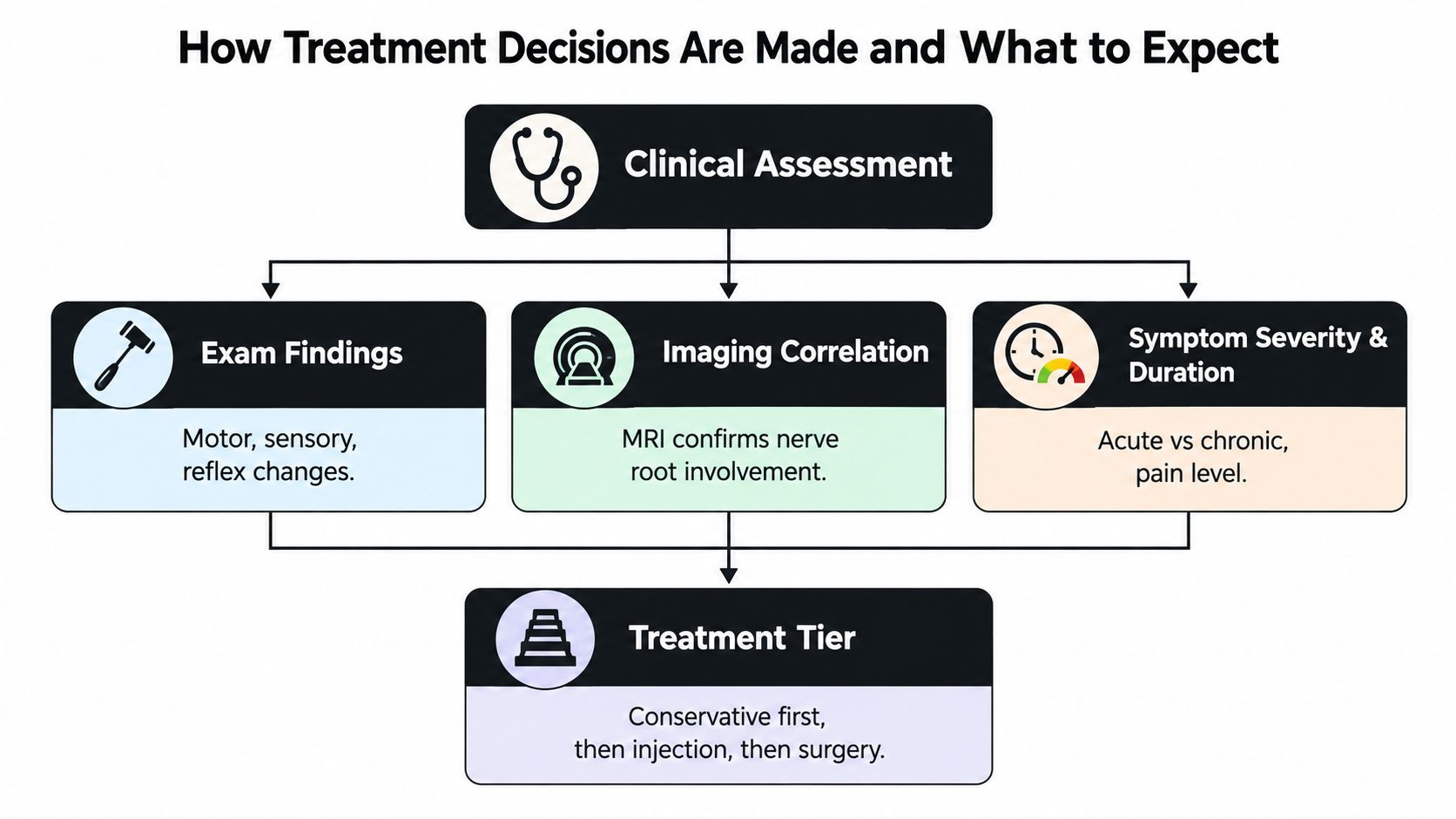
Four questions guide the plan
What does the examination show? Strength, sensation, reflexes, gait, and nerve-tension testing indicate whether the nerve is irritated and whether function is being lost.
Does imaging correlate? A disc or narrowed canal matters most when its location matches the affected nerve and symptom pattern.
How severe and persistent is the problem? Acute pain with stable strength allows more time for recovery. Persistent pain that disrupts sleep, work, walking, or rehabilitation may justify a targeted treatment or escalation.
What is the functional target? The goal might be walking farther, sleeping through the night, returning to work, or completing rehabilitation exercises. Pain intensity matters, but function shows whether the plan is changing the course.
An injection, when appropriate, may serve as a short-term bridge to rehabilitation rather than a permanent fix. If benefit is brief, absent, or neurologic function worsens, repeating the same approach has limited value.
Practical rule: Choose the least invasive option with a reasonable chance of restoring function, set a reassessment point, and avoid indefinite ineffective care.
Patients may also ask about supplements. For general background on non-prescription approaches, Hemp Well Ireland CBD pain relief offers information to review. Discuss any supplement with a clinician, especially if you take medication or have other medical conditions.
Conservative Care That Builds Recovery First
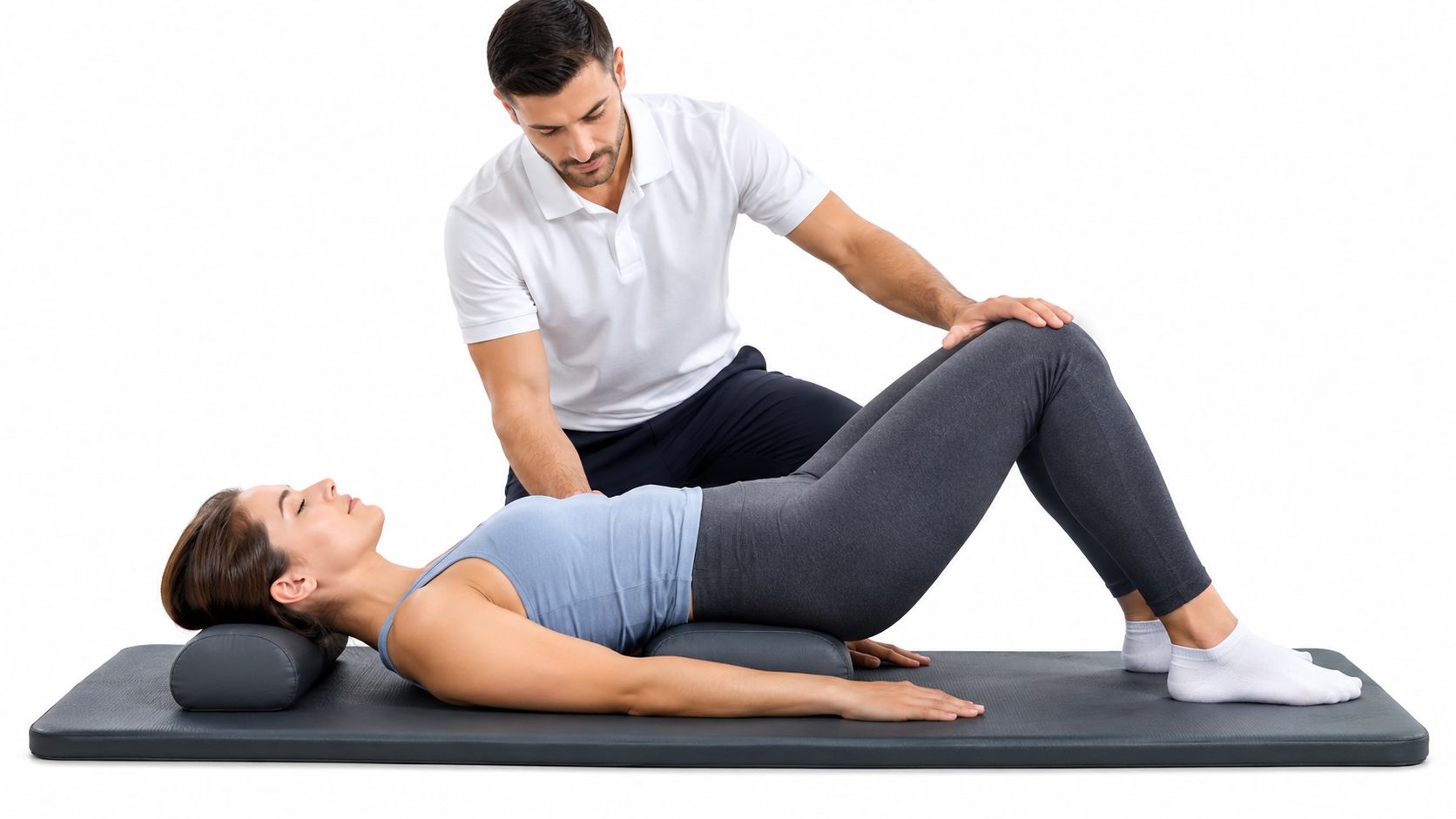
Conservative care isn't passive waiting. It's an active plan that reduces aggravating loads while gradually rebuilding the back, hip, and leg's ability to move. Evidence-based reviews support patient education and self-management, directional-preference or McKenzie-based exercise, mobilization or manipulation, neural mobilization, and activity-specific strengthening for acute and subacute lumbar radiculopathy evidence on conservative interventions.
Start with movement that your nerve can tolerate
A good program is individualized. One person may feel better with repeated extension movements, while another may need a different directional strategy. A trained clinician watches how symptoms respond during and after movement, then adjusts the program rather than forcing a standard routine.
Helpful principles include:
- Keep moving within limits: Short, manageable walks and regular position changes are usually more useful than prolonged bed rest.
- Use symptom response as feedback: An exercise that gradually reduces leg symptoms may be useful, while one that consistently pushes pain farther down the leg needs review.
- Build neural mobility carefully: Nerve-gliding movements can address mobility without aggressive stretching, but they should be prescribed and progressed based on irritability.
- Strengthen for real tasks: Progression may include lifting mechanics, stair tolerance, standing endurance, or work-specific movements.
- Modify, don't abandon, activity: Temporarily reducing heavy bending, twisting, or prolonged sitting can create room for healing while preserving general conditioning.
Traction can feel relieving for some people, but evidence supports mainly short-term value and weak long-term effects review of lumbar radiculopathy care. It shouldn't replace active rehabilitation.
Know when the plan needs a new decision
A home program should have clear instructions, a way to track function, and a reassessment point. Record walking tolerance, sleep, sitting time, leg symptoms, and any change in strength. If you're steadily improving, the plan can progress. If pain remains function-limiting or neurologic symptoms worsen, an evaluation should revisit the diagnosis and next tier.
A pain and wellness clinic isn't limited to a physical therapy-only model. It can coordinate targeted rehabilitation with medication review, diagnostic assessment, and image-guided procedures when appropriate. For practical activity guidance, see this resource on how to manage sciatica.
Medications for Nerve Related Leg Pain and Opioid Sparing Choices
Medication can create enough comfort to sleep, walk, and take part in rehabilitation, but it usually does not correct the mechanical reason a nerve is irritated. Common starting options include acetaminophen and nonsteroidal anti-inflammatory drugs, with the choice shaped by kidney function, gastrointestinal and cardiovascular risks, allergies, and other prescriptions, as described in this clinical overview of lumbar radiculopathy care.
Match the medication to the job
Acetaminophen may reduce pain without the anti-inflammatory effect of an NSAID. NSAIDs can help when inflammation contributes to symptoms, yet common use does not make them risk-free or suitable for every patient. A clinician may selectively consider other non-opioid medicines when burning or shooting symptoms, poor sleep, or medication restrictions complicate treatment.
Judge benefit by function, not only by the pain score. A medication has a useful short-term role if it helps you walk, complete prescribed exercises, sleep, or tolerate a flare while the underlying recovery plan continues. If it does not improve a meaningful activity, its risks may outweigh its benefit.
Why opioids are not the default
Opioids are generally reserved for severe pain after non-opioid approaches have failed. They require review of duration, drug interactions, sedation, driving safety, constipation, and dependence risk. They may blunt pain without improving nerve recovery or correcting compression, so an opioid-sparing plan is especially appropriate when expected relief is temporary.
Medication goal: Reduce symptoms enough to support recovery, then adjust the medication as function improves.
Patients considering non-prescription approaches can review these evidence-based natural pain relief options. Bring every supplement or product to a medication review. “Natural” does not automatically mean safe, effective, or compatible with prescribed treatment. Reassess the plan if function fails to improve, side effects appear, or weakness progresses.
Image Guided Injections and Interventional Procedures That Target the Nerve
An epidural steroid injection works best as a targeted, time-limited treatment for symptoms, not as a cure for the underlying compression. Coverage and clinical guidance generally consider it when leg pain limits function, the examination and imaging support nerve-root involvement, and conservative care has not worked for at least 2 to 4 weeks Medicare coverage guidance for epidural injections.
The medication is placed near irritated nerve structures. A transforaminal injection approaches the area around one exiting nerve root. An interlaminar injection places medication in the epidural space through a different route. The choice depends on the affected level, pain distribution, imaging, prior procedures, anatomy, and safety considerations.
What the evidence means in practical terms
An evidence synthesis cited by the American College of Physicians found immediate pain improvement of −7.55 points on a 0 to 100 scale compared with placebo, but no meaningful long-term reduction in pain, function, or surgery rates beyond about 3 months evidence synthesis on epidural corticosteroid injections. A clinical summary reports that transforaminal injections can reduce pain at 3 months. That benefit window explains why clinicians may use an injection as a bridge to rehabilitation or as a way to delay escalation when neurologic findings remain stable.
The practical test is function. If less leg pain lets you walk, sleep, or perform prescribed exercises, the injection may create time for the nerve and surrounding tissues to recover while active treatment continues. If relief does not change a meaningful activity, repeating the procedure without reconsidering the diagnosis, imaging, or treatment goal has less value.
| Procedure | When considered | Expected benefit window | Primary role |
|---|---|---|---|
| Transforaminal epidural injection | Focal radicular symptoms with matching examination and imaging | Mainly short-term, sometimes extending to about 3 months | Bridge to rehabilitation or temporary relief |
| Interlaminar epidural injection | Broader or multilevel epidural inflammation when clinically appropriate | Mainly short-term | Reduce symptoms while active care continues |
| Selective nerve-root block | Diagnostic clarification or targeted relief around a suspected root | Time-limited | Identify and calm a specific irritated nerve |
| Facet or medial branch intervention | Facet-mediated back pain rather than isolated nerve-root pain | Depends on response and diagnosis | Diagnostic evaluation or targeted back-pain treatment |
| Sacroiliac intervention | Suspected sacroiliac joint pain after clinical assessment | Time-limited | Confirm and manage a non-radicular pain source |
| Radiofrequency ablation | Selected facet-related pain after appropriate diagnostic workup | Variable and not intended to decompress a nerve | Modulate pain from targeted sensory nerves |
| MILD or Vertiflex Superion | Selected patients with structural lumbar narrowing and activity-related symptoms | Depends on anatomy and candidacy | Minimally invasive decompression or support in appropriate cases |
Payer policies may set specific utilization rules. One published policy requires 4 weeks of conservative management, with an earlier injection after 2 weeks in some cases of clear radiculopathy. It also specifies at least 30 days between repeat injections and no more than 6 injections in 12 months clinical policy for epidural steroid injections. Requirements vary, including for Illinois patients, so confirm eligibility before scheduling. The decision should also include a plan for rehabilitation and a clear point for reassessment if function does not improve.
When Surgery and Neuromodulation Are Considered
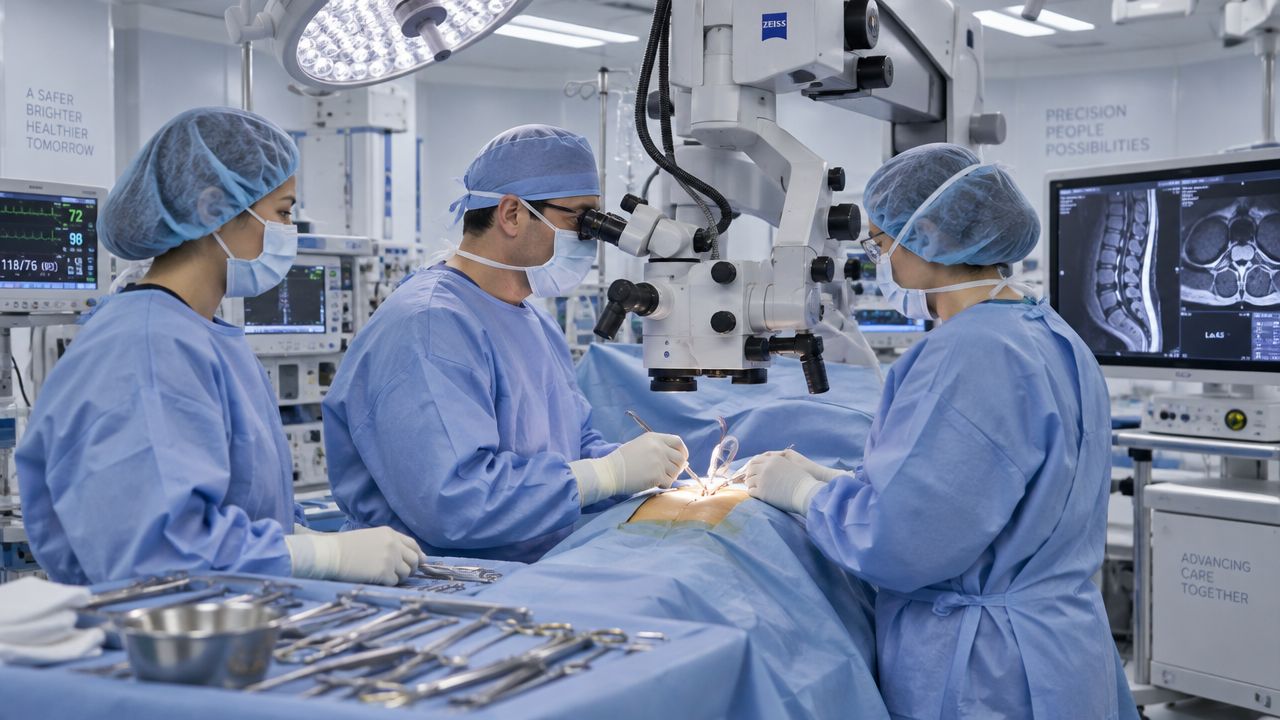
Surgery addresses a structural problem. An epidural injection can reduce inflammation around a compressed nerve and create time for rehabilitation, but it does not remove a disc fragment or permanently enlarge a narrowed passageway. If compression remains substantial, leg pain continues despite an appropriate care plan, or neurologic function declines, a surgical consultation becomes reasonable.
The North American Spine Society guideline evidence describes patients with large lumbar disc herniations occupying more than 25% of the spinal canal who did not improve after 6 weeks. In that specific evidence setting, surgery produced better results than epidural injections. The same evidence reported relief after rescue transforaminal injection in 50% of patients in one setting, while medium- to long-term outcomes were reported in 75.4% of patients after an average of 1.8 transforaminal injections. These findings help frame a decision point, not predict an individual result. An injection may serve as a bridge to therapy when strength is stable. Persistent disability or worsening neurologic findings changes the conversation.
Decompression is selective, not automatic
Open discectomy, microdiscectomy, and microendoscopic discectomy are strongly recommended surgical options for lumbar disc herniation in this systematic review of treatment guidelines. The choice depends on whether symptoms, examination findings, imaging, symptom duration, functional loss, and patient goals point to the same pain source. Progressive weakness or severe neurologic dysfunction can shorten the usual timeline. Emergency symptoms require urgent evaluation.
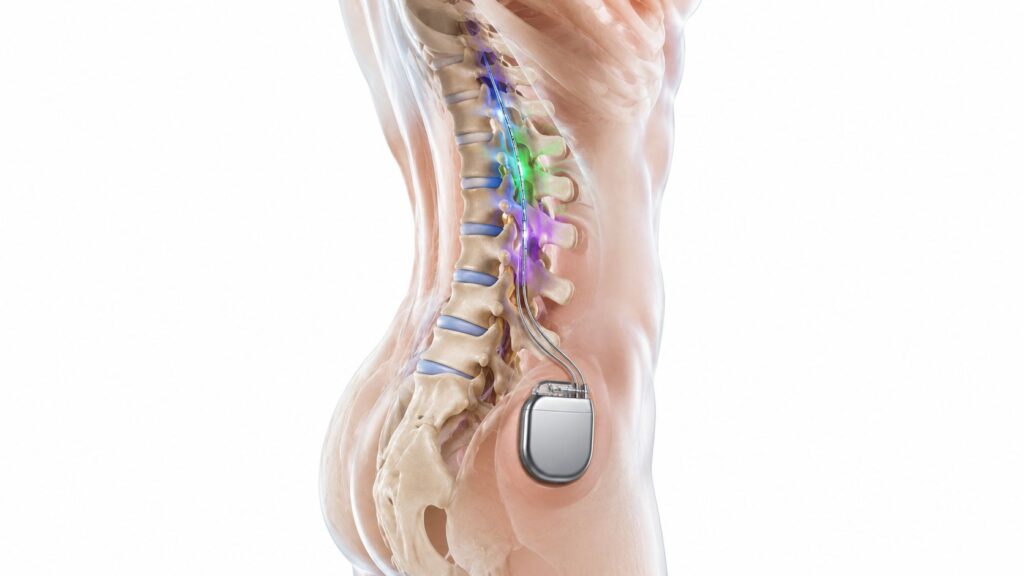
Neuromodulation follows a different decision path. Peripheral nerve stimulation and spinal cord stimulation may help selected patients with persistent neuropathic pain, including some with post-laminectomy pain, after clinicians assess the pain generator and prior treatments. These therapies change how pain signals are processed. They do not correct structural compression or replace urgent decompression when a nerve is progressively injured.
For a plain-language explanation of how spinal cord stimulation works, distinguish pain-processing changes from correction of the underlying anatomy.
Regenerative procedures need careful expectations
PRP is sometimes presented as a more advanced or longer-lasting alternative to steroid injections. A 2025 meta-analysis found epidural PRP performed comparably to epidural steroid injection for radiculopathy caused by lumbar disc disease, without showing superiority or a clear safety advantage 2025 meta-analysis of epidural PRP and steroid injection. That makes PRP an evolving option to discuss, not a replacement or cure. In an opioid-sparing plan, the practical question is whether the treatment supports rehabilitation and improves function enough to justify its risks, cost, and uncertain durability.
Choosing Your Next Step and Getting Care Near Chicago Ridge
When leg pain starts limiting your day, use three signals to choose the next step: time course, neurologic status, and functional progress. New or worsening weakness, difficulty walking, bowel or bladder changes, or numbness in the saddle region requires urgent evaluation, not a routine treatment trial.
With stable strength and recent symptoms, begin with education, activity adjustment, medication review, and rehabilitation. The first benefit window is improved movement and function over time. If pain still restricts walking, sleep, work, or exercise after a reasonable conservative trial, review imaging and discuss whether a selective nerve-root block or epidural injection could serve as a short-term bridge to rehabilitation. The decision point is functional progress, not pain relief alone. Persistent symptoms or major compression on imaging may justify a surgical consultation. Conservative care generally comes first, while discectomy is considered later in selected circumstances, as described in this review of lumbar radiculopathy treatment recommendations.
Bring your medication list, imaging reports and discs when available, prior procedure records, symptom timeline, and notes about activities you can or cannot perform. Track sitting, standing, walking, sleep, and work tolerance, along with changes in numbness or strength.
Midwest Pain & Wellness is a pain and wellness clinic in Chicago Ridge, Illinois, coordinating opioid-sparing care with primary care clinicians, surgeons, chiropractors, and rehabilitation therapists. The practice serves patients in Chicago Ridge, Palos Heights, Palos Hills, Evergreen Park, and Hickory Hills, Illinois, including workers' compensation and personal injury cases.
Midwest Pain & Wellness evaluates lumbar radiculopathy through targeted diagnosis, active rehabilitation, image-guided procedures, and selected escalation. Visit Midwest Pain & Wellness to request an appointment and discuss a personalized plan for restored movement and function.