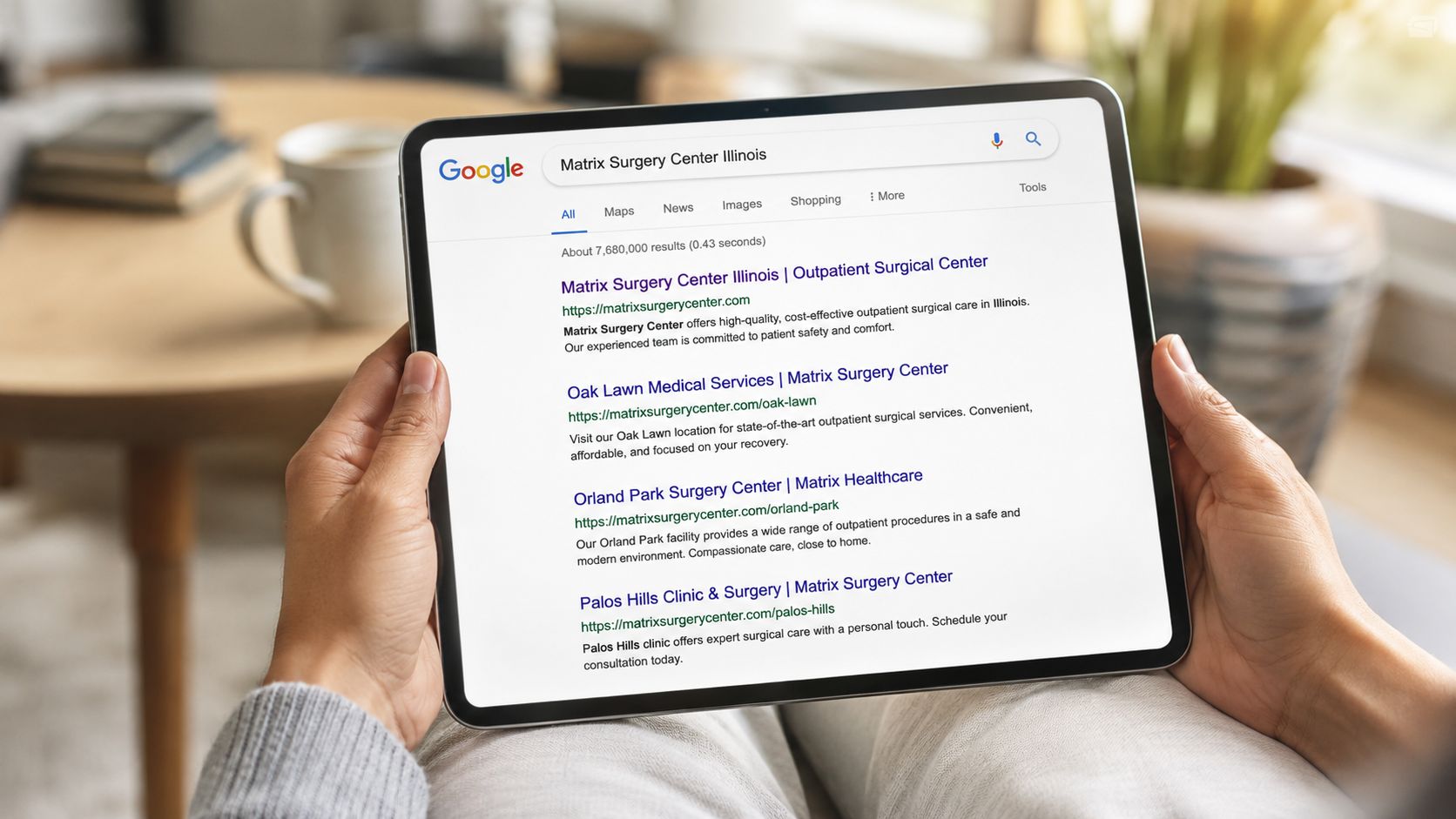
If you're in Oak Lawn, Palos Hills, Palos Heights, Worth, Bridgeview, Hickory Hills, Alsip, Burbank, Evergreen Park, or Orland Park and you typed “Matrix Surgery Center” into Google, you're probably trying to solve a much simpler problem. You want the right pain doctor, the right procedure, and a location that makes sense for regular care.
That search creates confusion fast. A facility name shows up, pain treatment is mentioned, and it sounds like it might be an Illinois option. For many patients in Chicago's south suburbs, the primary concern isn't finding a surgery center by name. It's finding the right kind of pain care close to home.
Searching for Matrix Surgery Center in Illinois
The first thing to clear up is geography. Matrix Surgery Center is not in Illinois. It is a Medicare-certified Ambulatory Surgery Center located at 4450 Fashion Square Blvd, Suite 200 in Saginaw, Michigan 48603, specializing in interventional pain treatment.
That matters if you live in Orland Park, Alsip, or Evergreen Park and expected a nearby office. It also matters if you're dealing with back pain, nerve pain, joint pain, or post-surgical pain and need more than a one-time procedure. Travel sounds manageable when you're searching online. It feels very different when you need repeat visits, follow-up checks, medication review, or a second intervention.
What most people are actually looking for
Patients usually aren't attached to a building name. They're looking for answers to practical questions:
- Can this place diagnose the pain generator instead of guessing based on symptoms alone?
- Do they offer image-guided treatment for spine, joint, or nerve pain?
- Will I have follow-up care nearby if the first treatment helps only partially?
- Can I avoid being pushed toward opioids when the goal is function and durable relief?
Practical rule: If your pain care requires ongoing evaluation, an out-of-state facility name is usually less important than local continuity.
Why the search confusion happens
“Matrix Surgery Center” sounds like it could be anywhere. The facility name also appears alongside general pain and joint treatment language, so Illinois residents can easily assume it serves the Chicago area. It doesn't.
For patients in the south suburbs, the better approach is to stop chasing the name and focus on the care model. Ask whether you need a procedure-only site, or a full pain clinic that can evaluate, treat, reassess, and coordinate your care over time. That distinction changes outcomes in day-to-day practice because chronic pain rarely behaves like a one-visit problem.
Understanding Ambulatory Surgery Centers
An ambulatory surgery center, often shortened to ASC, is a facility built for procedures that don't require an overnight hospital stay. A patient arrives, has the procedure, recovers, and goes home the same day. For many interventional pain treatments, that setup is appropriate and efficient.
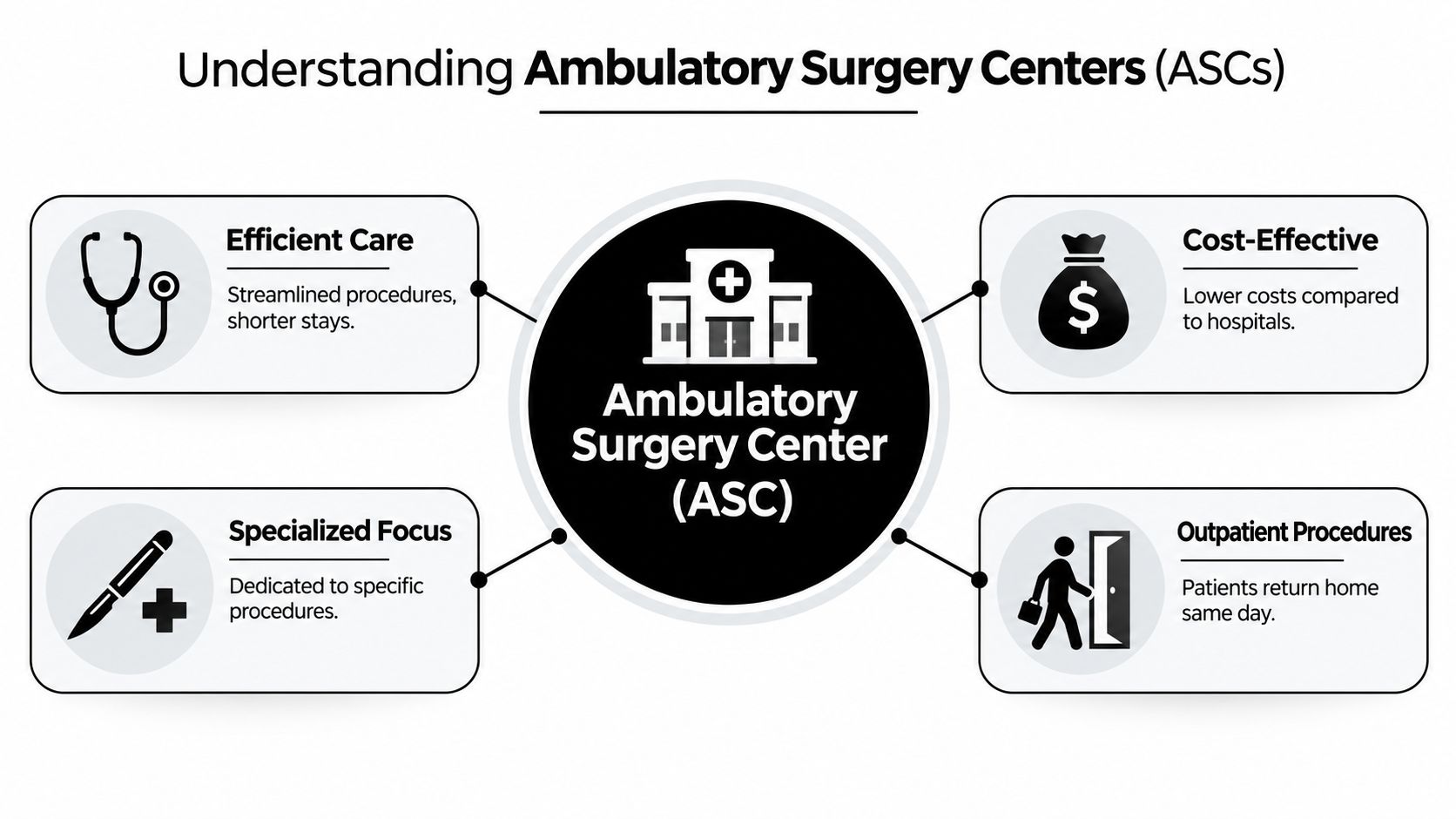
A good ASC isn't just a smaller version of a hospital. It's designed around workflow, patient turnover, procedural safety, and recovery logistics. That's why the environment often feels more efficient and less chaotic than a large hospital outpatient department.
What an ASC does well
Many patients benefit from an ASC model because it can provide:
- Focused procedural care for injections, nerve interventions, spine procedures, and other outpatient treatments
- Same-day discharge so patients can recover at home instead of staying overnight
- A specialized environment where staff are used to a consistent set of procedures and peri-procedural needs
An ASC can be a very good setting when the diagnosis is clear and the treatment plan is already established.
What patients should understand about the facility itself
The building standards matter more than most patients realize. Ambulatory surgery centers like Matrix Surgery Center must follow strict design and operational standards, including durable non-porous finishes, sound-proofing in post-op areas, and robust IT infrastructure verified through inspections.
That sounds technical, but it affects real patient experience. Cleanable surfaces matter for infection control. Post-op sound control matters when patients are waking up and need calm monitoring. Strong IT systems matter when records, scheduling, and communication have to work without confusion.
The trade-off patients often miss
An ASC is excellent for procedures. It may not be the same thing as a full-service pain clinic.
A procedure center answers, “Can we perform this treatment safely?” A full pain practice also answers, “Was this the right treatment, what comes next, and who's following you after the procedure?”
That difference is where many searches go off track. People search for a surgery center when what they really need is a physician-led pain program that uses procedures as one part of a larger plan.
Common Procedures for Advanced Pain Management
Those searching for Matrix Surgery Center aren't searching for architecture or accreditation. They're searching because pain is limiting sleep, work, walking, driving, or exercise, and they want something more targeted than pills and rest.
In modern pain medicine, that often means interventional care. These are procedures designed to identify or treat the source of pain with precision, usually using imaging guidance and a structured follow-up plan.
Diagnostic and therapeutic injections
Some of the most common procedures are targeted injections. These can help reduce inflammation, calm irritated nerves, or confirm whether a certain structure is driving the pain.
Examples include:
- Epidural steroid injections for radiating spine-related pain
- Facet or medial branch blocks when the pain pattern suggests the small joints of the spine
- Sacroiliac joint injections for lower back and buttock pain
- Peripheral nerve blocks when symptoms track along a specific nerve distribution
For patients trying to understand one of the most common options, this guide on what a nerve block injection is gives a useful patient-level explanation.
Procedures used when pain keeps returning
When a temporary block helps but the pain comes back, physicians may consider longer-acting interventions. A common example is radiofrequency ablation, which targets nerves responsible for transmitting pain from certain joints, especially in the neck or low back.
Another category involves implant-based therapies, such as peripheral nerve stimulation or spinal cord stimulation. These options are generally considered when pain has become persistent, function is declining, and more conservative care hasn't produced enough relief.
The best procedure is the one tied to a specific diagnosis. The wrong procedure, even when technically perfect, still disappoints the patient.
Minimally invasive options for selected spine problems
Some patients aren't looking for another injection. They're trying to avoid a bigger spine operation if possible. In those cases, minimally invasive options may come into the discussion, depending on the diagnosis and imaging findings.
These can include:
- MILD procedures for selected lumbar stenosis cases
- Vertiflex Superion placement in carefully chosen patients
- Kyphoplasty for vertebral compression fractures
What works and what doesn't
What works is matching the procedure to the pain generator, confirming the target with history, exam, and imaging, and reassessing after treatment.
What doesn't work is chasing pain from one body part to another with loosely chosen injections, skipping follow-up, or assuming every patient with “back pain” needs the same pathway. Good pain care is selective. It isn't a menu where every intervention fits every complaint.
How to Choose a Pain Treatment Center Near You
Illinois patients often start with the wrong question. They ask, “Which surgery center should I go to?” The better question is, “Who is going to manage my pain before, during, and after the procedure?”
That shift matters because chronic pain care isn't just about access to a procedure room. It's about diagnosis, judgment, sequencing, follow-up, and knowing when not to do an intervention.
Start with the physician, not the building
A center can look polished online and still be the wrong fit. Patients in Bridgeview, Hickory Hills, and nearby communities should look first at the physician's pain focus, how conditions are evaluated, and whether treatment plans feel individualized or templated.
Use a checklist like this:
- Specialty fit matters. Look for a practice centered on pain management, not a general musculoskeletal label that leaves too much unclear.
- Procedure range matters. A narrow menu can push patients toward whatever the clinic happens to offer, rather than what the diagnosis supports.
- Follow-up matters. Ask who sees you after the procedure, how response is measured, and what happens if relief is partial.
- Access matters. Chronic pain care often requires repeat visits, so location and scheduling are part of treatment practicality.
For patients comparing options, an interventional pain management clinic should provide a clearer framework than a surgery-center-only search.
Cost and safety are part of the equation
The national ASC industry performs over 15 million procedures annually in the U.S., often at 30 to 50 percent lower cost than hospital outpatient departments while maintaining comparable safety standards. That's one reason outpatient procedural care has become so important.
Lower cost, however, doesn't automatically mean better overall care for every patient. If a less expensive setting is disconnected from diagnosis, follow-up, and long-term planning, the savings can be offset by delays, repeated ineffective treatment, or fragmented care.
| What to evaluate | Why it matters |
|---|---|
| Local access | Follow-up is easier when the clinic is close to Oak Lawn, Worth, Burbank, or Orland Park |
| Comprehensive services | Pain often needs more than one tool |
| Opioid-sparing approach | Long-term function usually improves when treatment goes beyond medication dependence |
| Care coordination | Spine, nerve, joint, and post-surgical pain often involve multiple providers |
Choose the practice that can still guide your care if the first procedure only gets you halfway better.
Midwest Pain & Wellness A Better Choice for Illinois
For Illinois residents, location alone changes the patient experience. Midwest Pain & Wellness is located at 10258 Southwest Highway, Suite B, Chicago Ridge, IL 60415, placing it near Oak Lawn, Palos Hills, Worth, Bridgeview, and Orland Park. That matters when pain care includes consultation, imaging review, procedures, reassessment, and continued management.
A local pain clinic also solves a different problem than an out-of-state surgery center. It doesn't just offer a place where a procedure can happen. It offers a place where the diagnosis can be refined, options can be compared, and treatment can change based on how the patient responds.
Why the care model is different
A standalone surgery center is usually built around procedural throughput. That can work very well when the patient already has a settled diagnosis and a narrow treatment need.
A pain clinic is different in daily practice. It can evaluate chronic back pain that may really be sacroiliac pain, sort out whether neck pain is facet-mediated or radicular, address post-surgical pain without assuming repeat surgery is the answer, and build an opioid-sparing plan over time.
Comparing Care Models Standalone ASC vs. Integrated Pain Clinic
| Feature | Typical Standalone Surgery Center | Midwest Pain & Wellness |
|---|---|---|
| Main focus | Outpatient procedures | Full-spectrum pain evaluation and treatment |
| Geography for Illinois patients | May be out of state | Local Chicago Ridge access for south suburban patients |
| Care scope | Often procedure-centered | Diagnosis, image-guided treatment, follow-up, and coordinated planning |
| Chronic pain strategy | May be limited to intervention scheduling | Opioid-sparing, multimodal care for spine, nerve, joint, injury, post-surgical, and headache conditions |
| Treatment pathway | One episode of care may stand alone | Ongoing reassessment guides next steps |
| Coordination | Can be limited outside the procedural event | Works with surgeons, primary care providers, chiropractors, and rehab therapists |
| Convenience for repeat care | Travel can complicate routine follow-up | Better fit for regular visits and evolving treatment plans |
What patients in the south suburbs should care about most
The best local option isn't the one with the most impressive-sounding facility name. It's the one that can answer these questions clearly:
- What is causing my pain?
- Why is this treatment the right next step?
- What if it helps only partly?
- How will my doctor adjust the plan without defaulting to opioids?
That's where a dedicated pain and wellness clinic has the advantage. It can manage the full arc of care, not just the day of the procedure.
If you live in Palos Heights, Evergreen Park, or Alsip, convenience isn't a minor benefit. It affects whether follow-up happens on time, whether flare-ups get addressed quickly, and whether your plan stays consistent.
For patients with chronic pain, consistency is often what separates temporary relief from meaningful recovery. A nearby clinic can monitor response, repeat only the procedures that make clinical sense, and integrate other treatments when procedure-only care isn't enough.
Your Coordinated Care Experience
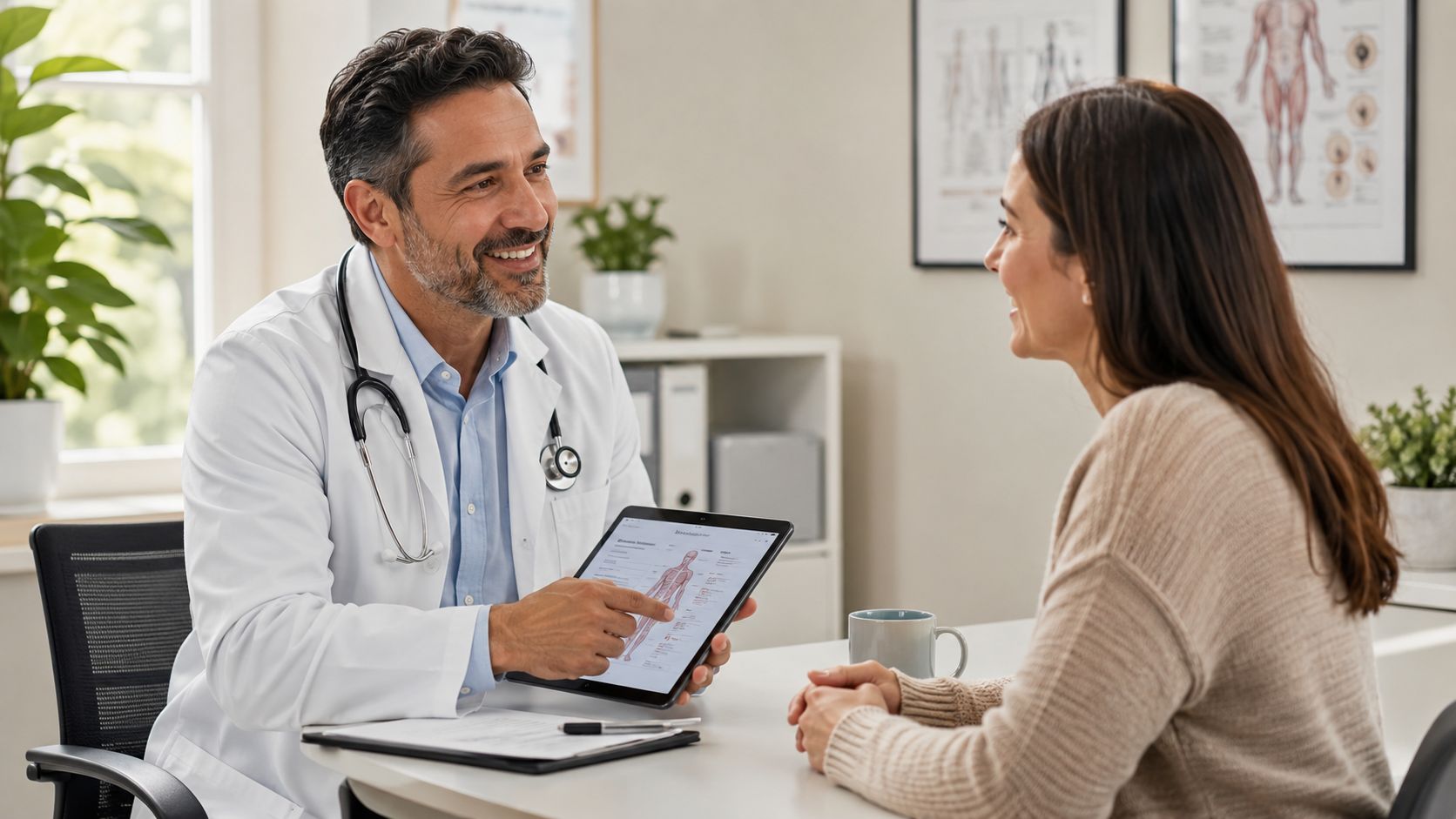
The patient experience in a specialized pain clinic usually starts long before any procedure is scheduled. The first visit should narrow the diagnosis, not merely confirm that you hurt. A physician reviews symptoms, prior treatment, imaging, functional limits, and the pattern of pain over time.
The first visit
A good consultation often changes the direction of care. A patient may come in saying, “My MRI shows disc problems,” but the exam suggests the main issue is the sacroiliac joint. Another patient may assume surgery is next, but careful review shows a targeted diagnostic block is the smarter next move.
That early decision-making is where coordinated care begins. It keeps patients from getting locked into the wrong pathway too early.
Procedure day and after
If a procedure is appropriate, the experience should still feel connected to the larger treatment plan. The doctor explains the target, the reason for image guidance, what improvement would count as a successful response, and what the next step will be if relief is incomplete.
For patients curious about precision techniques, this overview of ultrasound guidance for nerve blocks helps explain how targeted care is delivered.
Long-term follow-up
The most important part of pain care often happens after the intervention. The clinic tracks what changed, what didn't, and whether better function followed. If the response was partial, the next step might be a different procedure, a rehabilitative strategy, coordination with a surgeon, or a review with the primary doctor.
- Before treatment the focus is diagnosis and selection.
- During treatment the focus is precision and safety.
- After treatment the focus is function, reassessment, and continuity.
That sequence is what many patients are looking for when they search for Matrix Surgery Center. They want organized, dependable pain care. In Illinois, the strongest answer is usually local, coordinated, and built for repeat decision-making instead of one isolated procedure.
FAQ for Patients in Chicago's South Suburbs
Patients from Burbank, Evergreen Park, Alsip, Oak Lawn, and nearby suburbs usually ask the same practical questions once they realize Matrix Surgery Center is not an Illinois location.
Do I need to be worried that I found the wrong place online
Not really. This confusion is common. Patients frequently express confusion when searching for “Matrix Surgery Center” because existing public information doesn't clearly distinguish a general pain and joint treatment center from a comprehensive, opioid-sparing chronic pain program.
Do I need a local pain clinic or just a place that performs procedures
If your pain is ongoing, recurrent, or not fully explained, a local full-service clinic is usually the better fit. You need diagnosis, treatment, and follow-up in one care path.
What should I expect at the first appointment
Expect a detailed review of symptoms, prior care, imaging if available, medications, and how pain affects walking, work, sleep, or daily activity. The first visit should identify likely pain generators and lay out reasonable next steps.
Does insurance matter when choosing a pain clinic
Yes. You should confirm accepted plans before scheduling, especially if you may need repeat visits or procedures. That prevents delays later.
What if my case involves a work injury or accident
That should be discussed upfront. Pain cases tied to workers' compensation or personal injury need coordinated documentation and clear treatment planning.
Is opioid-free or opioid-sparing care a reasonable question to ask
Absolutely. It's one of the most important questions. A strong pain clinic should be able to explain how it uses procedures, rehabilitation, and ongoing reassessment to reduce reliance on long-term opioid treatment.
If you're in Oak Lawn, Palos Hills, Palos Heights, Worth, Bridgeview, Hickory Hills, Alsip, Burbank, Evergreen Park, or Orland Park and need clear answers about chronic pain, spine pain, nerve pain, injury pain, or post-surgical pain, Midwest Pain & Wellness offers local, coordinated, opioid-sparing care designed around diagnosis, precision treatment, and follow-up that makes sense for real life.