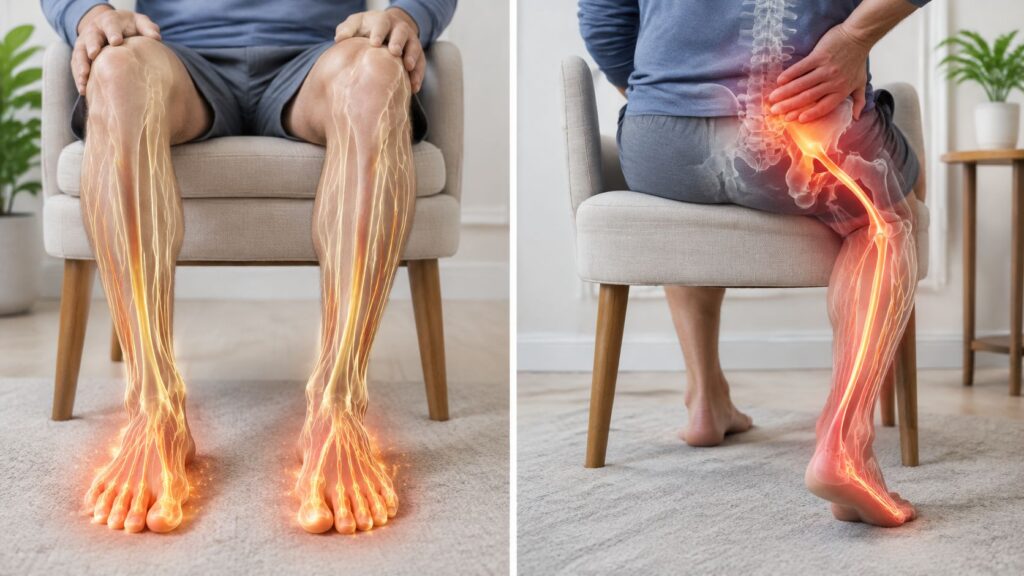
Maria, a 42-year-old graphic designer, kept flipping her head backward at red lights because turning forward triggered a stabbing jolt behind her right ear. She had been told it was migraine, then tension, and eventually wondered whether anyone understood what the pain felt like. If your pain is electric, shock-like, and one-sided, especially when it travels from the skull base across the scalp or toward the eye, you may recognize her experience.
Occipital neuralgia treatment works best as a stepwise plan, not as a single procedure promised to solve every case. Conservative care may be enough for some people. Others need a diagnostic nerve block, radiofrequency treatment, Botox, or peripheral nerve stimulation when relief fades or daily function keeps deteriorating. The right sequence depends on your examination, pain pattern, response to prior care, and tolerance for risk.
Table of Contents
- When Every Head Turn Hurts
- What Occipital Neuralgia Actually Is
- Conservative Care and Medications
- Nerve Blocks, Steroid Injections, and Ablation
- Botox and Peripheral Nerve Stimulation
- How Treatment Decisions Unfold in Real Patients
- When to Escalate and How to Choose a Specialist
- Your Next Steps Toward Lasting Relief
When Every Head Turn Hurts
Occipital neuralgia can make ordinary movements feel threatening. Turning your head to check traffic, brushing your hair, resting against a pillow, or looking down at a phone may provoke a sudden burst of pain. Patients often describe the sensation as an electric shock, lightning bolt, stabbing needle, or hot wire beginning near the upper neck and moving behind the ear, over the scalp, or toward the eye.
The pain may come in brief attacks, but some people also develop a persistent ache, scalp sensitivity, or neck tightness between jolts. That combination can lead to confusion with migraine, tension headache, or pain referred from the cervical spine. A migraine can include occipital pain, but the sharp, shock-like quality and sensitivity to light touch often point clinicians toward an irritated occipital nerve instead.
Practical rule: The trigger matters as much as the pain location. Write down whether movement, touch, posture, hair brushing, or pillow pressure starts an attack.
Why dismissal delays recovery
Being told that pain is “just tension” can leave you trying to work, sleep, and exercise without a usable plan. Repeatedly protecting your neck may also reduce normal movement and increase muscle guarding, which can make the area more sensitive.
Early recognition doesn't mean rushing into an invasive procedure. It means identifying the likely pain generator, ruling out concerning alternatives, and choosing an intervention that matches the severity and persistence of your symptoms. A guided plan can prevent weeks of lost sleep and productivity by moving you away from trial-and-error care.
The condition is relatively uncommon, but it matters in specialty headache and pain practices. A Dutch population study reported a disease-specific incidence of 3.2 cases per 100,000 person-years, with a mean diagnosis age of 54.1 years, and occipital neuralgia represented 8.3% of facial pain cases in that study, as summarized in the clinical overview of occipital neuralgia. Because the disorder is uncommon, much of the treatment evidence comes from smaller studies rather than large randomized trials.
What Occipital Neuralgia Actually Is
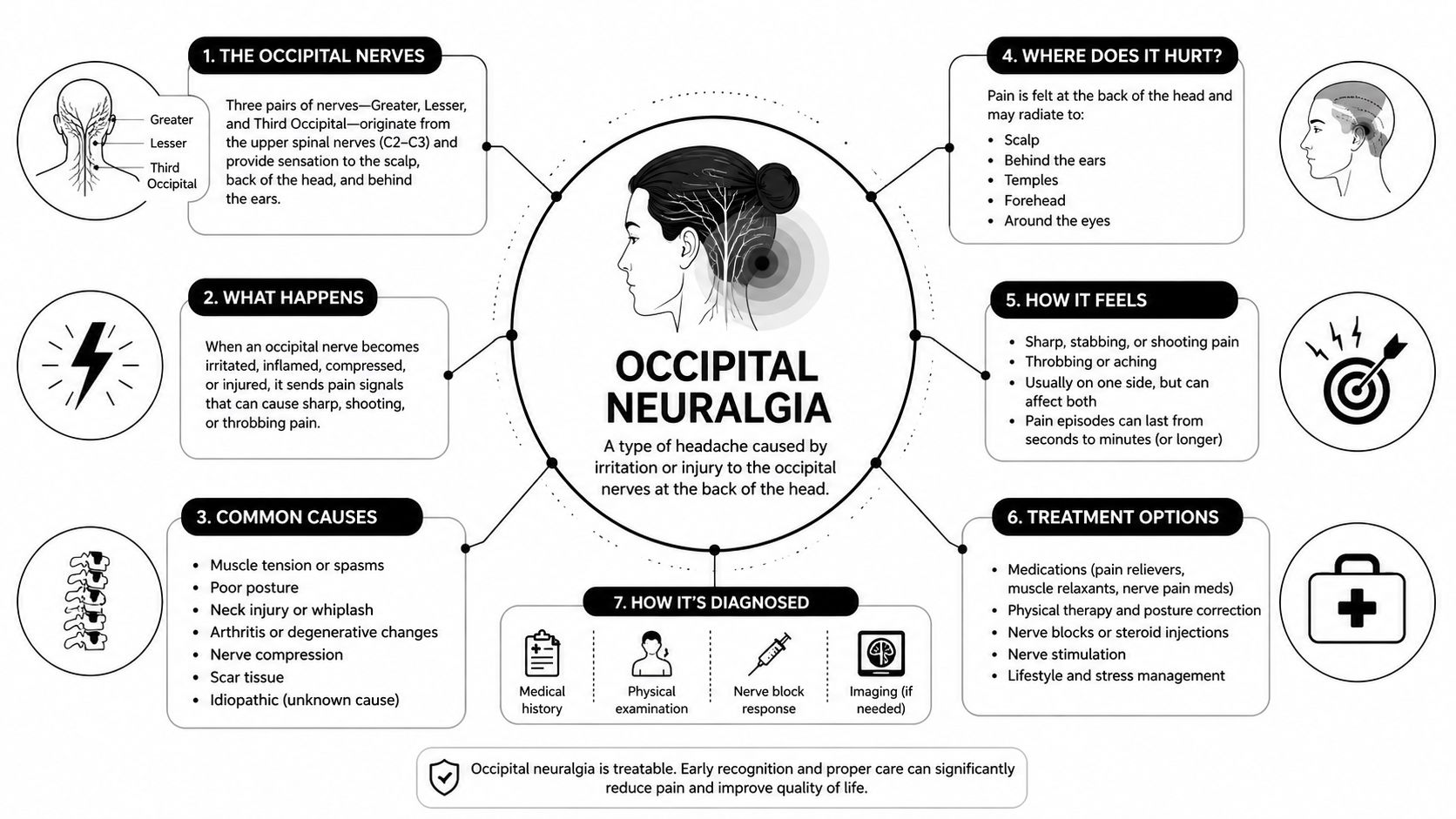
Occipital neuralgia is pain arising from one or more occipital nerves, most often the greater or lesser occipital nerve. The greater occipital nerve typically emerges from the upper cervical region between C1 and C2 and travels toward the scalp. The lesser occipital nerve arises from the cervical plexus and supplies areas near the side and back of the head.
Formal diagnostic criteria require pain in the distribution of the greater, lesser, or third occipital nerves, along with hallmark features such as paroxysmal attacks lasting seconds to minutes, severe intensity, or a shooting and stabbing quality. Clinicians also look for tenderness over the affected nerve and temporary relief after a local anesthetic block. These details help separate occipital neuralgia from cervicogenic headache, migraine with occipital features, cluster headache, and pain referred from muscles or joints in the neck.
Possible causes include post-traumatic nerve entrapment, whiplash, irritation associated with upper cervical disease, and rare inflammatory conditions such as C2 myelitis. In other patients, no single trigger can be identified. The absence of a clear injury doesn't make the pain imaginary, and a normal scan doesn't automatically exclude nerve pain.
How clinicians confirm the diagnosis
Diagnosis begins with your history and a focused examination. I look for the exact starting point of pain, sensory changes, tenderness along the nerve, neck motion that reproduces symptoms, and neurological findings that suggest a different problem.
Imaging can help exclude structural causes when the history or examination raises concern, but occipital neuralgia isn't usually confirmed by imaging alone. A temporary response to a carefully placed local anesthetic nerve block can support the diagnosis while also showing whether the targeted nerve is contributing meaningfully to your pain. The formal criteria and role of blockade are described in clinical guidance on nerve blocks for occipital neuralgia.
Conservative Care and Medications
The first treatment rung addresses irritation, muscle guarding, posture, and sensitivity without committing you to a procedure. Heat may relax tight upper-neck muscles, while ice can calm a flare for some patients. Neither approach should be used to push through worsening pain. Use the response as information, not as proof that the underlying nerve problem has been corrected.
Your workstation deserves attention. Keep the monitor at a comfortable height, support your forearms, avoid prolonged forward-head posture, and take regular position changes rather than holding one “perfect” posture all day. Remove external pressure from the area by avoiding tight hats, heavy shoulder bags, or hairstyles that pull firmly on the scalp and upper neck.
Give therapy enough time to answer the question
Physical therapy should focus on the upper cervical spine rather than generic strengthening alone. A therapist may use gentle suboccipital release, mobility work, postural retraining, and deep neck flexor strengthening. Judge the response after 4 to 6 weeks of consistent treatment, unless symptoms worsen or new neurological signs appear.
Medication choices require a conversation about sedation, interactions, medical history, and functional goals. Common options include:
- Gabapentin or pregabalin: Often considered early for neuropathic pain. Dizziness, sleepiness, swelling, and difficulty concentrating can occur, and doses should be adjusted by a clinician.
- Nortriptyline: An alternative when sleep disruption accompanies nerve pain. Dry mouth, constipation, drowsiness, and cardiac considerations may limit its use.
- Carbamazepine: May be considered when the attacks have a particularly classic neuralgic pattern. It requires careful review of interactions and safety monitoring.
- NSAIDs or acetaminophen: These may help during flares or when muscle and joint pain coexist, but they often don't control the nerve-generated component by themselves.
| Treatment | Typical Dose or Protocol | Onset of Relief | Notable Side Effects |
|---|---|---|---|
| Heat or ice | Short, comfortable applications based on response | Often during use | Skin irritation or worsening symptoms if overused |
| Posture and ergonomic changes | Frequent position changes and reduced neck strain | Gradual | Poor setup may aggravate symptoms |
| Physical therapy | Upper cervical mobility, suboccipital work, and deep neck flexor training for 4 to 6 weeks | Gradual | Temporary soreness or symptom flare |
| Gabapentin or pregabalin | Clinician-directed titration | Gradual | Drowsiness, dizziness, cognitive slowing |
| Nortriptyline | Clinician-directed evening dosing when appropriate | Gradual | Dry mouth, constipation, drowsiness |
| NSAIDs or acetaminophen | Short-term use when medically appropriate | Relatively prompt for some flares | Gastrointestinal, kidney, liver, or bleeding concerns depending on the medicine |
Conservative care and oral medication help some patients, but persistent cases often need a more targeted strategy. The next decision should be based on function and duration of benefit, not solely on how many medications you've tried.
Nerve Blocks, Steroid Injections, and Ablation
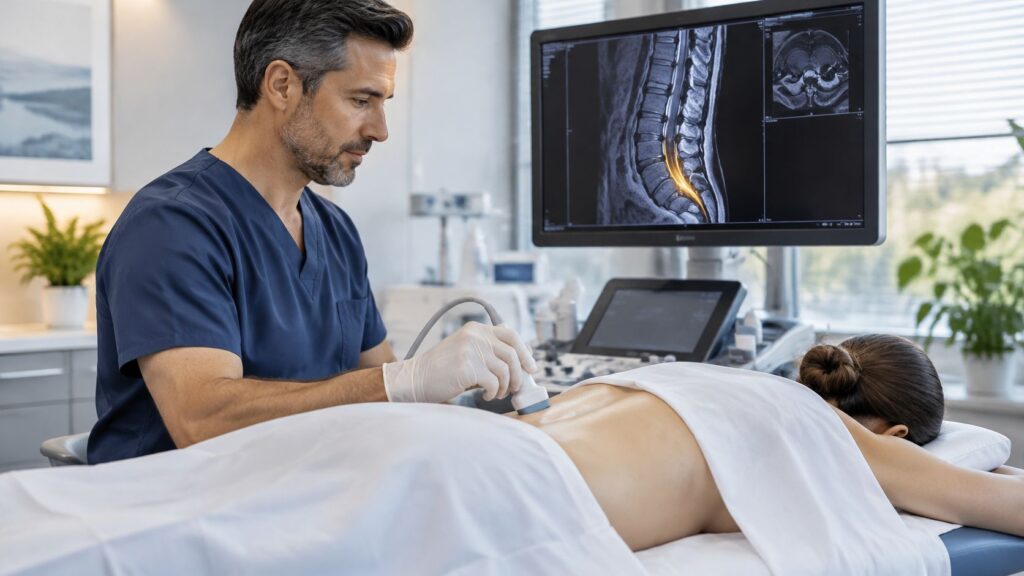
An image-guided occipital nerve block places local anesthetic, often with an anti-inflammatory medication, near the suspected nerve. Ultrasound can show superficial nerve and soft-tissue anatomy in real time. Fluoroscopy can help guide bony landmarks and is useful when the target or cervical anatomy requires a different approach. The safest technique depends on the nerve, your anatomy, prior surgery, and the clinician's experience.
A block has two jobs. It may reduce pain, and it can function as a diagnostic test. If the familiar pain improves during the expected anesthetic window, that supports the nerve as a meaningful pain generator. A short response doesn't necessarily mean the procedure failed, but it does limit confidence that longer-lasting nerve lesioning will solve the problem.
Published results are encouraging but shouldn't be treated as a guarantee. In one study of 44 patients, 42 patients, or 95.45%, had satisfactory relief lasting at least six months after an occipital nerve block. Mean headache scores fell from 7.23 before treatment to 1.95 within 24 hours and remained at 2.21 at six months, while 16.67% still needed pain medication at six months, according to the published occipital nerve block study. A separate ultrasound-guided study reported anesthetic success in 86% of patients at 30 minutes, with pain-score reductions at 30 minutes, two weeks, and four weeks and no significant adverse events in that report.
The honest expectation: A block can be both treatment and a test, but it doesn't promise permanent relief.
Where radiofrequency fits
Thermal radiofrequency ablation uses controlled heat to disrupt pain transmission along a targeted nerve pathway. In a retrospective study of 46 patients, average pain scores improved from 6.7 before treatment to 2.7 afterward. Patients reported average relief of 76.3%, with relief lasting an average of 6.5 months, as reported in the thermal radiofrequency study.
A broader retrospective study reported average scores falling from 5.57 to 2.39, average patient-reported improvement of 63.53%, and benefit lasting an average of 253.9 days, according to radiofrequency outcomes for occipital neuralgias and headaches. These results support ablation as a reasonable option after a convincing block, but they don't establish a cure.
| Outcome Metric | Occipital Nerve Block | Radiofrequency Ablation |
|---|---|---|
| Main purpose | Diagnostic information and therapeutic relief | Longer-lasting interruption of targeted pain signaling |
| Expected course | Often weeks to months, with variability | Often multi-month relief, with variability |
| Evidence signal | Pain reduction in observational studies and reviews | Meaningful pain reduction in retrospective studies |
| Recovery | Usually brief, with local soreness possible | May involve post-procedure soreness or altered sensation |
| Main trade-off | Relief may wear off and require repetition | Greater technical commitment and nerve-injury risk |
The risk discussion matters. Nearby nerve injury, bruising, temporary numbness, and neuropathic pain can occur. One cohort found third occipital neuralgia after C2-3 or third occipital nerve radiofrequency treatment in 19% of patients, underscoring why lesion placement and anatomy matter. You can learn more about the general procedure in this overview of nerve block injections.
Botox and Peripheral Nerve Stimulation
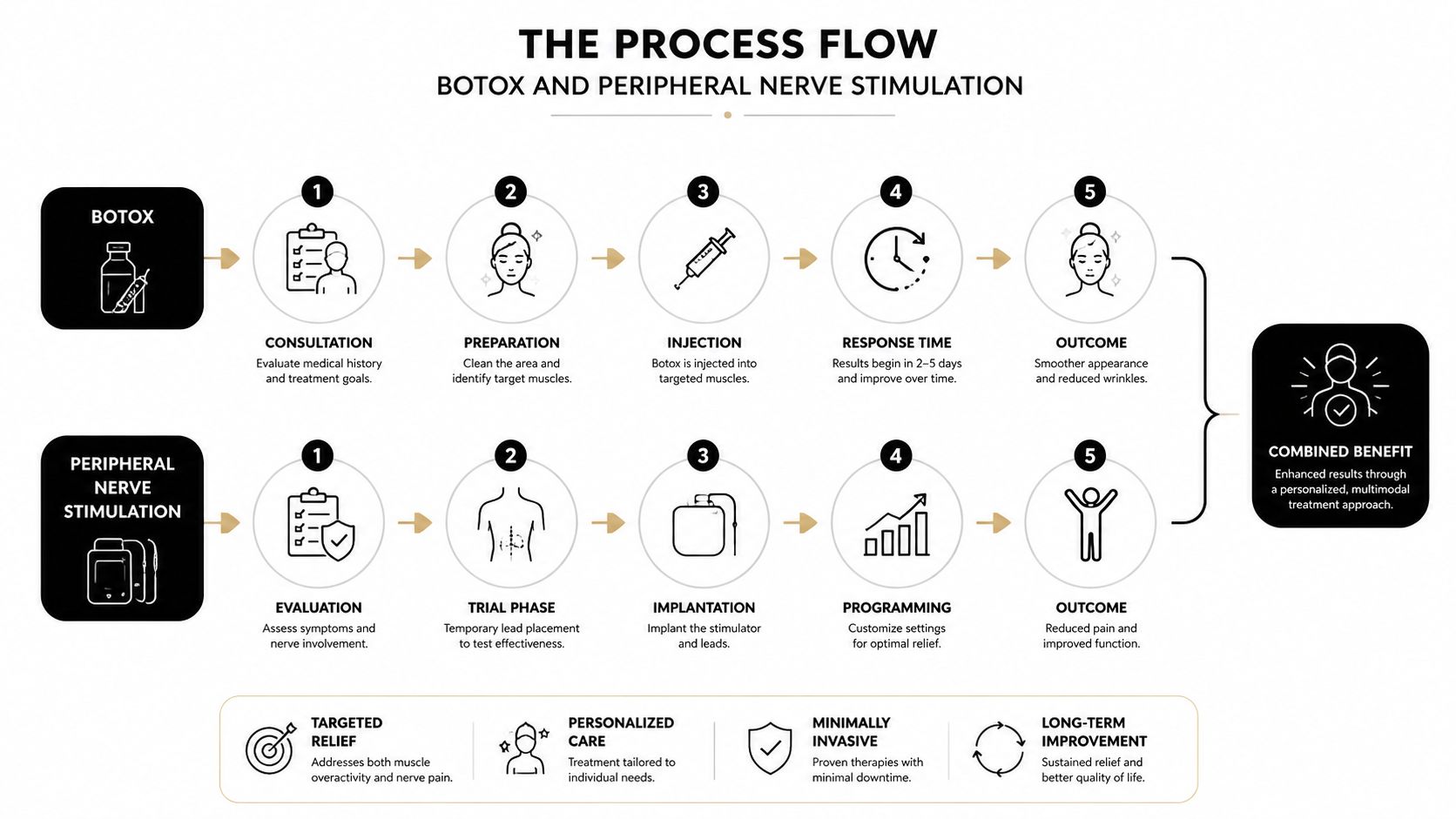
Repeated blocks make sense when they provide meaningful functional relief for a useful interval. They become less attractive when benefit lasts only briefly, requires frequent repetition, or leaves you planning your work and sleep around the next injection. At that point, Botox and 60-day peripheral nerve stimulation deserve a structured discussion, not automatic dismissal as “last resort” treatments.
Botulinum toxin is injected into selected muscle and headache-related sites based on the pain pattern and examination. Protocols may use approximately 100 to 200 units, with onset often developing over about two weeks and effects commonly discussed over roughly three months. Those dosing and timing decisions are individualized, and Botox isn't interchangeable with an occipital nerve block. It may be more useful when muscle overactivity and a broader headache pattern coexist.
Why stimulation can change the conversation
Peripheral nerve stimulation places leads near the greater or lesser occipital nerves to modulate pain signaling. A 60-day system is temporary by design. The patient lives with the leads for the trial period, tracks pain and function, and then discusses whether the response justifies a longer-term implanted system.
The approach doesn't destroy the nerve, which may appeal to patients who want a reversible or neuromodulatory strategy rather than lesioning. It still involves procedural risks, device management, lead migration concerns, infection risk, and the possibility that stimulation won't provide enough benefit. The Congress of Neurological Surgeons recognizes occipital nerve stimulation as an option for medically refractory occipital neuralgia, meaning it generally follows failure of less invasive care, as described in its occipital nerve stimulation guideline.
A recent multicenter study reported significant reductions in pain and pain interference after 60-day peripheral nerve stimulation of the occipital nerves. The evidence is still developing, but the treatment is clinically relevant when blocks and ablation don't provide durable control. For a plain-language explanation of the process, review how peripheral nerve stimulation works.
How Treatment Decisions Unfold in Real Patients
Treatment doesn't follow a rigid staircase for everyone. The same procedure can be appropriate for one patient and premature for another because the diagnosis, functional impact, and duration of relief differ.
Patient A finds a lower-risk answer
Patient A has pain after prolonged desk work, tenderness over one occipital nerve, and no concerning neurological findings. The first plan focuses on workstation changes, upper cervical therapy, and a medication trial. A guided nerve block then produces substantial relief that continues long enough for normal sleep and work to return. Because the benefit is meaningful and durable, there is no reason to rush toward ablation or stimulation.
Patient B needs several layers
Patient B improves after a block, but the pain returns and begins interrupting sleep. A second procedure helps, though for a shorter period. After reviewing the response, risks, and examination, the patient chooses radiofrequency ablation. Relief is substantial but incomplete, and a broader headache pattern remains. Botox becomes reasonable because the remaining symptoms involve muscle and headache features that a focal nerve procedure may not fully address.
The decision trigger isn't the number of treatments. It's the combination of partial relief, shrinking duration, and lost function.
Patient C moves toward neuromodulation
Patient C has severe, persistent pain, cannot tolerate several medication trials because of side effects, and receives little lasting benefit from blocks. After confirming the diagnosis and discussing alternatives, the patient chooses a 60-day peripheral nerve stimulation trial. Strong improvement in daily activity and pain interference supports a discussion about a permanent system. If the trial had failed, the plan would have changed rather than proceeding automatically.
These pathways show why a careful specialist asks what improved, how long it lasted, what side effects occurred, and what activities remain limited. The next treatment should answer the problem created by the previous one.
When to Escalate and How to Choose a Specialist
Conservative care deserves a fair trial, but waiting indefinitely isn't a treatment plan. Consider specialist evaluation when pain persists after 4 to 6 weeks of appropriate conservative care, when a block wears off within weeks instead of providing a useful interval, or when sleep, work, driving, and exercise remain restricted.
Escalate sooner for new neurological symptoms, progressive weakness, significant numbness, coordination changes, or a severe headache pattern that feels different from your usual pain. Those symptoms may point beyond isolated occipital nerve irritation and require prompt medical assessment. Increasing reliance on opioid medication is also a reason to reassess the diagnosis and pursue opioid-sparing options, rather than increasing the prescription.
What to look for in a pain specialist
A qualified interventional pain practice should be able to explain the diagnosis and the rationale for each step. Look for:
- Training and certification: A physician with recognized pain-medicine training and board certification should be able to discuss both medication management and procedures.
- Image guidance: Ask whether ultrasound or fluoroscopy is used when appropriate for nerve blocks and cervical procedures.
- Treatment continuity: The practice should be able to evaluate ablation and peripheral nerve stimulation rather than sending you elsewhere after the first injection.
- Multidisciplinary coordination: Access to neurology, primary care, rehabilitation, and surgical consultation helps when the presentation is complex.
You can begin with primary care or neurology, or contact an interventional pain practice directly where self-referral is accepted. Before the visit, gather imaging reports and discs if available, a medication list, prior procedure dates, treatment responses, and a headache diary showing triggers, duration, severity, sleep disruption, and functional limitations. This chronic headache specialist resource can help you prepare for that conversation.
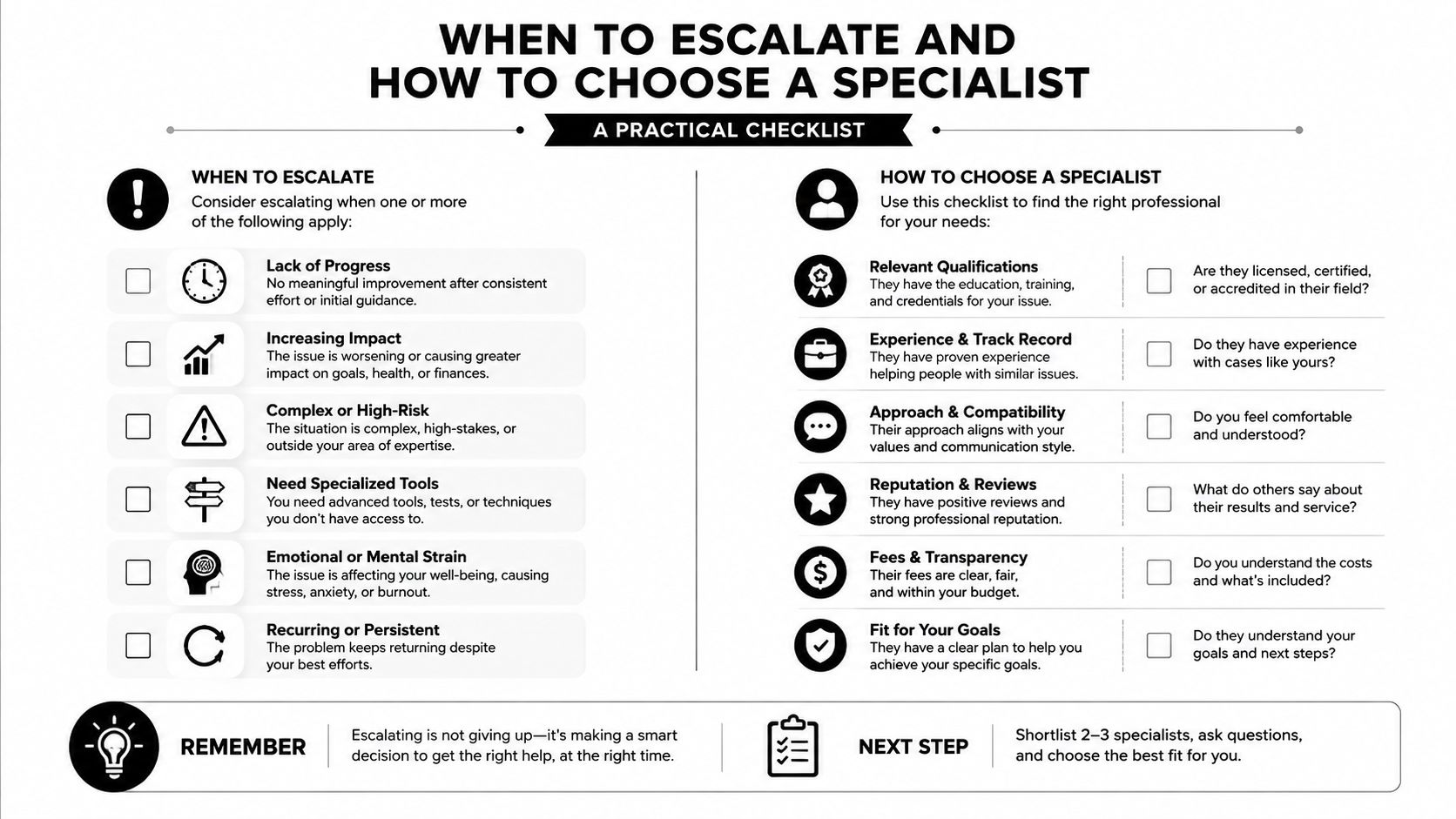
The best specialist won't promise that one injection will end the condition. They'll explain what result would justify repeating a treatment, changing direction, or considering neuromodulation.
Your Next Steps Toward Lasting Relief
If you live in Chicago Ridge, Palos Heights, Palos Hills, Evergreen Park, or Hickory Hills, Illinois, start by scheduling an evaluation with a pain and wellness clinic that treats nerve and headache disorders through staged, opioid-sparing care.
Bring:
- Prior imaging reports and relevant images
- A headache or pain diary
- Your current medication and supplement list
- Notes describing treatments that failed, helped, or caused side effects
At the first visit, expect a detailed history, focused examination of the occipital nerves and upper cervical region, review of neurological symptoms, and a discussion about whether imaging is needed. A responsible plan usually begins with diagnosis and a targeted block when appropriate, before any commitment to ablation or stimulation. Ask about insurance participation, authorization requirements, and weekday scheduling when you call.
Midwest Pain & Wellness provides personalized interventional pain care in Chicago Ridge, Illinois, including image-guided injections, radiofrequency procedures, Botox for appropriate headache conditions, and peripheral nerve stimulation discussions. Visit Midwest Pain & Wellness to request an evaluation and discuss a practical occipital neuralgia treatment plan.