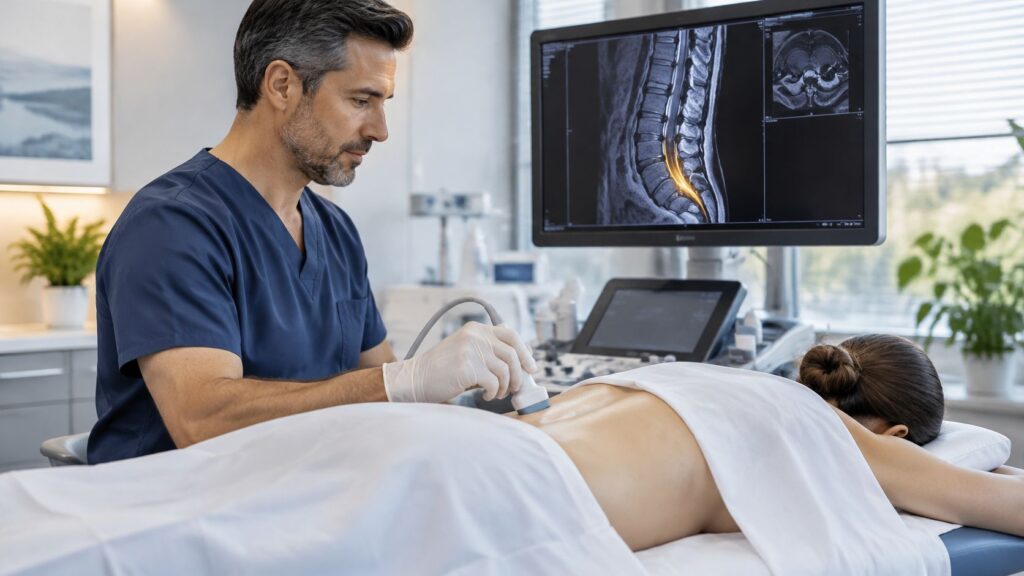
The MILD procedure is a minimally invasive lumbar decompression for lumbar spinal stenosis. It typically takes about one hour, requires no hospital admission or general anesthesia, and usually lets you return home the same day.
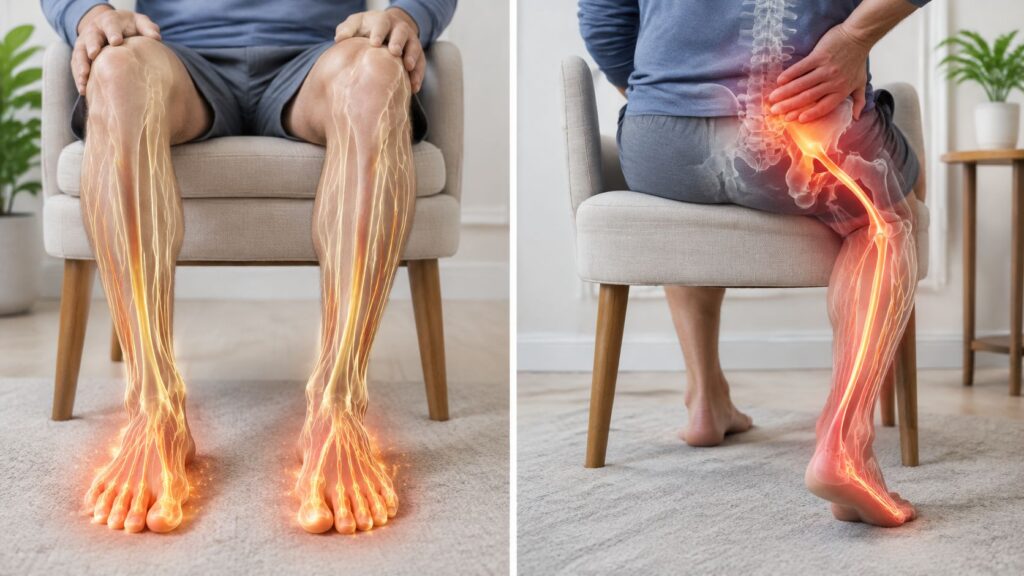
You may be asking because walking has become strangely predictable. You start across a parking lot, feel heaviness or aching spread through your legs, then find relief only after sitting or leaning forward. In Chicago Ridge, Palos Heights, Palos Hills, Evergreen Park, and Hickory Hills, many adults with this pattern eventually hear the term MILD, but the name alone doesn't explain who benefits, what happens during treatment, or how it compares with standard decompression.
MILD stands for Minimally Invasive Lumbar Decompression. It's designed for a specific form of lumbar spinal stenosis, particularly stenosis in which a thickened ligamentum flavum contributes to pressure on the nerves. It isn't a universal treatment for back pain, and it shouldn't be presented as an automatic substitute for surgery.
Table of Contents
- When Walking Stops Being Easy and MILD Enters the Conversation
- How Lumbar Spinal Stenosis Creates the Symptoms MILD Targets
- What Actually Happens During the MILD Procedure Step by Step
- Who Is a Good Candidate and Who Should Look Elsewhere
- MILD Compared With Epidural Injections and Open Decompression
- Recovery, Return to Walking, and When to Expect Real Improvement
- Common Misconceptions About MILD Worth Clearing Up
- Bringing It All Together and Your Next Step in Chicago Ridge
When Walking Stops Being Easy and MILD Enters the Conversation
An active retiree might notice the change during a morning walk. A route that once covered a mile now ends halfway down the block because both legs feel heavy, the low back aches, and standing upright becomes increasingly uncomfortable. Sitting restores comfort, but only temporarily. At the grocery store, leaning over the cart feels easier than walking through the aisles without support.
That pattern often points toward neurogenic claudication, the leg discomfort, heaviness, tingling, or weakness caused by narrowing around the lumbar nerves. The important clue isn't that the back hurts. It's that symptoms worsen with standing or walking and improve with sitting or bending forward.
The conservative staircase
Most patients don't begin with a procedure. A clinician may first recommend targeted exercise or physical therapy to improve strength, mobility, and tolerance for activity. Oral anti-inflammatory medicine may help manage symptoms, while an epidural steroid injection can reduce inflammation around irritated nerves.
Those treatments can be useful, but they don't remove a thickened ligament or permanently enlarge a narrowed canal. If relief becomes brief or walking remains severely limited, the discussion may move toward decompression options.
MILD can occupy a middle position in that decision. It addresses a specific source of narrowing through a smaller, image-guided approach, while open decompression reaches a broader area and may be more appropriate when bone, instability, or extensive stenosis drives the problem.
Clinical perspective: The right question isn't “Is MILD better than surgery?” It's “What is causing the narrowing, and which treatment matches that anatomy and my goals?”
The procedure was developed in 2005 and first reached the market after U.S. FDA 510(k) clearance on December 19, 2006. A review reported that the first patient was treated immediately after clearance and that 12 clinical studies were completed within a few years of introduction, providing early evidence for the technique. Read the review of MILD's development and early evidence.
How Lumbar Spinal Stenosis Creates the Symptoms MILD Targets
Your lower spine contains a passageway called the central canal. The canal is formed by a ring of bone, with the nerve sac traveling through its center. Along the inner back portion of that ring sits the ligamentum flavum, a flexible band that helps connect and support the spinal bones.
With aging and degeneration, that ligament can become thicker and less flexible. The discs may bulge, and the facet joints can enlarge. Together, these changes reduce the space available for the cauda equina, the bundle of nerves serving the lower body.
A narrowed passage acts like a kinked hose
Think of a garden hose carrying water. If the hose is squeezed from several directions, flow becomes restricted. In lumbar stenosis, the nerves are crowded inside a canal narrowed by bone, joints, discs, and thickened ligament.
The symptom pattern often reflects posture. Standing and walking increase the lower-back extension that can further reduce available space. Sitting, bending forward, or leaning over a shopping cart flexes the lumbar spine and may open the canal enough to reduce nerve pressure. The result can be leg heaviness, cramping, tingling, or aching that appears after a period upright and eases with rest.
For MILD candidacy, imaging should show the right target, not merely “arthritis” or “stenosis” in a broad sense. Neutral guidance describes percutaneous image-guided lumbar decompression for mild-to-moderate lumbar spinal stenosis with neurogenic claudication, no more than grade 2 spondylolisthesis, and ligamentum flavum hypertrophy of at least 2.5 mm. Review the medical-policy criteria for image-guided lumbar decompression.
MILD primarily addresses the thickened ligamentum flavum. The physician removes small portions of that tissue through a specialized instrument, creating more room without performing a broad laminectomy or placing hardware. The goal is to restore space while preserving the spine's supporting structures.
What Actually Happens During the MILD Procedure Step by Step
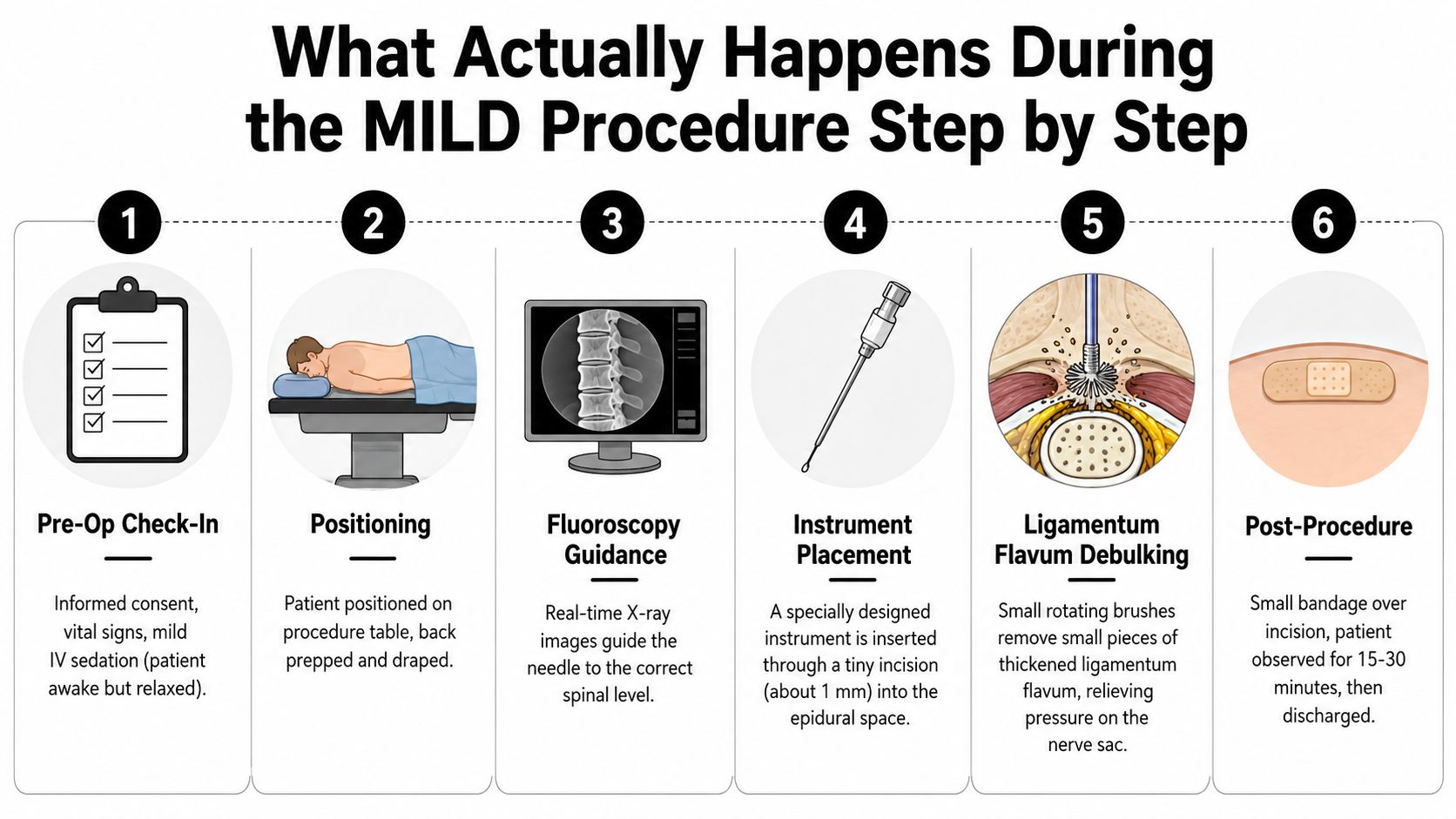
The procedure begins with a review of your medical history, medications, imaging, and consent. Johns Hopkins describes MILD as typically taking about one hour, without hospital admission or general anesthesia, with patients usually going home the same day. See Johns Hopkins' overview of the MILD procedure.
You'll usually receive local anesthetic and light intravenous sedation. You remain relaxed but can generally respond to instructions. The team positions you on your stomach on a fluoroscopy table, then cleans and drapes the back.
Fluoroscopy guides each movement
Fluoroscopy provides live X-ray images. After numbing the skin and deeper tissues, the physician makes a small access point and guides a port toward the targeted level. The opening is designed to limit disruption to muscle and surrounding anatomy.
Through that access point, specialized instruments remove small pieces of hypertrophied ligamentum flavum. The physician works under imaging rather than relying on surface landmarks, which helps confirm the correct spinal level and instrument position.
No screws, implants, or fusion are placed during MILD. The approach focuses on reducing the tissue contributing to central canal narrowing while avoiding the broader exposure associated with open surgery.
Leaving the procedure area
After the instruments are removed, the access site receives a small dressing. You'll spend time in recovery while the team checks your vital signs, alertness, leg strength, and ability to walk safely. Because sedation can affect driving, you'll need an adult to take you home and follow the clinic's discharge instructions.
The experience is less extensive than inpatient spine surgery, but it's still a real decompression procedure. You should ask exactly which spinal level will be treated, which structure is causing the narrowing, and what alternatives remain if your symptoms don't improve.
Who Is a Good Candidate and Who Should Look Elsewhere
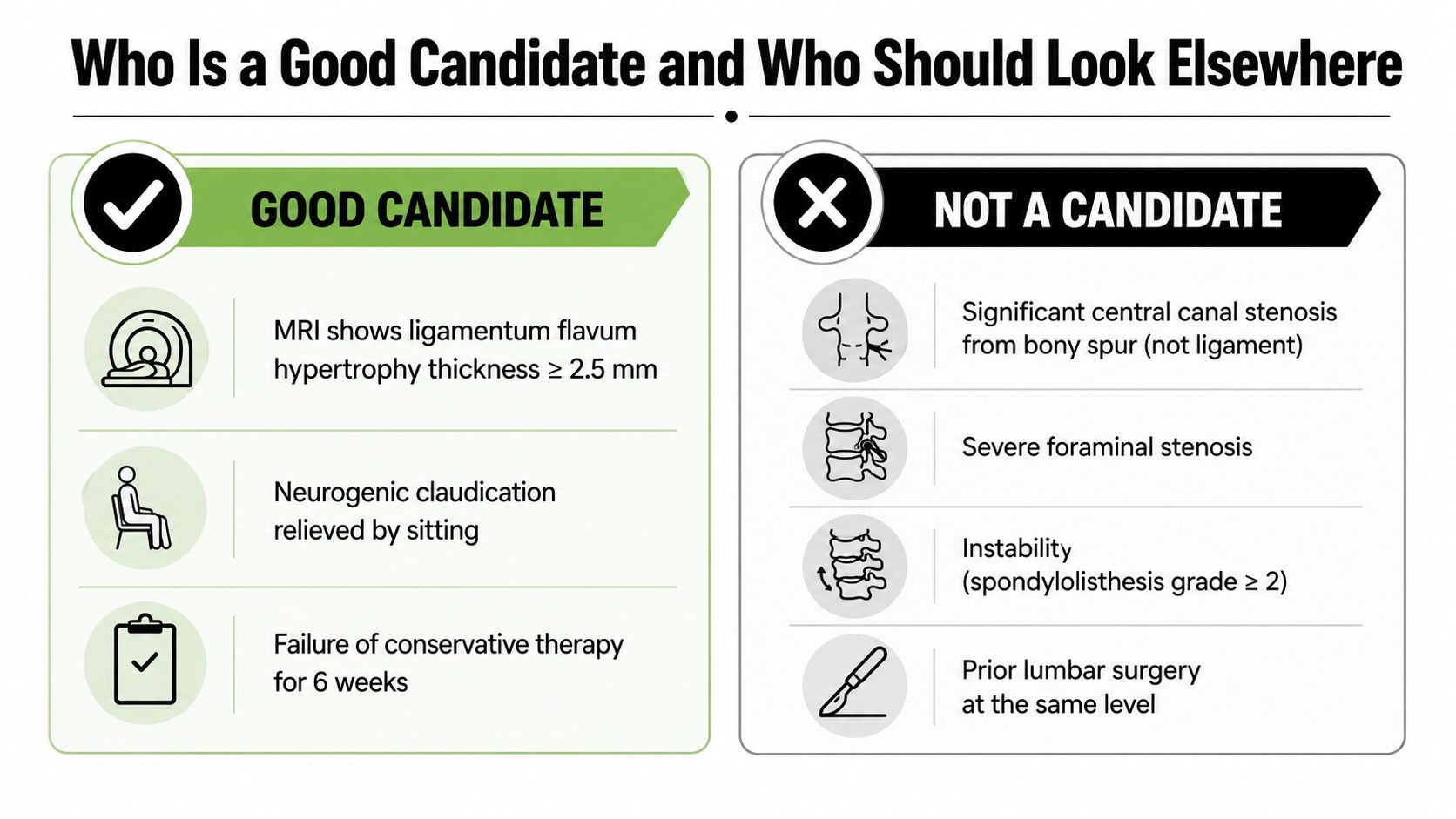
A good MILD candidate has a match between symptoms, examination findings, and imaging. The MRI shouldn't just show degenerative changes. It should help explain why standing and walking trigger leg symptoms and why sitting or bending forward provides relief.
The most relevant pattern is neurogenic claudication from lumbar spinal stenosis, with ligamentum flavum hypertrophy of at least 2.5 mm and no more than grade 2 spondylolisthesis. The patient should have meaningful limits on walking or standing and should have tried reasonable nonoperative care without lasting functional improvement.
What supports candidacy
A specialist may look for:
- A recognizable symptom pattern: Leg heaviness, aching, numbness, or tingling that worsens with upright activity and improves with sitting.
- A matching MRI: Central canal narrowing in which thickened ligamentum flavum is a meaningful contributor.
- Acceptable spinal stability: No instability that requires a larger stabilization procedure.
- A clear functional goal: Walking through a store, standing for meals, or moving around the home with fewer rest breaks.
- A medically appropriate risk profile: Medication, bleeding, infection, and anesthesia considerations are reviewed before scheduling.
You can read more about minimally invasive lumbar decompression and how clinicians evaluate the procedure at this MILD treatment overview.
When MILD may be the wrong tool
MILD may not address symptoms driven mainly by severe foraminal narrowing, a disc herniation, hip disease, vascular disease, or mechanical low back pain without claudication. It also may not be appropriate when instability, advanced spondylolisthesis, extensive bony overgrowth, or a progressive neurologic deficit calls for a different operation.
Prior surgery at the same level requires careful review rather than an automatic yes or no. Active infection and significant bleeding risk can also change the plan.
Bring the MRI report, but don't stop there. The scan matters only when it explains the symptoms that limit your life.
Patient selection matters because the evidence is stronger for a defined stenosis subtype than for general degenerative spine disease. Recent guidance frames MILD as one option within a broader stenosis toolkit, not a universal replacement for injections, decompression, or fusion.
MILD Compared With Epidural Injections and Open Decompression
These treatments do different jobs. An epidural injection is primarily used to deliver medication near irritated nerves. MILD removes a portion of thickened ligamentum flavum contributing to central narrowing. Open decompression can remove more bone and ligament when the anatomy requires broader access.
A randomized controlled trial compared 143 MILD patients with 131 epidural steroid injection patients in people with lumbar spinal stenosis, neurogenic claudication, and verified central stenosis from ligamentum flavum hypertrophy. At one year, MILD was statistically superior to epidural steroid injections. At two years, the report described improvements of 22.7 points in ODI and 3.6 points in pain scores, with no serious device- or procedure-related adverse events. Review the randomized trial comparing MILD with epidural steroid injections.
For a plain-language explanation of injection treatment, see how an epidural injection works.
The comparison patients actually need
| Outcome / Risk | MILD Procedure | Epidural Steroid Injection | Open Decompression |
|---|---|---|---|
| Primary target | Thickened ligamentum flavum contributing to central stenosis | Inflammation around irritated nerves | Broader removal of compressive bone and ligament |
| Anesthesia and setting | Outpatient approach, generally without general anesthesia | Usually outpatient | Often a more extensive surgical setting |
| Functional evidence | Durable ODI and symptom improvements have been reported | Can provide relief, but the treatment doesn't remove the narrowing | May reach anatomy that MILD cannot |
| Reoperation evidence | A 2-year cohort reported a 5.6% surgical reoperation rate, 8 of 143 patients, while a separate 5-year report found 12.0% of 75 patients required open decompression. Long-term MILD follow-up data | Relief may be temporary for some patients | More extensive treatment may offer greater mechanical reach, with greater procedural burden |
| Important trade-off | Less invasive, but not designed for every type of stenosis | Medication-based symptom management | More capable for severe or unstable anatomy, but typically involves greater recovery demands |
The long-term picture isn't one-sided. A 2025 systematic review included 12 studies and 500 patients, finding improvements in pain and ODI with low adverse-event rates, while also stating that larger randomized trials are needed. A separate 2025 comparative study reported lower durotomy rates with MILD than open decompression, but higher neurologic deficits and a higher reoperation rate, 46.2% versus 29.3%. Read the 2025 systematic review and comparative evidence.
That's why I discuss MILD as a targeted option, not a promise of greater durability than open decompression.
Recovery, Return to Walking, and When to Expect Real Improvement
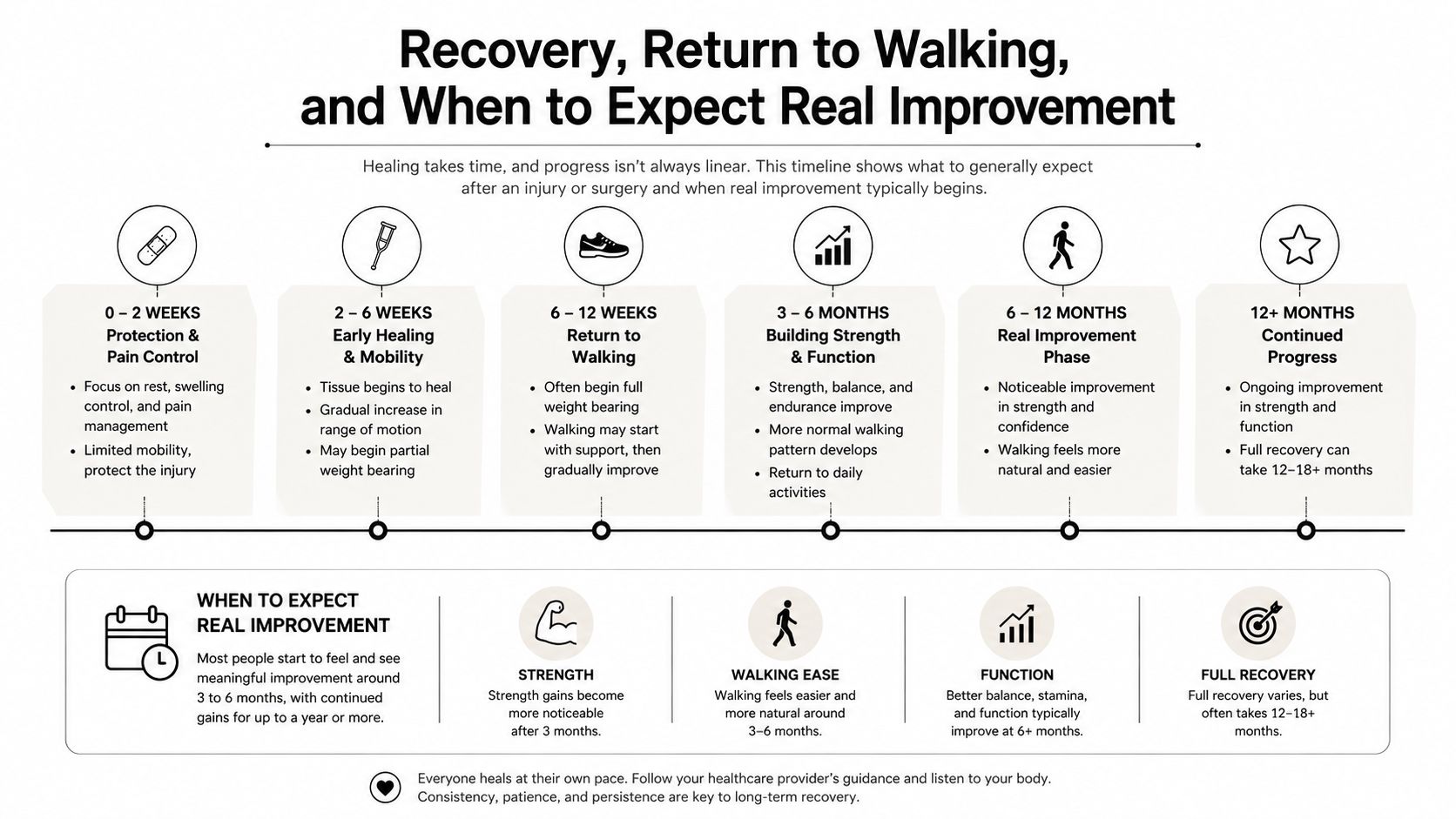
Most patients leave the facility the day of treatment. The first priority is safety, not testing how far you can walk. Arrange transportation, follow medication instructions, and keep the access site clean according to your clinician's directions.
Mild soreness near the treated area can occur as the tissues settle. Your recovery plan should be individualized because baseline walking ability, nerve irritation, other joint conditions, and the number of treated levels all affect the pace of improvement.
A practical recovery framework
- The first day: Walk with supervision as instructed, avoid driving after sedation, and use the prescribed activity limits.
- The first several days: Short, comfortable walks are generally more useful than one ambitious outing. Stop if symptoms escalate sharply.
- Early follow-up: Your clinician checks the access site, neurologic status, medication plan, and response to treatment.
- Progressive conditioning: As symptoms permit, gradually increase walking and reinforce movement with a targeted rehabilitation plan.
The purpose of walking is not only to measure improvement. It also helps rebuild endurance after months of avoiding activity. A nerve may have more room immediately, but irritated nerves and deconditioned muscles don't always recover on the same schedule.
Published MOTION trial follow-up found that improvements remained significant over baseline at three and five years. At five years, the report described improvements in ODI, back pain, leg pain, and Zurich Claudication Questionnaire symptom severity and physical function of 20.6, 2.5, 4.6, 0.9, and 0.7 points, respectively. Review the five-year MOTION follow-up.
Those results describe groups, not guarantees for an individual. Ask your specialist what improvement would count as meaningful for your daily life and what the next step would be if walking remains restricted.
Common Misconceptions About MILD Worth Clearing Up
MILD isn't the same as open decompression. It targets a narrower anatomical problem and may be unsuitable when severe multilevel narrowing, instability, or advanced spondylolisthesis requires broader decompression or stabilization. A smaller incision doesn't make every case a small case.
MILD doesn't treat every kind of back or leg pain. The procedure is intended for neurogenic claudication associated with central lumbar stenosis and ligamentum flavum hypertrophy. It won't automatically correct pain arising mainly from a disc, the facet joints, the hip, blood-flow problems, or severe narrowing where a nerve exits through the foramen.
Recovery isn't automatic. Creating more room around the nerves can remove one source of mechanical pressure, but strength and walking tolerance still need rebuilding. Patients may require ongoing exercise, medication adjustments, injections, or another intervention if symptoms persist or the underlying degeneration progresses.
Long-term durability deserves a direct conversation. Earlier follow-up data showed relatively low rates of later open decompression in selected patients, while newer comparative evidence has produced a more mixed trade-off, including higher reoperation rates for MILD than open decompression in one 2025 study. The appropriate conclusion isn't that MILD always fails or always wins. It's that the patient's anatomy and priorities should determine the choice.
If your symptoms are posture-dependent but you're not a candidate for this specific decompression, another motion-preserving treatment may be discussed. You can learn about the Vertiflex Superion procedure as part of that broader conversation.
Bringing It All Together and Your Next Step in Chicago Ridge
MILD tends to make the most sense when a patient has a classic neurogenic claudication pattern, imaging-confirmed central stenosis, meaningful ligamentum flavum thickening, and inadequate relief from conservative care. Age alone doesn't decide candidacy, and an MRI label alone shouldn't decide it either. The central question is whether the tissue being treated explains the activity-limiting symptoms.
Bring these questions to a consultation:
- Imaging: How recent is my MRI, and does it show ligamentum flavum thickening at the symptomatic level?
- Stability: What grade of spondylolisthesis is present, and do flexion-extension images show instability?
- Prior care: How did I respond to physical therapy, oral medication, and epidural injections?
- Safety: Do my anticoagulants, medical conditions, or infection risks change the plan?
- Goals: What walking or standing improvement would make treatment worthwhile?
- Alternatives: If MILD isn't appropriate, would continued nonsurgical care or open decompression better match my anatomy?
For residents of Chicago Ridge, Palos Heights, Palos Hills, Evergreen Park, and Hickory Hills, the evaluation can begin with a pain and wellness clinic rather than a commitment to one procedure. Midwest Pain & Wellness provides interventional pain care that may include diagnostic workup, image-guided treatments, minimally invasive decompression when indicated, and coordinated rehabilitation within an opioid-sparing plan.
Request an imaging review and a 30-minute consultation before committing to any treatment path. A careful candidacy discussion should leave you knowing not only whether MILD may help, but also what it cannot address and what alternatives remain.
If lumbar spinal stenosis is limiting your walking or standing, visit Midwest Pain & Wellness to request an evaluation with the pain and wellness team. Bring your current imaging and medication list so the clinic can discuss whether MILD or another coordinated, opioid-sparing treatment fits your symptoms and goals.