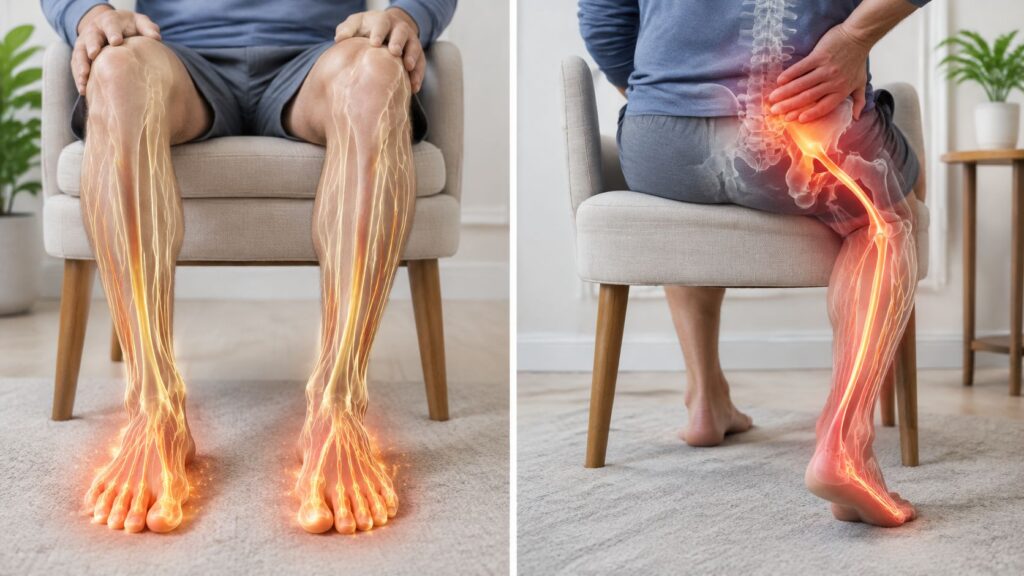
The most popular advice about mindfulness and chronic pain is also the most misleading: sit, breathe, and the pain will disappear. That promise sets patients up for disappointment. Mindfulness pain management can change how pain is processed, anticipated, and tolerated, but it usually doesn't remove the underlying structural or nerve problem.
A more useful clinical view treats mindfulness as one part of coordinated care. It may support an injection, radiofrequency ablation, spinal cord stimulation, medication plan, or rehabilitation program by reducing reactivity and improving participation. For patients in Chicago Ridge, Palos Heights, Palos Hills, Evergreen Park, Hickory Hills, and surrounding Illinois communities, the practical question isn't whether mindfulness replaces medical treatment. It's where mindfulness adds value to a broader pain plan.
Table of Contents
- Why Mindfulness Alone Won't Cure Your Pain
- What the Clinical Evidence Actually Shows
- Core Mindfulness Practices for Pain Management
- How Mindfulness Complements Interventional Pain Treatments
- Real Patient Scenarios and Treatment Integration
- Getting Started with Your Mindfulness Practice
- Common Questions About Mindfulness and Pain
Why Mindfulness Alone Won't Cure Your Pain
Chronic pain can come from irritated spinal nerves, arthritic joints, disc disease, nerve injury, inflammation, or changes that persist after surgery. Mindfulness can help you respond differently to the signals, but it can't mechanically open a narrowed spinal canal, repair a damaged joint, or directly eliminate every source of nerve irritation.
That distinction matters because pain intensity and pain-related suffering are not identical outcomes. A patient may still report pain while sleeping better, moving with less fear, reducing muscle guarding, or recovering more quickly after a flare. Pain acceptance isn't resignation. It means the sensation no longer controls every decision.
What mindfulness can and cannot do
Mindfulness trains attention and reduces automatic reactions to uncomfortable sensations. During practice, you notice the location, quality, and changing nature of pain without immediately adding panic, catastrophic thoughts, or protective tension. That process can make pain less overwhelming even when the physical signal remains.
It doesn't guarantee direct analgesia, and it shouldn't be presented as a substitute for evaluation. A new weakness, progressive numbness, bowel or bladder changes, fever, or severe pain after trauma requires medical attention, not a meditation exercise.
Clinical expectation: Use mindfulness to improve coping, function, and treatment participation. Use interventional care to address pain generators that require diagnosis or targeted treatment.
Why coordinated care is more practical
Interventional treatments can reduce signals from a specific source. A nerve block may help identify or calm an irritated structure. Radiofrequency ablation may address selected facet-mediated pain, while spinal cord stimulation may be considered for carefully evaluated persistent nerve pain. These treatments have their own indications, risks, and limitations, so a pain specialist must determine whether they fit your diagnosis.
Mindfulness can support the period before and after those decisions. It may reduce anxiety before a procedure, help you follow activity guidance afterward, and give you a strategy for flares that doesn't depend entirely on medication. The most responsible plan combines realistic goals, diagnostic assessment, and ongoing review rather than asking one technique to do everything.
What the Clinical Evidence Actually Shows
The evidence supports a measured conclusion. Mindfulness can help people with chronic pain, but average improvements in pain intensity are generally small, and the results vary across programs, conditions, and outcomes.
A landmark trial followed 109 patients with nonspecific chronic pain over a 2.5-year period. Of those patients, 43 completed the mindfulness program and 47 remained in the control group. The mindfulness group showed a significant improvement in vitality, with Cohen's d = 0.39, plus medium-to-large effects involving anxiety, depression, pain control, and pain acceptance. Changes in pain intensity were small and not significant. The trial is available through this PubMed-indexed landmark research report.
Translating effect sizes into patient expectations
A 2016 meta-analysis of 30 randomized controlled trials found a small but statistically significant benefit compared with usual care, passive controls, and education or support groups, with a standardized mean difference of 0.32 and a 95% confidence interval of 0.09 to 0.54. The mean percent change in pain was -0.19% in meditation groups versus -0.08% in controls, which illustrates why mindfulness shouldn't be marketed as a powerful stand-alone analgesic. A separate review of 10 eligible studies found a moderate effect on perceived pain control, g = 0.58, while evidence for direct reductions in pain intensity and depression remained limited. These findings are summarized in the systematic review and meta-analysis of mindfulness for chronic pain.
A broader review of 38 randomized controlled trials found a small reduction in chronic pain symptoms, along with statistically significant improvements in depression and quality of life. The authors rated the evidence quality as low because studies differed substantially in their participants, interventions, comparison groups, and outcome measures, as detailed in the PubMed review of mindfulness meditation for chronic pain.
For patients, the practical message is straightforward: mindfulness may be more dependable for pain acceptance, mood, quality of life, and pain-related function than for eliminating pain signals. A pain clinic can help place those outcomes alongside examination findings and procedural options. Patients who want to understand the emotional and behavioral side of persistent pain can also review this resource on mental health and chronic pain.
Core Mindfulness Practices for Pain Management
Mindfulness works best when the practice matches the patient's goal, mobility, and tolerance. Someone focused on pain intensity may begin with structured mindfulness-based stress reduction, while someone trying to walk farther may benefit more from mindful movement and function-focused pacing.
Build a structured foundation
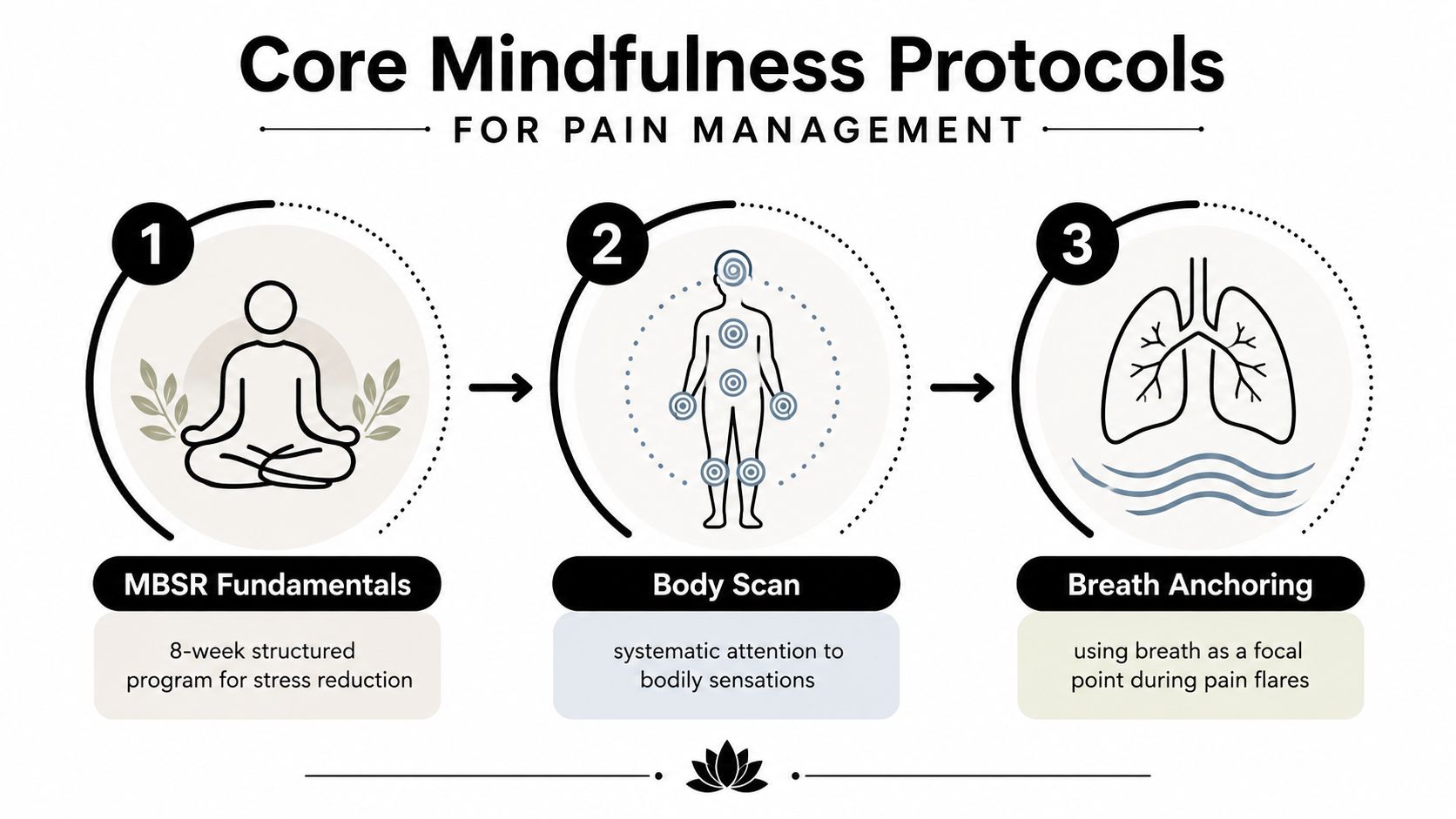
Mindfulness-Based Stress Reduction, or MBSR, combines meditation, body awareness, gentle movement, and education. Recent comparative evidence reviewed 68 studies involving 5,339 participants and found that MBSR was strongest for pain intensity, while mindfulness-oriented recovery enhancement was strongest for physical function. The same 2025 network meta-analysis found an 8-week format with once-weekly 90 to 120 minute sessions appeared optimal for several outcomes, according to the PubMed-indexed network meta-analysis.
A practical MBSR-style starting sequence is:
- Sit or recline with support and notice where your body contacts the chair or bed.
- Follow the breath without forcing it to become deeper or slower.
- When pain or worry captures attention, label the distraction gently and return to the breath.
- End by noticing whether tension, urgency, or fear has changed, even if pain remains.
Use the body scan carefully
During a body scan, move attention gradually from the feet through the legs, pelvis, spine, shoulders, arms, neck, and face. Notice painful, neutral, and comfortable areas. Patients with nerve pain may find this useful for distinguishing burning, tingling, pressure, and temperature instead of experiencing the entire body as one undifferentiated threat.
Don't force attention into an area that feels overwhelming. Keep your eyes open, shorten the exercise, or anchor attention to sounds and contact with the chair if internal focus increases distress.
Add movement and breath anchoring
Mindful movement can include supported walking, shoulder rolls, ankle circles, or gentle range-of-motion work approved by your clinician. Move slowly, stop before sharp or escalating pain, and observe the difference between effort, stretch, pressure, and warning symptoms.
For a flare, place both feet on the floor if possible and take several comfortable breaths. Notice the exhale, release unnecessary jaw or shoulder tension, and choose the next safe action. Patients who want additional general guidance may find these wellbeing tips for anxiety relief useful, particularly when pain and worry reinforce each other.
How Mindfulness Complements Interventional Pain Treatments
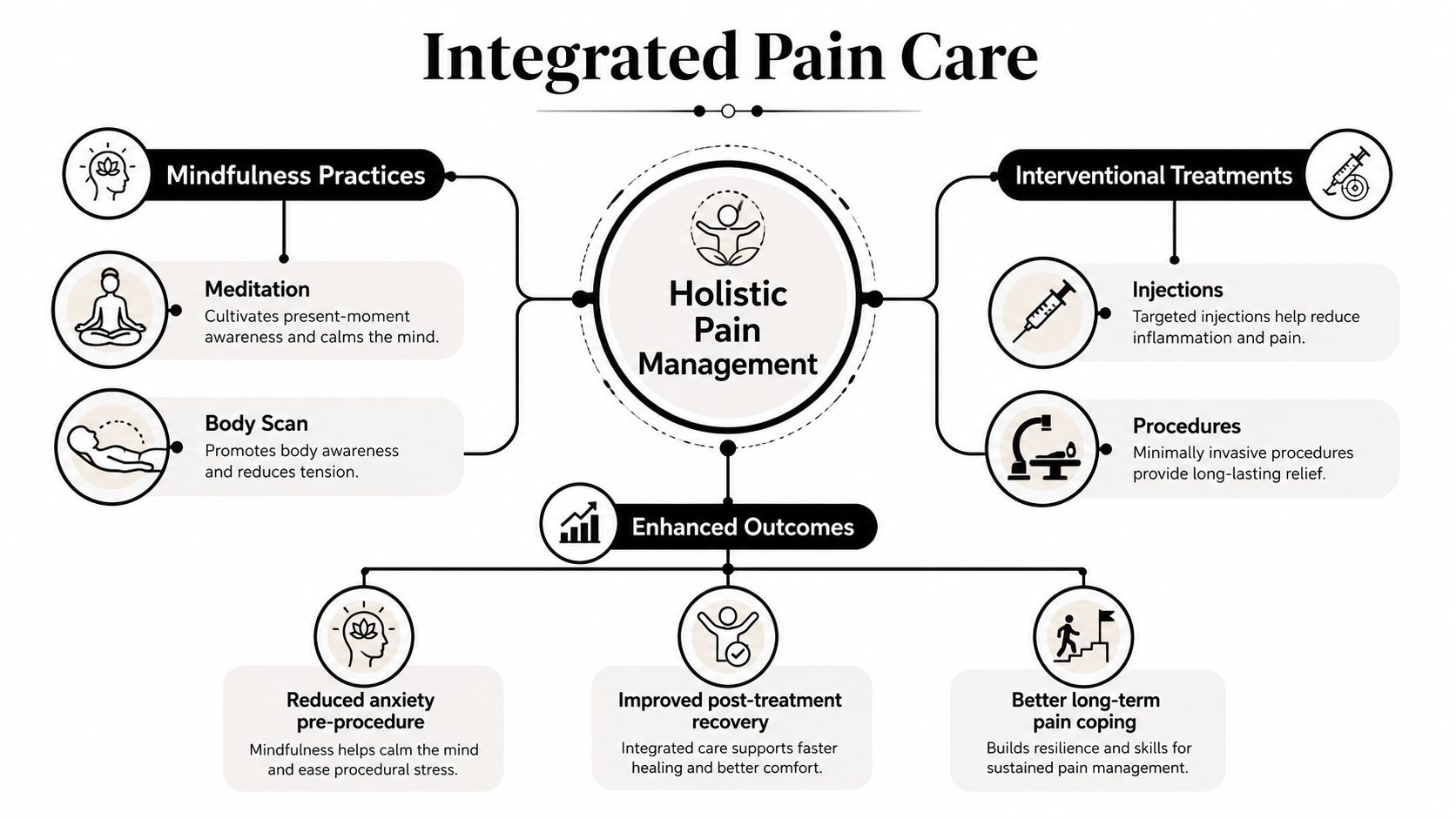
Interventional treatment and mindfulness work on different parts of the pain experience. A procedure may target a suspected pain generator, while mindfulness helps the nervous system and the patient's behavior respond to symptoms with less fear and reactivity.
The mechanism isn't the same as opioid medication. A neuroimaging review reported that after brief training of less than 10 hours, pain relief was associated with top-down regulation from the orbitofrontal cortex and rostral anterior cingulate cortex toward areas including the thalamus and primary somatosensory cortex. In people with extensive practice above 1,000 hours, the review described prefrontal deactivation and greater somatosensory cortical activation. Both pathways were described as non-opioidergic, as discussed in this review of neural mechanisms in mindfulness analgesia.
Applying the combination clinically
Before an epidural steroid injection or nerve block, breath anchoring may help a patient remain still and communicate clearly about symptoms. Afterward, mindfulness can support pacing, sleep, and gradual return to prescribed activity. For radiofrequency ablation, the practice may help patients distinguish expected soreness from escalating symptoms without reacting to every fluctuation.
Spinal cord stimulation and other advanced interventions also require careful follow-up and active participation. Mindfulness doesn't determine candidacy or replace device management, but it may help patients observe patterns, track function, and discuss meaningful changes with the clinical team.
The goal isn't to make a procedure unnecessary. The goal is to give the procedure a better behavioral and emotional environment in which to work.
Mindfulness also fits alongside physical therapy, medication review, sleep support, and education. A clinic such as Midwest Pain & Wellness can evaluate whether interventional options belong in a broader plan rather than treating meditation as an isolated prescription. Patients exploring nonprescription approaches should still discuss safety and interactions with a clinician; general information about plant-based pain relief essentials shouldn't replace that review.
Real Patient Scenarios and Treatment Integration
Consider a patient with persistent low back pain and leg symptoms who has been avoiding walking because every flare feels threatening. An evaluation may identify a treatable spinal or nerve-related contributor, and an epidural injection may be considered when clinically appropriate. Mindfulness doesn't replace that assessment. It gives the patient a way to practice slower breathing, observe symptom changes, and follow a graded activity plan without treating every sensation as proof of new damage.
The useful outcome isn't necessarily a pain-free day. It may be walking to the mailbox, standing long enough to prepare food, or sleeping with fewer cycles of anxious monitoring. Those are functional targets a pain specialist can track alongside pain ratings.
Post-surgical recovery
A post-surgical patient may be worried about moving the treated area, even while the surgeon and rehabilitation team recommend gradual activity. A brief body scan can identify protective tension in the jaw, abdomen, or shoulders. Mindful movement can then accompany approved exercises, with attention to breathing and controlled effort rather than pushing through sharp pain.
The patient still needs surgical follow-up and rehabilitation guidance. Mindfulness helps with participation, but it cannot rule out infection, hardware problems, recurrent compression, or other complications. New or worsening symptoms should be reported to the treating clinician.
Nerve pain and medication concerns
A patient with burning or electric nerve pain may use mindfulness during medication review or while considering an intervention. The practice can reduce the panic that often accompanies unpredictable symptoms and may help the patient record triggers, sleep disruption, activity limits, and medication effects more accurately.
A 2025 randomized clinical trial reported that, in adults with chronic low back pain who were treated with opioids, 8 weeks of mindfulness or CBT improved physical function and quality of life, reduced pain and opioid dose, and benefits lasted up to 12 months, as reported in this clinical trial coverage. That finding doesn't justify changing opioid treatment without supervision. It supports a coordinated conversation about additional tools.
Patients often communicate more effectively when they document symptoms in concrete terms. This guide on how to describe pain to your doctor can help organize location, quality, timing, triggers, and functional impact before an appointment.
Getting Started with Your Mindfulness Practice
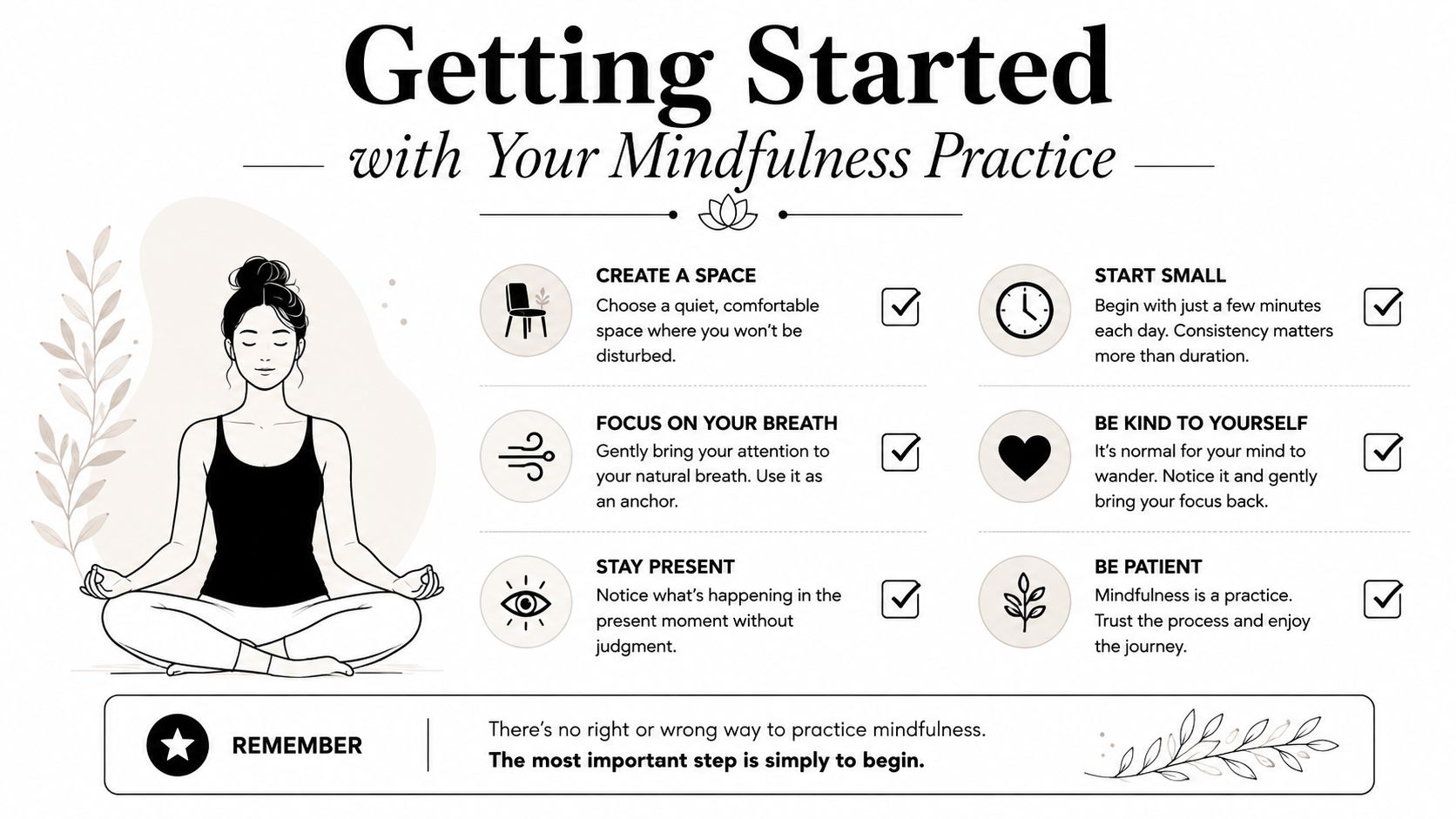
Start with a practice you can repeat, not one that looks impressive on paper. A supported chair, a quiet room, and a short period of attention are enough for the first attempt. If sitting increases back or hip pain, recline or practice while standing with support.
A four-week starting protocol
Week one, establish contact. Practice breath awareness for a brief, manageable period on most days. Track whether you noticed tension, worry, or breath-holding, not only whether pain changed.
Week two, broaden awareness. Add a short body scan, stopping or shifting attention if symptoms become overwhelming. Include neutral sensations, such as contact with clothing or the chair.
Week three, connect practice to function. Use mindfulness during an approved walk, home exercise, meal preparation, or transition from sitting to standing. The purpose is to observe movement and fear without rushing or avoiding automatically.
Week four, prepare for flares. Choose a simple sequence, such as feeling both feet on the floor, taking comfortable breaths, relaxing the shoulders, and selecting one safe next step. Share your observations with your pain clinician, especially if symptoms change.
Keep the plan clinically connected
Residents of Chicago Ridge, Palos Heights, Palos Hills, Evergreen Park, and Hickory Hills, Illinois, can ask a pain clinic, primary care provider, behavioral health professional, or qualified MBSR instructor about structured support. Ask how the program adapts for limited mobility, nerve symptoms, post-surgical recovery, or a history of trauma.
Measure progress broadly. Sleep, mood, confidence with movement, time spent ruminating, ability to complete daily tasks, and recovery after flares may change before pain intensity does. If mindfulness increases panic, intrusive memories, or distress, pause and seek professional guidance rather than forcing longer sessions.
Common Questions About Mindfulness and Pain
Does mindfulness work for every type of pain?
No single approach works consistently for every condition. Mindfulness has been studied in back pain, joint pain, neuropathic pain, migraine, and other chronic pain populations, but responses differ. It's most reasonable to view it as a complementary skill that may improve pain-related function, mood, and acceptance while another treatment addresses the suspected pain source.
How quickly should I expect a benefit?
Don't judge the practice by one difficult session. The evidence includes structured programs, and the 2019 review of brief mindfulness-based interventions concluded that the overall evidence was limited and inconclusive, with more rigorous large-scale studies needed before brief interventions could be recommended as first-line treatment. That review is available through PubMed's analysis of brief mindfulness interventions.
Can mindfulness replace medication or procedures?
Usually, it shouldn't be treated as a replacement. A RAND systematic review found 24 randomized controlled trials with continuous pain measures and reported a small effect, standardized mean difference 0.26 with a 95% confidence interval of 0.06 to 0.46, while also classifying the evidence as low quality because of substantial heterogeneity. You can review the RAND systematic review of mindfulness meditation.
Which program should I choose?
Choose based on your primary goal. MBSR had the strongest result for pain intensity in the comparative evidence, while mindfulness-oriented recovery enhancement performed best for physical function. A structured program may suit patients who need accountability, while brief breath or movement practices may be more realistic during severe flares.
Can I practice while taking opioids?
Mindfulness may be used alongside opioid treatment, but don't reduce, stop, or alter medication without the prescribing clinician. A meta-analysis of 13 randomized controlled trials found a significant reduction in depression, SMD -0.28 with a 95% confidence interval of -0.53 to -0.03, while sensory pain and anxiety showed trends rather than statistically significant effects, as reported in this PubMed-indexed meta-analysis.
What if meditation makes my pain feel stronger?
Stop, shorten the exercise, open your eyes, or shift attention outward to sounds and contact with the floor. Tell your clinician if practice repeatedly increases distress. Mindfulness should be adapted to your nervous system and treatment needs, not used as a test of willpower.
Midwest Pain & Wellness provides pain and wellness care in Illinois, including evaluation and interventional options that can be coordinated with mindfulness and other supportive strategies. Visit Midwest Pain & Wellness to discuss a personalized plan for chronic back, neck, joint, nerve, or post-surgical pain.