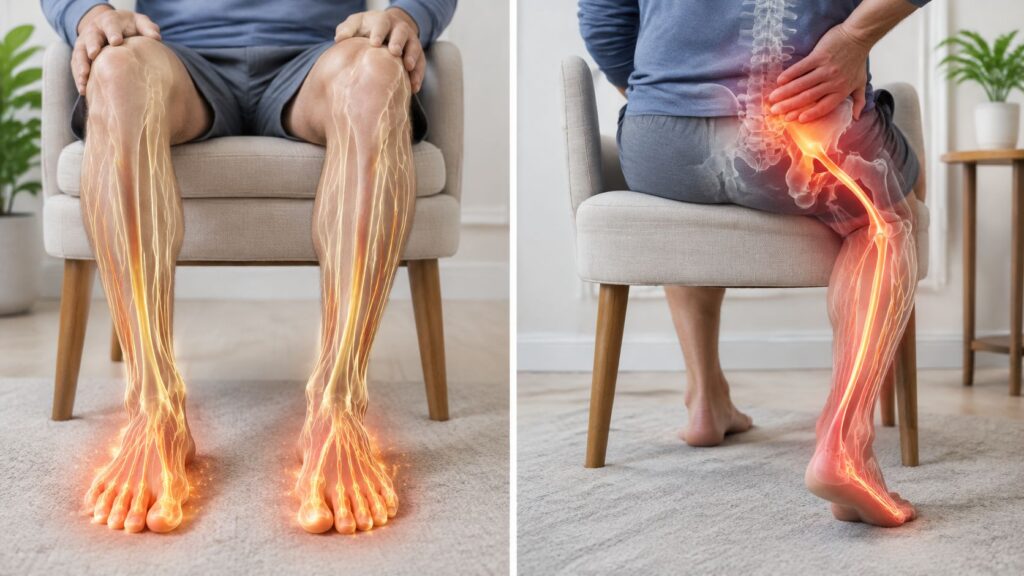
You're in a pain clinic in Chicago Ridge, or perhaps you've driven in from Palos Heights, Palos Hills, Evergreen Park, or Hickory Hills. Your back hurts, the pain may travel into a leg, and someone has mentioned a spinal injection. The confusing part is that facet joint injection vs epidural injection sounds like a choice between two competing treatments. Clinically, it's a choice between two different targets.
One procedure is aimed at the small joints at the back of the spine or the nerves that supply them. The other is aimed at the epidural space around irritated nerve roots. The correct decision depends on your pain pattern, examination, imaging, and response to prior care, not on which injection sounds more powerful.
Table of Contents
- Understanding Facet Joint Injection vs Epidural Injection
- What Each Procedure Involves and Where It Targets
- Side-by-Side Comparison of Indications, Techniques, and Evidence
- Diagnostic Purpose, Repeat Policies, and Coverage Rules
- Real-World Use Cases and When Each Option Fits
- How to Decide Which Procedure Makes Sense for You
- Next Steps for Patients Near Chicago Ridge and the South Suburbs
Understanding Facet Joint Injection vs Epidural Injection
A patient with localized low back pain may describe stiffness when standing, arching backward, or turning. Another patient may have pain that begins in the low back and travels down the buttock and leg with numbness, tingling, or weakness. Those symptoms can occur in the same region, but they point clinicians toward different pain generators.
Facet-mediated pain is usually axial, meaning it stays primarily in the neck or back. It may become more noticeable with extension, rotation, or lateral bending. Radicular pain follows an irritated nerve root, often extending into an arm or leg, and may come with sensory changes or weakness. These patterns aren't perfect diagnostic labels, but they provide an important starting point.
Imaging matters, but an MRI finding alone doesn't prove that a particular structure causes your pain. Degenerative changes can appear in people with very different symptoms. A useful evaluation combines the scan with the physical examination, the distribution of pain, movement triggers, and the history of what has or hasn't helped.
The practical answer: Don't ask which injection is better in the abstract. Ask which structure is most likely producing your symptoms.
At Midwest Pain & Wellness, Dr. Yaw Donkoh evaluates these distinctions within a complete, opioid-sparing pain management model. The practice isn't a physical therapy clinic. Its interventional approach may include image-guided injections and other coordinated treatments, while rehabilitation and medical care can be integrated when appropriate.
The rest of the decision becomes clearer once you understand where each needle goes, what medication it delivers, and whether the procedure is being used to test a diagnosis, provide therapeutic relief, or both.
| Clinical question | Facet joint injection | Epidural steroid injection |
|---|---|---|
| Primary target | Facet joint or medial branch nerves | Epidural space near irritated nerve roots |
| Typical pain pattern | Localized axial neck or back pain | Radicular pain traveling into an arm or leg |
| Common diagnostic role | Often used to assess facet involvement | Primarily therapeutic for nerve-root inflammation |
| Technique | Small-volume, highly targeted placement | Medication placed in the epidural space under imaging |
| Best rationale | Examination and history suggest facet-mediated pain | Symptoms and imaging suggest nerve-root irritation or compression |
| Evidence | Condition-specific and variable | Stronger support for selected radicular and discogenic presentations |
What Each Procedure Involves and Where It Targets
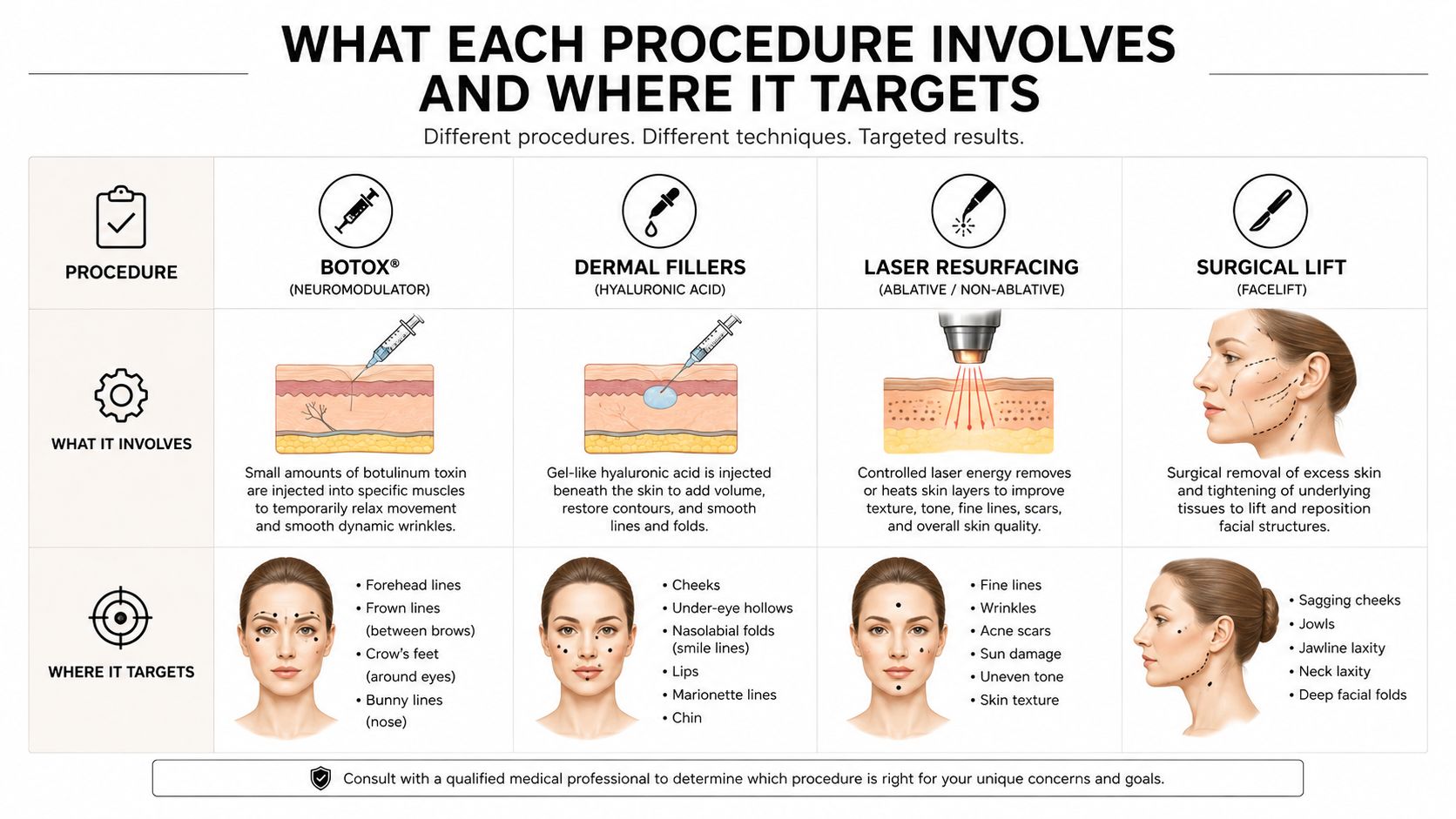
Facet joints are paired joints located behind the vertebral bodies. They help guide spinal movement and contribute to stability. When a clinician performs an intra-articular facet injection, the needle is directed into the joint capsule. A medial branch block places medication near the small nerves that carry pain signals from the facet joint.
The volume is deliberately small because the joint itself has limited capacity. A consensus guideline recommends less than 1.5 mL for an intra-articular lumbar facet injection and less than 0.5 mL for a lumbar medial branch block to limit spread and reduce the risk of capsular rupture, as described in the consensus guideline on facet interventions. The injection commonly contains a local anesthetic, with a corticosteroid used when therapeutic treatment is appropriate.
The facet target
The patient is positioned so the physician can identify the bony landmarks with fluoroscopic imaging. After numbing the skin, the needle advances toward the selected joint or medial branch nerve. The purpose is precision. Medication shouldn't be scattered across unrelated structures when the clinical question concerns one specific joint or nerve supply.
For a straightforward explanation of the procedure and its clinical purpose, see the facet joint injection procedure guide.
The epidural target
An epidural steroid injection places medication into the epidural space, specifically between the dura and the ligamentum flavum. This space lies around the spinal cord and nerve roots. The goal is to place anti-inflammatory medication close to an irritated nerve root rather than inside a facet joint.
Fluoroscopy is commonly used to guide the needle and confirm its position. The approach may vary according to the suspected level and location of nerve irritation, but the central principle remains the same. An epidural treats a nerve-related target, while a facet procedure treats a joint-related or medial-branch target.
That anatomical difference explains why two people with “back pain” may receive completely different recommendations.
Side-by-Side Comparison of Indications, Techniques, and Evidence
The meaningful comparison isn't procedure against procedure. It's pain generator against pain generator.
Indications and pain targets
Epidural injections are most logically considered when symptoms suggest radiculopathy, such as pain traveling along an extremity, altered sensation, or clinical evidence of nerve-root irritation. A disc problem or degenerative narrowing may compress or inflame a nerve, and the epidural route places medication near that irritated structure.
Facet procedures are considered when pain is mainly axial and the examination suggests involvement of the posterior spinal joints. The pain may be concentrated on one side or both sides of the neck or back and aggravated by extension, rotation, or lateral bending. Those findings don't establish the diagnosis by themselves, but they make a facet-focused evaluation more reasonable.
Technique and expected role
Both procedures require careful positioning and image guidance, but the needle path and destination differ. Facet injections use a small, highly localized volume. Epidural injections access a larger anatomical space surrounding the nerve roots.
A facet procedure may function as a diagnostic block, a therapeutic injection, or part of a pathway toward another treatment. An epidural injection is generally selected for therapeutic nerve-root pain rather than to confirm that a facet joint is the source.
Evidence strength
The evidence isn't uniform across all spinal conditions. A review of lumbar epidural injections reports Level II evidence for lumbar discogenic pain when fluoroscopically directed caudal or lumbar interlaminar techniques are used, while support for facet interventions is more condition-specific, as discussed in this review of epidural injections for lumbar pain.
The same evidence synthesis describes moderate support for lumbar intra-articular facet injections and medial branch blocks, but limited support for cervical intra-articular facet injections. Other reviews have reported weak or inconsistent benefit for some therapeutic facet applications and have questioned epidural corticosteroid effectiveness for spinal stenosis or nonradicular back pain. Those distinctions matter because an injection can be technically successful yet poorly matched to the underlying diagnosis.
Anatomy should drive the choice. Facet and epidural injections aren't interchangeable treatments for generic spine pain.
What may not work well
An epidural is a poor match for isolated axial pain without meaningful nerve-root features. A facet injection is unlikely to solve pain that clearly follows a compressed nerve into the leg or arm. Neither injection repairs the underlying degenerative process, and neither should be repeated automatically because a prior injection produced brief relief.
Patients comparing options for suspected nerve-related symptoms may also find this discussion of the best injection for nerve pain useful, but the final choice still requires an individualized examination.
Diagnostic Purpose, Repeat Policies, and Coverage Rules
Patients often hear the word “injection” and assume both procedures serve the same therapeutic purpose. They don't. Facet procedures are frequently diagnostic first, while epidural injections are generally used to treat inflammation associated with radicular pain.
A medial branch block temporarily numbs the nerves supplying a facet joint. If the patient's familiar pain improves during the expected anesthetic period, that response can support the facet joint as a pain generator. It doesn't prove that the joint is the only source of pain, and it doesn't automatically justify indefinite repeat injections. In appropriate cases, a confirmed facet source may lead to discussion of radiofrequency ablation.
Why repeat treatment is conditional
Current interventional pain guidance generally limits epidural injections to a maximum of four therapeutic sessions per spinal region during a rolling 12-month period. The same guidance defines a successful injection as providing at least 50% relief for at least 3 months. These requirements appear in the 2026 interventional pain management guideline.
That policy framework creates an important clinical boundary. Short-lived improvement may help a person function, but it doesn't automatically demonstrate durable value or support repeated treatment. The physician must consider the degree of relief, how long it lasted, whether function improved, and whether the original diagnosis remains convincing.
Facet procedures are treated differently in coverage policies. Some policies restrict therapeutic intra-articular facet injections for indications outside defined criteria, while diagnostic blocks may be evaluated under separate requirements. This difference reflects the more limited and condition-specific evidence supporting facet interventions.
What insurers may require
One coverage policy requires cervical or lumbar radiculopathy that has persisted despite at least 4 weeks of conservative management, along with continuing moderate-to-severe pain, before an epidural injection is considered for coverage, as outlined in this epidural injection medical policy.
Before scheduling, ask which diagnosis supports the procedure, whether prior care must be documented, what response would count as meaningful, and how repeat treatment will be assessed. The practical details of repeat steroid treatment are also addressed in this guide to how many steroid injections may be appropriate.
Real-World Use Cases and When Each Option Fits
A 62-year-old woman has low back pain that increases when she leans backward, rotates, or stands for a long time. Her MRI shows facet arthropathy at L4-L5 without meaningful foraminal narrowing. The symptoms and imaging point toward posterior-element pain, so a medial branch block may be a more logical diagnostic step than an epidural injection.
Pain that travels into the leg or arm
A patient reports low back pain followed by burning or electric pain down the leg, with numbness when walking and weakness during ankle movement. Examination reproduces tension along the involved nerve, and imaging shows disc material contacting the matching nerve root. An epidural steroid injection fits this pattern because medication is placed near the irritated nerve-root structures.
The same reasoning applies to cervical symptoms that begin in the neck and extend into the arm. The injection does not repair a disc or remove stenosis. Its purpose is to reduce inflammation around the nerve when the clinical findings and imaging identify a compatible source.
Evidence synthesis gives selected fluoroscopically directed epidural approaches stronger support for lumbar discogenic pain than many facet applications. That support applies to appropriately selected patients, not to every person with an abnormal scan.
Localized pain with extension and rotation
A different patient has pain confined mostly to the low back. Getting out of a chair, arching backward to reach a shelf, or turning in bed repeatedly produces the familiar pain, while the neurologic examination remains normal. If imaging shows facet degeneration at the same level and side, a facet joint injection or medial branch block may better test the suspected pain generator.
The practical distinction is diagnostic. A medial branch block examines whether nerves supplying the facet are transmitting the pain. An intra-articular injection places medication inside the joint itself. The choice depends on the suspected structure and the procedure's purpose, as outlined in this interventional pain management policy.
Lumbar spinal stenosis
A patient with lumbar spinal stenosis may have leg heaviness and walking intolerance from nerve-root compression, or mainly back pain from overloaded facet joints. Some patients have both patterns, so the dominant symptom should guide the target.
A 2016 intra-individual comparative study found that facet joint injections could serve as an alternative to epidural steroid injections in the same patients with lumbar spinal stenosis, according to this published comparative study. The study reported that lumbar spinal stenosis affects about 11% of the general population and up to 20% of people older than 60 years. These findings do not make either injection universally superior. They support matching the procedure to the main pain pattern.
How to Decide Which Procedure Makes Sense for You
Start with the symptom map, not the name of the injection. Write down where the pain begins, where it travels, what movements reproduce it, whether numbness or weakness occurs, and which positions provide relief. Bring that information to the consultation along with MRI, CT, or X-ray reports and records of prior treatment.
A practical decision screen
Pain traveling into an arm or leg raises the question of radiculopathy and may support discussion of an epidural steroid injection, especially when examination and imaging identify a compatible nerve-root problem.
Pain confined mainly to the neck or back makes a facet source more plausible when extension, rotation, or lateral bending reproduces it. A medial branch block may help test that hypothesis before a longer-lasting denervation procedure is considered.
Imaging must match the symptoms. A disc bulge on a scan doesn't automatically explain localized back pain, and facet arthritis doesn't automatically explain leg weakness. The level and side shown on imaging should make clinical sense.
Prior response provides context, not proof. If an earlier epidural helped leg pain but not back pain, that distinction may be more useful than recording that the injection “worked.” If a facet block reduced the familiar axial pain, the timing and functional change matter.
Current policy language also emphasizes defined selection criteria for facet procedures, including pain lasting at least 3 months, a predominantly axial pattern, no strong radicular component, and worsening with extension, rotation, or lateral bending, as documented in the policy linked earlier. Coverage rules can differ from one insurer to another, so the clinical recommendation and authorization requirements should be reviewed together.
At Midwest Pain & Wellness, double board-certified interventional pain specialist Dr. Yaw Donkoh can place the injection decision within a multimodal, opioid-sparing plan. Patients dealing with an injury may also benefit from reviewing this back injury settlements guide so medical documentation and recovery planning are considered alongside legal questions.
Next Steps for Patients Near Chicago Ridge and the South Suburbs
The central distinction is straightforward. A facet joint injection targets a facet joint or the medial branch nerves that supply it, usually when the concern is localized axial pain. An epidural steroid injection targets the epidural space near irritated nerve roots, usually when symptoms are radicular and travel into an arm or leg.
Neither option should be selected from an MRI report alone. Bring the actual images when possible, not only the written interpretation. Also bring a medication list, records of previous injections or procedures, information about conservative care, and a short timeline showing how your symptoms have changed.
What to discuss at the visit
Ask the clinician to identify the suspected pain generator in plain language. You should understand:
- What the examination suggests: Whether the findings point toward a joint, nerve root, disc, stenotic region, sacroiliac structure, or more than one source.
- What the imaging supports: Whether the scan matches the painful side, level, and symptom pattern.
- What the injection is meant to accomplish: Diagnostic information, short-term therapeutic relief, improved function, or preparation for another treatment.
- What happens afterward: Which response will count as meaningful and what the next step will be if relief is incomplete.
Midwest Pain & Wellness coordinates care with surgeons, primary care providers, chiropractors, and rehabilitation therapists when that collaboration supports a durable plan. Its broader pain services include image-guided injections, medial branch blocks, radiofrequency ablation, neuromodulation options, and selected minimally invasive procedures, with treatment chosen according to the patient's condition rather than a fixed procedure menu.
Patients from Chicago Ridge, Palos Heights, Palos Hills, Evergreen Park, and Hickory Hills can ask about weekday access, workers' compensation cases, and personal injury cases when arranging care. The clinic's focus is personalized, multimodal, opioid-sparing treatment that aims to restore function while addressing the source of pain as precisely as possible.

If your pain is localized, movement-sensitive, or diagnostic uncertainty is slowing your recovery, schedule an evaluation with Midwest Pain & Wellness to review whether a facet-focused procedure or epidural injection fits your symptoms. Visit Midwest Pain & Wellness to request a consultation and bring your imaging and treatment history to the discussion.