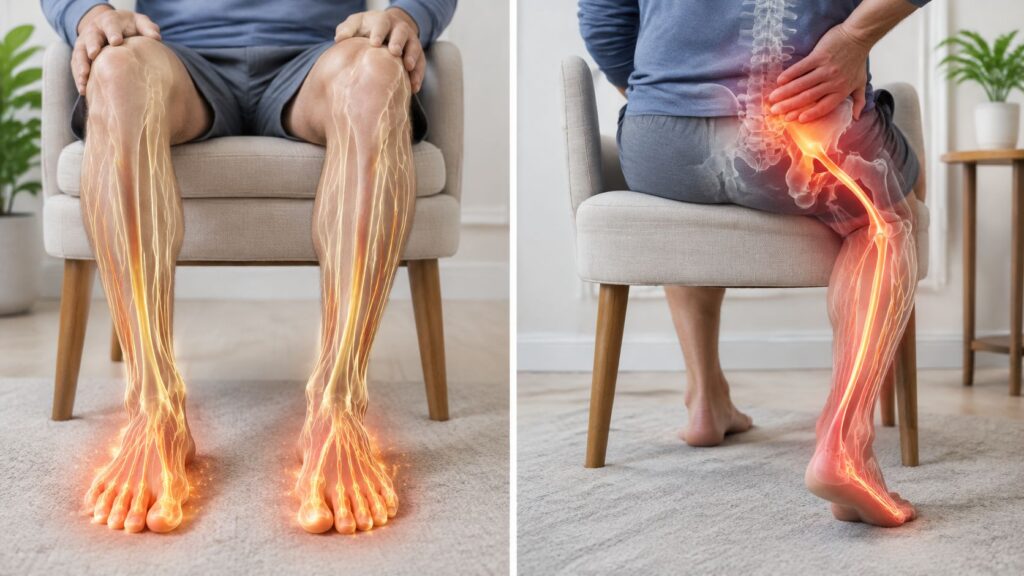
Radiofrequency ablation of the spine is a heat-based interruption of pain-carrying nerves, and it should be performed only after diagnostic blocks confirm those nerves are contributing to your pain. In a contemporary lumbar study, 77.0% of patients responded at one month and 79.0% remained responders at 24 months, with response defined as at least 50% pain relief. Read the prospective lumbar RFA study
You may be months into a familiar cycle. Your beltline hurts when you lean backward, rotate in bed, or rise from a chair. You've tried medication, exercise-based care, and perhaps an injection that helped briefly before the pain returned. The difficult question is whether radiofrequency ablation spine treatment addresses your actual pain generator, or whether it's another temporary procedure.
The answer depends on where your pain starts. Facet-mediated pain has the clearest pathway to medial branch RFA. Sacroiliac pain may require lateral branch treatment. Discogenic pain, nerve-root pain, spinal stenosis, and vertebral fracture pain follow different diagnostic and treatment pathways, and RFA isn't interchangeable across them.
This guide focuses on practical decision-making for patients in Chicago Ridge, Palos Heights, Palos Hills, Evergreen Park, and Hickory Hills, Illinois. Midwest Pain & Wellness is a pain and wellness clinic, not a physical therapy practice, so the discussion centers on image-guided diagnosis, interventional treatment, medication-sparing care, and coordination with rehabilitation professionals when appropriate.
Table of Contents
- What Radiofrequency Ablation of the Spine Actually Does
- Who Is a Real Candidate for Spinal RFA
- How the Procedure Targets the Right Nerve
- What the Day of Treatment Feels Like
- Realistic Results and How Long Relief Lasts
- How RFA Compares to Other Spine Pain Treatments
- Common Myths Worth Putting to Rest
- Next Steps for Patients in the Chicago Ridge Area
What Radiofrequency Ablation of the Spine Actually Does
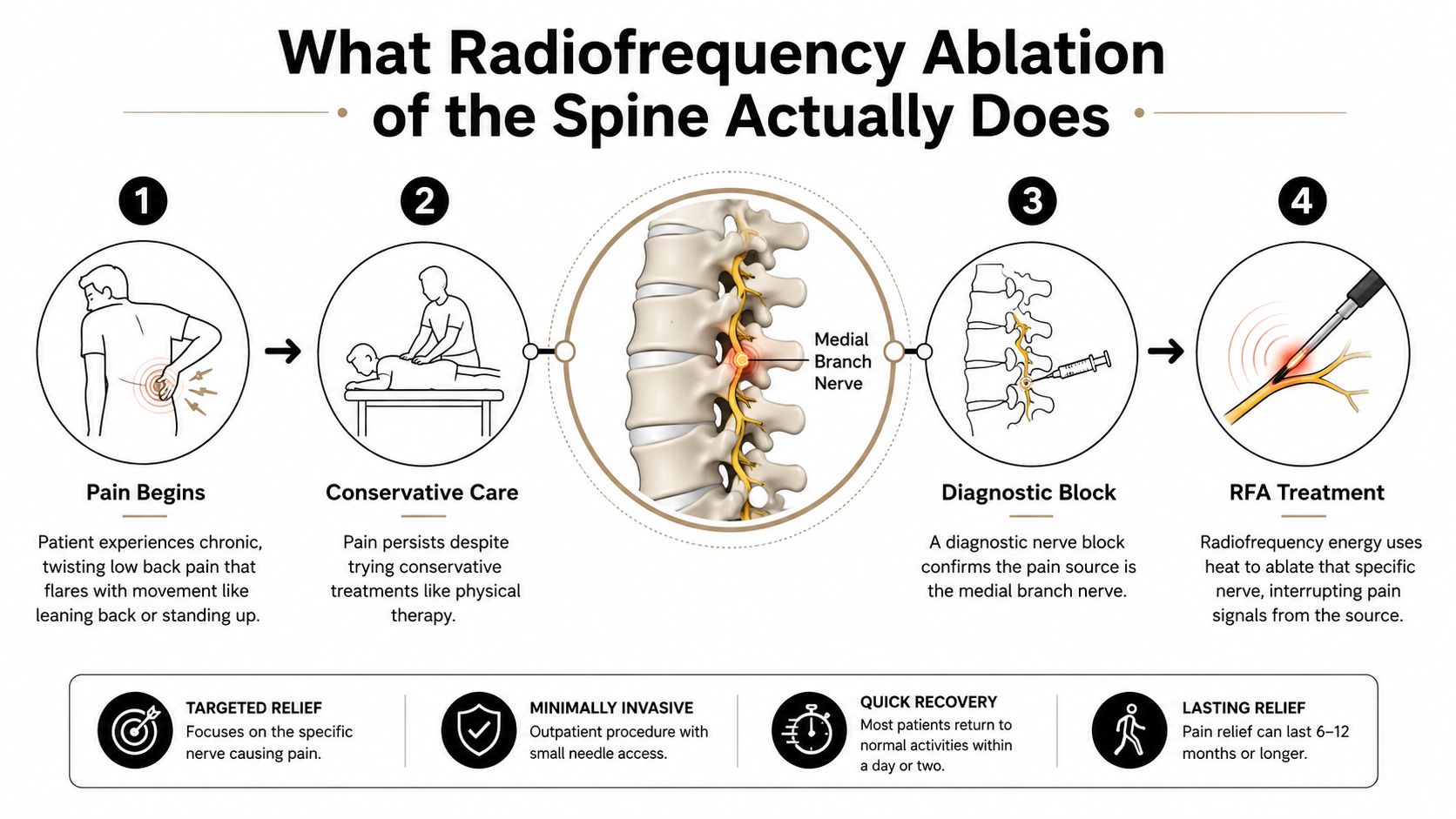
Facet pain often feels mechanical rather than electric. You may notice a deep ache near the beltline that worsens with extension, twisting, getting out of a car, or standing after sitting. The pain can persist despite physical therapy, anti-inflammatory medication, and an injection whose benefit disappeared too soon. That pattern can raise suspicion for facet-mediated pain, but symptoms alone can't prove the source.
Spinal RFA uses controlled heat to interrupt selected medial branch nerves. These small nerves carry pain signals from facet joints toward the spinal cord. Under image guidance, the physician places a radiofrequency electrode beside the target nerve, confirms its position, and creates a carefully controlled lesion. Coverage guidance commonly describes conventional thermal RFA as being performed around 80°C, while clinical techniques may use different temperatures, durations, or pulsed energy depending on the target and treatment plan. Review Medicare coverage guidance for lumbar facet RFA
The goal isn't to burn bone, remove a disc, or repair arthritis. The goal is to reduce nociceptive signaling from a confirmed pain source. The nerve isn't removed from your body, and relief can fade as nerve function returns. That makes RFA a targeted and potentially repeatable intervention, not a permanent structural cure.
Why a diagnostic block comes first
RFA should never be a first-visit guess. A medial branch block temporarily numbs the suspected nerve. If your familiar pain improves during the expected anesthetic window and returns afterward, the result provides evidence that the nerve is involved. Many coverage pathways require two diagnostic blocks with consistent, high relief before ablation, because a single response can sometimes be misleading.
Practical rule: A convincing block result matters more than an attractive MRI finding. Imaging can show arthritis, but the block helps determine whether that arthritis is actually generating your pain.
For a plain-language explanation of the condition itself, see facet-mediated pain and its treatment pathway. The central point is simple. RFA can help when the physician treats the right nerve for the right pain generator, using the right image-guided technique.
Who Is a Real Candidate for Spinal RFA
A real candidate usually has axial pain, meaning pain centered in the neck or back rather than pain traveling along a nerve into an arm or leg. The discomfort may worsen with extension and rotation, and examination may reproduce pain over the posterior spine. A preserved neurologic examination supports the facet hypothesis, although it doesn't establish it by itself.
The most important requirement is a positive diagnostic pathway. Major coverage policies commonly call for at least two medial branch blocks with consistent relief before proceeding to conventional thermal RFA. Some clinical protocols use at least 50% relief, while more stringent selection may use 80% or greater concordant relief. Learn how a medial branch block helps identify the pain source
Conservative care should also have been given a reasonable opportunity. That may include medication management, activity modification, and a structured rehabilitation plan, depending on your medical history. RFA isn't a substitute for evaluating instability, significant neurologic compression, infection, fracture, or other structural conditions that need a different response.
Supported and less-established targets
The evidence-supported pathway most often involves cervical, thoracic, or lumbar facet-mediated pain. In the sacroiliac region, physicians may consider lateral branch RFA when diagnostic workup supports that source. Selected post-surgical patients may also qualify when the pain is facet-mediated and the anatomy remains suitable.
Discogenic pain and vertebral compression fracture pain require more caution. Newer literature is examining basivertebral and sinuvertebral nerve targets for chronic discogenic low back pain, while other RFA approaches have been studied for painful spinal metastases. These are not interchangeable with standard medial branch RFA, and candidacy depends on the specific diagnosis and available evidence. Review the 2025 literature on expanding spinal RFA targets
| Indication | Evidence Status | Required Diagnostic Block |
|---|---|---|
| Lumbar facet-mediated pain | Established interventional indication | Comparative medial branch blocks, commonly two |
| Cervical or thoracic facet-mediated pain | Established when selection criteria are met | Region-specific medial branch blocks |
| Sacroiliac joint pain | Selected use through lateral branch treatment | Diagnostic sacroiliac or lateral branch pathway |
| Discogenic pain | Emerging or investigational for newer nerve targets | Diagnosis-specific evaluation, not routine facet blocks |
| Vertebral compression fracture pain | Diagnosis-specific and not routine medial branch RFA | Imaging and fracture-focused assessment |
RFA may be inappropriate with an active infection, significant bleeding risk that can't be safely managed, an unstable spine, or an inability to tolerate the required position and monitoring. A careful consultation is where those issues are identified.
How the Procedure Targets the Right Nerve
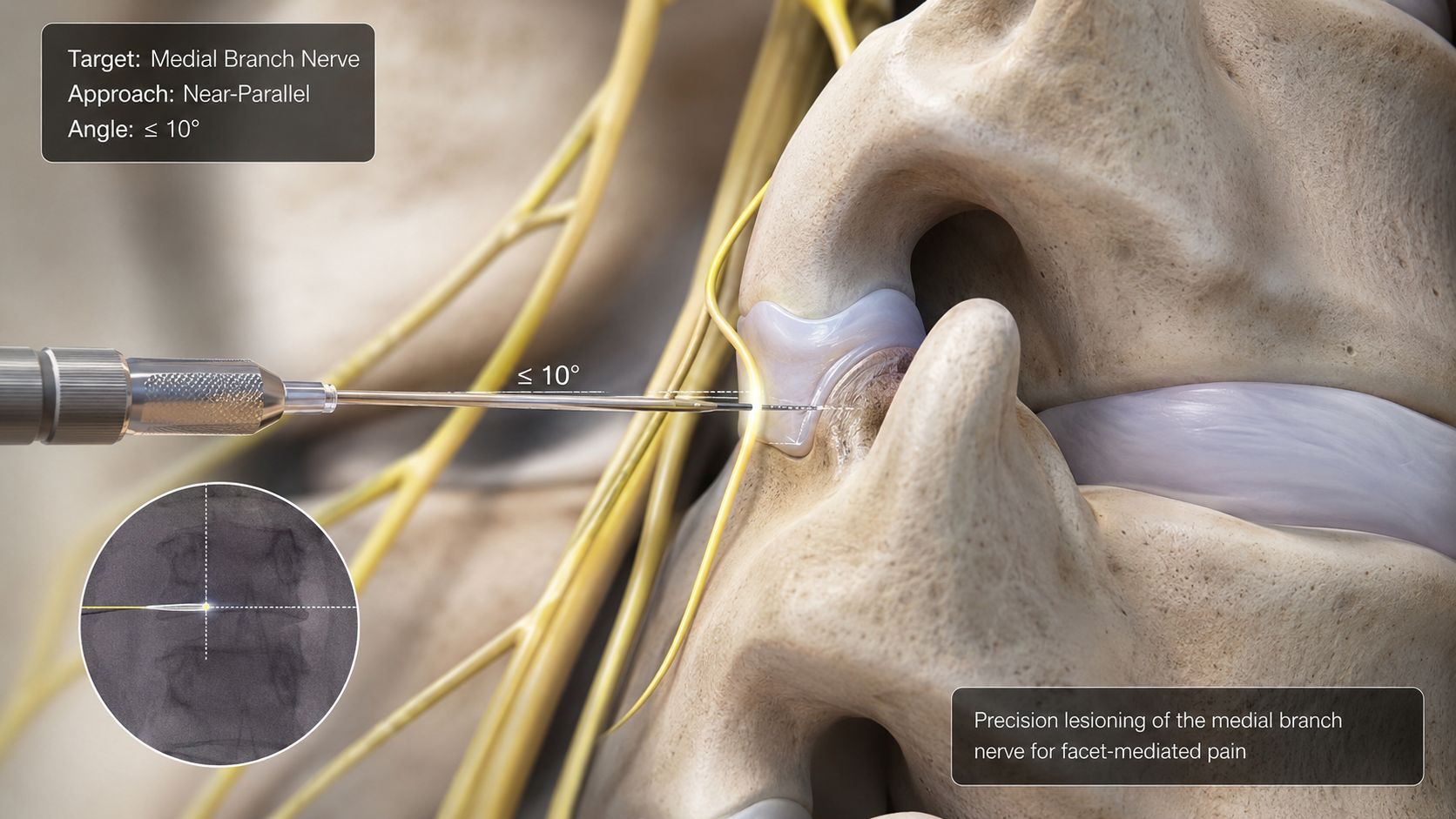
The technical objective is nerve capture, not just placing a needle somewhere near the spine. For lumbar medial branch treatment, fluoroscopy helps the physician identify the bony landmarks and guide the cannula toward the region between the superior articular process and transverse process. True anteroposterior and oblique views help confirm the position before energy is delivered.
The electrode is generally placed near-parallel to the medial branch, rather than pointing directly across it. Expert guidance emphasizes this orientation because the nerve is small and its course varies. A parallel approach gives the lesion a better opportunity to contact the nerve along its course, while a perpendicular approach can create a narrow lesion that misses the target. Review best-practice guidance for radiofrequency neurotomy
Confirmation before lesioning
After the cannula reaches the intended location, the physician may use sensory and motor stimulation. Sensory stimulation at 50 Hz helps assess whether the electrode is close to the expected sensory target. Motor stimulation at 2 Hz helps check that the cannula isn't positioned too close to an unintended motor nerve root. The team also monitors impedance and temperature during treatment.
Local anesthetic reduces discomfort around the electrode. Conventional thermal RFA then applies energy for a controlled period, often creating a lesion around the uninsulated electrode tip. Pulsed techniques use lower-temperature energy patterns, while cooled systems can create a different lesion geometry. The appropriate method depends on anatomy, diagnosis, equipment, and the physician's judgment.
The treated nerve's pain signaling is interrupted rather than permanently erased. Over time, nerve function may return, which explains why relief varies and why repeat treatment can become reasonable for a patient who previously benefited. The procedure also doesn't correct disc degeneration, facet arthritis, weakness, poor movement patterns, or spinal instability. Those issues still need attention.
What the Day of Treatment Feels Like
At an Illinois pain and wellness clinic, the day usually begins with check-in, medication review, consent, and confirmation that the treatment plan still matches your symptoms. Before positioning you, the physician should review the diagnostic block results, verify the planned levels and side, and answer last questions about sedation, sensations, and aftercare.
For lumbar and sacroiliac targets, you'll generally lie face down. Pillows can support the hips, chest, or head so the position is tolerable. Thoracic treatment may involve a prone or slightly oblique position, depending on the target and imaging view. The skin is cleaned and draped, and local anesthetic creates a brief sting followed by numbness.
During the lesion
You may feel pressure as the cannula is advanced, followed by a short burning, warmth, or deep ache during lesioning. Tell the team what you feel, particularly if the sensation travels in an unexpected direction. The staff monitors vital signs throughout the procedure, and the physician can pause to reassess the electrode position or adjust local anesthetic.
The room time is often 30 to 45 minutes per treated region, although the exact duration depends on the number of levels, positioning, imaging, and safety checks. RFA is commonly performed as an outpatient procedure, but you should follow the clinic's instructions about eating, medications, sedation, and transportation.
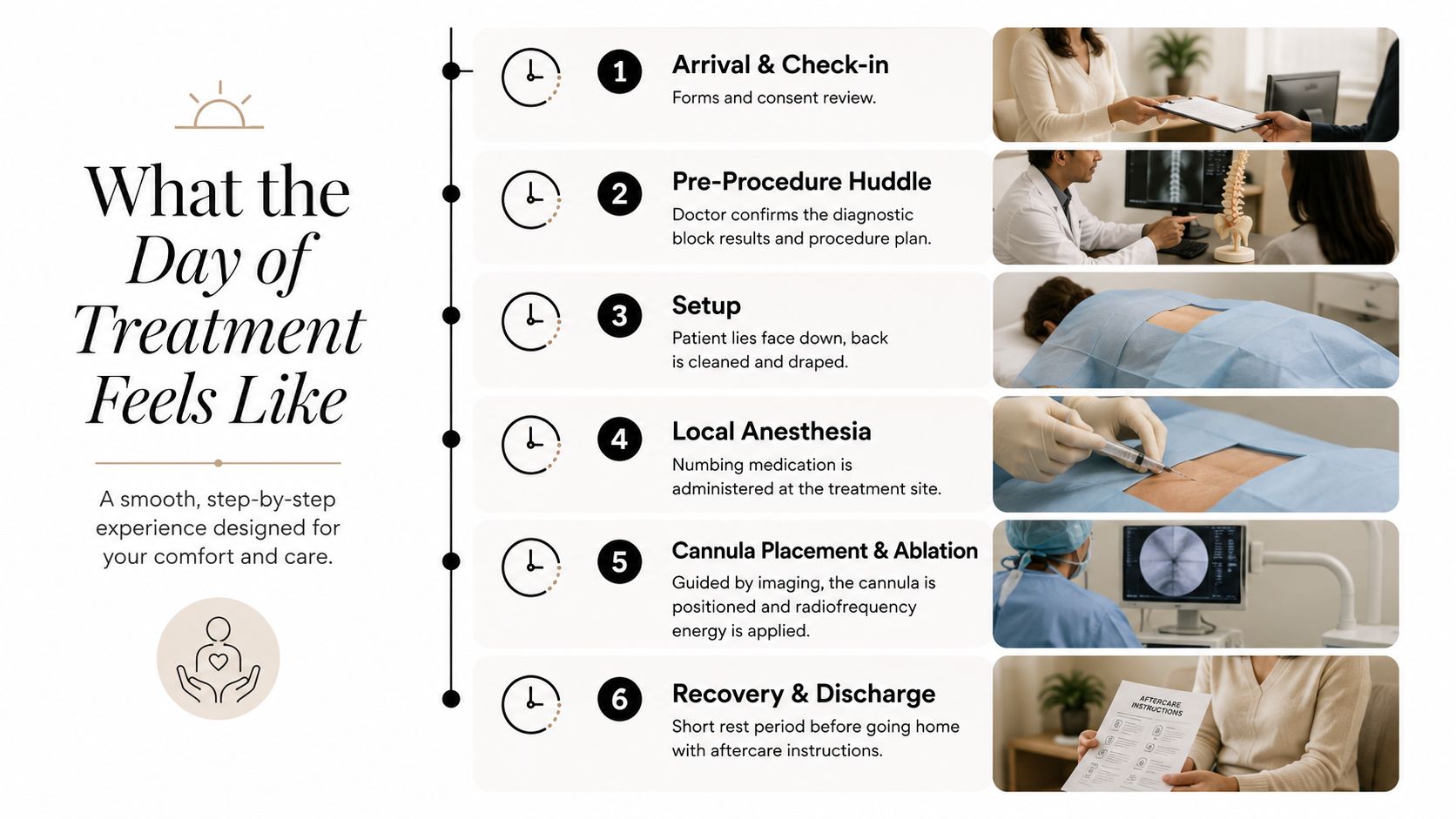
Afterward, you'll rest while the team observes you and confirms that you can walk safely. Temporary soreness at the needle sites or a bruised, irritated feeling is common. Your discharge summary should explain wound care, activity progression, medication instructions, warning signs, physical therapy timing, and the date or method for reporting your response.
Arrange a responsible ride if sedation or clinic policy requires it, and don't assume you can drive because you feel alert. Your own discharge instructions control. The safest plan is to treat the first day as a recovery period and resume normal activity gradually, rather than testing the treated area with heavy lifting or strenuous exercise immediately.
Realistic Results and How Long Relief Lasts
The honest answer is that RFA works best in carefully selected facet pain, and even then it doesn't help everyone. In an older cohort of more than 60 patients with lumbar facet syndrome, function improved by at least 50% in 58%, while pain improved by at least 50% in 53%, with no complications reported in that cohort. The report also found that analgesic use decreased during follow-up, supporting an opioid-sparing role for selected chronic spinal pain patients. Review the long-term lumbar facet RFA cohort
A more recent prospective real-world study enrolled 193 patients treated between December 2020 and January 2024. It found that 77.0% were responders at one month and 79.0% remained responders at 24 months, with response defined as at least 50% pain relief. The study also reported an 8.6-point mean reduction in the Oswestry Disability Index from a baseline score of 38.0, indicating measurable functional improvement over two years. Examine the contemporary prospective outcomes
Those numbers describe groups, not promises for an individual. A responder may still have pain, may still need exercise and medication adjustments, and may experience benefit that varies by activity. RFA also can't treat pain from every structure in the same back.
| Pain Generator | Reported Success Rate | Average Relief Duration |
|---|---|---|
| Lumbar facet syndrome | At least 50% pain improvement in 53% of the older cohort | Durable benefit reported during follow-up |
| Lumbar facet syndrome | At least 50% functional improvement in 58% of the older cohort | Durable benefit reported during follow-up |
| Contemporary lumbar facetogenic pain | 77.0% responders at one month, 79.0% at 24 months | Benefit remained measurable through 24 months in the study |
| Other spinal pain generators | Results vary substantially by diagnosis and target | No single duration applies |
When repeat treatment makes sense
Coverage policies commonly limit repeat treatment at the same level to no more than twice per year, with at least six months between procedures in some policies. One coverage pathway allows repeat conventional thermal RFA when the initial lesion produced more than 50% relief for at least six months. Review the relevant coverage criteria
Another clinical policy specifies no more than two treatments per year at the same level, at least six months apart, and no more than four joints per session in a covered spinal region. Review the spinal RFA repeat-treatment policy
The decision to repeat should be based on meaningful prior benefit and a return of the same pain pattern. A new pain pattern deserves a new evaluation, not automatic re-lesioning.
How RFA Compares to Other Spine Pain Treatments
RFA belongs later in the diagnostic process, after testing points to a specific pain generator. A medial branch block temporarily numbs the small nerves serving facet joints. Meaningful, temporary improvement supports facet-mediated pain and helps determine whether medial branch RFA is appropriate. The same logic does not automatically apply to disc, sacroiliac, or nerve-root pain.
Epidural steroid injections address a different problem. They are generally considered when inflammation around a spinal nerve root causes radiating arm or leg pain, numbness, or related symptoms. They are not a direct replacement for medial branch RFA when the main complaint is axial pain arising from the facet joints.
Matching the treatment to the problem
Intra-articular facet injections place medication inside the facet joint. They can provide diagnostic information or short-term relief in selected cases, but they do not interrupt the medial branch nerves in the way RFA does.
Spinal cord stimulation is a neuromodulation option for selected patients with persistent neuropathic or postsurgical pain, especially after conservative care and other treatments have not provided adequate control. It involves a different evaluation, a trial, and ongoing device management.
Minimally invasive lumbar decompression targets structural narrowing. It does not interrupt facet-joint pain signals. If standing or walking symptoms result from anatomic compression, decompression may fit the problem better than RFA.
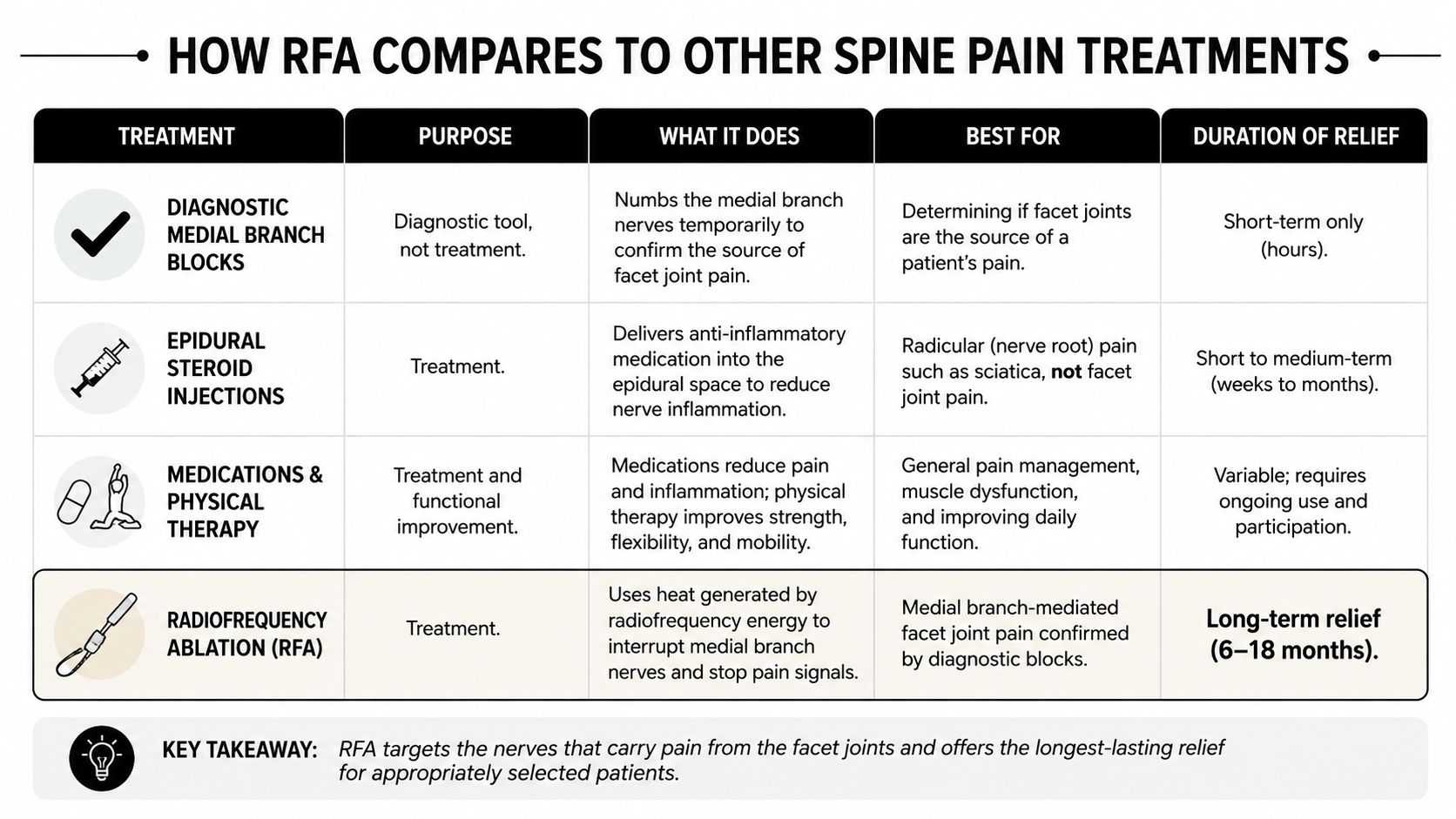
The treatment choice should follow the suspected generator. Facet pain may lead from diagnostic blocks to image-guided RFA, while discogenic, radicular, sacroiliac, or stenotic pain requires a different workup. In southwest Chicago suburbs practice, that distinction matters because the procedure only addresses the nerves and structure selected during the evaluation. RFA may create time for movement and rehabilitation, but it does not correct every source of spine pain.
Common Myths Worth Putting to Rest
Myth: RFA burns your bones or removes your cartilage.
Conventional RFA applies heat at the electrode tip to interrupt a selected nerve. It doesn't reshape the vertebrae, remove cartilage, or repair the arthritic joint. The treatment targets nerve signaling, not the underlying degeneration.
Myth: RFA cures facet arthritis.
It doesn't. The facet joint remains arthritic, and other structures may continue to contribute to pain. The aim is to reduce pain signaling enough to improve movement, sleep, activity, and participation in a broader care plan.
Myth: One treatment lasts forever.
Relief can fade when the treated nerve recovers. Clinical summaries describe pain relief commonly lasting 6 to 12 months, with some reports lasting longer. Review the NCBI clinical summary of spinal RFA
Myth: RFA is just another nerve block.
A block injects local anesthetic near a nerve and is mainly diagnostic in this setting. RFA uses an electrode and controlled energy to create a longer-lasting interruption of nerve conduction. The procedures answer different clinical questions.
Myth: RFA carries the same risk profile as open spine surgery.
RFA is percutaneous and image guided, so it doesn't involve the tissue disruption of open surgery. That doesn't make it risk-free. Infection, bleeding, temporary numbness, neuritis, unintended nerve injury, and post-procedure soreness remain possible, which is why image guidance, stimulation, medication review, and careful selection matter.
The most important myth is that a procedure can substitute for diagnosis. A technically excellent lesion placed at the wrong nerve is still the wrong treatment.
Next Steps for Patients in the Chicago Ridge Area
If you live in Chicago Ridge, Palos Heights, Palos Hills, Evergreen Park, or Hickory Hills, start by gathering the information that lets a pain specialist reconstruct the story rather than relying on a single scan. Bring imaging reports and discs when available, a medication list, prior injection notes, diagnostic block results, surgical records, and a short description of what movements trigger the pain.
At the initial evaluation, expect questions about pain location, radiation, sitting and standing tolerance, sleep, weakness, numbness, bowel or bladder changes, prior treatment, and the exact response to earlier injections. Bring questions such as:
- Which structure do you believe is generating my pain?
- Do my symptoms fit facet, sacroiliac, disc, nerve-root, or stenotic pain?
- Do I need one diagnostic block or a comparative block pathway?
- What relief threshold would make RFA reasonable?
- Which levels would you treat, and why?
- What alternatives fit if the block is negative?
- How will we measure function, not just pain?
Coordinating diagnosis and treatment
Midwest Pain & Wellness can evaluate and treat facet-mediated spine pain with image-guided interventions, including diagnostic medial branch blocks and radiofrequency ablation. The clinic also coordinates care with primary care clinicians, surgeons, chiropractors, and rehabilitation professionals when the diagnosis calls for a broader plan. Insurance authorization depends on your policy and clinical documentation, so ask what records and prior-treatment evidence are needed before scheduling.
A common workflow is diagnostic evaluation first, followed by the required blocks and a separate treatment decision if the results are concordant. Timing can vary with authorization, medical clearance, and scheduling, so don't assume that a procedure date is appropriate until the diagnostic evidence has been reviewed. For financial questions, review the clinic's information about radiofrequency ablation cost and coverage considerations.
Patients sometimes also ask how a clinic communicates educational information online and maintains clear patient messaging. For organizations handling that work, this resource on social media management for clinics offers a useful overview, but your medical decision should remain grounded in an individual examination and diagnostic plan.
On procedure day, confirm transportation requirements, medication instructions, arrival time, and whether sedation is planned. After treatment, clarify how to report your pain and functional response, when follow-up occurs, when to resume rehabilitation, and how the results will be sent to your referring provider.
Midwest Pain & Wellness evaluates chronic spine pain in Chicago Ridge, Illinois, and uses diagnostic blocks to determine whether facet-mediated pain is an appropriate target for radiofrequency ablation. Visit Midwest Pain & Wellness to request an evaluation and discuss an image-guided, opioid-sparing plan for your symptoms.