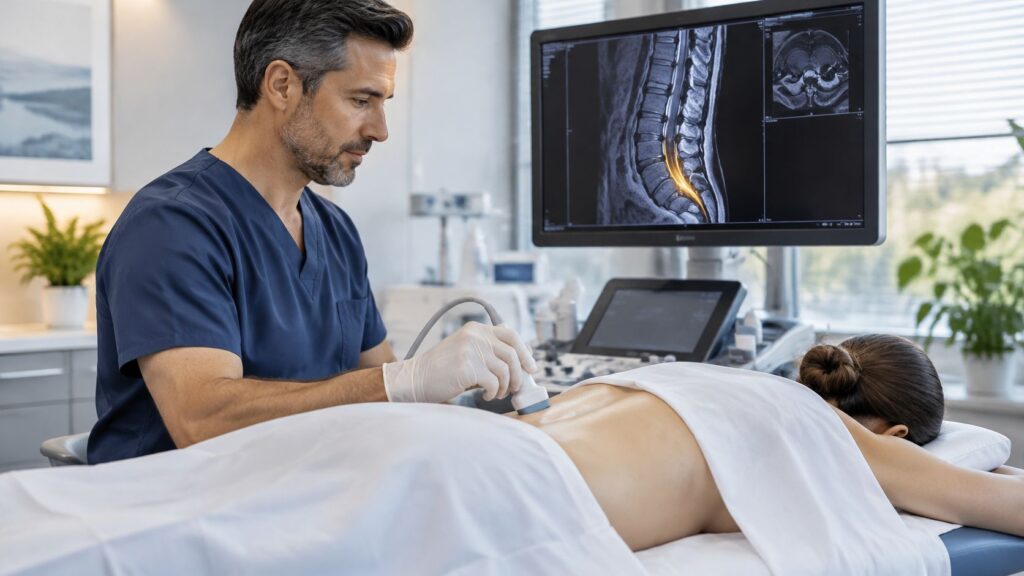
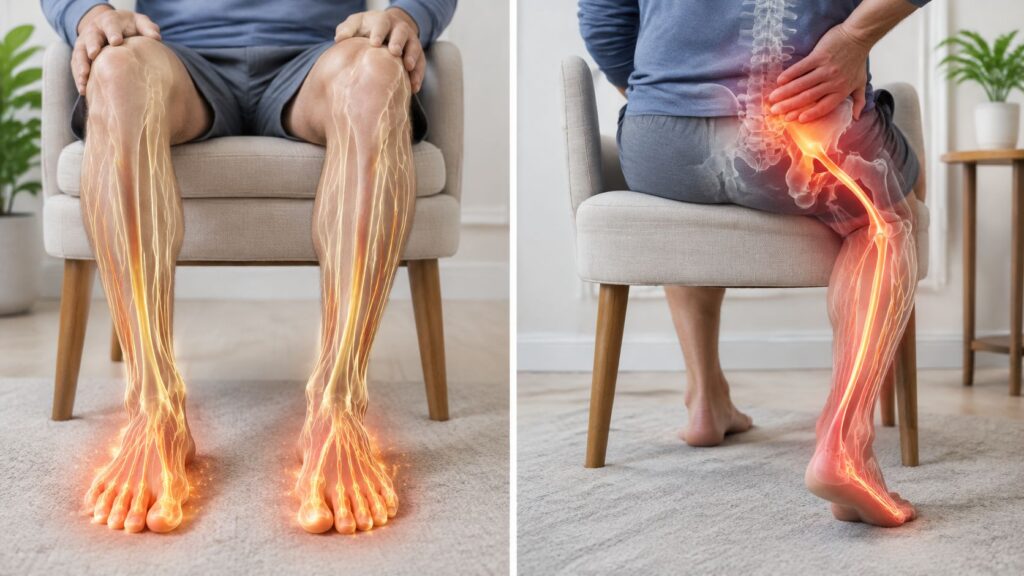
You may notice the pattern already. A person bends to pick up a grocery bag, steps out of the shower, coughs hard, or twists in bed, and a sharp mid-back pain shows up out of nowhere. For many people in Chicago Ridge and the nearby Illinois communities, that moment is the first time they hear the phrase vertebral compression fracture. The hard part is that the cause isn't always obvious, and the right next step depends on whether the problem is a weakened bone, a harder injury, or something more serious underneath.
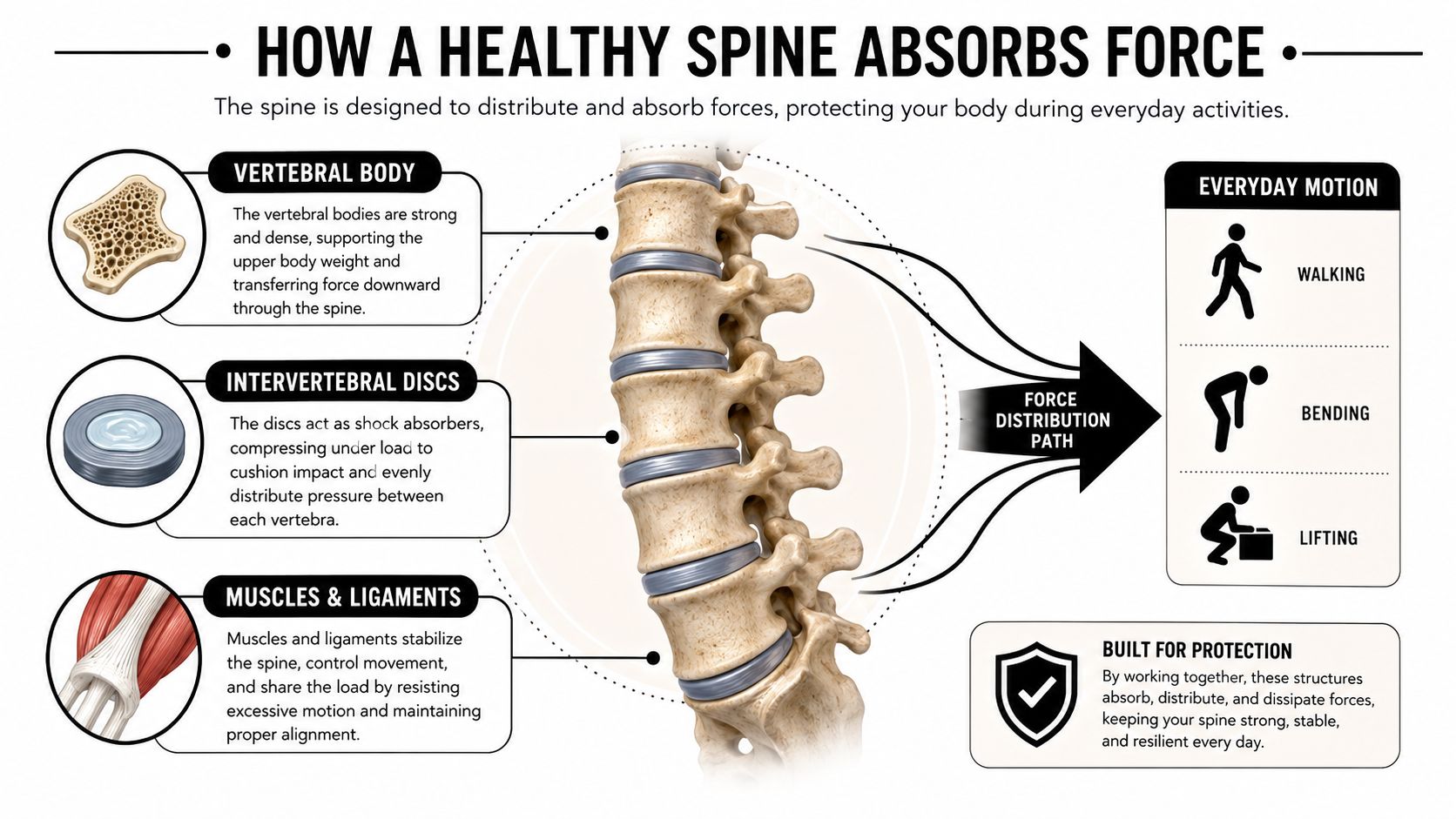
Table of Contents
- How a Healthy Spine Absorbs Force
- The Osteoporotic Pathway
- Traumatic and Pathological Causes
- How Risk Adds Up Over a Lifetime
- Recognizing the Signs and Getting the Right Diagnosis
- Treatment Options from Conservative Care to Kyphoplasty
- Prevention Through Bone Health and Daily Habits
- When to Seek Specialist Care Near Chicago Ridge
How a Healthy Spine Absorbs Force
A healthy spine doesn't work like a stack of rigid blocks. It behaves more like a column with built-in shock absorbers, where the vertebral body, intervertebral discs, muscles, and ligaments share load every time you walk, bend, lift, or even cough. The front part of each vertebra carries a lot of compressive force, which is why a compression fracture often shows up there first, as a wedge-shaped collapse rather than a clean break.
Why the thoracolumbar junction fails first
The thoracolumbar junction is a common fracture site because it sits where the flexible upper spine meets the stiffer lower spine. That transition point concentrates stress, especially during forward bending and lifting. In plain language, it's the part of the column that has to manage changing forces on both sides, so if bone quality drops, that zone can fail before the rest of the stack does.
A compression fracture isn't just “a broken bone” in the usual sense. It's a structural collapse of the vertebral body, usually in the front, where the bone loses height and changes shape. Once that front support gives way, the spine can start to tilt forward, which is why some people notice height loss or a stooped posture over time.
Practical rule: if the spine's support beams are weakened, ordinary motion can become enough to cause failure.
For a broader overview of back pain patterns, see how to help back pain, especially if you're trying to tell mechanical pain from a fracture-like problem.
What changes when the scaffolding starts to fail
In a healthy spine, the discs act like cushions and the muscles help stabilize movement. When the vertebral body weakens, the load shifts in a way it was never built to handle. That's why the cause of a vertebral compression fracture causes more than pain, it changes the structure that carries your body weight.
The rest of the article follows three major paths: osteoporotic fractures, traumatic fractures, and pathological fractures from disease. Most readers start with osteoporosis, but the main job is sorting out which path fits the person in front of you.
The Osteoporotic Pathway
Osteoporosis is the dominant cause of vertebral compression fractures, and the reason is mechanical, not abstract. The vertebral body contains a meshwork of trabecular bone inside and a harder cortical shell around it. It functions like a sponge wrapped in a thin shell; when the sponge loses density, the whole structure can't resist axial load the way it used to. Expert reviews note that VCF risk rises roughly twofold for every standard-deviation drop in vertebral bone mineral density (PMC review).
Why tiny triggers can be enough
Once bone quality drops far enough, the body doesn't need a dramatic event to fail. Severe osteoporosis can let a fracture happen during standing up, bending, coughing, or sneezing, and AANS notes that some people fracture after stepping out of the shower, sneezing forcefully, or lifting a light object (AANS). That's why patients are often shocked by the trigger, it feels too small to have caused a fracture, but the bone was already carrying too much risk.
Adjacent disc degeneration makes things even more vulnerable. As discs change with age, stress gets distributed differently across the vertebral body, which can concentrate force where the bone is already weakest. That's one reason older adults often fracture with less drama than younger people do.
If a person fractures after a minor motion, the motion isn't the whole story. The bone quality usually is.
This is also the point where prevention and treatment overlap. If someone has one fracture, the next question isn't just pain control, it's whether the person needs a bone-health plan to reduce the chance of another break. If you're looking for a practical bone-health perspective, reverse bone loss in women is a useful patient-facing resource to read alongside a clinician's advice.
The key takeaway is simple. Osteoporosis lowers the load threshold of the vertebral body until routine life events can push it past the breaking point. That's why a compression fracture from “nothing much” still deserves real evaluation.
Traumatic and Pathological Causes
A vertebral compression fracture can start in very different ways. Some follow high-energy trauma, such as a fall from height, a motor vehicle collision, or a sports injury. In those situations, the spine is exposed to a sudden force that can overwhelm even healthy bone.
Other fractures happen because the vertebra has already been weakened by cancer, infection, or medication exposure. In those cases, the fracture is usually a sign of a larger medical problem, not just a local spine injury. StatPearls notes that trauma, infection, neoplasm, chemotherapy, long-term steroid use, hyperthyroidism, and radiation therapy can all weaken vertebrae enough to fracture (StatPearls).
Common Non-Osteoporotic Causes of VCF at a Glance
| Cause Category | Typical Trigger | Pain Pattern | Red-Flag Clues |
|---|---|---|---|
| High-energy trauma | Major fall, collision, forceful impact | Sudden and severe after injury | Other injuries, obvious accident history |
| Malignancy-related fracture | Minimal or no trauma | Persistent, deep pain, often not eased much by rest | History of cancer, unexplained weight loss, night pain |
| Infection-driven fracture | Can follow illness or spread from elsewhere | Pain plus systemic symptoms | Fever, chills, feeling unwell |
| Medication or endocrine-related weakening | Often no single event | Can look like ordinary back pain at first | Steroid exposure, thyroid issues, other bone-loss risks |
The trigger usually gives an important clue, but it does not always give the full answer. A patient who fractures after a motor vehicle collision often remembers a clear accident. A patient with cancer-related bone weakening may have no major injury at all, only pain that stays present, feels deep, and does not behave like routine mechanical back pain. Infection deserves the same caution, especially when back pain comes with fever, chills, or a general sick feeling.
Some causes are easy to miss because they overlap with osteoporosis. Long-term steroid use is a classic example. Chemotherapy and radiation can also weaken bone on top of age-related loss, so a fracture may reflect more than one problem at the same time. AAFP's review highlights modifiable risks such as alcohol and tobacco use, low body weight, and calcium or vitamin D deficiency, all of which can weaken the vertebrae further (AAFP).
For patients in Chicago Ridge, Palos Heights, Palos Hills, Evergreen Park, and Hickory Hills, the practical question is simple: does this look like a straightforward fracture after injury, or does it need a broader workup because something else is weakening the bone?
How Risk Adds Up Over a Lifetime
A spine usually does not fail because of one dramatic event alone. The more common pattern is a stack of smaller problems, each one weakening the bone a little more until normal load becomes too much. A 72-year-old woman with low body weight, a long smoking history, and a recent fall may not have a single obvious cause, yet those factors together can move her much closer to the point where a vertebra collapses.
A layered example that feels real
Age matters because fracture risk rises as bone strength falls over time, and the burden is strongly sex-linked. StatPearls reports an annual incidence of 10.7 per 1,000 women versus 5.7 per 1,000 men, with prevalence reaching about 40% by age 80 (StatPearls). It also estimates a lifetime risk of about 25% of postmenopausal women experiencing a compression fracture. That is why a postmenopausal woman with a prior fracture history needs a different level of attention than a younger adult with a one-time strain.
Self-check: if more than one risk factor is present, do not assume the pain is “just old age.”
Other risks matter too. AAFP identifies nonmodifiable factors like advanced age, female sex, and prior fractures, and modifiable ones like tobacco use, alcohol use, frailty, low body weight, and calcium or vitamin D deficiency (AAFP). The more of these that stack together, the less force it takes to cause a fracture. It works like a chair with several loose joints, one weak point may still hold, but several weak points together make failure much easier.
Older adults often fracture after minimal trauma, while younger patients are more likely to fracture after higher-energy injury. That difference matters because malignancy should move higher on the list in people under 55 who have no trauma or only minor trauma, especially when pain does not fit the usual mechanical pattern (PMC review).
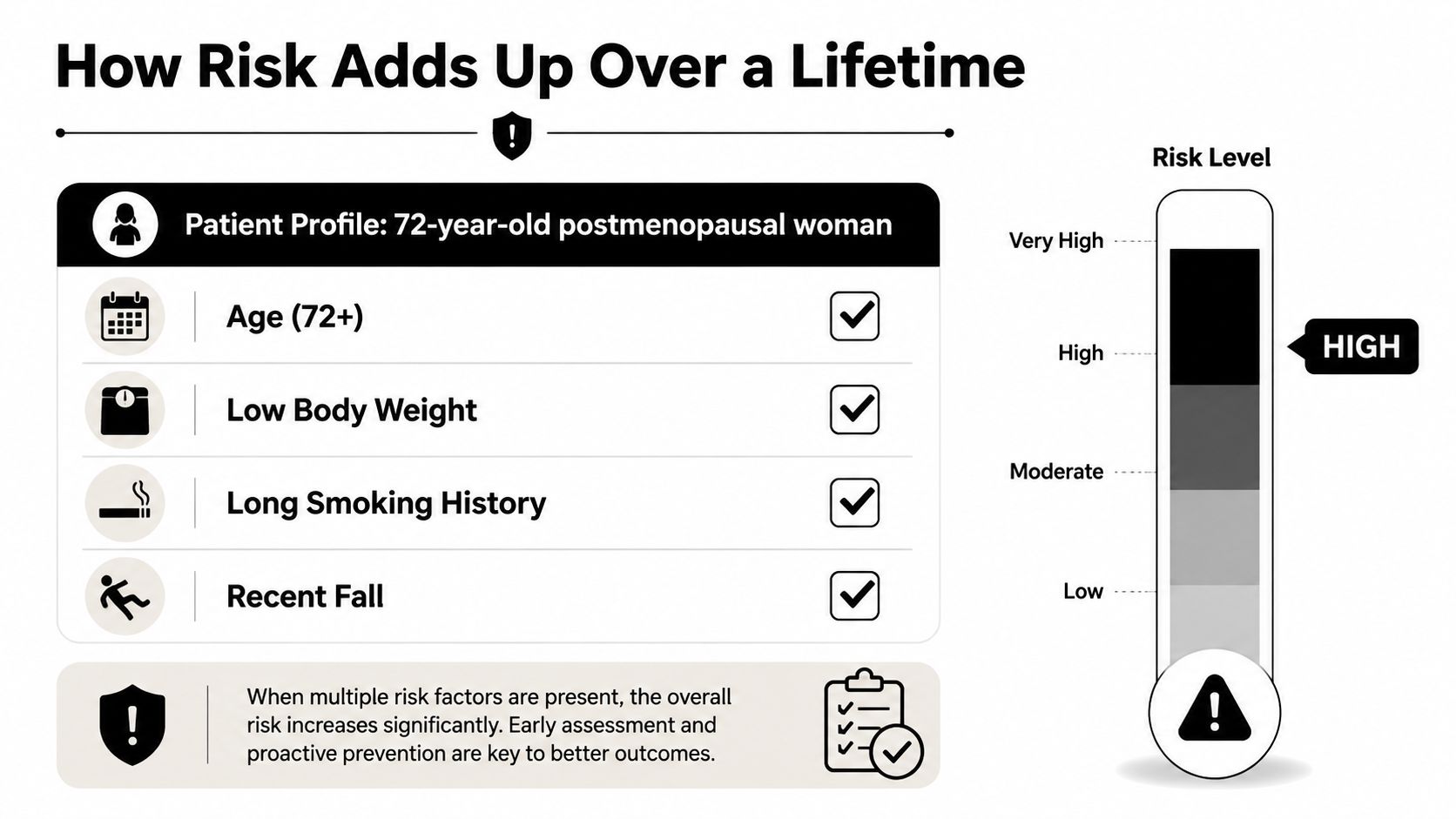
For a 72-year-old in the Chicago Ridge area, the practical mindset is simple. Every risk factor moves the spine closer to failure. That does not mean a fracture is certain, but it does mean new back pain deserves faster attention and a more careful diagnosis.
Recognizing the Signs and Getting the Right Diagnosis
The classic presentation is sudden mid- to lower-back pain after a movement that seemed harmless. The pain often worsens with standing, bending, or changing positions, and improves when lying down. With multiple fractures, some people also notice loss of height or a more stooped posture over time. OrthoInfo notes that pain can also worsen with coughing or sneezing, and pain may occasionally radiate to the stomach or legs (OrthoInfo).
Symptoms that need urgent evaluation
Certain symptoms should push the situation out of the routine category.
- Bowel or bladder changes: this can signal nerve involvement.
- Saddle anesthesia: numbness in the groin area needs prompt assessment.
- Severe night pain: pain that wakes you up shouldn't be brushed off.
- Fever: back pain plus fever raises concern for infection.
- Unexplained weight loss: this can be a red flag for malignancy.
A clinician usually starts with a history, a physical exam, and an X-ray. X-rays show the bone shape and can reveal the collapsed vertebra, while MRI helps tell whether the fracture is new and can help rule out malignancy or infection by showing soft tissue and bone marrow changes (OrthoInfo). CT is useful when the question is how far the fracture extends or whether the spinal canal is involved. DEXA measures bone density, which helps quantify the underlying osteoporosis risk rather than just the fracture itself.
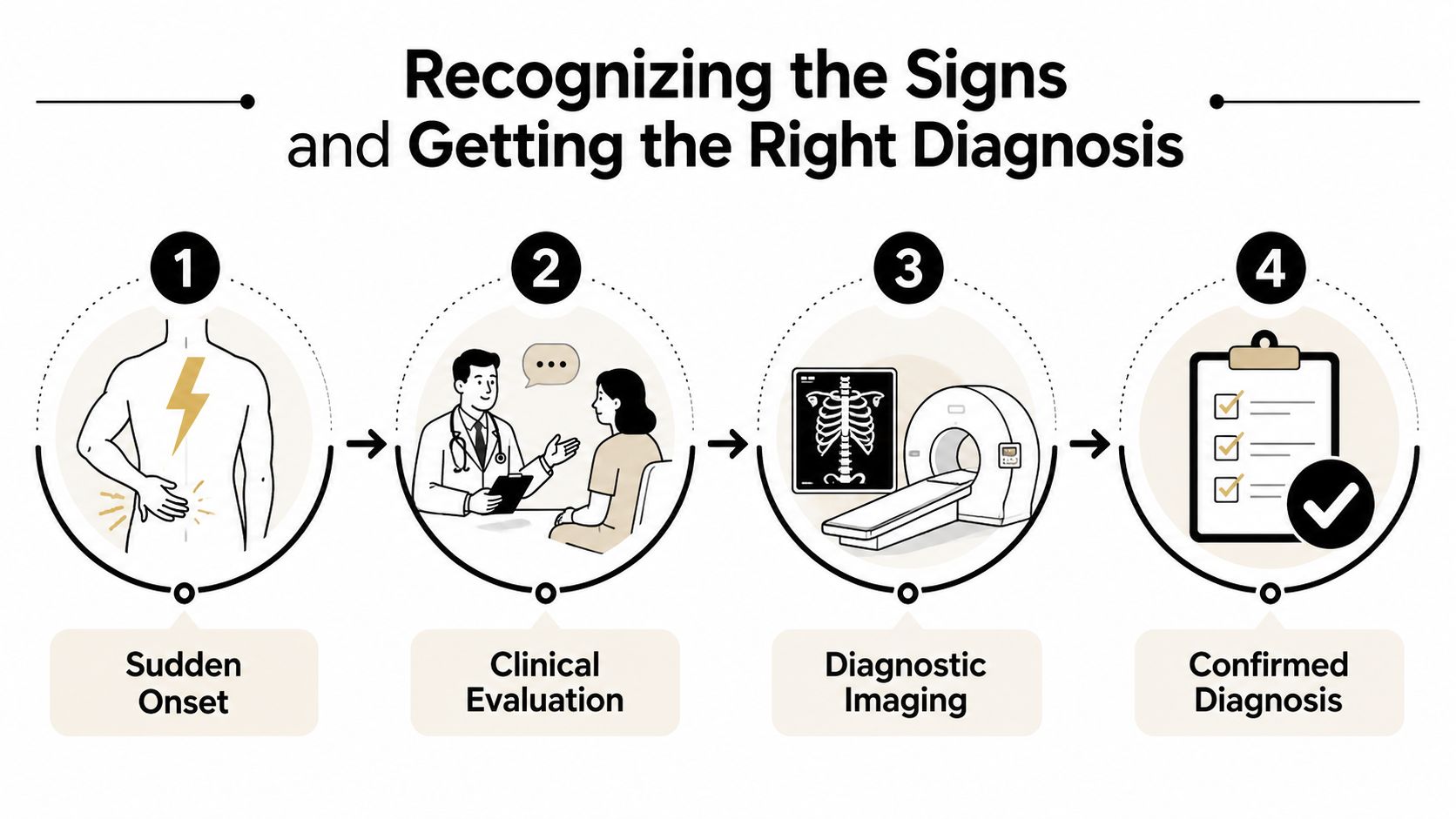
The test should match the question. X-ray asks, “Is there a collapse?” MRI asks, “Is it new, and is something else going on?” DEXA asks, “Why did this bone fail in the first place?”
That distinction matters because treatment choices depend on cause, timing, and severity. A vertebral compression fracture causes a different urgency when it's tied to infection or cancer than when it's due to bone loss alone.
Treatment Options from Conservative Care to Kyphoplasty
The first step is usually to calm the pain and protect the fracture while the bone heals. That often means pain control, activity modification, and support for healing. Short-term bracing can limit motion, like putting a splint on a broken arm so the injured area can rest, and medication usually starts with NSAIDs or acetaminophen when they are appropriate. If pain is stronger, a clinician may use a short course of stronger medication while still keeping the plan opioid-sparing whenever possible. Some people also benefit from targeted exercise and posture work once the acute pain eases.
Where interventional pain care fits
Even as the fracture settles, pain can linger because the nearby joints and muscles keep guarding the area. That is often where interventional pain care helps, especially if the pain seems to come from the facet joints or sacroiliac region rather than the collapsed vertebra itself. Procedures such as medial branch blocks, facet injections, sacroiliac injections, and radiofrequency ablation can quiet those pain generators so the back can relax and move more normally.
For acute painful fractures that are not improving with conservative care, vertebral augmentation may be considered. Kyphoplasty and vertebroplasty are image-guided procedures that stabilize the fractured vertebra through minimally invasive spine surgery. The choice depends on the fracture pattern, timing, and symptoms, because a fresh collapse is not managed the same way as a painful fracture that has already started to settle.
Midwest Pain & Wellness in Chicago Ridge offers kyphoplasty as part of its interventional pain and spine care. Patients who want to understand recovery can review the clinic's kyphoplasty procedure recovery information to see what healing may look like after the procedure.
Good rule of thumb: if pain is severe, recent, and still limiting function after conservative care, image-guided treatment may be worth discussing.
The cause of a vertebral compression fracture changes the level of urgency, especially when infection or cancer is involved. Those situations call for faster attention than bone loss alone, because the treatment plan has to address the underlying problem, not just the pain. Surgical referral becomes more urgent if there is progressive neurological deficit, spinal instability, or fracture non-union. In plain language, that means worsening weakness, an unstable spine, or a fracture that is not healing the way it should. The goal is not to jump straight to a procedure, it is to match treatment to the underlying cause so the patient can move safely again.
Prevention Through Bone Health and Daily Habits
A movement-based framework like the Telomyx osteoporosis exercise guide pairs well with clinician-guided plans for spine-safe exercise. Prevention works best when it has three parts because the spine is protected by bone strength, steadier balance, and fewer day-to-day stressors. If one part is weak, the others have to work harder, much like a chair with one loose leg.
First, bone density optimization matters. That means enough calcium and vitamin D, weight-bearing exercise, and medication guided by a clinician when osteoporosis is present. Second, fall prevention matters at home and in the community, through better footwear, brighter lighting, balance work, and reviewing medicines that may affect steadiness. Third, limiting controllable bone stressors matters, especially smoking, heavy alcohol use, and unnecessary long-term steroid exposure.
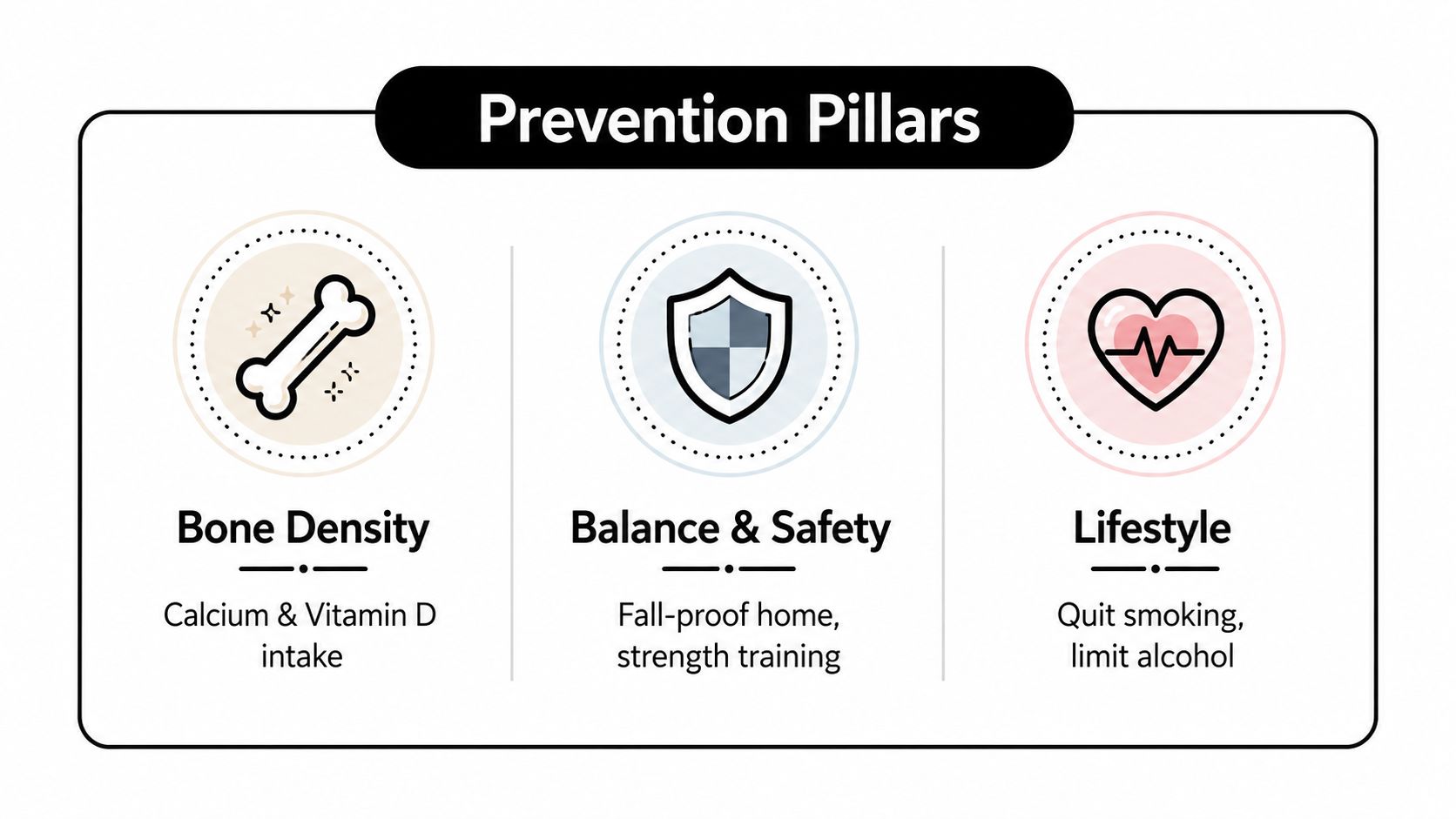
A simple prevention box to keep in mind
- Bone Density: calcium and vitamin D intake, plus treatment if osteoporosis is confirmed.
- Balance and Safety: fall-proof the home, keep walkways clear, and keep strength work part of the week.
- Lifestyle: stop smoking and limit alcohol.
That mix matters because a prior vertebral fracture raises the risk of another one. OrthoInfo notes that people with osteoporosis who have already had a spinal fracture are more likely to have additional spinal fractures or fractures in the hip or wrist (OrthoInfo). Prevention after the first fracture is part of treating the fracture itself, because the goal is to keep the next small slip from becoming another collapse.
A daily routine helps more than a perfect one-time effort. Short walks, balance drills, and strength work can all support the spine if they are chosen with bone health in mind and matched to what a clinician says is safe for the person's fracture pattern and overall condition. For an older adult, that often means asking a simple question before starting something new, will this make the bones stronger, help me stay steadier, or reduce the chance of a fall?
For people who have already had one fracture, prevention also means paying attention to patterns that make the next injury more likely. A curved posture, slower reactions, or a home with loose rugs and poor lighting can turn a minor stumble into a painful setback. Better habits do not replace medical treatment for osteoporosis, but they do reduce the load on fragile bone and make recovery more durable.
When to Seek Specialist Care Near Chicago Ridge
If you live in Chicago Ridge, Palos Heights, Palos Hills, Evergreen Park, Hickory Hills, or the surrounding Illinois communities, don't wait on a new spinal fracture pattern that feels wrong. Seek urgent evaluation for new severe back pain after a minor fall in an older adult, pain that wakes you at night, fever with back pain, unexplained weight loss, numbness or weakness in the legs, or any loss of bowel or bladder control.
Start with a primary care clinician if the pain is mild, stable, and clearly improving. Reach a board-certified interventional pain specialist sooner when the pain is severe, when function is dropping, or when you may need image-guided treatment such as kyphoplasty. For a local overview of that care pathway, the clinic's interventional pain management clinic page explains the scope of services in one place.
- Severe new pain after minor trauma: get evaluated promptly.
- Night pain, fever, or weight loss: ask about urgent workup.
- Leg weakness, numbness, or bowel and bladder changes: treat as urgent.
- Persistent pain despite conservative care: ask about specialist options.
The goal is durable pain relief and restored function through evidence-based, opioid-sparing treatment.
If you're dealing with back pain that might be a vertebral compression fracture, Midwest Pain & Wellness can help you sort out the cause and match it to the right level of care. Visit Midwest Pain & Wellness to learn more about diagnosis, kyphoplasty, and interventional options that focus on relief without depending on long-term opioids.