If you're reading this, there's a good chance you've already done the usual things for pain. You've tried rest, medications, physical therapy, injections, maybe even surgery discussions. Yet your back, neck, knee, hip, or joint still limits how you sleep, move, work, or get through the day.
That's often the point when people start hearing terms like regenerative medicine, cell therapy, or stem cell treatment and feel overwhelmed. The language can sound futuristic. What most patients want is much simpler. Is this real, is it safe, am I a candidate, and what would the process look like at a pain clinic in Illinois?
Autologous cell therapy is one option for carefully selected patients with chronic pain. It is not a miracle cure. It is not the right fit for everyone. But it is a legitimate medical approach built around one central idea: using your own cells rather than donor material. For patients in Chicago Ridge and nearby Illinois communities such as Oak Lawn, Palos Hills, Palos Heights, Worth, Bridgeview, Hickory Hills, Alsip, Burbank, Evergreen Park, and Orland Park, that makes the conversation much more practical. This isn't abstract science. It's a treatment path that starts with diagnosis, candidacy, and realistic expectations.
Is Autologous Cell Therapy Your Next Step for Pain Relief?
A common story sounds like this. A patient develops low back pain that at first seems manageable. Months pass. The pain starts radiating into the hip or leg, sitting becomes difficult, sleep gets lighter, and daily tasks begin to feel like small negotiations with the body. Standard treatment helps some, but not enough.
Another patient has chronic knee pain from arthritis or an old injury. They've tried anti-inflammatory medication, bracing, activity changes, and injections. They're not ready for major surgery, or they may not even be a good surgical candidate. What they want is a serious discussion about whether there's another option between “just live with it” and “replace the joint.”

That's where autologous cell therapy enters the conversation. In plain terms, autologous means the treatment uses your own cells. In pain medicine, the appeal is straightforward. We're not trying to chase symptoms alone. We're trying to change the painful environment in a damaged or degenerative area in a way that may improve function and reduce pain.
When patients usually ask about it
Many individuals don't start with autologous cell therapy. They ask about it after:
- Conservative care hasn't held up: Medication, home exercise, therapy, or standard injections gave partial or temporary relief.
- The diagnosis is structural: Imaging and examination point to a specific pain generator such as a degenerative joint, disc, or related tissue injury.
- They want an opioid-sparing plan: They want a path that focuses on function, not long-term dependence on pain medication.
- They need a localized strategy: Their problem is concentrated in a specific spine or joint area rather than being vague, body-wide pain.
A reasonable next step isn't the newest treatment. It's the treatment that fits the diagnosis, the level of damage, and the patient's goals.
For many patients across the southwest suburbs of Chicago, the value of this therapy isn't hype. It's clarity. If you're considering this approach, you need a direct explanation of what it is, what it can and can't do, and how a clinic in Illinois evaluates whether it makes medical sense for you.
What Is Autologous Cell Therapy?
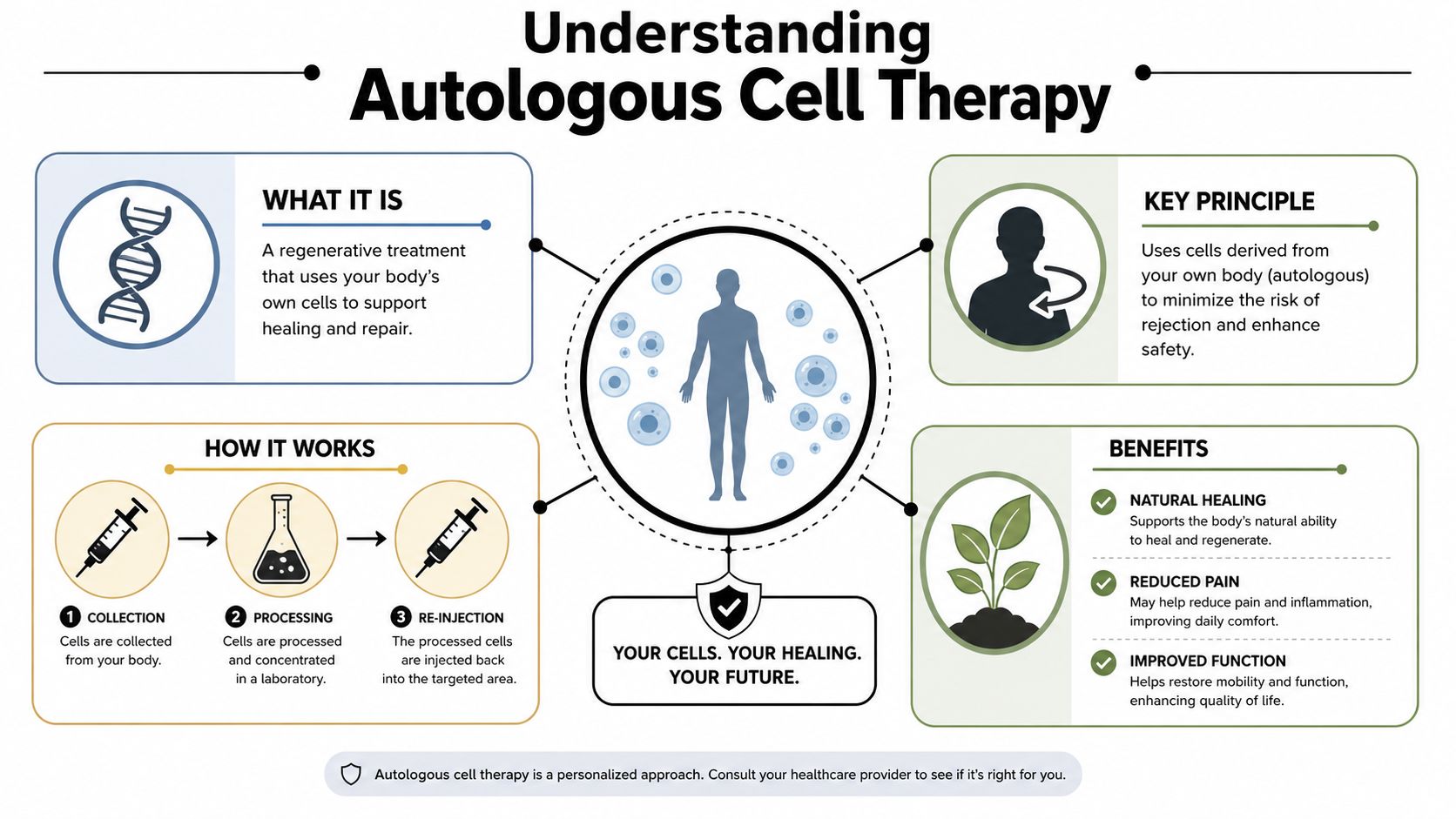
Autologous cell therapy uses your own cells as the starting material for treatment. Think of it as recruiting your body's own skilled repair crew rather than bringing in outside workers. That matters because your immune system already recognizes your own cells as self.
At a high level, the process involves collecting cells from your body, processing that material, and then delivering the prepared product back to the area being treated. In broader cell therapy practice, this is a custom process for each individual patient, not a mass-produced product.
Why using your own cells matters
The biggest biological advantage is safety related to immune compatibility. Using a patient's own cells in autologous therapy significantly reduces the risk of immunological reactions and serious events such as graft-versus-host disease that are associated with donor-cell approaches. That safety profile is one reason autologous stem cell therapy accounted for 51.3% of the global market in 2025, and the broader global autologous cell therapy market is projected to reach US$6.7 billion in 2026 and US$15.4 billion by 2033, with a projected 12.6% CAGR over that forecast period, according to Persistence Market Research's autologous cell therapy market analysis.
That doesn't mean every autologous treatment is appropriate or proven for every pain condition. It does mean the core concept is well established: personalized cell-based treatment built from the patient's own biology.
What patients should understand first
A few points make this easier to understand:
- It's personalized: Each treatment is built from the individual patient's cells.
- It isn't the same as taking a pill: Drugs circulate systemically. Cell-based procedures are intended to target a specific tissue environment.
- It still requires process control: This involves more than drawing material and reinjecting it without careful preparation and planning.
- It works best when tied to a real diagnosis: The treatment only makes sense if we know where the pain is coming from.
If you want a broader primer on the underlying biology, how stem cells work to repair your body gives helpful background.
The best way to think about autologous cell therapy is not “replacement parts.” It's a biologic strategy intended to improve the environment inside a painful tissue.
That distinction matters. In pain care, patients often arrive hoping for a promise of regrowth. What usually serves them better is a grounded discussion of inflammation, signaling, tissue quality, and function.
How It Is Used for Spine and Joint Pain Conditions
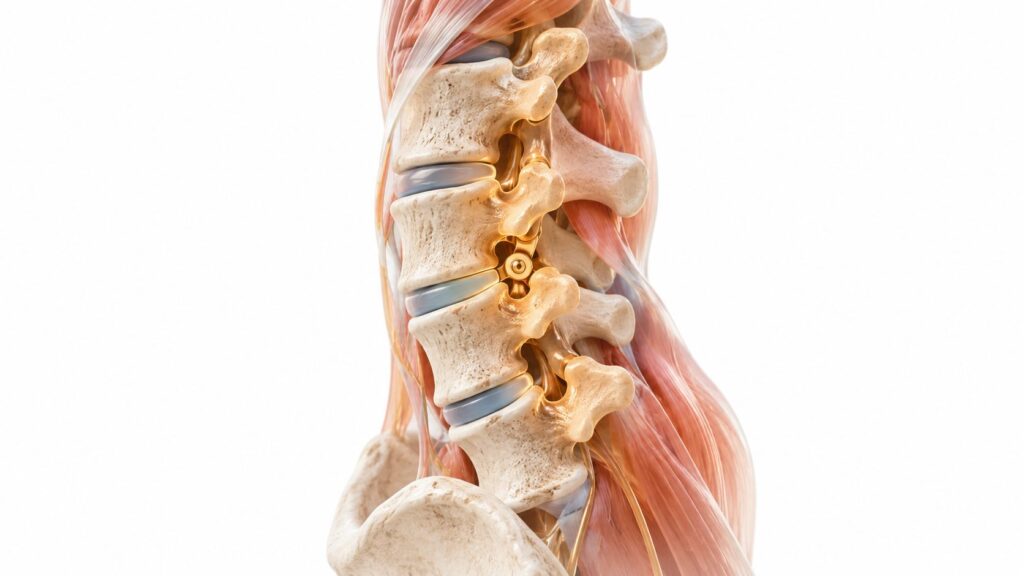
In a pain practice, autologous cell therapy is usually considered for focused musculoskeletal problems, not every type of chronic pain. The most common situations involve degenerative or injured tissue where the pain source can be localized with history, exam, and imaging.
For the spine, that may include painful degenerative disc changes, certain facet-related pain patterns, or other carefully selected structural conditions. For joints, the conversation often centers on arthritis, chronic joint irritation, or lingering pain after injury when the problem is still localized and measurable.
What the treatment is trying to do
A practical goal is not to promise that a worn joint or disc becomes brand new. In pain medicine, that's not how responsible counseling works. A more accurate explanation is that autologous cell therapy may help alter the local tissue environment by affecting inflammation and biologic signaling in a way that supports pain reduction and improved function.
That's why patient selection matters so much. If a patient has severe instability, advanced structural collapse, or a pain pattern that doesn't match the imaging, a cell-based injection may not solve the underlying problem. Likewise, if pain is primarily nerve-related from a different source, another interventional treatment may be the better fit.
Conditions where the conversation often comes up
Patients typically ask about autologous cell therapy in settings such as:
- Degenerative spine pain: Especially when symptoms appear tied to a known disc or joint source.
- Knee or hip osteoarthritis: Particularly when symptoms persist despite standard conservative care.
- Shoulder or other joint pain: When tissue degeneration or chronic inflammation appears to be part of the pain pattern.
- Post-injury pain that lingers: If healing has plateaued and the source remains localized.
Good candidates usually have one thing in common. Their pain story, physical exam, and imaging point to the same target.
The other side of the discussion is just as important. The evidence in many orthopedic uses is still developing. Reviews have described much of the evidence as low quality, even when short-term improvement is reported. They also note practical concerns such as extended turnaround times, cell aging, and other factors that may affect long-term efficacy, as discussed in Genedata's review of autologous and allogeneic cell therapies.
What does not work well
Autologous cell therapy is usually a poor fit when:
| Situation | Why it may not be a good match |
|---|---|
| Widespread pain without a clear source | A targeted biologic treatment needs a clear target |
| Expectations are unrealistic | No injection reliably erases years of degeneration |
| The main problem needs mechanical correction | Some structural issues require surgical solutions |
| Diagnosis is uncertain | Treating the wrong tissue leads to disappointing results |
That candor matters. A responsible pain specialist doesn't offer biologic treatment because it sounds advanced. The treatment has to match the pathology.
Autologous Therapy vs PRP and Allogeneic Options
Patients often bundle several different treatments under one label. They'll say “stem cells” when they might really mean platelet-rich plasma, donor-cell products, or a broader regenerative procedure. Those aren't interchangeable.
The biggest practical difference
Autologous cell therapy is a custom-batch model. In commercial practice, the typical vein-to-vein time is 3 to 5 weeks, because the process includes collection, transport, ex vivo manipulation, and return logistics, as explained by Cell & Gene's overview of cell therapy manufacturing. PRP, by contrast, is commonly a same-day procedure.
That timing difference changes expectations. PRP is usually faster and simpler. Autologous cell therapy involves more coordination and more process complexity.
Regenerative treatment comparison
| Therapy Type | Source of Cells | Primary Components | Key Advantage |
|---|---|---|---|
| Autologous cell therapy | The patient | Patient-derived cells processed for that individual | Uses the patient's own biology in a personalized approach |
| PRP | The patient's blood | Platelet-rich plasma and growth factors | Usually simpler and often done the same day |
| Allogeneic options | A donor source | Donor-derived cellular material | Readily available without collecting the patient's own cells |
The right choice depends on the diagnosis, goals, timeline, and risk discussion.
How I explain the differences in clinic
PRP is often easier for patients to grasp. It comes from blood, it's processed quickly, and it's usually discussed for soft tissue and joint-related pain in a relatively straightforward office workflow.
Autologous cell therapy sits in a different category. It is more individualized and more complex. That can be an advantage when a patient is a strong candidate, but complexity alone doesn't make it better.
Allogeneic options raise a separate conversation because they involve donor-derived material. That changes the biologic and regulatory discussion. Some patients assume donor cells must be more powerful because they sound newer or more advanced. That assumption doesn't hold up consistently in practice. The right question isn't which sounds impressive. It's which option best fits the problem being treated.
If you're comparing approaches more broadly, regenerative therapy PRP and cell-based options in Chicago Ridge outlines the treatment options in more practical terms.
A useful treatment comparison doesn't start with marketing language. It starts with the tissue involved, the speed of the workflow, and how much uncertainty a patient is willing to accept.
Are You a Candidate for Autologous Cell Therapy?
Not everyone with chronic pain is a candidate, and that's a good thing. Careful screening protects patients from spending time and money on a treatment that doesn't match their condition.
At a pain clinic, the evaluation should feel structured. In practical terms, I think of it as assess, recommend, treat. Each part matters.
Assess
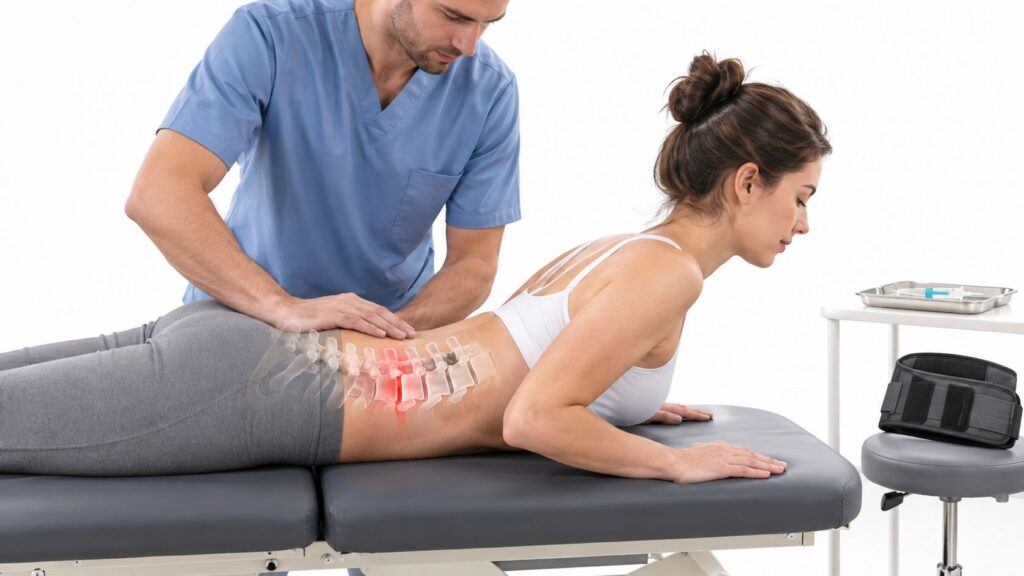
First, the diagnosis has to be solid. That means reviewing symptoms, prior treatment history, exam findings, and imaging. If the pain generator isn't clear, pushing forward with a cell-based procedure is premature.
A proper evaluation also needs to respect process quality. FDA guidance emphasizes confirming cell identity, heterogeneity, and potency through appropriate testing and validation during development, as described in the FDA guidance for human somatic cell therapy and gene therapy. In patient terms, that means the conversation isn't just “can we collect cells?” It's also “is this treatment likely to perform its intended biologic function?”
Recommend
Clinical judgment is key. A recommendation should reflect:
- A confirmed pain source: The exam and imaging need to support the same diagnosis.
- Failure of simpler options: Conservative treatment should already have been given a fair chance.
- Functional goals: The goal might be walking with less pain, tolerating work, or delaying a more invasive procedure.
- Realistic expectations: Improvement is possible. Guarantees aren't.
For patients in Oak Lawn, Palos Hills, Palos Heights, Worth, Bridgeview, Hickory Hills, Alsip, Burbank, Evergreen Park, Orland Park, and surrounding Illinois communities, that evaluation should be close to home and specific to pain management, not generic wellness language.
Treat
Only after the first two steps make sense does treatment become reasonable. Midwest Pain & Wellness offers cell-based therapies as part of a broader pain practice. That matters because regenerative treatment should sit inside a full diagnostic and interventional framework, not outside it.
Patients who are poor candidates should hear that clearly. Sometimes the right answer is a different injection, nerve-focused treatment, surgical referral, or continued conservative care.
The Treatment Journey From Procedure to Recovery
One reason patients hesitate is simple uncertainty. They don't know what treatment day feels like, how much downtime to expect, or when improvement should happen. A clear roadmap helps.
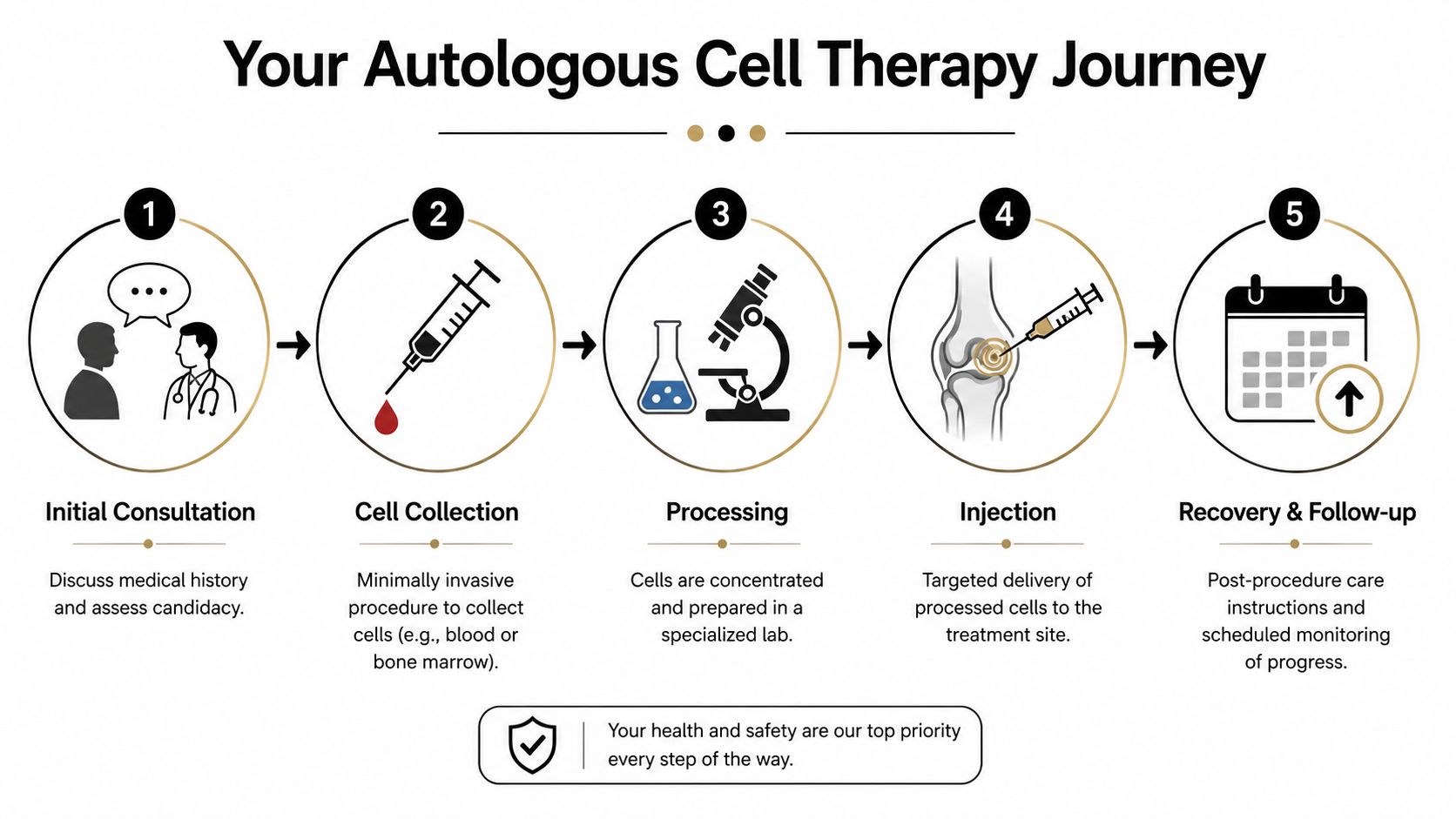
What treatment day usually involves
The first part is cell collection. Depending on the treatment plan, this may involve collecting the biologic material under local anesthetic. Patients usually want to know whether that part hurts. In most cases, discomfort is managed with numbing medication and careful technique.
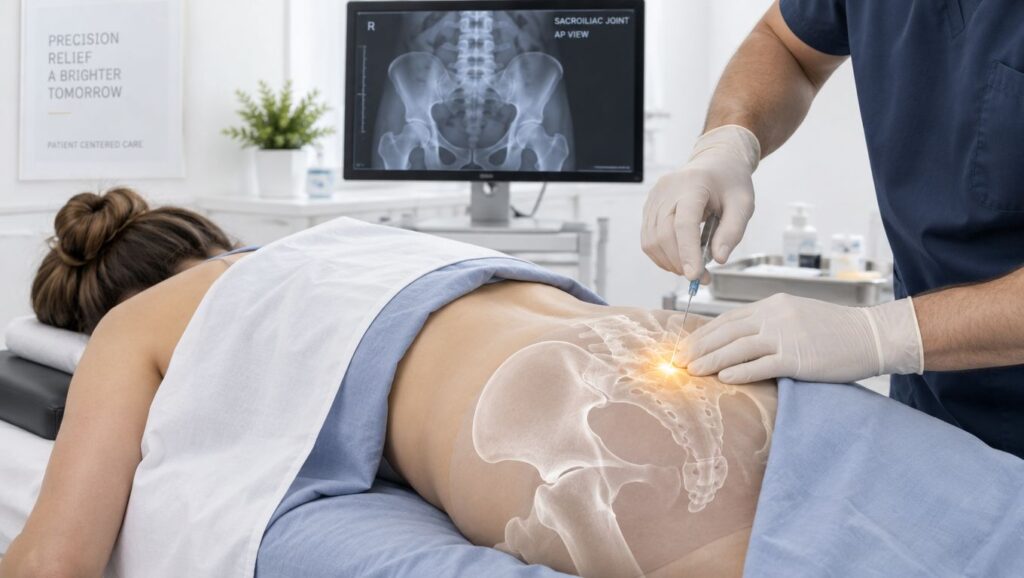
Next comes processing and preparation. After that, the material is delivered to the target area with image guidance when appropriate. Precision matters. If you're treating a pain generator in a joint or spine-related structure, placement is part of the treatment.
The first few days after the procedure
Most patients should expect some soreness. That doesn't necessarily mean something is wrong. It often reflects the procedure itself and the body's response in the treated area.
Typical early guidance includes:
- Protect the area: Avoid overloading the treated site right away.
- Follow activity restrictions: “More” isn't better in the first phase of recovery.
- Stay in communication: New or concerning symptoms need review.
- Think in phases, not hours: This is not an instant-relief treatment.
Early soreness can be normal. The more important question is whether recovery is tracking the expected pattern over time.
When improvement happens
This is a biologic process, not a same-day fix. Some patients notice change gradually over weeks, while others judge progress more meaningfully over a longer recovery window. The right benchmark is usually function. Are you walking better, sleeping better, tolerating stairs better, or relying less on rescue medication?
That's also why follow-up matters. Progress has to be measured against the original goals, not against hype. If you're also trying to understand the financial side before moving forward, how much stem cell treatment may cost is often one of the first practical questions patients ask.
A useful recovery mindset is steady, not dramatic. Patients tend to do better when they understand that the body needs time to respond.
Your Questions About Autologous Cell Therapy Answered
Is the procedure painful?
Most patients tolerate it well when local anesthetic is used appropriately. The collection step and the injection step can both cause temporary discomfort, and soreness afterward is common. The key difference is that procedural discomfort is usually brief, while the reason for doing the treatment is to improve longer-term pain and function.
Is it covered by insurance?
Honesty matters. Access and affordability are major issues in the broader cell therapy world. Reported costs for approved therapies in that broader space range from $373,000 to $4.25 million, and patients often face additional burdens such as travel, lodging, and limited access to specialized centers, according to CGTLive's discussion of payer challenges and patient access. In orthopedic pain applications, coverage is often limited, so patients need to ask about self-pay costs, consultation fees, and follow-up care.
How many treatments will I need?
The goal is usually to make a thoughtful decision about whether a single treatment is appropriate, not to sign a patient up for an open-ended series without a clear reason. That said, the answer depends on the diagnosis, the severity of degeneration, and how the patient responds over time. A careful doctor will avoid promising a fixed number before the evaluation is complete.
What are the risks?
Because the treatment uses your own cells, the immune compatibility issue is different from donor-based therapy. Still, no procedure is risk-free. Patients should discuss soreness, bleeding, infection, lack of benefit, and the possibility that symptoms improve only partially or temporarily.
Patients make better decisions when they ask two questions at the same time. “What could go right?” and “What could make this a poor fit for me?”
That second question is often the one that protects people the most.
If you're in Chicago Ridge or nearby Illinois communities such as Oak Lawn, Palos Hills, Palos Heights, Worth, Bridgeview, Hickory Hills, Alsip, Burbank, Evergreen Park, or Orland Park, and you want a clear opinion on whether autologous cell therapy fits your pain condition, Midwest Pain & Wellness can help you start with diagnosis, candidacy, and realistic next steps.