If you're reading this with the lights dimmed, one eye closed, and a pounding pain that seems to start deep behind your face or at the base of your skull, you're not alone. Migraine attacks don't feel like ordinary headaches. They can disrupt work, driving, sleep, family time, and even simple tasks like reading a text message or tolerating the smell of coffee.
In clinics across Chicago Ridge and nearby Illinois communities like Oak Lawn, Palos Hills, Palos Heights, Worth, Bridgeview, Hickory Hills, Alsip, Burbank, Evergreen Park, and Orland Park, people often ask the same question: what causes migraine headaches? The short answer is that migraines come from a neurologic pain process, not from weakness, low pain tolerance, or “just stress.” The better answer is more useful, because it helps explain why some people improve with careful trigger control, why others need preventive treatment, and why neck problems are sometimes the missing piece.
A modern migraine evaluation should do more than label the pain. It should identify the pattern, the likely drivers, and the factors that keep attacks recurring. That matters if you want treatment that's practical, evidence-based, and opioid-sparing.
An Introduction to Migraine Headaches
A migraine often starts before the pain does. Some people notice irritability, fatigue, neck tightness, food cravings, or a sense that something is off. Then the attack builds. Light feels harsh. Noise feels amplified. Nausea may follow. The head pain may throb, but not always. For some patients, the dominant complaint is pressure, facial pain, scalp tenderness, or pain that starts in the neck and moves forward.
That's one reason migraines get misunderstood. They don't look the same in every person, and they don't always stay the same over time. A patient in Oak Lawn may describe a classic one-sided throbbing attack with light sensitivity. A patient in Orland Park may say the pain begins as upper neck stiffness and becomes a disabling headache hours later. Both patterns can fit migraine.
Clinical reality: If a headache repeatedly disrupts function, brings sensory sensitivity, or follows a recognizable pattern, it deserves a real evaluation.
Many adults have spent years trying to “push through” these attacks with caffeine, over-the-counter medication, rest, or trial-and-error lifestyle changes. Sometimes that helps. Sometimes it only delays proper care. Migraine is a real neurologic condition with identifiable mechanisms and several different treatment paths.
The most useful way to approach it is to separate three questions:
- What's happening in the nervous system
- What tends to trigger your attacks
- Whether another pain source, especially the cervical spine, is feeding the problem
Those distinctions can change treatment completely.
The Underlying Science of a Migraine Attack
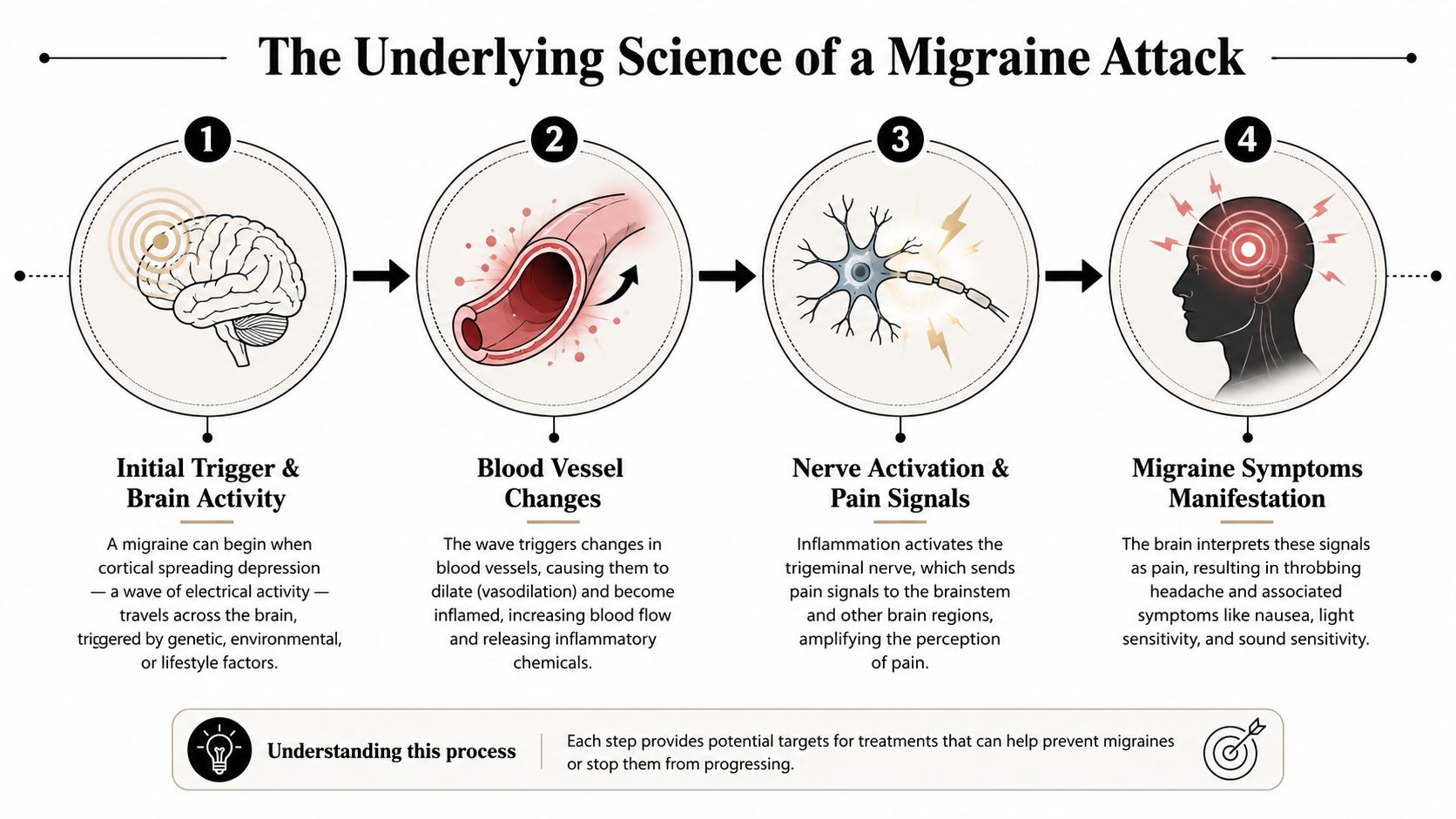
Migraine isn't just a bad headache. It's a neurovascular disorder, meaning the brain, nerves, and blood vessel-related signaling all play a role. At the center of the attack is activation of the trigeminovascular system, often initiated by Cortical Spreading Depression, with release of peptides such as CGRP that drive inflammation and pain. Migraine also has a strong inherited component, with heritability estimates ranging from 34% to 64% according to this review in Nature Reviews Neuroscience.
The brain's threshold matters
A practical way to think about migraine is this: some brains are more reactive. Not damaged. Reactive. If the nervous system has a lower threshold for sensory overload, hormonal fluctuation, sleep disruption, or pain input from the neck, an attack can start more easily.
That threshold is influenced by genetics. Some patients clearly have a family pattern. Others don't know their family history but recognize that they've always been “headache prone,” light sensitive, motion sensitive, or vulnerable to sleep changes.
What happens during an attack
The biologic sequence is more organized than is commonly understood.
- An initiating brain event occurs. In many migraines, cortical spreading depression is the early neurologic event.
- The trigeminal pain pathway activates. This system carries pain information from structures around the brain and face.
- Inflammatory signaling increases. CGRP and related peptides are released from trigeminal nerve terminals.
- Pain and sensory symptoms appear. That's when throbbing, pressure, nausea, light sensitivity, sound sensitivity, and scalp pain may become obvious.
This is why migraine treatments target the nervous system, not just the pain sensation. The goal isn't only to dull symptoms after they begin. It's to interrupt the pathway that creates them.
A migraine attack is a process. If treatment only addresses the final pain stage, many patients never get reliable control.
Why this changes treatment
Once you understand the mechanism, several common frustrations make more sense:
Why standard pain pills often fall short
They may blunt pain briefly but don't reliably stop the migraine cascade.Why timing matters
Early treatment usually works better than waiting until the attack is fully established.Why prevention can be appropriate
If your brain's threshold is easily crossed, reducing attack frequency can matter as much as treating individual episodes.Why neck pain can matter
Pain input from the upper cervical region can feed into the same broader pain network and help drive attacks in susceptible patients.
For many people in Palos Hills or Bridgeview, the key breakthrough isn't hearing that migraine is “common.” It's learning that the condition has a real biologic basis and a treatable pathway.
Common Migraine Triggers and Risk Factors
Most migraine patients eventually notice patterns. The challenge is that triggers aren't always simple, and they often stack. A poor night of sleep might be manageable. So might a skipped lunch. Add work stress, bright light, and neck tension on the same day, and the threshold gets crossed.
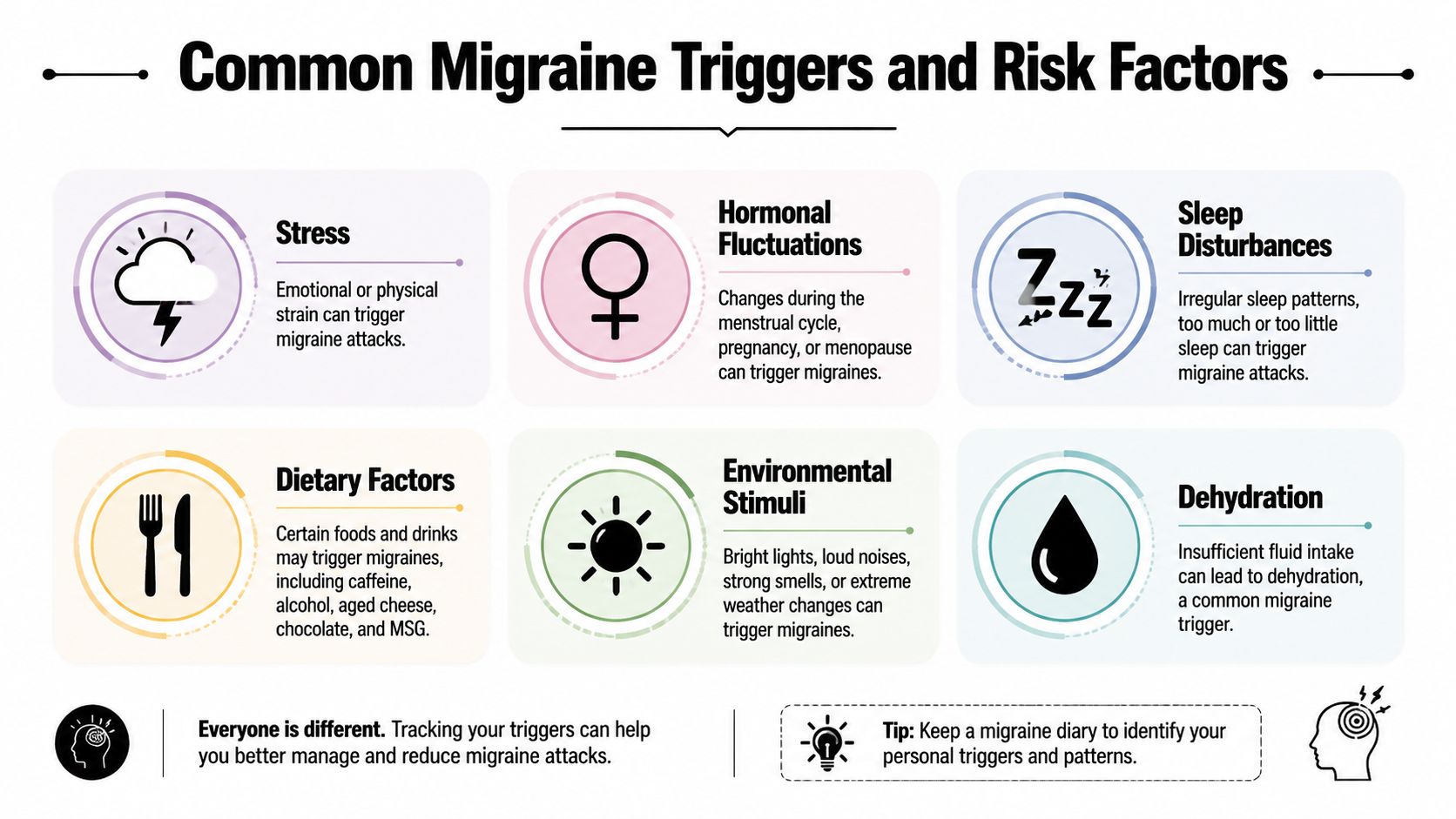
Specific triggers have been reported at meaningful rates. Stress affects 80% of individuals, hormonal changes affect 65% of women, skipped meals affect 57%, weather changes affect 53%, and sleep disturbances affect 50%, according to migraine trigger data summarized here.
The triggers that show up most often
Some patterns deserve closer attention because they're both common and actionable.
Stress
This is the big one for many adults. Stress can mean emotional strain, but it can also mean physical overexertion, poor recovery, muscle tension, and inconsistent daily habits.Hormonal fluctuation
Many women notice attacks around menstruation, ovulation, pregnancy-related changes, or perimenopause. Those aren't imagined patterns. They reflect biologic shifts in migraine sensitivity.Skipped meals and fasting
Irregular eating is a frequent trigger. People who get busy, delay lunch, or rely on coffee until afternoon often miss this connection.Sleep disruption
Too little sleep, irregular sleep, and poor sleep quality all matter. The issue isn't just insomnia. Even “catch-up sleep” or schedule shifts can provoke attacks in some patients.
Environmental and sensory triggers
Not every trigger comes from diet or stress. The environment matters too.
- Weather changes can contribute for many patients.
- Bright lights affect some people strongly.
- Strong odors can be enough to tip the system.
- Neck pain may be part of the trigger pattern rather than a side symptom.
Patients in Illinois often report that changing weather, glare, and disrupted routines combine in ways that are hard to ignore once they start tracking symptoms.
Keep a simple migraine log. Track sleep, meals, stress, menstrual timing if relevant, caffeine changes, and neck pain. Patterns usually become clearer than memory alone suggests.
Caffeine is more complicated than most people think
One of the most confusing topics in migraine care is caffeine. Some people use it during an attack and feel temporary relief. Others find it can trigger symptoms. A commonly missed issue is caffeine withdrawal, which is distinct from caffeine consumption itself and can precipitate attacks through changes in adenosine receptor regulation, as discussed in this migraine overview.
That's why abrupt coffee reduction sometimes backfires. Patients think they're making a healthy change, then their headaches worsen for reasons that seem contradictory. In practice, consistency matters more than extremes. If caffeine is part of your routine, sudden withdrawal may be a problem. If you're using caffeine erratically to chase fatigue or headaches, that inconsistency may also work against you.
What usually works best is a structured review of your pattern, not blanket rules.
Understanding Different Types of Migraine
Not all migraines look alike. That matters because the symptoms you describe help guide diagnosis and treatment. Some patients never have visual symptoms. Others do. Some have attacks separated by long stretches of normal function. Others develop a much more persistent pattern.
Migraine types at a glance
| Feature | Migraine Without Aura | Migraine With Aura | Chronic Migraine |
|---|---|---|---|
| Typical presentation | Recurrent migraine symptoms without a warning aura | Migraine symptoms preceded or accompanied by aura symptoms | A frequent, ongoing migraine pattern that occurs on many days |
| Aura symptoms | Usually absent | May include visual changes, sensory changes, or speech disturbance before the headache phase | May occur with or without aura depending on the individual |
| Pain pattern | Often moderate to severe and disabling | Similar migraine pain, but aura helps define the type | May feel less cleanly separated into “attacks” because headache burden is more continuous |
| Associated symptoms | Light sensitivity, sound sensitivity, nausea, activity intolerance | Similar symptoms, plus temporary neurologic aura features | Similar symptoms, often mixed with medication overuse concerns, neck pain, poor sleep, and functional decline |
| How patients describe it | “I get migraines, but no warning signs” | “I see or feel something change before the headache starts” | “It feels like I'm always either having a migraine or recovering from one” |
What an aura actually is
Aura isn't just “feeling weird” before a headache. It refers to transient neurologic symptoms that can happen before or during the migraine phase. Many patients describe shimmering lights, zig-zag patterns, blind spots, tingling, or trouble finding words. Those symptoms can be frightening, especially the first time.
They're also important diagnostically. If you've had repeated episodes of temporary visual or sensory disturbance followed by headache, mention that clearly during your evaluation. It changes the conversation.
Why the distinction matters
The label matters less than the pattern, but the pattern matters a lot. If your headaches are becoming more frequent, harder to interrupt, and more tied to daily dysfunction, the issue may no longer be occasional episodic migraine. It may be evolving toward chronic migraine or a mixed headache disorder with overlapping neck and nerve involvement.
That's when generic advice starts to fail. Detailed history becomes more important than broad internet checklists.
The Overlooked Connection Between Neck Pain and Migraines
Many patients are told that neck pain happens because the migraine is severe. Sometimes that's true. But sometimes the neck is part of the cause.
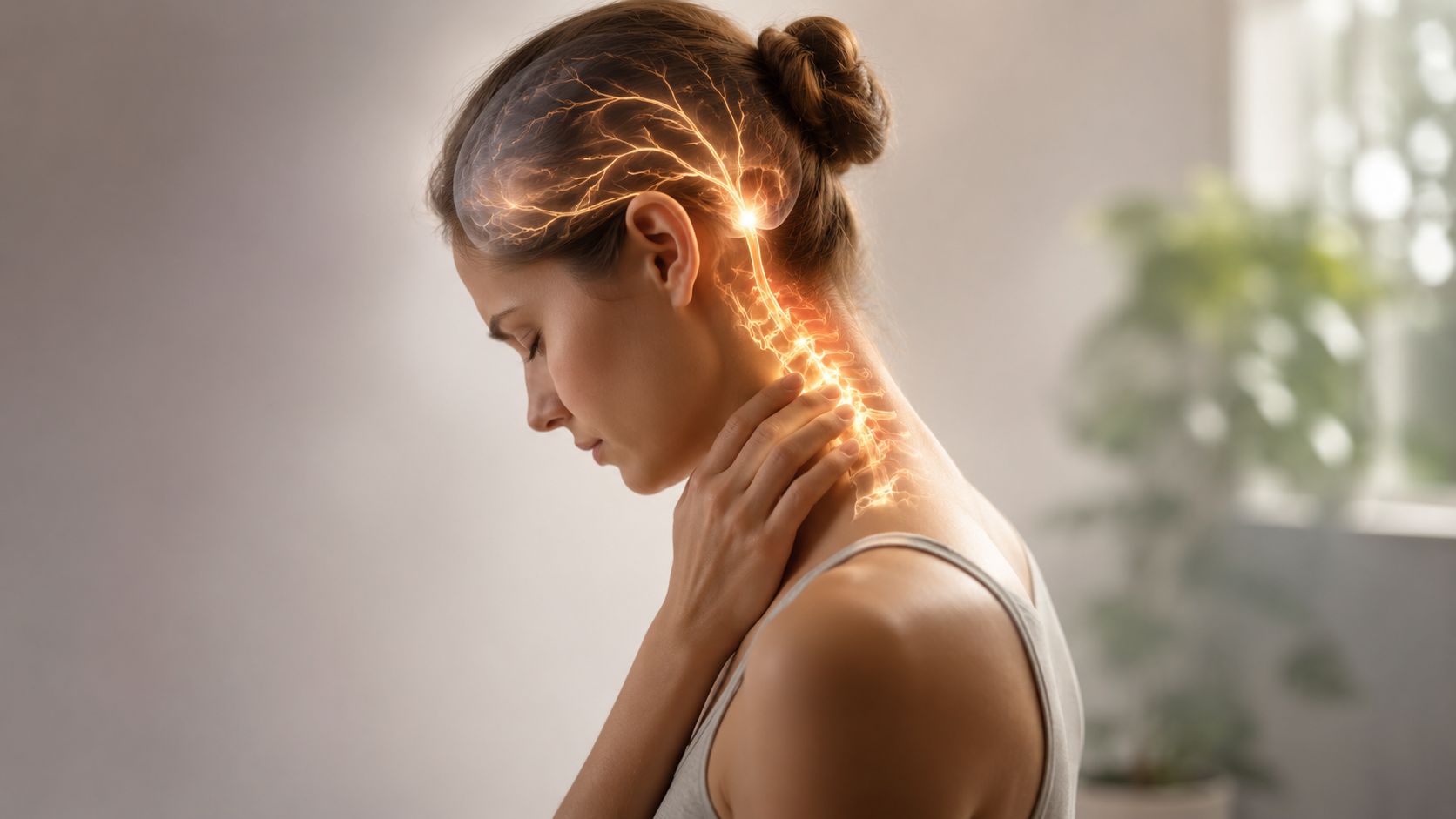
Neck pain is a probable trigger in 38% of cases, and mainstream education often underemphasizes how cervical problems can contribute to migraine activity, including through mechanisms such as cervical radiculopathy and other biomechanical pain generators, as described in this clinical review of headache disorders.
Why the upper neck can trigger head pain
The upper cervical spine and the trigeminal pain system are closely related in the way pain signals are processed. If joints, muscles, discs, or nerves in the neck are irritated, that input can refer pain into the head or help trigger the broader migraine cascade in a susceptible person.
This is one reason a patient may say, “My headache always starts at the base of my skull,” or “If my neck flares, the migraine follows.” Those details matter. They're not side notes.
For readers dealing with both recurrent headaches and chronic neck symptoms, it's worth reviewing what causes chronic neck pain because the overlap is often stronger than patients realize.
Clues that the cervical spine deserves attention
A neck-related contribution becomes more likely when the pattern includes the following:
- Pain that starts in the neck and radiates toward the back of the head, temple, or eye
- Reduced neck motion or stiffness around the time of attacks
- Headaches worsened by posture, prolonged desk work, driving, or sleeping awkwardly
- Tenderness in the upper neck or occipital region
- A history of injury, strain, or chronic cervical degeneration
When migraine treatment partly helps but never fully solves the problem, I look carefully for a cervical driver.
This doesn't mean every migraine is a neck problem. It means the neck should be examined when the history supports it. That's especially important for patients in Alsip, Burbank, or nearby Illinois communities who've been treated repeatedly for migraine symptoms without anyone assessing the cervical contribution in a meaningful way.
When to Seek Specialized Care in Illinois
If your headaches are occasional, predictable, and respond well to a simple routine, you may be able to manage them with lifestyle adjustments and guidance from your primary doctor. If the pattern is changing, recurring more often, or affecting your ability to function, it's time for a more focused workup.
For patients in Hickory Hills, Worth, Bridgeview, and surrounding Illinois communities, specialized care is appropriate when the diagnosis is unclear or the usual advice isn't working.
Signs you shouldn't ignore
Seek medical evaluation promptly if you notice any of these patterns:
- Headaches that are increasing in frequency or severity
- New neurologic symptoms, especially if they don't fit your usual pattern
- Poor response to over-the-counter medication
- Frequent recurrence after temporary relief
- Headaches that interfere with work, sleep, or driving
- A strong link to neck pain, injury, or posture
- Confusion about whether you have migraine, another headache disorder, or both
If you already know you have migraine but your current plan isn't controlling it, a dedicated headache specialist in Chicago can help clarify the diagnosis and treatment options.
What a specialist visit usually includes
A good consultation shouldn't feel rushed. It usually starts with a detailed history of the headache pattern, associated symptoms, triggers, medication use, and any overlap with neck pain, jaw tension, prior injuries, or hormonal changes.
The exam may include:
- Neurologic screening to look for focal deficits or red flags
- Cervical assessment if neck symptoms are present
- Medication review to identify patterns that may be helping or hurting
- Discussion of imaging when the history or exam suggests it's needed
The goal of an evaluation isn't just to confirm migraine. It's to identify the drivers that make your pattern yours.
That distinction leads to better treatment choices.
Modern Migraine Treatment at Midwest Pain & Wellness
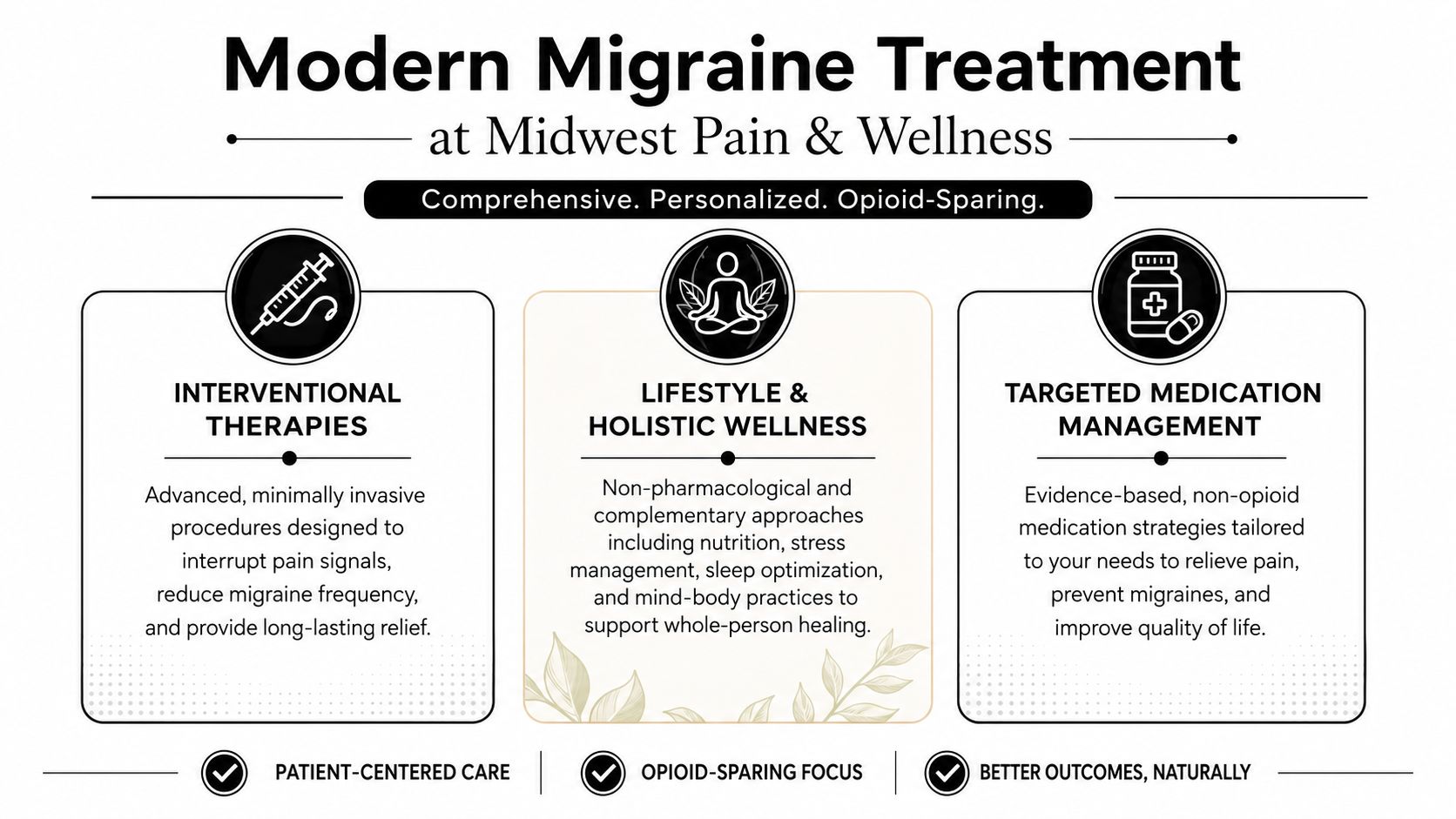
Migraine treatment works best when it matches the mechanism and the pattern. A patient with infrequent attacks needs a different strategy than someone with recurring migraine linked to hormonal shifts, neck pain, or a chronic headache cycle. Functional imaging has shown that the hypothalamus can malfunction up to 48 hours before a migraine, and lower estrogen levels can increase the sensitivity of facial and scalp nerves to pain, according to this migraine review. That helps explain why modern treatment often combines prevention, acute therapy, and targeted procedures.
Preventive care
Preventive treatment aims to reduce how often attacks happen and how disruptive they become. Depending on the patient, that may include non-opioid preventive medications, lifestyle stabilization, or procedure-based options for chronic migraine. For some patients, how Botox helps migraines becomes part of that discussion, especially when the pattern is persistent and function is declining.
Prevention is often the right move when waiting for attacks and reacting to them has become a losing strategy.
Acute treatment
Acute treatment is designed to stop or reduce a migraine that has already started. This may include migraine-specific medication, anti-nausea support, and a clear timing plan so treatment is used early enough to matter.
What usually doesn't work well is random escalation. Taking whatever is available, at inconsistent times, without a plan often leads to frustration and sometimes rebound patterns.
Interventional options
For patients with refractory symptoms, occipital involvement, or a strong cervical component, interventional pain management may help. Options can include targeted nerve blocks and other image-guided procedures when the history and exam support them.
Given the varied causes, treatment becomes more personalized. A patient whose migraines are strongly linked to upper neck pain may need a different path than someone whose pattern is dominated by hormonal fluctuation or classic sensory aura.
A strong migraine plan is rarely one-dimensional. The best results usually come from combining trigger management, a realistic acute strategy, and preventive or interventional care when the pattern calls for it.
If migraine attacks are disrupting your life in Chicago Ridge, Oak Lawn, Palos Hills, Palos Heights, Worth, Bridgeview, Hickory Hills, Alsip, Burbank, Evergreen Park, or Orland Park, Midwest Pain & Wellness offers evidence-based, opioid-sparing care for headache, neck pain, and related nerve conditions. A careful evaluation can identify whether your migraines are being driven by classic neurologic triggers, cervical spine problems, or both, and help you move toward a treatment plan built around lasting function rather than temporary survival.