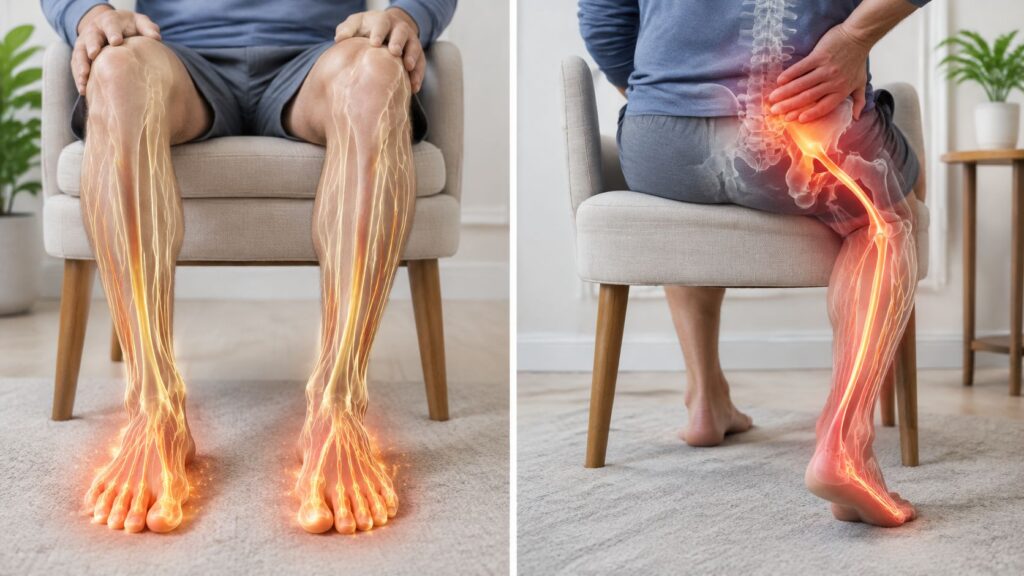
You're probably reading this because the headaches keep coming back, the pills only help a little, and every bad week starts to feel like a repeat of the last one. Maybe you've already seen a primary care doctor, maybe you've tried to “push through,” and maybe you're still waiting for someone to explain why the pattern keeps changing. A chronic headache specialist looks at that pattern with a different lens, especially when pain is frequent, disabling, or hard to classify.
In suburban Chicago, that search can get frustrating fast. If you live in Oak Lawn, Palos Hills, Palos Heights, Worth, Bridgeview, Hickory Hills, Alsip, Burbank, Evergreen Park, or Orland Park, you may also be dealing with referral delays, insurance questions, and the simple reality that specialty care isn't always close by. In that setting, the right headache visit isn't about a quick prescription, it's about getting the diagnosis right and building a plan that fits real life.
Understanding a Chronic Headache Specialist
A patient often comes in after months of trial and error. They've used over-the-counter medication, skipped social plans, and started to wonder whether the headaches are “just stress.” Then the story turns out to be more complicated, with pain that arrives in clusters, lingers for days, or shows up so often that it starts controlling the calendar. That is the point where a chronic headache specialist becomes useful, because the job is no longer simple symptom relief.
Why Subspecialty Training Matters
A chronic headache specialist is often a neurologist with additional fellowship training in headache medicine. This subspecialty training is typically an extra year after neurology residency, with board certification through the United Council for Neurologic Subspecialties (Duke Health). That extra training matters because headache care depends on pattern recognition, not just naming the pain.
A specialist also knows when the headache story does not fit a routine primary headache pattern. Headache disorders are extremely common, and the World Health Organization estimates they affected about 40% of the global population, or 3.1 billion people in 2021. When a problem is that common, the details decide whether the plan works.
Practical rule: the more frequent and disabling the headaches become, the more useful a structured specialty evaluation is.
The specialist visit usually starts with a timeline. When did the headaches begin, how often do they happen, what do they feel like, and what makes them better or worse? That history, paired with a neurologic exam, helps separate a primary headache disorder from a secondary problem that needs different treatment.
For people in suburban Chicago, that evaluation can also solve a practical problem. Referral rules, prior authorization requirements, and in-network access can slow care in Oak Lawn, Palos Hills, Palos Heights, Worth, Bridgeview, Hickory Hills, Alsip, Burbank, Evergreen Park, and Orland Park. A clinic such as Midwest Pain & Wellness can make that process easier by focusing on headache care close to home, so patients spend less time sorting paperwork and more time getting a plan they can follow.
Common Headache Disorders Treated by Specialists
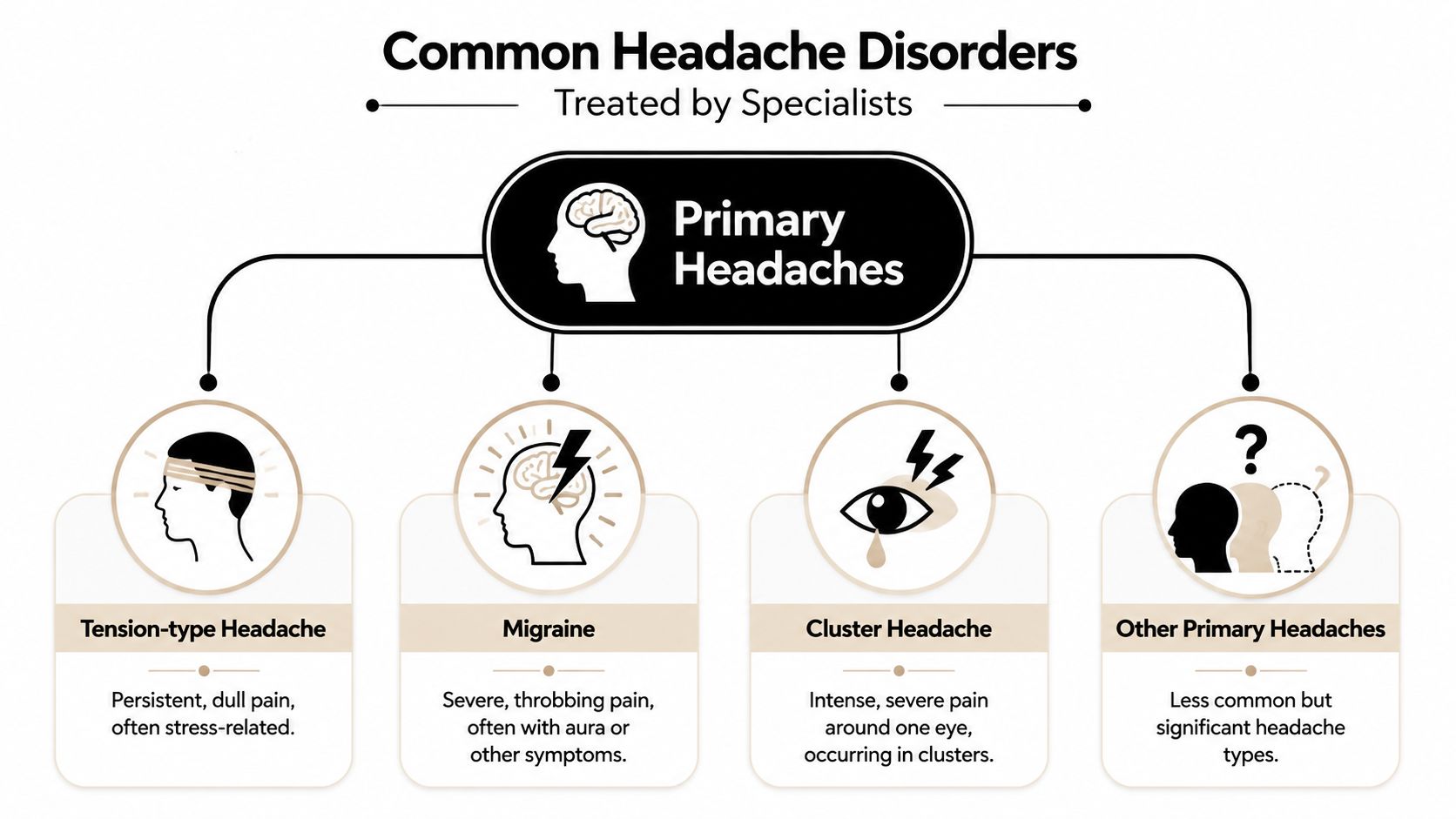
Some patients think every headache means the same thing. It does not. One person may have tension-type headache on some days, migraine on others, and a separate pattern tied to neck strain, poor sleep, or medication overuse. A specialist sorts out those patterns because treatment depends on which headache type is causing the disability.
Migraine and Chronic Migraine
The International Headache Society defines chronic migraine as headache on 15 or more days per month for more than 3 months, with at least 8 of those days showing migraine features (American Migraine Foundation). The same threshold appears in the ICHD-3 definition, and it matters because frequent migraine is no longer an occasional problem, it becomes a chronic disorder that often needs preventive treatment (ICHD-3 summary).
Migraine is more than a bad headache. It can bring light sensitivity, nausea, sound sensitivity, or neurologic symptoms such as aura. When headaches happen most days of the month, the specialist is trying to answer a simple question, is this chronic migraine, another primary headache, or a secondary problem that has been missed?
For patients in suburban Chicago, that question often comes up after weeks of trying to get a referral approved or finding an in-network visit close to home. In places like Oak Lawn, Palos Hills, and nearby communities, a clinic such as Midwest Pain & Wellness can help keep the evaluation focused and local, so the process feels less like starting over each time a form changes.
Other Common Patterns
Tension-type headache usually feels like pressure, tightness, or a band around the head. Cluster headache is different, often severe and centered around one eye. New daily persistent headache is another pattern specialists look for because it can begin suddenly and then remain present.
The details matter because headache care works like sorting keys on a ring. The shape may look similar at first, but the teeth determine which lock it opens. A pattern that seems “just like stress” may fit a different disorder once timing, location, and associated symptoms are reviewed carefully.
Patients who are not responding to appropriate preventive treatment or who are using narcotics often should be referred to a headache specialist, according to the American Migraine Foundation (American Migraine Foundation). That advice is about persistence, treatment failure, and the need for a more exact diagnosis, not severity alone.
A patient who says, “It's always there now,” deserves a deeper workup than someone with the occasional stress headache.
Diagnostic Approach to Chronic Headache
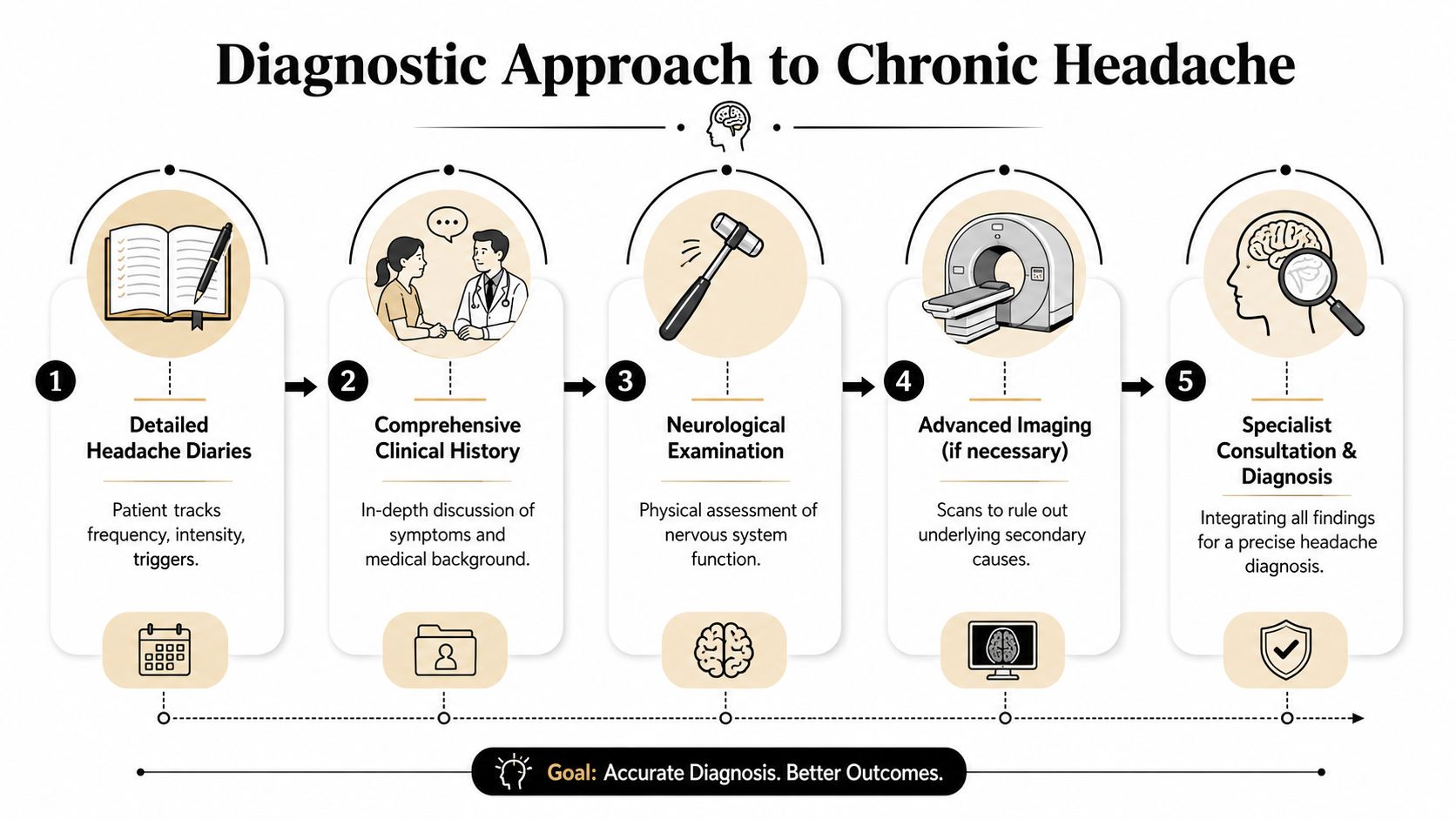
A strong headache workup begins with listening, not with imaging. The headache diary, the symptom story, and the neurologic exam usually come first, because a scan should answer a question the clinician already has in mind. Used in the wrong setting, imaging can pull attention away from the underlying cause, while the right sequence can identify a dangerous mimic early.
The First Pass
The first step is usually a careful review of headache timing, pattern, and triggers. A diary helps the specialist see frequency and change over time, especially when memory is vague and pain days blend together. The neurologic exam then looks for signs that do not fit a primary headache disorder.
Red flags point the specialist toward a secondary cause. Guidelines recommend brain MRI with and without contrast for trigeminal autonomic cephalalgias, new neurologic deficits, or new headache features, and they also recommend routine funduscopy in newly presenting headache patients to rule out raised intracranial pressure (PMC guideline review). That approach is less about ordering a scan and more about matching the test to the suspected mechanism.
When Imaging Becomes Necessary
Some headache patterns need more targeted imaging. Persistent unilateral aura, brainstem aura, or persistent aura without infarction may warrant MRI, and refractory TACs may require MRA, MRV, pituitary or cavernous sinus imaging, and sometimes pituitary testing. Those choices help the clinician rule out vascular, sellar, orbital, or intracranial pressure-related causes that can resemble a primary headache.
Clinical point: a scan is most useful when the history or exam tells the clinician what problem they are trying to prove or exclude.
A patient with headaches and visual symptoms may need a different path than someone with one-sided facial pain or autonomic features. That is why headache evaluation feels so methodical. It is built to protect patients from both missed diagnoses and unnecessary testing. For a plain-language overview of migraine features, this clinic guide on how to identify a migraine can help frame the conversation before the visit.
Evidence Based and Interventional Treatments
Once the diagnosis is clear, the treatment plan usually becomes more specific. Some patients need prevention first, some need procedure-based support, and some need a combination of both. The goal is to match the treatment to the headache type in front of you, not to use a medication just because it is common.
Prevention First
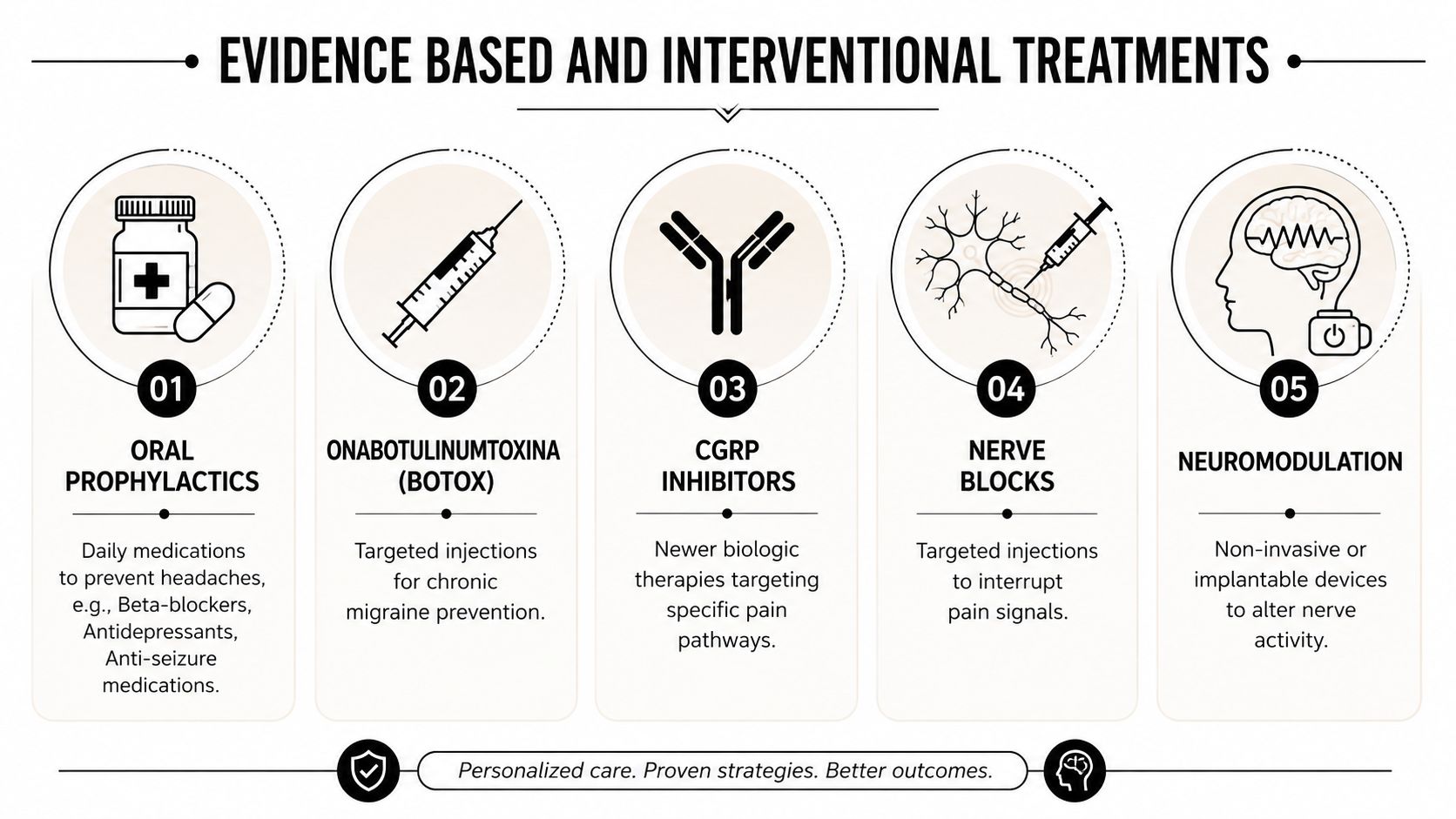
Preventive treatment works best when it is measured instead of guessed. One guideline says an adequate preventive trial should include failure or intolerance of at least two established prophylactic agents, and the response should be checked after 3 to 6 months. Treatment is continued only if headache days fall by 50% or if validated disability scores improve, such as the Migraine Disability Assessment or HIT-6 (AAFP review). That keeps the plan tied to outcomes the patient can feel in daily life.
Oral preventive medicines are often the first layer. A specialist may also consider onabotulinumtoxinA, CGRP-targeted therapy, nerve blocks, neuromodulation devices, and behavioral strategies, depending on the pattern and the patient's goals. The right choice depends on how often the headaches happen, how disabling they are, and whether earlier treatment changed the course.
Where Procedures Fit
For chronic migraine, onabotulinumtoxinA (Botox) was the first FDA-approved preventive treatment, and it can reduce headache days for many patients. For a closer look at how this therapy is used in clinic, see Botox treatment results for migraine. Clinical literature also reports that two successive injection cycles of 155 to 195 units across seven head and neck areas reduced headache days by 50% over 6 months in chronic migraine patients (PMC review).
Anti-CGRP therapies approved in 2018 can reduce migraine days by about 6 to 8 days per month in chronic migraine. That kind of option matters when a patient has already tried standard prevention and still has too many headache days to function.
Practical point: preventive therapy is not about making pain disappear overnight, it is about lowering the frequency and severity enough to leave room for daily life again.
A treatment plan may also include nerve blocks, neuromodulation, and short-term bridging strategies when pain flares while a preventive medicine is still taking effect. In a pain and wellness clinic setting, these tools are part of a broader, opioid-sparing plan, not stand-alone fixes.
What to Expect at Your First Visit
Walking into a headache clinic for the first time can feel awkward, especially if you've already seen multiple providers. Bring the details that help tell the story clearly, your medication list, a headache diary if you've kept one, prior imaging reports, and any notes about symptoms that show up before or during attacks. The more precise the history, the faster the clinician can separate a primary headache from something that needs another path.

At the visit, the clinician usually starts with questions about timing, severity, associated symptoms, prior medicines, and what failed. Then comes a neurologic exam, sometimes with focused palpation of tender areas or neck structures if the pain pattern suggests a musculoskeletal contribution. The point is to build a working diagnosis that can be measured, not just guessed.
How Follow-Up Usually Works
A treatment plan should have a benchmark. If a preventive therapy is started, the doctor needs a way to tell whether it's helping, whether the dose is right, and whether the next step should be an adjustment or a different therapy. That's why specialists often schedule follow-up after a defined trial period instead of asking patients to “see how it goes” indefinitely.
If you want a sense of how Botox visits are typically framed in practice, this clinic's overview of Botox for migraine before and after can make the process feel less mysterious. It's still a medical appointment, but it helps to know what the workflow looks like before you sit down in the exam room.
Patient shortcut: the most useful first-visit question is, “What outcome should I track between now and my follow-up?”
That question turns the appointment into a partnership. Instead of just reacting to the next bad day, you and the specialist can measure whether the plan is changing the pattern.
How to Choose the Right Specialist in the Chicago Suburbs
A headache appointment in the Chicago suburbs often starts long before you sit in the exam room. One office may know headaches well, but if the referral is incomplete or the insurance step is unclear, care can stall. A good specialist should be able to explain how the diagnosis is confirmed, what treatments are available, how follow-up works, and how the clinic handles insurance and referral requirements. For patients in Oak Lawn, Palos Hills, Worth, Bridgeview, Evergreen Park, Palos Heights, Hickory Hills, Alsip, Burbank, and Orland Park, proximity matters too, because headache care often works best when repeat visits are realistic.
What to Look For
Start with credentials, then move to process. Board certification, headache-focused training, and a clear approach to preventive care matter because chronic headache treatment usually depends on careful dose changes and reassessment, not one-time advice. A clinic should also be able to explain whether it offers procedural care when needed, since some headache patterns respond better to interventions than to oral medicine alone.
Insurance participation matters just as much. If a clinic is out of network, the referral process can slow down even when the medical need is clear. For many people, the deciding factor is not which clinic sounds most impressive, but which one can provide care without avoidable delay. For a broader look at finding a headache specialist in Chicago, this guide to a headache specialist in Chicago can be a useful starting point.
Why Local Fit Matters
In a suburban area, the best plan is usually the one you can follow. Office hours, travel time, parking, and the ability to return for repeat visits all shape whether treatment stays on track. A person who can get to appointments reliably is more likely to stay with the plan long enough to see whether it helps.
Rule of thumb: if a clinic makes the first visit easy but follow-up hard, the treatment plan often breaks down.
A practice that serves the southwest suburbs and understands headache care can reduce that friction. In Chicago Ridge, Midwest Pain & Wellness provides interventional headache care for migraine, chronic headache, neck-related head pain, and facial pain, which can matter when the pain pattern overlaps with spine or nerve issues. That kind of setup can be practical for patients who need both diagnostic clarity and a treatment path that fits work, family, and transportation realities.
Insurance Referral Paths and Clinic Differentiators at Midwest Pain & Wellness
A patient can have a clear headache pattern, a concerned primary care doctor, and still get stuck. The referral may sit incomplete, records may never reach the specialist, or the insurer may ask for one more step before approving the visit. In suburban Chicago, those delays often matter as much as the diagnosis itself, because a headache that keeps returning does not pause while paperwork moves.
The clearest referral path starts with simple documentation. Headache frequency, prior treatments, and what has already failed should be written down in plain language, then sent with the appointment request so the specialist can review the pattern before the first visit. That approach helps the referral read like a map, not a loose set of symptoms.
Specialty care is often appropriate when preventive treatment has not worked well or when pain medicines are being used too often, as noted earlier. In practice, that means a referral should happen before the cycle becomes harder to break. A delayed referral can leave a patient repeating the same short-term fixes while the underlying headache pattern stays in place.
Midwest Pain & Wellness is a Chicago Ridge pain management clinic led by double board-certified interventional pain specialist Dr. Yaw Donkoh. The practice uses opioid-sparing care and offers image-guided injections, Botox for chronic migraine, and a broader interventional model that can help when headache symptoms overlap with neck, nerve, or post-injury pain. For patients in Oak Lawn, Palos Hills, Orland Park, and nearby suburbs, that setup can reduce extra handoffs because diagnosis and treatment can stay in one place.
That local fit also matters for insurance and follow-up. A clinic may be easy to find on a map, but hard to use if it creates repeated referral delays or requires extra travel for each adjustment in care. Midwest Pain & Wellness is built to help patients work through those barriers with a visit that focuses on the headache pattern, the likely cause, and a plan that can be carried out.