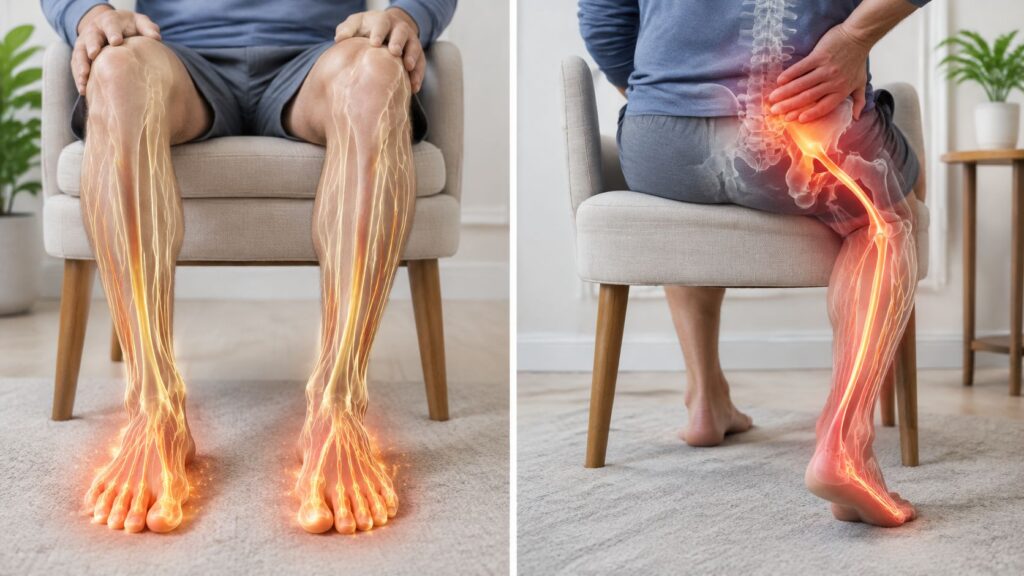
Radiofrequency ablation and rhizotomy are often the same procedure, with early radiofrequency studies reporting success rates ranging from 27% to 90% depending on surgical history and patient group. The distinction is usually between standard thermal RFA and advanced approaches such as endoscopic rhizotomy.
If your treatment notes use both terms, you're not alone in wondering whether you've been offered two different procedures. The terminology overlaps, but the clinical choice still matters. A pain specialist must identify the actual pain generator, confirm that the targeted nerve is responsible, and then match the technique to your anatomy, diagnosis, goals, and coverage.
For patients in Chicago Ridge, Palos Heights, Palos Hills, Evergreen Park, and Hickory Hills, the useful question isn't, “Which sounds more advanced?” It's, “Which nerve-targeting method fits my confirmed pain source?”
| Feature | Standard thermal RFA | Endoscopic rhizotomy |
|---|---|---|
| Main approach | Percutaneous, image-guided needle procedure | Endoscopic procedure using direct visualization |
| Typical target | Medial branch nerves associated with facet pain | Medial branch nerves, with direct access to the target |
| Energy or action | Radiofrequency heat creates a nerve lesion | Nerve lesioning or interruption through an endoscopic approach |
| Evidence profile | More established for confirmed facet-mediated pain | Promising comparative results in selected patients |
| Main practical advantage | Familiar, minimally invasive, and commonly covered | May provide more durable relief in appropriate cases |
| Main trade-off | Pain can recur as the nerve recovers | Greater technical complexity and longer operative time |
Table of Contents
- Is Rhizotomy the Same as Radiofrequency Ablation
- How the Procedure Works and What to Expect
- Comparing Standard RFA With Endoscopic Rhizotomy
- Who Is the Right Candidate for Nerve Ablation
- Navigating Insurance Coverage and Long-Term Value
- Alternative and Adjunct Pain Management Options
Is Rhizotomy the Same as Radiofrequency Ablation
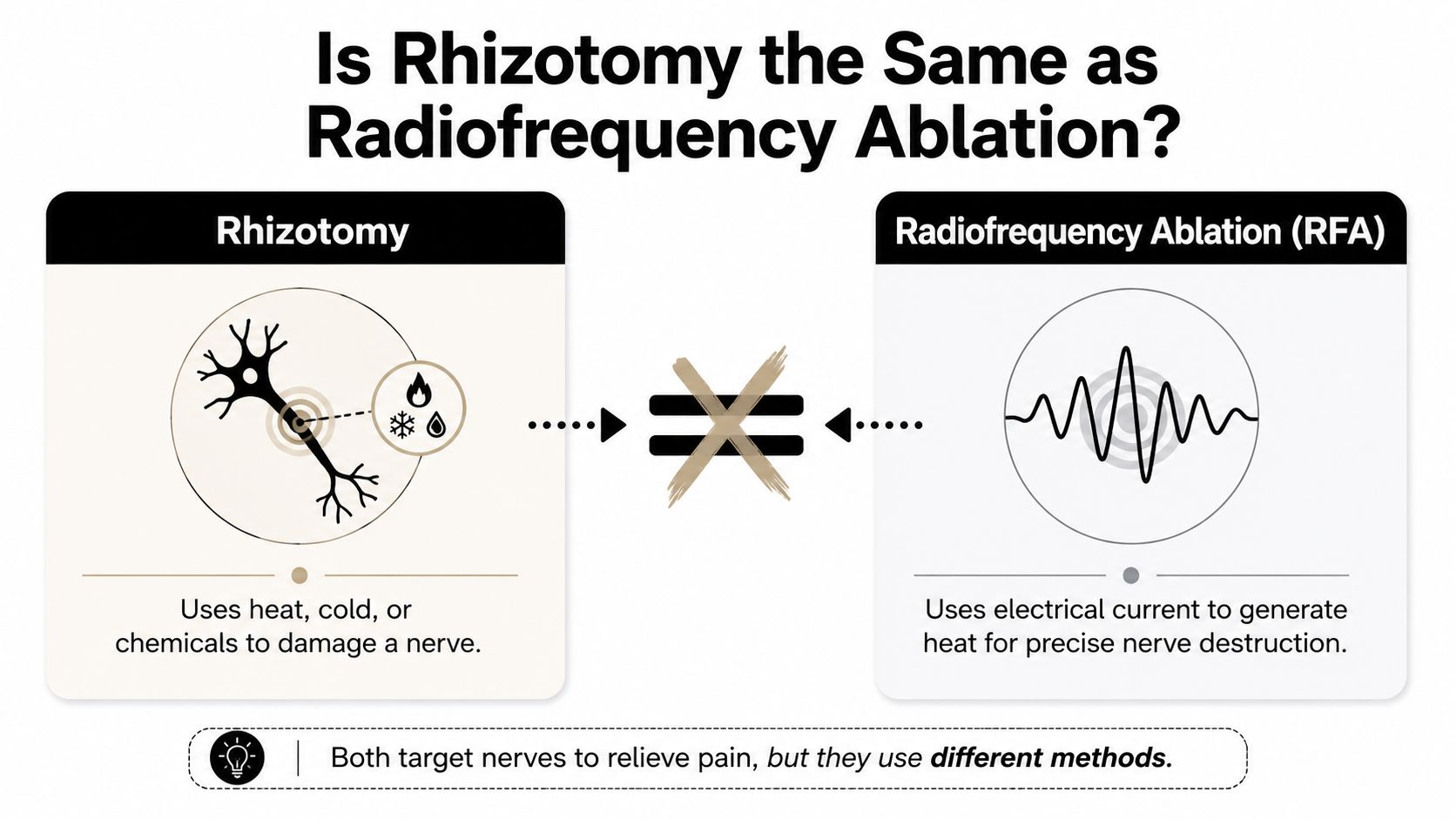
Are rhizotomy and radiofrequency ablation two names for the same treatment? They overlap, but they are not interchangeable in every clinical setting. A rhizotomy describes interrupting or damaging a nerve to reduce pain. Radiofrequency ablation describes one way to create that nerve lesion, using energy delivered through a specialized probe. This patient explanation of rhizotomy and RFA outlines the terminology in patient-friendly language.
Use this framework:
- Rhizotomy describes the nerve-interruption procedure or intended result.
- Radiofrequency ablation describes the energy method.
- Thermal RFA is one form of radiofrequency nerve lesioning.
- Endoscopic rhizotomy uses a different approach and may interrupt or remove the targeted nerve under direct visualization.
The distinction matters in facet-mediated pain, especially for patients in Chicago Ridge, Palos Heights, Palos Hills, Evergreen Park, and Hickory Hills comparing treatment options. Medial branch nerves carry pain signals from the facet joints. Ablation reduces those signals from a confirmed source, but it does not repair arthritis or restore a degenerated joint. If another structure is causing the pain, treating the medial branch nerve may provide little benefit. Review this guide to facet-mediated pain when determining whether the facet joints fit your symptom pattern.
Why the vocabulary changes
A referral may use rhizotomy, a procedure note may say radiofrequency neurotomy, and a benefits policy may describe radiofrequency denervation. In many facet-pain cases, these labels refer to the same treatment family. The word rhizotomy, however, can also cover endoscopic techniques and other forms of nerve interruption.
The treatment method still needs clarification. Conventional thermal RFA uses controlled heat to create a lesion. Pulsed radiofrequency is generally described as a modulation technique rather than a conventional destructive lesion. Cooled radiofrequency uses cooling around the probe to create a broader treatment field and may suit selected joint targets. The appropriate option depends on the target nerve, anatomy, diagnosis, treatment objective, and payer requirements.
Ask the physician to identify the target nerve, energy type, approach, and intended effect. Those details reveal whether the proposed treatment is standard thermal RFA or an endoscopic rhizotomy, and they make it easier to judge expected durability, procedural complexity, and coverage before scheduling.
How the Procedure Works and What to Expect
Standard thermal RFA is a precise, image-guided procedure. For spinal facet pain, the physician places a specialized needle near the medial branch nerve that supplies the painful facet joint. CMS describes conventional thermal RFA as using approximately 80°C energy, delivered through the probe to create a controlled lesion at the target nerve (CMS coverage guidance).
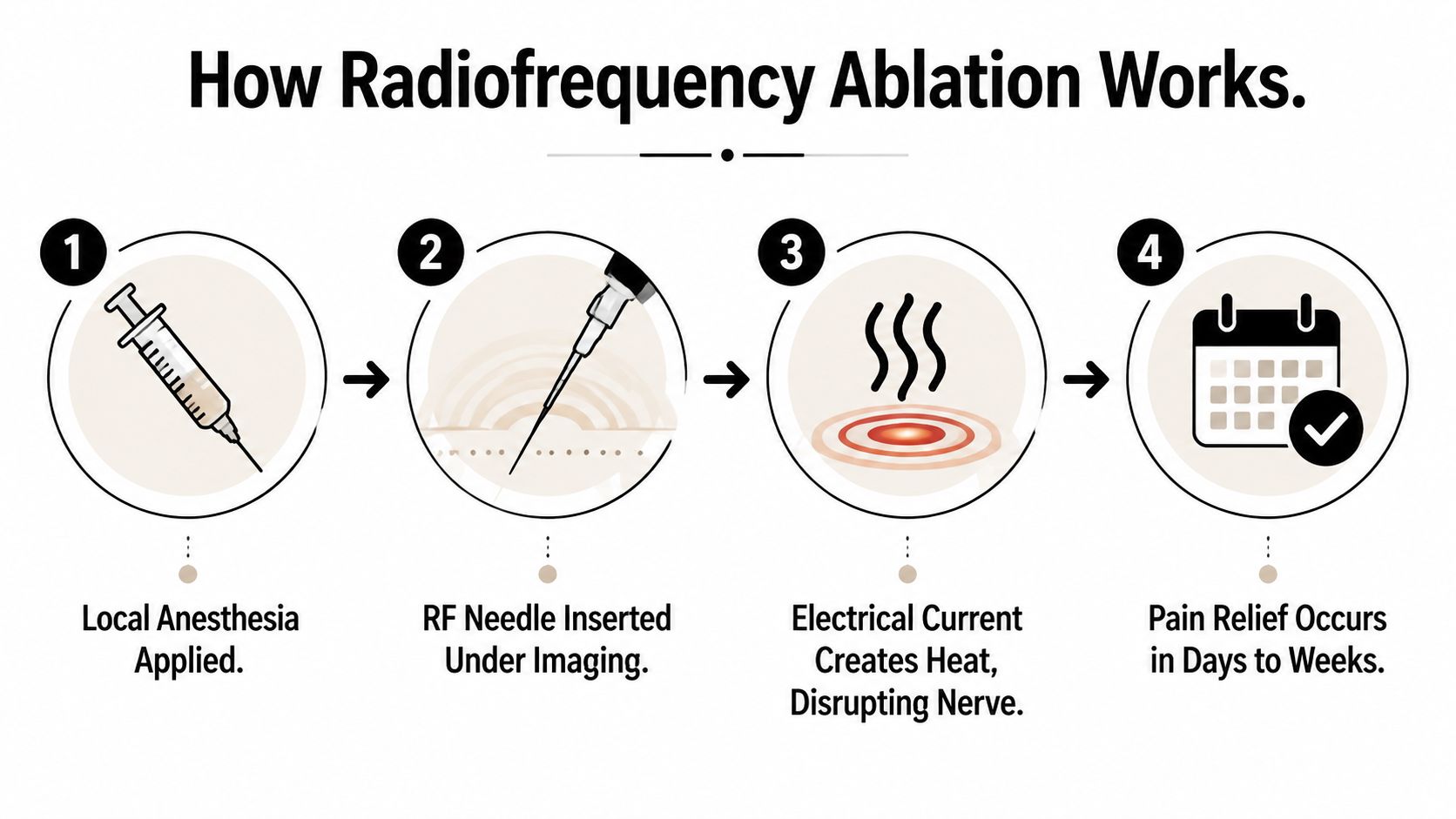
The treatment typically follows a deliberate sequence:
- Preparation: The care team reviews your symptoms, imaging, medications, and diagnostic block response. You'll be positioned so the physician can safely access the intended level.
- Local anesthetic: The skin and deeper tissues are numbed. Sedation, if appropriate, is discussed separately because you need to remain sufficiently responsive for safety checks.
- Image guidance: Fluoroscopy or another appropriate imaging method helps the physician place the RF needle beside the correct medial branch nerve.
- Testing: The physician may perform sensory or motor testing to confirm location and reduce the risk of treating the wrong structure.
- Lesion creation: Radiofrequency current generates heat at the probe tip. The controlled lesion interrupts pain signaling from the targeted nerve.
- Recovery: You're monitored briefly, receive activity and wound-care instructions, and arrange transportation if sedation was used.
What recovery can feel like
Some patients notice improvement quickly, while others experience temporary soreness or a flare near the treatment site before the benefit becomes clearer. The treated nerve doesn't vanish permanently, and pain may return if the nerve recovers or if another pain generator becomes dominant. That's why a successful procedure should support a broader plan for movement, strength, sleep, and daily function.
A medial branch block plays a different role. It's a diagnostic injection designed to test whether the suspected medial branch nerve is contributing to your pain. A meaningful temporary response can support proceeding to ablation, while little or no change should prompt a search for another source. You can read more about what a medial branch block does.
Not every radiofrequency treatment aims to destroy a nerve. Pulsed RF may be selected when modulation is the objective, while cooled RF may be considered when a larger treatment area is clinically appropriate. Those choices aren't interchangeable, and the physician should explain why a particular mode suits your diagnosis.
Comparing Standard RFA With Endoscopic Rhizotomy
How should patients weigh standard thermal RFA against endoscopic rhizotomy when both may address facet-related pain? The procedures can target medial branch nerves, yet they differ in access, visualization, technical demands, coverage, and expected durability.
| Feature | Standard Thermal RFA | Endoscopic Rhizotomy |
|---|---|---|
| Access | Percutaneous needle placed through the skin | Endoscope introduced to visualize the treatment area |
| Visualization | Image guidance confirms needle position | Direct endoscopic visualization may identify the nerve and surrounding structures |
| Nerve treatment | Thermal lesion created with radiofrequency energy | Endoscopic nerve interruption or lesioning |
| Pain relief pattern | Well-established option when diagnostic blocks confirm the facet source | Comparative studies suggest longer-lasting relief in selected patients |
| Recurrence | Pain may return as the nerve recovers | Some comparative studies report lower recurrence, but results depend on patient selection and technique |
| Complexity | Less procedurally complex and commonly used | More technically demanding, with longer operative time |
| Coverage | More familiar within existing facet-RFA policies | Coverage may be less predictable because policies often distinguish procedures by technique |
| Best fit | Confirmed facet pain where a minimally invasive, repeatable treatment is appropriate | Selected patients who may benefit from direct visualization and potentially greater durability |
Standard thermal RFA uses a needle placed through the skin under imaging guidance. The physician creates a controlled thermal lesion near the targeted medial branch nerve. Endoscopic rhizotomy uses an endoscope to view the treatment area directly, which may help identify the nerve and nearby structures before interruption or lesioning. Direct visualization can be useful in selected anatomy, but it does not remove the need for an accurate diagnosis.
A prospective trial involving 60 patients, with 30 receiving traditional percutaneous RFA and 30 receiving endoscopic RFA, found similar early pain scores. The endoscopic group had better results at 3 and 6 months, higher MacNab scores at 1 year, and fewer complications than the control group (comparative trial data).
The same research source describes a retrospective cohort involving 234 patients, including 511 RFAs and 386 endoscopic rhizotomies. Endoscopic rhizotomy was associated with better pain scores, lower opioid consumption, and longer relief across spinal regions. Another comparison reported recurrence in 8% of the endoscopic group, 3 of 36 patients, versus 61% after 1 year in the RFA group. These findings are clinically relevant, but they do not predict an individual patient's outcome. Results can change with diagnosis, spinal region, anatomy, operator experience, and follow-up.
Why longer relief is only one criterion
A systematic review of 11 randomized controlled trials found that, at 12 months, endoscopic neurotomy produced significantly better pain relief than percutaneous RFA, with a mean difference of 1.98, a 95% confidence interval of 1.60 to 2.36, and P < 0.0001. At 1 month, the review found no significant difference.
That timing helps explain the trade-off. Endoscopic treatment may offer more durable benefit in carefully selected cases, while standard RFA is usually less technically complex, familiar to clinicians and payers, and easier to repeat when pain returns. Endoscopic rhizotomy may require more operative time, and authorization can be less predictable when a policy is written around standard facet-RFA terminology.
For Illinois patients, the practical decision should include four questions: how certain is the facet diagnosis, what does the patient's anatomy permit, how much durability is expected, and will the payer authorize and repeat the selected technique? A treatment that appears stronger in a study still has to fit the patient's risks, goals, coverage, and access to follow-up care.
Who Is the Right Candidate for Nerve Ablation
Nerve ablation works best when the physician can identify a specific pain pathway. It's not a universal treatment for back pain, neck pain, or any symptom described as “nerve pain.” The strongest evidence applies to axial facet-mediated pain, meaning pain centered in the neck or back and linked to facet joints, rather than untreated radiculopathy traveling along a compressed nerve root.
Start with the pain pattern
Facet pain often stays primarily in the neck or back, although it may refer into nearby areas. Radiculopathy typically involves irritation or compression of a spinal nerve root and may produce radiating pain, numbness, tingling, or weakness into an arm or leg. These conditions can coexist, which is why a careful examination matters.
Current policy guidance emphasizes that cervical, lumbar, and thoracic facet RFA should be used for axial pain, with imaging guidance, and not when untreated radiculopathy is the active problem (clinical policy guidance).
Confirm the target before lesioning
A diagnostic medial branch block tests whether the suspected nerve is carrying pain from the facet joint. The point isn't to provide indefinite treatment. The point is to obtain useful clinical information before creating a lesion.
A reasonable evaluation asks:
- Does the pain pattern fit facet involvement?
- Did diagnostic blocks produce a meaningful temporary response?
- Does the physical examination support the suspected level?
- Have other causes, such as radiculopathy, fracture, infection, or serious structural disease, been considered?
- Can reducing pain help you restore movement and function?
The American Society of Interventional Pain Physicians describes conventional radiofrequency neurotomy as having Level II evidence in both lumbar and cervical regions. CMS also notes that 5 of 6 randomized controlled trials found statistically significant pain reduction, reinforcing RFA as the more established guideline-supported option when diagnostic blocks confirm the pain generator (evidence review).
A positive block doesn't promise complete relief. It tells the physician that the selected nerve is a credible target. If the block fails to change your typical pain, proceeding directly to ablation usually doesn't solve the diagnostic problem.
Navigating Insurance Coverage and Long-Term Value
Clinical effectiveness and insurance coverage aren't the same question. A procedure may make sense medically but still require specific documentation, diagnostic blocks, imaging guidance, authorization, or an explanation of why another treatment isn't appropriate.
Coverage policies increasingly place limits on repeat RFA. Some 2024 to 2025 payer policies limit repeat treatment to about every 6 months and often allow no more than two sessions per spinal region per year. Policies vary, so patients should confirm requirements with their insurer and treating clinic before scheduling.
Think beyond the first procedure
Standard RFA has a broader and more established evidence base for confirmed facet pain. It's also familiar to many coverage systems and can often be repeated when pain returns and the patient continues to meet criteria. That repeatability has practical value, particularly when a less invasive approach is appropriate.
Endoscopic rhizotomy may provide longer relief in selected patients, as comparative studies have reported. But the procedure may involve longer operating time, more complex access, and different authorization considerations. Longer durability doesn't automatically make it the better choice if the diagnosis is uncertain or if the technique isn't suitable for your anatomy.
Ask for a written estimate that separates the clinical plan from the coverage plan. The discussion should identify the proposed target, why it matches your pain, what diagnostic evidence supports it, whether the technique is covered, and what happens if pain returns.
For patients comparing expected expenses, the clinic's explanation of radiofrequency ablation cost factors can help frame questions about authorization, facility charges, and follow-up. The goal isn't to choose based on price alone. It's to avoid selecting a procedure without understanding both its medical rationale and its real-world accessibility.
Alternative and Adjunct Pain Management Options
Nerve ablation addresses pain signaling from a selected nerve. It doesn't correct every contributor to chronic pain, and it may not be appropriate when the source is a compressed nerve root, disc problem, fracture, inflammatory condition, or widespread pain pattern. A treatment plan matches the intervention to the diagnosis rather than treating every spinal complaint with the same procedure.
Epidural steroid injections may be considered when inflammation around a spinal nerve root contributes to radiating arm or leg pain. That approach differs from medial branch RFA because it targets an irritated nerve-root environment rather than the small nerves supplying facet joints.
Physical therapy can help restore strength, mobility, balance, and tolerance for activity. For many patients, the value of an injection or ablation increases when reduced pain makes it possible to move consistently and rebuild function. The treatment plan should specify what activities are safe, what movements need modification, and how progress will be measured.
Matching options to the pain generator
| Clinical problem | Possible intervention category | Main purpose |
|---|---|---|
| Confirmed facet-mediated axial pain | Medial branch block followed by RFA or selected rhizotomy technique | Reduce pain signaling from the facet joint |
| Radiating pain from nerve-root irritation | Epidural steroid injection or other targeted evaluation | Calm inflammation and clarify the symptomatic level |
| Persistent pain despite injections and rehabilitation | Neuromodulation evaluation | Modify pain signaling when appropriate |
| Selected joint or soft-tissue pain | Regenerative options such as PRP | Support a personalized treatment discussion |
| Vertebral compression fracture | Kyphoplasty evaluation | Address fracture-related pain and structural collapse |
| Chronic migraine or cervical dystonia | Botox treatment evaluation | Reduce activity of selected pain or muscle pathways |
Platelet-rich plasma and cell-based therapies may be discussed for selected conditions, but they aren't substitutes for diagnostic reasoning. Spinal cord stimulation and peripheral nerve stimulation can be considered for certain persistent pain patterns when less invasive measures haven't restored function. Other minimally invasive options, including decompression procedures, may be relevant when narrowing rather than facet pain drives the symptoms.
Midwest Pain & Wellness is a pain and wellness clinic in Chicago Ridge, Illinois, led by double board-certified interventional pain specialist Dr. Yaw Donkoh. The practice offers image-guided injections, medial branch blocks, radiofrequency ablation, stimulation therapies, regenerative options, and coordinated multimodal care, while working with patients and referring providers across Chicago Ridge, Palos Heights, Palos Hills, Evergreen Park, and Hickory Hills.
Headache patients may also find it useful to browse migraine weather insights while tracking symptoms, pressure changes, sleep, and other possible triggers. A symptom record can give your clinician more useful information than a vague report that headaches are “worse lately.”
If you're unsure whether your symptoms point to facet pain, radiculopathy, or another condition, Midwest Pain & Wellness can evaluate the pain generator and discuss diagnostic blocks, standard RFA, endoscopic options, and appropriate alternatives. Visit Midwest Pain & Wellness to request an appointment and bring your imaging, medication list, prior procedure records, and insurance information to the consultation.