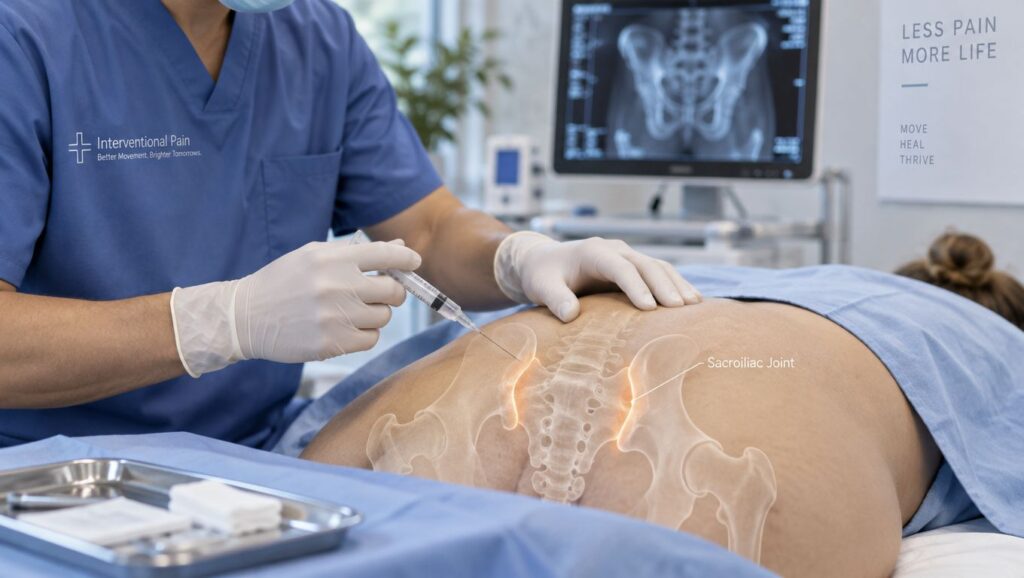
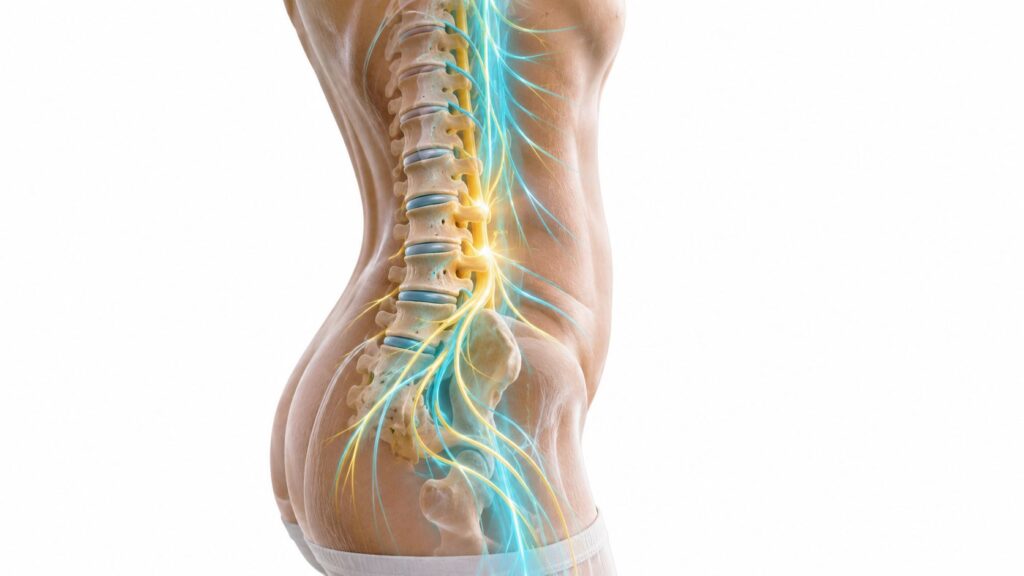
Most minimally invasive lumbar decompression patients leave the clinic the same day and begin meaningful improvement within days, but complete functional recovery can take 3 to 12 months rather than ending at one sharp milestone. You may feel better in one part of your body while still moving cautiously, sleeping poorly, or wondering when you'll safely return to lifting, work, and household tasks.
That mismatch between a quick discharge and a slower recovery is where many patients become frustrated. A small incision and outpatient treatment don't mean the nerves, muscles, and surrounding tissues have finished healing. For patients in Chicago Ridge, Palos Heights, Palos Hills, Evergreen Park, Hickory Hills, and surrounding Illinois communities, the most useful recovery plan is practical, symptom-specific, and connected to the demands of daily life.
The available evidence supports meaningful functional improvement, but it also supports patience. In a randomized trial, walking tolerance improved by 258% at one year with mild plus conservative medical management, compared with 64% with conservative management alone, while additional lumbar intervention was needed by 5.8% and 26.1%, respectively (trial results on mild treatment).
Table of Contents
- What to Expect After Minimally Invasive Lumbar Decompression
- Immediate Post-Op Care and First-Week Priorities
- How Pain and Walking Improve Over Time
- Pain Control and Activity Progression Guidelines
- Return-to-Work Timelines by Job Type
- Red Flags and When to Contact Your Pain Clinic
- Optimizing Long-Term Results with Follow-Up Care
What to Expect After Minimally Invasive Lumbar Decompression
You're home after the procedure, still feeling soreness near the treatment area, and your first thought may be, “Why don't I feel completely better yet?” That reaction is common. The nerve may have more room immediately, but the body still needs time to settle after the procedure.
Many patients are observed briefly after sedation, have their neurologic status checked, and go home the same day when recovery is stable. The early experience often includes incision tenderness, muscle soreness, fatigue, and cautious walking. Those symptoms don't automatically mean the decompression failed.

Why symptoms recover at different speeds
Before decompression, a prospective study found pain in 85.8% of patients, numbness in 74.1%, and paresthesia, or abnormal tingling, in 44.7%. Pain improved fastest, with a mean 55.3% reduction by six weeks, while numbness continued improving up to one year (prospective radiculopathy recovery study).
That distinction matters. Leg pain may ease before sensation normalizes, and incisional soreness may temporarily compete with the symptom that brought you to treatment. Don't judge the entire outcome by the first evening or even the first several days.
Practical rule: Early relief is encouraging, but a slower return of numbness does not by itself indicate a poor result.
During the first week, short walks and regular position changes are usually more useful than trying to stay in bed. For additional home-based preparation and recovery ideas, patients may also find these Carevo Home Health Care recovery tips helpful. Your own pain clinic's instructions should take priority, especially for wound care, medication, and activity restrictions.
Immediate Post-Op Care and First-Week Priorities
The first week works best when you treat recovery as controlled movement, not complete inactivity. You'll usually be checked after sedation, assessed for neurologic changes, and discharged the same day if your condition is stable. Some patients resume normal activity within 24 hours, while return to work may happen within a few days when the job is light and the treating team approves it (outpatient MILD recovery guidance).
Your first days at home
- Protect the incision: Follow the clinic's instructions for keeping the dressing and treatment area clean and dry. Don't apply products or soak the area unless your care team permits it.
- Walk a little and often: Several brief walks are generally more useful than one ambitious outing. Stop before symptoms escalate, then resume later.
- Change position regularly: Alternate standing, walking, and resting instead of remaining in one posture for a long period.
- Take medication as directed: Use prescribed medication according to the plan, and contact the clinic if side effects or poor pain control interfere with walking or sleep.
- Arrange practical help: Have someone assist with transportation, meals, laundry, and chores that require bending, twisting, or lifting.
Normal early soreness should gradually become easier to manage. New or worsening weakness, significant drainage, fever, rapidly increasing redness, or a sudden change in bladder or bowel function requires prompt medical contact rather than watchful waiting.
Rehabilitation shouldn't be improvised. The clinic may recommend walking first, then a structured program as healing progresses. Patients can review post-surgical rehabilitation guidance while following the individualized instructions provided by their treating clinician.
How Pain and Walking Improve Over Time
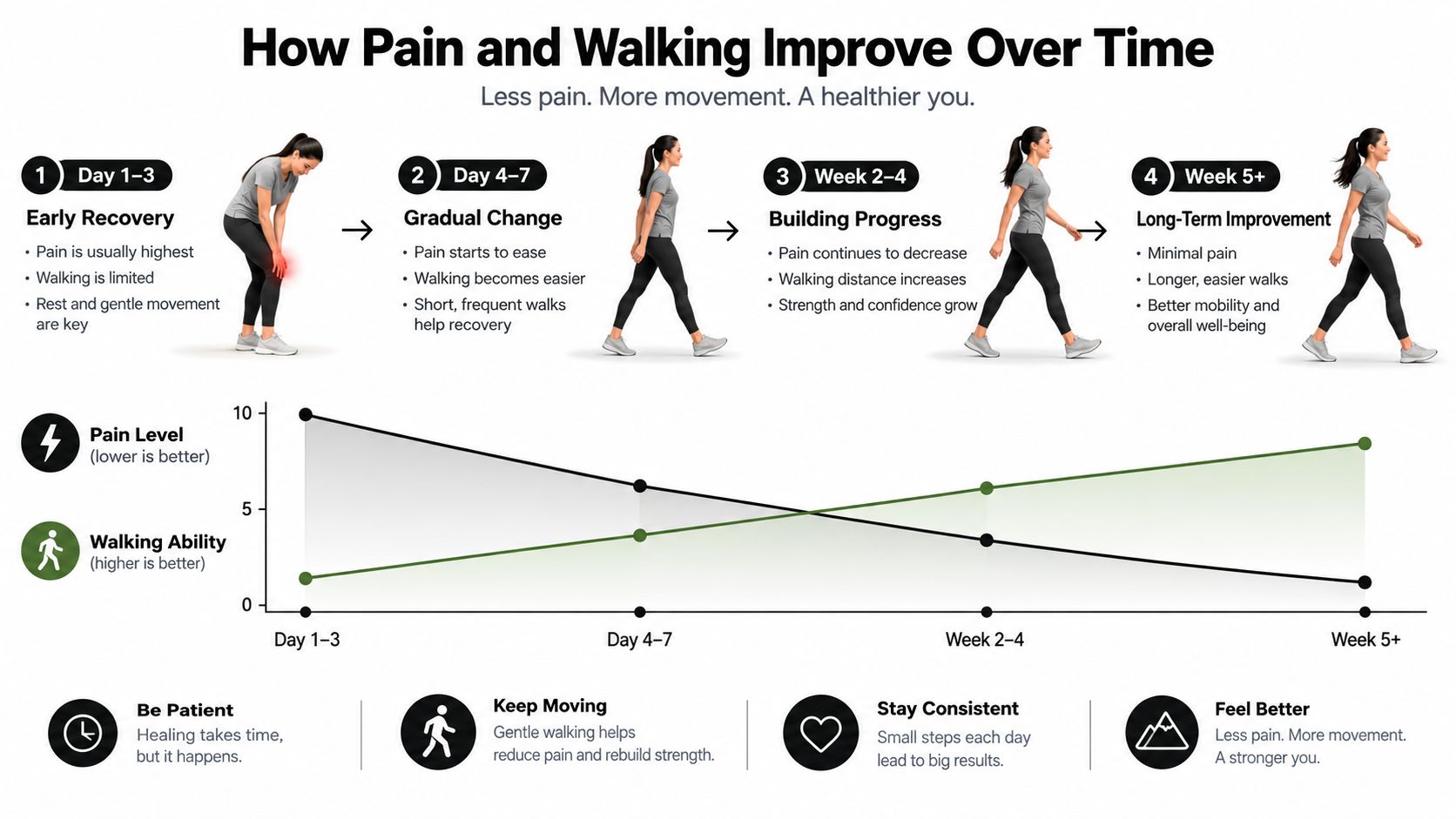
A patient may leave the facility quickly yet still need time before lifting, working, or managing daily chores comfortably. Discharge measures immediate safety, not full functional recovery. After minimally invasive lumbar decompression, leg pain may ease before walking endurance returns. Back-muscle fatigue, uncertain balance, or ongoing nerve irritation can limit activity even when the main symptom is improving.
For patients in Illinois, plan around function rather than the discharge conversation. Returning to household tasks, work duties, and lifting depends on walking tolerance, symptom response, and the clinician's restrictions. Recovery rarely improves at the same pace across every activity.
A randomized controlled trial of the mild procedure for lumbar spinal stenosis found that the mild plus conservative medical management group improved walking tolerance by a mean of 258% at one year, compared with 64% in the conservative-management-only group. Within one year, 5.8% of the mild plus conservative care group needed another lumbar spine intervention, compared with 26.1% of controls (randomized trial data).
Track function, not just pain
Use ordinary tasks to measure progress:
- Walking: Can you go farther before leg heaviness or pain makes you stop?
- Standing: Can you prepare a meal or wait in line with fewer breaks?
- Daily chores: Can you shower, dress, or complete light household tasks without a flare?
- Recovery after activity: Do symptoms settle with rest, or remain into the next day?
Pain reduction matters, but walking tolerance often shows more clearly whether spinal stenosis symptoms are improving. Increase activity gradually. One good day does not confirm readiness for a full schedule, lifting, or demanding work. Numbness may plateau while walking and leg pain improve, because nerve recovery and conditioning follow different timelines. The practical goal is sustained movement through the day with fewer restrictions, while healing tissues and irritated nerves adapt.
Pain Control and Activity Progression Guidelines
Pain control should help you move safely, sleep, and participate in recovery. It shouldn't encourage you to ignore warning signs or prove that you can resume every activity immediately. A staged plan usually works better than alternating between complete rest and overexertion.
Use a steady progression
Start with brief, comfortable walking and increase distance only when the current level doesn't produce a sustained flare. Avoid repetitive bending, twisting, heavy lifting, and strenuous exercise until your treating clinician clears those activities. If a new activity causes more pain that persists rather than settles, reduce the intensity and contact the clinic if you're unsure why.
Recovery guidance commonly describes same-day mobilization, regular pain control for 2 to 3 weeks, desk work around 4 to 6 weeks, most usual activities by about 12 weeks, and gradual improvement during the first 3 months, with some patients continuing to improve for up to 2 years (lumbar decompression recovery guidance).
- Medication: Take prescribed medication exactly as directed. Ask about constipation, sedation, interactions, or alternatives rather than changing doses independently.
- Walking: Keep walks short enough that your gait remains controlled. Several manageable efforts are preferable to one long test.
- Desk work: Use frequent position changes and avoid treating a full uninterrupted workday as the first milestone.
- Lifting: Return to lifting only after review, especially if your work involves repeated loads, awkward positions, or carrying while twisting.
- Driving: Wait until you can move comfortably, respond safely, and meet your clinician's medication and activity requirements.
What works: Consistent, moderate activity paired with symptom monitoring.
What doesn't: Using a low-pain morning as permission to catch up on every delayed chore.
Pain education can also help patients understand why symptoms may persist even after the original compression has been treated. For a broader discussion of pain without relying automatically on medication or surgery, episode 266 with Howard Schubiner offers additional context. Patients can also review what postoperative pain can mean and bring specific questions to their pain clinic.
Return-to-Work Timelines by Job Type
A quick discharge can sound like a quick recovery. In practice, leaving the facility is only the first milestone. A desk worker in Illinois may resume limited duties sooner than a delivery driver or construction worker, but safe return depends on what the job requires for an entire shift.
An independent study found average return to work around 14 days after decompression in general lumbar surgery populations, while a hospital outcomes summary reported that only about 60% of decompression patients reported back improvement at or after 6 months (patient-facing MILD recovery information). These figures describe broad patient groups, not an automatic clearance. Leg symptoms, back pain, endurance, and job demands may improve on different timelines.
Match the plan to the job
| Job type | Main recovery question |
|---|---|
| Desk-based work | Can you sit, stand, and change position without escalating symptoms? |
| Light active work | Can you walk, carry light items, and move repeatedly without losing control or increasing pain? |
| Physically demanding work | Can you lift, bend, climb, push, pull, and sustain those movements safely? |
Desk work may resume earlier if the workstation can be adjusted and the employee can change position during the day. A full shift still requires more tolerance than completing a short task at home. Light active work demands walking and repeated movement, even without heavy loads. Physically demanding work commonly requires staged duties, temporary restrictions, and review of lifting, bending, climbing, pushing, pulling, and twisting.
Plan around function
Describe the job in operational terms. “I work on my feet” does not show whether you stand in one place, cross a facility, climb stairs, drive, handle equipment, or lift repeatedly. Your clinician needs to know how symptoms behave across a shift, not only whether you can complete one task at home.
For Illinois workers with workers' compensation or injury-related restrictions, arrange documentation early. The return plan should specify permitted duties, limits, hours, and review points. Returning before your endurance matches the job can delay progress, even when the incision and discharge requirements look satisfactory.
Red Flags and When to Contact Your Pain Clinic
A common mistake is assuming every symptom is normal because the procedure was minimally invasive. Smaller access does not eliminate the need to report meaningful changes. At the same time, ordinary soreness after treatment doesn't mean something has gone wrong.
Call your pain clinic promptly about new or worsening weakness, a major change in sensation, increasing redness or drainage, fever, severe or rapidly escalating pain, or new difficulty controlling bladder or bowel function. Seek urgent evaluation for severe neurologic changes or symptoms that feel dramatically different from your expected postoperative discomfort.
Record the change clearly
Before calling, note:
- What changed: Describe the symptom in plain language.
- When it began: Include whether it appeared suddenly or gradually.
- Where it is located: Separate incision soreness, back pain, leg pain, numbness, and weakness.
- What affects it: Record whether walking, resting, medication, or position changes the symptom.
- What else is present: Mention fever, drainage, falls, or difficulty walking.
Longer-term results can remain meaningful. In follow-up data at 2 years, ODI improved by 22.7 points, the Numeric Pain Rating Scale improved by 3.6 points, and the reported surgical reoperation rate was 5.6%, with no evidence of spinal instability through that period (long-term MILD follow-up data).
Those results don't mean every patient follows the same path. They do show why a concerning early symptom deserves assessment rather than an automatic conclusion that recovery has failed.
Optimizing Long-Term Results with Follow-Up Care
A durable outcome depends on what happens after discharge as much as on the procedure itself. Follow-up gives the clinical team a chance to review walking tolerance, medication use, neurologic symptoms, wound healing, and work demands. It also allows activity recommendations to change as your recovery develops.
Keep recovery individualized
Patients with spinal stenosis often need more than short-term pain relief. They need a plan for walking, conditioning, body mechanics, and the activities that matter to them. Guidance on managing spinal stenosis can help frame the condition as an ongoing functional problem rather than a single painful episode.
A coordinated pain clinic can adjust an opioid-sparing plan, address residual symptoms, recommend rehabilitation, and communicate with other clinicians when care overlaps. Midwest Pain & Wellness provides interventional pain management and follow-up for patients across Illinois, including Chicago Ridge and nearby communities, with treatment plans adapted to spine, nerve, injury, and post-surgical pain.
The right goal is not to rush through milestones. It's to regain walking capacity, daily independence, and work tolerance without repeatedly provoking the same symptoms. Keep scheduled follow-up visits, report meaningful changes early, and measure progress by what you can do reliably over time.
If you're recovering from or considering minimally invasive lumbar decompression, Midwest Pain & Wellness can evaluate your symptoms and help create a personalized, opioid-sparing recovery plan. Contact the clinic to discuss walking limitations, postoperative pain, return-to-work demands, and the next practical step for your care in Illinois.