You wake up with a stiff neck, but the problem doesn't stay in your neck. Pain travels through your shoulder and down your arm. Turning your head becomes difficult, sleep is interrupted, and routine tasks in Chicago Ridge, Palos Heights, Palos Hills, Evergreen Park, or Hickory Hills start requiring workarounds. When medication, activity changes, and other conservative measures haven't controlled nerve-related symptoms, a cervical epidural steroid injection may become part of the discussion.
The important question isn't only whether an injection can help. It's whether your pain pattern, examination, imaging, and treatment goals make it a reasonable option. Epidural steroid injection neck pain treatment is most defensible for cervical radiculopathy, where an irritated nerve root causes radiating arm pain. It's less predictable for pain confined to the neck, and it doesn't repair a herniated disc, stenosis, or degenerative change.
Table of Contents
- Understanding the Epidural Steroid Injection Procedure
- Choosing Between Interlaminar and Transforaminal Approaches
- What the Clinical Evidence Shows for Neck Pain Relief
- Safety Profile and Known Risks of Cervical Injections
- Preparing for Your Procedure and Post-Treatment Recovery
- Integrating Injections Into a Multimodal Pain Plan
- Next Steps for Patients in the Chicago Ridge Area
Understanding the Epidural Steroid Injection Procedure
A patient from Chicago Ridge may describe the same frustrating pattern: neck pain after sitting at a computer, sharp pain when looking over the shoulder, and burning or tingling that reaches the hand. Imaging may show a disc herniation, narrowing around a nerve, or degenerative changes. In that situation, the pain generator may not be the neck muscles alone. An inflamed cervical nerve root can keep sending pain signals into the shoulder and arm.
A cervical epidural steroid injection places anti-inflammatory medication, commonly a corticosteroid with local anesthetic, into the epidural space near the irritated structures. The epidural space lies outside the protective covering around the spinal cord and nerve roots. The medication's purpose is to calm inflammation and reduce nerve-related pain, not to reshape the disc or permanently widen the spinal canal.
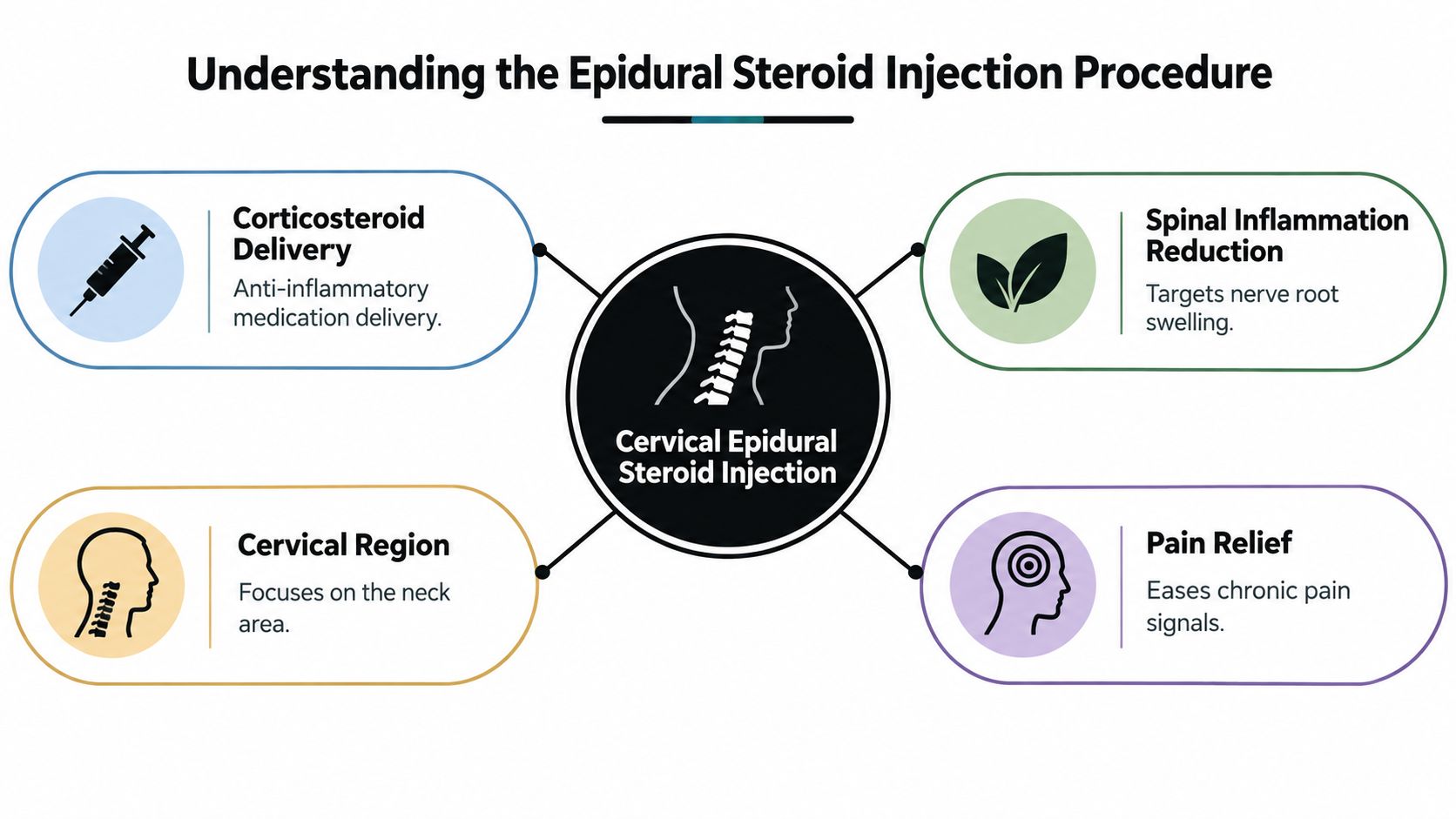
What the injection targets
Cervical epidural injections are used for neck pain with radiculopathy and inflammatory nerve-root irritation associated with herniated discs, stenosis, or degenerative disc disease. Evidence summarized by the American Academy of Neurology indicates that these injections probably reduce short-term pain by about 24 percentage points, with a number needed to treat of 4, and short-term disability by 16 percentage points, with a number needed to treat of 6.
Those findings describe short-term improvement, not a cure. A successful injection can make it easier to sleep, move the arm, participate in rehabilitation, or tolerate daily activity while the underlying condition is managed. It shouldn't be presented as proof that the structural problem has disappeared.
The procedure is usually performed with image guidance. After the skin is numbed, the physician advances the needle to the intended location and confirms placement before delivering medication. Patients should ask how fluoroscopy, contrast, prior imaging, and medication selection will be used in their case. A clear explanation of fluoroscopy-guided injection care can also help you understand why precision matters in the cervical spine.
Neck and head symptoms sometimes overlap, but they don't always have the same source. If your primary complaint is migraine rather than radiating cervical nerve pain, a resource on how occipital nerve blocks stop migraine may help explain a different treatment target.
Choosing Between Interlaminar and Transforaminal Approaches
The two principal cervical epidural approaches differ in where the needle enters and how broadly the medication is delivered. Your physician chooses between them after considering your symptoms, neurological findings, imaging, and the location of suspected nerve irritation.
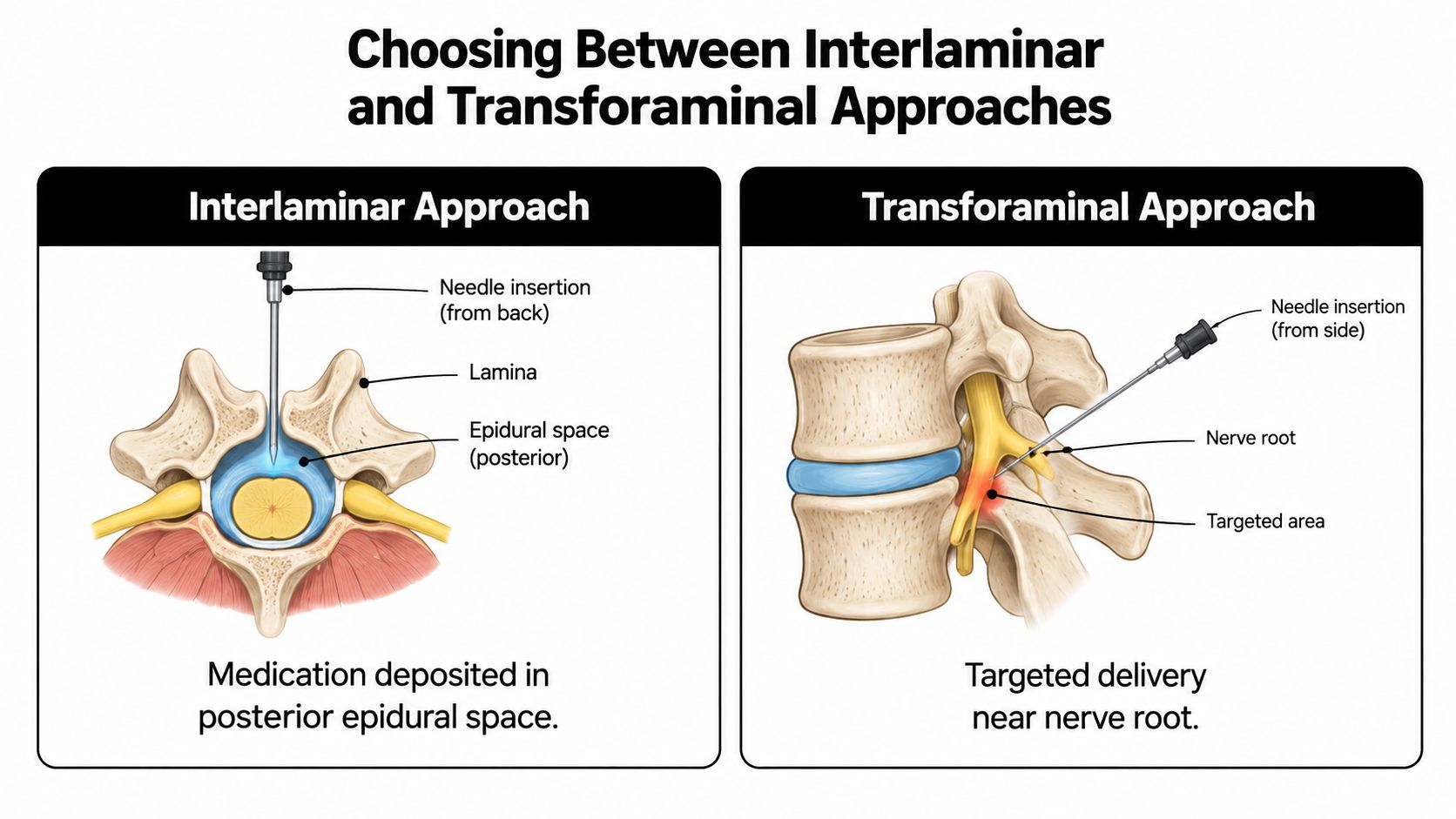
Interlaminar approach
With an interlaminar injection, the needle passes between portions of the vertebrae from the back and enters the posterior epidural space. Medication can spread across that space rather than being placed immediately beside one named nerve root.
This approach may be considered when symptoms or imaging suggest irritation across a region, or when a broader epidural distribution is clinically appropriate. It still requires careful planning. The cervical spine contains the spinal cord, nerve roots, blood vessels, and limited working space, so “broader” doesn't mean casual or imprecise.
Transforaminal approach
A transforaminal injection directs medication toward the opening where a cervical nerve root exits the spine. That targeted placement can fit a pattern in which symptoms clearly follow one irritated root, such as arm pain, numbness, or tingling that corresponds with imaging findings.
Targeting doesn't automatically make the approach safer. Serious complications have been documented with both techniques, including dural puncture, epidural hematoma, spinal cord injury, paralysis, and death. The risk is considered highest with cervical transforaminal injections because inadvertent arterial injection has been associated with vertebral artery injury, cerebellar infarction, central nervous system infarction, and death, as discussed in this review of cervical epidural injection safety.
Ask before consenting: Which approach fits my imaging and symptoms, what safeguards will be used, and what finding would make you choose a different treatment?
Practical safeguards include reviewing prior imaging, confirming adequate epidural space, using careful image guidance, and avoiding the procedure in situations such as active infection, significant coagulation problems, or progressive neurological decline. Medication choice also matters, particularly for cervical transforaminal procedures. Patients who want to understand how epidural techniques are applied in other spinal regions can review this overview of epidural steroid injection for back pain, while remembering that cervical anatomy carries its own considerations.
What the Clinical Evidence Shows for Neck Pain Relief
The evidence is strongest when neck pain is part of a radicular syndrome. That means pain travels from the neck into the shoulder or arm because a cervical nerve root is irritated. The evidence becomes less persuasive when the complaint is purely axial, meaning pain stays primarily in the neck without a clear nerve-root pattern.
A 2022 systematic review and meta-analysis screened 34 studies and found that 9 randomized trials met its inclusion criteria. The review judged the evidence good for cervical disc herniation when local anesthetic and steroids were used, but only fair for axial or discogenic pain, spinal stenosis, and postsurgery syndrome. The authors supported cervical epidural injections as an option for several neck-pain subtypes, while emphasizing that confidence varies by diagnosis. (Pain Physician review)
| Clinical pattern | What the evidence supports | What remains uncertain |
|---|---|---|
| Radicular pain from disc herniation | A reasonable option for short-term pain and disability reduction | Duration and degree of relief vary |
| Purely axial or discogenic pain | Possible use in selected cases | Evidence is weaker than for radicular symptoms |
| Cervical spinal stenosis | May be considered after individualized review | Effectiveness remains insufficiently established |
| Postsurgery syndrome | Can enter a broader treatment discussion | Results are less predictable |
A separate 2022 review of 4 studies involving 370 patients found no significant long-term difference at 12 months between steroid-plus-anesthetic injections and anesthetic-only injections for chronic neck pain. The reported weighted mean difference was -0.006, with a 95% confidence interval from -0.275 to 0.263 and P = 0.963, indicating that adding steroids didn't improve long-term pain or functional outcomes over anesthetic alone in that analysis. (Controlled-trial review)
That distinction matters during consent. Local anesthetic may provide an early diagnostic clue or temporary relief, while steroid may reduce inflammation for some patients. Controlled evidence doesn't establish that steroid consistently adds long-term value for chronic neck pain, so the treatment plan should be based on your diagnosis and response rather than an assumption that more medication means better results.
Safety Profile and Known Risks of Cervical Injections
Cervical epidural injections have a meaningful safety record when appropriately selected and carefully performed, but they aren't risk-free. Clinical summaries report temporary pain relief in about 40% to 84% of patients, a wide range that reflects differences in diagnosis, technique, study population, and outcome definitions. (Cleveland Clinic clinical summary)
The same source reports historical dural puncture rates of 0.25% to 2.0% for interlaminar cervical injections and about 1.12% for transforaminal injections. More recent summaries report rates around 0.3% for the transforaminal approach and 0.25% to 2.0% for the interlaminar approach. These figures reinforce a practical point: low frequency doesn't mean zero possibility.
Common and serious concerns
Patients may experience temporary soreness, increased neck pain, headache, or other short-lived symptoms. A separate clinical summary reported pain improvement in 38% to 75% of patients depending on the study, and described a fluoroscopically guided interlaminar series of 345 injections with a 16.8% complication rate, most commonly increased neck pain, headache, or insomnia that resolved quickly. (Clinical injection FAQ)
Serious events require immediate attention. New or worsening weakness, loss of coordination, severe headache, fever, bowel or bladder changes, or unusual numbness after the procedure should prompt urgent contact with the treating team or emergency evaluation.
A safe plan includes knowing not only why an injection is recommended, but also when the risks outweigh the likely benefit.
Your clinician should review blood-thinning medication, infection risk, bleeding disorders, neurological changes, allergies, prior imaging, and any history of difficult procedures. The decision should be individualized, especially when the pain is axial or when cervical stenosis is the primary diagnosis.
Preparing for Your Procedure and Post-Treatment Recovery
Preparation starts before you arrive at the clinic. The office should review your medication list, allergies, medical conditions, imaging, and transportation needs. Don't stop blood thinners or other prescribed medication on your own. Follow the specific instructions from your treating physician.
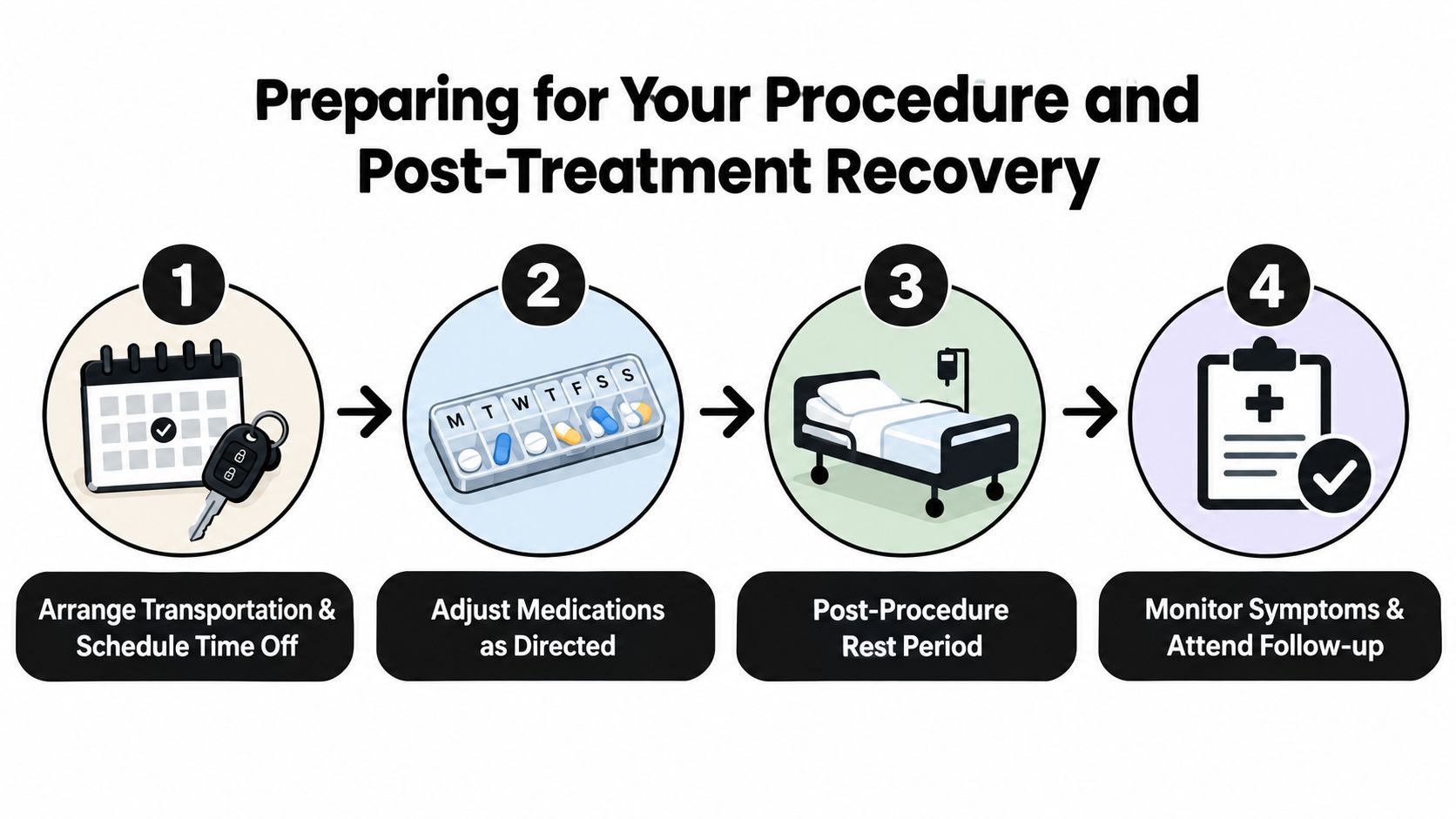
Before the appointment
- Arrange transportation: Plan a ride home if sedation is used or if your clinic requires assistance after the injection. Leave room in your schedule for observation and a quieter remainder of the day.
- Confirm medication instructions: Ask which medicines to take, hold, or bring with you. The answer depends on your health history and the planned technique.
- Bring relevant records: Imaging reports, medication lists, and information about prior injections help the physician avoid preventable problems.
- Report changes: Tell the clinic about fever, infection, new weakness, worsening numbness, or a recent change in your health before the procedure.
During the appointment, you'll be positioned for access to the cervical spine. The skin is cleaned, local anesthetic numbs the entry area, and imaging guides needle placement. Contrast may be used to confirm the intended location before medication is delivered. You'll be monitored afterward and given individualized instructions.
After the injection
Expect to take it easy initially. Some people notice immediate numbness or temporary relief from the local anesthetic, while others feel soreness as it wears off. Steroid-related improvement may not be immediate, and a lack of instant relief doesn't necessarily determine the final result.
Keep a simple record of pain location, arm symptoms, sleep, walking, work tolerance, and any weakness or numbness. This information is more useful than judging the injection only by whether pain vanished. The cervical epidural injection recovery guidance can help you prepare questions, but your own clinician's instructions take priority.
Contact the clinic promptly if symptoms are unexpectedly severe or progressive. Seek urgent medical attention for serious neurological changes, severe headache, fever, or signs of infection.
Integrating Injections Into a Multimodal Pain Plan
An injection can create a treatment window, but it usually can't correct the mechanical or structural cause of cervical nerve irritation. If pain decreases enough to move more normally, the next step is to use that improvement rather than waiting passively for the problem to return.
A multimodal plan may combine targeted rehabilitation, posture and workstation changes, medication management, activity modification, and follow-up assessment. Physical therapy can address movement tolerance and strength, while carefully selected home exercises help preserve gains between visits. The right program depends on examination findings. Aggressive stretching or strengthening during an active flare can aggravate symptoms, so progression should be guided rather than improvised.
Use relief to restore function
A useful goal isn't just “less pain.” It might be sleeping through the night, turning your head to check traffic, returning to household tasks, or tolerating work at a computer. Tracking those functional markers helps determine whether the injection delivered clinically meaningful benefit.
Midwest Pain & Wellness is a Chicago Ridge pain and wellness clinic led by double board-certified interventional pain specialist Dr. Yaw Donkoh. Its broader approach may include image-guided procedures, targeted rehabilitation, medication management, nerve interventions, and other opioid-sparing options when clinically appropriate.
Repeat injections require the same discipline as the first. A repeat may be reasonable when the initial treatment produced meaningful improvement and symptoms later returned, but more procedures aren't automatically better. Recent guidance highlights uncertainty in cervical spinal stenosis and variation in policies governing repeat injections, with examples ranging from no more than 4 injections per region in 12 months to more restrictive intervals and response requirements. (2025 evidence summary)
Next Steps for Patients in the Chicago Ridge Area
A careful consultation begins with the pain pattern, not the procedure. If symptoms travel from your neck into the arm, your clinician will look for a consistent nerve-root distribution, changes in strength or sensation, reflex findings, and imaging that supports the suspected source. If pain stays in the neck, the discussion should be more cautious because the evidence for purely axial pain is weaker.
Patients from Chicago Ridge, Palos Heights, Palos Hills, Evergreen Park, and Hickory Hills should also ask how success will be measured. The answer may involve improved sleep, greater arm use, reduced medication reliance, or the ability to participate in rehabilitation. A temporary reduction in pain can still be valuable when it helps restore function, but it shouldn't be described as a permanent fix.

Before scheduling, discuss the injection approach, image guidance, medication plan, expected timeline, warning signs, and criteria for repeating or stopping treatment. A responsible plan also includes alternatives if the injection doesn't help, particularly when symptoms progress or the diagnosis points toward a different intervention.
If neck and arm pain is limiting your daily life, schedule an evaluation with Midwest Pain & Wellness to review whether a cervical epidural steroid injection fits your diagnosis and goals. The team can discuss image-guided pain care, rehabilitation, and opioid-sparing options with patients throughout the surrounding Illinois communities.
Midwest Pain & Wellness provides individualized evaluation and image-guided treatment planning for cervical nerve pain and other chronic pain conditions. Visit Midwest Pain & Wellness to request an appointment and discuss a practical path toward safer movement and restored function.