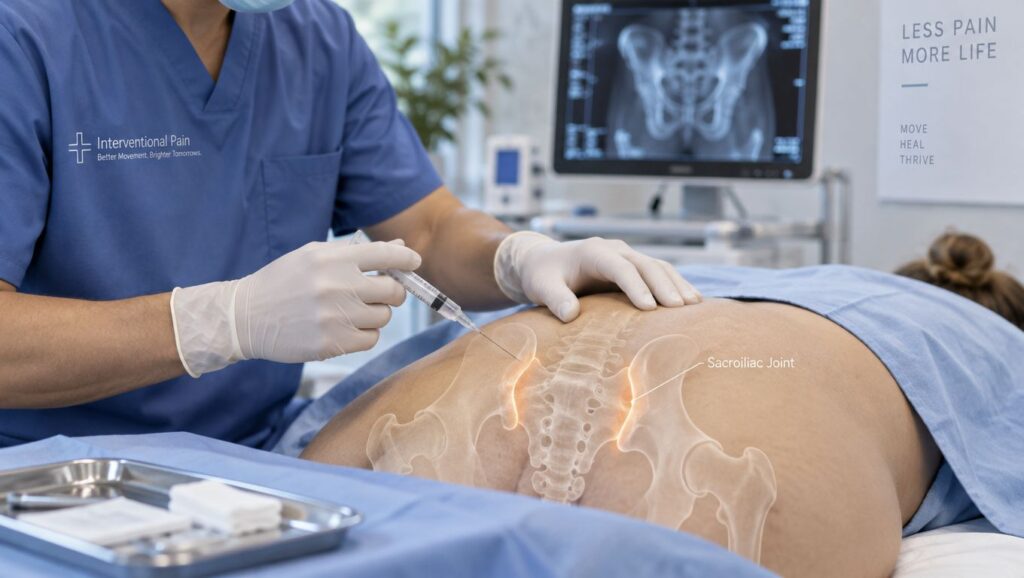
You may be dealing with persistent burning, numbness, weakness, or electric pain after an accident, a disc problem, spine surgery, or a diagnosis that was never explained clearly. The hardest question is often simple: Can the nerve recover, and how long will it take?
The answer depends on what was injured. Spinal cord injury recovery follows a different biological pattern from recovery after damage to a peripheral nerve or a compressed nerve root. Your injury's location, severity, cause, and response to treatment all shape the outlook. Understanding those differences makes it easier to recognize meaningful progress, choose reasonable treatments, and know when persistent symptoms need specialty care.
Table of Contents
- Understanding Spinal Nerve Damage and What Recovery Actually Means
- The Biology of Nerve Healing and Realistic Timelines
- Recovery Prognosis by Injury Type and Severity
- Staged Treatment Options for Nerve Pain and Recovery
- Rehabilitation Strategies That Support Nerve Healing
- When to Seek Specialty Interventional Pain Care
Understanding Spinal Nerve Damage and What Recovery Actually Means
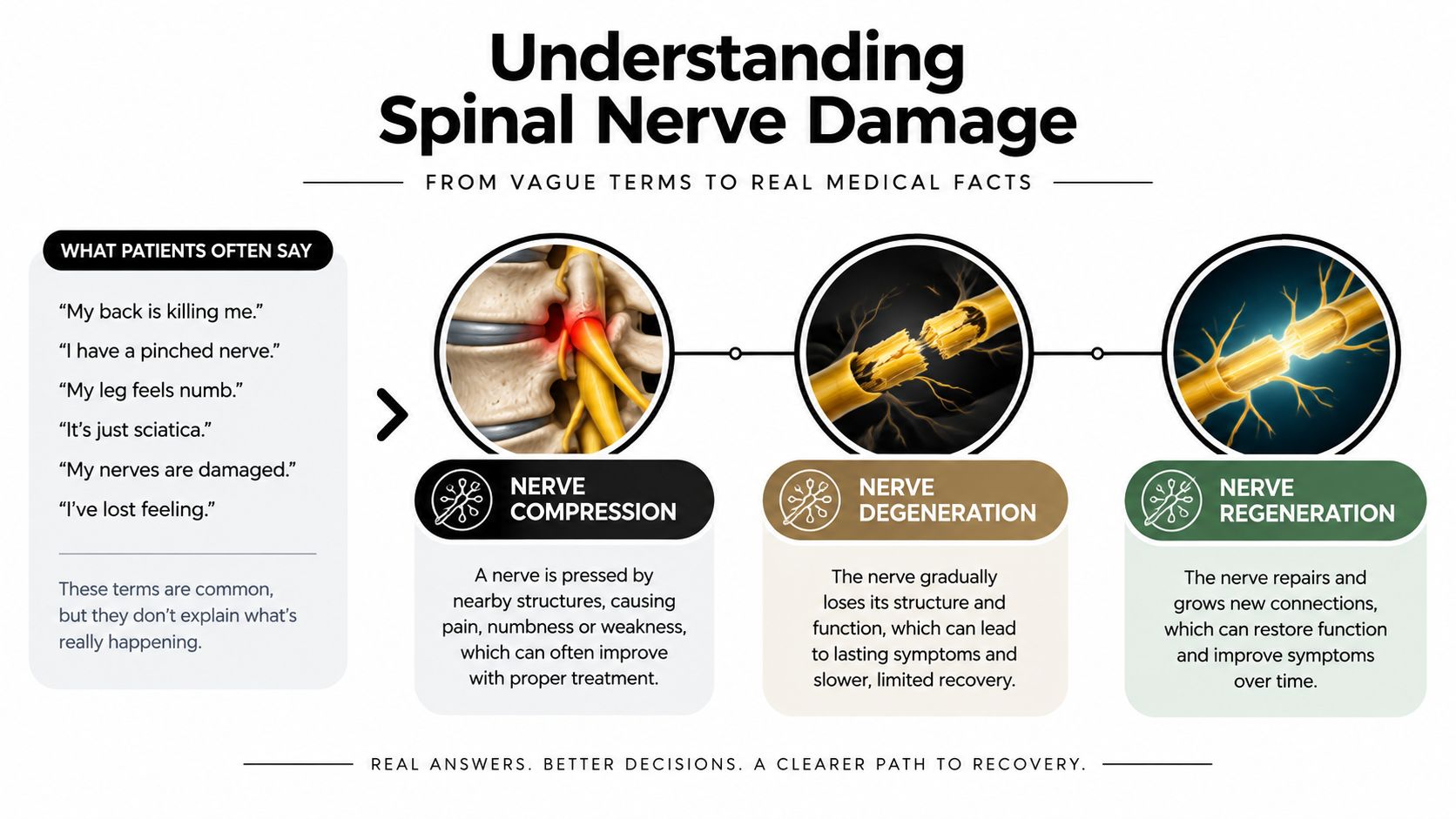
“Spinal nerve damage” is a useful search term, but it isn't a precise diagnosis. A person may use it to describe a compressed nerve root from a herniated disc, irritation caused by spinal stenosis, damage to a peripheral nerve after trauma, or an injury involving the spinal cord itself. These conditions can produce similar symptoms, including pain, tingling, numbness, weakness, balance problems, and changes in reflexes, yet they don't heal in the same way.
The first practical step is to identify the structure involved. The spinal cord is part of the central nervous system and carries signals between the brain and the body. Nerve roots exit the spine and connect with peripheral nerves that travel toward muscles, skin, and organs. A disc problem may irritate a nerve root without severing it, while a traumatic spinal cord injury can affect movement and sensation below the lesion.
Recovery has more than one definition
Recovery rarely means returning perfectly to pre-injury function. Clinically, it may mean any of the following:
- Less nerve pain: Burning, shooting, or shock-like pain becomes less frequent or easier to control.
- Better sensation: Numb areas become smaller, or the brain can interpret touch and temperature more accurately.
- Improved strength: A weak muscle begins working again, even if endurance remains limited.
- Greater independence: You can walk, dress, sleep, work, or complete household tasks with fewer adaptations.
Trauma, disc herniation, spinal stenosis, and complications after surgery can all affect nerves through different mechanisms. That's why an examination, imaging review, and sometimes electrodiagnostic testing matter more than the label alone. A patient with pain from compression may have a different treatment path from someone with irreversible nerve-root avulsion or complete cord transection.
If an injury resulted from a motor vehicle collision, legal and medical needs may overlap. A resource on car accident spinal injury legal help may help with documentation questions, but it shouldn't replace prompt evaluation by a qualified medical professional. For symptom patterns that may indicate a spinal nerve problem, review this guide to spinal nerve injury symptoms.
The Biology of Nerve Healing and Realistic Timelines
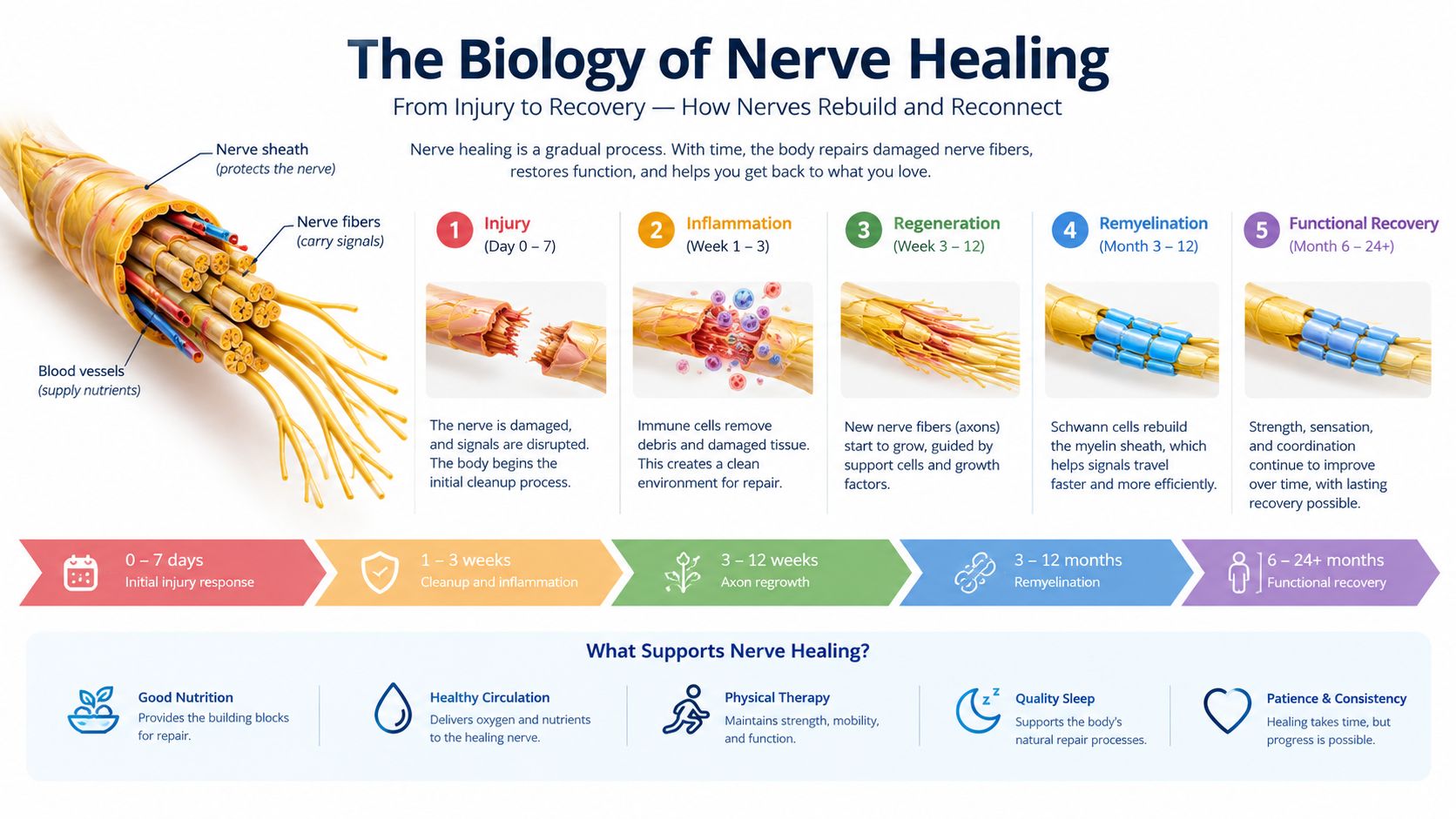
Nerves don't repair themselves overnight because the body uses different mechanisms depending on how much nerve tissue remains intact. A partially injured peripheral nerve may preserve enough functioning axons to reorganize its signal pathways. A severely damaged nerve may need to grow new axons toward the muscle or sensory area it serves.
Partial damage and collateral branching
When 20% to 30% of axons are damaged, collateral branching is the main recovery mechanism. This process can begin within the first 4 days after injury and continue for about 3 to 6 months. Surviving axons send additional branches toward areas that have lost input, which can improve communication without requiring every damaged fiber to regrow. These figures and mechanisms are described in this review of peripheral nerve regeneration.
When more than 90% of the axon population in a nerve is damaged, true axonal regeneration becomes the primary route to recovery. Axons generally regrow at about 1 to 3 millimeters per day, so the distance between the injury and the target muscle or sensory region directly affects the timeline. A nerve injured close to the target may show functional change sooner than one that must regenerate over a much longer distance.
Why early care still matters
Full peripheral nerve recovery requires several linked events, including breakdown of damaged tissue, axonal regrowth, and reconnection with the end organ. The biological capacity for regeneration is strongest soon after injury, which supports early rehabilitation and repeated examinations rather than a “wait and see” approach.
That doesn't mean every early treatment restores lost nerve tissue. It means clinicians can use early assessments to protect joints, preserve muscle length, manage pain, and identify signs that the nerve is reconnecting. A discussion of regenerative medicine and tissue engineering can provide background, but regenerative approaches shouldn't be presented as guaranteed repairs.
Recovery Prognosis by Injury Type and Severity
Patients often ask for one recovery percentage, but no single number applies to every spinal nerve injury. The most useful prognosis combines severity, completeness, and anatomic level. A person with an incomplete injury may retain pathways that support recovery, while a complete injury has far fewer preserved connections to build on.
A systematic review found that the first year after traumatic spinal cord injury is the key recovery window. Among people with complete AIS/Frankel A injuries, 19.3% improved by at least one neurological grade, compared with 73.8% for grade B, 87.3% for grade C, and 46.5% for grade D, as reported in the systematic review of traumatic spinal cord injury recovery.
What the grading pattern tells us
These results don't predict an individual outcome. They show why an incomplete injury generally offers more preserved pathways for improvement than a complete injury, while also showing that the relationship isn't perfectly linear. Grade D injuries, for example, had a lower one-grade improvement rate than grade C in this review because people at different starting points have different opportunities to demonstrate a grade change.
Spinal level also matters. Lumbar injuries had the strongest outcomes overall, with 77.7% showing one-grade improvement and 17.1% achieving full recovery. Thoracic injuries had the poorest outcomes in the review, including 3.7% achieving full recovery. Those figures should guide a conversation, not replace one, because examination findings and imaging provide essential individual context.
A practical prognosis discussion should address:
- What remains intact: Movement or sensation below the injury can indicate preserved pathways.
- Where the injury is located: Cervical, thoracic, lumbar, nerve-root, and peripheral nerve injuries create different functional challenges.
- Whether changes are occurring: New movement, improved sensation, or better control can be clinically meaningful.
- What limits function now: Pain, weakness, spasticity, joint stiffness, fear of movement, and poor sleep may require separate treatment.
Symptoms from a disc bulge and a herniated disc can also differ in cause and management. A careful comparison of bulging disc versus herniated disc can help patients prepare more focused questions for an examination.
Staged Treatment Options for Nerve Pain and Recovery
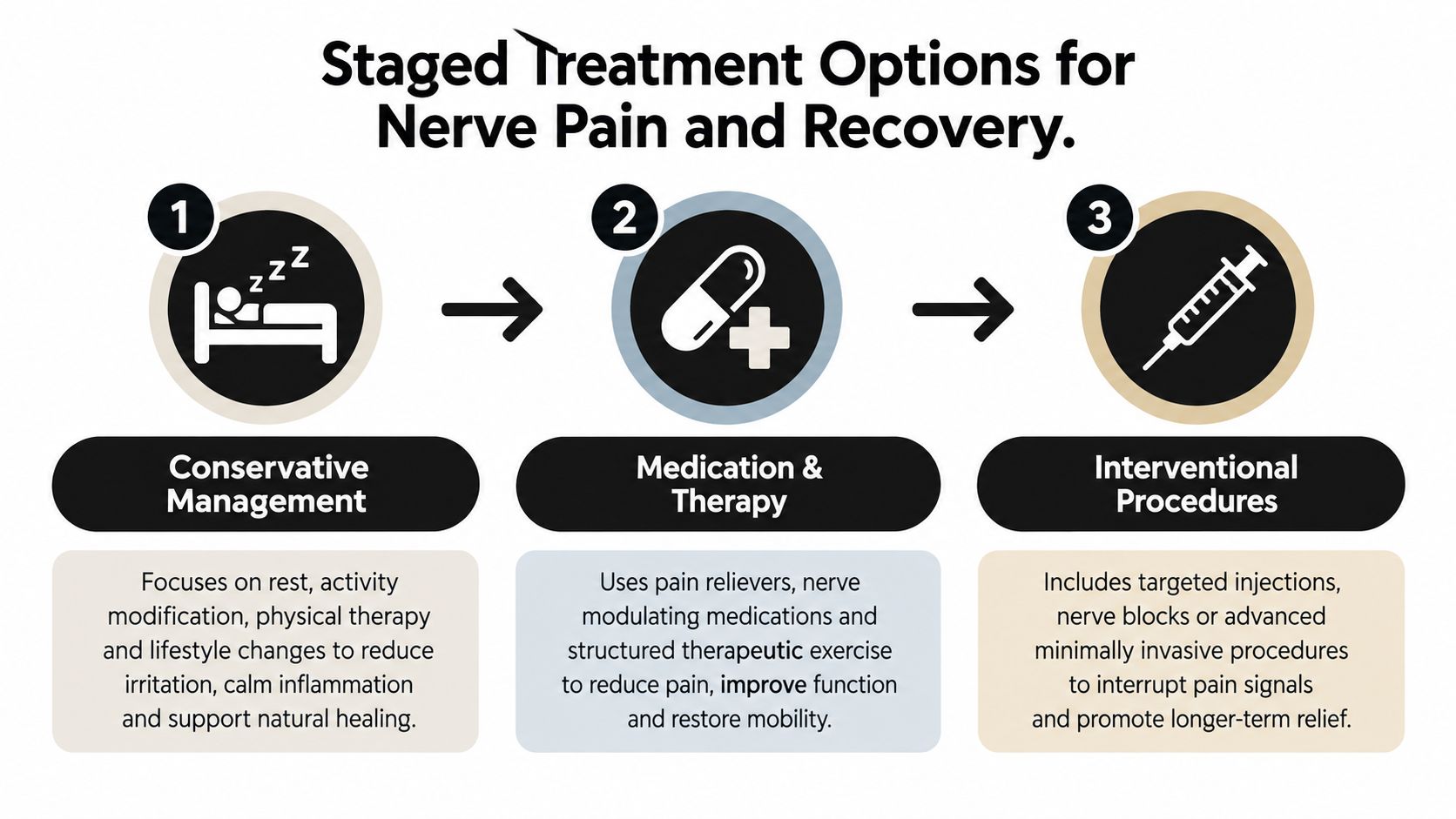
A patient may have burning pain, weakness, numbness, or pain triggered by movement. Each symptom points to a different treatment target. Medication can reduce neuropathic pain without removing mechanical compression. An injection can calm inflammation and improve movement without repairing a damaged nerve. Treatment should therefore match the suspected pain mechanism, examination findings, imaging, and functional goals.
Start with the least invasive effective option
Conservative care may include activity modification, sleep support, therapeutic exercise, and a rehabilitation plan that preserves function without prolonged inactivity. Clinicians may consider non-opioid medication classes, including anticonvulsants or antidepressants used in appropriate patients for neuropathic pain. Selection depends on the diagnosis, other medications, kidney and liver health, fall risk, mood, and treatment goals.
If pain remains connected to a specific spinal structure, image-guided procedures can provide both diagnostic information and symptom relief. Options may include epidural steroid injections for selected pain caused by disc herniation or stenosis, along with targeted nerve blocks. These nonsurgical approaches are also summarized by a spine pain treatment center. The goal is to test a reasonable target and improve function, not to imply that an injection regenerates a nerve.
Match the procedure to the pain generator
A medial branch block can help determine whether facet joints contribute to back or neck pain. If diagnostic blocks provide appropriate temporary relief, radiofrequency neuroablation may be considered for longer-lasting management of selected facet-mediated pain. Other options include sacroiliac joint procedures, transforaminal epidural injections, therapeutic nerve blocks, and spinal cord stimulation. A general overview of these procedures is available from the University of Chicago Medicine's spine center.
These procedures serve different purposes. An epidural injection targets inflammation around a nerve root. Radiofrequency treatment addresses selected pain signals from small sensory nerves. Spinal cord stimulation may be considered as an adjunct for carefully evaluated chronic pain. It does not repair a severed spinal cord or guarantee normal nerve function. A review of neuromodulation and regenerative strategies likewise supports individualized selection and the need for stronger human evidence.
Practical rule: Choose an intervention because the examination and diagnostic evidence support its target, not because the procedure sounds more advanced.
The distinction between spinal cord injury and peripheral nerve damage matters here. Interventional treatment may reduce pain or improve tolerance for movement, but it should not be presented as a method for restoring every lost neurologic function. The expected benefit depends on whether the problem is inflammation, compression, abnormal joint pain, or an established spinal cord injury.
Regenerative therapies, including platelet-rich plasma and cell-based approaches, remain under investigation. No FDA-approved therapy can reliably induce neurological recovery after spinal cord injury, particularly in motor-complete injuries, and many proposed treatments remain preclinical or in early-stage clinical trials, according to this review of emerging spinal cord injury therapies. Careful consent should cover uncertainty, possible risks, cost, and the difference between symptom relief and nerve repair.
Rehabilitation Strategies That Support Nerve Healing
A patient may begin with severe weakness, guarded movement, and pain that makes every task feel unsafe. The early rehabilitation priority is often preservation. Range-of-motion exercises, stretching, positioning, bracing, and gait-assist devices can help protect joints and maintain the physical capacity needed if nerve function returns.
As movement improves, the emphasis changes. Therapy may shift toward controlled strengthening, balance, walking practice, hand function, endurance, and task-specific activities. The plan shouldn't remain fixed while the patient's neurologic status changes.
The rehabilitation plan should evolve
For traumatic spinal injury, the fastest motor gains typically occur during the first 3 months, while persistent neurologic dysfunction at 6 to 9 months is often permanent. ASIA grade can still improve by one grade for up to 1 year after injury, so a slower recovery curve doesn't automatically mean that all potential has ended. These timelines and recommendations support early, actively adjusted rehabilitation.
A useful progression may include:
- Protect movement: Maintain joint mobility, manage swelling, and prevent contractures.
- Restore control: Practice the specific movements that are beginning to return.
- Build function: Use the recovering limb or leg in meaningful daily tasks.
- Manage barriers: Address spasticity, pain, fatigue, fear, and poor balance.
Pain control matters because uncontrolled pain can prevent effective participation. Spasticity may require medical management, stretching, bracing, or changes in positioning. A pain specialist, surgeon, primary care clinician, and rehabilitation team should share relevant findings so that treatment doesn't pull in conflicting directions.
Emotional recovery deserves attention too. Trauma, loss of independence, and uncertainty can affect sleep, motivation, and adherence. Patients who need additional psychological support may find trauma counselling services useful alongside medical and rehabilitation care.
When to Seek Specialty Interventional Pain Care
Persistent nerve pain deserves a structured evaluation when it interferes with sleep, walking, work, self-care, or participation in rehabilitation. Specialty care is especially appropriate when initial medication and activity changes haven't provided enough relief, when the suspected pain generator remains unclear, or when symptoms continue despite an apparently healed surgical site.
Some symptoms require urgent medical attention rather than a routine pain consultation:
- Progressive weakness: New or worsening loss of strength can signal ongoing nerve compromise.
- Bowel or bladder changes: Loss of control or a major change in function requires prompt assessment.
- Rapidly spreading numbness: Expanding sensory loss should not be ignored.
- Severe unresponsive pain: Pain that escalates despite initial treatment may require reassessment of the diagnosis.
- New gait or balance problems: Falls, leg collapse, or sudden coordination changes need timely evaluation.
A board-certified interventional pain specialist typically reviews the history, neurologic examination, imaging, prior procedures, medications, and functional goals. The resulting plan may combine targeted injections, nerve blocks, medication adjustments, rehabilitation coordination, radiofrequency procedures, neuromodulation, or minimally invasive decompression when the clinical findings support those choices.
For residents of Chicago Ridge, Illinois, Palos Heights, Illinois, Palos Hills, Illinois, Evergreen Park, Illinois, and Hickory Hills, Illinois, the practical question is not just whether pain has lasted "long enough." It's whether the current plan is improving function, protecting neurologic health, and addressing the actual source of symptoms. A pain and wellness clinic should provide interventional pain care and coordinated guidance, not present itself as a physical therapy practice or promise complete nerve regeneration.
Midwest Pain & Wellness provides personalized, opioid-sparing evaluation and treatment for spine and nerve pain, including image-guided injections, nerve blocks, radiofrequency ablation, spinal cord stimulation, and other minimally invasive options when appropriate. Visit Midwest Pain & Wellness to request an evaluation and discuss a recovery plan based on your symptoms, examination, and functional goals.