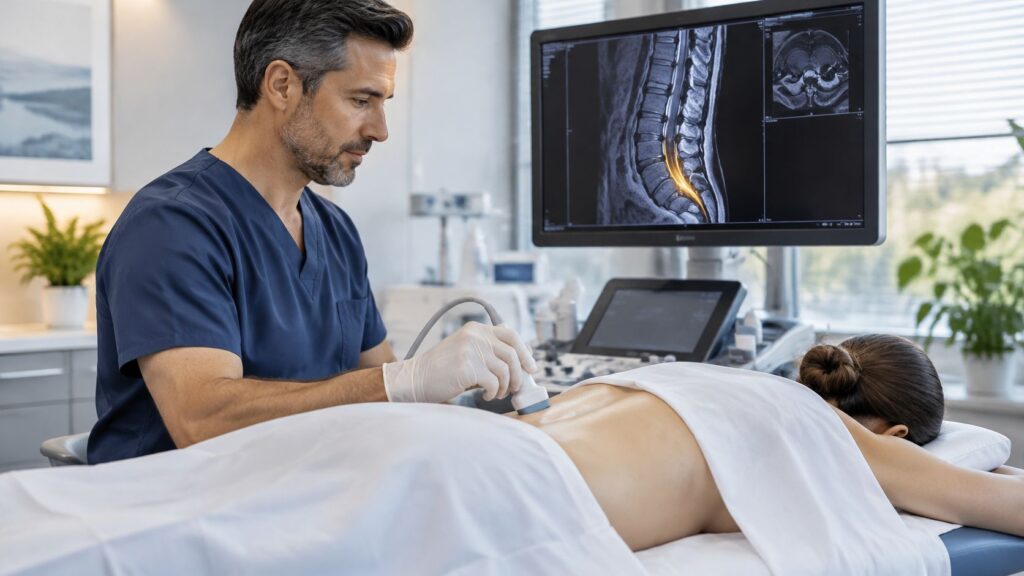
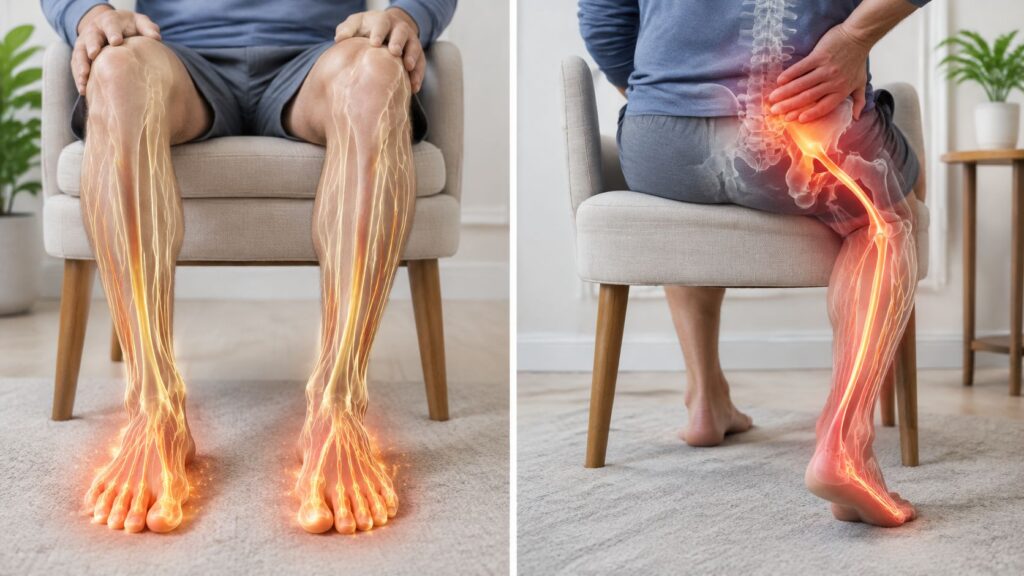
You get your MRI report, scan the words, and one phrase jumps out: “bulging disc” or “herniated disc.” For those in Chicago Ridge and nearby communities like Oak Lawn, Palos Hills, Palos Heights, Worth, Bridgeview, Hickory Hills, Alsip, Burbank, Evergreen Park, and Orland Park, that label raises common questions. Is this serious? Will it heal? Do I need injections or surgery? Did I permanently damage my back?
The most important answer is also the one patients hear the least: the label on the MRI matters less than what the disc is doing to your nerves and your function. Two people can have very different MRI wording and feel very similar pain. One person with a “bulge” can hurt badly. Another with a “herniation” can improve quickly.
That's why an interventional pain specialist doesn't treat a scan in isolation. We treat the pain pattern, the nerve irritation, the weakness, the numbness, the sleep disruption, and the way your symptoms limit daily life. That's the difference between reading a report and building a treatment plan.
Your Back Pain Diagnosis Explained
A common scenario goes like this. Someone has back pain for a few weeks, then pain starts shooting into the hip or down the leg. Their primary doctor orders imaging. The report comes back with unfamiliar language, and suddenly they're searching every possible meaning of “bulging disc vs herniated disc.”
The first thing to know is that these terms describe anatomy, not destiny. Research indicates that the severity of pain and functional impairment doesn't reliably correlate with whether imaging shows a bulge or a herniation, because both are part of the same continuum of disc degeneration and can produce similar symptoms through related mechanisms, as noted in this discussion of bulging discs and herniated discs.
That point matters because people often assume a herniation must always be “worse.” Clinically, that isn't how real patients present. A small focal problem in the wrong place can create major nerve pain. A larger-looking abnormality may cause much less trouble if it isn't inflaming or compressing a sensitive nerve root.
What patients usually want to know
| Question | What usually matters most |
|---|---|
| Is a bulging disc better than a herniated disc? | Not automatically. Symptoms and nerve involvement matter more than the wording alone. |
| Why does my MRI sound scary if I can still walk? | Imaging can look dramatic while symptoms stay manageable. |
| Why am I hurting so much if my report says “bulge”? | A contained disc problem can still press on or irritate a nerve. |
| What guides treatment first? | Pain pattern, exam findings, and how much the problem limits function. |
Clinical reality: The scan helps confirm the diagnosis, but your treatment path is driven by symptoms, physical findings, and response to care.
If you're trying to make sense of your report, it helps to understand how back pain is diagnosed from the full clinical picture, not just one imaging phrase. That's the difference between anxiety and a plan.
The question behind the question
When patients ask whether they have a bulging disc or a herniated disc, what they're really asking is this: “What does this mean for my recovery?” That's the right question. The answer usually depends on whether the disc is causing local back pain, radiating leg pain, numbness, tingling, or weakness, and whether those symptoms are getting better, staying the same, or progressing.
Bulging vs Herniated An Anatomical Comparison
A lot of anxiety starts with one line on an MRI report. A patient reads “bulging disc” or “herniated disc” and assumes one label guarantees a worse outcome. In practice, the anatomy matters, but it does not decide treatment by itself.
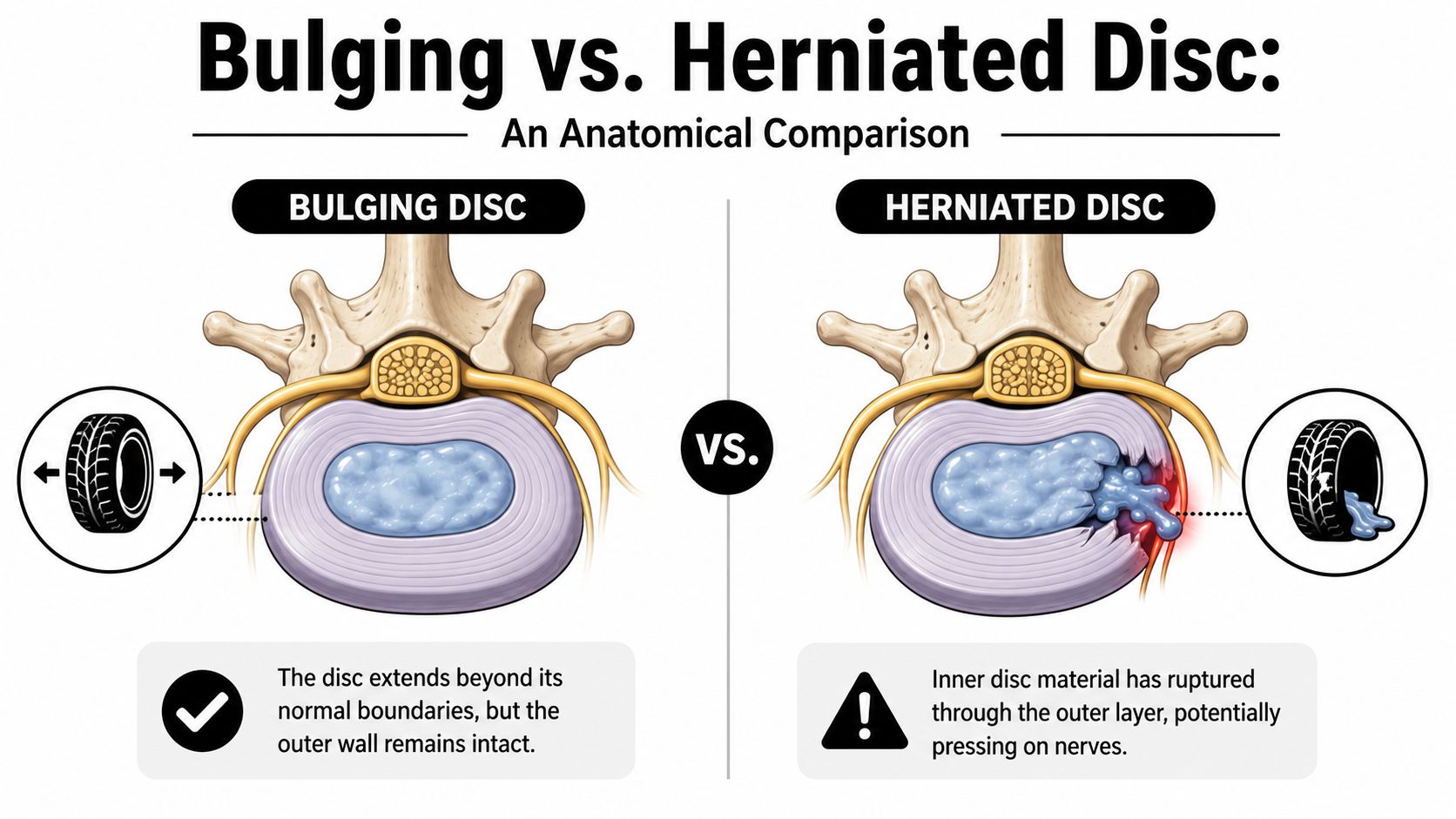
Each spinal disc has a tough outer ring called the annulus fibrosus and a softer center called the nucleus pulposus. A bulging disc means the disc extends outward more broadly, but the outer ring remains contained. A herniated disc means there is a tear in the outer ring, and disc material pushes through that weak spot.
That is the structural difference.
A simple tire comparison helps. A bulging disc works like a tire sidewall that bows outward but stays closed. A herniated disc is closer to a defect in the tire wall where material pushes through. The second pattern can irritate a nearby nerve more easily, especially if the disc material reaches the nerve root or triggers inflammation around it.
Side by side comparison
| Feature | Bulging disc | Herniated disc |
|---|---|---|
| Outer layer | Intact | Torn or ruptured |
| Shape | Broad, diffuse extension | Focal protrusion or extrusion |
| Inner material | Contained | Extends beyond the outer layer |
| Nerve irritation | Possible | Often more likely |
This distinction helps explain the MRI. It does not tell the whole story about pain.
I often explain it this way to patients: a small herniation in the wrong location can cause severe sciatica, while a larger bulge may cause very little trouble. The report describes structure. Your symptoms tell us whether that structure is irritating a nerve, inflaming surrounding tissue, or showing age-related wear that does not need aggressive treatment.
Why this difference matters clinically
A herniated disc has more potential to inflame or compress a nerve because the inner disc material is no longer fully contained. A bulging disc can still cause significant symptoms if it narrows the space around a nerve root. Location matters. Inflammation matters. The degree of nerve irritation matters most.
That is why I do not treat the word “bulge” or “herniation” in isolation. I treat the patient in front of me. If the main issue is radiating leg pain, numbness, or weakness, the next step is based on how the nerve is behaving, not on which label sounds more serious on paper. If your symptoms fit that pattern, it helps to understand how sciatica is treated and managed.
A bulging disc is a contained disc contour change. A herniated disc is a break in the outer wall with disc material extending through it.
For many patients, that is reassuring. One diagnosis is not automatically “better” or “worse.” The more useful question is whether the disc is driving your pain, how much nerve irritation is present, and what that means for recovery.
Decoding Your Symptoms Radiating Pain vs Local Aches
What you feel often tells us more than the label itself.
A bulging disc may cause a deep, local ache in the back or neck. Some patients describe stiffness, pressure, or a pain that's worse after sitting, bending, or getting up from a chair. That pattern often fits mechanical compression, where the disc contour changes enough to disturb nearby structures.
A herniated disc more often creates sharp, radiating pain because leaked disc material can trigger chemical irritation around a nerve root, not just physical pressure. That's one reason herniated discs often produce burning, shooting, or electric pain down the arm or leg.

Symptoms that often point toward nerve irritation
- Radiating leg pain: Pain travels from the low back into the buttock, thigh, calf, or foot.
- Tingling or numbness: The nerve isn't just irritated. It may also be signaling abnormally.
- Pain with coughing or sneezing: Pressure changes can aggravate an already sensitive nerve root.
- Weakness: Trouble lifting the foot, rising onto the toes, or pushing off can be more concerning than pain alone.
If that pattern sounds familiar, it helps to understand how sciatica is managed and why radiating pain often needs a different conversation than simple back strain.
Symptoms overlap more than people expect
This isn't a strict rulebook. A bulging disc can cause severe radiating pain if it narrows space around a nerve. A herniated disc can sometimes cause mostly local pain. The location and inflammatory response matter.
That's why I tell patients to pay attention to the pattern more than the terminology:
- Is the pain staying in the back, or traveling?
- Is there numbness, tingling, or weakness?
- Is sitting clearly worse than walking?
- Are symptoms improving, or becoming more constant?
The word on the report matters less than whether the nerve is angry.
What symptoms change the treatment conversation
Local soreness without neurologic symptoms often starts with activity modification, anti-inflammatory treatment, and guided rehabilitation. Sharp radiating pain, sensory change, or weakness pushes us to look more closely at nerve involvement and whether targeted procedures may calm the inflammation faster.
That's why this distinction matters. Not because one term is always worse, but because different symptom patterns point toward different treatment priorities.
The Diagnostic Path From Exam to MRI
A patient will often arrive worried because the MRI report says one thing and a friend's report says another. The first step is to slow that down. Before any scan matters, the diagnosis has to match the actual pattern of pain, numbness, weakness, and function loss.
In clinic, the work starts with the history and exam. I want to know where the pain began, whether it stays in the back or shoots into the leg, what positions aggravate it, and whether there is numbness, tingling, or true weakness. Then I check strength, reflexes, sensation, walking pattern, and movements that reproduce symptoms. That combination usually tells me more about the irritated structure than the MRI label by itself.
What the exam adds that the MRI cannot
The physical exam helps answer the question patients really care about. Is this disc finding causing the symptoms, or is it just something the scan happened to pick up?
Several parts of the exam help sort that out:
- Strength testing shows whether nerve irritation is affecting muscle function.
- Reflex changes can support a specific nerve root pattern.
- Sensory findings help map symptoms to the most likely level.
- Provocative testing helps distinguish pain reproduced by nerve tension from pain that stays more mechanical and localized.
Structured symptom tracking can also make the visit more useful, especially for patients who have trouble describing patterns over time. A guided intake tool such as the Diagnoo product can help patients organize what they are feeling before the appointment.
When MRI helps, and what it actually tells us
MRI is the best imaging study for looking at discs, nerves, and other soft tissues when imaging is needed. It can show whether the disc contour is broad-based, focal, protruding, or extruded, and whether nearby nerve tissue looks crowded or inflamed.
That said, MRI is a structure test. It does not measure pain. It does not tell us how irritated a nerve is on a given day. It also does not prove that the most dramatic finding on the report is the one driving symptoms.
Radiology reports often describe a bulging disc as a broader extension of disc material beyond the usual disc margin, while a herniated disc is more focal, with disc material pushing farther out through a weaker area of the outer layer. Those definitions help with anatomy, but they do not reliably predict who will hurt more, who will recover faster, or who will need an injection.
The practical takeaway
A useful diagnosis comes from matching the exam to the imaging, not from reacting to a single word on the report.
I see this often. One patient with a modest bulge has severe leg pain because the nerve is inflamed in a tight space. Another has a larger herniation on MRI and very manageable symptoms. The treatment plan follows the clinical picture first, then the scan.
That is why the diagnosis process moves from symptoms, to exam, to MRI, in that order.
When to Seek Specialty Pain Management
A common scenario is this. Your MRI report mentions a bulging disc or a herniated disc, and the wording sounds alarming. What matters more at this stage is whether your symptoms are settling, staying stuck, or starting to affect strength, walking, sleep, or bowel and bladder function.
Many disc problems calm down with time and the right early care. Specialty pain management becomes useful when the pattern suggests ongoing nerve irritation, worsening function, or pain that is no longer responding to reasonable first steps. In practice, I am less concerned with the label on the scan than with whether the nerve is getting more irritated and whether your recovery has stalled.
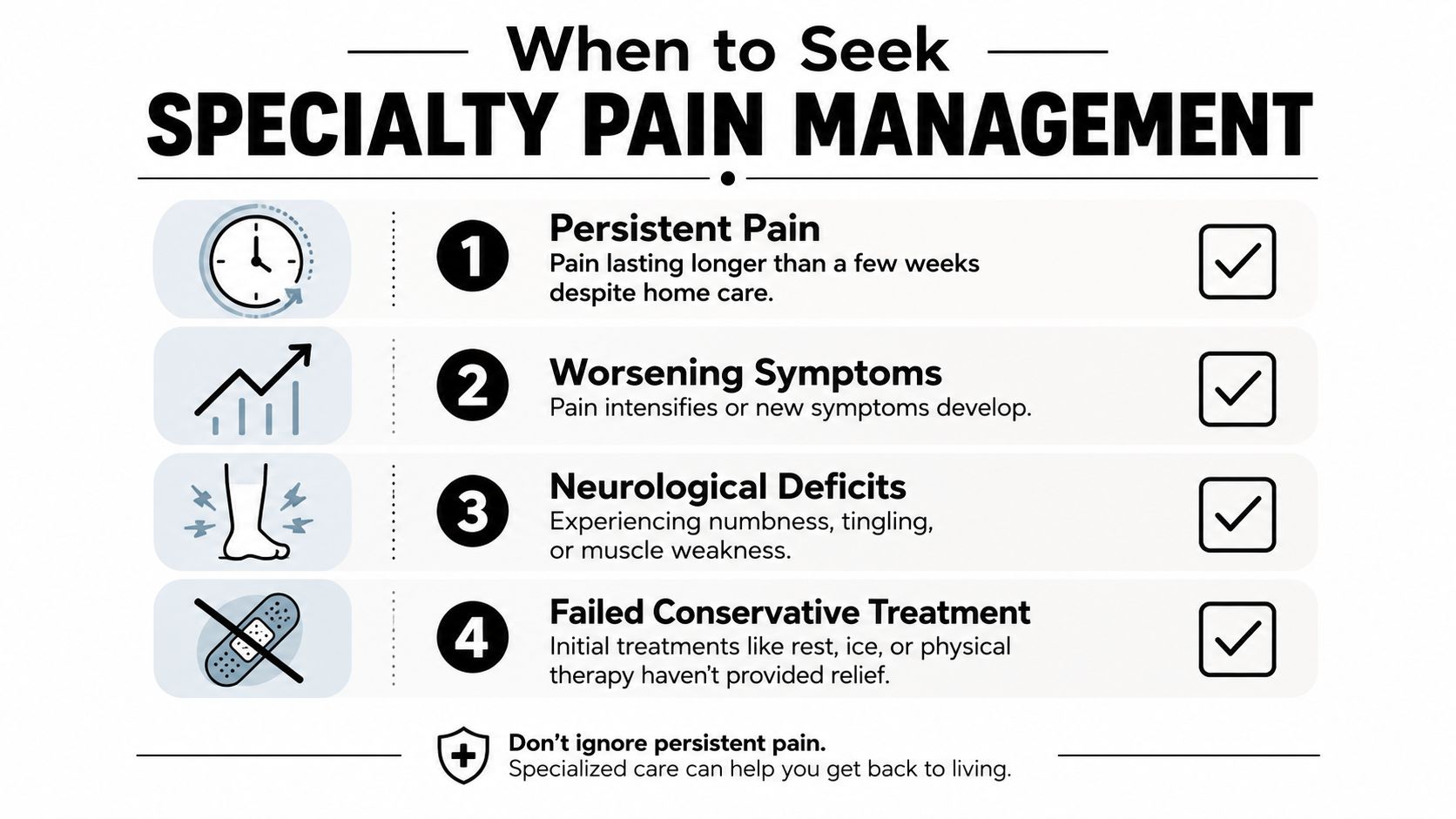
Signs that shouldn't be ignored
Some symptoms call for prompt evaluation because they can signal meaningful nerve involvement:
- Progressive weakness: If the leg, foot, or ankle is becoming less reliable, get assessed promptly.
- Loss of bowel or bladder control: This needs urgent medical attention.
- Severe pain that does not let up: Constant pain that stays intense despite rest and medication deserves a closer look.
- Expanding numbness or tingling: Symptoms that are spreading carry more weight than symptoms that are stable and mild.
Those findings do not automatically mean surgery. They do mean the situation needs a more focused evaluation than routine watchful waiting.
The 4 to 6 week benchmark
A short trial of conservative care is often reasonable when pain is improving and there is no progressive neurologic deficit. If you are still significantly limited after 4 to 6 weeks of appropriate treatment, it is time to reconsider the plan.
That does not mean home care failed. It means the current strategy has not reduced the nerve irritation enough, or the pain generator is more persistent than it first appeared. A treatment plan for degenerative disc disease that combines symptom relief with longer-term spine support can help frame what that next step may look like.
A practical rule is simple. Seek specialty care sooner if radiating pain is disrupting sleep, work, or walking, or if numbness and weakness are entering the picture.
What specialty pain management adds
Specialty pain management helps sort out what is driving the pain. The question is not just bulge versus herniation. The key question is whether the pain is mostly inflammatory, mostly compressive, mostly mechanical, or a combination.
That distinction changes treatment decisions. A patient with primarily axial low back pain may need a different strategy than someone with sharp leg pain from an irritated nerve root. In some cases, image-guided treatment can reduce inflammation enough to let physical therapy work again and help a patient avoid a more invasive step.
The goal is clarity, pain control, and a treatment path that matches the symptoms in front of you.
A Modern Approach to Treatment Conservative to Interventional
Disc treatment works best when it's layered, not one-dimensional.
Most patients don't need a dramatic intervention on day one. They need a plan that starts with the least invasive options that match the symptom pattern, then escalates only if the response is incomplete. For bulging disc vs herniated disc, that matters because the right treatment isn't chosen by the MRI label alone. It's chosen by the clinical problem in front of you.
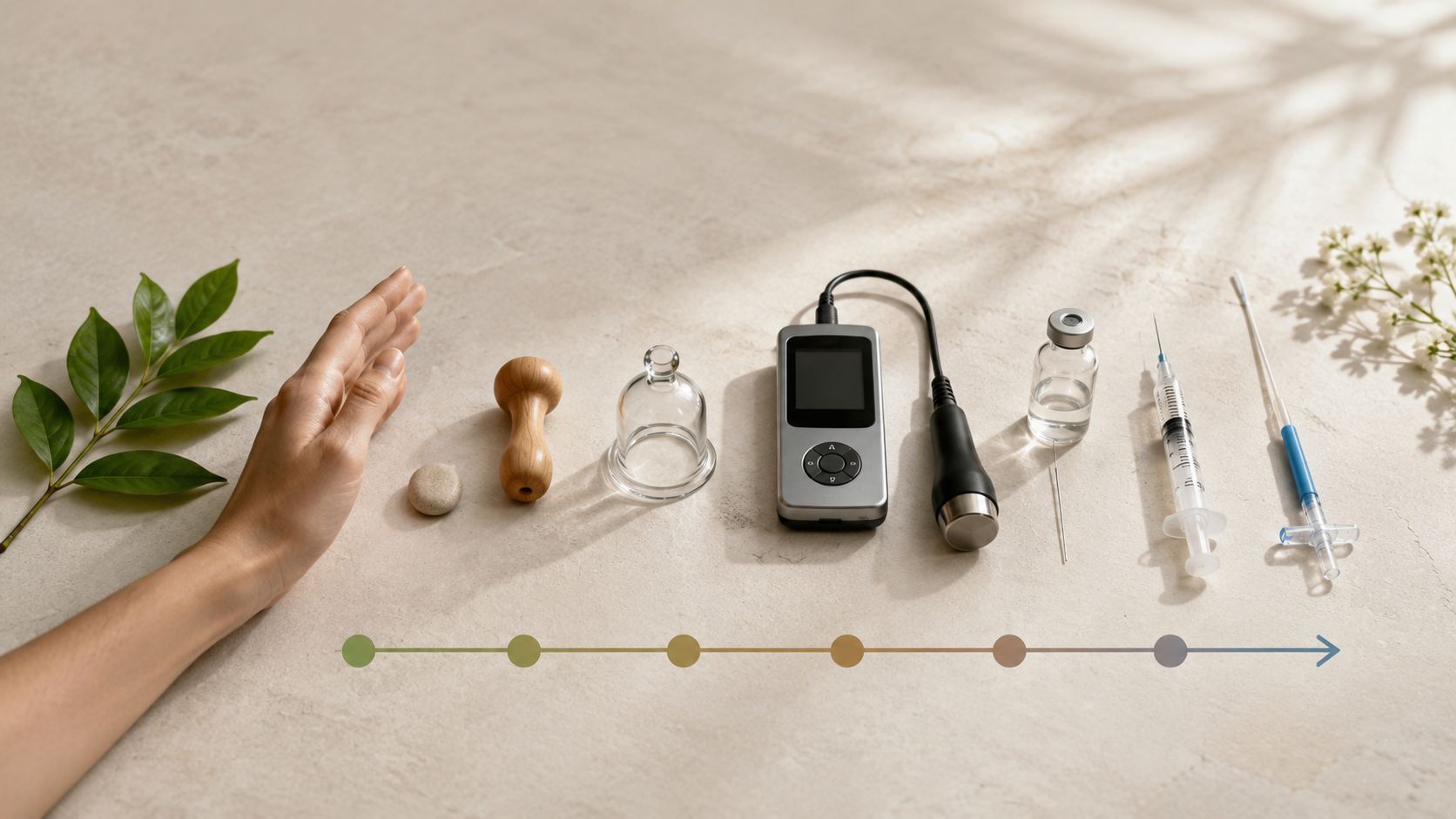
The first layer of care
For many patients, treatment begins with a combination of:
- Activity modification: Not bed rest, but reducing movements that repeatedly flare the nerve or disc.
- Anti-inflammatory strategies: These can help settle irritated tissues enough to restore movement.
- Guided rehabilitation: Coordinated physical therapy can improve mechanics, support the spine, and reduce repeated aggravation.
For degenerative disc-related pain, long-term planning matters too. This overview of treatment for degenerative disc disease gives a helpful sense of how spine care often combines symptom control with durability.
When conservative care isn't enough
Some patients hit a wall. Their pain may improve a little, then return every time they sit, drive, or bend. Others can't participate in therapy well enough because the inflamed nerve keeps firing.
That's where interventional pain care becomes useful.
- Epidural steroid injections can reduce inflammation around an irritated nerve root.
- Medial branch blocks and radiofrequency ablation may help when the pain generator is more facet-related than disc-driven.
- Targeted procedures for spinal stenosis, such as MILD or Vertiflex, may be appropriate when narrowing around the nerves is a major contributor to symptoms.
What works and what usually doesn't
A few practical truths matter here.
What often works
- Matching treatment to the pain pattern.
- Using image-guided procedures when nerve inflammation is the main driver.
- Building a plan that restores walking, sleep, and daily function.
What often doesn't
- Treating every MRI abnormality as if it needs the same intervention.
- Repeating passive care forever without reassessing the diagnosis.
- Assuming stronger pain medicine fixes a structural or inflammatory problem.
The best plan is the one that helps you move better, hurt less, and avoid unnecessary escalation.
A modern pain clinic isn't replacing conservative care. It's coordinating it, then stepping in with more precise treatment when the basics stop moving the patient forward.
Common Patient Questions Answered
A patient will often come in worried after reading an MRI report that says herniated disc, convinced surgery is next. In practice, that is not how this usually goes. Many disc-related pain flare-ups improve with time, the right activity changes, physical therapy, medications, and, when needed, targeted injections.
Can a bulging disc turn into a herniated disc
Yes, it can. A bulging disc and a herniated disc are often part of the same wear-and-tear process, and a disc can change over time.
What matters more than that wording change is what your body is doing right now. If your pain is easing, your strength is stable, and the leg symptoms are settling down, the label matters much less. If pain is spreading, numbness is increasing, or weakness is appearing, that changes the treatment conversation.
If my MRI says herniated disc, do I need surgery
Usually, no.
I tell patients to focus less on the word herniated and more on three questions. Is the pain improving. Is the nerve irritated enough to cause true weakness or persistent numbness. Have reasonable nonsurgical treatments helped you function again.
Surgery is generally reserved for a narrower group of patients. That includes people with progressive neurologic loss, pain that remains disabling despite appropriate treatment, or red-flag symptoms such as loss of bowel or bladder control. For everyone else, the first step is usually a structured nonsurgical plan.
Why does a “small” disc problem hurt so much
Because pain is driven by nerve contact and inflammation, not by size alone.
A small disc abnormality can be very painful if it sits directly against a sensitive nerve root. A larger-looking bulge may cause very little trouble if it is not creating much pressure or inflammation. This is one of the biggest reasons MRI language can be misleading without a proper exam. The scan describes anatomy. Your symptoms tell us whether that anatomy is the pain generator.
A mild-looking MRI can still match severe sciatica. A dramatic-looking MRI can be surprisingly quiet.
What should recovery look like
Recovery is usually gradual, not instant. The first sign of progress is often less constant pain. After that, the radiating pain may travel less far down the leg, sitting becomes more tolerable, sleep improves, and daily movement feels less guarded.
There can be setbacks. A long drive, poor sleep, or doing too much too soon can stir symptoms up again. That does not always mean the disc is getting worse. It often means the nerve is still sensitive and needs more time, better pacing, or more targeted treatment.
The goal is not just to make the pain bearable. The goal is to restore walking, sitting, work tolerance, and confidence in movement while lowering the chance of another flare.
If back or leg pain is keeping you from working, sleeping, or moving normally, Midwest Pain & Wellness offers Chicago Ridge-area patients a focused, opioid-sparing approach to spine and nerve pain. Dr. Yaw Donkoh and the team provide personalized evaluations and interventional treatment plans for patients in Oak Lawn, Palos Hills, Palos Heights, Worth, Bridgeview, Hickory Hills, Alsip, Burbank, Evergreen Park, Orland Park, and surrounding Illinois communities.