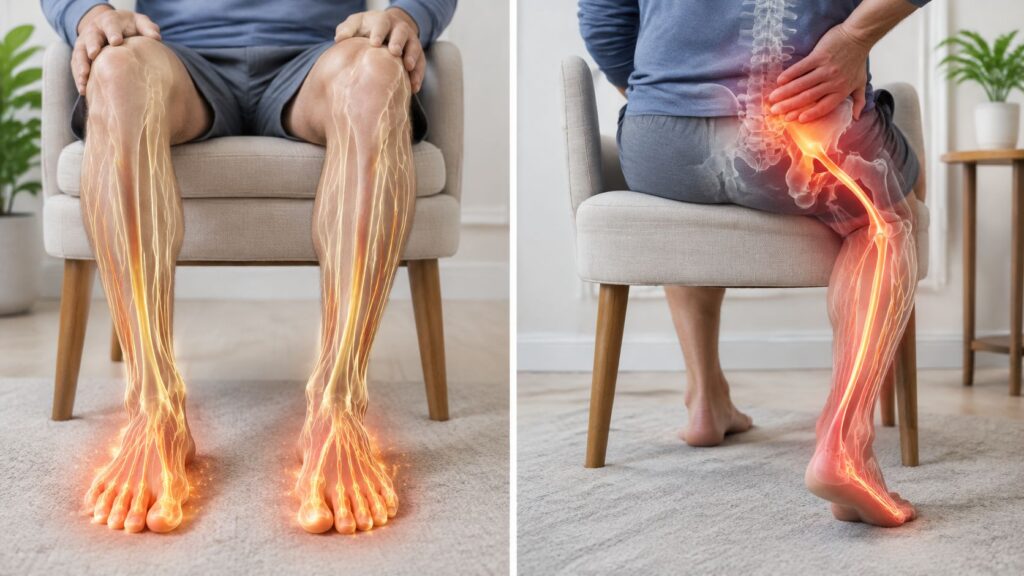
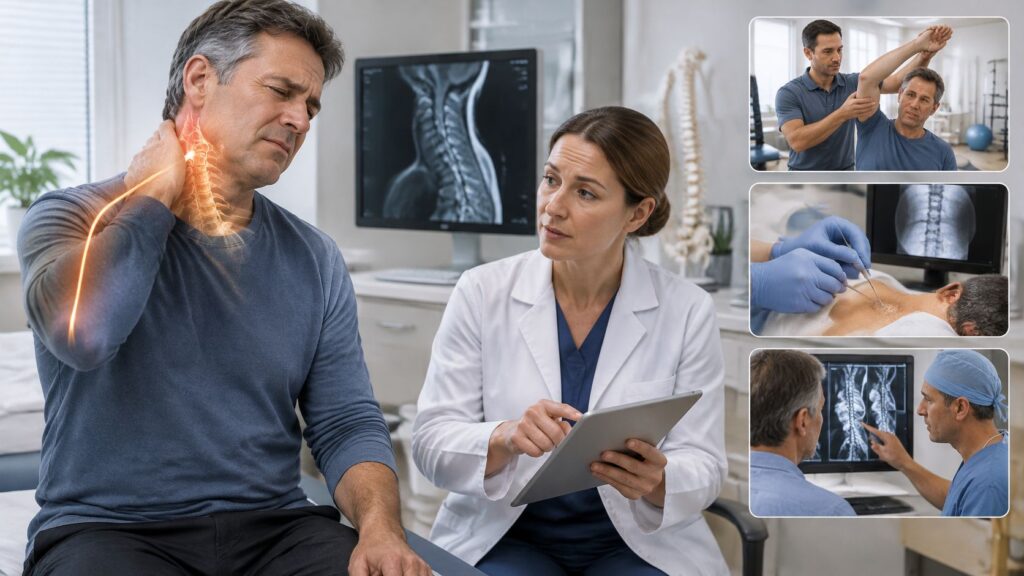
Interventional pain medicine is a medical specialty that diagnoses and treats persistent pain with targeted, usually image-guided procedures, often alongside rehabilitation, medication, and other nonprocedural care.
You're probably reading this because rest, heat, and medication haven't been enough. You can get through the day, but sitting at work, climbing stairs, or sleeping through the night has become harder than it used to be. Someone may have mentioned an injection, an ablation, or a specialist, and now you want to know what's being offered before you agree to anything.
A useful way to think about what is interventional pain medicine is as both treatment and test. A procedure targets one specific structure, and your response helps confirm whether that structure is causing your pain. If it doesn't help, that answer still points care in a better direction.
Table of Contents
- What Interventional Pain Medicine Is and Why It Exists
- Core Procedures and What Each One Targets
- How the Clinic Proceeds
- Matching Pain Patterns to the Right Procedure
- Benefits, Risks and What the Evidence Shows
- Booking Care in Chicago Ridge and Nearby Illinois Communities
What Interventional Pain Medicine Is and Why It Exists
You have tried physical therapy for your back, but certain movements still bring the same pain. At a visit, I would ask which structure might be driving it, then consider a targeted procedure that can both treat the pain and test that idea. The procedure's name identifies its target, not whether it will work for you.
A block that does not help is still useful information. It makes that suspected pain source less likely and can redirect the next step in care. A needle can reach the intended spot precisely and still provide no relief if that spot is not the source.
Why This Specialty Is Needed
Chronic pain can affect daily life and work, not just comfort. The U.S. National Center for Health Statistics reported that 24.3% of adults had chronic pain in 2023, up from 20.5% in 2019. 8.5% had high-impact chronic pain that frequently limited life or work activities, according to National Center for Health Statistics chronic pain data.
Low-back pain illustrates the scale of the problem worldwide. About 619 million people experienced it in 2020, roughly 1 in 13 people worldwide. It accounted for 8.1% of all-cause years lived with disability globally that year, according to National Center for Health Statistics chronic pain data.
Care often combines approaches, much like a team addressing different parts of the same problem. A procedure may calm an irritated nerve or test whether a joint is involved; rehabilitation can then work on movement and strength. Patients can also explore mind-body approaches to pain management to support coping, manage stress, and maintain daily function.
Where the Field Came From
Interventional pain medicine grew from regional anesthesia and nerve blockade. The first neural blockade and regional analgesia were introduced in 1884. Later, the hollow needle allowed anesthetic and analgesic agents to be delivered more precisely, as described in the history of interventional pain medicine.
A procedure can treat pain and test its source. Even when it brings no relief, the response can help guide care.
The specialty works alongside surgery and physical therapy. A pain and wellness clinic may perform a procedure, coordinate medication and follow-up, and refer you to a licensed physical therapist for rehabilitation. These parts of care have different roles, but can contribute to the same goal: improving daily function.
Core Procedures and What Each One Targets
A block may reduce your pain, or it may leave it unchanged. Either result gives the care team useful information: relief can support the suspected source, while no relief can redirect the search. A procedure name identifies the level, route, and target, and the benefit depends on whether that target is generating your pain.
The table summarizes what each procedure reaches and what it is intended to do. Target structure means the anatomy reached by the needle, probe, or device. Relief windows are general expectations, not promises for an individual patient.
| Procedure | Target structure | Main purpose | Typical relief window |
|---|---|---|---|
| Nerve block | A specific nerve or nerve group | Check whether the nerve is involved and provide short-term relief | Hours to days with local anesthetic alone |
| Epidural steroid injection | Space around the spinal nerve roots | Calm an inflamed, irritated nerve root | Weeks to months, varies by patient |
| Facet and medial branch block | Small spinal joints and their sensory nerves | Test whether facet joints drive the pain | Short-term; used as a diagnostic check |
| Radiofrequency ablation (RFA) | Medial branch nerves after a positive diagnostic block | Interrupt pain signals with a controlled heat lesion | Commonly several months to about a year |
| Spinal cord stimulation (SCS) | Spinal cord pain pathways via implanted leads | Modulate neuropathic pain signals | Ongoing while the device is in place; trial first |
| MILD (minimally invasive lumbar decompression) | Narrowed lumbar spinal canal | Relieve pressure on nerves through a small incision | Varies; assessed at follow-up visits |
| Kyphoplasty | Fractured vertebra from a compression fracture | Stabilize the bone and reduce fracture pain | Often early pain relief; varies by patient |
| PRP (platelet-rich plasma) | Tendons, joints and selected spine structures | Support tissue healing with the patient's own growth factors | Evidence mixed; usually judged over months |
For example, an epidural steroid injection places medication in the space around spinal nerve roots to calm irritation. Weeks to months describes a possible relief window, not a prediction for every patient with back pain.
Three Families of Procedures
- Diagnostic and short-term procedures: Nerve blocks and facet or medial branch blocks help test whether a suspected structure is contributing to pain. If a block does not help, that response is information that can guide the next step. For neck pain that may involve the small cervical joints, treatment options for facet-related neck pain explain the relationship between the joint, its sensory nerves, and diagnostic testing.
- Targeted treatments: Epidural steroid injections address inflammation near a nerve root. Radiofrequency ablation (RFA) targets medial branch nerves when diagnostic blocks support the facet joints as the pain source.
- Structural or device-based options: MILD addresses narrowing in the lumbar spinal canal, kyphoplasty stabilizes a fractured vertebra, and SCS is tested in a trial before an implant is considered.
PRP belongs to a separate, evolving category. It uses components from your own blood to support tissue healing. Evidence varies by condition, so the possible benefit should be discussed candidly.
Two procedures can sound similar while treating different problems. SCS starts with a trial, allowing you and your specialist to assess its effect before considering a permanent implant. Kyphoplasty stabilizes broken bone from a compression fracture; it does not treat a pinched nerve. Their targets determine what each procedure is meant to address.
Image guidance helps the clinician place a needle at the intended target. Learn how a fluoroscopy-guided injection uses imaging to confirm placement before medication is delivered. Illinois payer coding materials also distinguish procedures by level and route. For example, cervical or thoracic interlaminar epidural injections with imaging guidance are listed under CPT 62321, while cervical or thoracic transforaminal epidural injections include CPT 64479.
Those codes describe the procedure performed. They do not establish that the targeted structure is causing your pain. A block's effect, or lack of effect, helps interpret that possibility and shape the next decision.
How the Clinic Proceeds
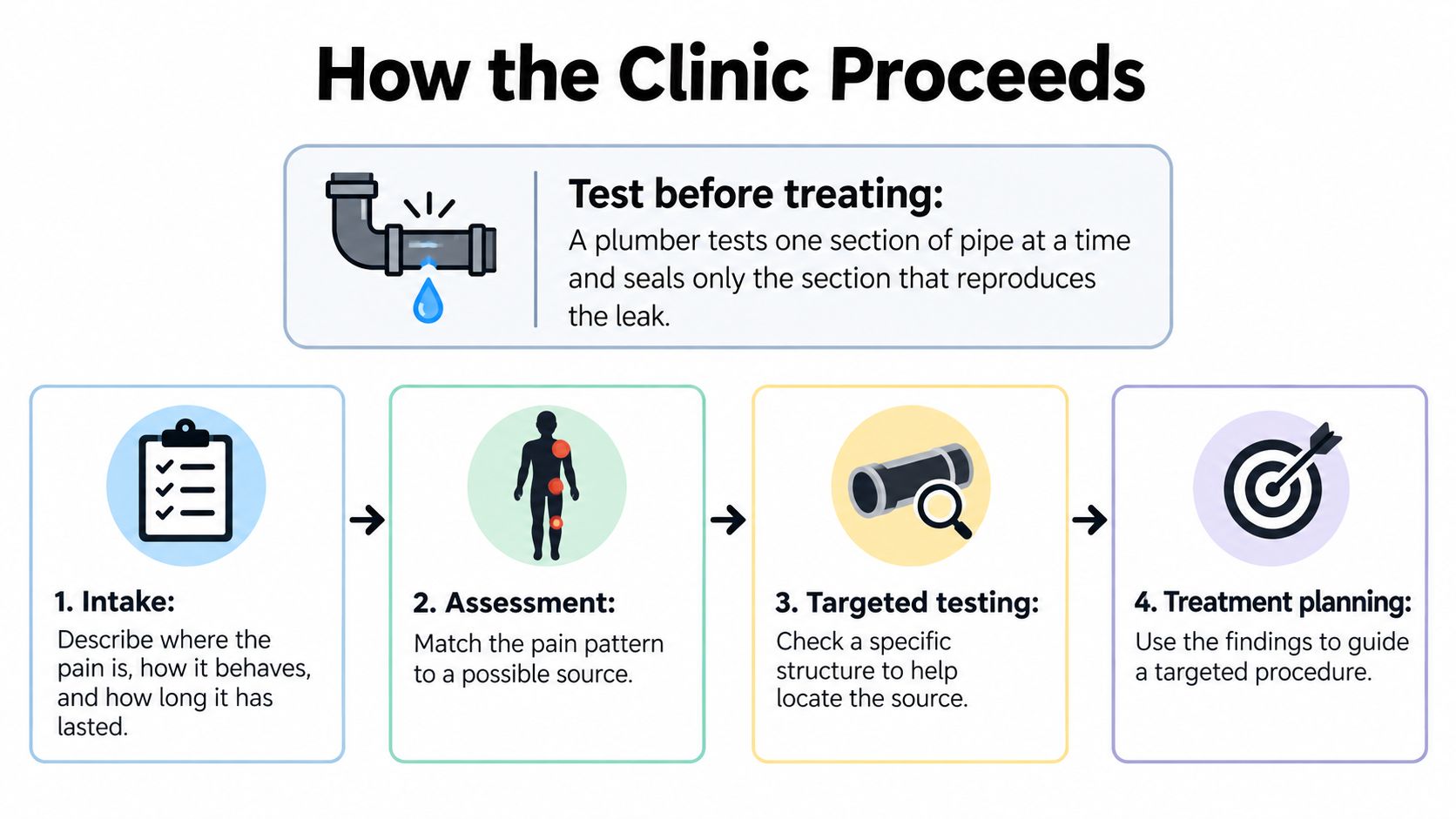
At the first visit, you describe what hurts, what brings the pain on, and what you can no longer do comfortably. The clinician uses those details, your examination, and your records to decide whether a specific structure is worth testing. Each procedure can serve as both a treatment and a test: its name identifies the target, while your response helps show whether that target matters in your case.
The Clinic Pathway Step by Step
- Intake and history review: You describe where the pain is, how it behaves, how long it has lasted, which treatments you have tried, and how it affects your daily function.
- Focused exam and records: The specialist checks movement, strength, sensation, and pain patterns, then reviews prior imaging and medical records for findings that fit.
- Image-guided diagnostic block: Fluoroscopy or ultrasound helps confirm that the needle and medication reach the intended target, improving anatomical precision, as described in StatPearls interventional pain management guidance.
- Your response record: You track pain and function over the following hours to days. Walking farther, turning your neck, or sitting through a meal can be as informative as a pain score.
- A clear, reproducible response: If the findings suggest facet-mediated pain, radiofrequency ablation may be considered. RFA uses high-frequency electrical energy in the 300 to 500 kHz range to create a controlled thermal lesion, according to StatPearls interventional pain management guidance.
- Written recommendation: The plan describes the proposed procedure, likely benefit, alternatives, risks, and how the team will judge the outcome.
- The therapeutic procedure: Image guidance helps the clinician reach the confirmed target, rather than choosing a site based only on where the pain feels strongest.
- Follow-up reassessment: The team reviews pain, function, medication use, sleep, and work capacity to decide whether to continue, adjust, or stop the plan.
A useful record makes the response easier to assess after the visit, when details can fade. The pain documentation resources from PatientNotes offer examples of how to record symptoms, response periods, and follow-up plans.
When a Block Does Not Help
A block that gives no relief still produces diagnostic information that redirects care. If numbing a structure does not change your usual pain during activities that normally bring it on, that structure becomes less likely to be the main source.
Practical rule: Judge a diagnostic block while the anesthetic should be working. Notice whether your familiar pain changes during the activities that usually trigger it.
The result may shift attention to another joint or nerve level, or toward rehabilitation, medication changes, or surgical evaluation. It can also help prevent a longer-lasting procedure from targeting a structure that does not appear to explain your symptoms.
Midwest Pain & Wellness in Chicago Ridge, Illinois is a pain and wellness clinic, not a physical therapy practice. It does not provide physical therapy. When rehabilitation is appropriate, the conservative plan can include referral to a licensed physical therapist, with care coordinated among surgeons, primary care providers, chiropractors, and rehabilitation therapists.
Before your first visit, write down what you want explained in plain language. These questions to ask a pain management doctor can help you ask what source is suspected, what test comes first, and how care may change if the test does not help.
Practical barriers also affect whether a plan can be completed. Transportation, insurance approvals, language needs, work schedules, and returning for staged visits are worth discussing early, so the team can account for them when arranging follow-up.
Matching Pain Patterns to the Right Procedure
If your back hurts more when you lean backward, but you have no leg pain, the pattern may point toward the small facet joints in the spine. The first step is a medial branch block, and radiofrequency ablation (RFA) enters the plan only after a convincing response. The name of a procedure tells you what it targets, not whether it will work for you.
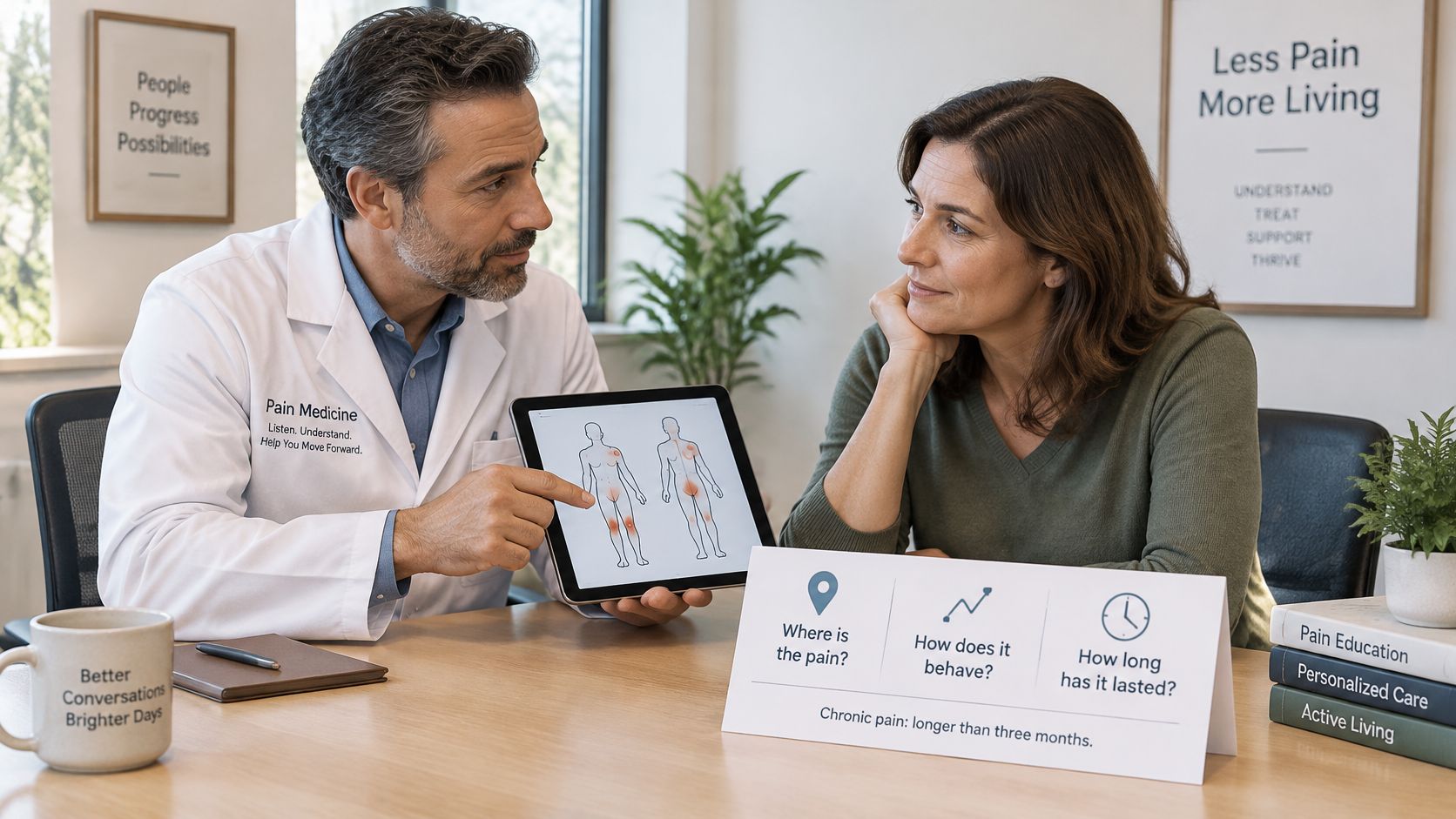
A clinician matches the location and behavior of your pain with examination findings and imaging. Pain lasting longer than three months is commonly defined as chronic. A scan can show age-related changes that are not causing symptoms, so the findings need to fit your pain pattern.
| Pain pattern | Procedure to discuss | Check before deciding |
|---|---|---|
| Leg pain with nerve-root signs | Epidural steroid injection | Imaging confirms nerve-root involvement |
| Low-back pain worse leaning backward, no leg pain | Medial branch block, then RFA if it responds | Positive diagnostic block response |
| Burning or electric pain after surgery or nerve injury | Spinal cord stimulation trial | Conservative care has not worked; neuropathic features present |
| Leg pain with walking that eases when sitting | MILD for lumbar stenosis | Imaging matches the walking-related symptoms |
| Sudden back pain with osteoporotic compression fracture | Kyphoplasty | Imaging confirms a fresh vertebral fracture |
| Tendon or knee osteoarthritis pain | PRP within a multimodal plan | Evidence is mixed; discuss expected benefit |
| Widespread pain with no identifiable structure | Usually not a procedure candidate | Medication, rehabilitation and behavioral care first |
A block is both a treatment and a test. It temporarily numbs a targeted nerve, much like checking one switch to see whether it controls a particular light. If your usual pain does not improve during the expected window, that result is useful: it suggests the suspected source may not be the main driver and can redirect the next step in care.
Three Illustrative Cases
These composite examples show how a pain pattern can guide discussion. They are not promises of a particular result.
- Leg pain at age 52: Pain travels below the knee, examination shows nerve-root signs, and imaging fits the symptoms. An epidural steroid injection targets the irritated nerve root. If pain eases, rehabilitation with a licensed physical therapist can help the patient rebuild movement.
- Facet-pattern pain at age 64: Back pain worsens with leaning backward, without leg pain. A medial branch block provides clear, short-term relief, so RFA is discussed as a possible next step. The aim is to create an opportunity to rebuild walking tolerance, though relief is not guaranteed.
- Compression fracture at age 71: Sudden back pain is traced to a fresh osteoporotic vertebral fracture on imaging. Kyphoplasty may be discussed to stabilize the bone, rather than treating the pain as nerve inflammation.
The same test-first idea applies to spinal cord stimulation. A 2025 single-center study of 505 adults undergoing spinal cord stimulation trials reported an 86.1% trial-success rate, according to Journal of Pain Research spinal cord stimulation trial results. A trial lets a patient assess pain and daily function before permanent implantation is considered. The study result cannot predict an individual patient's response.
Each plan should match a suspected source, start with an appropriate option, and include reassessment. Widespread pain without an identifiable structure usually calls for care such as medication, rehabilitation, or behavioral support rather than a targeted procedure.
Some symptoms need urgent medical evaluation before a routine procedure is considered. Seek prompt care for fever with back pain, unexplained weight loss, or new bladder, bowel, or leg weakness.
Benefits, Risks and What the Evidence Shows
Some procedures help selected pain patterns. Others don't. The honest starting point is that minimally invasive describes access to the body, not guaranteed benefit.
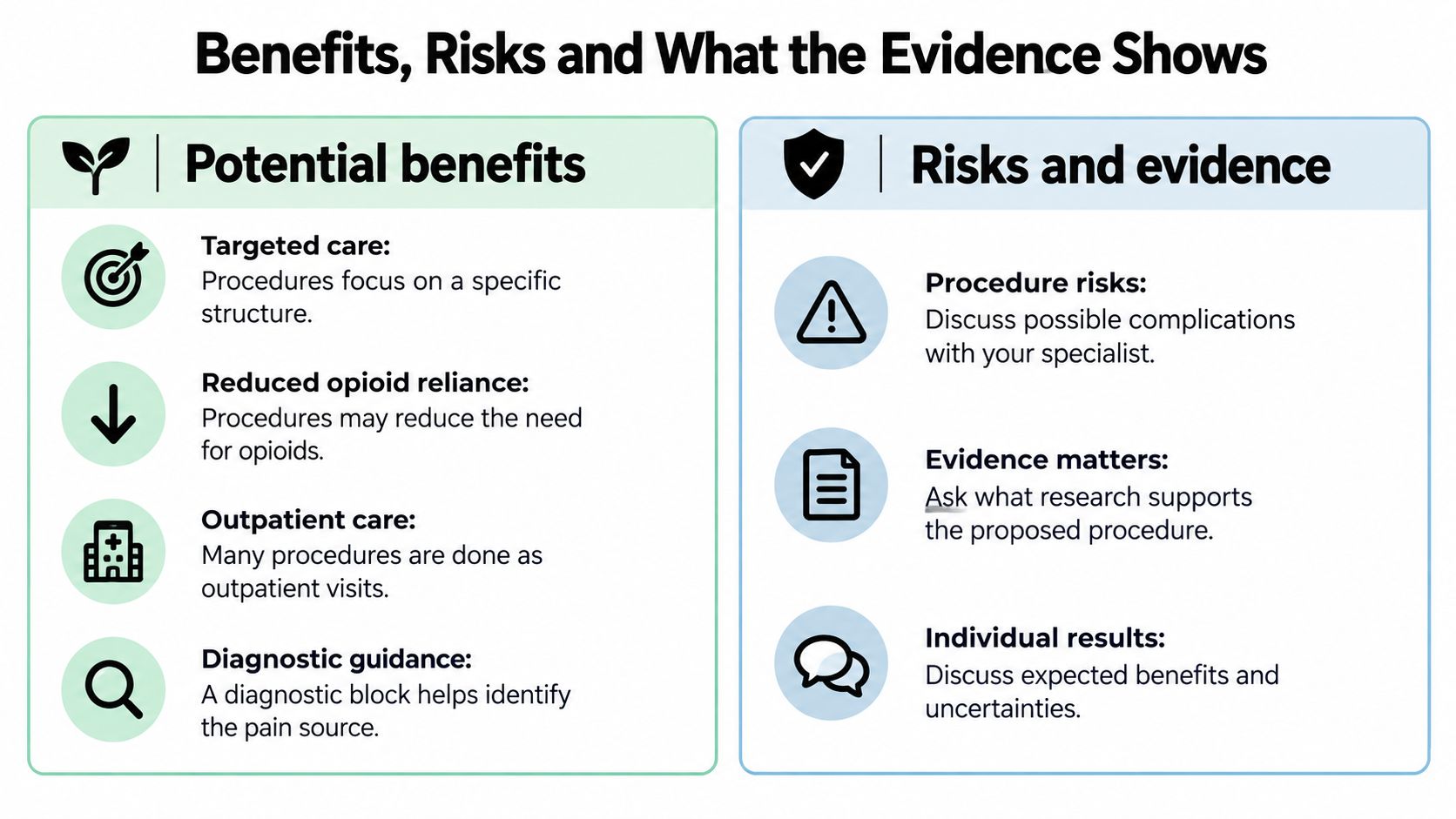
Potential benefits are straightforward. Treatment is aimed at a specific structure, many procedures are outpatient visits, and targeted relief may reduce reliance on opioids. A diagnostic block can also prevent an unnecessary permanent procedure, and image guidance improves needle accuracy.
| Benefit | Risk to weigh |
|---|---|
| Targets a specific pain structure | Bleeding and infection at the injection site |
| Often done as an outpatient visit | Nerve injury from needle placement |
| Can reduce reliance on opioids | Dural puncture headache after spinal access |
| Diagnostic block can prevent an unnecessary permanent procedure | Steroid flushing, sleep disruption and higher blood sugar for a few days |
| Image guidance improves needle accuracy | Lead movement after spinal cord stimulator implantation |
Blood thinners and other medications must be reviewed before spinal procedures. For one common option, review the specific epidural steroid injections risks before you decide rather than relying on a general reassurance that injections are minor.
What Recent Evidence Requires
A 2025 BMJ clinical practice guideline found no high-certainty evidence of important pain relief for any of 13 commonly used interventions for chronic axial or radicular spine pain, and it recommended against lumbar epidural injections for spinal stenosis or chronic low-back pain without significant radicular symptoms, according to the BMJ guideline on interventional procedures for chronic spine pain.
That doesn't make every procedure pointless. It makes patient selection, diagnosis, and shared decision-making more important than the procedure name. Temporary pain reduction also isn't the same as structural healing, and a plan should stop after an unsuccessful diagnostic or therapeutic trial.
Illinois Opioid Context
Interventional care is often framed as one opioid-sparing option within multimodal treatment, not as a replacement for rehabilitation or medical care. Illinois ranked 41st among the 50 states and District of Columbia for opioid-prescribing rates in a cited comparison covering prescriptions from 2008 through 2016, according to Illinois Criminal Justice Information Authority opioid prescription data.
Illinois Department of Public Health reporting states opioid prescriptions recorded by the Illinois Prescription Monitoring Program decreased 9.8% from 2013 to 2017, and prescriptions exceeding 90 morphine milligram equivalents in one month were used as a county-level high-prescribing measure, in Illinois opioid data reporting.
Booking Care in Chicago Ridge and Nearby Illinois Communities
Before scheduling a procedure, ask how the clinic will guide you through each step. A clear booking conversation can help you understand the plan, what happens if coverage is denied, and what information the clinic needs from you.
CDC-based data summarized in 2025 found chronic pain prevalence was 1.7 times higher among rural residents, twice as high among American Indian and Alaska Native adults, and 4.1 times as high among people living below the federal poverty level than among those earning more than four times that level, according to Pain Medicine research on chronic pain access disparities. The same linked research describes a qualitative study in which Spanish-speaking older Latino adults reported limited treatment access, insufficient Spanish-language services, and insurance barriers. These findings help explain why booking details matter, though they cannot predict one patient's experience.
Your Local Context in Illinois
Chicago Ridge, Illinois had 14,433 residents in the 2020 Census, with a Census Bureau estimate of 13,834 for 2023, according to Census Bureau QuickFacts for Chicago Ridge. These population figures describe the community; they do not measure medical demand or predict treatment outcomes.
Patients also travel from Palos Heights, Illinois, Palos Hills, Illinois, Evergreen Park, Illinois, and Hickory Hills, Illinois. If travel may limit follow-up, raise that before a multi-visit diagnostic plan is scheduled. A procedure's name identifies its target, not whether it will help you. If a diagnostic block does not reduce pain, that result can redirect care rather than count only as a failed treatment.
Use these questions when booking:
- Interpreter services: Are interpreters available for the consultation and procedure instructions?
- Insurance denial: What happens if insurance denies a procedure, and who can explain the next step?
- Care coordination: Can the clinic coordinate with your primary care provider, rehabilitation therapist, or a workers' compensation case?
- Travel and cost limits: Can the plan account for limited travel, older adults, or low-income patients?
Clear answers cannot promise relief. They can show how the clinic will support testing, treatment, and reassessment, and explain what findings would prompt a change in the plan.
If you're considering interventional care in Chicago Ridge or a nearby Illinois community, Midwest Pain & Wellness can assess whether a specific nerve, joint, or spinal structure is a reasonable target and explain which diagnostic check should come first. The team can discuss expected benefits, alternatives, and what result would mean stopping rather than continuing. Visit Midwest Pain & Wellness to request an appointment and begin with a diagnosis before a procedure.