You're driving home, you check your blind spot, and a sharp, electric pain shoots from your neck into your shoulder and down to your thumb. Later, your grip feels clumsy opening a jar. At night, you can't find a pillow position that doesn't set it off again.
That pattern is why people start searching cervical radiculopathy treatment options. The hard part isn't finding a list of procedures. It's knowing when conservative care is enough, when an injection makes sense, and when waiting stops being safe. Pain severity alone doesn't answer that. Neurological change does.
This guide is built around timing. You'll get honest expectations for each step, what each option can and can't do, and which signals should change the plan.
Table of Contents
- What Cervical Radiculopathy Feels Like and Why It Happens
- Conservative Care as the Real Starting Point
- Cervical Epidural Steroid Injections What They Really Do
- Radiofrequency Ablation and Peripheral Nerve Procedures
- Spinal Cord Stimulation for Refractory Cervical Radicular Pain
- Surgical Options From Foraminotomy to Fusion
- Building Your Decision Pathway in the Chicago Southland
- Frequently Asked Questions for Patients in Chicago Ridge
What Cervical Radiculopathy Feels Like and Why It Happens
Cervical radiculopathy isn't ordinary neck stiffness. It's pain that travels. You may feel sharp or burning pain starting in the neck and radiating into the shoulder, arm, or hand, often with numbness, tingling, or weakness in a specific pattern.
That travel pattern matters. Local neck pain stays in the neck and upper back. Shoulder bursitis usually hurts when you lift the arm overhead. Carpal tunnel tends to affect the hand in a different distribution and often worsens at night in a distinct way. Radiculopathy follows a nerve.
Why Your Arm Hurts When the Problem Is in Your Neck
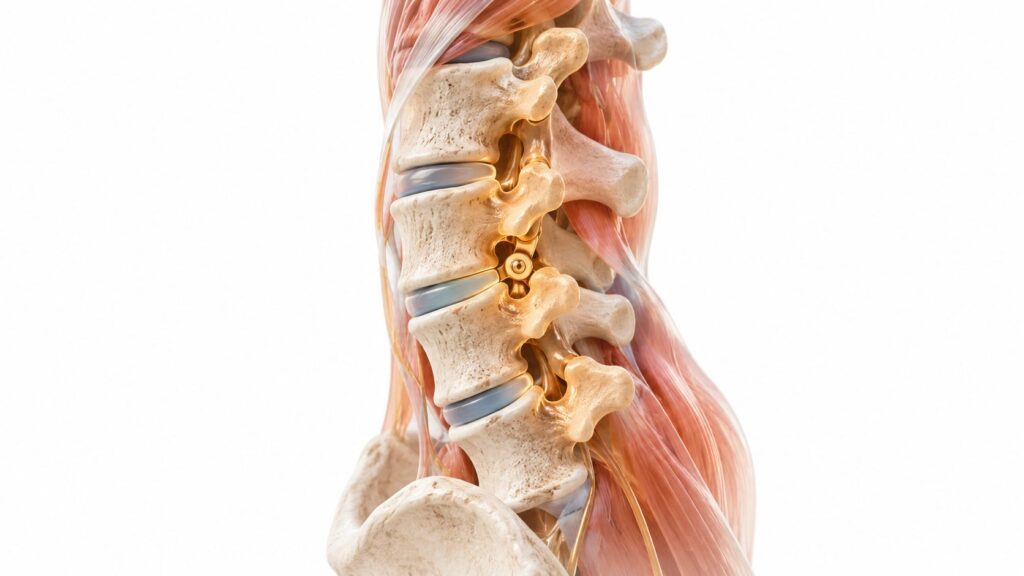
Nerve roots exit the cervical spine and supply sensation and strength to your arm and hand. A herniated disc, bone spur, or thickened ligament can narrow the opening for that root and compress or irritate it. Your brain interprets signals from that injured root as coming from the places the nerve serves, so you feel symptoms downstream.
Looking up, turning to drive, or sleeping with your neck extended can narrow that opening further and flare symptoms. People hunting for sleep positions often find practical positioning ideas from Ruidoso sleep specialists on neck pain, which can help with comfort while you pursue proper evaluation.
- Track the route: Note exactly where pain, numbness, or tingling travels and which fingers are involved.
- Track strength: Note grip clumsiness, dropping objects, or trouble with buttons, keys, or writing.
- Track triggers: Record what worsens it, such as looking up, driving, desk work, or sleeping.
- Track the timeline: Write down when it began and whether it's improving, plateauing, or worsening.
Imaging should match your symptoms and exam, not lead the decision by itself. Degenerative changes on an MRI don't automatically explain mild or improving symptoms.
That distinction guards against overtreatment. A detailed history, strength and sensation exam, and imaging that lines up with both help sort radiculopathy from mimics. You can review common symptom patterns in this guide to cervical radiculopathy symptoms and patterns before your visit and bring your timeline with you.
Conservative Care as the Real Starting Point
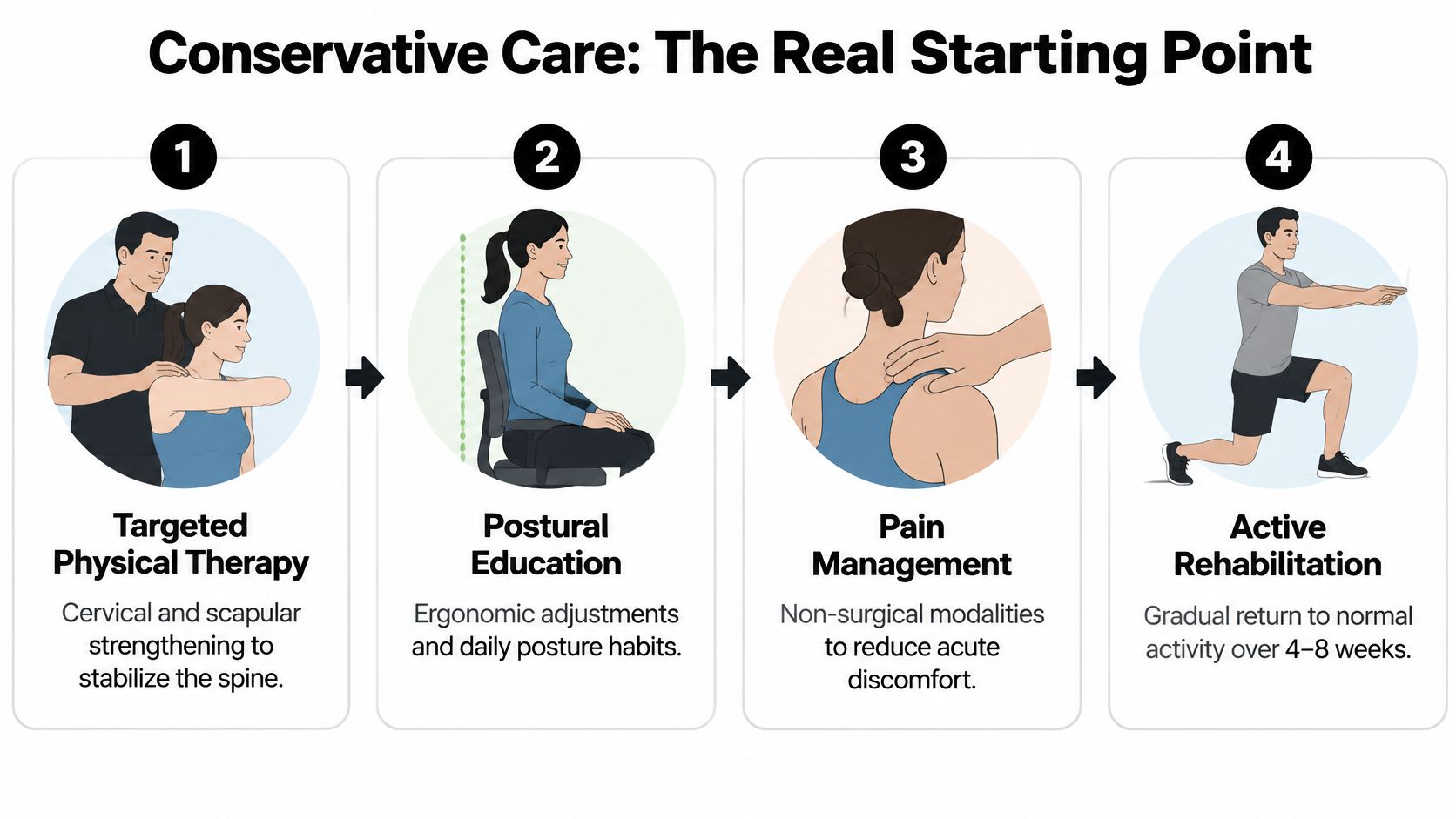
For adults without progressive motor deficit, conservative multimodal care is the initial benchmark, not a hurdle to endure before real treatment. That includes activity modification, NSAIDs when appropriate, and structured physical therapy emphasizing cervical and scapular strengthening, stretching, and sometimes traction, as outlined in StatPearls guidance on cervical radiculopathy management.
Most acute cases improve without surgery. A randomized comparison of surgery, physiotherapy, and a cervical collar found surgery produced faster pain reduction but no significant between-group difference at 1 year in that same summary. That supports staged care rather than automatic early surgery when strength is intact and symptoms are improving.
What Active Care Actually Looks Like
Rest alone isn't the plan. A Washington State guideline describes physical therapy with a home exercise program for 6 weeks that substantially reduced neck and arm pain in a randomized trial, with active care including exercise based therapy, traction, and anti-inflammatory medication in the Washington State cervical radiculopathy guideline.
In practice, that means postural correction for desk and driving, scapular stabilizers, gentle cervical mobility, and a home program you follow between visits. If you want structure for general mobility work between supervised sessions, you can browse mobility and recovery plans and bring questions about what's appropriate for your specific nerve level to your clinician. Don't push through exercises that repeatedly shoot pain down the arm.
- Continue the plan: Pain is trending down, sleep is improving, and strength and sensation are stable.
- Reassess promptly: Pain plateaus despite consistent therapy, function stays limited, or new weakness appears.
- Escalate urgently: Progressive weakness, gait change, hand clumsiness suggesting cord involvement, or bowel or bladder change.
Practical rule: Reassessment at approximately 4 to 8 weeks is a useful decision point. It's not a deadline to suffer until, and it's not permission to ignore worsening neurology before then.
Conservative care isn't a test of toughness. If it's working, staying the course avoids procedural risk. If it isn't, that documented trial makes the next step clearer and better justified.
Cervical Epidural Steroid Injections What They Really Do
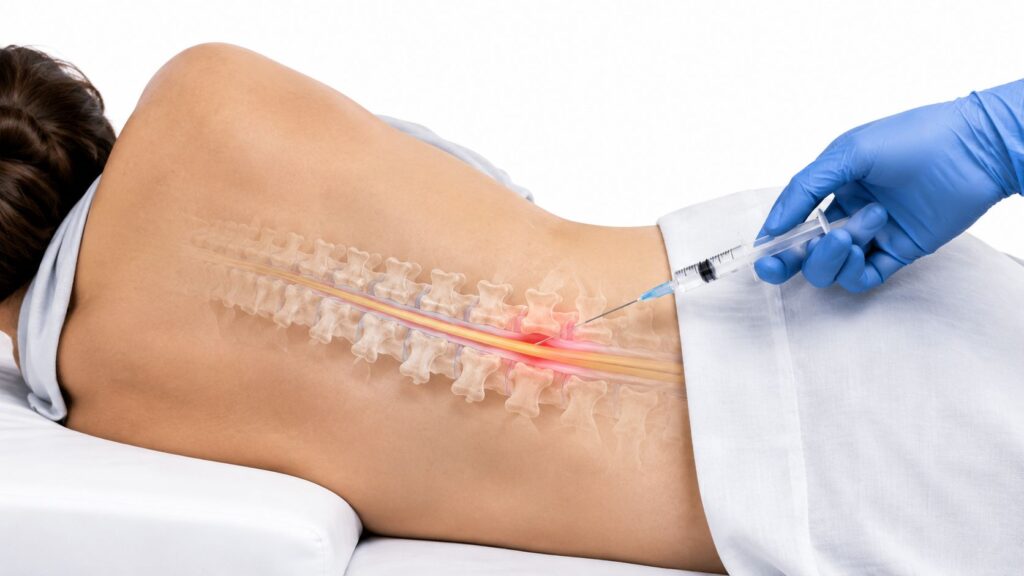
A cervical epidural steroid injection puts anti-inflammatory medication near an irritated nerve root. It doesn't remove a disc herniation or bone spur. It aims to calm inflammation so pain eases and you can participate more fully in rehabilitation.
That distinction sets expectations. Benefit is probabilistic and often short term, not guaranteed or curative. A 2025 American Academy of Neurology systematic review summary found epidural steroids probably reduce short-term radicular pain, with a standardized risk difference of -24.0% and a number needed to treat of approximately 4, while disability improved with a risk difference of -16.0% and a number needed to treat of approximately 6, as reported in the 2025 AAN systematic review in Neurology. Long term disability benefit was less certain in that review.
What to Expect From a Cervical Epidural Steroid Injection
| Outcome | Pooled/Estimated Range | Time Frame |
|---|---|---|
| Short term pain reduction | Risk difference -24.0%, NNT approximately 4 | Short term |
| Short term disability improvement | Risk difference -16.0%, NNT approximately 6 | Short term |
| Long term disability improvement | Smaller and statistically uncertain, NNT approximately 9 in the AAN review PDF summary | Long term |
| Complete relief in observational data | 24% complete, 40% at least 75% relief, 32% no relief in data summarized in a PMC review of epidural injection variability | Varies by cohort |
Observational results vary by diagnosis, technique, and structural findings. That variability is the point of counseling before you consent. Some patients get meaningful relief that lets therapy progress. Others get little change, which is also useful information because it pushes the conversation toward other options rather than repeating the same injection without a plan.
You can read how image guided treatment fits neck pain care in this overview of epidural steroid injection for neck pain, then discuss whether your imaging and exam make you a reasonable candidate.
Safety Is Not a Footnote in the Neck
Cervical procedures sit near the spinal cord and important blood vessels. Serious neurologic or vascular complications are uncommon, but they're possible, which is why fluoroscopic or CT guidance, careful technique selection, and explicit risk benefit counseling aren't optional.
- Good candidate signals: Function limiting radicular pain persists after structured conservative care, exam and imaging point to a specific level, and there's no progressive deficit that needs urgent surgical evaluation instead.
- Poor fit signals: Worsening weakness, myelopathy signs, or pain that doesn't match a radicular pattern.
Think of an injection as a time buying tool within a broader plan. It can open a window for rehabilitation. It shouldn't become a loop that delays reassessment when strength or function is slipping.
Radiofrequency Ablation and Peripheral Nerve Procedures
Patients often ask about radiofrequency ablation as if it's one procedure for all neck and arm pain. It isn't. What is being ablated determines whether it fits your problem.
Medial branch radiofrequency ablation targets small nerves that carry pain signals from facet joints. That addresses facet mediated axial neck pain, the deep ache in the neck itself. It doesn't decompress a pinched nerve root causing pain shooting into the hand.
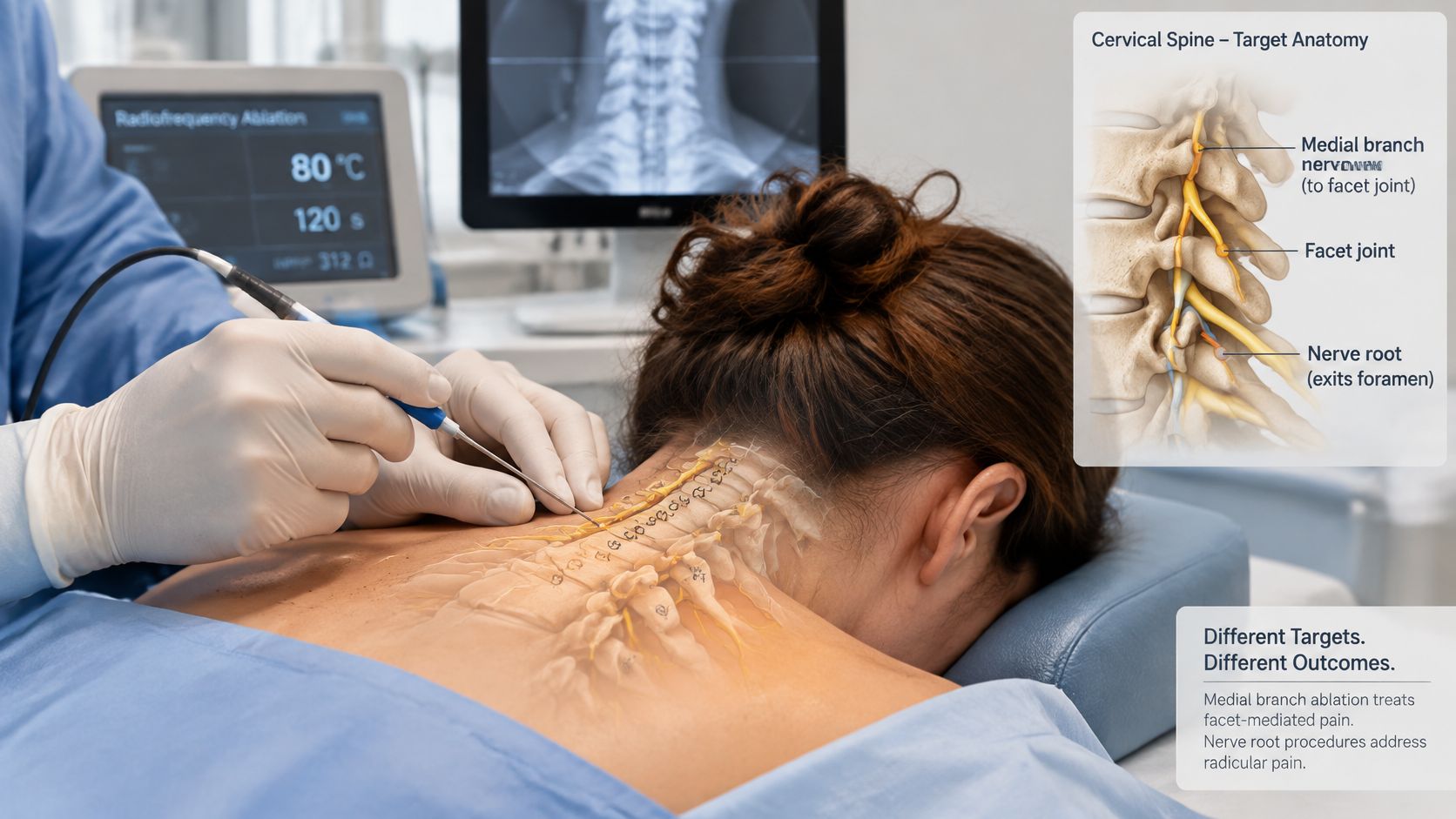
Sorting the Targets
Pulsed radiofrequency near the dorsal root ganglion is a different concept. It modulates rather than destroys tissue in the way conventional ablation does, and clinicians consider it in select radicular cases. Peripheral procedures, such as blocks aimed at nerves around the shoulder or back of the head, address secondary pain generators that can amplify your overall symptoms when muscles guard and posture changes for weeks.
Many people have mixed pain. You might have true radiculopathy plus facet pain and myofascial spasm on top of it. Treating only one generator leaves the others driving symptoms, which is why diagnostic blocks and a careful exam matter before anyone schedules ablation.
- Facet pattern: Predominantly neck pain, worse with extension and rotation, without a clear arm distribution or weakness.
- Radicular pattern: Pain, numbness, or tingling traveling into the arm or hand in a nerve pattern, sometimes with weakness.
- Mixed pattern: Both are present, and the plan has to sequence treatments rather than promise one procedure fixes everything.
Ablation is a precision tool aimed at the correct generator, not a catch all for any pain above the shoulders.
Relief, when it occurs, is temporary because nerves can recover over time, so re-treatment is sometimes discussed if the first procedure clearly helped function. The calendar matters less than the result. If a diagnostic block doesn't reproduce meaningful relief, proceeding to ablation on hope alone is hard to justify. If it does help, ablation can protect gains you've made with rehabilitation by lowering the facet component while the radicular component is managed separately.
Be candid about your main complaint at the visit. Point to where pain starts, where it ends, and what you can't do. That map determines whether radiofrequency belongs in your cervical radiculopathy treatment options at all.
Spinal Cord Stimulation for Refractory Cervical Radicular Pain
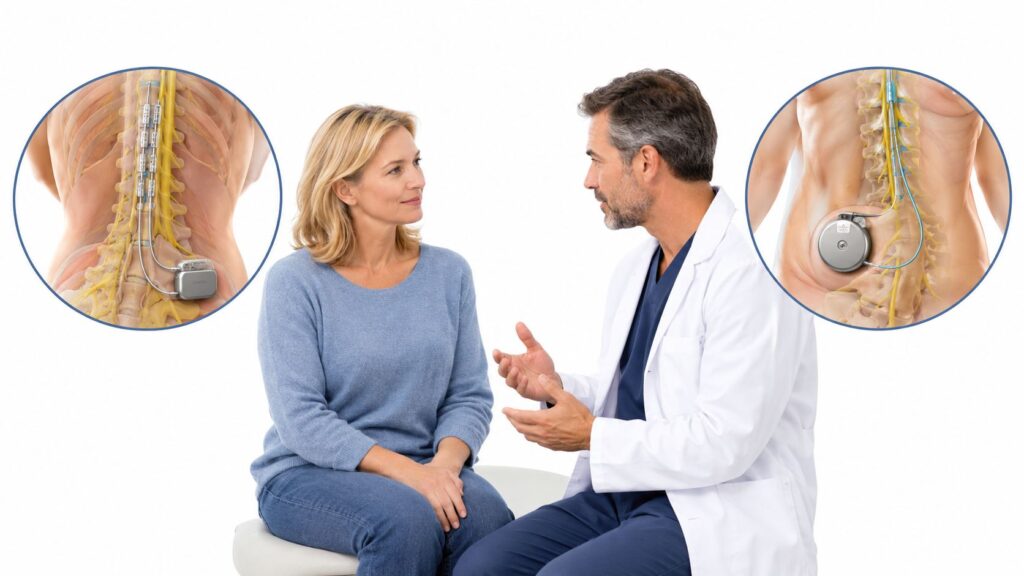
Spinal cord stimulation, or SCS, sits near the end of the pathway, not the beginning. Clinicians reserve it for persistent cervical radicular pain that hasn't responded adequately to structured conservative care and appropriately selected injections, and where surgery is not clearly indicated, has already been done, or carries concerns that make a reversible option attractive.
A stimulator delivers electrical signals near the spinal cord to modulate how pain signals are processed. It doesn't remove compression, repair a disc, or restore strength lost from ongoing nerve or cord compression. That limit is critical.
How the Trial Pathway Works
You don't start with a permanent implant. The process begins with a trial, where temporary leads are placed and you test the system during daily life. Different waveforms exist, including tonic, high frequency, and burst patterns, and programming is adjusted to your pain map.
- Screening: Review imaging, neurologic exam, prior treatments, medical issues, and goals.
- Trial period: Assess whether pain eases meaningfully and, equally, whether sleep, activity, and daily function improve.
- Decision point: Proceed to permanent implantation only if the trial shows clear, worthwhile benefit in your own routine.
Realistic success looks like meaningful pain reduction and better function, not guaranteed complete elimination of pain. Some patients return to activities they'd avoided and rely less on medication. Others find the trial underwhelming, and that's a successful trial too because it prevents an implant that wouldn't help. You can explore patient experiences in these spinal cord stimulation reviews and considerations to frame questions for a consultation.
When SCS Should Wait
Untreated spinal cord compression, untreated myelopathy, and progressive weakness need surgical evaluation first. A stimulator shouldn't be used to work around a missed surgical window. Untreated mood or sleep disorders also deserve attention before implantation, because they affect pain perception, recovery, and satisfaction with any device based therapy.
SCS is an option for refractory pain after the cause has been properly worked up. It's not a rescue from compression that still needs decompression.
If you're at this stage, bring a complete record of prior therapy, injections, imaging, and surgeries. The question isn't only whether a device can be placed. It's whether your pain pattern, exam, and history make neuromodulation the right next step.
Surgical Options From Foraminotomy to Fusion
Surgery enters the conversation for two different reasons. One is urgency, such as progressive motor deficit, myelopathy, gait change, or significant spinal cord compression. The other is persistence, where disabling radicular pain and concordant imaging remain after a rehabilitation program and selective injections.
A clinical summary describes progressive improvement generally expected during the first 6 to 8 weeks of conservative treatment, with surgical evaluation considered if meaningful improvement doesn't occur, especially when imaging shows a specific lesion such as a single level disc herniation matching history and exam, as noted in Medscape guidance on cervical radiculopathy treatment. That same summary stresses surgery isn't automatically superior for long term outcomes.
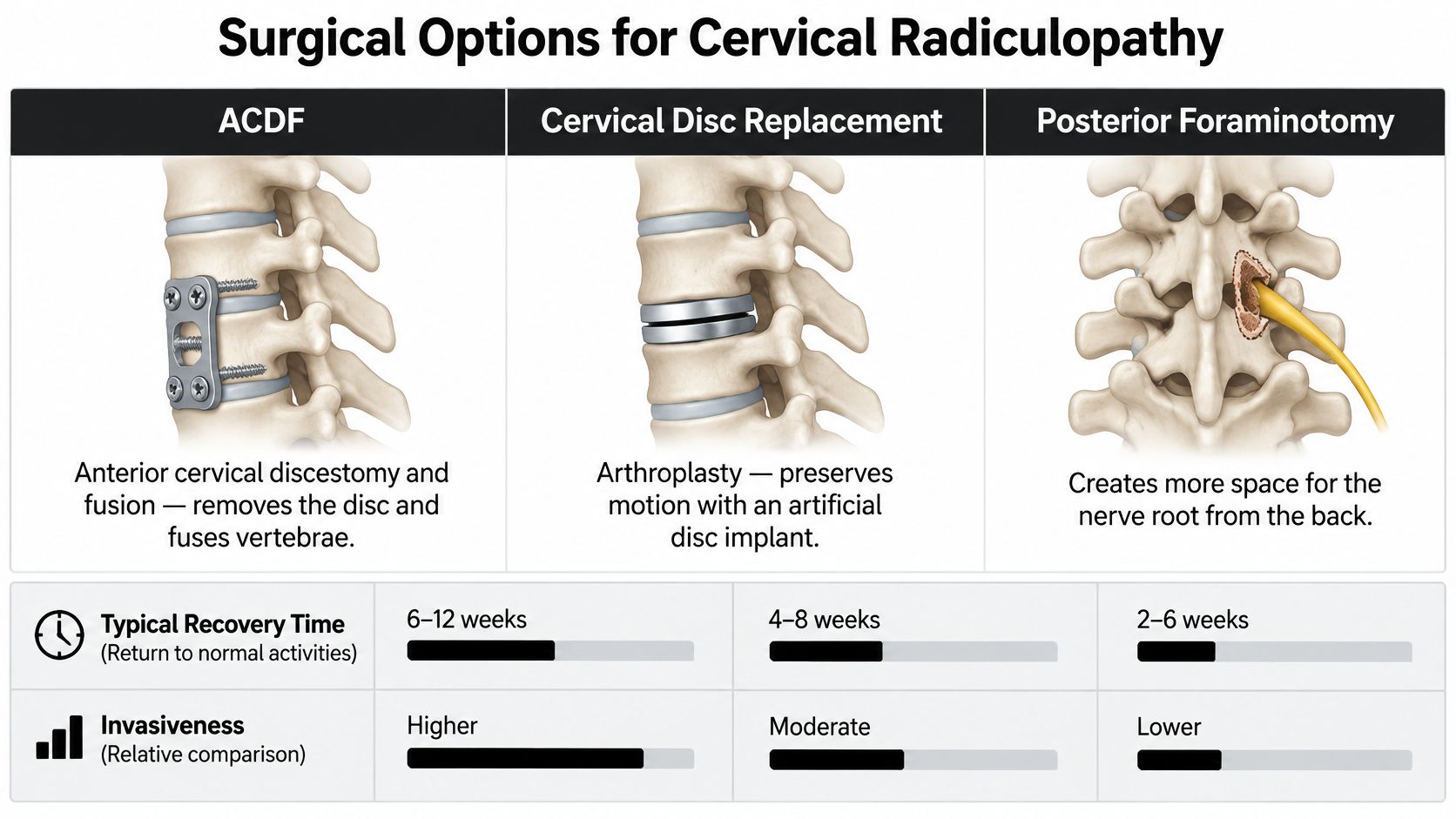
Comparing the Main Operations
Anterior cervical discectomy and fusion, or ACDF, approaches from the front of the neck, removes the offending disc material or spur, and fuses that segment. Surgeons use it commonly for single level herniation with matching radiculopathy and for cases where stability or alignment favors fusion. You trade motion at that level for decompression and stability.
Cervical disc replacement, or arthroplasty, also approaches from the front and removes the damaged disc, but places an artificial disc intended to preserve motion. Selected surgeons offer it to selected patients based on anatomy, bone quality, facet health, and the number of levels involved. Not everyone with radiculopathy qualifies.
Posterior foraminotomy approaches from the back and enlarges the opening where the nerve root exits. Surgeons consider it for foraminal stenosis or lateral herniations where anterior access and fusion may be unnecessary. It can preserve motion and avoid fusion in appropriately chosen cases.
| Procedure | Main Indication Logic | Motion Effect |
|---|---|---|
| ACDF | Single level herniation or spur with concordant symptoms | Fuses the treated level |
| Disc replacement | Selected patients where motion preservation is a priority and anatomy fits | Intended to preserve motion |
| Posterior foraminotomy | Foraminal narrowing or lateral herniation accessible from behind | Typically avoids fusion |
Recovery involves activity restrictions, careful return to driving only when your surgeon clears it, and postoperative rehabilitation to restore strength and posture safely. Timelines vary by procedure, number of levels, job demands, and your overall health, so get specifics in writing from your surgical team.
The honest trade off is speed versus risk. Surgery generally produces faster pain and disability improvement during the first year, but available evidence doesn't consistently show superior long term outcomes when there's no progressive deficit. That's why timing, not fear or frustration alone, should drive the referral.
Don't wait for a routine recheck if weakness is progressing, your hand is getting clumsier, walking feels unsteady, or imaging already shows cord compression. Those signals move surgery from elective discussion to expedited evaluation.
Building Your Decision Pathway in the Chicago Southland
A useful plan matches your symptom pattern, not just the calendar. For adults in Chicago Ridge, IL, Palos Heights, IL, Palos Hills, IL, Evergreen Park, IL, and Hickory Hills, IL, most steps in this pathway can be coordinated locally through a pain and wellness clinic that works with primary care, rehabilitation therapists, chiropractors, and surgeons when escalation is needed.
Midwest Pain & Wellness is a pain and wellness clinic in Chicago Ridge where evaluation, rehabilitation planning, and image guided procedures can be sequenced in one coordinated plan, with surgical referral arranged when your exam warrants it. That's different from starting and ending with therapy alone when symptoms aren't following a simple course.
Green, Yellow, and Red Signals
- Green light, continue and monitor: Pain is improving, strength is intact, and function is returning. Stay with active rehabilitation and reassess strength and sensation at planned intervals.
- Yellow light, escalate evaluation: Pain remains function limiting after structured care, sleep and work are still disrupted, or symptoms plateau. Discuss image guided injection, updated imaging, or other targeted procedures based on the pain generator.
- Red light, urgent specialist referral: Progressive weakness, gait problems, hand clumsiness suggesting myelopathy, or imaging confirmed cord compression. Don't cycle through repeated conservative measures while neurology worsens.
Decision anchor: Ask at every visit, is my strength stable, is my function improving, and does my imaging match my exam? Those three answers drive the next step more reliably than pain score alone.
Bring your symptom timeline, medication list, prior imaging, and a short list of functional goals, such as driving comfortably, sleeping through the night, or returning to lifting at work. Specific goals make it easier to judge whether an injection, ablation, stimulation trial, or surgical consult delivered value.
Local coordination matters because handoffs lose information. When your pain clinic communicates directly with your therapist and surgeon, your documented progress, or lack of it, travels with you and supports timely decisions.
Frequently Asked Questions for Patients in Chicago Ridge
How Long Should I Try Nonsurgical Care
Try structured care long enough to judge the trend, with planned reassessment rather than open ended waiting. If pain is improving and strength is stable, continuing makes sense. If weakness appears or worsens, or function remains disabling despite consistent effort, ask about escalation sooner rather than finishing an arbitrary course.
Will an Injection Fix the Compression
No. A cervical epidural injection targets inflammation around the nerve root to reduce symptoms. The disc or spur causing compression remains unless it changes on its own over time or is addressed surgically. Relief that lets you rehabilitate effectively is a worthwhile goal, but it isn't structural repair.
When Should I Get a Second Opinion
Seek one when fusion involving multiple levels is proposed, when weakness persists or worsens without a clear plan, or when repeated injections are offered without reassessment of the diagnosis. A second opinion should review your imaging, examine strength and reflexes, and explain alternatives in plain language.
What Should I Bring to an Interventional Consult in Chicago Ridge, IL
Bring prior MRI images and reports, a medication list, notes on where pain travels, any weakness you've noticed, and what you've already tried. Patients coming from Palos Heights, IL, Palos Hills, IL, Evergreen Park, IL, and Hickory Hills, IL should also note driving and work limitations, since those functional details shape timing decisions.
What About Return to Driving and Work After Surgery
Your surgeon sets those milestones based on the procedure, levels treated, medication use, and neck mobility. Desk work and physical labor follow different paths. Get your restrictions in writing and share them with your pain and rehabilitation team so everyone is working from the same plan.
If neck pain is shooting into your arm and you're unsure whether to continue conservative care, consider an injection, or seek a surgical opinion, Midwest Pain & Wellness in Chicago Ridge can examine your strength and function, review your imaging, and build a staged plan around clear reassessment points. Schedule a consultation through Midwest Pain & Wellness to discuss cervical radiculopathy treatment options matched to your symptoms, timeline, and goals.