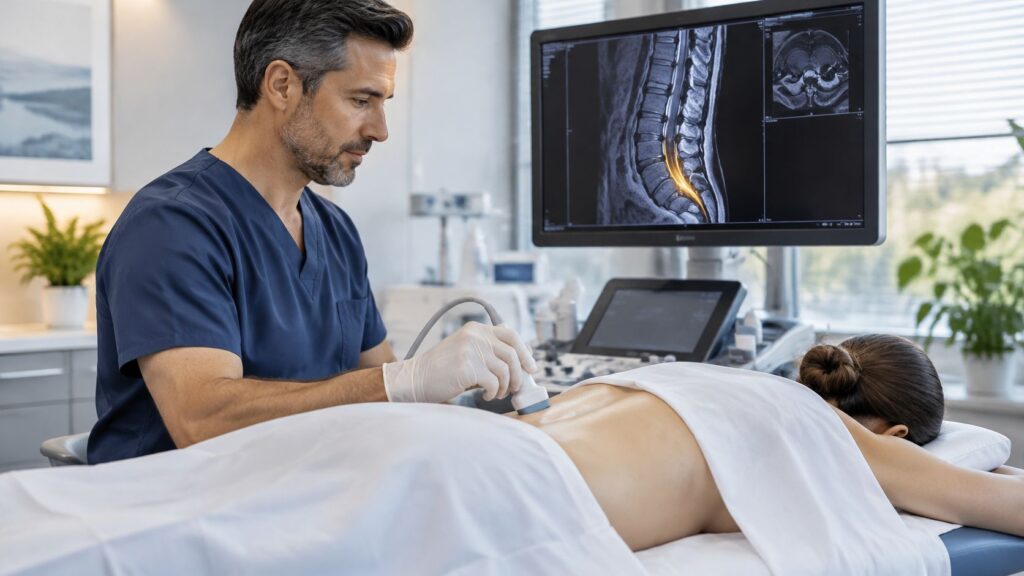
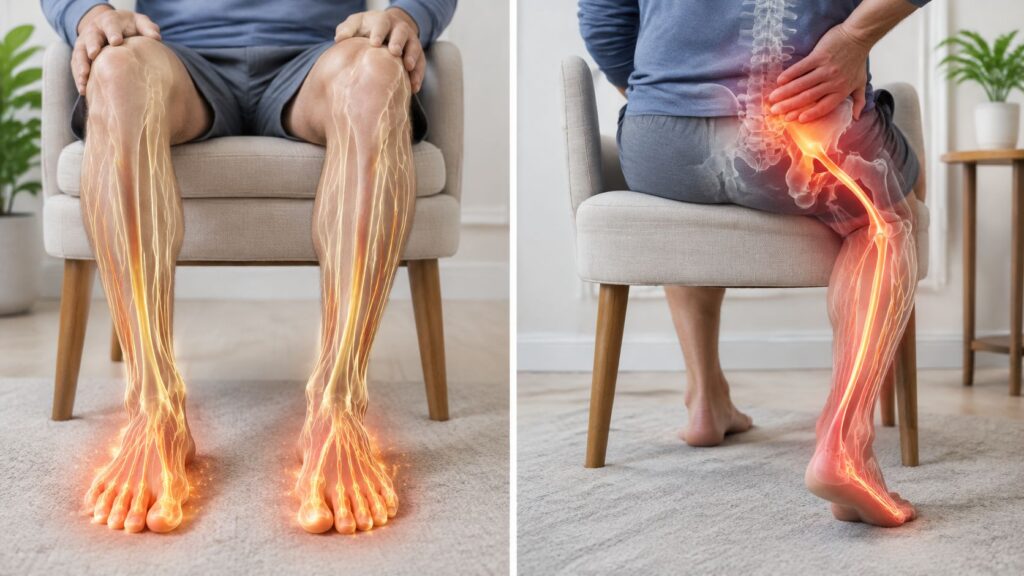
You wake up with a stiff neck, turn your head to back out of the driveway, and feel that familiar catch. By mid-morning, the ache has climbed into your shoulders. By afternoon, it may be sitting behind your eyes as a headache or running down your arm as tingling, burning, or heaviness. You've probably already tried the usual cycle of rest, heat, stretching, over-the-counter medication, and “waiting it out.” For many people, it keeps coming back.
That pattern is frustrating because chronic neck pain rarely responds to a single fix. It usually needs a structured plan that starts with the source of pain, addresses the mechanics that keep it going, and uses treatments in the right order. At a pain and wellness clinic, the goal isn't just to dull symptoms for a few days. It's to improve function, reduce flare-ups, and build a path to lasting relief without leaning on opioids.
The Daily Reality of Chronic Neck Pain
Chronic neck pain can make ordinary tasks feel harder than they should. Driving, sleeping, reading, working at a desk, carrying groceries, or even holding a conversation while turning your head can become irritating or exhausting. Some people feel a deep ache at the base of the skull. Others describe muscle tightness, stabbing pain between the shoulder blades, or pain that radiates into the upper back and arms.
If that sounds familiar, you're far from alone. Globally, neck pain affects an estimated 60 to 80% of individuals at some point in their lifetime, and the global burden is projected to rise by 32.5% by 2050, reaching an estimated 269 million cases according to this global review. That matters for one reason. Your pain is common, but it should never be dismissed as something you have to live with.
Why temporary fixes often disappoint
A heating pad may calm muscle guarding. A massage may help for a day or two. Rest might settle a flare. But if the pain keeps returning, there's usually a reason. The neck may be under repeated strain from posture, the joints may be irritated, a nerve may be inflamed, or stress may be keeping the muscles in a protective, tightened state.
Practical rule: If your pain keeps cycling between “better for now” and “back again,” you probably need more than symptom management.
That's where a stepwise, multimodal plan helps. Instead of asking one treatment to do everything, you combine the right pieces. That may include ergonomic correction, exercise, medication used strategically, image-guided injections, and in some cases more advanced procedures.
Start by measuring what's actually changing
One useful first step is to track the pain in a way that's more specific than “bad” or “not as bad.” A simple pain assessment guide can help you notice patterns, triggers, and functional limits. That kind of tracking is valuable because treatment decisions should be based on how pain affects sleep, driving, work, concentration, and movement, not just the number you give it.
The good news is that chronic neck pain relief usually becomes more realistic once the problem is organized clearly. Patients do better when care follows a roadmap rather than a grab bag of disconnected treatments.
Uncovering the Root Cause of Your Neck Pain
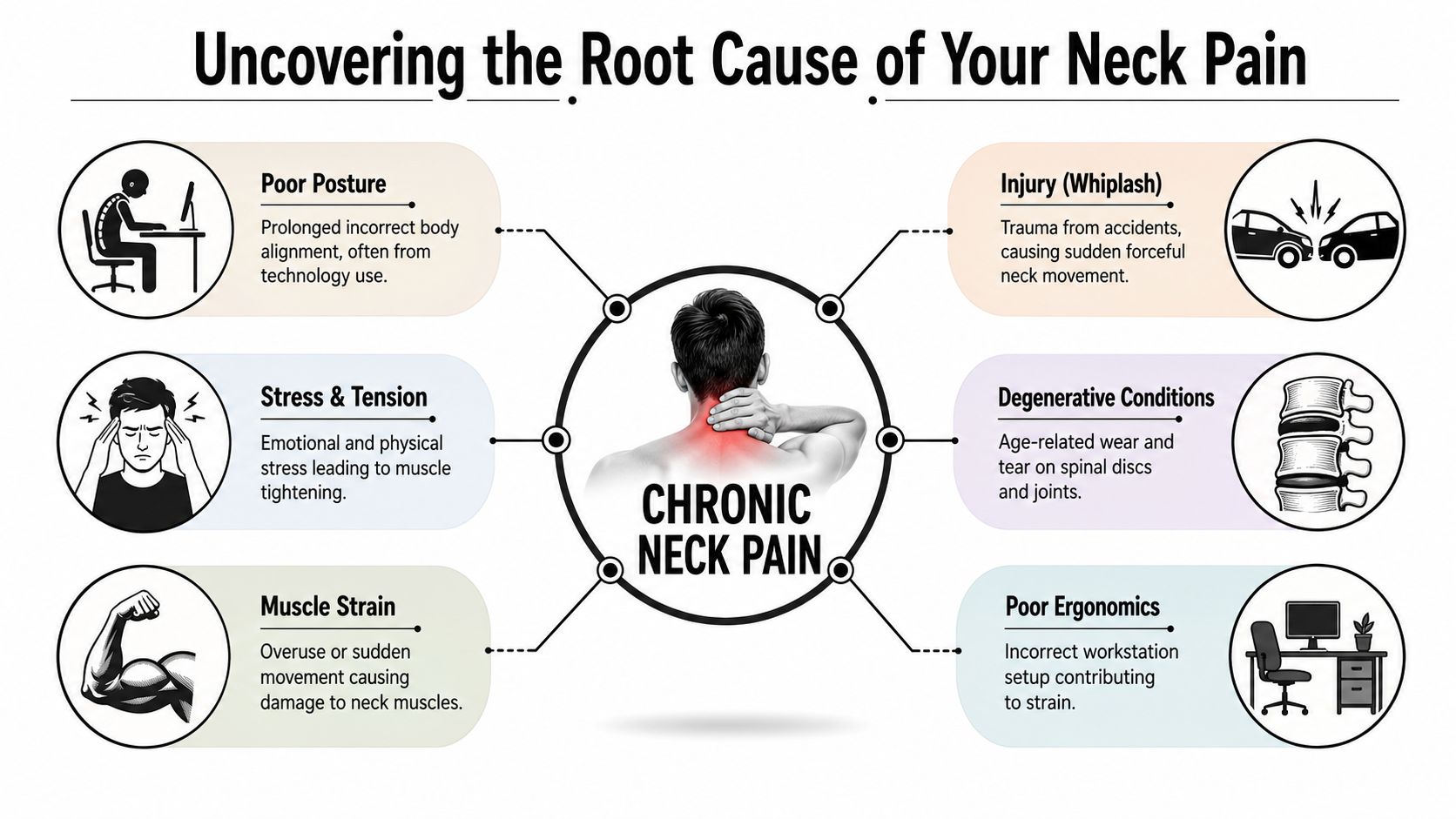
The neck is a small area with a lot going on. Muscles, facet joints, discs, nerves, posture, stress, prior injuries, and workstation setup can all contribute. Two people can both say “my neck hurts” while having very different pain generators.
What shows up often in Illinois patients
In Illinois, chronic neck pain is commonly linked to poor posture and prolonged static positions, especially time spent leaning toward screens or sitting at a desk with the head pushed forward. People who view digital device screens for 8 hours or more daily have a 1.61-fold increased odds of chronic neck pain frequency escalation based on the clinical summary cited by this Illinois-focused neck pain resource.
That doesn't mean posture is the only cause. It means posture often acts like fuel on the fire. A patient may already have irritated joints, overworked muscles, or age-related wear, and then a workday spent in sustained forward-head posture keeps re-triggering the same pain pattern.
Another frequent contributor is degenerative disc disease, especially in older adults. Aging can change the discs and joints in the cervical spine. Prior injury and other health factors can worsen those changes. Degeneration doesn't always cause pain by itself, but when it matches the exam and symptom pattern, it becomes clinically important.
Diagnosis should be specific, not generic
At a pain and wellness clinic, the evaluation should feel like an investigation, not a template. The visit usually includes:
- A detailed symptom history that looks at where the pain starts, where it travels, what aggravates it, and whether there's numbness, weakness, headaches, or sleep disruption.
- A focused physical examination that checks neck motion, muscle tenderness, joint loading, nerve irritation, reflexes, and strength.
- Imaging when needed to clarify whether discs, arthritis, narrowing, or other structural issues may be involved.
A scan alone doesn't replace the clinical exam. Many adults have age-related changes on imaging that may or may not match their pain. The key is correlation. Symptoms, exam findings, and imaging need to line up.
Pain treatment works better when the diagnosis names the structure involved, not just the region that hurts.
For a more condition-specific overview, the guide on what causes chronic neck pain is a useful starting point. The important point is this. Long-term relief usually begins when the pain is sorted into a few practical categories: muscular, joint-related, nerve-related, stress-mediated, degenerative, post-injury, or a combination.
Foundational Steps for At-Home Neck Pain Relief
Home care matters. Not because it solves every case on its own, but because it supports every other part of treatment. Patients often get better faster when they stop provoking the neck all day, move more intentionally, and calm the nervous system that amplifies pain.

Fix the daily mechanics first
A lot of neck pain is sustained by habits that feel harmless because they're repetitive and familiar.
- Bring the screen to eye level. If you're looking down for long stretches, your neck muscles stay loaded.
- Break static posture often. Don't wait until you're already stiff. Stand up, reset your shoulders, and gently move the neck through comfortable range.
- Support the upper back. Good neck posture usually starts lower, with the shoulder blades and thoracic spine.
- Use movement, not guarding. People in pain often stiffen everything. That can make symptoms linger.
A helpful way to think about it is that ergonomics doesn't just reduce strain. It gives procedures, medications, and exercise a better chance to work because you're no longer re-irritating the same tissues all day.
Gentle movement usually beats complete rest
When pain flares, many people stop moving their neck almost entirely. Short-term protection can be reasonable, but prolonged avoidance tends to make the area stiffer and more sensitive. Gentle range-of-motion work, scapular retraction, posture resets, and guided stretching are often more useful than immobilizing the neck unless a clinician has told you otherwise.
If jaw clenching is part of the picture, that matters too. TMJ tension and neck pain often travel together. A practical set of movements to relieve TMJ tension and neck pain can be helpful when the jaw, temples, and upper neck are all involved.
Don't ignore the brain and stress response
Chronic pain isn't always just a tissue problem. Sometimes the nervous system stays on high alert. Stress can increase muscle guarding, make pain feel louder, and prolong flare-ups even after the original trigger has eased.
Cognitive Behavioral Therapy, or CBT, has strong support in chronic pain care. A Cochrane review of 75 randomized controlled trials found that CBT produces moderate improvements in pain, disability, and emotional distress, with effects maintained at follow-up according to this evidence summary.
That doesn't mean the pain is “in your head.” It means the brain and body are connected. If stress is tightening the neck, worsening sleep, or making every pain signal feel threatening, treating that layer can improve physical symptoms.
A good home program does two jobs at once. It reduces mechanical strain and lowers the nervous system's sense of threat.
Medications and Targeted Injections
When home care and activity changes aren't enough, the next step is often physician-directed treatment. A pain clinic's approach to this differs from a general advice visit. The goal is to reduce pain enough to restore movement, improve sleep, and identify the structures that need more focused treatment.
How medications fit into care
Non-opioid medications can be useful, but each has limits. NSAIDs may help calm inflammation. Muscle relaxants may help when spasm is dominating the picture. Simple analgesics can make it easier to move, work, or participate in exercise.
These options are best used strategically, not passively. Medication should support function. It shouldn't become the whole plan.
Short-term relief matters because patients often need a window where they can turn their head more comfortably, sleep better, or tolerate a guided rehab program. Clinical guidance for neck pain also supports medications and local anesthetic or corticosteroid-based injections as tools that can reduce pain enough to enable normal cervical mobility, with the larger emphasis remaining on active rehabilitation rather than medication alone.
Why injections can do more than calm pain
Targeted injections are different from oral medication because they address a specific region. Depending on the symptom pattern, a clinician may consider trigger point injections for muscle knots, epidural steroid injections when nerve irritation is suspected, or other image-guided procedures aimed at joints or surrounding structures.
These injections can be therapeutic, diagnostic, or both.
- Therapeutic role means the injection is meant to reduce pain and inflammation.
- Diagnostic role means the response helps clarify which structure is generating pain.
- Functional role means relief allows better participation in exercise, posture correction, and daily activity.
For patients trying to understand one common category of diagnostic treatment, this overview of what a nerve block injection is gives a useful foundation.
If an injection helps briefly but your posture, workstation habits, and movement pattern never change, the benefit may fade faster than you hoped.
That's one reason pain care has to stay coordinated. Some patients also need support at home while symptoms are limiting function. For families managing mobility or daily care needs, understanding options for paramedical care to live safely can help bridge the gap while formal treatment is underway.
Advanced Interventional Pain Management Options
When pain persists despite home care, medication, and more basic injections, advanced interventional treatment may be the next reasonable step. A dedicated pain clinic offers tools for such treatments that most general offices do not. These procedures are typically minimally invasive, image-guided, and designed to target a clearly identified pain source.
Procedures should match the pain generator
A patient with painful cervical facet joints needs a different strategy than someone with neuropathic arm pain, post-surgical pain, or mixed neck and upper back symptoms. Choosing the wrong procedure is one reason patients lose confidence in pain care. The right question isn't “What's the strongest treatment?” It's “Which treatment matches the structure and symptom pattern involved?”
Here's a simple comparison.
Advanced Interventional Procedures at a Glance
| Procedure | Targets This Type of Pain | How It Works | Goal of Treatment |
|---|---|---|---|
| Medial Branch Block | Suspected facet joint pain in the neck | Numbs the small nerves that carry pain from the facet joints | Confirm whether the facet joints are the source of pain |
| Radiofrequency Ablation | Confirmed facet-mediated neck pain | Uses heat generated by radiofrequency energy to interrupt pain signaling from targeted nerves | Provide longer-lasting relief after successful diagnostic blocks |
| Epidural Steroid Injection | Pain with nerve irritation or radiating arm symptoms | Places anti-inflammatory medication near the irritated nerve region | Reduce inflammation and calm radiating pain |
| Trigger Point Injection | Myofascial pain with focal muscle knots and guarding | Delivers medication into tight muscular trigger points | Relax painful muscle bands and improve motion |
| Peripheral Nerve Stimulation | Certain focal nerve-related pain patterns | Uses mild electrical stimulation near a peripheral nerve | Reduce pain signaling without relying on medication |
| Spinal Cord Stimulation | Chronic neuropathic pain, including some post-surgical pain states | Delivers electrical signals to modify pain processing in the spinal cord | Improve pain control and function when simpler measures haven't worked |
Medial branch blocks and radiofrequency ablation
For many adults with chronic neck pain, the facet joints are a major source of pain. These small joints can become irritated from arthritis, repetitive extension and rotation, prior injury, or chronic postural stress.
A medial branch block is often used first. It temporarily numbs the tiny nerves that supply the facet joints. If pain improves in a pattern that matches the block, that tells the clinician the facet joints are likely important pain generators.
That sets up radiofrequency ablation, or RFA. In simple terms, RFA creates a controlled heat lesion on the targeted sensory nerve so it stops sending pain signals the way it had been. It doesn't “fix” arthritis, and it doesn't replace good mechanics, but it can create a meaningful reduction in pain for the right patient.
Stimulation therapies for nerve-driven pain
Some chronic pain behaves less like a joint problem and more like abnormal nerve signaling. That may happen after surgery, after injury, or when pain continues even after inflammation has calmed.
In those cases, stimulation-based therapies may be considered. Peripheral nerve stimulation targets a more localized nerve distribution. Spinal cord stimulation works at the level of the spinal cord to change how pain signals are processed.
These treatments are usually considered after more conservative and intermediate options have been tried, and after careful screening confirms the pain pattern is a good fit.
Procedures from a broader spine toolkit
Even though this article is focused on the neck, some patients have mixed pain patterns involving the upper back, lower back, posture, gait changes, and deconditioning. In a multidisciplinary pain practice, procedures such as MILD or Vertiflex may be used for selected lumbar stenosis cases when lower spine symptoms are adding to the patient's overall functional decline. They aren't neck procedures, but they can matter in the bigger picture when multiple pain sources are limiting activity.
Midwest Pain & Wellness offers several of these interventional options as part of coordinated, opioid-sparing pain care, including image-guided injections, radiofrequency ablation, peripheral nerve stimulation, spinal cord stimulation, and selected minimally invasive spine procedures.
The best advanced procedure is the one that fits a clearly established diagnosis and is paired with the right aftercare.
That aftercare matters. If forward-head posture, shoulder elevation, stress-driven muscle guarding, or poor ergonomic setup keeps reloading the cervical spine, even a technically successful procedure may not hold up as well as it should. Durable chronic neck pain relief usually depends on both precise intervention and correction of the mechanics that keep reproducing the pain.
Exploring Regenerative Medicine for Neck Pain
Regenerative medicine sits in a different category from injections that mainly reduce inflammation or procedures that interrupt pain signaling. The idea is to support the body's own healing response in carefully selected situations.
Where PRP may fit
One commonly discussed option is platelet-rich plasma, or PRP. It's prepared from a patient's own blood, processed so the platelet-rich portion can be used in a targeted way. In pain medicine, PRP may be considered for some joint, tendon, or soft tissue conditions when the goal is to support healing rather than numb the area or suppress inflammation.
That distinction matters. PRP isn't usually presented as a universal answer for every type of chronic neck pain. It may be more relevant when the pain appears linked to structures that could plausibly benefit from a regenerative approach, and less relevant when the main issue is nerve compression, advanced degeneration, or pain maintained primarily by central sensitization.
Careful selection matters more than hype
This is an area where expectations need to stay grounded. Regenerative treatments often interest patients because they sound less invasive and more “natural,” but responsible care requires more than enthusiasm. A clinician has to ask whether the diagnosis is clear, whether standard evidence-based options have been used appropriately, and whether the anatomy involved makes the treatment reasonable.
That's why these therapies should be discussed case by case. They aren't a shortcut around diagnosis, and they shouldn't be used as a substitute for proven conservative or interventional care when those are the better fit.
For patients who want a more focused overview, PRP for neck pain explains how this option may fit into a broader treatment plan.
A thoughtful regenerative plan should do three things well:
- Match the right tissue target rather than treating “neck pain” as one broad problem.
- Set realistic expectations about what the treatment can and can't do.
- Stay integrated with the rest of care, including movement correction, rehab, and follow-up.
Your Next Step to Relief in the Chicago Area
If you live in Oak Lawn, Palos Hills, Palos Heights, Worth, Bridgeview, Hickory Hills, Alsip, Burbank, Evergreen Park, or Orland Park, you don't need to keep bouncing between generic advice, short-term prescriptions, and disconnected appointments. Persistent neck pain usually responds best when one team can evaluate the pain pattern, identify the likely source, and match treatment to the right stage of care.
Why a pain and wellness clinic is different
A pain and wellness clinic is not the same as a physical therapy office, and it's not just a place to get medication. It sits at the point where diagnosis, non-opioid medical management, image-guided procedures, and coordinated rehab strategy come together.
That matters because clinical practice guidelines for neck pain recommend a multimodal approach that prioritizes education, manual therapy combined with active treatment, and referral for structured exercise programs, supporting coordinated care over isolated therapies, as outlined in these evidence-based guidelines.
In practical terms, that means your care should be organized around questions like these:
- What structure is most likely causing the pain
- Which treatments can reduce pain while preserving function
- How do we avoid repeating temporary fixes without a plan
- What needs to change in posture, activity, stress management, or rehab to make the medical treatment last
A simple path forward
When patients are overwhelmed, they usually need a clear next step, not another vague recommendation.
Assess
Start with a focused consultation. Review your history, symptom pattern, prior treatments, imaging if available, and the way pain is affecting work, sleep, and movement.Recommend
Build a personalized plan. That may include home strategies, non-opioid medication, targeted therapy referral, image-guided injections, or advanced procedures depending on the diagnosis.Treat
Move forward in a stepwise way. Start with the least invasive option that fits the problem, then escalate only when needed and only for a clear reason.
Good pain care should feel organized. You should understand why a treatment is being offered, what it's meant to do, and what comes next if it helps or doesn't.
For people in the southwest Chicago suburbs, that kind of clarity can make a major difference. Chronic neck pain relief often becomes possible when care stops being fragmented and starts being intentional.
If you're ready to take the next step, Midwest Pain & Wellness offers evaluation and treatment for chronic neck pain through an opioid-sparing, multimodal approach that may include non-opioid medication management, image-guided injections, interventional procedures, and coordinated rehabilitation planning. For adults in and around Chicago Ridge, including Oak Lawn, Palos Hills, Palos Heights, Worth, Bridgeview, Hickory Hills, Alsip, Burbank, Evergreen Park, and Orland Park, scheduling a consultation is a practical way to find out what's driving your pain and what treatment path makes sense for you.