What You Need to Know About Vertebral Compression Fracture Treatment
Vertebral Compression Fracture Treatment includes both conservative and interventional options designed to relieve pain, stabilize the spine, and help you return to daily activities. Here’s what you need to know:
Treatment Options at a Glance:
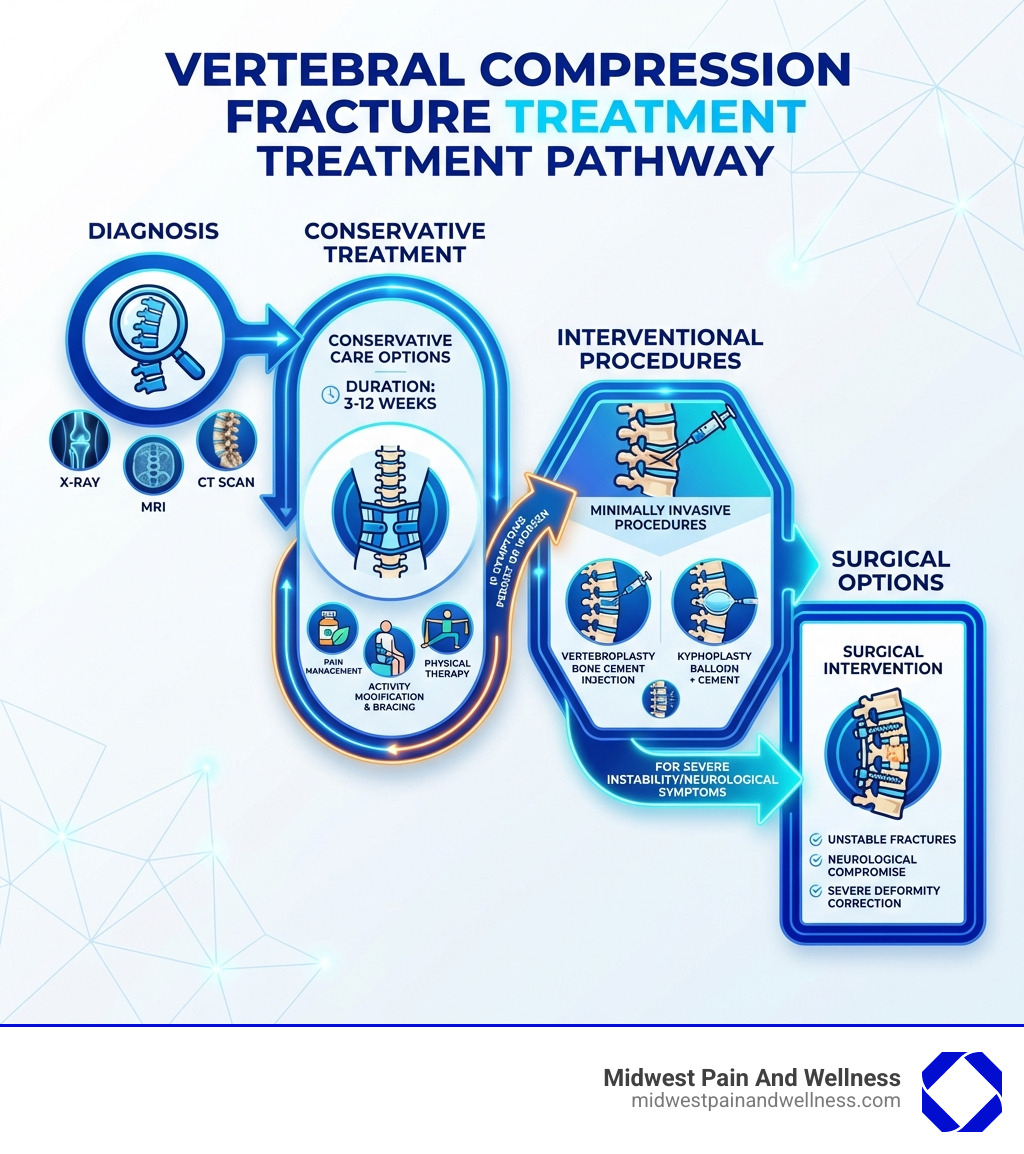
- Conservative Care – Pain medication, activity modification, back bracing, and physical therapy (typically 3-12 weeks)
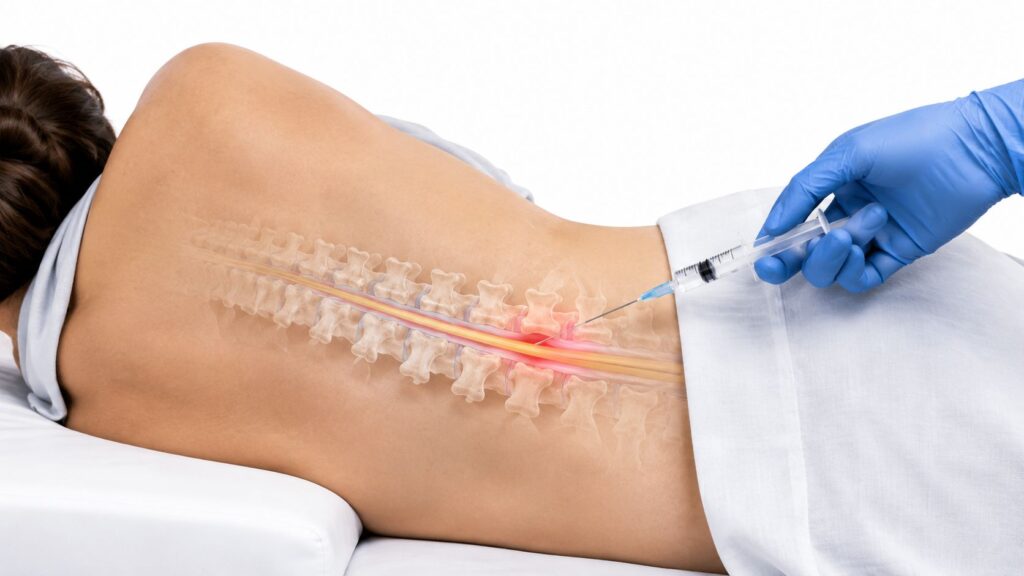
- Minimally Invasive Procedures – Vertebroplasty or kyphoplasty to stabilize the fracture with bone cement (outpatient, 1-2 hours)
- Surgical Intervention – Reserved for unstable fractures, neurological compromise, or severe deformity
When Treatment is Needed:
- Pain rating greater than 4 out of 10
- More than 40% vertebral body collapse
- Persistent pain after 3+ weeks of conservative care
- Loss of height or developing spinal deformity
Most patients see significant pain reduction within three months with conservative treatment. More than 50% of patients pursuing non-surgical options experience sufficient pain relief without needing procedures.
A vertebral compression fracture occurs when one of the bones in your spine collapses—most commonly in the thoracolumbar junction (T12-L1 region). These fractures affect more than 700,000 Americans annually and are the most common complication of osteoporosis. While some fractures cause severe, immediate pain, others develop gradually with minimal symptoms.
The good news? Most vertebral compression fractures heal successfully without surgery. The key is matching the right treatment to your specific situation—considering factors like your pain level, fracture stability, overall health, and underlying bone strength.
As Dr. Yaw Donkoh, a double board certified physician in anesthesiology and interventional pain management, I’ve helped countless patients steer Vertebral Compression Fracture Treatment options at Midwest Pain and Wellness, focusing on minimally invasive, outcomes-focused approaches that prioritize your long-term recovery and quality of life. My training in interventional techniques allows me to offer both conservative management and advanced procedures when appropriate, always with your specific needs in mind.
Understanding Vertebral Compression Fractures and Their Causes
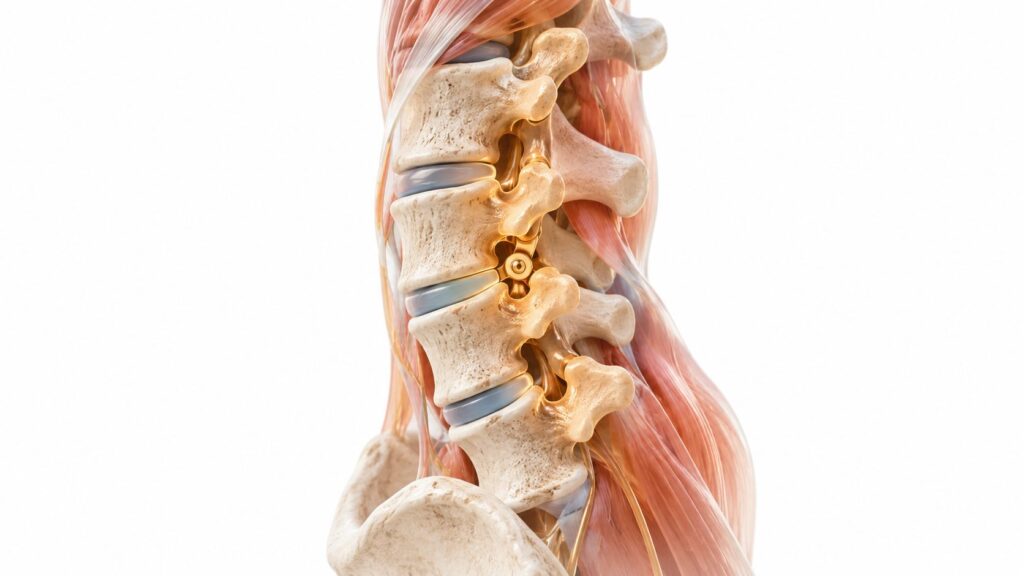
When we talk about a vertebral compression fracture (VCF), we are describing a “crush” injury to the vertebral body—the thick, drum-shaped bone at the front of your vertebra. Because the back part of the vertebra is often stronger, the front collapses more easily, creating a “wedge-shaped deformity.” This can lead to a noticeable loss of height or a rounded back, often called a “dowager’s hump” or kyphosis.
The number one cause we see in our Chicago Ridge clinic is osteoporosis. In fact, scientific research on the public health impact of osteoporosis shows that these fractures are a massive clinical burden, especially as we age. For someone with severe osteoporosis, even a sneeze, a cough, or stepping out of the shower can trigger a fracture.
Other primary causes include:
- High-Energy Trauma: Think car accidents or falls from a significant height. In younger patients with healthy bones, it takes a lot of force to cause a VCF.
- Neoplastic Conditions: Cancers like multiple myeloma or metastatic disease (cancer that has spread from elsewhere, like the lungs or breasts) can weaken the bone from the inside out. You can learn more about the various conditions we treat to see how we handle these complex cases.
- The Thoracolumbar Junction: Approximately 60% to 75% of VCFs occur at the T12-L1 vertebrae. This is the “transition zone” where your stiff middle back (thoracic spine) meets your flexible lower back (lumbar spine), making it highly vulnerable to axial loading (downward pressure).
Understanding your bone mineral density is vital. If you’ve lost more than an inch of height or notice your back curving forward, it’s time to investigate.
Diagnosis and Evaluation for Vertebral Compression Fracture Treatment
Diagnosis isn’t just about looking at a picture; it’s about understanding the “why” and “when” of your pain. When you visit us, we start with a thorough physical examination. We look for “point tenderness”—pain that occurs exactly over the bone when we press on it.
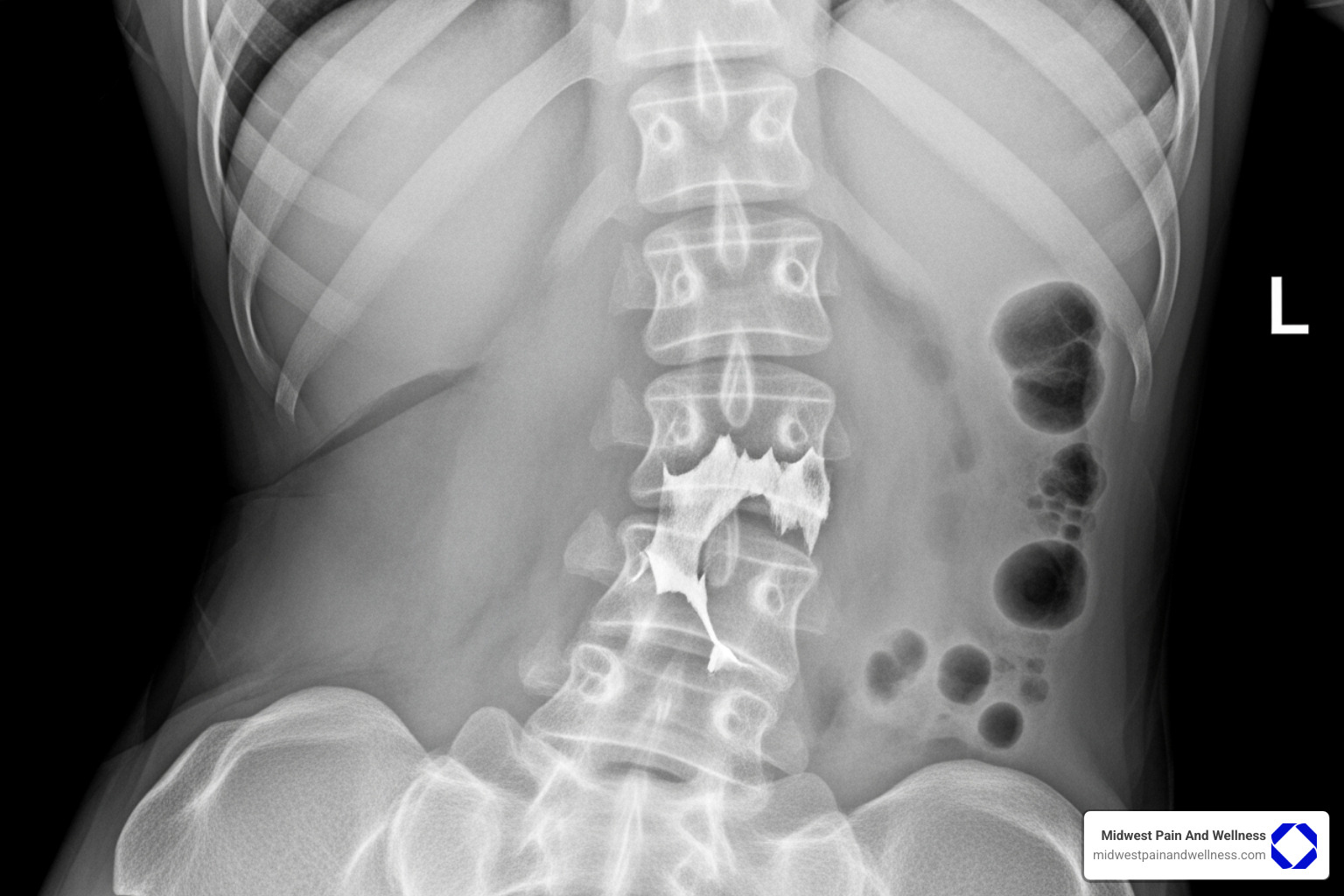
To get the full story, we use several imaging tools:
- Spinal X-ray: This is usually the first step to see the bone alignment and the degree of collapse.
- MRI with STIR Sequences: This is our “gold standard.” Scientific research on imaging features of VCFs highlights that MRI is essential for identifying “bone marrow edema.” This tells us if the fracture is “acute” (new and healing) or “chronic” (old and stable). If there’s no edema, the fracture may have happened years ago and might not be the cause of your current pain.
- CT Scan: We use this if we suspect the fracture is “unstable” or if bone fragments are pushing toward the spinal cord (retropulsion).
- DEXA Scan: This measures bone mineral density. It tells us if you have osteoporosis, which helps us prevent the next fracture.
We also perform a neurological assessment to check for weakness, numbness, or changes in your reflexes. We use standardized tools like the AO Spine classification and the TLICS score (Thoracolumbar Injury Classification and Severity Score) to decide if your fracture is stable enough for conservative care or if it needs a more hands-on approach. Sometimes, what looks like a fracture is actually related to degenerative disc disease, so a precise diagnosis is non-negotiable.
Conservative Management and Non-Surgical Options
Believe it or not, the “wait and see” approach (with professional guidance) is often the best Vertebral Compression Fracture Treatment. Research shows that patients who pursue conservative treatment have more than a 50% chance of significant pain reduction within three months.
Our multi-modal, opioid-free chronic pain treatment focuses on:
- Activity Modification: We want you moving, but safely. Think low-impact exercises like walking or Tai Chi. These improve circulation, which helps the bone heal faster.
- Avoiding Bed Rest: This is a big one! Prolonged bed rest is actually dangerous. It increases the risk of blood clots (DVT), pneumonia, and further bone loss. We want you up and about as soon as you can tolerate it.
- Back Bracing: Braces act like a “cast” for your back. They limit painful bending and keep your spine in a position that takes pressure off the fracture.
| Feature | Rigid Brace (TLSO) | Soft Brace/Corset |
|---|---|---|
| Support Level | High (Restricts movement) | Moderate (Comfort/Reminder) |
| Best For | Unstable or very painful fractures | Stable, minor fractures |
| Duration | Typically 4-12 weeks | As needed for comfort |
- Medication Management: We avoid heavy opioids. Instead, we may use:
- Calcitonin: A synthetic hormone that can significantly reduce bone pain for the first four weeks.
- Teriparatide: A medication that actually helps build new bone.
- NSAIDs: For inflammation, though we use these carefully in our older patients.
- Injections: If localized pain is severe, we might consider epidural injections in Chicago or nerve blocks to help bridge the gap while the bone heals.
The Role of Physical Therapy in Vertebral Compression Fracture Treatment
Physical therapy is the backbone of long-term recovery. While we might avoid intense therapy in the first few weeks to let the bone settle, it becomes essential for preventing the “domino effect” of future fractures.
Our procedures we use for treatment often include a referral to a therapist who specializes in:
- Back Extensor Strengthening: Research by Sinaki et al. proved that stronger back muscles significantly reduce the risk of future VCFs.
- Core Stabilization: Protecting the spine by building a “natural corset” of muscle.
- Fall Prevention: Since 50% of patients with VCFs have a history of falls, we work on balance and gait training to keep you on your feet.
- Postural Training: Learning how to move, sit, and lift without putting extra stress on the front of your vertebrae.
Minimally Invasive Interventional Procedures
If conservative care hasn’t worked after 3 to 4 weeks, or if the pain is so debilitating that you can’t walk, we look toward interventional options. These are “minimally invasive,” meaning they are performed through a tiny needle under local anesthesia or light sedation.
These procedures use a medical-grade bone cement called PMMA (polymethyl methacrylate). Scientific research on vertebroplasty and kyphoplasty confirms that these treatments can provide rapid, long-term pain relief.
The benefits of these procedures include:
- Speed: Most take about an hour.
- Quick Recovery: The cement hardens in about 20 minutes, and most patients go home the same day.
- Immediate Stabilization: By “gluing” the fracture, we stop the micro-movements that cause sharp pain.
Sometimes, patients have overlapping pain from the small joints in the back. In those cases, we might also discuss facet joint injections to ensure we are treating every source of your discomfort.
Comparing Vertebroplasty and Kyphoplasty for Vertebral Compression Fracture Treatment
While both involve cement, they have different goals.
Vertebroplasty involves injecting the cement directly into the fractured bone. It’s excellent for stabilization and pain relief. It was introduced in the U.S. in the early 1990s and remains a staple of Vertebral Compression Fracture Treatment.
Kyphoplasty (or Balloon Kyphoplasty) adds an extra step. We insert a small balloon into the vertebra and inflate it to create a cavity and, ideally, restore some of the lost height of the bone. Once the balloon is deflated, we fill that space with cement.
- Height Restoration: Kyphoplasty is often better at correcting “segmental kyphosis” (the forward curve).
- Safety: Because the cement is injected into a pre-formed cavity at lower pressure, the risk of cement leakage is often lower with kyphoplasty.
- Outcomes: Both procedures are highly effective. We choose the one that fits your specific fracture morphology. Our goal with all treatment procedures is to get you back to your life with as little “down time” as possible.
Surgical Interventions and Long-Term Prognosis
Surgery involving “open” incisions and hardware (like screws and rods) is rarely the first choice for a VCF. However, it is necessary in specific, high-stakes situations.
We follow the scientific research on surgical algorithms for spine injury to determine if surgery is needed. Indications include:
- Neurological Deterioration: If the fracture is causing leg weakness or loss of bowel/bladder control.
- Spinal Instability: If the ligaments and bones are so damaged that the spine can no longer support your weight.
- Burst Fractures: Where the bone explodes outward, potentially narrowing the spinal canal. This is often linked to spinal stenosis.
In these cases, a surgeon might perform “internal fixation” to stabilize the spine. If you’ve had previous back surgery and are experiencing new issues, we also provide post-laminectomy pain treatment in Chicago Ridge to help manage your recovery.
The long-term prognosis for VCFs is generally good, but it requires an “interprofessional” approach. This means your pain specialist, primary doctor, and physical therapist all work together to manage your bone health and prevent the next fracture.
Frequently Asked Questions about VCFs
How long does it take for a vertebral compression fracture to heal?
Most vertebral fractures take about three months to fully heal. However, the most intense pain usually begins to subside within 4 to 12 weeks with proper bracing and activity modification. If pain persists beyond this window, it’s a sign that the fracture may not be healing correctly (non-union) or that interventional treatment is needed.
Can I prevent future spinal fractures if I have osteoporosis?
Yes! Prevention is a “three-legged stool”:
- Medication: Taking anti-osteoporosis drugs (like bisphosphonates) can reduce your risk of a second fracture by up to 70%.
- Nutrition: Ensuring you get enough Calcium (1,200mg) and Vitamin D (800+ IU) daily.
- Exercise: Weight-bearing and back-strengthening exercises are non-negotiable for building bone density.
When is surgery absolutely necessary for a compression fracture?
Surgery is usually only “absolutely necessary” if there is a risk of permanent nerve damage or if the spine is so unstable that it cannot stay aligned. We use the TLICS score; a score greater than 4 usually suggests that surgical intervention should be strongly considered.
Conclusion
Navigating Vertebral Compression Fracture Treatment can feel overwhelming, but you don’t have to do it alone. Whether your fracture was caused by a sudden fall or the quiet progression of osteoporosis, our goal at Midwest Pain and Wellness is to provide a clear, custom care plan that avoids the risks of long-term opioid use.
By combining conservative measures like bracing and physical therapy with advanced, minimally invasive procedures like kyphoplasty, we offer a multi-modal path to relief. Our interprofessional team approach ensures that we aren’t just treating a “spot on an X-ray,” but a whole person who wants to get back to their family, their hobbies, and their life in Chicago Ridge.
If you are struggling with persistent back pain or have been diagnosed with a spinal fracture, come see us for a comprehensive evaluation. You can learn more about our specific Vertebral Compression Fracture Treatment in Chicago Ridge and take the first step toward a stronger, pain-free spine.