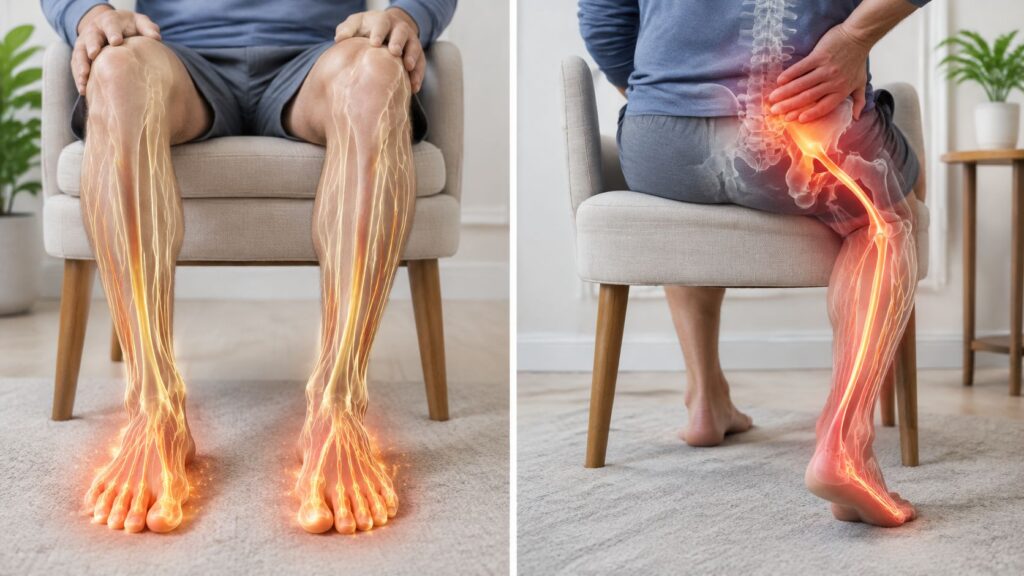
You may be reading this after a familiar pattern has taken over your life. You stand at the kitchen counter, walk through a store, or head down the block, and your back and legs begin to ache, burn, or feel weak. Sitting down brings relief, but the cycle keeps returning. Your clinician has mentioned MILD, or minimally invasive lumbar decompression, and now you're searching for “mild procedure complications” because you want honest information before making a decision.
That caution is appropriate. MILD is generally associated with a low complication burden, but low risk doesn't mean no risk. The most useful discussion includes both sides: short-term issues such as soreness or bruising, and the possibility that symptoms may return or that another procedure could eventually be needed. For patients in Chicago Ridge, Palos Heights, Palos Hills, Evergreen Park, Hickory Hills, and nearby Illinois communities, the right choice starts with understanding how the procedure works and how your own health and anatomy affect the balance.
Table of Contents
- What to Expect from the MILD Procedure Before Discussing Risks
- How Common Are MILD Procedure Complications and What They Look Like
- Understanding Serious Versus Minor Risks After MILD
- How MILD Risks Compare to Other Lumbar Stenosis Treatments
- Warning Signs to Watch For and When to Contact Your Clinic
- How Your Care Team Lowers Risk Before During and After MILD
- Taking the Next Step Toward Safer Relief in the Chicago Ridge Area
What to Expect from the MILD Procedure Before Discussing Risks
Consider a patient with lumbar spinal stenosis who can walk only a short distance before leg pain and heaviness force a pause. The problem isn't always a single disc pressing sharply on a nerve. In many cases, thickened ligament and other tissue crowd the spinal canal, leaving less room for the nerves when the patient stands or walks.
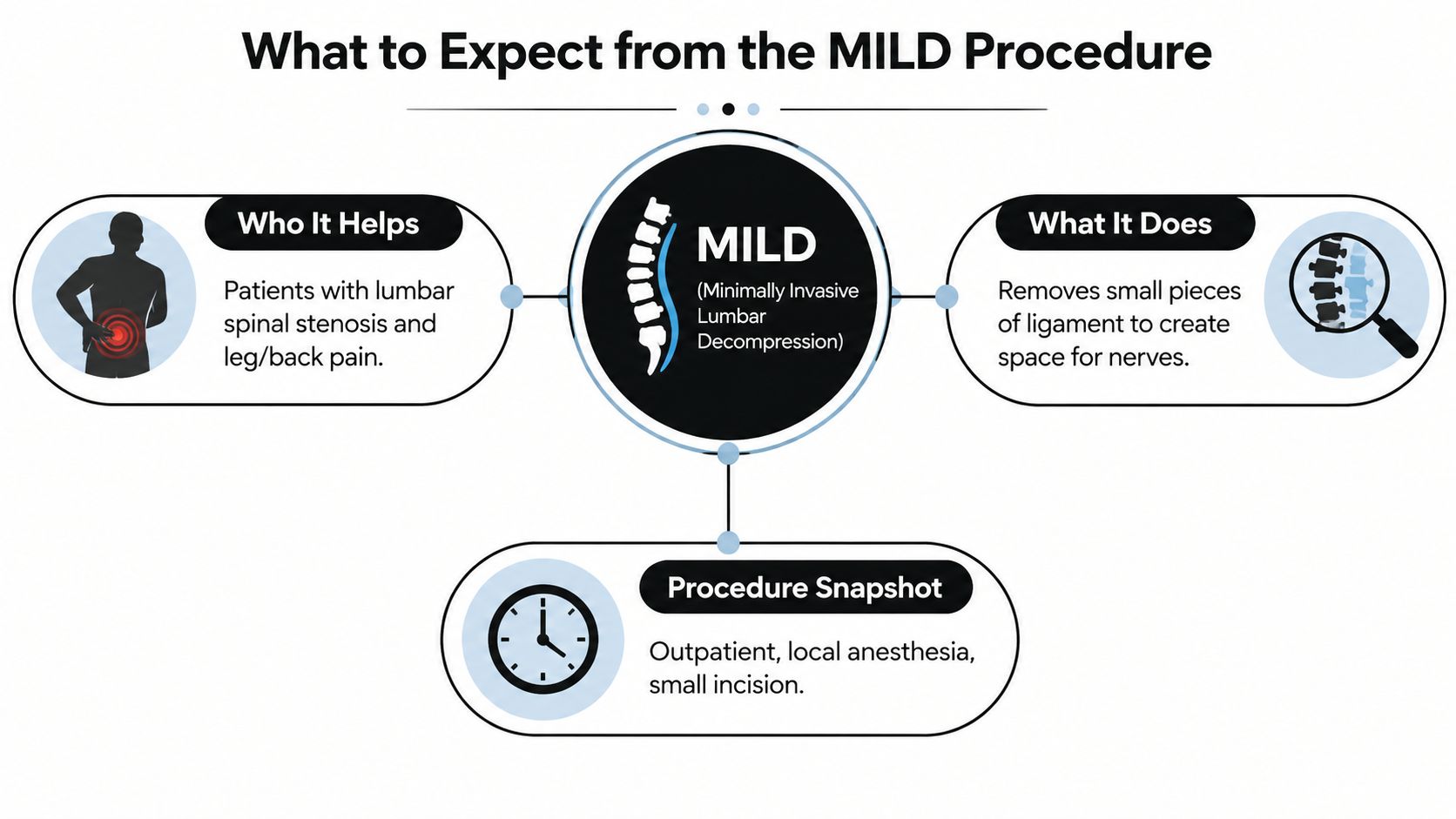
MILD targets that crowding. During minimally invasive lumbar decompression, the physician removes small portions of thickened ligament through a small incision. The purpose is to create more room for the nerves without placing an implant and without performing the wider tissue removal associated with open surgery.
A simple way to understand the goal
Think of the spinal canal as a crowded hallway. The nerves need enough space to pass through, but thickened ligament can act like debris narrowing the walkway. MILD removes selected tissue from the crowded area. It doesn't rebuild the entire hallway, and it isn't intended to solve every possible cause of back or leg symptoms.
That distinction matters. MILD is most relevant to patients whose symptoms fit lumbar spinal stenosis with neurogenic claudication, the pattern of leg discomfort, heaviness, numbness, or weakness that worsens with standing or walking and often improves with sitting or bending forward. A careful evaluation is still necessary because arthritis, disc disease, instability, nerve disorders, and other conditions can produce similar symptoms.
How MILD differs from open surgery
MILD is designed as an outpatient, minimally invasive procedure. It uses a small incision and image guidance, and it may be performed with local anesthesia rather than general anesthesia. It also doesn't use an implant. Those features can reduce the amount of tissue disruption, but they don't eliminate bleeding, infection, nerve-related problems, or the possibility that the decompression won't provide durable relief.
You can review the treatment's purpose and candidacy considerations through Midwest Pain & Wellness' information on MILD for spinal stenosis. Midwest Pain & Wellness is a pain and wellness clinic, not a physical therapy practice. Its role is to evaluate whether an image-guided intervention fits your diagnosis, medical history, and goals, while coordinating with other clinicians when needed.
How Common Are MILD Procedure Complications and What They Look Like
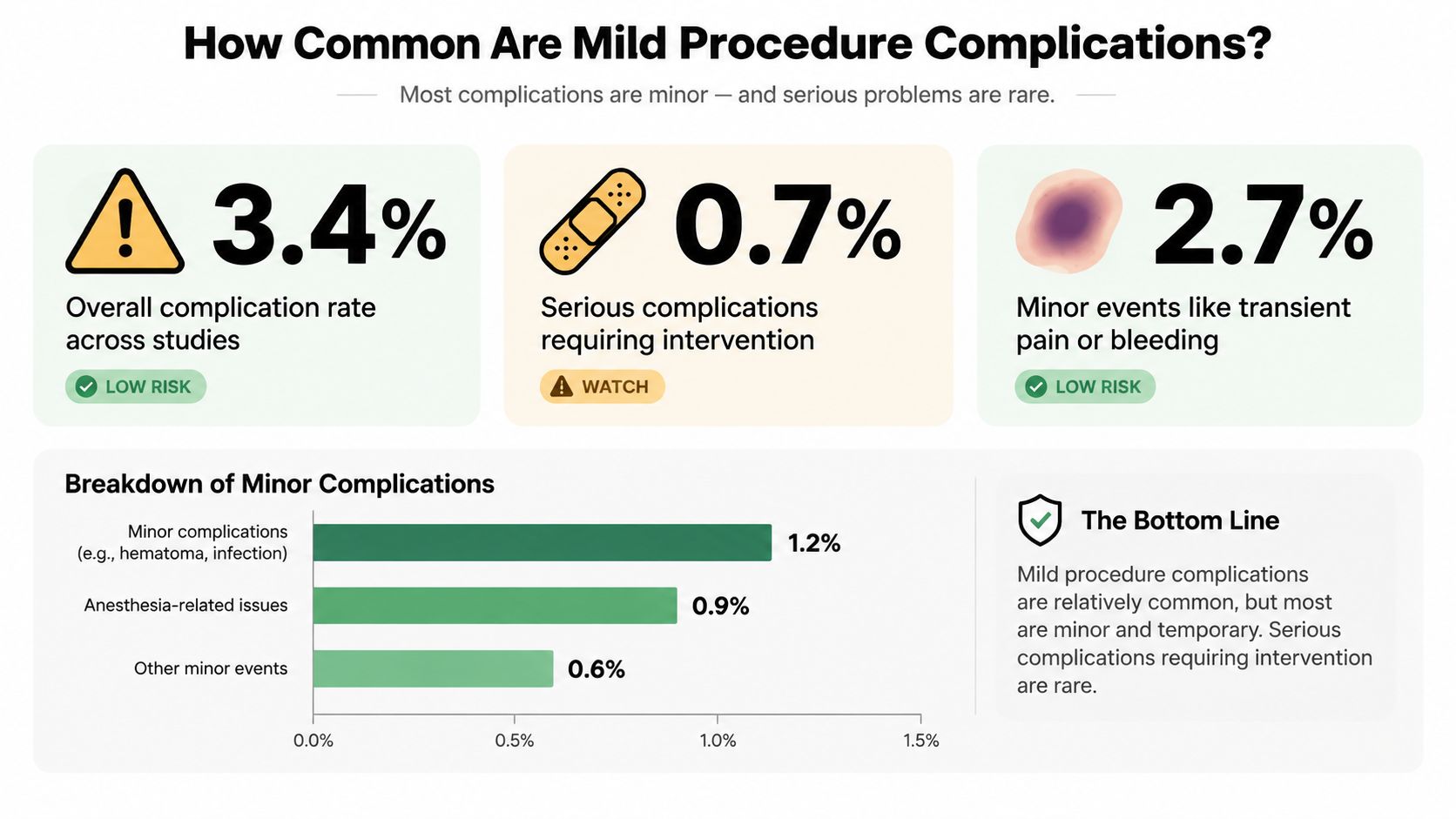
A patient may leave the procedure with a tender access site, then hear about a later reoperation during a follow-up visit. Those outcomes belong in the same safety conversation, but they are not the same event. MILD procedure complications can range from temporary soreness to neurologic injury, a dural tear, or a later need for open decompression. Ask what occurred, when it occurred, how it was treated, and whether it affected function over time.
A two-year follow-up study of 143 patients found no serious device- or procedure-related adverse events. It reported a 1.3% device- or procedure-related adverse-event rate and an overall surgical reoperation rate of 5.6%, or 8 of 143 patients. The study also found no evidence of spinal instability through two years. These findings support a low short-term complication burden, while the reoperation figure shows why longer-term follow-up still matters. Review the two-year follow-up findings.
What minor complications can feel like
Clinical reports most often describe effects at the skin, muscle, or access site rather than major nerve injury. During recovery, you may notice:
- Localized soreness: The skin and deeper tissue near the incision or treated level can feel tender.
- Bruising or ecchymosis: Discoloration may develop where instruments entered the tissue.
- Minor bleeding: Small-volume bleeding may be controlled during the procedure or noticed afterward.
- Post-procedural pain: Temporary discomfort can occur even when the procedure is uncomplicated.
- Allergic dermatitis: An occasional skin reaction has been reported.
A meta-analysis involving 500 patients reported an overall adverse-reaction rate of 8.2%, with soreness at the operation site as the most common complication. It reported no postoperative neurologic deficit or dural tear. See the meta-analysis of MILD outcomes.
Why timing and treatment levels matter
An intraoperative complication occurs during treatment. A postoperative complication appears during recovery, sometimes after discharge. Timing helps the care team choose observation, medication, wound care, imaging, or another intervention.
The number of treated levels can also affect the risk discussion. In multilevel cases, one study reported a 16.3% durotomy rate per patient, while another reported an overall complication rate of 4.8%, including 3.2% durotomy and 1.6% postoperative epidural hematoma requiring evacuation. The clinical review of MILD complications explains why treatment levels and prior procedures should be reviewed during consent and follow-up.
Understanding Serious Versus Minor Risks After MILD
A nervous patient may hear “bleeding” and picture an emergency. Another may hear “minimally invasive” and assume serious problems cannot occur. A useful risk discussion puts these possibilities into separate categories, then explains what monitoring can detect early.
Minor problems and serious events are different categories
Soreness, bruising, low-volume bleeding, and local tissue irritation usually settle with routine care. They are different from a neurologic deficit or a hematoma that presses on a nerve. Published clinical reports describe MILD complications as mainly involving bleeding or tissue-level trauma, while some pooled datasets reported no postoperative neurologic deficit or dural tear. The clinical review cited earlier summarizes these reported patterns.

A hematoma is a collection of blood. A durotomy is an unintended opening in the dura, the protective membrane around the spinal nerves. If that opening allows cerebrospinal fluid to escape, a CSF leak may cause a severe headache that worsens when sitting or standing. That symptom still requires assessment by the treating team, because a patient cannot reliably identify the cause at home.
Contact your clinic promptly if pain is worsening rather than gradually settling, or if new weakness, numbness, fever, drainage, or a severe positional headache appears. Emergency evaluation may be appropriate for rapidly progressing weakness, loss of bladder or bowel control, or other sudden neurologic changes. Your discharge instructions should specify whom to call and where to go after hours.
The longer-term tradeoff deserves attention
MILD's smaller treatment pathway may offer a lower immediate burden than a larger operation, particularly for patients whose health makes extensive surgery less suitable. That short-term advantage does not guarantee that MILD will be the final treatment. Persistent or returning symptoms can lead to another procedure later.
A 2025 comparative study reported a higher reoperation rate after MILD than after open decompression, 46.2% versus 29.3%, along with neurologic deficits of 6.3% versus 0.6%. It also reported fewer durotomies with MILD, 0% versus 2.9%. Review the 2025 comparative study.
These results describe that study population, not a guaranteed outcome for you. For Illinois patients, the decision should include your anatomy, symptom severity, functional goals, surgical candidacy, follow-up access, and willingness to consider future treatment.
A useful question for your consultation: “What problem is MILD expected to solve, and what would make you recommend a different treatment now or later?”
How MILD Risks Compare to Other Lumbar Stenosis Treatments
Patients rarely compare MILD with just one alternative. They may be weighing an injection, continued conservative care, an implanted spacer, or open decompression. Each option addresses a different part of the problem, so comparing only complication rates can produce a misleading answer.
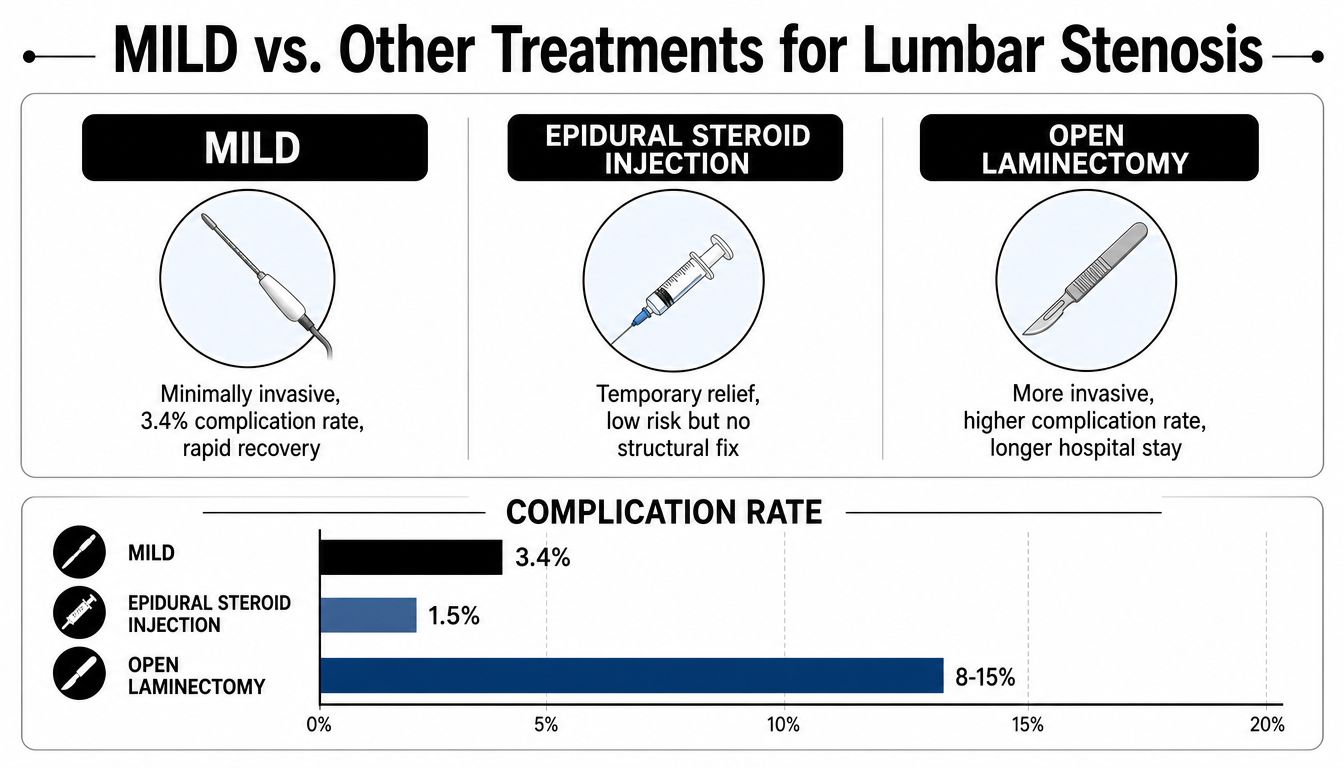
MILD removes selected ligament tissue. An epidural steroid injection aims to reduce inflammation and pain but doesn't remove the structural tissue narrowing the canal. Open laminectomy provides a broader decompression, but it involves more extensive surgery and carries the risks associated with a larger operation. An implanted spacer uses a device to alter motion at a treated level, which introduces implant-specific considerations.
A practical comparison
| Treatment option | Invasiveness and recovery | Key risk considerations |
|---|---|---|
| MILD | Minimally invasive, generally performed as an outpatient procedure | Bleeding, soreness, infection, hematoma, CSF leak, and possible later reoperation |
| Epidural steroid injection | Needle-based treatment with limited tissue disruption | Temporary symptom relief may not address structural narrowing, and injection-specific risks require review |
| Open decompression | More extensive surgery with greater tissue disruption and a more involved recovery | Durotomy, neurologic complications, infection, bleeding, and other surgical risks |
| Implanted spacer | Minimally invasive device-based treatment | Implant-related issues, level selection, and possible need for revision or additional treatment |
The 2025 comparison is especially important because it showed a lower durotomy rate with MILD but higher reoperation and neurologic deficit rates than open decompression in that study. Learn more about minimally invasive lumbar decompression.
How to use the comparison
Ask which treatment matches the cause of your walking limitation. If thickened ligament is the main source of narrowing, removing selected tissue may make sense. If instability, severe deformity, or another structural problem dominates, a different approach may be more appropriate.
The safest choice isn't automatically the least invasive choice. It's the option whose expected benefit, risks, recovery demands, and likelihood of future treatment fit your situation.
Warning Signs to Watch For and When to Contact Your Clinic
After MILD, mild soreness or bruising at the access site can occur. The important question isn't whether you feel anything. It's whether your recovery is gradually moving in the right direction or whether a new symptom is worsening.
A 2025 review described procedure-related adverse events as uncommon, while documenting hematoma rates up to 4.5%, wound infection rates from 0% to 1.4%, postoperative urinary retention from 2.7% to 13.0%, and CSF leak from 4.3% to 7.7% across the studies it reviewed. Read the 2025 review of MILD adverse events. These ranges come from different studies and shouldn't be treated as a personal prediction.
During the first recovery period
During the first day or two, follow your discharge instructions and observe the incision, pain level, mobility, urination, and general condition. Call the clinic promptly if pain is steadily worsening, the wound becomes increasingly red or warm, drainage increases, or you develop fever or chills.
A severe headache that is worse when upright deserves a call because it can be consistent with a CSF leak. New or worsening leg weakness, new numbness, loss of bowel or bladder control, or rapidly changing neurologic symptoms require urgent medical assessment.
Symptoms that need emergency care
Don't wait for a routine appointment if you develop sudden chest pain, difficulty breathing, fainting, coughing blood, or severe lightheadedness. One-sided leg swelling, warmth, discoloration, or calf pain also deserves prompt evaluation, especially if it occurs with chest symptoms because blood clots can become emergencies.
Keep a simple symptom log. Record whether pain is improving, whether walking is becoming easier or harder, whether the wound is changing, and when each new symptom began. Patients from Chicago Ridge, Palos Heights, Palos Hills, Evergreen Park, and Hickory Hills should use the clinic's discharge instructions for direct contact information, and should use emergency services for severe breathing, chest, bleeding, or neurologic symptoms.
Recovery should trend toward improvement. A sudden reversal after you were getting better is a reason to contact your care team.
How Your Care Team Lowers Risk Before During and After MILD
Safety starts before the procedure. A responsible evaluation looks beyond the MRI and asks whether the symptoms, imaging, medical history, medications, allergies, and functional goals all point toward MILD.
Before treatment
Your clinician should review the levels involved, the suspected cause of stenosis, prior spine procedures, bleeding risks, medication use, allergies, and conditions that may affect healing or anesthesia. Prior surgery can alter anatomy, and multilevel treatment can carry different risks from a focused single-level procedure.
Ask direct questions:
- Candidate selection: What finding on my imaging makes MILD appropriate?
- Alternatives: What would open decompression or another nonsurgical option offer that MILD won't?
- Durability: What symptoms might improve, and what symptoms may remain?
- Escalation: What would lead you to recommend another procedure?
- Follow-up: Who should I call if pain, weakness, fever, or wound changes develop?
During and after treatment
Image guidance helps the physician target the intended anatomy and monitor instrument position. Careful bleeding control, attention to the number of treated levels, and appropriate observation after the procedure all support risk management. These safeguards lower risk, but they can't make the risk zero.
A five-year follow-up study of 75 patients reported no major complications and no intraoperative complications, 0 of 75. It classified postoperative issues as minor in 17.3% of patients, 13 of 75, most commonly post-procedural pain. Review the five-year durability findings.
Why real-world context matters
Clinical studies measure defined outcomes in selected groups. Post-market safety systems capture events reported after broader use, but those records can be limited and may not describe every patient's condition or treatment details. The two types of information answer different questions, so neither should be used alone to promise safety or predict an individual result.
For patients who need other image-guided care, fluoroscopy-guided injections may be part of a broader treatment plan. A coordinated approach can help clarify whether decompression, injection therapy, rehabilitation, surgery, or a combination best matches the patient's goals.
Taking the Next Step Toward Safer Relief in the Chicago Ridge Area
MILD can be a reasonable option for selected patients with lumbar spinal stenosis and neurogenic claudication. The published record generally describes a low rate of major immediate complications, with many reported issues involving soreness, bruising, minor bleeding, or other manageable tissue reactions. At the same time, patients deserve a clear explanation that symptoms may recur and that later surgery or another intervention remains possible.
Your personal risk depends on more than the procedure name. The number of treated levels, prior spine procedures, medications, medical conditions, anatomy, and the exact source of nerve compression all matter. A good consultation should explain not only why MILD may help, but also why it might not be enough.
Midwest Pain & Wellness serves patients in Chicago Ridge, Palos Heights, Palos Hills, Evergreen Park, and Hickory Hills, Illinois. The clinic is led by Dr. Yaw Donkoh, a double board-certified interventional pain specialist, and provides personalized, opioid-sparing pain care. The team can evaluate whether MILD fits your condition, discuss alternatives, and coordinate with surgeons, primary care clinicians, chiropractors, and rehabilitation professionals when that supports continuity of care.
Bring your imaging reports, medication list, allergy information, prior spine procedure records, and a short description of how far you can stand or walk before symptoms begin. Also write down what improves the symptoms and what you most want to regain, such as shopping independently, walking around your neighborhood, or standing long enough to prepare a meal.
Midwest Pain & Wellness provides personalized evaluation and image-guided pain care for Illinois patients considering MILD and other lumbar stenosis treatments. Visit Midwest Pain & Wellness to request an evaluation and discuss the potential benefits, complications, alternatives, and follow-up plan with the team.